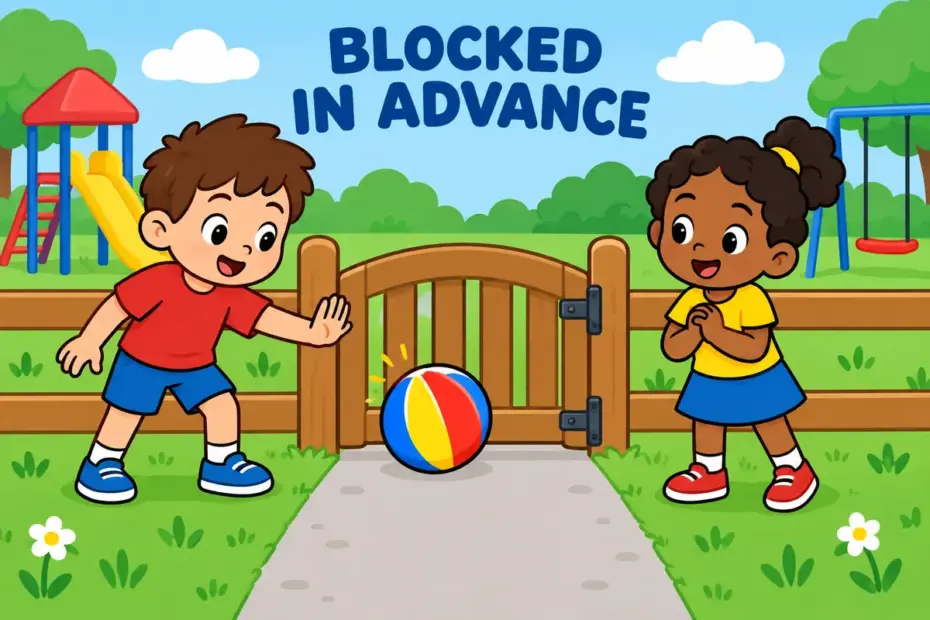
Preclude means to prevent something or make it impossible, and it usually appears with from: “A broken ankle precluded her from competing.” The verb is transitive, so it needs a stated subject and object, and in formal writing it often names the very possibility being ruled out.
Preclude at a glance
- Preclude is a transitive verb; its forms are precludes, precluded, precluding and the noun preclusion.
- The dominant patterns are preclude + object and preclude someone from doing something.
- Its subject is normally a rule, a cost, an injury, weather or bad timing, not a person deciding.
- Preclude belongs to formal, legal and academic writing far more than to casual talk.
- The commonest error is writing preclude to do in place of preclude from doing.
What does preclude mean?
Preclude is a transitive verb meaning to prevent something from happening or to make it impossible. The Cambridge entry for preclude keeps the idea of shutting a thing out before it can occur, and that “before it can occur” is what separates it from forestall, which stops something already underway.
| Sense | Plain meaning | Example sentence |
|---|---|---|
| Prevent an event | Stop something from happening at all | Heavy rain precluded any play on the first day. |
| Make impossible | Remove the conditions a thing needs | A total ban precludes negotiation with the supplier. |
| Shut a person out | Stop someone from taking part | The conflict of interest precluded her from voting. |
| Rule out a conclusion | Show that an explanation cannot hold | The fingerprint precludes the intruder theory. |
One limitation is worth stating plainly. Preclude is often too strong where plain prevent will do, because it claims an absolute block rather than a raised risk: a cancelled bus does not preclude a picnic, it merely threatens one. The verb also never means to forbid by law, which is prohibit.
How do you use preclude in a sentence?
Preclude takes a small set of predictable frames, and choosing the right one is most of the work. The active patterns name what caused the block, while the passive shifts attention to the person or option that was blocked.
| Pattern | Example | What it signals |
|---|---|---|
| preclude + noun | Budget cuts preclude any expansion this year. | Direct prevention of an event or outcome. |
| preclude someone from + -ing | Injury precluded him from running the final. | A blocked action by a named person. |
| be precluded from + noun | Staff are precluded from outside paid work. | A formal rule or contract term. |
| preclude the possibility of | The delay precludes the possibility of a spring launch. | Rules out one specific outcome. |
| preclude the need for | Digital tickets preclude the need for a queue. | Removes a requirement entirely. |
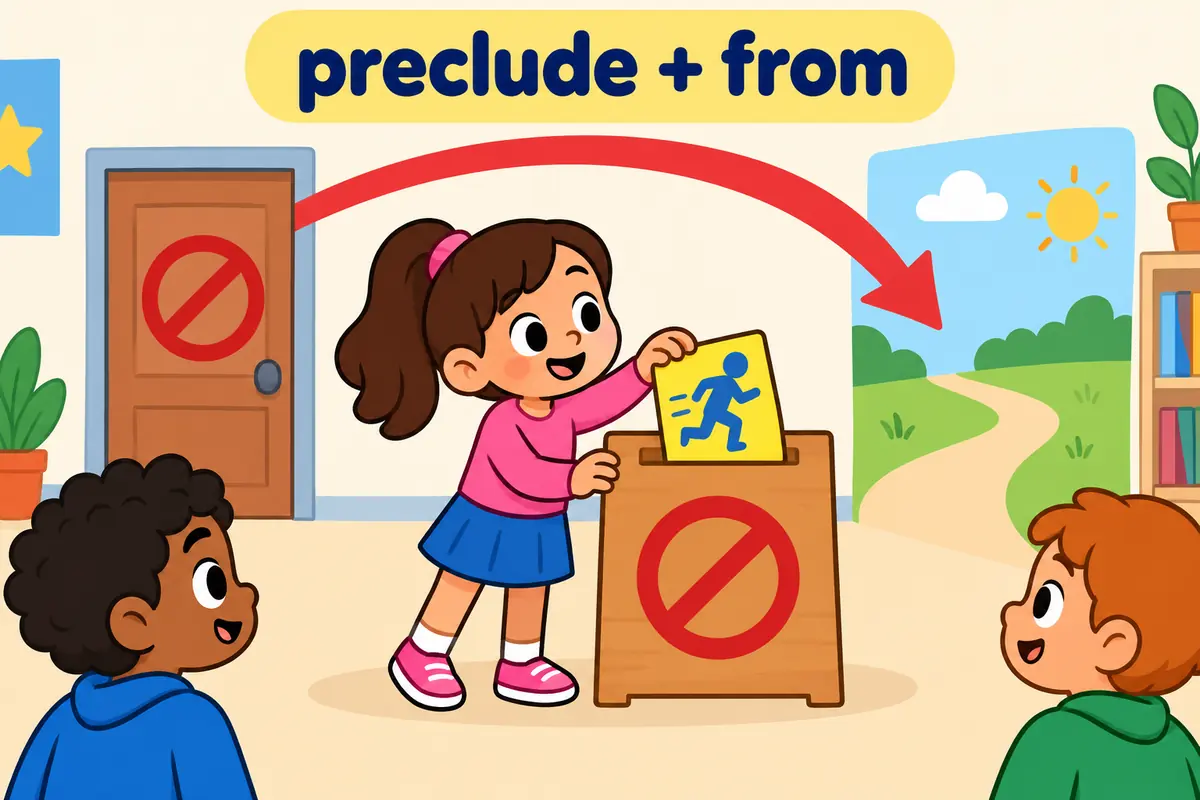
Preclude in a sentence: examples across contexts
Preclude changes register more than meaning. The nine sentences below keep the same verb while moving from a classroom to a legal file, and each one names the constraint doing the blocking.
| Context | Example sentence | Why this works |
|---|---|---|
| Classroom | A snow day precluded the class from finishing the experiment. | Names the blocking event and the blocked action in one clause. |
| Workplace email | The deadline precludes any further revisions to the draft. | States a firm constraint without sounding personal. |
| News report | Flooding precluded rescue teams from reaching the village for two days. | Keeps the cause and the prevented action adjacent. |
| Legal writing | The clause precludes the tenant from subletting the flat. | Shows preclude as a rule that removes an option. |
| Technical writing | Sealing the unit precludes the need for monthly lubrication. | Uses preclude the need for to remove a requirement. |
| Conversation | Rain precluded a picnic, so we stayed in and baked. | Works in speech when the subject is weather or timing. |
| Academic writing | The sample size precludes any firm conclusion about the drug. | Rules out a conclusion rather than a physical event. |
| Sports report | An ankle injury precluded her from defending the title. | Pairs a person with from plus an -ing verb, the standard pattern. |
| Medical note | The allergy precludes the use of penicillin. | Names a contraindication in clinical shorthand. |
Only the legal and medical rows use the bare noun pattern after from. In ordinary writing the verb form is the safer choice.
Preclude vs prevent
The verb readers reach for next is almost always prevent, and the pair is not interchangeable. Preclude claims that something cannot happen; prevent says only that it is being stopped or made less likely.
| Attribute | preclude | prevent |
|---|---|---|
| Strength | Absolute: makes a thing impossible | Graded: stops or reduces a risk |
| Grammar | Takes a noun or from + -ing | Takes a noun or from + -ing |
| Typical subject | A rule, cost, injury or timing | An action, measure or person |
| Typical object | An option, possibility or action | An event, harm or mistake |
| Register | Formal, legal, academic | Neutral, everyday to formal |
Verdict: choose preclude when an option has been ruled out entirely, and keep prevent for reducing a risk that could still occur. Where the outcome is only partly blocked, hinder or avert describe the situation more exactly.
Word forms and grammar of preclude
Preclude inflects regularly, and the passive be precluded from dominates contracts and rule books. The table also lists the noun and adjective built from the same root.
| Form | Part of speech | Example |
|---|---|---|
| preclude | verb, base form | These rules preclude any appeal. |
| precludes | verb, third person singular | Society membership precludes outside trading. |
| precluded | verb, past and past participle | The fog precluded a landing that night. |
| precluding | verb, present participle | Cost is precluding a second attempt. |
| preclusion | noun | The preclusion of new evidence shaped the appeal. |
| preclusive | adjective | The ruling had a preclusive effect on later cases. |
| precludement | non-standard noun | Use preclusion, not precludement. |
The passive is the one learners underuse. Saying she was precluded from applying sounds neutral and official, whereas she could not apply states the same fact more plainly.
Common mistakes with preclude
- Incorrect:
The storm precluded us to travel.Correct: The storm precluded us from travelling. Rule: Preclude takes from before an -ing verb, never a to-infinitive. - Incorrect:
The rules precluded.Correct: The rules precluded any exception. Rule: Preclude is transitive, so it cannot stand without an object. - Incorrect:
The delay precluded that we would finish.Correct: The delay precluded completion. Rule: The verb takes a noun phrase, not a that-clause. - Incorrect:
The law precludes people to smoke here.Correct: The law prohibits smoking here. Rule: Preclude rules out an option; prohibit forbids conduct. - Incorrect:
He is a preclude who avoids parties.Correct: He is a recluse who avoids parties. Rule: Do not confuse preclude with recluse, a person who lives alone.
Practice using preclude
Work through the six items and then read the reasoning, because the pattern matters more than the missing word.
- Fill the gap: Low attendance ______ the club from hiring the hall.
- Choose the better word: A flat tyre (prevented / precluded) us from arriving on time.
- Correct the error: The contract precludes to work for a rival.
- Build a sentence: use preclude the possibility of about a missed deadline.
- Spot the register: which fits a policy memo — this rule precludes early retirement, or the rule stops people retiring early?
- Rewrite in the passive: The injury precluded her from playing. Begin with She.
Answers
- precluded — low attendance is the constraint, and the club is the blocked object.
- prevented — a flat tyre raised a risk and caused a delay; preclude would claim arrival was impossible.
- The contract precludes working for a rival — use from plus an -ing form, not a to-infinitive.
- Model answer: The missed deadline precludes the possibility of a refund this term.
- This rule precludes early retirement — a policy memo prefers the formal verb and a bare noun.
- She was precluded from playing by the injury — the passive keeps the blocked person as the subject.
The bottom line
Use preclude in a sentence when a rule, cost, injury or timing removes an option entirely, and name that constraint as the subject. Two nuances decide most sentences: the verb is transitive, so something is always precluded, and the from pattern needs an -ing verb rather than a to-infinitive. When the outcome is merely less likely, prevent or hinder is the honest choice.
Frequently asked questions about preclude
Does preclude mean the same as prevent?
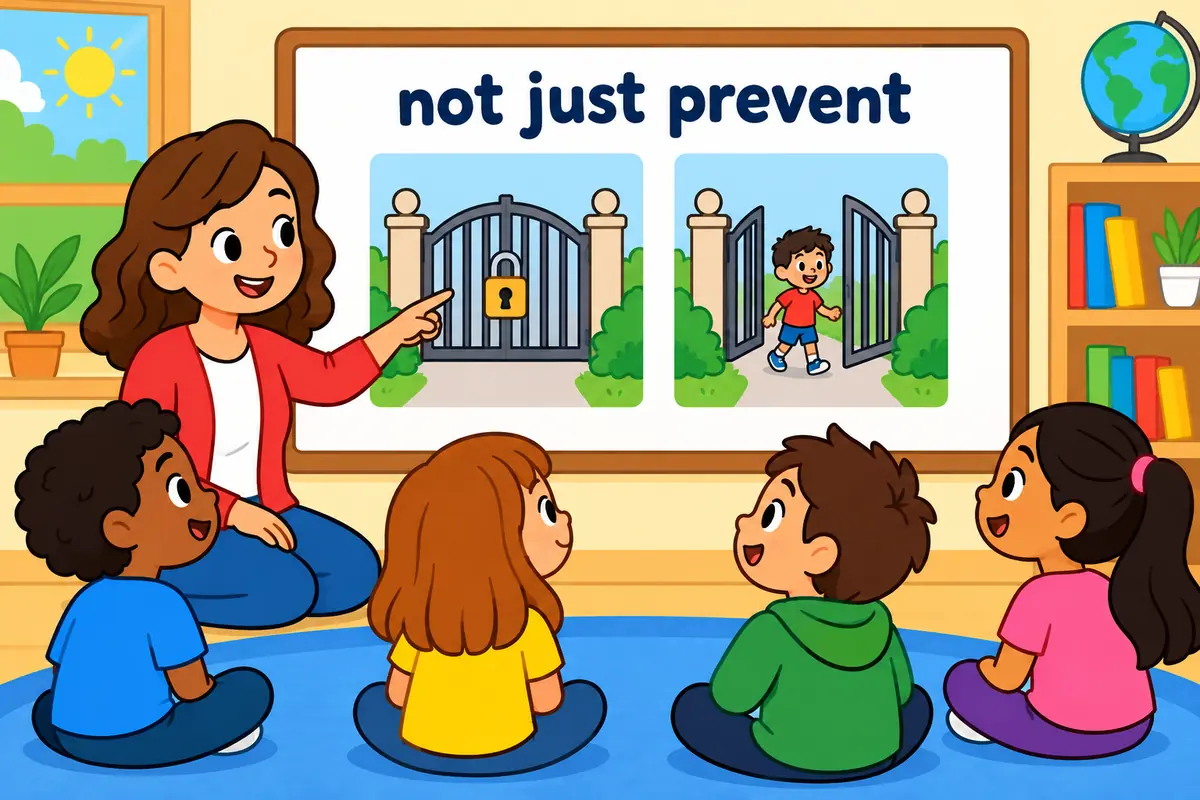
Preclude is stronger than prevent. It claims that something has been made impossible, while prevent says only that an event is being stopped or made less likely. A locked gate precludes entry, but a warning sign merely prevents some people from entering. If the outcome could still happen, keep prevent.
Is it preclude from or preclude to?
The correct form is preclude from followed by an -ing verb or a noun. You write the injury precluded him from running, never precluded him to run. The to-infinitive is the single most common learner error with this verb. When you want a noun, preclude from plus a noun phrase also works.
Can people be precluded, or only things?
Both can be. People are precluded from doing something, as in staff are precluded from voting on their own pay. Events, options and conclusions are precluded directly, as in the fog precluded a landing. The person pattern always needs from, while the thing pattern usually takes a bare noun.
How does preclude work in the passive voice?
The passive takes be precluded from and is common in contracts and rule books. A clause might read employees are precluded from accepting gifts. The passive keeps attention on the blocked person rather than on the rule, which is why official writing favours it. The active equivalent would name the rule as the subject.
Do you ever wonder how to use the word “preclude” correctly in a sentence? Let’s unravel this term and understand its proper usage. “Preclude” means to prevent something from happening or make it impossible.
In English language, this word can be a powerful tool for indicating events or actions that could be impeded or avoided. Learning how to integrate “preclude” into your vocabulary can enhance your ability to communicate clearly and effectively.
7 Examples Of Preclude Used In a Sentence For Kids
- We can’t play outside if it’s raining, it will preclude our fun.
- Eating all my vegetables will not preclude me from having dessert.
- Don’t forget to tie your shoelaces so you do not preclude yourself from running.
- Listening to the teacher will preclude misunderstandings during the lesson.
- Put on your sunscreen to preclude getting a sunburn at the beach.
- Let’s finish our homework early to preclude being late to school.
- Wearing a helmet will preclude getting hurt while riding a bike.
14 Sentences with Preclude Examples
- Preclude procrastination by creating a realistic study schedule.
- Taking breaks between study sessions can preclude burnout and improve productivity.
- Preclude distractions by studying in a quiet and well-lit environment.
- Technical difficulties can sometimes preclude students from attending online lectures.
- Seeking help from professors or tutors can preclude misunderstandings about course material.
- Setting clear academic goals can preclude confusion and lack of motivation.
- Participating in extracurricular activities should not preclude students from focusing on their studies.
- Proper time management can preclude the need for last-minute cramming before exams.
- Understanding the importance of mental health can preclude students from neglecting self-care.
- Poor attendance can preclude students from fully grasping the concepts taught in class.
- Seeking internships and practical experience can preclude a lack of real-world skills upon graduation.
- Building a strong professional network can preclude difficulties in finding job opportunities after college.
- Developing good communication skills can preclude misunderstandings with classmates during group projects.
- Participating in workshops and seminars can preclude feeling unprepared for future career challenges.
How To Use Preclude in Sentences?
To Preclude means to prevent something from happening or to make something impossible. When using this word in a sentence, it is important to follow some guidelines for clarity and accuracy.
Here are some tips on how to use Preclude in a sentence:
-
Subject-Verb-Object: Start your sentence with the subject, followed by the verb (usually ‘precludes’), and then the object that is being prevented. For example: “Heavy rain precludes outdoor activities.”
-
Use in Context: Make sure the sentence makes sense and fits the context in which you are using the word. For instance, “His busy schedule precludes him from taking on any additional responsibilities.”
-
Avoid Ambiguity: Be clear about what is being prevented or made impossible. For example, instead of saying “The new law precludes,” specify what it precludes: “The new law precludes the use of cellphones while driving.”
-
Connect with Conjunctions: You can use conjunctions like “and” or “or” to connect multiple elements in a sentence using Preclude. For example: “A lack of funding precludes proper maintenance and repair of the equipment.”
By following these tips, you can effectively incorporate the word Preclude into your sentences with confidence and precision.
Conclusion
In conclusion, the use of clear and concise sentences with the keyword “preclude” can effectively communicate the concept of preventing or making something impossible. By incorporating this keyword into sentences, writers can emphasize the idea of an action or condition that stops an event from happening. For instance, “Her lack of experience may preclude her from getting the job” illustrates how qualifications or abilities can prevent someone from achieving a certain outcome.
By constructing sentences that feature the word “preclude,” individuals can convey the idea of hindrance or exclusion in a straightforward manner. Whether discussing limitations, barriers, or restrictions, employing this keyword in sentences can clarify the notion of something that obstructs or rules out a particular scenario or possibility.


