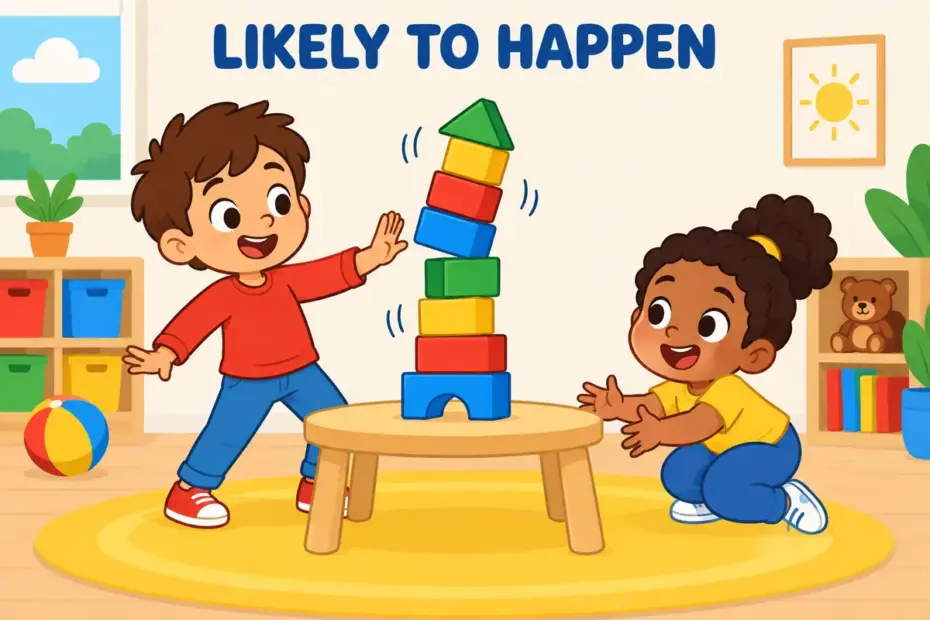
Prone means likely to do or suffer something, and it also describes lying face downwards. To use prone in a sentence, pair it with to and a noun or an -ing verb: “Cheap laptops are prone to overheating.” The adjective most often follows be, seem or become, and the physical sense appears after lie or fall.
Prone at a glance
- Prone is an adjective; proneness is its noun and it has no common adverb.
- The dominant pattern is prone to plus a noun or an -ing verb, as in prone to error.
- A second sense means lying face downwards or flat on the front.
- The register is neutral to formal and common in health, risk and safety writing.
- The commonest error is breaking the pair, as in prone for making mistakes.
What does prone mean?
Prone is an adjective meaning likely to do, suffer or show something, usually something unwanted, and a separate sense means lying face downwards. The Cambridge entry for prone records both, and the likelihood sense nearly always travels with to: crops prone to frost, a knee prone to injury. Where the risk is legal or the outcome merely possible, liable is often the more exact word.
| Sense | Plain meaning | Example sentence |
|---|---|---|
| Likely to suffer | Exposed to something unwanted | Damp cellars are prone to mould. |
| Likely to do | Having a tendency to act in a certain way | He is prone to exaggerate. |
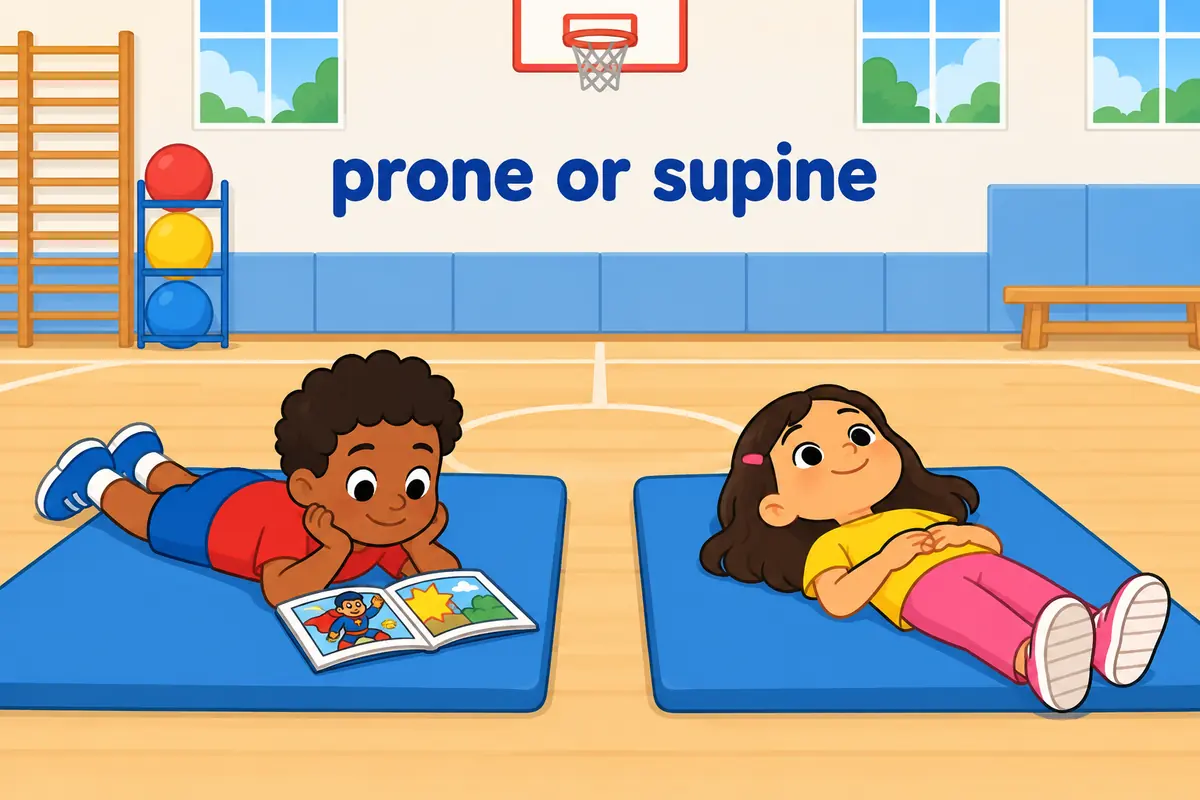
| Lying face down | Resting flat with the front downward | She lay prone on the mat. |
One limitation is worth stating plainly. Prone is not a synonym for certain or destined, and it usually points at a risk. A neutral habit such as reading is better written tends to read, because prone would imply something to worry about.
How do you use prone in a sentence?
Prone works as an adjective in two senses, and the pattern around it decides which one the reader hears. The five patterns below separate the likelihood sense from the physical one.
| Pattern | Example | What it signals |
|---|---|---|
| prone to + noun | prone to error | Names what a person or thing tends to suffer. |
| prone to + -ing verb | prone to forgetting names | Names the habitual action. |
| be + prone to + noun | The road is prone to flooding. | States a standing risk. |
| lie or fall + prone | The climber lay prone on the ledge. | Uses the physical sense. |
| accident-prone | an accident-prone cyclist | A compound for someone who often has mishaps. |
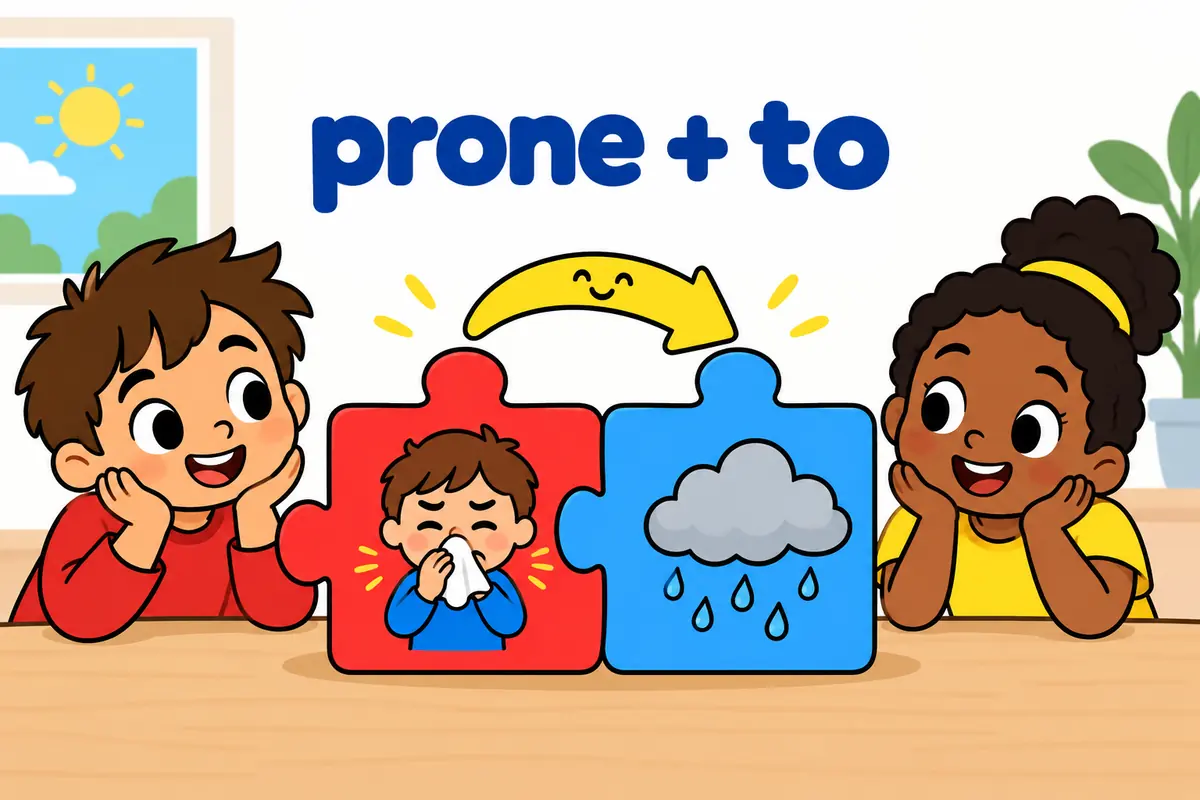
Prone in a sentence: examples across contexts
Prone moves between risk and posture without changing shape. The nine sentences below keep the adjective while shifting from health advice to a scene in a novel.
| Context | Example sentence | Why this works |
|---|---|---|
| Health writing | Children in damp flats are prone to chest infections. | Links a condition to an environment. |
| Workplace email | The shared printer is prone to jamming on Fridays. | Uses the pattern for a minor recurring fault. |
| News report | The valley is prone to flash floods after storms. | States a standing risk for a whole place. |
| Safety notice | Wet floors are prone to causing slips. | Warns of a hazard in the passive voice. |
| Academic prose | Coastal cities are prone to subsidence as groundwater falls. | Names a physical process behind the risk. |
| Sports commentary | Their defence is prone to panic under a high ball. | Applies the word to a collective weakness. |
| Gardening | Clay soil is prone to waterlogging in winter. | Uses a natural subject with a seasonal risk. |
| Conversation | I am prone to losing my keys. | Shows the everyday, self-deprecating register. |
| Fiction | He lay prone in the grass, watching the hedgehog. | Switches to the physical sense without a risk. |
Only the last sentence uses the posture sense. A vulnerable child and a prone one are both at risk, but only one of them is lying down.
Prone vs liable
Prone and liable overlap in the sense of likelihood, and they part company over duty and law. Prone also sits near susceptible, which stresses sensitivity rather than habit.
| Attribute | prone | liable |
|---|---|---|
| Core meaning | Tending towards something, often a risk | Likely to happen, or legally responsible |
| Typical pattern | prone to + noun or -ing | liable to + verb; liable for + noun |
| Focus | A characteristic tendency | A chance outcome or a legal duty |
| Typical subject | People, things and places | People, companies and decisions |
| Register | Neutral to formal | Formal, often legal |
Verdict: use prone for a tendency, liable to for a possible outcome, and liable for when the question is legal responsibility.
Word forms and grammar of prone
Prone has a small family, and its physical sense gives two useful near neighbours. The table lists the forms and the contrasts.
| Form | Part of speech | Example |
|---|---|---|
| prone | adjective | a prone sleeper |
| proneness | noun | His proneness to worry tired him. |
| prone, posture sense | adjective | The swimmer floated prone. |
| supine | adjective — opposite posture | He lay supine, staring at the ceiling. |
| prostrate | adjective — related posture | The runner lay prostrate at the finish. |
The posture sense is easy to reverse: prostrate implies weakness or defeat, while inclined describes a gentle preference rather than a flat position.
Common mistakes with prone
- Incorrect:
He is prone for making mistakes.Correct: He is prone to making mistakes. Rule: The fixed pattern is prone to, never prone for. - Incorrect:
The area is prone to flood.Correct: The area is prone to flooding. Rule: After prone to, use a noun or an -ing form rather than a bare verb. - Incorrect:
She was prone on her back.Correct: She was supine on her back. Rule: Prone means face down while supine means face up. - Incorrect:
He is prone to be late.Correct: He is prone to lateness. Rule: Prone to prefers a noun or an -ing form to a bare infinitive. - Incorrect:
The prone child fell off the swing.Correct: The child, lying prone on the grass, watched the swing. Rule: Prone is a position or a tendency, not a lasting label for a person.
Practice using prone
Work through the six items, then check the reasoning rather than only the answer.
- Fill the gap: The old bridge is ______ to cracking in frost.
- Choose the better word: A company that breaks its contract may be (prone / liable) for damages.
- Correct the error: She is prone to forget her keys.
- Build a sentence: use prone to about a garden path that floods in heavy rain.
- Spot the register: which describes a cliff risk — the cliff is prone to rockfall, or the cliff tends to drop rocks, honestly?
- Rewrite with the noun: He is prone to worry. Use proneness instead.
Answers
- prone — the bridge tends to crack, so the fixed pair prone to fits.
- liable — legal responsibility calls for liable for, not prone.
- She is prone to forgetting her keys — prone to takes an -ing form here, not a bare verb.
- Model answer: The garden path is prone to flooding after heavy rain.
- The cliff is prone to rockfall — a safety sentence stays formal and drops the filler honestly.
- His proneness to worry tired his friends — the noun names the tendency itself.
The bottom line
Use prone in a sentence when something is likely to suffer a particular problem, and remember that the word usually points at a risk rather than a neutral habit. The two nuances that decide most sentences are these: the fixed pair is prone to followed by a noun or an -ing form, and a separate sense means lying face downwards. For a plain statement of likelihood, likely is the simpler choice.
Frequently asked questions about prone
Is it prone to do or prone to doing?
Both appear, but prone to doing or prone to plus a noun is the safer choice in formal writing. He is prone to forget is understood, yet he is prone to forgetting and his proneness to error read more naturally. When in doubt, turn the verb into an -ing form or a noun.
What does lying prone mean?
Lying prone means lying face downwards, flat on the front of the body. A swimmer, a sniper or a child studying ants can all be described as prone. The opposite position is supine, which means lying face up, and the two words are easy to mix up because neither is used in everyday speech.
Can prone be used without to?
Yes, in the physical sense. A person can lie prone, fall prone or be found prone without any to. The likelihood sense, however, nearly always needs to, because prone alone cannot name what a thing tends to suffer. That is why the fixed pair prone to appears so often.
Is prone the same as likely?
Not quite. Likely states a plain chance, while prone adds the idea of a standing tendency towards something unwanted. A player prone to injury has a history of it, whereas a player likely to score is merely expected to. Prone also carries more judgement than likely.
Have you ever struggled with using the word “prone” correctly in a sentence? Let’s simplify it for you. To be “prone” means to have a tendency or inclination towards something, often in a negative context.
When you understand how to use “prone” properly, you can effectively communicate situations where someone is likely to experience or be affected by something. So, let’s break down how to use “prone” in a sentence to avoid any confusion and enhance your writing skills.
7 Examples Of Prone Used In a Sentence For Kids
- You are prone to falling if you run too fast.
- Be careful, the broken chair is prone to tipping over.
- Don’t sit on the edge of the bed, you are prone to falling off.
- The tower of blocks is prone to collapsing if you stack them too high.
- Remember to hold the cup with both hands, it is prone to spilling.
- The loose shoelaces make you prone to tripping.
- Be gentle with the flower, it is prone to wilting if you handle it roughly.
14 Sentences with Prone Examples
- Prone to procrastination, many college students find it challenging to stay focused on their studies.
- Juggling multiple assignments and extracurricular activities can make students prone to burnout.
- With the abundance of fast food options on campus, students are prone to making unhealthy dietary choices.
- Late-night cram sessions make students prone to feeling exhausted and unfocused during exams.
- Peer pressure can make students prone to participating in risky behavior at college parties.
- Students who struggle with time management are more prone to missing deadlines for assignments.
- The competitive nature of college admissions can make students prone to feeling overwhelmed and stressed.
- Without proper financial planning, students may be prone to running out of money before the end of the semester.
- Poor academic performance in a particular subject can make students prone to losing interest in that area of study.
- Lack of communication with professors can make students prone to misunderstandings about course expectations.
- The pressure to maintain a high GPA can make students prone to cheating on exams and assignments.
- Living in cramped dormitories can make students prone to conflicts with roommates.
- Students who struggle with mental health issues may be more prone to feelings of isolation and loneliness.
- Taking on too many extracurricular activities can make students prone to sacrificing their social life and well-being for the sake of their resume.
How To Use Prone in Sentences?
To use the word Prone in a sentence, follow these simple steps:
-
Understand the meaning: The word Prone means having a tendency or inclination towards something. It is often used to indicate a likelihood or predisposition.
-
Select the context: Think about a situation where you want to express someone’s tendency or vulnerability towards a particular action or outcome.
-
Construct the sentence: Begin by identifying the subject (the person or thing you are talking about) and the action or quality they are inclined towards. For example, “She is prone to getting sunburnt if she doesn’t wear sunscreen.”
-
Place the word in the sentence: Position the word Prone appropriately in the sentence to convey the intended meaning clearly. Remember to place it before the verb or adjective it is modifying.
-
Check the sentence: Read the sentence aloud to ensure it makes sense and accurately portrays the Prone. Make any necessary adjustments for clarity.
-
Practice makes perfect: To become more comfortable with using the word Prone in sentences, try creating more examples in different contexts. This will help you become more familiar with its usage.
By following these steps and practicing regularly, you will soon become confident in incorporating Prone into your sentences effectively.
Conclusion
In conclusion, sentences with the keyword “prone” often highlight a tendency, inclination, or vulnerability towards a certain action or state. These sentences suggest a likelihood or predisposition towards something, such as being prone to making mistakes, prone to accidents, or prone to illness. By using this keyword, writers can efficiently convey a person’s habitual behavior or susceptibility to certain situations.
By incorporating sentences with “prone” into writing, it becomes easier to convey nuanced meanings and provide insight into character traits or circumstances. This keyword serves as a useful tool for indicating patterns or tendencies, allowing for a more precise and descriptive depiction of individuals or situations in various contexts.


