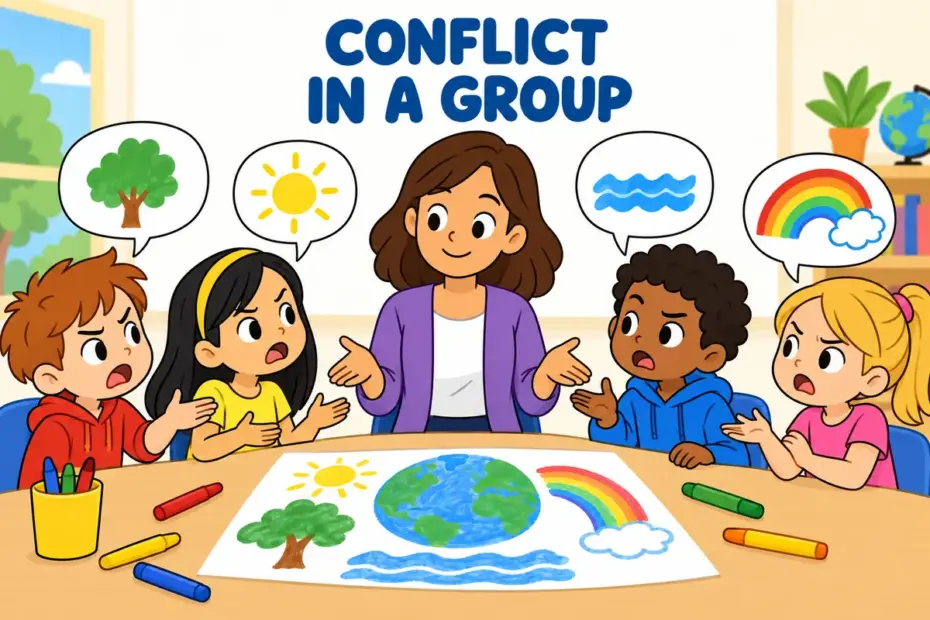
Strife is a noun meaning bitter disagreement or conflict, usually within a group rather than between armies. To use strife in a sentence, name the setting and the two sides it divides: “Years of strife split the village.” The word is uncountable in this sense, so it rarely takes a or an.
strife at a glance
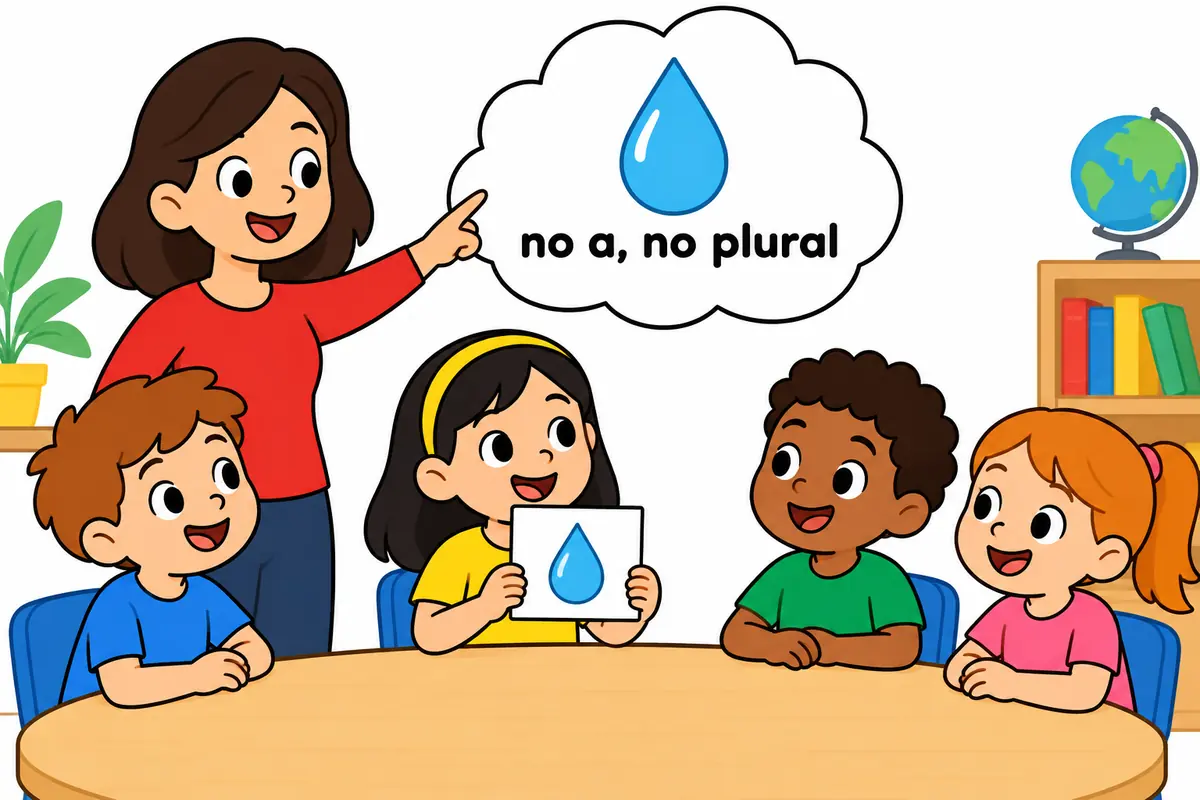
- Strife is an uncountable noun: it has no plural and does not normally take a or an.
- The dominant patterns are strife between two groups, strife within one group, and the fixed phrase civil strife.
- Subjects are usually groups, periods or places, as in years of strife or a region torn by strife.
- Strife suits news, history and formal writing; conversation usually prefers conflict or fighting.
- The commonest error is treating strife as countable, writing a strife or many strifes.
What does strife mean?
| Sense | Plain meaning | Example sentence |
|---|---|---|
| Violent conflict | Open, often prolonged fighting between groups or regions | Years of strife emptied the northern towns. |
| Bitter dissension | Angry disagreement inside a single group | Strife inside the committee delayed every vote. |
Two senses cover almost every real use, and both carry duration: a single heated exchange is a quarrel, not strife. The Cambridge entry for strife confirms the core meaning of bitter or violent conflict, and the word keeps a literary weight that ordinary conflict does not. When you mean one person disagreeing with another, a quarrel is the plainer noun.
One limitation matters here. Strife is not the right word for a private argument, a customer complaint or a friendly debate. Use strife only when the disagreement is serious, drawn out and shared by a group; otherwise conflict, dispute or disagreement reads more accurately and does not overdramatise.
How do you use strife in a sentence?
| Pattern | Example | What it signals |
|---|---|---|
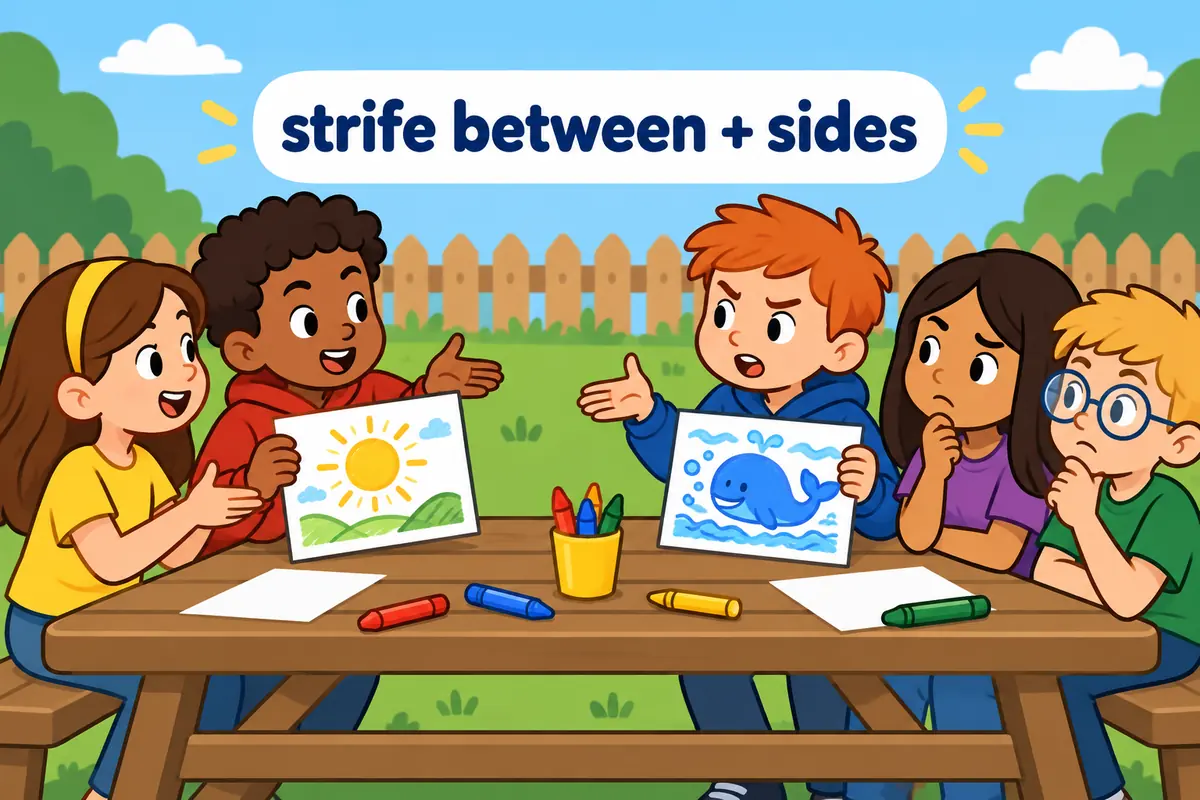
| strife between + two sides | The strife between the two unions lasted a decade. | Names both parties to the conflict. |
| strife within + group | Strife within the party cost it the election. | Turns the conflict inward on one group. |
| civil strife | Civil strife forced the schools to close. | The fixed phrase for conflict inside one country. |
| in / into strife | The ruling pushed the region into strife. | Shows a change of state rather than an ongoing condition. |
| years / decades of strife | A decade of strife raised the price of bread. | Measures the conflict by how long it lasts. |
| end / settle / fuel strife | Cheap grain settled the strife for a season. | Shows who or what changes the conflict. |
The preposition does real work: between points at two sides, within points at one. Mixing them up is the fastest way to make a careful sentence sound vague. Writers who need a verb for the friction behind the conflict often reach for friction between colleagues.
Strife in a sentence: examples across contexts
| Context | Example sentence | Why this works |
|---|---|---|
| Classroom | The class ended its strife with a shared rule about turns. | A small, concrete disagreement a young reader can picture. |
| Workplace email | We should address the strife between the two shifts before winter. | Names the two groups and keeps the tone diagnostic. |
| News report | Decades of strife have driven families from the border region. | Time span plus consequence, the standard news frame. |
| History essay | Religious strife shaped the town’s street plan. | Ties a long conflict to a visible legacy. |
| Legal writing | The clause was drafted to avoid industrial strife during arbitration. | Uses the formal sense of organised conflict. |
| Diplomatic report | Mediators hoped to stop the strife before the harvest. | Names a deadline that makes the conflict urgent. |
| Literature | The novel opens in a village worn down by strife. | Strife as an atmosphere rather than an event. |
| Conversation | There has been strife in the family since the will was read. | The one register where the word appears without a formal frame. |
| Sports commentary | Strife in the dressing room explained the sudden slump. | Transfers a serious noun to a smaller, familiar setting. |
Notice how often the sentence names a duration, a cause or a consequence. Strife rarely stands alone as a bare subject; it is carried by years, regions or groups. Where the conflict is noisy and petty rather than grave, constant bickering is the sharper choice.
Strife vs conflict
Strife and conflict overlap so heavily that writers treat them as interchangeable, yet the two nouns sit at different scales. Conflict
| Attribute | strife | conflict |
|---|---|---|
| Typical scale | A whole group, region or era | Two sides or two ideas, any size |
| Duration | Usually prolonged | Can be brief or long |
| Countability | Uncountable | Countable and uncountable |
| Typical pairing | strife between / within | conflict with / between / over |
| Register | Formal, literary and news | Neutral, all registers |
| What it implies | Enduring bitterness | Active opposition |
Verdict: use conflict for the neutral, countable idea of two sides in opposition, and save strife for a longer, graver disagreement that wears a whole group down.
Word forms and grammar of strife
Strife barely inflects, which is why the errors around it are about number and derived forms rather than tenses.
| Form | Part of speech | Example |
|---|---|---|
| strife | noun, uncountable | The strife lasted three winters. |
| strifes | non-standard plural | Incorrect: many strifes; correct: much strife. |
| strife-torn | compound adjective | Aid reached the strife-torn province. |
| strife-ridden | compound adjective | No one would invest in a strife-ridden plant. |
| striving | noun from a different word | Their striving finally paid off. |
The verb striving belongs to strive, which means to try hard and shares no meaning with the conflict noun. Treat any sentence that pairs strife with an effort noun as a warning sign and rewrite around conflict or labour instead.
Common mistakes with strife
- Incorrect:
The office suffered many strifes last year.Correct: The office endured constant strife last year. Rule: Strife is uncountable, so it takes no plural and pairs with much rather than many. - Incorrect:
A strife broke out between the two teams.Correct: Strife broke out between the two teams. Rule: An uncountable noun drops the article, even when it is the subject. - Incorrect:
She felt strife about the decision.Correct: She felt torn about the decision. Rule: Strife names a situation between people, not a private emotion inside one person. - Incorrect:
Their argument was pure strife.Correct: Their argument was pure contention. Rule: A single argument is contention or a quarrel; strife suggests a longer, group-wide condition. - Incorrect:
The dispute ended in strife, a trite and overused word.Correct: The dispute ended in strife, a word that can sound heavy. Rule: Trite means stale and worn out, and shares only a spelling shape with strife, not a meaning.
Practice using strife
Work through the six items, then read the reasoning rather than only the answer.
- Fill the gap: Years of ______ had left the town without a working market.
- Choose the better word: The two neighbours settled their (strife / contention) over the fence at last.
- Correct the error: A strife inside the club dragged on for three seasons.
- Build a sentence: use strife between about two school teams who argue over the pitch.
- Spot the register: which belongs in a news report — the region was torn by strife, or things got really messy there?
- Rewrite in the plural-free form: The many strifes of the family lasted years. Use strife once.
Answers
- strife — the uncountable noun fits the long duration; strifes and a strife are both wrong.
- contention — the argument is short and between two people, which is the narrower noun.
- Strife inside the club dragged on for three seasons — the article disappears with an uncountable noun.
- Model answer: The strife between the two teams began when the pitch was double-booked.
- The region was torn by strife — a report uses the formal noun and no conversational intensifier.
- The family endured strife for years — the plural is dropped and the verb absorbs the duration.
The bottom line
Use strife in a sentence when a serious disagreement lasts long enough to wear down a whole group, and keep it uncountable. The two nuances that decide most sentences are scale and duration: between points to two sides and within points to one, while a brief exchange is a quarrel rather than strife. Where the trouble is noisy rather than grave, the turmoil that follows is the truer word.
Frequently asked questions about strife
Is strife a countable noun?
No. Strife is uncountable in its ordinary sense, so it takes no plural and no a or an. You write much strife or years of strife, not many strifes. Only in rare literary flourishes does a plural appear at all.
Which preposition goes with strife?
Use between for two named sides, as in strife between the unions, and within for trouble inside one group, as in strife within the party. The fixed phrase civil strife takes no preposition because it already names the setting. The pattern stays fixed.
Is strife a formal word?
Strife belongs to news, history and formal writing, where it sounds grave and slightly literary. In ordinary conversation most speakers say conflict, trouble or fighting. A message that used strife casually would sound heavier than the situation deserves. That register gap matters.
Can strife mean struggle or effort?
Rarely, and only in older writing that treats strife as earnest striving. Modern readers almost always understand strife as bitter conflict between people. If you mean effort, choose struggle or striving to avoid the darker sense entirely. Choose the plainer word instead.
Strife, a term often used to describe conflict or discord, can manifest in various forms and impact individuals, groups, or even entire nations. This intense disagreement or struggle can arise from differing beliefs, values, interests, or simply from misunderstandings.
Navigating through strife requires effective communication, empathy, and the willingness to find common ground. By addressing the root causes of tension and working towards peaceful resolutions, individuals can foster harmony and mutual understanding. In both personal relationships and on a larger scale within society, the ability to navigate and manage strife is essential for creating a more cohesive and resilient community.
7 Examples Of Strife Used In a Sentence For Kids
- The strife between the two friends ended with an apology.
- Let’s try to solve the strife by talking calmly.
- Playing together can help reduce strife among siblings.
- We should always try to avoid strife by being kind to each other.
- Let’s think of ways to resolve strife peacefully.
- It’s important to communicate openly to avoid strife in relationships.
- Let’s work together to overcome the strife and build a stronger community.
14 Sentences with Strife Examples
- Strife over group project responsibilities led to tension among the college students.
- The strife between two rival student clubs escalated during the annual college fest.
- Strife among roommates over cleaning schedules caused unnecessary drama in the dorm.
- The constant strife over limited parking spots created frustration among the college students.
- Academic strife arose due to differing opinions on the best study techniques within the group.
- The strife between sports teams reached a peak during the inter-college tournament.
- Strife over which extracurricular activities to pursue divided the opinions of the college students.
- The ongoing strife between faculty members affected the students’ learning environment.
- Financial strife due to rising tuition fees added to the stress of college students.
- The cultural strife within the diverse student body required careful navigation and understanding.
- Strife between classmates during competitive exams strained relationships within the college.
- The constant strife over meal choices in the college canteen showed the diversity of preferences among students.
- The strife between student unions over campus policies influenced the college administration’s decisions.
- Relationship strife among college couples affected their focus on academics and personal growth.
How To Use Strife in Sentences?
To use “Strife” in a sentence, first, ensure that you have a good understanding of the word’s meaning. Strife refers to conflict, disagreement, or turmoil between individuals or groups.
Here’s how you can incorporate the word Strife into a sentence: “The family was torn apart by the constant strife between the siblings over their inheritance.” In this sentence, Strife is used to describe the ongoing conflict and tension that exists within the family due to disagreements over inheritance.
When using Strife in a sentence, it’s important to provide context so that the reader can understand the nature of the conflict or discord being described. You can use Strife to highlight tension, rivalry, or disagreement in various situations such as relationships, organizations, or communities.
Experiment with different sentence structures and scenarios to become more comfortable with incorporating Strife into your writing. You can practice by writing sentences that depict Strife in different contexts, such as political strife, marital strife, or social strife.
Over time, you’ll become more adept at integrating Strife into your sentences effectively to convey tension or conflict between individuals or groups.
Conclusion
In conclusion, the sentences with the keyword “strife” exemplify conflict and tension in various contexts. Whether it is describing interpersonal discord, societal unrest, or political turmoil, these sentences capture the challenges and struggles that come with strife. They highlight the negative consequences of discord and the need for resolution and reconciliation in order to foster harmony and peace.
Through these examples, we see how strife can manifest in different forms and impact individuals and communities. By acknowledging and addressing the sources of strife, we can work towards creating a more peaceful and harmonious society. Ultimately, these sentences serve as a reminder of the importance of finding common ground and understanding to overcome conflicts and build a more united and cooperative world.


