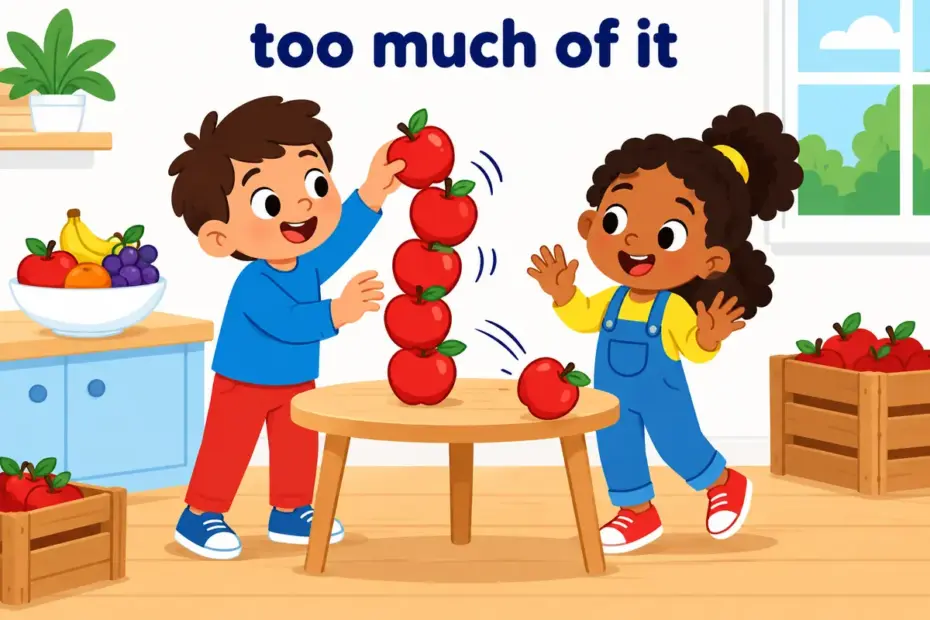
Surfeit means an amount that is more than enough and usually too much. To use surfeit in a sentence, give it the pattern a surfeit of: “A surfeit of advice left the new mayor exhausted.” The noun is countable and almost always arrives with of.
Surfeit at a glance
- Surfeit is mainly a noun meaning an excessive amount; it is also a verb meaning to supply or eat to excess.
- Its forms are surfeits, surfeited and surfeiting.
- The dominant pattern is a surfeit of plus the thing there is too much of.
- Surfeit belongs to formal and literary writing rather than casual conversation.
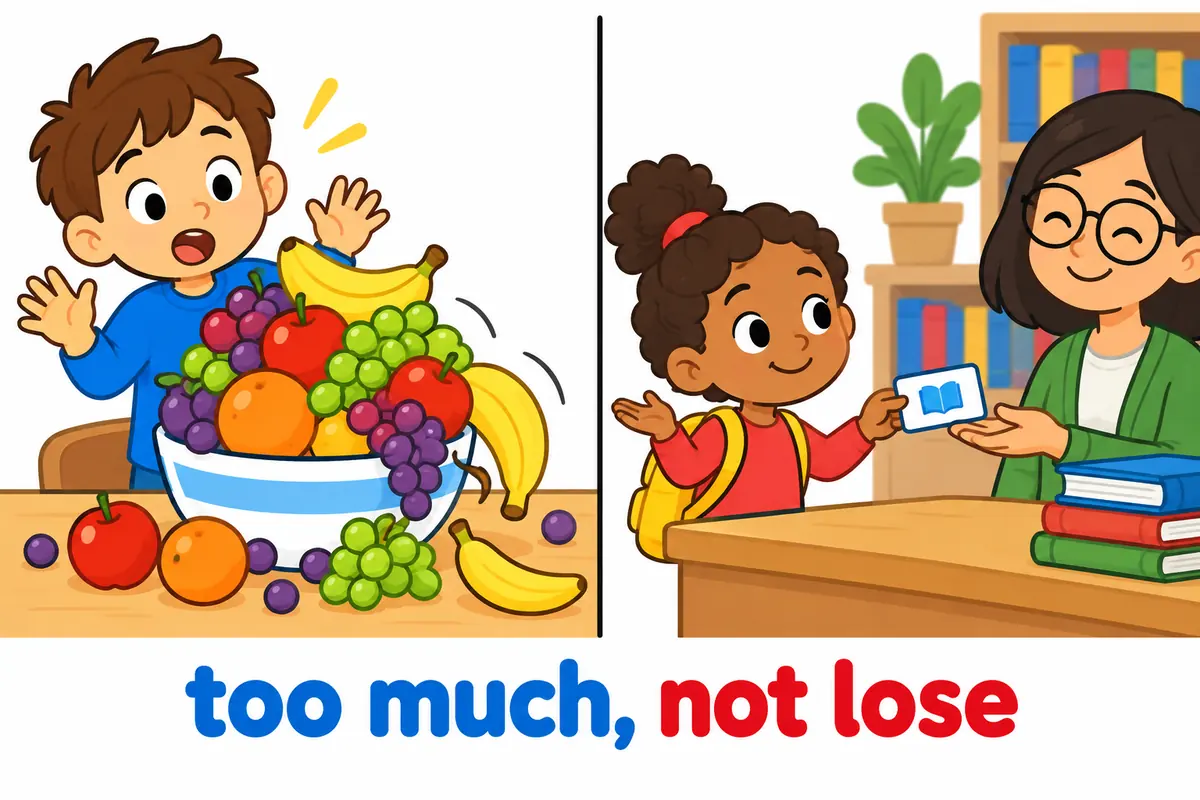
- The commonest error is confusing surfeit with forfeit, which means to lose as a penalty.
What does surfeit mean?
Surfeit is a noun meaning an excessive amount of something, and a verb meaning to supply or consume to excess. The Cambridge entry for surfeit records both, and the noun is far more common in modern writing than the verb.
| Form and sense | Plain meaning | Example sentence |
|---|---|---|
| Noun | More than enough, to the point of harm | A surfeit of sugar dulls the taste. |
| Verb | Fill or feed beyond what is wanted | Rich food had surfeited the guests. |
| State | The weary result of too much | He sank into a surfeit of comfort. |
One limit is worth stating. Surfeit is not a neutral word for plenty: it carries the idea that the amount has gone too far and produced weariness or waste. If you only mean a large, welcome amount, abundance is the kinder and more accurate noun.
How do you use surfeit in a sentence?
As a noun, surfeit almost always appears as a surfeit of X, where X is whatever there is too much of. The verb is rarer and usually turns passive, as in the guests were surfeited with cake.
| Pattern | Example | What it signals |
|---|---|---|
| a surfeit of + noun | A surfeit of choice slows the shopper. | The dominant noun pattern, countable with a. |
| the surfeit of + noun | The surfeit of meetings drained the team. | Definite article when both sides know the excess. |
| surfeit + object + with | They surfeited the market with cheap copies. | The verb takes with before what is heaped on. |
| be surfeited with | The guests were surfeited with cake. | Passive voice, the commonest use of the verb. |
| surfeit on + noun | The children surfeited on sweets. | Intransitive with on, which is rarer and literary. |
The preposition never changes: it is always a surfeit of, never a surfeit in or a surfeit from. Learners who drop the article find that surfeit of choice sounds clipped, because the noun is countable and wants a or the in front.

Surfeit in a sentence: examples across contexts
Surfeit changes register more than it changes meaning. The nine sentences below keep the same noun while moving from a kitchen to a market report, and each one names what there is too much of.
| Context | Example sentence | Why this works |
|---|---|---|
| Kitchen talk | A surfeit of lemons meant marmalade for a month. | A concrete surplus shows the idea at once. |
| Retail report | A surfeit of stock forced the shop into a clearance sale. | Business language suits the countable pattern. |
| Workplace email | The surfeit of updates buried the one message that mattered. | Names the cost of too much information. |
| News feature | A surfeit of new towers changed the skyline overnight. | An abstract count works with a of phrase. |
| Literary prose | He tired of the surfeit of praise. | Formal and faintly ironic, which suits the noun. |
| Academic writing | A surfeit of variables weakens the model. | A precise subject keeps the claim checkable. |
| Health column | A surfeit of screens leaves little room for sleep. | Everyday advice without a medical claim. |
| Travel writing | There was a surfeit of churches and not one cafe. | A wry comparison gives the noun its edge. |
| Conversation | We had a surfeit of cake after the fair. | The first person plural sounds spoken but keeps the pattern. |
The noun keeps its faint disapproval in every row. Even the cheerful cake sentence hints that nobody could finish it, which is the note that separates surfeit from a plain large amount.
Surfeit vs excess, glut and plethora
Surfeit overlaps with three nouns and is interchangeable with none of them. excess is the neutral word for too much; a glut of produce is a market surplus; a plethora of options suggests a confusing variety rather than sheer quantity.
| Attribute | surfeit | excess | glut |
|---|---|---|---|
| Core idea | Too much, with a sense of weariness | More than is needed or allowed | Supply far beyond demand |
| Tone | Literary and faintly critical | Neutral and technical | Economic and journalistic |
| Typical object | Praise, choice, advice, food | Weight, speed, caution | Oil, grain, housing, stock |
| Countable | Yes, a surfeit of | Usually uncountable | Yes, a glut of |
| Implied fix | Rest or restraint | A limit or a rule | A price fall or a pause in output |
Verdict: use excess for a neutral overrun, glut for a market awash with goods, plethora for a dizzying variety, and surfeit when you want the older, softer note of having had more than enough.
Word forms and grammar of surfeit
Surfeit inflects regularly, and its past participle surfeited survives as a separate adjective meaning overfilled. The table also lists the misspelling learners reach for most often.
| Form | Part of speech | Example |
|---|---|---|
| surfeit | noun, singular | A surfeit of noise spoiled the concert. |
| surfeits | noun, plural; verb, third person | Surfeits of grain lowered the price. |
| surfeited | verb, past and past participle | The household was surfeited with guests. |
| surfeiting | verb, present participle | They were surfeiting on summer fruit. |
| surfeit of | fixed phrase | A surfeit of rules does not guarantee order. |
| surfiet | non-standard misspelling | Do not write surfiet; the correct ending is -feit. |
Common mistakes with surfeit
- Incorrect:
She had to surfeit her deposit.Correct: She had to forfeit her deposit. Rule: Forfeit means to lose as a penalty; surfeit means too much. - Incorrect:
There was surfeit of noise.Correct: There was a surfeit of noise. Rule: The countable noun needs a or the before it. - Incorrect:
A surfeit in choices confused us.Correct: A surfeit of choices confused us. Rule: The fixed preposition is of, never in. - Incorrect:
The guests surfeited the cake.Correct: The guests were surfeited with cake. Rule: The verb takes with before what is heaped on it. - Incorrect:
We enjoyed a surfeit of sunshine.Correct: We enjoyed abundance of sunshine. Rule: Surfeit is negative, so a welcome amount needs a positive word.
Practice using surfeit
Work through the six items, then check the reasoning rather than only the answer.
- Fill the gap: A ______ of warnings made the notice easy to ignore.
- Choose the better word: A warehouse holds a (glut / surfeit) of grain, while a dinner guest feels a (glut / surfeit) of rich food.
- Correct the error: There was a surfeit in praise after the show.
- Build a sentence: use a surfeit of about too many meetings in one week.
- Spot the register: which belongs in a literary review — the novel suffers from a surfeit of description, or the novel has way too much description?
- Rewrite with the verb: The audience was given too much music. Use surfeit as a verb with with.
Answers
- surfeit — the noun takes of and a before it.
- glut, then surfeit — a market surplus is a glut; a personal overfill is a surfeit.
- There was a surfeit of praise after the show — the fixed preposition is of.
- Model answer: A surfeit of meetings left no time to do the actual work.
- The novel suffers from a surfeit of description — a review keeps the formal noun and avoids slang.
- The audience was surfeited with music — the passive verb takes with before the excess.
The bottom line
Use surfeit in a sentence when an amount has passed the point of enough and begun to weary or waste, and give it the pattern a surfeit of plus the thing in excess. The two points that settle most sentences are these: the noun is countable and always takes of, and the word is faintly critical rather than neutral. Where the excess is neutral or welcome, a dearth of is its mirror image on the other side of enough.
Frequently asked questions about surfeit
Is surfeit a formal word?
Surfeit belongs to formal, literary and journalistic writing, where its faint note of weariness earns its place. Everyday speech usually prefers too much, plenty or loads. Writing we had a surfeit of snacks in a text message sounds playful and old-fashioned, while a review or a market report wears it easily.
What is the difference between surfeit and excess?
Excess is the neutral word for more than is needed or allowed, as in excess weight or excess speed. Surfeit is warmer and more literary, and it suggests that the oversupply has produced boredom, waste or weariness. A budget deals with excess; a memoir savours a surfeit of praise.
Do you say a surfeit of or surfeit of something?
In modern writing the countable form is standard: a surfeit of something, or the surfeit of something. The bare form without an article sounds clipped in a full sentence, so keep a or the in front. The fixed preposition is always of, never in or from.
Can surfeit be used as a verb?
Yes, though the verb is rarer and often passive. It means to supply or feed someone beyond what they want, and it takes with: the guests were surfeited with cake. An intransitive form with on also exists, as in the children surfeited on sweets, but most modern writers choose the noun.
Have you ever felt overwhelmed by an excessive amount of something? That feeling of having more than you need or want is commonly referred to as a “surfeit.”
A surfeit can be physical, mental, or emotional, manifesting in various aspects of our lives. It’s that sensation of being saturated or overloaded, often leaving us feeling drained or dissatisfied.
7 Examples Of Surfeit Used In a Sentence For Kids
- I ate a surfeit of chocolates!
- The toy store had a surfeit of toys to choose from.
- There was a surfeit of balloons at the birthday party.
- We had a surfeit of fun playing games together.
- The library has a surfeit of colorful picture books.
- The garden had a surfeit of beautiful flowers blooming.
- We saw a surfeit of colorful birds in the park.
14 Sentences with Surfeit Examples
- After attending four back-to-back lectures, I had a *surfeit of information to process.*
- During exam season, I often experience a *surfeit of stress and anxiety.*
- The college canteen always seems to have a *surfeit of unhealthy food options.*
- After pulling an all-nighter to finish my assignment, I had a *surfeit of caffeine to keep me awake.*
- I find it hard to focus on my studies when I have a *surfeit of distractions around me.*
- Attending multiple club meetings back-to-back can lead to a *surfeit of commitments for college students.*
- Studying for multiple exams in a short span of time can result in a *surfeit of information to review.*
- Participating in too many extracurricular activities can lead to a *surfeit of responsibilities for students.*
- Trying to balance social life and academic commitments can sometimes lead to a *surfeit of conflicting priorities.*
- With a *surfeit of options for internships, it can be difficult for students to choose the right one.*
- Attending consecutive college events can result in a *surfeit of social interactions for introverted students.*
- Taking on too many electives can lead to a *surfeit of coursework to manage each semester.*
- Struggling to cope with the demands of college life can lead to a *surfeit of emotions for students.*
- Finding a place to study on campus during peak hours can be challenging due to a *surfeit of students occupying the libraries.*
How To Use Surfeit in Sentences?
Surfeit is a word that means an excessive amount of something, typically food or drink. When using “surfeit” in a sentence, it is important to make sure that the context clearly shows that there is an abundance or overindulgence of the specific item.
Here is an example of how to use surfeit in a sentence: “After the holiday feast, I experienced a surfeit of desserts and felt uncomfortably full.” In this sentence, “surfeit” is used to express the idea that there was a large amount of desserts consumed, leading to a feeling of being overly full.
Another example could be: “The buffet offered such a surfeit of options that I couldn’t decide what to eat first.” In this sentence, “surfeit” emphasizes the overwhelming quantity of food choices at the buffet.
When incorporating surfeit into your sentences, be mindful of the particular item or concept that is in excess. Using this word can help to convey a sense of abundance or overabundance. Practice using surfeit in different context to become more familiar with its usage in everyday language.
Conclusion
In conclusion, a surfeit of information can overwhelm individuals and lead to difficulty in decision-making. When faced with a surfeit of choices or data, people may experience confusion and indecisiveness, ultimately hindering their ability to make informed judgments. As demonstrated by the provided sentences, a surfeit of options can be detrimental to productivity and clarity of thought.
To mitigate the negative effects of a surfeit of information, it is essential to prioritize and filter out non-essential details. By focusing on key points and relevant facts, individuals can streamline their decision-making process and avoid feeling overwhelmed by an excess of data. Ultimately, maintaining a balanced and manageable amount of information is crucial for making effective choices and maintaining mental clarity in today’s information-rich world.


