Glut means an amount of something that is more than enough, and as a verb it means to supply or consume it to excess. To use glut in a sentence, name the oversupply and the market it floods: “A glut of cheap imports drove prices down.” The noun almost always follows the pattern a glut of.
Glut at a glance
- Glut is a noun and a verb; its forms are gluts, glutted and glutting.
- The noun almost always appears as a glut of + noun.
- Usual collocations are a glut of supply, a glut of cheap goods and a housing glut.
- Glut belongs to business, economics and news writing more than to casual conversation.
- The commonest error is dropping of, as in a glut cheap imports.
What does glut mean?
Glut is a noun meaning an oversupply of something, and a verb meaning to supply or fill it beyond what is needed. The Cambridge entry for glut records both the noun and the verb. The noun answers the question how much is too much, while the verb answers what caused it, so the choice between them is usually obvious. Where a price simply rises, an excess of demand is the nearer idea, because glut always points to too much supply.
| Sense | Plain meaning | Example sentence |
|---|---|---|
| Noun: oversupply | More of something than demand can use | A glut of office space pushed rents down. |
| Verb: oversupply | To flood a market past what it needs | Cheap imports glutted the market within a year. |
| Verb: overfill | To fill or feed to excess | He glutted himself on cake at the party. |
One limitation matters. Glut is not a synonym for shortage, and it is not neutral in tone: a glut usually signals falling prices and unhappy sellers. If supply merely keeps pace with demand, the plain word supply is more accurate. Where the surplus is welcomed rather than feared, a flood of donations sounds warmer than a glut.
How do you use glut in a sentence?
Start with the oversupplied thing. As a noun it sits in a fixed phrase with of; as a verb it takes the market or the person as its object. The five patterns below cover almost every real sentence.
| Pattern | Example | What it signals |
|---|---|---|
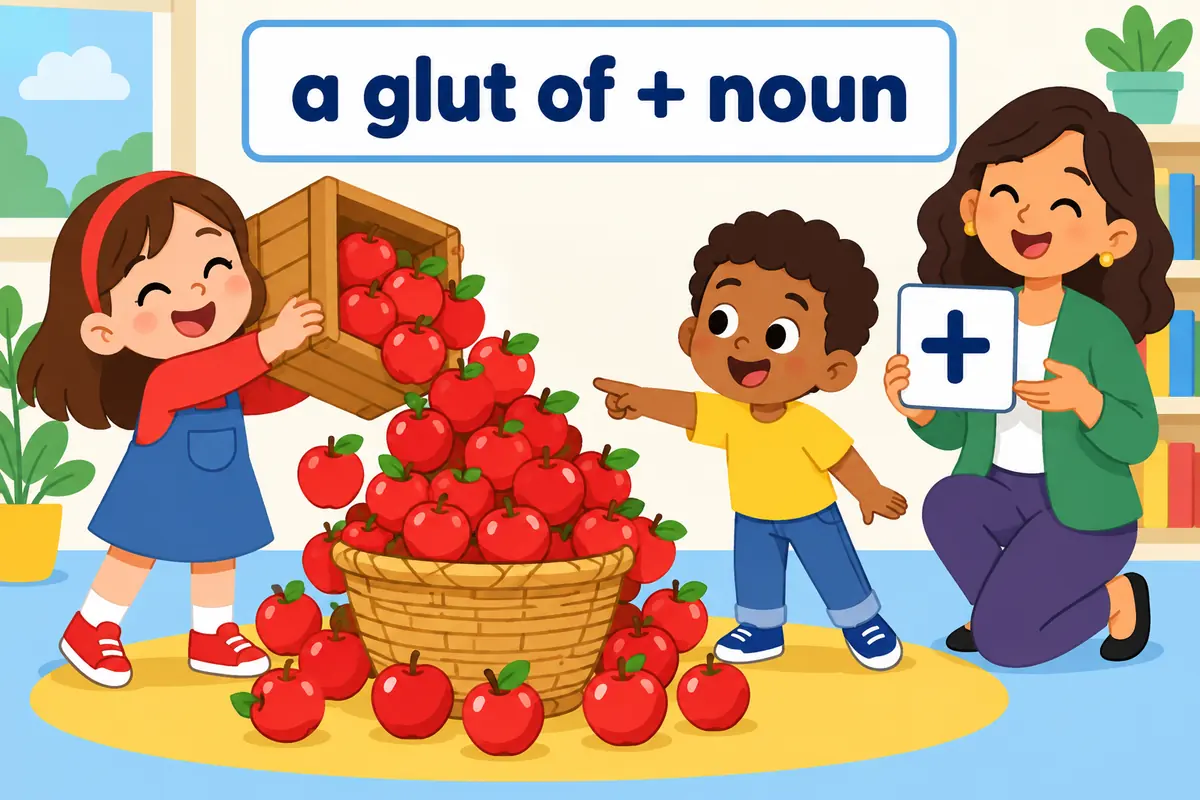
| a glut of + noun | A glut of oil sent prices tumbling. | The standard noun pattern; of cannot be dropped. |
| glut the market with + noun | Importers glutted the market with cheap shoes. | Verb: deliberately flood a market. |
| be glutted with + noun | The shelves were glutted with unsold toys. | Passive verb; stresses the oversupplied thing. |
| glut + object | Farmers glutted the harvest market. | Verb takes a direct object, never a clause. |
| glut oneself on + noun | She glutted herself on pastries. | Reflexive and literal, mainly about eating. |
Glut in a sentence: examples across contexts
Glut changes company more than it changes meaning. Each sentence below keeps the same oversupply idea while moving from a classroom to a market report.
| Context | Example sentence | Why this works |
|---|---|---|
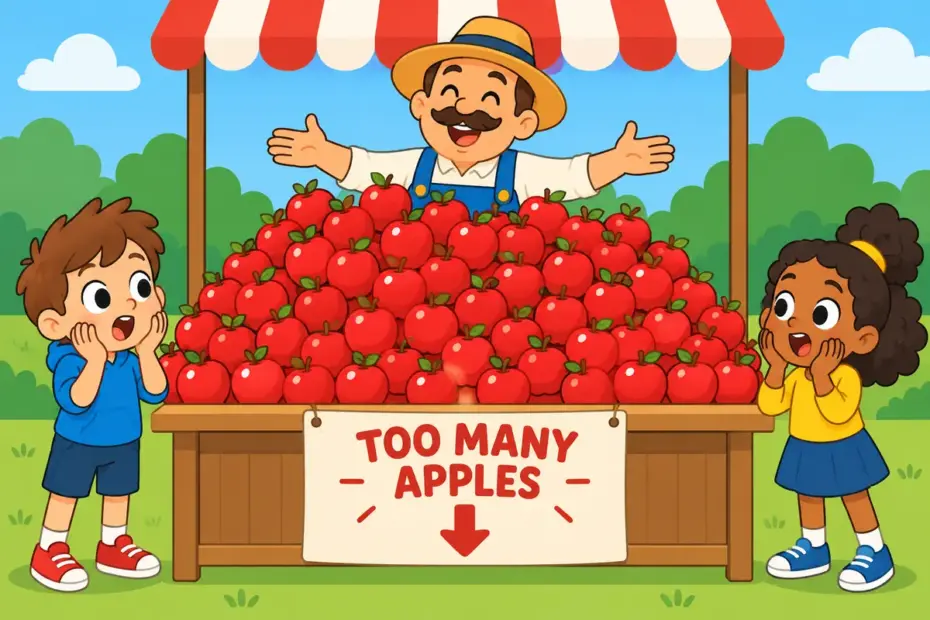
| Classroom | The stall had a glut of apples, so the class pressed cider. | A concrete oversupply a child can picture. |
| Workplace email | A glut of applicants let us fill the post in a week. | Frames oversupply as an advantage to the writer. |
| News report | A global glut of ships left half the fleet idle. | Names the oversupply and its visible result. |
| Economic writing | The price fall followed a glut of imported steel. | Links the noun to a measurable market effect. |
| Technical writing | Forecasters warned of a glut of grain at harvest. | Uses the fixed of pattern in a planning context. |
| Conversation | There is a glut of coffee shops on this street now. | Keeps the noun pattern in everyday speech. |
| Academic prose | The study linked a glut of graduates to falling starting pay. | Treats oversupply as a variable, not a mood. |
| Sports writing | A glut of midfielders left the coach choosing among equals. | Transfers the market idea to team selection. |
| Travel writing | August brings a glut of tourists to the old town. | Shows the noun works for people, not only goods. |
The verb, by contrast, barely appears outside economic writing. That asymmetry is the clearest signal of where the word lives.
Glut vs surplus
Glut and surplus both describe too much, but they measure different things. A glut is too much supply for current demand; a surplus is what is left after needs are met. Related near-synonyms are a plethora of choices and a surfeit of rich food, both of which stress excess.
| Attribute | glut | surplus |
|---|---|---|
| Core meaning | Far more supply than demand wants | An amount left over after needs are met |
| Typical setting | Markets and supply chains | Budgets, stores and trade balances |
| Implies | Price pressure and waste | A leftover that can be saved or sold |
| Duration | Often temporary and cyclical | Can be planned for months ahead |
| Register | Common in news headlines | Neutral and technical |
Verdict: use glut when the market is overwhelmed by supply, and surplus when the extra amount is simply counted and stored.
Word forms and grammar of glut
Glut inflects regularly, and one lookalike relative causes most of the confusion. The surplus figure in a budget is a different idea from a glut, even though the two sentences often appear side by side.
| Form | Part of speech | Example |
|---|---|---|
| glut | noun, singular | The glut of wheat lasted two seasons. |
| glut | verb, base form | Importers could glut the port within a month. |
| gluts | noun plural or verb, third person | Fresh gluts appear every autumn. |
| glutted | verb, past and past participle | The market was glutted with unsold copies. |
| glutting | verb, present participle | Buyers accused the mills of glutting supply. |
| glutton | noun, related root, different meaning | A glutton is a person who overeats. |
Keep glutton out of a sentence about quantities of goods. It names a person or, informally, an enthusiast, and it never means an oversupply.
Common mistakes with glut
- Incorrect:
The city faced a glut cheap housing.Correct: The city faced a glut of cheap housing. Rule: The noun pattern is a glut of + noun, and of is obligatory. - Incorrect:
A glut means there is no supply left.Correct: A glut means there is too much supply. Rule: Glut is excess, not shortage. - Incorrect:
The crops glutted.Correct: The crops created a glut. Rule: As a verb glut is transitive and needs an object, or a reflexive pronoun. - Incorrect:
He was a glut at the buffet.Correct: He was a glutton at the buffet. Rule: Glutton names the person; glut names the quantity. - Incorrect:
The shop had glut of toys.Correct: The shop had a glut of toys. Rule: The countable pattern needs the article a, unless the noun is uncountable, as in a glut of supply.
Practice using glut
Work through the six items, then check the reasoning as well as the answer.
- Fill the gap: After the record harvest, farmers faced a ______ of potatoes.
- Choose the better word: The warehouse held a (glut / glutton) of unsold bikes.
- Correct the error: Cheap flights glutted with tourists the small island.
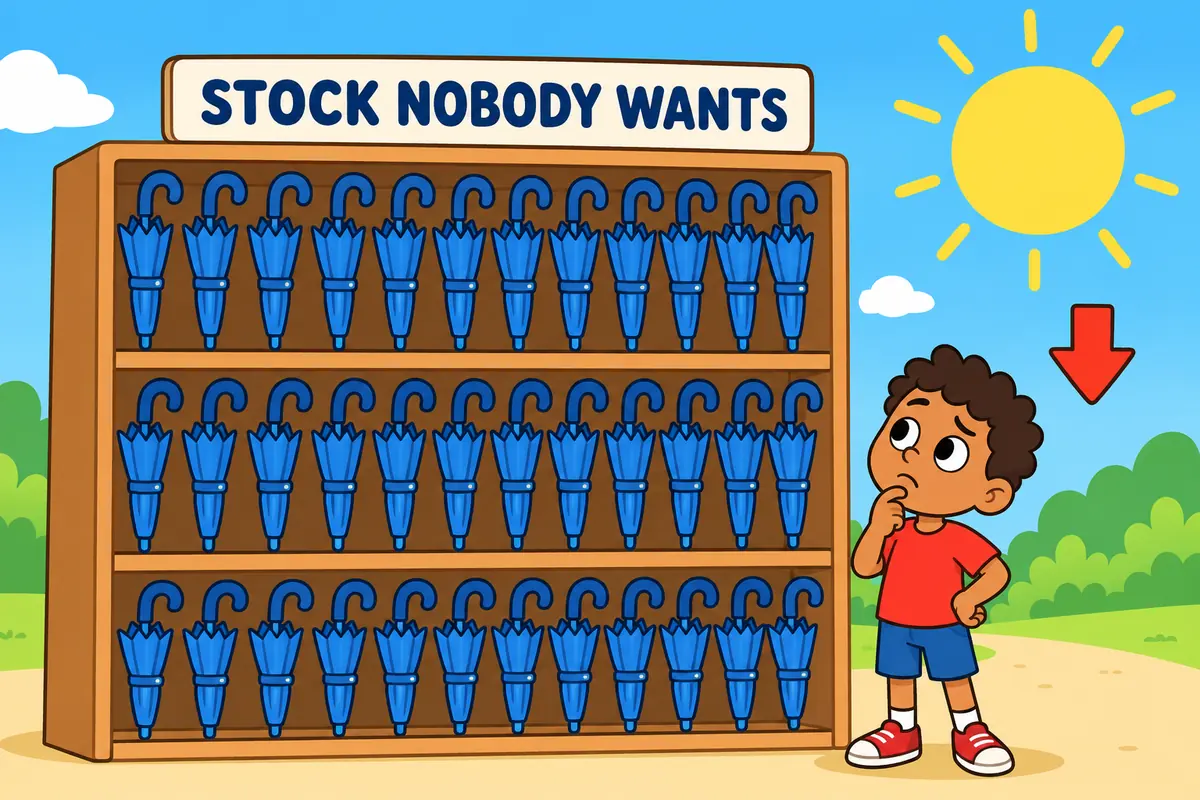
- Build a sentence: use a glut of about too many umbrellas in a shop after a dry summer.
- Spot the register: which belongs in a market report — a glut of steel pushed prices lower, or there were loads of steel?
- Rewrite as a verb: The market was glutted with copies. Start with Importers.
Answers
- glut — the oversupply follows a glut of, the fixed noun pattern.
- glut — glutton means a person who overeats, so it cannot describe stock.
- Cheap flights glutted the small island with tourists — the verb takes the object first, then with.
- Model answer: The shop had a glut of umbrellas after a rainless summer.
- a glut of steel pushed prices lower — a report prefers the precise noun to loads of.
- Importers glutted the market with copies — the active verb keeps the actors as the subject.
The bottom line
Use glut in a sentence when supply is far greater than demand, and reach for the noun pattern a glut of rather than the rarer verb. Two nuances decide most sentences: the noun needs of, and the verb is transitive, so something must be glutted. When the extra amount is simply stored rather than unwanted, surplus is the plainer choice.
Frequently asked questions about glut
Is glut a formal word?
Glut sits mainly in business, economics and news writing, where a market is described precisely. In casual speech people usually say there is too much of something instead. A sentence such as the shops had a glut of candles sounds like a trade report, while there were far too many candles sounds like a text message.
What is a glut of supply?
A glut of supply is more of a product offered than buyers are willing to take at the current price. It is measured against demand, so the same quantity can be a glut in one market and barely enough in another. The usual effects are falling prices and unsold stock.
Can glut be used as a verb?
Yes, glut is also a verb meaning to flood a market or fill something to excess. It is transitive, so it takes an object: importers glutted the market, or she glutted herself on cakes. The noun is far more common in everyday writing, and the verb mainly appears in economic reports.
What is the plural of glut?
The plural of the noun is gluts, as in autumn gluts of apples. The same form gluts is also the third person singular of the verb, as in cheap imports gluts the market. Context makes the two clear, because only the verb form takes an object directly.
Have you ever come across a situation where there is an excessive amount of something, so much so that it seems overwhelming? This abundance is known as a “glut.”
In writing, a sentence with “glut” showcases a scenario where there is an overabundance of a particular thing, whether it be information, products, or emotions, creating a sense of excess that can impact the overall context.
7 Examples Of Glut Used In a Sentence For Kids
- There was a glut of colorful candies at the party.
- The market had a glut of fresh fruits and vegetables.
- I saw a glut of balloons flying in the sky.
- There was a glut of toys in the playroom.
- The bakery had a glut of delicious cupcakes.
- We had a glut of books in our library.
- The garden had a glut of beautiful flowers.
14 Sentences with Glut Examples
- Glut of assignments during exam season can be overwhelming for college students.
- It’s important to manage your time effectively to avoid feeling glut with deadlines.
- The glut of information available online can make it challenging to find credible sources for research papers.
- Attending career fairs can help students stand out in a glut of job applicants.
- The glut of extracurricular activities on campus can make it difficult to choose which ones to participate in.
- It’s easy to get glut with junk food when studying for long hours, but it’s important to eat healthy.
- The glut of options for internships can leave students feeling unsure about which ones to apply for.
- Managing finances can be difficult for college students, especially with a glut of tempting sales and discounts.
- It’s common to feel glut with information before a big exam, but try to focus on key concepts.
- The glut of social events happening on campus can make it hard to balance academics and a social life.
- Students often feel glut with resources when preparing for presentations, but practice can help alleviate those nerves.
- It’s easy to feel glut with study materials, but creating a study schedule can help organize your time more effectively.
- The glut of textbooks required for classes can be a financial burden for college students.
- With a glut of study groups forming on campus, it’s important to find one that fits your learning style.
How To Use Glut in Sentences?
To use Glut in a sentence, follow these steps:
-
Identify the word you want to emphasize or highlight in your sentence. This can be a verb, noun, adjective, or any other part of speech that you want to bring attention to.
-
Begin your sentence as you normally would, making sure to include the word you have chosen to use Glut on.
-
Insert the word “Glut” before the word you want to emphasize by using parentheses (). This will indicate that you want that particular word to stand out.
-
Continue writing the rest of your sentence as usual, ensuring that the sentence flows naturally and the emphasized word is highlighted effectively.
-
Review your sentence to make sure that the emphasized word stands out and makes sense within the context of your sentence.
For example, if you want to emphasize the word “amazing” in a sentence, you can use Glut in the following way:
“The (amazing) view from the top of the mountain took my breath away.”
In this sentence, the word “amazing” is highlighted by using Glut, drawing attention to the incredible view from the top of the mountain.
Conclusion
In conclusion, the sentences with “glut” indicate an overabundance or excess of something. Whether referring to a glut of products in the market, a glut of information online, or a glut of job applicants, this keyword is used to convey a sense of saturation or surplus. The term “glut” serves to highlight instances where there is an overwhelming supply that surpasses demand, often leading to competition or challenges in finding balance.
By identifying and understanding sentences that feature the word “glut,” we can recognize situations where an excessive amount of something exists. This acknowledgment can prompt us to consider strategies for managing or navigating through these scenarios where a glut may impact decision-making, resource allocation, or overall outcomes.