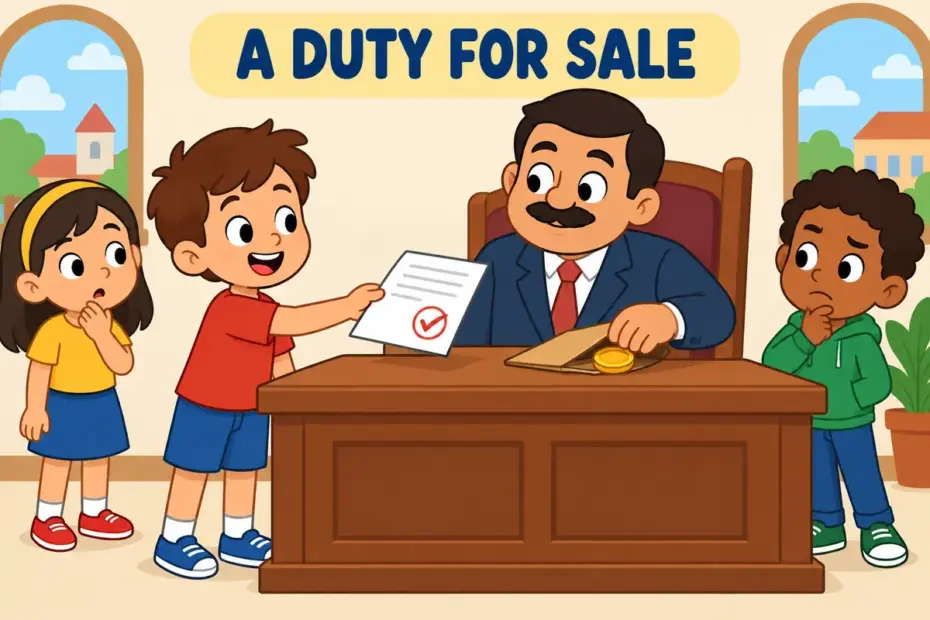
Venal is an adjective meaning willing to act dishonestly for money, especially in a position of trust that can be bribed. To use venal in a sentence, put it before the person or act it judges: a venal official sold the permit. Its noun is venality, and its close look-alike is venial.
Venal at a glance
- Venal is an adjective; its noun is venality and its adverb is venally.
- The core sense is open to bribery, or ready to trade a duty for money.
- It describes people such as officials, judges and clerks, and acts such as a venal bargain.
- Venal is formal and usually critical, common in journalism and political writing.
- The commonest error is confusing venal with venial, which means a minor, pardonable fault.
What does venal mean?
Venal is an adjective meaning open to bribery or willing to do something dishonest in return for money. The Cambridge entry for venal ties it to people who can be bought, which keeps it close to corrupt an official but narrower: corruption can mean many abuses, while venal points at money as the motive.
| Sense | Plain meaning | Example sentence |
|---|---|---|
| Open to bribery | Willing to be paid for a favour | A venal clerk sold the list of names. |
| Acting for money | Doing a job only for personal gain | His venal motives were plain to the inquiry. |
| Purchasable act | A decision that can be bought | The vote looked like a venal bargain. |
One limitation matters. Venal does not simply mean greedy, and it says nothing about a written rule. Greed is wanting more for yourself; venal is selling a duty that belongs to others. Where the abuse involves favours rather than cash, mercenary motives is sometimes the more exact phrase. A venal official is guilty of unscrupulous dealing, though not every unscrupulous act is for sale.
How do you use venal in a sentence?
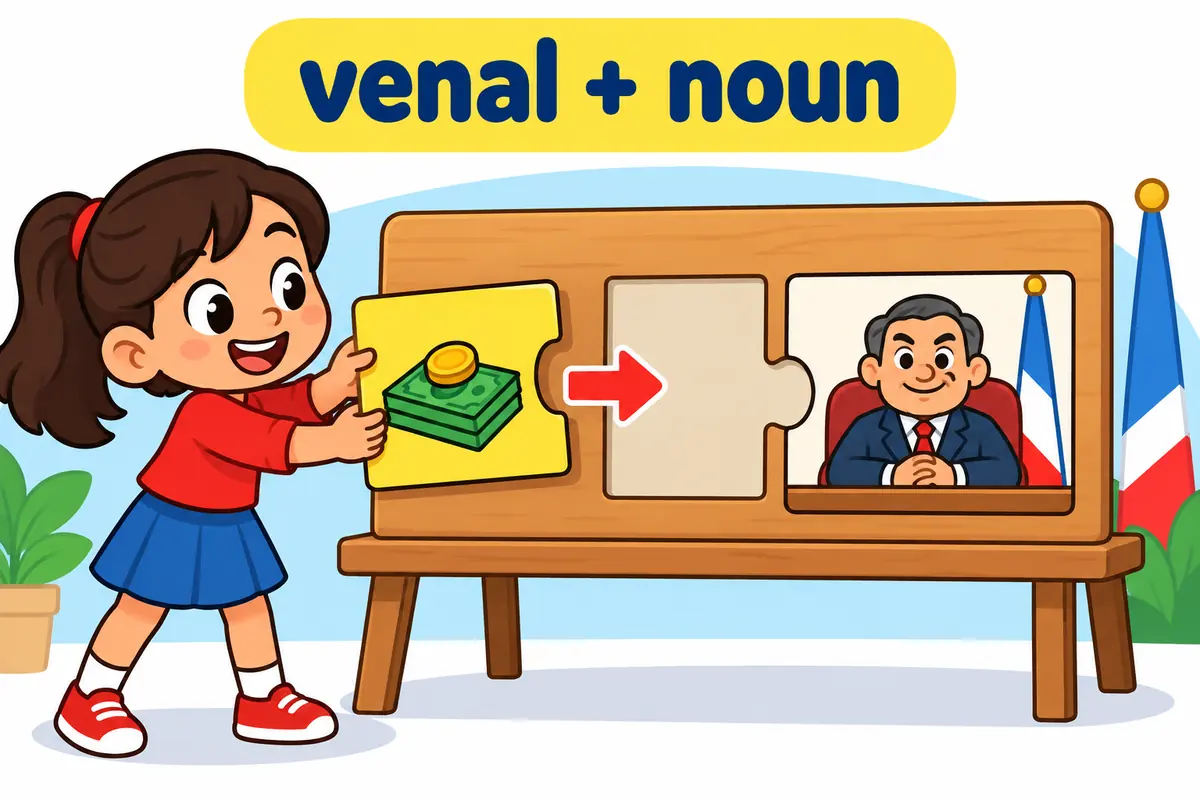
Place venal before the person or act it judges, or after a linking verb such as seem or become. Five patterns cover almost every real sentence.
| Pattern | Example | What it signals |
|---|---|---|
| venal + person | The venal inspector ignored three clear breaches. | The adjective judges a person in office. |
| venal + act or noun | They called the deal a venal bargain. | The corruption is attached to a decision. |
| seem or become + venal | The department had become venal over the years. | Reports a drift rather than a single act. |
| venality + of | The venality of the officials shocked the town. | The noun names the quality itself. |
| venally + verb | He acted venally and lost his post. | The adverb describes how a person behaved. |
Note that a single word can carry a whole accusation, which is why reporters use venal rather than a longer phrase such as willing to take a bribe.
Venal in a sentence: examples across contexts
Venal belongs to serious writing about power and money. The nine sentences below move from a news report to a history essay, and each one names the trust that was sold.
| Context | Example sentence | Why this works |
|---|---|---|
| Classroom | The play showed a venal mayor who traded permits for coins. | A simple scene makes the meaning clear. |
| Workplace email | We must show that our process is not venal or open to gifts. | A direct denial fits a compliance message. |
| News report | Three venal officers were dismissed for taking payments. | The adjective and the offence appear together. |
| Legal writing | The tribunal found a pattern of crooked dealings by a venal clerk. | A formal finding uses the precise term. |
| Political writing | Voters punished a venal council at the next election. | The judgement is public and political. |
| History essay | The empire grew venal as offices were openly sold. | The linking verb shows a slow change. |
| Business writing | A venal buyer accepted secret payments from suppliers. | The role names the trust that was broken. |
| Book review | The novel paints a venal judge with quiet precision. | A literary judgement stays restrained. |
| Conversation | Everyone knew the inspector was venal. | The word lands as a plain verdict in speech. |
Only the last row drops the formal frame. Even then, venal keeps its weight, because it accuses rather than merely observes.
Venal vs venial
These two words differ by a single letter and mean almost opposite things. Venal describes a person who can be bought; venial describes a fault that is small and easily forgiven. The table below keeps them apart with the tests a careful writer uses.
| Attribute | venal | venial |
|---|---|---|
| Core meaning | Open to bribery | Minor and pardonable |
| What it describes | People and acts | Faults and sins |
| Moral weight | Serious, often criminal | Slight, easily excused |
| Typical noun | Official, clerk, bargain | Sin, fault, error |
| Register | Journalistic and formal | Religious and formal |
| Memory hook | Ends like criminal | Ends like trivial |
Verdict: choose venal for a person who takes money for a duty, and venial only for a small fault that can be forgiven, never the reverse.
Word forms and grammar of venal
Venal forms its family regularly, and the noun venality often appears in headlines. The Merriam-Webster entry for venal also lists the adverb. The table shows the forms and the look-alike that shares the spelling pattern.
| Form | Part of speech | Example |
|---|---|---|
| venal | adjective, base form | The venal guard let the van through. |
| more venal | adjective, comparative | Each clerk seemed more venal than the last. |
| most venal | adjective, superlative | The most venal officers were dismissed. |
| venally | adverb | He behaved venally for years. |
| venality | noun | The report exposed widespread venality. |
| venial | adjective, different meaning | A venial slip needs no punishment. |
Because venality is the noun, a sentence never needs the phrase venal nature, and because venal is an adjective, it cannot accept a bribe itself.
Common mistakes with venal
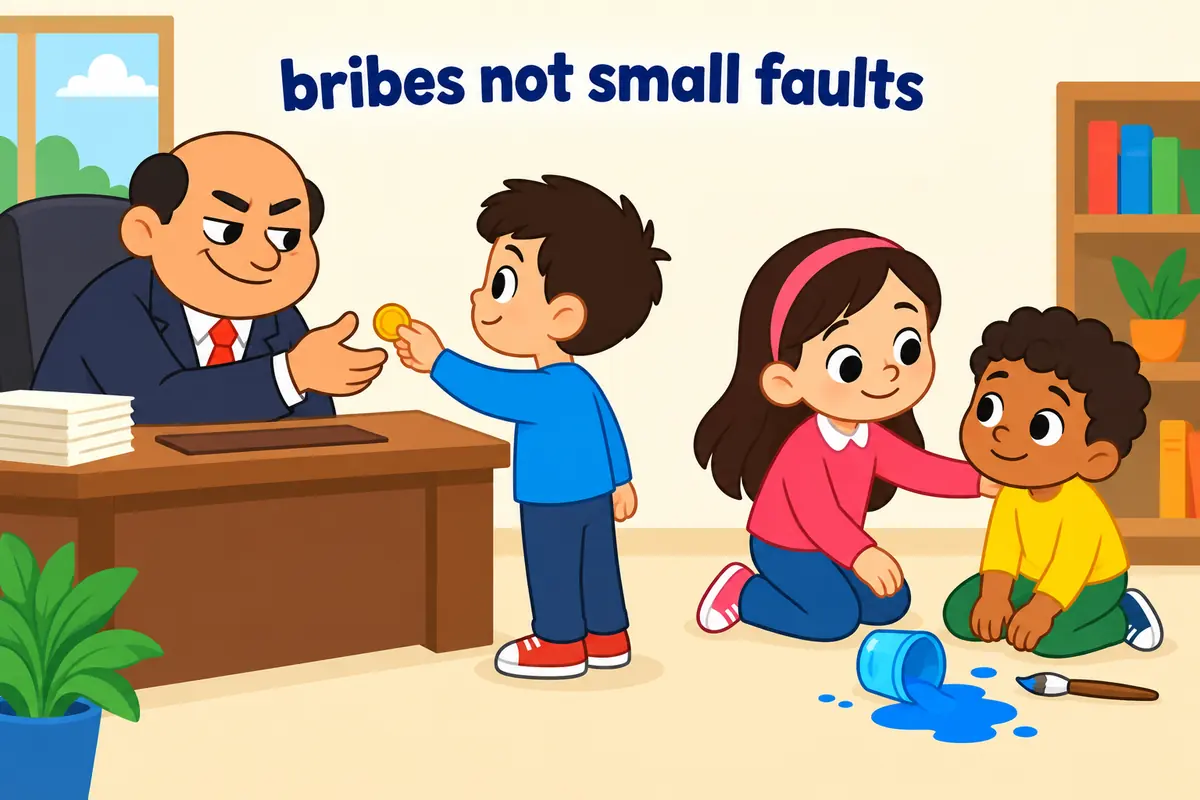
- Incorrect:
The teacher called the small fault a venal sin.Correct: The teacher called the small fault a venial sin. Rule: Venial means a minor, pardonable fault; venal means open to bribery. - Incorrect:
The judge was genial to bribes.Correct: The judge was venal. Rule: Genial means friendly and warm, so it cannot describe taking money. - Incorrect:
The film was venal and dull.Correct: The film was banal and dull. Rule: Banal means unoriginal; a film has no office to sell. - Incorrect:
The venally official took the envelope.Correct: The venal official took the envelope. Rule: Venal is the adjective, so it modifies the noun; venally is the adverb. - Incorrect:
His venality was clearly venal.Correct: His venality was obvious. Rule: Venality is a noun, so it cannot be described by the adjective built from the same root.
Practice using venal
Work through the six items, then check the reasoning rather than only the answer.
- Fill the gap: The inquiry described a ______ inspector who took payments for ignoring faults.
- Choose the better word: Forgetting one name from a list is a (venal / venial) error.
- Correct the error: The town grew genial as offices were openly sold.
- Build a sentence: use venal bargain about a permit granted for money.
- Spot the register: which belongs in a news report – A venal councillor took payments, or The councillor was, like, super greedy?
- Rewrite with the noun: The officials were venal. Use venality instead.
Answers
- venal – the inspector sells a duty, so the adjective for bribery fits.
- venial – a small, pardonable slip is venial; venal would accuse someone of bribery.
- The town grew venal as offices were openly sold – genial means friendly and cannot describe corruption.
- Model answer: The permit was a venal bargain, paid for in secret.
- A venal councillor took payments – a report stays precise and avoids slang.
- The venality of the officials was plain – the noun names the quality itself.
The bottom line
Use venal in a sentence to accuse someone of trading a public duty for money, and keep it before the person or act it judges. The word is narrower than corrupt and quite different from venial, so one letter decides whether you describe a bribe or a small fault. Where the abuse is broader than cash, greedy for power or corrupt is closer to what you mean.
Frequently asked questions about venal
Is venal a formal word?
Yes. Venal belongs to journalism, political writing and history, where a single adjective carries a serious charge. In everyday speech people usually say that someone took a bribe or is corrupt. The formal tone is part of why venal appears so often in headlines about officials.
Does venal mean greedy?
Only partly. Greedy describes a general wish for more, while venal ties that wish to a duty that can be sold. A shopkeeper can be greedy without being venal, because no public trust is involved. Venal always implies that a position of trust was traded for money.
What is the noun form of venal?
The noun is venality, meaning the quality of being open to bribery. It names the trait rather than a single act, so a report might expose widespread venality rather than one payment. The adverb form is venally, as in he acted venally for years.
Can a system or body be venal?
Yes, when the people inside it are open to bribes, although the word most often describes individuals. A venal council means a council whose members take money for favours. For an impersonal system, corrupt or rigged is often the clearer choice, since a system cannot accept a bribe itself.
Have you ever encountered a venal individual in your life? The term “venal” describes someone who is willing to betray their principles or sell their services for personal gain. It often connotes corruption, dishonesty, and a lack of morals.
In example sentences, the word “venal” can be used to highlight instances of bribery, fraud, or other unethical behavior. Keep reading to discover how this word can be effectively integrated into your vocabulary to better articulate and recognize instances of moral compromise.
7 Examples Of Venal Used In a Sentence For Kids
- The venal man promised to do anything for money.
- The greedy fox in the story was very venal.
- It is important to always be honest and not be venal.
- The princess learned that true friends are not venal.
- The venal merchant tried to cheat the villagers.
- The wise old owl warned the young animals about being venal.
- Sharing with others is better than being venal and selfish.
14 Sentences with Venal Examples
- Venal behavior among students during examinations is strictly against academic integrity.
- It is important for college students to avoid engaging in venal activities such as cheating or plagiarism.
- The consequences of being caught participating in venal behavior can have a lasting impact on a student’s academic career.
- Academic institutions often have strict policies in place to deter students from resorting to venal practices.
- Students should prioritize honesty and integrity over venal shortcuts to success.
- Seeking help from tutors or professors is a better alternative to resorting to venal methods to improve grades.
- The pressure to excel academically can sometimes lead students to consider venal actions, but it’s important to resist that temptation.
- Participating in venal activities undermines the hard work and dedication put into pursuing higher education.
- College students should be encouraged to report instances of venal behavior to maintain a fair and ethical learning environment.
- Expelling students who engage in venal behavior sends a strong message that academic dishonesty will not be tolerated.
- The prevalence of venal behavior can erode the credibility and reputation of educational institutions.
- Students should take pride in their academic achievements and not tarnish their records with venal actions.
- The pursuit of knowledge should be driven by a genuine desire to learn, not by venal motives.
- Academic success achieved through venal means is ultimately hollow and devoid of true accomplishment.
How To Use Venal in Sentences?
Venal means capable of being bought or corrupted. To use the word venal in a sentence, you can say something like, “The government official was accused of being venal after accepting bribes from the construction company.”
Another example could be, “The company’s reputation suffered when it was revealed that its CEO was involved in venal activities.”
When using venal in a sentence, make sure the context is appropriate and clear so that the meaning is easily understood. It is important to note that venal is often used in a negative light to describe individuals or actions that are motivated by greed or dishonesty.
Try incorporating venal into your writing to expand your vocabulary and convey more nuanced meanings. By using words like venal, you can add depth and complexity to your sentences, making your writing more engaging and impactful.
Conclusion
In conclusion, the examples provided clearly illustrate the concept of venality, where individuals prioritize personal gain over moral principles. These sentences showcase how corruption, bribery, and dishonesty are prevalent in society, leading to unethical behaviors and decisions in various contexts. By highlighting instances of venal conduct, it becomes apparent that the pursuit of self-interest at the expense of integrity can have damaging consequences on individuals and institutions alike.
Understanding the implications of venality is crucial in combating unethical behavior and promoting a culture of honesty and accountability. By recognizing and addressing the root causes of venal actions, steps can be taken to uphold ethical standards, integrity, and transparency in all spheres of life. Ultimately, by fostering a commitment to ethical conduct, we can work towards building a more just and trustworthy society.


