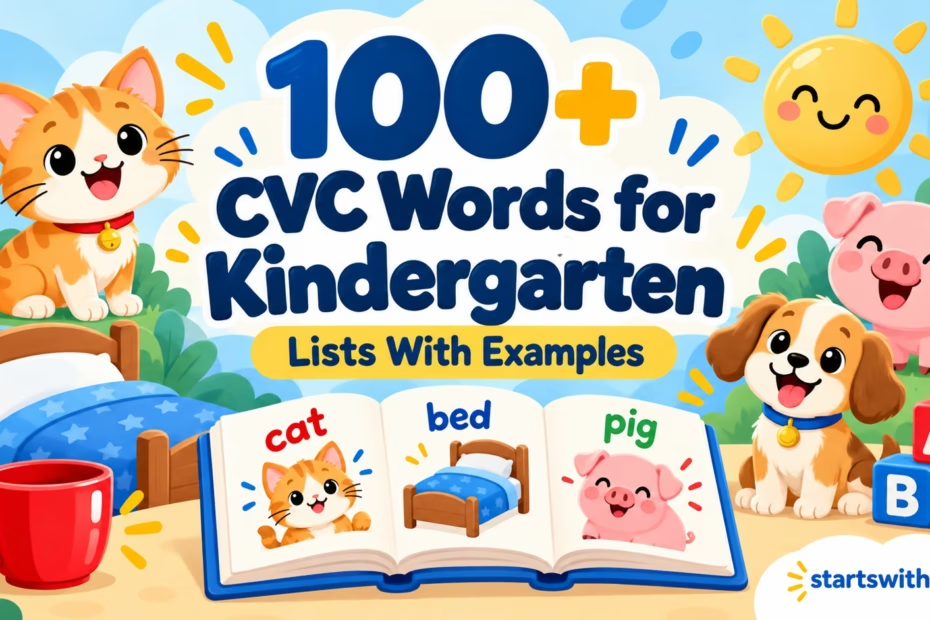
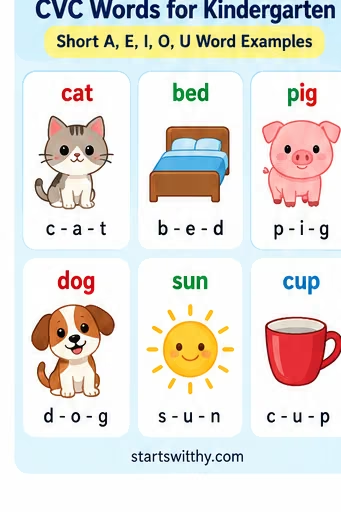
CVC words for kindergarten are words following a consonant-vowel-consonant pattern, usually three written letters representing three sounds with a short vowel. Cat, bed, pig, dog, and sun help new readers practice blending individual sounds into words and spelling the sounds they hear.
Key facts
- CVC means consonant-vowel-consonant.
- Cat is /k/ /a/ /t/: three letters and three phonemes.
- Short A, E, I, O, and U groups make a useful teaching sequence.
- Word families help children transfer a known spelling pattern to a new word.
Why are CVC words useful?
Students connect individual written letters to phonemes, then blend those sounds into words. They can also segment spoken words back into their sounds to spell them. Start with letters the child already knows, then progress to new word families. CVC work supports decoding, not just memorizing printed shapes.
Short A CVC words
- Bad
- bag
- ban
- bat
- cab
- can
- cap
- cat
- dad
- dam
- fan
- fat
- gap
- gas
- had
- ham
- hat
- jam
- lap
- mad
- man
- map
- mat
- nap
- pad
- pal
- pan
- pat
- rag
- ram
- ran
- rap
- rat
- sad
- sag
- sat
- sap
- tag
- tan
- tap
- van
- vat
- wax
- yam
- zap
Word families: -at (bat, cat, fat, hat, mat, pat, rat, sat); -an (ban, can, fan, man, pan, ran, tan, van); -ap (cap, gap, lap, map, nap, rap, sap, tap). Example: “The cat sat on the mat.”
Short E CVC words
- Bed
- beg
- bet
- den
- fed
- get
- hem
- hen
- jet
- led
- leg
- let
- men
- met
- net
- pen
- pet
- red
- set
- ten
- vet
- web
- wed
- wet
- yes
- yet
Families include -ed, -eg, -en, and -et. Build pen → hen → ten → den and read each word aloud.
Short I CVC words
- Bib
- bid
- big
- bin
- bit
- did
- dig
- dim
- dip
- fig
- fin
- fit
- fix
- him
- hip
- hit
- jig
- kid
- lid
- lip
- lit
- mix
- nip
- pin
- pig
- pit
- rib
- rid
- rig
- rim
- rip
- sit
- sip
- six
- tin
- tip
- win
- wit
- zip
Practice -ig, -in, -ip, -it, and -id families. Example: “The pig is big.”
Short O CVC words
- Bob
- bog
- box
- cob
- cod
- cog
- cop
- cot
- dot
- dog
- fog
- fox
- got
- hog
- hop
- hot
- job
- jog
- log
- lot
- mob
- mop
- nod
- not
- pod
- pop
- pot
- rob
- rod
- rot
- sob
- sod
- top
Examples: “The dog can hop” and “The log is hot.” Short-O pronunciation varies across English accents.
Short U CVC words
- Bud
- bug
- bun
- bus
- but
- cub
- cud
- cup
- cut
- dug
- fun
- gum
- gut
- hug
- hum
- hut
- jug
- mug
- mud
- mum
- nut
- pub
- pup
- rub
- rug
- run
- sun
- sub
- sum
- tub
- tug
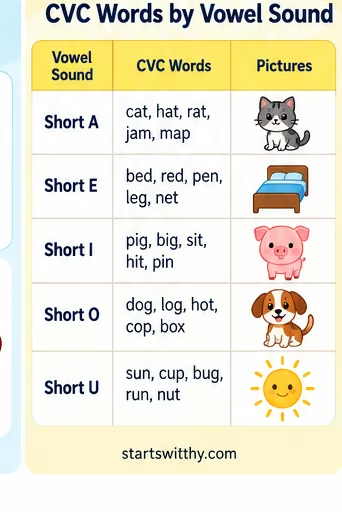
Build the -ug family using bug, dug, hug, jug, mug, rug, and tug.
How should you teach CVC words?
- Review each individual consonant and short-vowel sound.
- Model oral blending, such as /m/ /a/ /t/ → mat; avoid adding an extra “uh” after consonants.
- Point to the written letters as you blend the sounds.
- Change one letter at a time: mat → sat → pat → cat.
- Ask the learner to segment a spoken word and write one letter for each sound.
- Read a short sentence containing familiar decodable words.
Five classroom activities
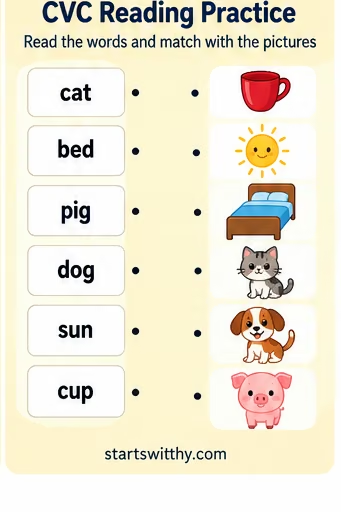
Build words with magnetic letters or cards. Sort picture cards by their middle vowel. Match word-family endings to initial consonants. Move one counter into each of three sound boxes, then replace the counters with letters. Finish missing-letter cards such as C _ T and P _ G. Move from two vowel categories to all five once students can reliably distinguish them.
Common mistakes
Avoid asking children to memorize entire printed word shapes without sound blending. Do not introduce all five unfamiliar short vowels at once. Also distinguish three-letter CVC words such as cat from words with digraphs such as ship or silent-E words such as cake.
Frequently asked questions
Are CVC words always three letters?
In introductory phonics, CVC usually names three-letter words such as cat and sun. Advanced descriptions sometimes refer to a three-phoneme pattern, which requires distinguishing letters from sounds.
Is “the” a CVC word?
No. TH is a digraph, and the word does not follow the beginner short-vowel CVC spelling pattern.
How many CVC words should a kindergartener know?
There is no universal target. Accurate decoding of newly encountered words is more useful than memorizing a fixed list.
Conclusion
CVC words for kindergarten are a foundation for blending, decoding, spelling, and reading simple sentences. Work from familiar sounds and word families toward increasingly independent reading.