Usury in a Sentence: Meaning, Examples & Practice
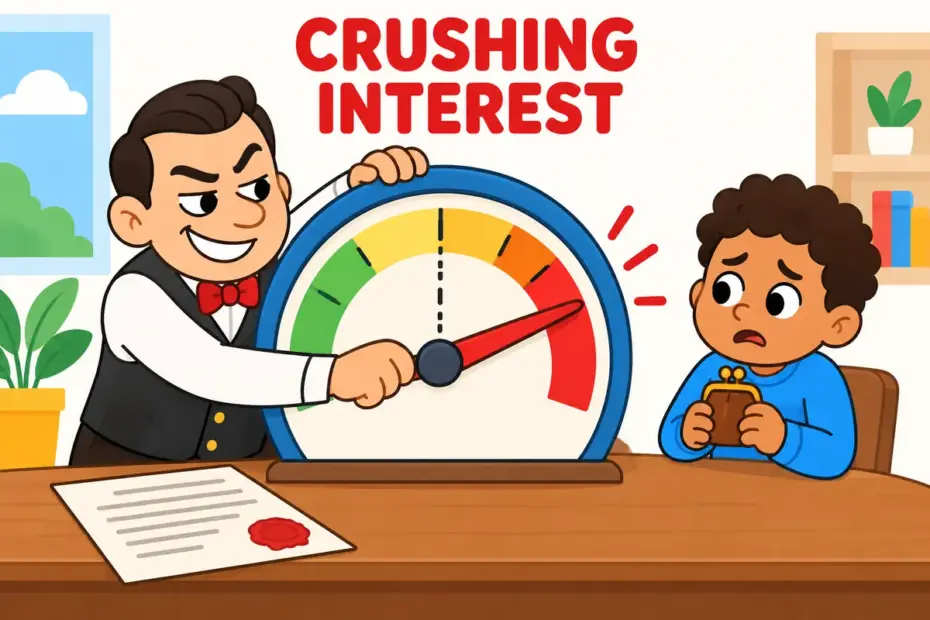
Usury is the practice of lending money at an unreasonably high rate of interest, and in older use it meant charging any interest on a loan. To use usury in a sentence, name the lending and the excessive charge, as in the lender was condemned for usury, because the noun carries a moral judgement as well as a financial one.
Usury at a glance
- Usury is an uncountable noun, so it takes no article: charging usury, never a usury.
- Its meaning is a moral and legal one: interest that is considered excessive or unfair.
- Its relatives are the person usurer and the adjective usurious, as in usurious rates.
- Common collocations are usury laws, the sin of usury and a rate condemned as usury.
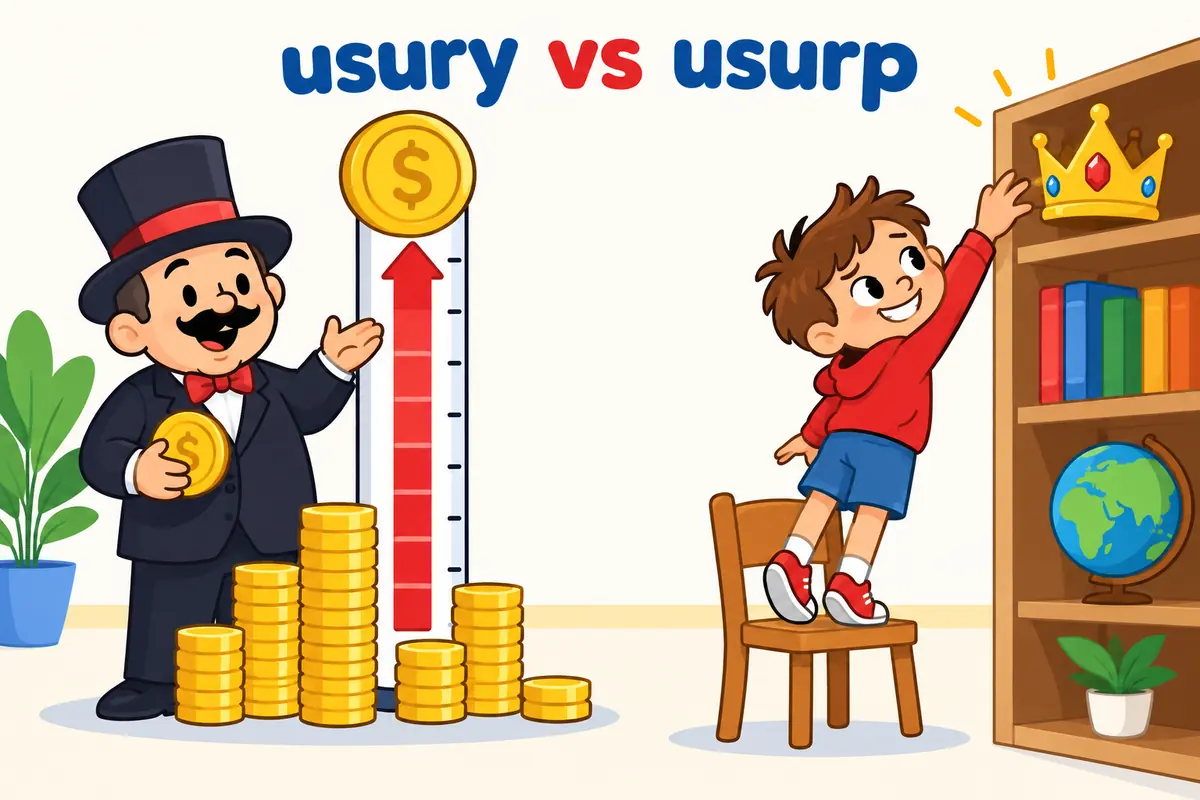
- The commonest error is confusing usury with usurp, which means to seize power or a position by force.
- The register is formal, historical and legal, which is why it clusters in law, theology and news about debt.
What does usury mean?
Usury is an uncountable noun meaning the lending of money at an interest rate considered unreasonably high, or historically any charge for a loan. The Cambridge entry for usury records the modern sense of excessive interest alongside the older religious sense, and the word always passes a judgement: a lawful rate is merely interest, while usury is interest that society decides has gone too far. A payday lender charging several hundred per cent a year is accused of usury, and a medieval court that banned profit on any loan enforced the older meaning. Where the point is the size of the charge rather than its legality, exorbitant describes the rate, while usury names the offence.
| Sense | Plain meaning | Example sentence |
|---|---|---|
| Excessive interest | Lending at a rate judged unfair or predatory | The lender was accused of usury for charging four hundred per cent. |
| Any interest (historical) | Charging anything at all for the use of money | Old church law treated all usury as a sin. |
| Usurious practice | The wider trade of exploiting borrowers | Reformers campaigned against usury in the poorest districts. |
One limitation is worth stating plainly. Usury is not simply any interest, so it should never be used for a normal, regulated loan. It is also uncountable, which means it cannot take a number or a plural, and it describes the practice rather than a single fee. When you only mean a very large sum charged, greed names the motive and exorbitant names the price, but neither carries the specific legal accusation that usury does.
How do you use usury in a sentence?
The noun fits a small number of frames, and because it is uncountable it never takes an article. Five patterns cover almost every real use.
| Pattern | Example | What it signals |
|---|---|---|
| charge / practise usury | The firm was found to have practised usury. | Takes no article because the noun is uncountable. |
| accused of usury | The moneylender was accused of usury. | The offence is named after the preposition of. |
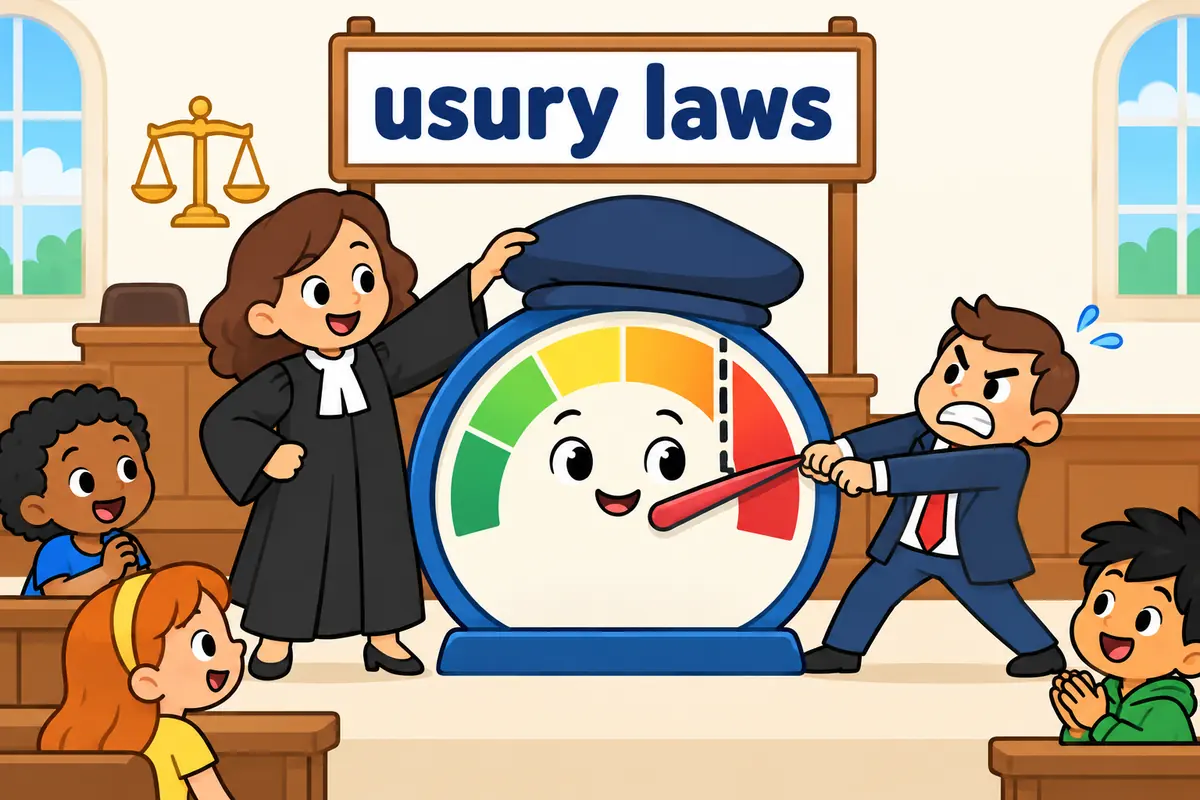
| usury laws | Strict usury laws cap the interest a lender may charge. | The noun works attributively before a legal term. |
| condemn / ban usury | Reformers tried to ban usury outright. | A moral or legal judgement is the subject. |
| labelled / called usury | Anything above that cap was labelled usury. | The word appears as the verdict in a passive frame. |
The absence of an article is the detail most learners miss. Because usury is uncountable and abstract, the natural sentence is the merchant was guilty of usury, and a usury or several usuries always sounds wrong. The adjective usurious is the form that takes a countable noun, as in usurious interest rates.
Usury in a sentence: examples across contexts
The noun keeps its sense of an excessive charge while the setting changes. The ten sentences below move from a classroom to a courtroom, and each shows the word naming a practice rather than a single payment.
| Context | Example sentence | Why this works |
|---|---|---|
| Classroom | The history lesson explained why medieval law called all usury a sin. | Uses the older sense of any charge on a loan. |
| News report | Campaigners say the payday lender profits from usury. | Names the trade as a moral accusation. |
| Legal writing | The statute defines usury as interest above the permitted ceiling. | Ties the word to a legal limit. |
| Economics | Economists debate whether tight usury laws reduce access to credit. | Uses the fixed phrase usury laws. |
| Personal finance | Borrowers trapped by usury often cannot repay the principal. | Shows the harm the practice causes. |
| Theology | Older teaching treated usury as a sin against charity. | The historical religious sense in context. |
| Conversation | My grandmother called that interest rate plain usury. | Everyday moral judgement with no article. |
| Banking history | Early banks avoided usury by charging fees instead of interest. | Shows how lenders once evaded the charge. |
| Reported speech | The regulator described the scheme as usury dressed up as credit. | Contrasts the polite label with the accusation. |
| Politics | Both parties promised to tighten laws against usury. | Shows the word in policy debate. |
Only a few rows mention a figure, because usury is about proportion and fairness rather than one number. A debt becomes the subject when the discussion turns to who is crushed by the charge, and credit is the neutral term for the same borrowed money.
Usury vs interest
Usury and interest name the same charge, and only the judgement separates them. Interest is the neutral, lawful price of borrowing, while usury is interest that has been condemned as excessive or predatory, so the second word is always an accusation.
| Attribute | usury | interest |
|---|---|---|
| Core meaning | Excessive or unfair charge for a loan | The ordinary price of borrowing money |
| Judgement | Condemnatory; a moral and legal wrong | Neutral; a normal commercial term |
| Countability | Uncountable: charging usury | Countable and uncountable: an interest rate |
| Typical partner | laws, sin, accuse, condemn | rate, payment, rise, fall |
| Register | Legal, historical and religious | Everyday, financial and academic |
Verdict: use interest for any lawful charge and reserve usury for a rate you are calling unfair, because choosing usury turns a financial statement into a moral one. The adjective exorbitant sits between the two, describing an outrageous price without naming a legal offence.
Word forms and grammar of usury
Usury has a small family, and the forms are easy to keep apart once you know which one is a person and which is an adjective. The look-alike usurp is unrelated in meaning even though the spellings nearly meet.
| Form | Part of speech | Example |
|---|---|---|
| usury | noun, uncountable | The law was passed to suppress usury. |
| usurer | noun, a person | The usurer demanded repayment within a week. |
| usurious | adjective | The court struck down the usurious rate. |
| usuriously | adverb, rare | The loan was usuriously priced. |
| usury laws | fixed noun phrase | Usury laws cap the interest lenders may charge. |
| usurp | verb, different meaning | A general may usurp the throne, but he charges no interest. |
The person who lends at usury is a usurer, and the rate itself is usurious, so the three forms divide cleanly between the practice, the person and the quality. Only the rare adverb, usuriously, tends to sound forced in modern writing.
Common mistakes with usury
- Incorrect:
The bank charged a usury of thirty per cent.Correct: The bank charged usurious interest of thirty per cent. Rule: usury is uncountable and never takes an article or a number. - Incorrect:
He tried to usury the throne from his brother.Correct: He tried to usurp the throne from his brother. Rule: usurp means to seize power, while usury concerns lending at excessive interest. - Incorrect:
They usured the villagers.Correct: They practised usury on the villagers. Rule: usury is a noun, so it needs a verb such as practise or charge. - Incorrect:
Several usuries were recorded.Correct: Several acts of usury were recorded. Rule: the noun has no plural, so the act must be counted with a phrase such as acts of. - Incorrect:
Any interest at all is usury.Correct: Only interest above a fair or legal limit is usury. Rule: the modern sense demands excess, so ordinary interest is not usury.
Practice using usury
Work through the seven items below, then read the reason with each answer. Related financial words such as shark and the neutral term interest appear among the choices.
- Fill the gap: The regulator accused the lender of ______.
- Choose the better word: A fair rate is called interest, but an unfair one may be called (usury / credit).
- Correct the error: The king tried to usury the crown from his nephew.
- Build a sentence: use usury with a word such as laws to describe a legal limit on interest.
- Spot the register: which fits a courtroom report — the lender was guilty of usury, or the lender was a total usury?
- Change the form: The judge described the rate as ______. Use the adjective.
- Choose the count: Is usury countable or uncountable?
Answers
- usury — the practice is named after of, and the noun takes no article.
- usury — the charge is being condemned as excessive, which is exactly the accusation.
- The king tried to usurp the crown from his nephew — seizing power is usurp, not usury.
- Model answer: Usury laws cap the interest that lenders may charge.
- the lender was guilty of usury — a formal report keeps the uncountable noun and never calls a person a usury.
- usurious — the adjective describes the rate itself.
- uncountable — it takes no article and no plural, so you say acts of usury.
The bottom line
Use usury in a sentence to condemn money lent at an excessive or predatory rate, and remember that the noun is uncountable, so it never takes an article or a plural. The two details that settle most sentences are that usury is a moral and legal judgement rather than a neutral figure, and that it must never be confused with usurp, which is about seizing power. For the ordinary price of borrowing, choose interest, and save usury for the charge you mean to accuse.
Frequently asked questions about usury
What does usury mean?
Usury means lending money at an interest rate considered unreasonably high, and in older use it meant charging any interest at all. The modern word is a judgement as much as a description, so it accuses the lender of exploitation. It stays uncountable, so you say guilty of usury, never a usury.
Is usury illegal?
In many places usury is illegal, but the exact limit is set by local law rather than by the word itself. Usury laws define a maximum rate, and anything above it may be struck down or punished. In everyday speech, however, usury can be used as a moral accusation even when no law is broken.
What is the difference between usury and interest?
Interest is the neutral price charged for borrowing money, while usury is that charge when it is judged excessive or predatory. A bank earns interest; a lender condemned for exploitation is accused of usury. The difference is not the arithmetic but the judgement, which is why usury turns a financial fact into a moral claim.
What is a person who commits usury called?
A person who lends at usury is called a usurer, and the rate itself is described as usurious. So the practice is usury, the practitioner is a usurer, and the charge is usurious interest. Keeping the three forms apart is the quickest way to sound precise in legal or historical writing.