
Adjectives for Army: Precise Words and Examples
Useful adjectives for army include disciplined, well-trained, large, professional, formidable, exhausted, and disorganized. Each describes a different quality: training, size, organization, strength, or condition. Choose the feature your sentence needs, then support evaluative words such as formidable with context instead of assuming every army deserves the same description.
- Disciplined emphasizes orderly conduct and self-control.
- Well-trained concerns preparation and practiced skills.
- Large describes size rather than effectiveness.
- Formidable suggests strength that inspires respect or concern.
- Exhausted describes condition rather than permanent identity.
Which adjectives describe an army most clearly?
The clearest adjective identifies the attribute you want to discuss. Use large or small for size, disciplined or disorganized for conduct and organization, and well-trained or inexperienced for preparation. These words are alternatives for different meanings rather than a ranked list of universal compliments.
| Example sentence | Pattern |
|---|---|
| A disciplined army | Conduct and self-control. |
| A well-trained army | Preparation and practiced skills. |
| A large army | Size. |
| A formidable army | Evaluated strength or difficulty to oppose. |
| An exhausted army | Temporary physical condition. |
| A disorganized army | Weak organization. |
| A well-equipped army | Available equipment. |
| A retreating army | Movement away from a position. |
Training and organization adjectives
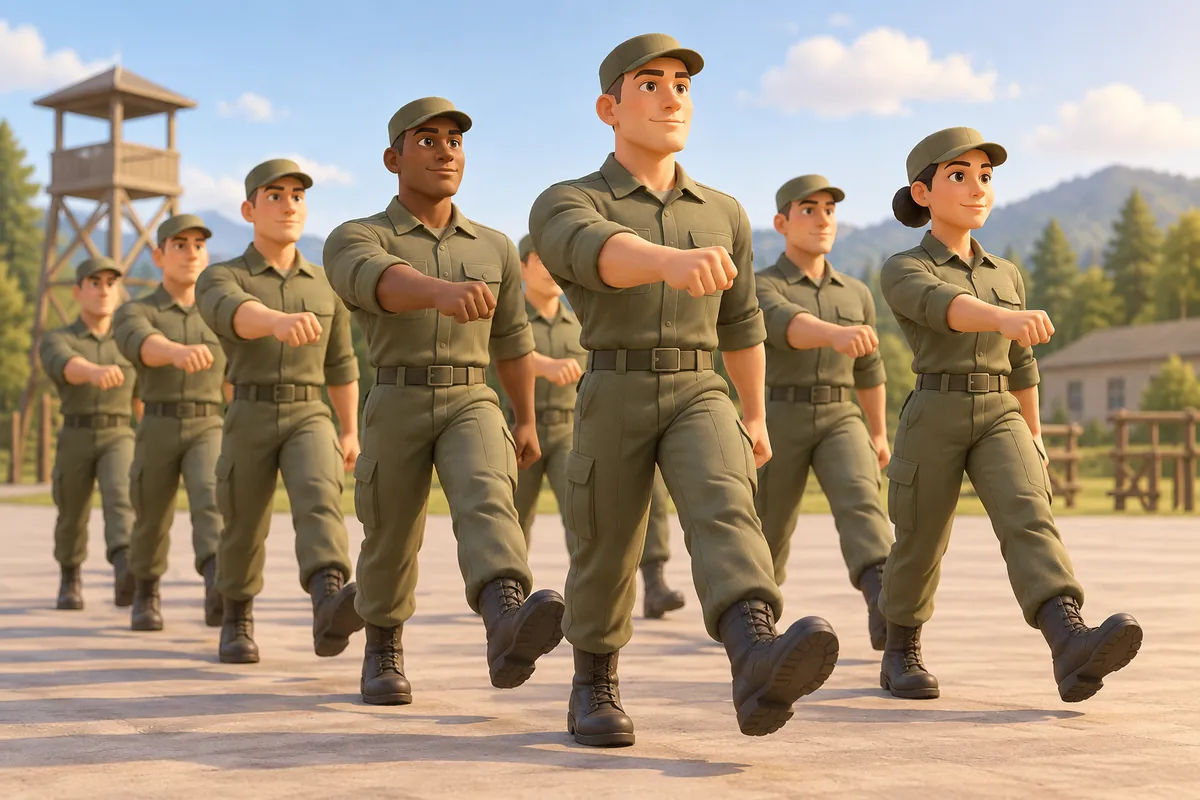
Disciplined, well-trained, coordinated, organized, professional, and experienced can describe different aspects of an army. A disciplined army follows standards of conduct; a well-trained army has practiced relevant skills. Organized emphasizes structure, while coordinated emphasizes activities working together.
Professional can describe a paid or career force, or evaluate standards, depending on context. Experienced describes prior exposure to the relevant work; it does not guarantee that every member is equally skilled. For precise writing, state the basis: “The well-trained army rehearsed the evacuation procedures” connects the adjective to an observable activity.
Size, strength, and resources
Large, small, sizeable, formidable, well-equipped, and under-resourced describe size or capability-related features. Large concerns quantity, while formidable evaluates how difficult a force may be to oppose or overcome. The words do not make the same claim.
A large army is not automatically well-equipped, and a small army is not automatically ineffective. “The well-equipped army had the vehicles needed for the relief operation” identifies a specific resource context. Avoid turning an adjective into an unsupported comparison of real military forces. A vocabulary example can explain a meaning without making a geopolitical ranking.
Condition, morale, and movement
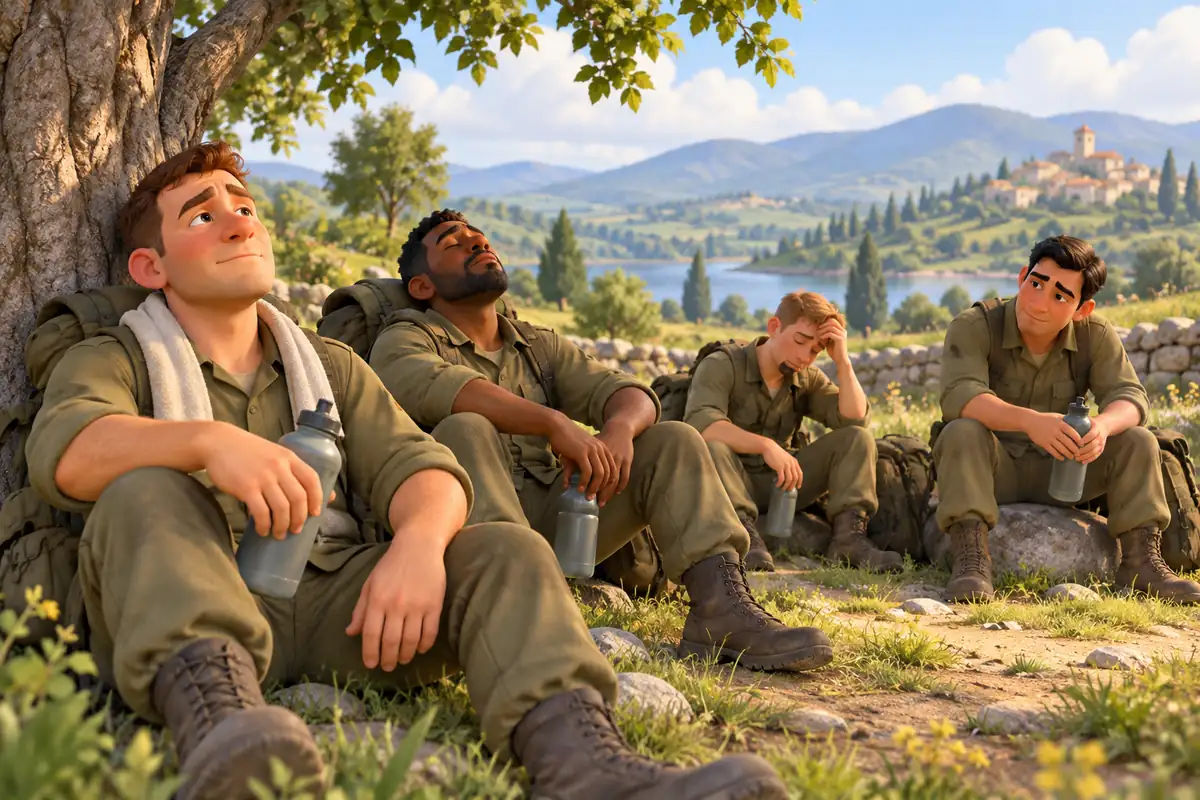
Exhausted, weary, rested, demoralized, determined, advancing, and retreating can describe a force’s condition or situation. Exhausted emphasizes fatigue; demoralized concerns reduced confidence or morale. Advancing and retreating describe movement rather than how brave or skilled the people are.
“The exhausted army paused after the long march” gives a cause and consequence. “The retreating army crossed the bridge” names a movement without asserting why it happened. Do not assume that a situational adjective states a permanent quality or explains the decision behind the event.
Positive, neutral, and critical descriptions
Positive descriptions such as capable or resilient evaluate performance or response to difficulty. Neutral words such as large or regional may identify a feature without praising it. Critical descriptions such as disorganized or poorly equipped identify weaknesses that should have support in factual writing.
Brave concerns courage and should not be inferred from size, equipment, or success alone. Loyal needs a clear object when allegiance matters: loyal to whom or what? In a fictional story, the narrator may make an evaluation directly. In a factual report, specific behavior or evidence helps readers assess the adjective.
How do you put adjectives before army?
Place the adjective before army or after a linking verb: “a disciplined army” and “The army was disciplined.” A compound such as well-trained is normally hyphenated before the noun. An adverb ending in -ly does not usually need that hyphen: “a highly trained army.”
Avoid piling several vague adjectives together. “A large, brave, amazing, powerful army” mixes attributes without showing their relevance. “A large, well-equipped army” identifies two separate features more clearly. For adjectives for army, start with the precise attribute, then add a second descriptor only if it contributes another needed fact.
Practice writing your own sentence
- Choose a subject: a person, animal, object, or group.
- Decide whether the event is present, past, or connected to the present.
- Add the verb form and a meaningful completion.
- Read the sentence aloud and check what the verb describes.
Try changing one detail at a time. Replace the subject first, then the time expression, and check whether the verb must change. This keeps the meaning stable while making the grammatical difference visible. Compare your new sentence with the examples rather than copying a pattern whose meaning you do not understand.
Sources and usage references
- Oxford Learner’s Dictionaries: army: Army as an organized military force and collocations.
- Collins Dictionary: formidable: Powerful or impressive quality rather than a simple synonym for large.
Frequently asked questions
Is military an adjective for army?
Military is an adjective, but “military army” is usually redundant because army already names a military force. Use military with nouns where the distinction matters, such as military training or military vehicles. When describing an army itself, choose a feature such as size, training, equipment, organization, or condition.
What is a child-friendly adjective for army?
Large is a simple choice because it describes size: “The large army marched past the town.” Brave is also familiar, but it evaluates courage rather than a visible count or formation. Explain what each word describes, and use fictional or general examples when a real-world claim is unnecessary.
Are powerful and large the same description?
No. Large describes size, while powerful describes capability or influence. An army might be large yet poorly supplied, or smaller yet effective in a particular context. If your sentence concerns numbers, choose large. If it concerns capability, name the relevant strength rather than assuming size alone proves it.
Can I describe an army as exhausted?
Yes. “The exhausted army rested after the march” describes a condition at a particular time. The adjective does not claim that the force is always weak or unprepared. Add a cause or time reference when needed, and distinguish physical fatigue from low morale, which demoralized expresses more directly.
More examples and sentence practice
When it comes to describing the army, we often think of words like strong, disciplined, and brave. But there are so many more adjectives that can capture the essence of this powerful and dedicated force. In this article, I’ll be exploring a wide range of adjectives that can be used to describe the army, along with examples to illustrate their usage. Whether you’re writing a military-themed story or simply want to appreciate the qualities of our armed forces, these adjectives will help you paint a vivid picture.
From the unwavering courage of soldiers to the strategic brilliance of commanders, the army is a testament to human resilience and determination. In this article, I’ll be delving into adjectives that capture the various aspects of the army, including their physical prowess, mental fortitude, and unwavering loyalty. With examples that showcase the real-life heroes who embody these qualities, you’ll gain a deeper appreciation for the sacrifices and triumphs of our military personnel. So let’s dive in and explore the rich tapestry of adjectives that describe the army.
How to Describe army? – Different Scenarios
When it comes to describing the army, there are several adjectives that can capture their various characteristics and qualities. Depending on the scenario or context, different adjectives can be used to highlight specific aspects of the army. Let’s take a closer look at how we can describe the army in different scenarios:
- Physical Prowess
- Mental Fortitude
- Unwavering Loyalty
- Heroic Actions
Remember, depending on the scenario or context, these adjectives can be combined to create a more comprehensive description of the army. Whether it’s highlighting their physical prowess, mental fortitude, unwavering loyalty, or heroic actions, these adjectives help capture the essence of the army and portray them in a positive light.
Describing Words for army in English
When it comes to describing the army, there are numerous adjectives that capture their qualities, characteristics, and accomplishments. These words paint a vivid picture of the brave men and women who serve their country. Let’s explore some adjectives that aptly describe the army.
Physically Strong and Fit
- Powerful: The army is a force to be reckoned with, possessing immense power.
- Tireless: Soldiers endure intense physical training and can push their bodies to the limit.
- Determined: The army’s physical strength is matched by their unwavering determination.
Mentally Resilient
- Brave: The army faces danger head-on, exemplifying bravery in the face of adversity.
- Cunning: Soldiers possess sharp minds to strategize and outsmart the enemy.
- Adaptable: In ever-changing situations, the army quickly adjusts their tactics and approaches to overcome challenges.
Unwavering Loyalty
- Devoted: Soldiers display unwavering loyalty to their fellow comrades and their country.
- Patriotic: The army’s love for their nation shines through in their every action.
- Selfless: Soldiers put the needs of their country before their own, showcasing true selflessness.
Heroic Actions
- Courageous: The army showcases tremendous bravery when they put their lives on the line.
- Honorable: Soldiers uphold values such as integrity, honor, and respect for others.
- Noble: The army’s actions reflect a deep sense of dignity and moral nobility.
Harnessing the Power of Adjectives
These adjectives can be combined to create a more comprehensive and impactful description of the army. For example, we can say that the army is powerful, tireless, and brave, highlighting their physical strength, unwavering dedication, and bravery in the face of danger.
Describing the army using these adjectives helps us better appreciate their sacrifices and commend their commitment to serving their country.
So, the next time you want to describe the army, remember the wide range of adjectives that capture their essence. They are powerful, determined, brave, and so much more, embodying the characteristics and values we admire and respect.
Remember, these adjectives should not just be words but a reflection of the immense admiration and gratitude we have for the men and women in the army.
Adjectives for army
Positive Adjectives for Army with 12 Example Sentences
When it comes to describing the army, there are numerous positive adjectives that come to mind. Here are twelve examples that showcase the admirable qualities of our brave soldiers:
- Brave: Soldiers in the army display incredible bravery in the face of danger.
- Dedicated: The army is made up of individuals who are deeply committed to their mission.
- Disciplined: The soldiers undergo rigorous training to maintain high levels of discipline.
- Resilient: Even in challenging circumstances, the army shows remarkable resilience.
- Courageous: The army demonstrates courage by taking on difficult tasks to protect our country.
- Honorable: The soldiers in the army uphold a strong sense of honor and integrity.
- Selfless: Army personnel put the needs of others before their own in selfless acts.
- Loyal: The army stands by its comrades and the values they uphold, showing unwavering loyalty.
- Adaptable: Army members are quick to adapt to changing situations and environments.
- Skilled: The army consists of highly skilled individuals who excel in their specialized areas.
- Respectful: Soldiers in the army show respect to their superiors, peers, and the people they serve.
- Patriotic: The army’s deep love for their country is evident in their unwavering commitment.
Table: Positive Adjectives for Army
| Adjective | Definition | Example Sentence |
|---|---|---|
| Brave | Showing courage in the face of danger | Soldiers in the army are brave. |
| Dedicated | Committed and devoted to a task or mission | The army is dedicated and focused. |
| Disciplined | Showing controlled behavior and obedience | The soldiers are disciplined. |
| Resilient | Able to recover quickly from difficult situations | The army is resilient and strong. |
| Courageous | Displaying bravery and valor | The army is courageous in battle. |
| Honorable | Having a strong moral character | Soldiers in the army are honorable. |
| Selfless | Concerned more with the needs of others | The army’s acts are selfless. |
| Loyal | Showing allegiance and faithfulness | Army members are loyal and committed. |
| Adaptable | Capable of adjusting to new situations | The army is adaptable and flexible. |
| Skilled | Possessing expertise and proficiency | The soldiers are skilled and trained. |
| Respectful | Showing admiration and esteem for others | The army is respectful and polite. |
| Patriotic | Exhibiting love and devotion to one’s country | The army is patriotic and proud. |
Negative Adjectives for Army with 5 Example Sentences
While the army is undoubtedly admirable, there are also negative adjectives that can be used to describe certain aspects. Here are five examples:
- Overbearing: At times, the army’s authority may be perceived as overbearing.
- Rigid: The army has strict rules and regulations that can be seen as rigid.
- Aggressive: In times of conflict, the army’s role may require aggressive action.
- Invasive: Army operations can sometimes be seen as invasive by certain groups.
- Restrictive: The army’s policies can sometimes be perceived as restrictive.
| Adjective | Definition | Example Sentence |
|---|---|---|
| Overbearing | Exercising excessive authority or control | The army’s actions can be overbearing. |
| Rigid | Strictly adhering |
Synonyms and Antonyms with Example Sentences
Synonyms for army
When describing the army, there are various synonyms that can be used to highlight its admirable qualities. Here are some synonyms for the word “army”:
- Military: The military is tasked with protecting the nation.
- Soldiery: The brave soldiery fought valiantly in battle.
- Force: The force exhibited by the army is awe-inspiring.
- Troops: The troops showcased incredible discipline and dedication.
- Armed Forces: The armed forces play a vital role in national security.
- Militia: The militia came together to defend the town from invaders.
- Warriors: The warriors displayed extraordinary bravery on the battlefield.
- Combatants: The combatants fiercely defended their homeland.
- Defenders: The defenders stood strong against the enemy.
- Battalion: The battalion executed their mission with precision.
- Regiment: The regiment exemplified unity and cohesion.
Here are some example sentences using these synonyms:
- “The military’s commitment to national defense is unwavering.”
- “The brave soldiery charged fearlessly into battle.”
- “The force displayed by the army was formidable.”
- “The troops demonstrated exceptional teamwork and discipline.”
- “The armed forces protect our borders and maintain peace.”
- “The militia volunteers defended their community with courage.”
- “The warriors fought with valor until the enemy was defeated.”
- “The combatants showed unwavering determination to protect their homeland.”
- “The defenders stood their ground against all odds.”
- “The battalion advanced strategically to secure the objective.”
- “The regiment operated as a cohesive unit, supporting one another during the mission.”
Antonyms for army
On the other hand, there are also antonyms that can be used to describe certain aspects of the army. These antonyms can shed light on the negative aspects or challenges faced by the military. Here are some antonyms for the word “army”:
- Disorganization: The army suffered from disorganization, affecting their effectiveness.
- Weakness: The weakness of the army’s leadership led to failures in strategy.
- Chaos: The chaos within the army hindered their ability to respond effectively.
- Defeat: The army experienced a crushing defeat in the battle.
- Surrender: The army was forced to surrender due to overwhelming odds.
Here are some example sentences using these antonyms:
- “The disorganization within the army resulted in confusion and inefficiency.”
- “The weakness of the army’s leadership was evident in their poor decision-making.”
- “The chaos among the ranks compromised their ability to execute orders.”
- “The army faced a devastating defeat against a stronger enemy.”
- “In the face of superior firepower, the army had no choice but to surrender.”
Remember, the army is an essential institution that plays a crucial role in protecting our nations. While it may face challenges at times, it is important to recognize and appreciate the dedication and bravery of the soldiers who serve.
Conclusion
In this article, we have explored a range of adjectives that can be used to describe the army. From positive synonyms like military, soldiery, and armed forces, to negative antonyms like disorganization and weakness, these adjectives provide a comprehensive understanding of the army and its characteristics.
By using descriptive words, we can paint a vivid picture of the army’s admirable qualities, such as their bravery, discipline, and dedication to protecting their nation. At the same time, we acknowledge the challenges they face, such as chaos and defeat.
Understanding the power of language allows us to appreciate the army’s strength and resilience in the face of adversity. By using the right adjectives, we can convey the true essence of what it means to be part of the military.
Whether it is highlighting the army’s courage or acknowledging their struggles, the adjectives discussed in this article provide a valuable tool for expressing our thoughts and feelings about the armed forces.
Remember, words have the power to shape perceptions and inspire action. So, choose your adjectives wisely when describing the army and pay homage to their sacrifices and achievements.


