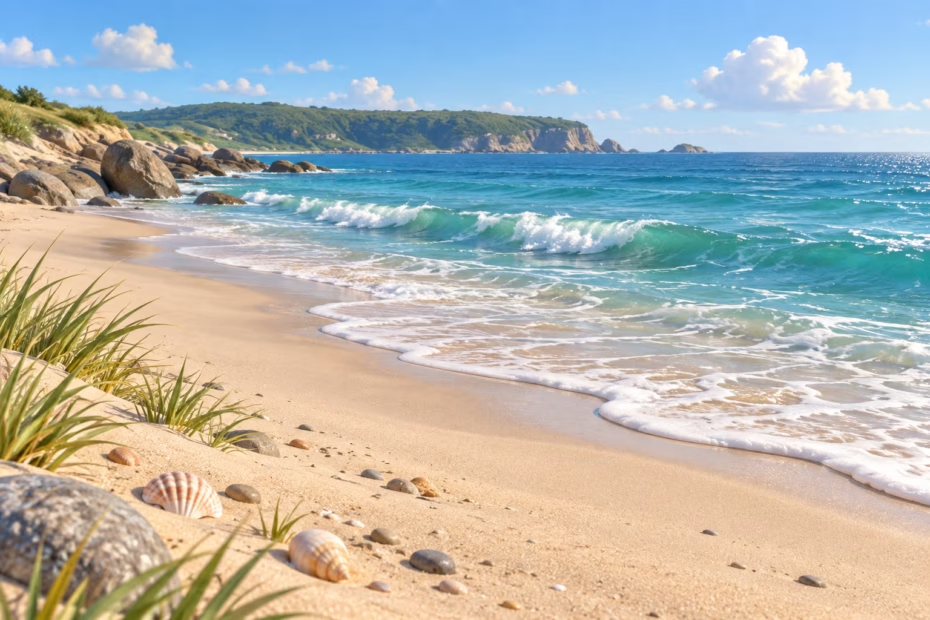
Adjectives for the beach describe its surface, weather, water, activity, or mood. Use sandy for a shore with sand, breezy for moving air, serene for calm, and lively for movement and energy. Pair a precise adjective with a visible or sensory detail so the description feels specific rather than generic.
Beach Adjectives at a Glance
- A beach can be sandy, gravelly, or rocky; the word beach does not mean every shore is made of fine sand.
- Use surface adjectives such as sandy, pebbly, or rocky for what the shore is made of.
- Use weather and light words such as breezy or sunlit only when those conditions are present.
- Serene and tranquil suggest calm; lively and vibrant suggest activity or energy.
- Crowded describes a shore filled with many people or things; it can be useful and neutral when you are reporting what you see.
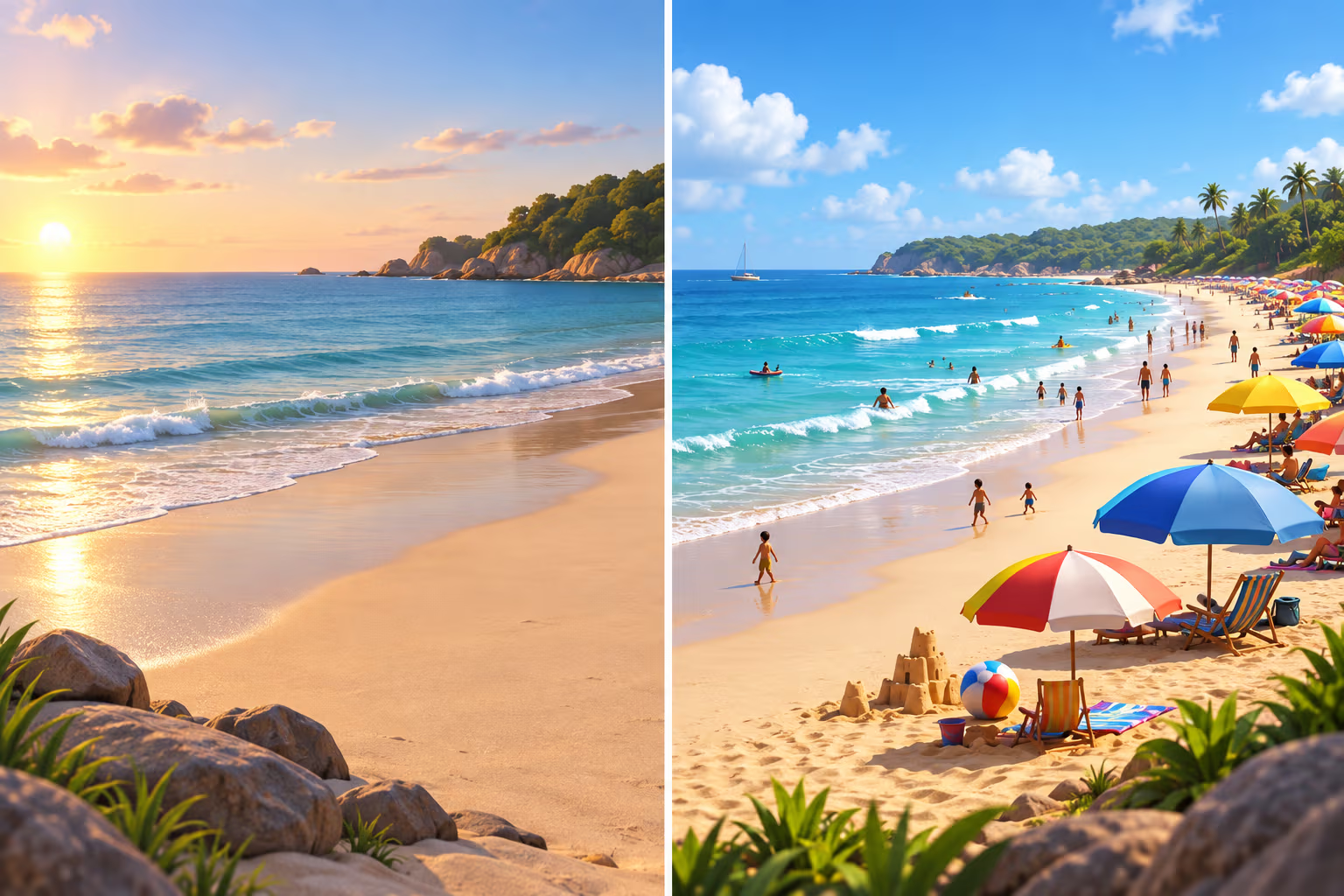
When it comes to the beach, there’s no denying its allure. The sand between your toes, the gentle crash of waves, and the warm embrace of the sun – it’s a sensory experience like no other. But how do you put into words the beauty and wonder of the beach? That’s where adjectives come in. In this article, I’ll be sharing a collection of descriptive words that will help you paint a vivid picture of the beach. From serene and tranquil to vibrant and lively, these adjectives will capture the essence of this beloved coastal paradise. So, grab your sunscreen and let’s dive into the world of adjectives for the beach!
How do you choose the right adjective for a beach?
Start with the beach feature you want readers to picture, then choose the word that names it. A beach can be pebbly underfoot, breezy in changing weather, sunlit at midday, or lively with visitors; using one or two accurate details usually says more than stacking several broad compliments.
- Name the feature: decide whether you mean the shore material, water, weather, light, activity, or mood.
- Notice evidence: look for pebbles, rough rocks, small waves, moving grasses, bright light, or nearby visitors.
- Choose the matching word: pebbly names a surface containing pebbles, while serene describes calm and crowded reports a high number of people or things.
- Check the tone: idyllic and picturesque express an appealing impression; windy, hot, and noisy may be welcome or uncomfortable depending on the person and activity.
- Add a concrete detail: explain what created the impression, such as “a breezy shore where sea grass bent in the wind.”
For example, “The beach was beautiful” gives a judgment, while “A pebbly shore curved beside clear, sunlit water” identifies visible features. If the focus is the water rather than the shore, see our guide to adjectives for the sea; for other natural settings, browse adjectives for nature and landscape adjectives.
Purdue OWL’s descriptive-writing guidance recommends vivid, precise language. A useful check is to ask what a reader can see, hear, or feel in the scene, then keep the adjective that makes that detail easier to imagine.

How to Describe beach? – Different Scenarios
When it comes to describing the beach, there are countless scenarios to consider. Whether you’re enjoying a peaceful morning walk along the shore or experiencing the excitement of a sunny afternoon, each moment at the beach offers a unique and enchanting atmosphere. Let me guide you through different scenarios and provide you with a range of descriptive words that will help paint a vivid picture of the beach.
A Serene Morning Stroll
As the sun rises over the horizon, casting a gentle glow on the sand, the beach takes on a tranquil and serene ambiance. Take a moment to breathe in the crisp, salty air and let the soothing sound of waves crashing against the shore wash over you. Here are some descriptive words to capture the essence of a serene morning at the beach:
- Peaceful
- Calm
- Tranquil
- Quiet
- Serene
A Vibrant Afternoon Adventure
As the day progresses, the beach comes alive with energy and excitement. Families build sandcastles, friends play beach volleyball, and the laughter of children fills the air. The beach becomes a vibrant and lively scene. Here are some descriptive words to capture the vibrant atmosphere of a sunny afternoon at the beach:
- Energetic
- Lively
- Bustling
- Exciting
- Playful
A Romantic Sunset Retreat
As the day draws to a close, the beach transforms into a romantic haven. The setting sun paints the sky with hues of pink, orange, and gold, creating a breathtaking backdrop for couples walking hand in hand along the water’s edge. Here are some descriptive words to describe the romantic ambiance of a beach sunset:
- Intimate
- Enchanting
- Romantic
- Breathtaking
- Magical
A Nighttime Adventure
Even after the sun has set, the beach continues to offer a unique and captivating experience. The moonlight reflects off the glistening waves, creating an ethereal glow. Bonfires illuminate the sand, providing warmth and the opportunity for storytelling and stargazing. Here are some descriptive words to capture the enchantment of a nighttime beach adventure:
- Mystical
- Fascinating
- Mysterious
- Mesmerizing
- Captivating
Which adjectives describe a beach’s surface, weather, or mood?
Use the feature column to choose a word that fits the beach you are describing. These adjectives name different qualities, so they can work together when each one adds a distinct detail.
| Adjective | What it describes | Example |
|---|---|---|
| Sandy | Consisting of or containing sand | A sandy path led from the dunes to the water. |
| Pebbly | Containing or resembling pebbles | The pebbly shore clicked beneath each step. |
| Rocky | Abounding in or consisting of rocks | A rocky point framed the sheltered cove. |
| Breezy | Swept by breezes | A breezy afternoon sent ripples across the bay. |
| Sunlit | Lighted by or as if by the sun | Sunlit water shimmered just beyond the wet sand. |
| Serene | Marked by calm or quiet | The serene inlet held a soft reflection of the sky. |
| Tranquil | Free from disturbance or turmoil | A tranquil cove was quiet before the boats arrived. |
| Idyllic | Pleasing or picturesque in natural simplicity | They found an idyllic spot beneath the low cliffs. |
| Picturesque | Resembling a picture or charming in appearance | A picturesque harbor curved around the old pier. |
| Lively | Full of life, movement, or activity | A lively stretch of shore filled with games and conversation. |
| Vibrant | Pulsating with life, vigor, or activity; also bright in color | Vibrant towels added bright color to the busy beach. |
| Crowded | Filled with many or too many people or things | The crowded boardwalk made people slow their pace. |
| Secluded | Screened or hidden from view | A secluded cove lay beyond the headland. |
Serene and tranquil overlap, but tranquil can suggest especially deep quiet, while serene emphasizes calm. Lively describes movement or activity; vibrant can convey energy or vivid color. The right choice depends on which feature you want to foreground.
Describing Words for beach in English
When it comes to describing the beach, there’s a vast array of words that can paint a vivid picture of its beauty, tranquility, and energy. To help you capture the essence of the beach, I’ve compiled a list of descriptive words that you can use in different scenarios. Whether you’re describing a serene morning stroll, a vibrant afternoon adventure, a romantic sunset retreat, or a nighttime escapade, these adjectives will bring your descriptions to life.
Serene Morning Stroll:
- Peaceful
- Calm
- Quiet
- Gentle
- Tranquil
During a serene morning stroll on the beach, you can feel the soothing waves lapping at your feet. The sand is soft and cool, and the air is filled with a refreshing breeze. As you walk along the shoreline, you might come across seashells scattered on the sand, glistening in the early morning light. This is the perfect time to enjoy the quiet beauty of the beach and let the peacefulness of the surroundings wash over you.
Vibrant Afternoon Adventure:
- Lively
- Energetic
- Sunny
- Active
- Playful
As the day progresses and the sun reaches its peak, the beach comes alive with activity. Families and friends gather to enjoy the lively atmosphere. Children build sandcastles, fly kites, and splash in the sparkling waves. The beach is filled with laughter, music, and the sound of beach balls being tossed around. The vibrant colors of umbrellas and beach towels dot the coastline, creating a playful and energetic scene.
Romantic Sunset Retreat:
- Breathtaking
- Romantic
- Serene
- Magical
- Enchanting
As the sun starts to dip below the horizon, the beach transforms into a romantic haven. The sky is painted with hues of orange, pink, and purple, casting a warm glow over the sea. Couples walk hand in hand along the water’s edge, their silhouettes creating a timeless image. The sound of crashing waves becomes a gentle serenade, and the atmosphere becomes magical and enchanting. It’s the perfect setting for a romantic getaway or a quiet moment of reflection.
Nighttime Adventure at the Beach:
- Mystical
- Mysterious
- Exciting
- Thrilling
- Captivating
Adjectives for beach
Positive Adjectives for Beach with 12 Example Sentences
When I think about the beach, I am filled with a sense of joy and tranquility. Here are some positive adjectives that can perfectly describe the beauty and wonder of the beach:
- Breathtaking: The beach offers breathtaking views of the sparkling blue ocean and golden sandy shores.
- Serene: As I take a peaceful walk along the shore, I am enveloped by the serene atmosphere of the beach.
- Invigorating: The fresh ocean breeze and the sound of crashing waves create an invigorating experience at the beach.
- Idyllic: The beach provides an idyllic backdrop for sunbathing, picnics, and building sandcastles.
- Tranquil: The gentle lapping of waves and the soft rustling of palm trees create a tranquil environment at the beach.
- Refreshing: Taking a dip in the clear, refreshing water is a delightful way to beat the heat at the beach.
- Sun-kissed: The beach is known for its sun-kissed shores and warm, golden sand.
- Picturesque: With its picturesque scenery and vibrant colors, the beach is a photographer’s dream.
- Blissful: Lounging under a beach umbrella, feeling the warm sand beneath my toes, I am filled with a blissful sense of relaxation.
- Unspoiled: Walking along the untouched shoreline, I am amazed by the unspoiled beauty of the beach.
- Rejuvenating: The beach has a rejuvenating effect on both the body and mind, offering a much-needed escape from the everyday hustle and bustle.
- Enchanting: The beach has an enchanting quality that captivates the senses with its beauty and tranquility.
Negative Adjectives for Beach with 5 Example Sentences
Although the beach is often associated with positive experiences, there are also some negative aspects that can be described using these adjectives:
- Crowded: During peak vacation times, the beach can become crowded with tourists, making it difficult to find a spot to relax.
- Sandy: While the soft sand is a defining feature of the beach, it can also be a nuisance, sticking to clothes and getting into everything.
- Hot: In the scorching summer heat, the beach can become quite hot, making it uncomfortable to walk on the sand without sandals.
- Windy: The beach can be quite windy at times, which may cause discomfort or make it challenging to enjoy certain activities.
- Noisy: With the sound of children playing, music, and the crashing waves, the beach can sometimes be quite noisy and overwhelming.
Remember, these adjectives are just tools to help you describe different aspects of the beach. Feel free to mix and match them to paint a vivid picture in your own unique way. So whether you’re looking to capture the serene beauty or the vibrant energy, the beach offers endless possibilities for descriptive words.
Context note: The retained “Negative Adjectives for Beach” examples include sandy, hot, windy, and noisy. Those words do not carry the same judgment in every situation: sandy describes a material, hot describes temperature, windy describes air movement, and noisy describes sound level. Any of them may feel pleasant, uncomfortable, or simply informative depending on the person, conditions, and activity. Crowded can likewise report the number of visitors without deciding whether the atmosphere is good or bad.
Synonyms and Antonyms with Example Sentences
Synonyms for Beach
When describing the beach, it’s important to have a variety of words to choose from. Here are some synonyms that can help you paint a vivid picture:
- Seashore: The seashore, with its crashing waves and sandy beaches, is a beautiful place to relax and unwind.
- Coast: The breathtaking coast stretches for miles, offering stunning views of the ocean and sandy beaches.
- Littoral: The littoral area is a serene and calming place, perfect for a peaceful day by the water.
- Shoreline: The shoreline provides a picturesque setting for beach activities like building sandcastles and collecting seashells.
- Seaboard: Along the seaboard, you’ll find endless opportunities for fun and adventure, from swimming to beachcombing.
Having these synonyms at your disposal allows you to add variety and depth to your descriptions of the beach.
Related-word note: These retained terms overlap with beach, but they are not exact substitutes in every sentence. Merriam-Webster defines a beach as a shore covered by sand, gravel, or larger rock fragments; a shore is land bordering a body of water, a coast is land near a shore, and a shoreline is the line where shore and water meet. Littoral is a more technical adjective or noun for a shore-related area, while a seaboard can mean a seacoast or the country bordering it. Choose the word that matches the place or feature you mean.
Antonyms for Beach
Usage note: “Inland,” “mountains,” “city,” and “desert” are contrasting settings, not strict antonyms of beach. Merriam-Webster defines an antonym as a word with an opposite meaning; the listed nouns name places or landforms that can contrast with a beach in a comparison. For a closer contrast, pair adjectives that describe the same feature, such as tranquil and turbulent for conditions, or crowded and secluded for visitor presence.
Sometimes, it can be helpful to describe the beach by contrasting it with its opposite. Here are some antonyms that can provide a fresh perspective:
- Inland: While the beach offers a refreshing and invigorating experience, the inland areas might be more tranquil and peaceful.
- Mountains: Unlike the flat and sandy beach, the mountains offer a completely different landscape, with towering peaks and rocky terrain.
- City: The beach provides a sanctuary away from the hustle and bustle of the city, offering a calm and relaxing atmosphere.
- Desert: In contrast to the beach’s sunny and sandy environment, the desert is hot and dry, with vast expanses of arid land.
By using antonyms, you can create interesting comparisons and emphasize the unique aspects of the beach.
Remember, mixing and matching these synonyms and antonyms can help you create your own unique description of the beach, tailored to your preferences and style.
Conclusion
Describing the beach is an art that allows us to capture the essence of this natural wonder. Throughout this article, we have explored various adjectives that can be used to paint a vivid picture of the beach. By using synonyms like seashore, coast, littoral, shoreline, and seaboard, we can evoke different aspects of the beach, from its sandy shores to its crashing waves. Additionally, we have discovered the power of antonyms like inland, mountains, city, and desert, which provide a contrasting perspective and help us appreciate the uniqueness of the beach.
As we conclude this discussion, I encourage you to experiment with these adjectives and create your own personalized description of the beach. Let your imagination run wild as you combine different words to capture the sights, sounds, and sensations that make the beach such a captivating destination. Whether you prefer a tranquil coast or a bustling seashore, the adjectives we have explored can help you bring your description to life.
So go ahead, grab a pen and paper, and embark on the journey of describing the beach in your own words. Let your creativity flow and transport your readers to the sandy shores and endless horizons of this breathtaking natural wonder.
Frequently Asked Questions About Beach Adjectives
What are good adjectives to describe a beach?
Choose words that match what is actually present: sandy, pebbly, or rocky for the shore; breezy or sunlit for conditions; and serene, lively, or crowded for mood and activity. A precise detail gives readers a clearer picture than several general compliments.
Is “sandy” always a negative adjective for a beach?
No. Sandy describes something consisting of, containing, or sprinkled with sand. It can be a neutral feature or a welcome quality for someone walking barefoot, while another visitor may dislike sand sticking to clothing. The adjective itself names the surface; context supplies the evaluation.
What is the difference between a beach, shore, and coast?
A beach is a shore covered by sand, gravel, or larger rock fragments. A shore is land bordering a body of water, while a coast is land near a shore. The terms overlap, but “rocky shore” and “coastal region” identify broader features than “sandy beach.”
Which adjectives describe a calm beach?
Serene and tranquil both describe calm or freedom from disturbance. Use serene for an unruffled, peaceful impression and tranquil when the scene feels deeply quiet. Add evidence, such as small waves, little activity, or an undisturbed reflection, to make the description specific.
Can “crowded” describe a beach positively?
Yes. Crowded means filled with many or too many people or things, but it does not decide how a visitor feels about the scene. A writer can use it neutrally to report attendance or pair it with lively when people, games, and conversation create an energetic atmosphere.


