Adjectives for Teachers: Meaningful Words & Examples
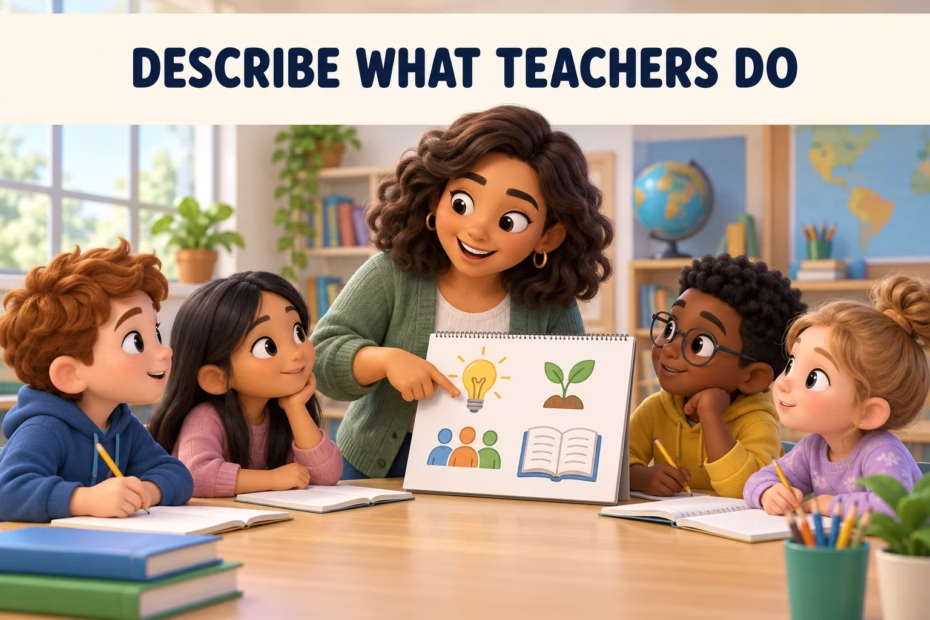
Choose an adjective for a teacher by matching the word to an action or example. A teacher may give a clear explanation, respond patiently to a question, or organize a lesson in a way that helps students follow it. Concrete details make a description more useful than a broad label by itself.
Which adjectives describe teaching practice clearly?
Start with something a reader could see or hear: how a teacher explains an idea, responds to a question, sets up a lesson, or gives feedback. Then choose a word that fits that evidence. The examples below show how a descriptor can point to a specific classroom action without claiming to measure a teacher’s whole career.
Teaching action
Possible adjectives
Example with evidence
Explains a new idea
clear, thorough, concise
“Her clear example showed how the two fractions differ.”
Sets up a lesson or routine
organized, prepared, consistent
“The teacher’s organized steps helped the group begin the lab safely.”
Responds to a learner’s question
patient, attentive, responsive
“He responded patiently and tried a second explanation.”
Comments on student work
specific, constructive, encouraging
“The specific feedback named one strength and a next step.”
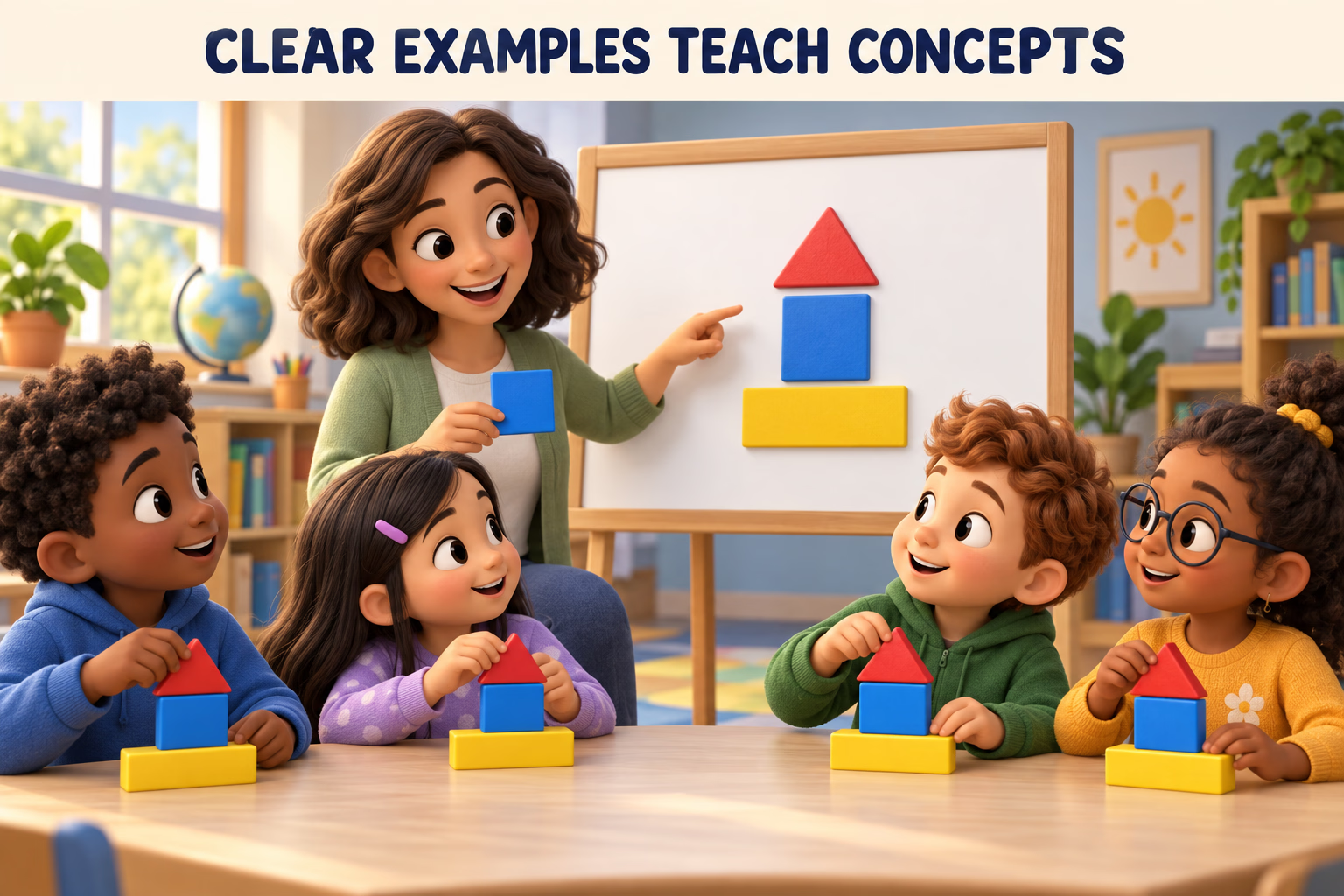
A clear example can make an explanation easier to follow.
How can you make a description more precise?
Pair the adjective with the action that supports it. “Patient” is more informative when the sentence explains that the teacher listened, paused, and rephrased an answer. “Creative” becomes more specific when the example names the activity or resource the teacher designed. A word such as passionate expresses an impression; use it when the context supports that impression rather than treating it as a measurable classroom result.
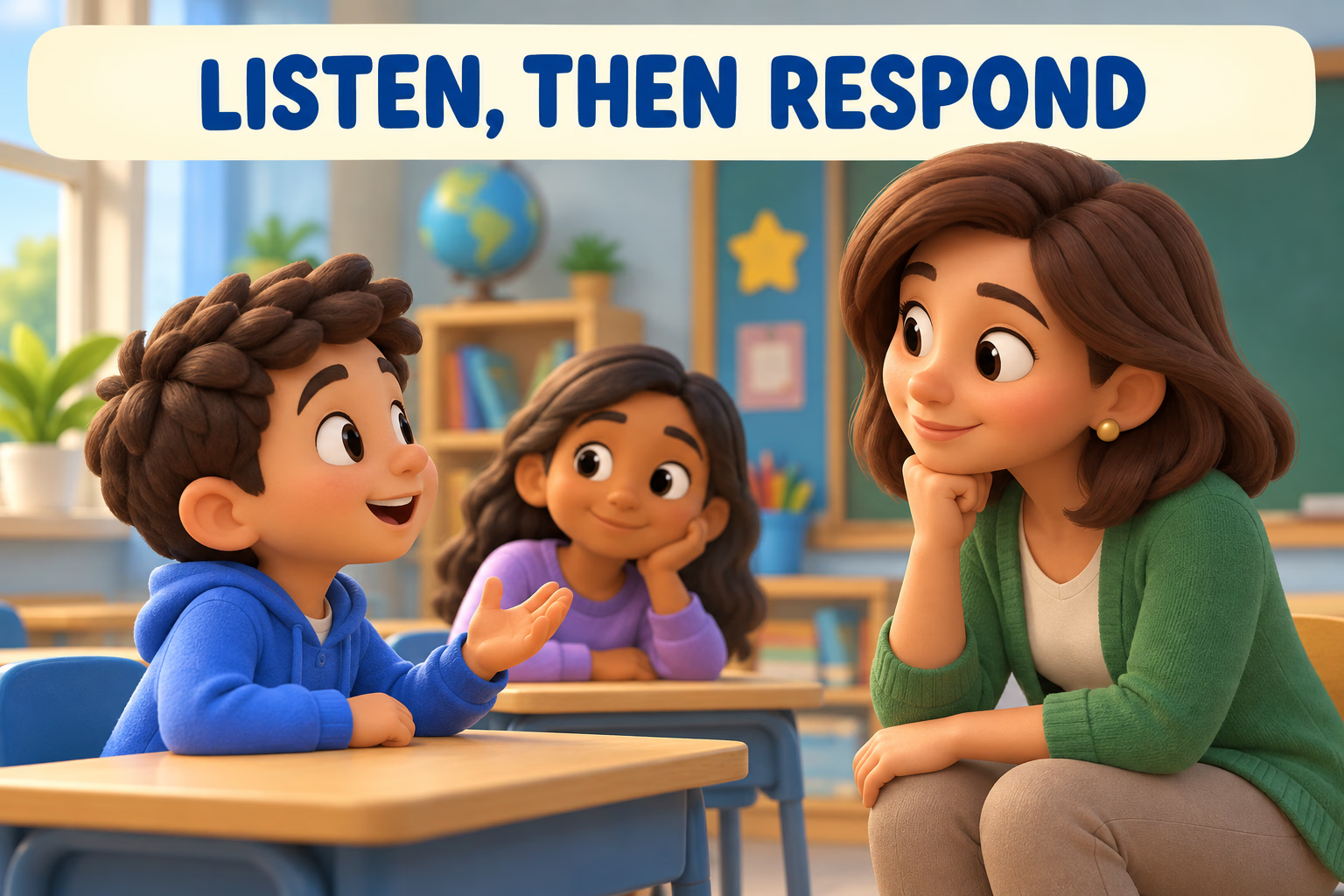
Listening and a calm response are observable parts of an interaction.
Adjectives can appear before a noun (“a patient teacher”) or after a linking verb (“the teacher is patient”). Cambridge Grammar describes both common positions. If you are writing feedback, a note of appreciation, or a character description, select the form that fits the sentence and the evidence you have.
Are all 500+ words in the original list adjectives?
The preserved word bank contains 512 unique non-empty table entries, but not every entry functions as an adjective. For example, corridor is a noun and confessedly is an adverb; some other entries are context-dependent or appear misspelled or joined together. Treat the table as a brainstorm, check a dictionary when a word’s role is unclear, and use a term only when it fits the sentence.
The list also includes words about origin, religion, appearance, physical status, and other personal characteristics. Those may identify a person in a relevant context, but they do not show whether the person explains a concept clearly or supports learners well. When describing teaching, focus on relevant actions and examples instead of using identity or appearance as a shortcut for judging skill. The InTASC teaching standards likewise organize professional practice around areas such as learner development, instruction, assessment, learning environments, and professional responsibility.
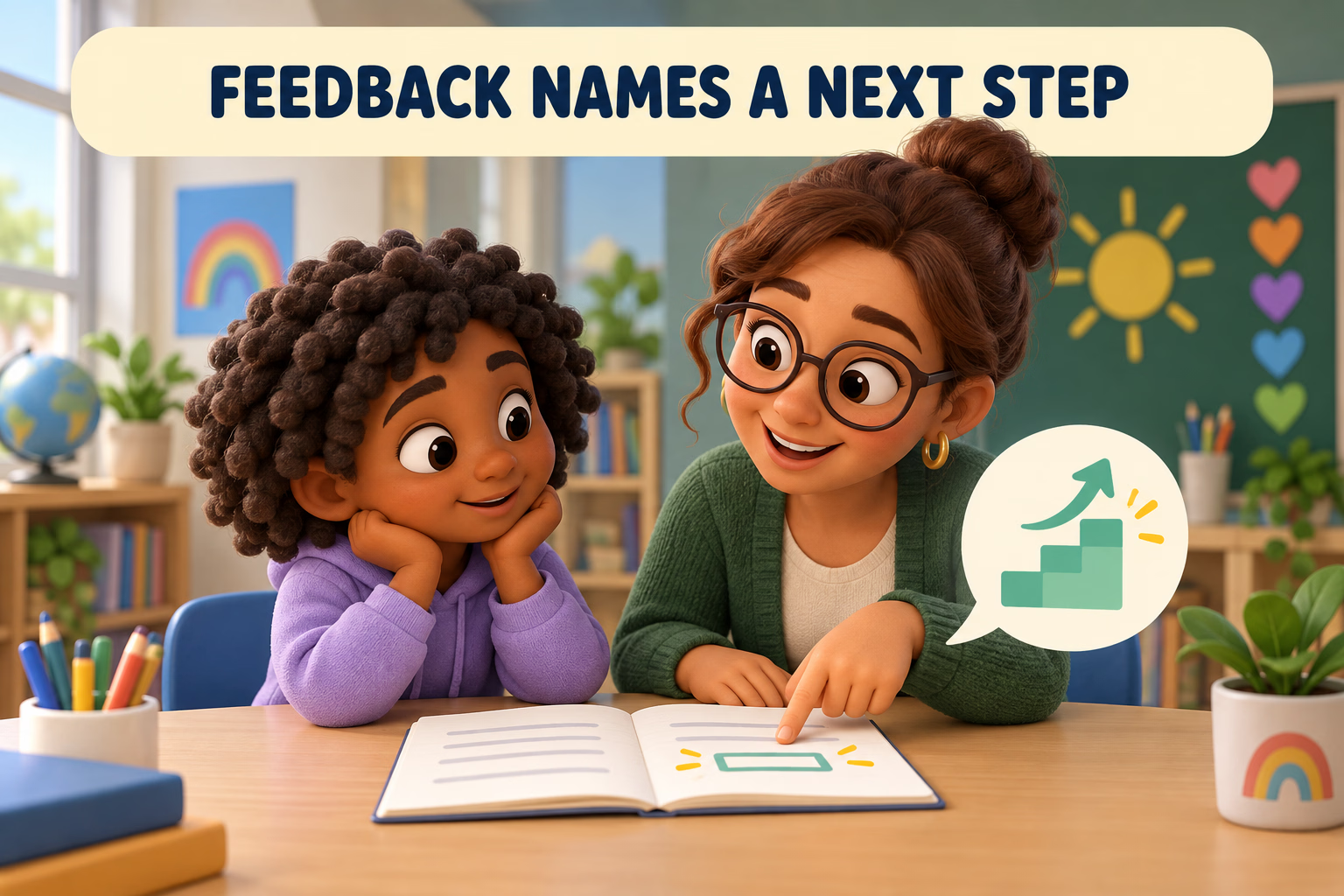
Specific feedback can name a next step as well as a strength.
When it comes to describing teachers, there are endless possibilities. After all, teachers come in all shapes and sizes, with their own unique quirks and qualities. But whether you’re looking for just the right word to describe your own teacher, or you’re creating an educational piece on the topic, it can be helpful to have a list of adjectives on hand. Here are some of the most common adjectives used to describe teachers:
Passionate: A passionate teacher is someone who really cares about their students and their subject matter. They’re the type of teacher who is always eager to share their knowledge, and who goes above and beyond to help their students succeed.
Dedicated: A dedicated teacher is someone who is committed to their profession. They’re always looking for new ways to improve their teaching, and they’re always willing to put in the extra work to help their students learn.
Patient: A patient teacher is someone who is willing to take the time to explain things clearly and patiently. They understand that not every student learns at the same pace, and they’re always willing to help those who need a little extra help.
Creative: A creative teacher is someone who is always coming up with new and innovative ways
Adjectives For Teachers
Adjectives are such an integral part of language. They can be used to describe people, places, things, emotions, and experiences. When used skillfully, adjectives can paint a vivid picture in the mind of the reader or listener.
As a result, they can be extremely useful for teachers. Adjectives can help to create Interest, Convey Messages, and Encourage active listening. In addition, they can add humor to a lesson or story, or help to emphasize a important point.
By using adjectives effectively, teachers can enliven their lessons and engage their students more fully. As a result, it is worth taking some time to select the right adjectives for each teaching situation.
A
Adjectives are words that describe or modify another person or thing in the sentence. When it comes to describing teachers, there are certainly a lot of positive adjectives that can be used. After all, teachers play an important role in shaping the lives of their students. They work hard to provide guidance and knowledge, and they truly care about their students’ success.
Some of the most commonly used adjectives to describe teachers include dedicated, caring, passionate, and hardworking. However, there are many other adjectives that could be used to accurately describe the positive impact that teachers have on their students. No matter what words are chosen, it is clear that teachers make a difference in the lives of those they teach.
Able
Aboriginal
Absent
Absurd
Academic
Acceptable
Accomplished
Accurate
Active
Actual
Adaptable
Admirable
Admired
Advanced
Adventurous
Advocate
Affectionate
Aged
Amateur
Amazed
Amazing
Ambitious
Amicable
Amusing
Analytical
Anatomical
Ancient
Anderanderyour
Angry
Animated
Annual
Anxious
Apathetic
Appreciative
Arab
Arabian
Armenian
Artistic
Assiduous
Assistant
Astounded
Astute
Athenian
Athletic
Attractive
Austere
Authentic
Authoritative
Automotive
Average
Awe-Inspiring
Awesome
B
Bearded
Belgian
Beloved
Beneficent
Benevolent
Black
Blesses
Blind
Brave
Bright
British
Brutal
Busy
Byzantine
C
Adjectives are words that describe or modify other words, making your writing more interesting and precise. If you’re a teacher, you likely want to find ways to make your writing more engaging for your students. Fortunately, there are a number of adjectives that start with the letter “C” that can help you do just that.
Some useful adjectives for teachers include “creative,” “committed,” and “caring.” Adjectives like these can help to describe how you approach your work, and they can give your students a better sense of who you are as a teacher. Additionally, using adjectives can help you communicate your expectations for your students’ work. For example, if you’re looking for a high-quality paper from your students, you might use the adjective “thorough.”
Adjectives are just one tool that you can use to improve your writing. However, they can be a valuable tool in making your writing more interesting and precise. So next time you’re struggling to add interest to your writing, consider reaching for an adjective that starts with the letter “C.”
Calvinistic
Canadian
Capable
Careful
Careless
Caring
Casual
Catholic
Celebrated
Certain
Certified
Charming
Chief
Chinese
Christian
Civilian
Civilized
Classic
Classical
Clever
Collaborative
Colored
Colorful
Comfortable
Committed
Communist
Comparable
Compassionate
Competent
Complete
Concerned
Confessedly
Confident
Congregational
Conservative
Consistent
Constant
Consummate
Convincing
Convivial
Coold Headed
Corridor
Corrupt
Courageous
Crafty
Creative
Crusty
Curious
Curvaceous
Cutting Edge
Cynical
D
Danish
Dead
Dear
Dedicated
Determined
Devoted
Devout
Different
Disabled
Disant
Discreet
Discretionary
Dishonest
Displeased
Distinct
Distinguished
Divine
Dogmatic
Domestical
Dramatic
Dressed
Dressy
Dull
Dutch
Dynamic
E
Eager
Earnest
Eastern
Effecting
Effective
Efficient
Elderly
Elementary
Elite
Eminent
Empathetic
Empowered
Encouraging
Energetic
Engaged
English
Enlightened
Enterprising
Enthusiastic
Entrant
Epicurean
Estonian
Ethical
Eugenic
European
Evangelical
Excellent
Exceptional
Excited
Exemplary
Experienced
Expert
Extern
Extra
F
Fair
Faithful
Familiar
Famous
Fantastic
Fashionable
Favorite
Favourite
Feisty
Fellow
Female
Fervid
Fiery
Filipino
Fine
Firebending
Flexible
Foreign
Foremost
Formal
French
Fresh
Future
G
Generous
Genius
Genteel
Gentle
Genuine
German
Gifted
Giving
Glad
Global
Good Under Pressure
Grad
Grade
Grand
Grateful
Greedy
Greek
Gymnastic
H
Haired
Happy
Hard
Hard-Working
Havethe
Hearted
Heathen
Heavenly
Hebrew
Helpful
Heretical
Heroic
Holographic
Holy
Homebound
Homesick
Honest
Honoured
Hopeful
Human
Humane
Humble
Hungry
I
Adjectives are words that describe or modify another person or thing in the sentence. The article Adjectives for Teachers That Start With I provides a list of such adjectives which can be used to describe teachers.
The list includes impressive adjectives like intelligent, impactful and inspiring. It is insightful to know such positive adjectives which can be used to describe teachers. It is also heartening to know that there are so many good things that can be said about teachers. The article is a reminder of how important and significant the role of a teacher is in society.
Ideal
Ignorant
Illustrious
Immediate
Immortal
Impecunious
Improvisational
Incomparable
Incompetent
Incredible
Independent
Indian
Indifferent
Indigenous
Individual
Infallible
Infamous
Influential
Ingenious
Initial
Innovative
Inservice
Inspiring
Instrumental
Instrumentalist
Insular
Intelligent
Intended
Intense
Interactive
Interested
Interesting
Intermediate
International
Interprovincial
Invaluable
Invisible
Inward
Iranian
Irascible
Irish
Italian
Itinerant
J | K | L
Jewish
Jocular
Judicious
Junior
Kind
Knowledgeable
Lay
Lazy
Lead
Leader
Librarian
Literary
Live
M
Major
Male
Married
Masterly
Mature
Memorable
Mighty
Military
Minded
Missionary
Modern
Modest
Moral
Motivated
Motivating
Multi
Musical
Muslim
N
Native
Natural
Nice
Noblest
Normal
Northern
Noted
Nurturing
O
Objective
Observant
Occasional
Online
Opportunistic
Oracular
Ordinary
Outstanding
P
Palestinian
Partial
Passionate
Passive
Perceptive
Permanent
Perseverent
Physical
Pious
Pleasant
Polite
Politic
Poor
Popular
Potent
Powerful
Practical
Pre
Prepared
Preschool
Present
Previous
Primary
Prime
Principal
Professional
Progressive
Prominent
Proper
Prophetic
Prospective
Protestant
Proud
Prudent
Punctual
Pupil
Q | R
Qualified
Questioning
Quiet
Real
Regular
Religious
Resourceful
Respectable
Respected
Respective
Responsible
Retired
Reverend
Rhetorical
Rival
Robotic
Rogue
Roman
Rosemont
Rude
Rural
Russian
S
Adjectives for teachers can be found by looking online or in a thesaurus. However, it is important to remember that not all adjectives are appropriate for every situation. When writing letters of recommendation, for example, it is important to use language that is both concise and accurate.
For this reason, it is often best to consult with a thesaurus or other professional resources when selecting adjectives for teachers. With careful consideration, however, it is possible to find the perfect adjective to describe any teacher. Salient, sincere, and supportive are just a few of the many adjectives that could be used to describe an outstanding educator.
Sacred
Sainted
Saintly
Sanctuary
Saudi
Scheming
Schismatical
School
Schoolsjust
Schoolthe
Scientific
Scrupulous
Seconded
Secular
Selfish
Semi
Seminary
Senior
Sensible
Sensitive
Separate
Servant
Service
Sexy
Sick
Simple
Sincere
Single
Sixth
Skilful
Skilled
Skillful
Skinned
Slain
Socialist
Sole
Solid
Solitary
Sophisticated
Southern
Spanish
Specialist
Specialized
Spirited
Spiritual
Splendid
Standard
Statewide
Steady
Stimulating
Stoic
Stoutest
Strange
Strapped
Strict
Striking
Strong
Student Centered
Suasive
Substitute
Suburban
Successful
Suitable
Superb
Superior
Superlative
Supplemental
Supplementary
Supreme
Swedish
Sweet
Sympathetic
T
Talented
Technical
Tefl
Temporary
Theologian
Thorough
Thoughtful
Threatened
Timorous
Tiny
Tired
Tough But Fair
Transcendental
Trusted
U
Unaccustomed
Unaided
Uncertificated
Undisputed
Unemployed
Uninspired
Unionized
Universal
Unnamed
Unreasonable
Unsound
Unsuccessful
Unwise
Unworthy
Usual
V
Valuable
Veteran
Victorian
Vigorous
Virtual
Visible
Visionary
Visual
Voluble
W | Y | Z
Wandering
Warm And Welcoming
Weary
Welcome
West
Western
Willing
Wise
Wonderful
Worried
Worthy
Wrong
Youthful
Zealous
Final verdict
Adjectives for teachers should include some of the following descriptive words: patient, intelligent, articulate, passionate, and caring. All of these adjectives accurately describe the qualities that make a great teacher.
These qualities are important in order to maintain a successful learning environment. A patient teacher is able to effectively manage a classroom of varying abilities and keep everyone on track. An intelligent teacher is able to understand their subject matter inside and out in order to better explain it to their students.
An articulate teacher is able to communicate clearly and effectively in order to engage their students in learning. A passionate teacher is able to inspire students to love learning and be excited about coming to class everyday. Lastly, a caring teacher is able to build positive relationships with their students which creates a supportive learning environment.
All of these adjectives work together to paint a picture of an ideal teacher. Adjectives for teachers should not stop at these five, but they are definitely a great starting point.
Robin founded StartsWithy in 2022 to make English words easier to understand and use. Robin oversees our 30,000+ guides, checks meanings and grammar against trusted dictionaries such as Cambridge, Oxford Learner’s and Collins, and is accountable for every correction we make.