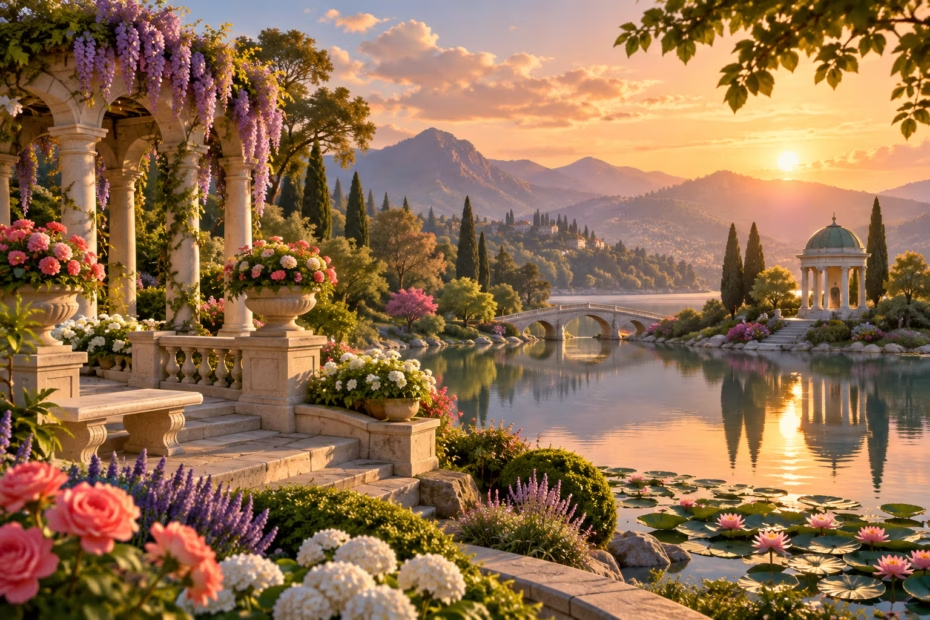
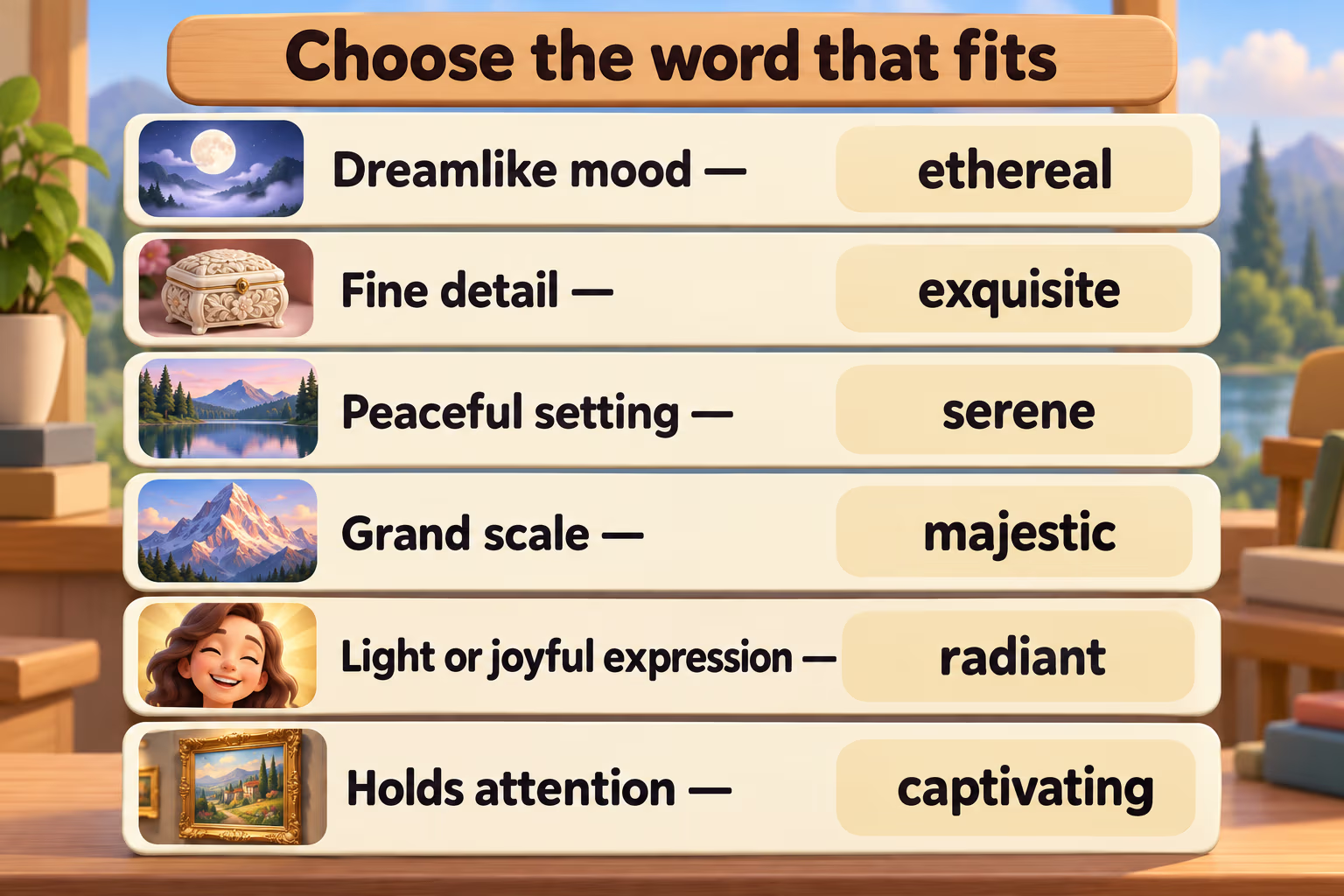
Useful adjectives for beautiful descriptions depend on the quality you want to emphasize. Choose breathtaking for a view that inspires awe, radiant for light or expressed happiness, exquisite for fine craftsmanship, serene for calm, majestic for grandeur, and captivating for something that holds attention. These related words are not interchangeable.
Key Facts: Adjectives for Beautiful
- Beautiful can describe aesthetic pleasure and, more broadly, something pleasing or excellent.
- Radiant can refer to brightness or an expression of happiness, love, or confidence.
- Exquisite often praises fine workmanship, detail, or delicate beauty.
- Serene emphasizes calm; majestic emphasizes grandeur or impressive presence.
- Kind-hearted, innovative, euphoric, and nostalgic describe character, novelty, a strong feeling, or a connection to the past; they are not exact synonyms for beauty.
When it comes to describing something as beautiful, the English language offers a plethora of adjectives that can truly capture its essence. As an expert in the art of writing, I have compiled a comprehensive list of adjectives that will help you elevate your descriptions to new heights. Whether you’re describing a breathtaking landscape, a stunning work of art, or a radiant smile, these adjectives will add depth and richness to your words. So, let’s dive in and explore the world of adjectives for beautiful, and discover how they can transform your writing into a masterpiece.
In a world filled with beauty, finding the perfect words to describe it can be a daunting task. That’s where the power of adjectives comes in. From the delicate and ethereal to the bold and vibrant, these adjectives allow us to paint vivid pictures with our words. In this article, I’ll be sharing my top picks for adjectives that will help you express the beauty you see in the world around you. So, whether you’re a writer looking to enhance your descriptions or simply someone who appreciates the beauty in everyday life, this article is for you. Get ready to expand your vocabulary and take your descriptions to the next level.
Beauty is a concept that transcends boundaries and captivates our senses. It has the power to evoke emotions, inspire creativity, and leave a lasting impression. As a writer, I understand the importance of finding the right words to convey the beauty we encounter. In this article, I’ll be sharing a curated selection of adjectives that will enable you to do just that. Whether you’re describing a person, a place, or a moment in time, these adjectives will help you paint a vivid and captivating picture. So, let’s embark on this linguistic journey together and discover the adjectives that will bring your descriptions of beauty to life.
How to Describe Beautiful? – Different Scenarios
When it comes to describing something as beautiful, there are various scenarios in which we can apply adjectives to capture its essence. Here are a few different scenarios and the adjectives you can use to describe beauty in each situation:
Nature
In the realm of nature, beauty can be found in the landscapes, flora, and fauna that surround us. To describe the beauty of nature, consider using these adjectives:
- Breathtaking: The grandeur of the mountains and the vastness of the ocean can leave us in awe.
- Picturesque: Use this adjective to paint a vivid picture of a scene that is visually pleasing.
- Serene: Capture the calming and tranquil aspects of nature with this adjective.
- Vibrant: Describes the explosion of colors found in blooming flowers or autumn leaves.
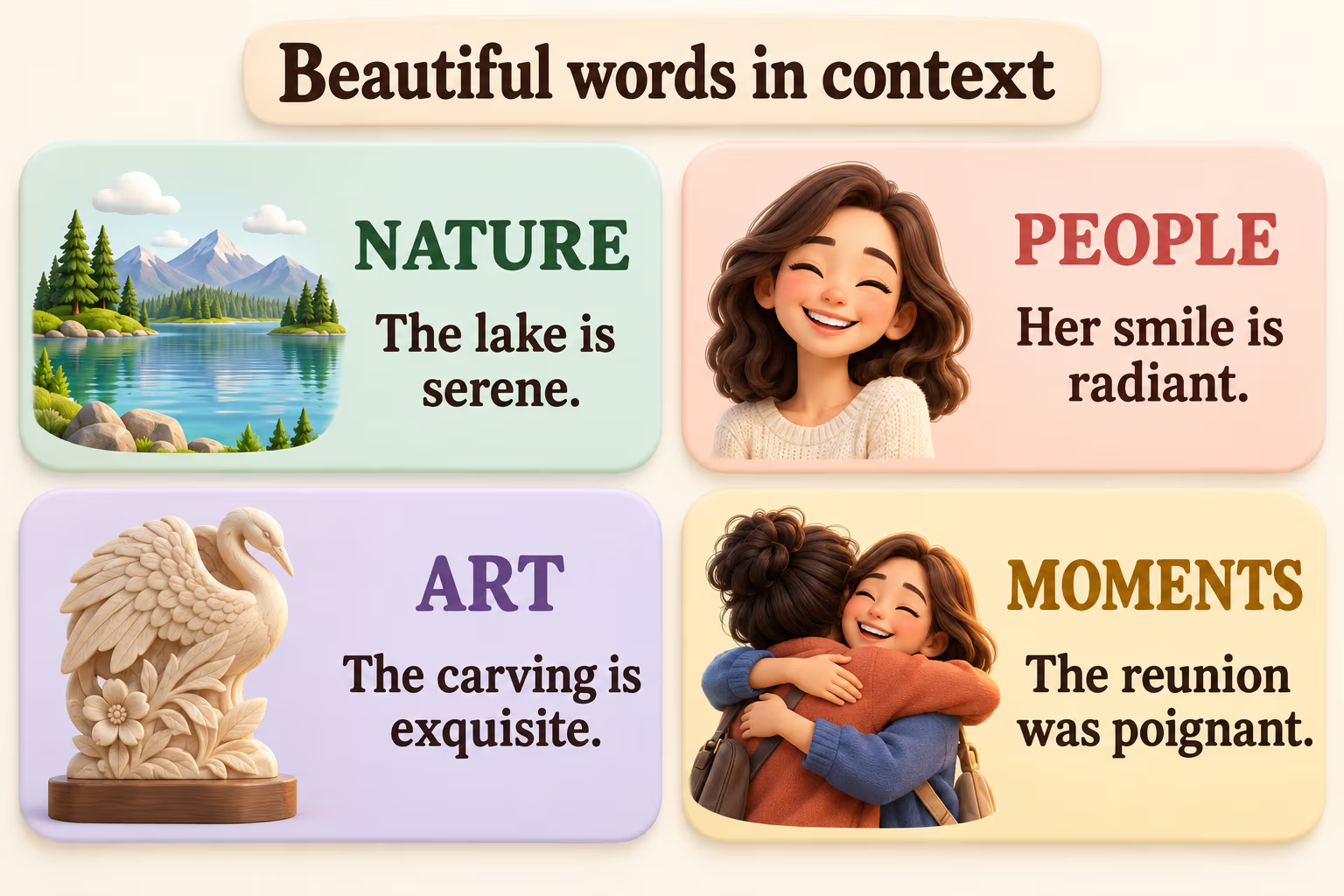
Example: “A serene lake reflected the last light of the day.” Serene describes the calm quality; use picturesque for a scene with visual charm or breathtaking when the view inspires awe. For more landscape vocabulary, see our guide to adjectives for beautiful places.
People
Beauty is not limited to the natural world; it can also be found in the faces and personalities of people. To describe the beauty of individuals, consider these adjectives:
- Radiant: This adjective emphasizes a person’s glowing and captivating presence.
- Graceful: Use “graceful” to highlight elegance and charm in someone’s movements and demeanor.
- Captivating: Describes someone who has a magnetic and irresistible allure.
- Kind-hearted: Goes beyond physical beauty to reflect a person’s inner qualities that shine through.
Example: “Her radiant smile made the room feel warmer.” Radiant can suggest brightness or happiness; graceful describes movement, while kind-hearted describes character rather than physical appearance. Choose a trait that fits the person and the point of the sentence.
Art
Artistic creations can evoke a sense of beauty that transcends the ordinary. To describe the beauty of art, consider these adjectives:
- Exquisite: This adjective emphasizes the meticulous craftsmanship and attention to detail.
- Expressive: Use this adjective to describe art that conveys emotions and meaning.
- Innovative: Describes art forms that push boundaries and challenge conventional ideas.
- Harmonious: Use “harmonious” to describe art that creates a sense of balance and unity.
Example: “The exquisite carving rewarded a closer look.” Exquisite suits carefully made detail; innovative describes a new or inventive approach, which may be beautiful but is not itself a synonym for beauty. For picture-specific vocabulary, see adjectives for photos and pictures.
Moments
Beauty can also be found in fleeting moments that touch our hearts. To describe the beauty of these moments, consider these adjectives:
- Enchanting: Describes moments that are magical and spellbinding.
- Poignant: Use this adjective to capture the bittersweet beauty of fleeting moments.
- Euphoric: Describes moments that are filled with extreme joy and happiness.
- Nostalgic: Reflects on the beauty found in memories of the past.
Example: “The reunion was poignant, and the old photograph felt nostalgic.” Poignant highlights a strong, often bittersweet emotional effect; nostalgic evokes a fond connection to the past. Neither word simply means visually beautiful. For more words about tone, see adjectives for atmosphere.
Describing Words for Beautiful in English
As a writer, I love exploring the vast array of adjectives that can be used to describe beauty. In this section, I will share with you some wonderful words that you can use to describe something as beautiful. These words will help you to paint vivid pictures with your descriptions, whether you’re talking about nature, people, art, or even special moments.
- Breathtaking: When something is breathtaking, it takes your breath away. It’s so beautiful that it leaves you speechless and in awe. Imagine standing on top of a mountain and witnessing a breathtaking sunset.
- Enchanting: To describe something as enchanting is to say that it’s magical and captivating. It has a certain charm that draws you in and fills you with joy. A beautifully decorated garden can be described as enchanting.
- Ethereal: When something is ethereal, it’s delicate and otherworldly. It has a serene and transcendent quality, like a scene from a dream. A bride walking down the aisle in a flowing white gown can be described as ethereal.
- Radiant: Something that is radiant is glowing and full of light. It emanates beauty and happiness, like a shining star in the night sky. The smile of a person in love can be described as radiant.
- Exquisite: This word is used to describe something that is of exceptional beauty and elegance. It’s intricately detailed and finely crafted. A beautifully designed piece of jewelry can be described as exquisite.
- Serene: When something is serene, it’s peaceful and calm. It evokes a sense of tranquility and contentment. An untouched beach with gentle waves crashing against the shore can be described as serene.
- Captivating: To describe something as captivating is to say that it’s utterly fascinating and holds your attention completely. It has a mesmerizing quality that draws you in. A captivating work of art can transport you to another world.
- Majestic: Something that is majestic is grand and impressive. It commands admiration and respect. A towering waterfall cascading down a mountainside can be described as majestic.
How to Choose the Right Adjective for Beautiful
Choose the word that names the feature a reader should notice, such as scale, light, calm, detail, or emotional effect. Merriam-Webster distinguishes beautiful as aesthetic pleasure or general approval from words that emphasize a more specific quality, so these examples are useful guides rather than a ranking.
| Word | What it emphasizes | Example |
|---|---|---|
| Breathtaking | Astonishment, awe, or a thrilling effect | “A breathtaking view opened beyond the ridge.” |
| Gorgeous | Strong attractiveness, splendor, or vivid display | “The garden looked gorgeous in the evening light.” |
| Radiant | Light, glow, or visible happiness | “Her radiant smile welcomed the guests.” |
| Exquisite | Fine craftsmanship, detail, or delicate beauty | “The frame had exquisite carved details.” |
| Serene | Quiet, peace, or an untroubled quality | “A serene lake mirrored the hills.” |
| Majestic | Grandeur or impressive presence | “Majestic cliffs rose above the shore.” |
| Ethereal | A delicate, refined, or otherworldly impression | “An ethereal mist softened the garden.” |
| Captivating | An effect that attracts and holds attention | “A captivating painting drew visitors closer.” |
An adjective can come before a noun (“an exquisite painting”) or after a linking verb (“the painting looks exquisite”). Cambridge Grammar calls these attributive and predicative uses; both patterns let you state the subject and its quality clearly.
Adjectives for Beautiful
Positive Adjectives for Beautiful with 10 Example Sentences
When it comes to describing something as beautiful, there are many positive adjectives that can help paint a vivid picture. Here are ten examples of positive adjectives for beautiful:
- Breathtaking: The view from the mountaintop was breathtaking.
- Enchanting: The garden was filled with enchanting flowers.
- Ethereal: The ballet performance was truly ethereal.
- Radiant: The bride looked absolutely radiant on her wedding day.
- Exquisite: The painting was an exquisite work of art.
- Serene: The beach at sunset was so serene.
- Captivating: The musician’s voice was captivating.
- Majestic: The waterfall was a majestic sight to behold.
- Stunning: The sunset over the ocean was truly stunning.
- Gorgeous: The actress wore a gorgeous gown to the red carpet event.
Negative Adjectives for Beautiful with 5 Example Sentences
Usage note: “Negative” here means a critical judgment about a style or quality, not that all five words are opposites of beautiful. A true antonym has an opposite meaning: gaudy and tacky criticize showiness or taste; overdone says something is excessive; superficial concerns surface or lack of depth; and artificial can simply mean human-made. Artificial flowers can still be attractive, so name the quality you intend to criticize.
Negative Adjectives for Beautiful with 5 Example Sentences
While we often focus on the positive aspects of beauty, there are also negative adjectives that can be used to describe something as beautiful. Here are five examples of negative adjectives for beautiful:
- Gaudy: The bright, flashy decorations were a bit gaudy.
- Tacky: The outfit she wore to the party was quite tacky.
- Overdone: The makeup was a bit overdone for a casual event.
- Superficial: The beauty of the building was only superficial, lacking substance.
- Artificial: The plastic flowers looked artificial and lacked natural beauty.
Remember, when using these adjectives, context is important. The same word can have different meanings depending on how it is used. Adjectives are a powerful tool to enhance your descriptions and create vivid imagery.
Synonyms and Antonyms With Example Sentences
Synonyms for Beautiful
When it comes to describing beauty, there is an array of synonyms that can enhance your descriptions and make them more vivid and engaging. Here are some synonyms for “beautiful” along with their meanings and example sentences:
| Synonym | Meaning | Example Sentence |
|---|---|---|
| Stunning | Extremely impressive or attractive | The sunset over the ocean was absolutely stunning. |
| Gorgeous | Very beautiful or attractive | She looked absolutely gorgeous in her elegant dress. |
| Breathtaking | Astonishingly beautiful | The view from the mountaintop was breathtaking. |
| Radiant | Emitting joy, love, or happiness; shining brightly | Her smile was radiant and lit up the entire room. |
| Exquisite | Delicately beautiful, often with intricate details | The artist created an exquisite painting using vibrant colors. |
Antonyms for Beautiful
On the other hand, there are also antonyms, or words with opposite meanings, that can be used to describe the absence of beauty or something less attractive. Here are some antonyms for “beautiful” along with their meanings and example sentences:
| Antonym | Meaning | Example Sentence |
|---|---|---|
| Ugly | Unpleasant or unattractive in appearance | The abandoned building was in a state of ugly disrepair. |
| Plain | Lacking ornament or beauty; simple | The design of the chair was plain and functional. |
| Homely | Lacking in physical attractiveness | Despite her homely appearance, she possessed a warm and kind heart. |
| Unappealing | Not attractive or interesting | The food at that restaurant was unappealing and lacked flavor. |
| Repulsive | Causing intense dislike or disgust | The smell coming from the dumpster was absolutely repulsive. |
Regional and meaning note: Plain can mean simple or undecorated, and Merriam-Webster also records a sense meaning neither beautiful nor ugly; it does not always mean unattractive. Homely is especially dialect-sensitive: Cambridge marks “simple or ordinary, but pleasant” as UK usage and “unattractive” as US-disapproving. The latter can sound insulting when applied to a person. Repulsive signals strong disgust, a much stronger reaction than ordinary lack of beauty.
Remember, when using these adjectives, it’s important to consider the context and choose the most appropriate word to convey your intended meaning. Adjectives have the power to enhance your descriptions and create vivid imagery, so choose them wisely.Conclusion
In this article, I have explored a variety of adjectives that can be used to describe beauty. From stunning and gorgeous to breathtaking and radiant, these adjectives add depth and vividness to our descriptions. They allow us to paint a picture with words, capturing the essence of beauty in all its forms.
It is important to remember that the context in which we use these adjectives is crucial. While some adjectives may be fitting for a person or a landscape, they may not be appropriate for an object or a situation. Understanding the nuances and connotations of each adjective is key to using them effectively.
Additionally, I have also introduced antonyms for describing beauty, such as ugly, plain, homely, unappealing, and repulsive. These adjectives provide a contrasting perspective and highlight the subjective nature of beauty.
By incorporating these adjectives into our writing, we can elevate our descriptions and create a more engaging and captivating experience for our readers. So go ahead, embrace the power of adjectives and let your words bring beauty to life.
Frequently Asked Questions About Adjectives for Beautiful
What is a strong word for beautiful?
Breathtaking is a strong choice when a view, performance, or design inspires awe. Gorgeous emphasizes striking attractiveness or splendor, while exquisite suits finely made detail. Pick the word that matches the subject: a mountain view can be breathtaking, a colorful dress gorgeous, and a carved frame exquisite.
What adjective describes fine beauty or detail?
Exquisite is a good fit when beauty comes from careful workmanship, delicate detail, or refined design. Write “an exquisite bracelet” or “exquisite embroidery” when the quality is visible in the making. For a calm scene choose serene; for large, impressive scale choose majestic.
Can beautiful describe a moment or an idea?
Yes. Beautiful can describe something that gives aesthetic pleasure and, more broadly, something pleasing or excellent. A writer might call a reunion a beautiful moment or describe a beautiful idea. If you want to specify the feeling, use poignant for emotional impact or inspiring for an idea that motivates.
Is homely always a synonym for unattractive?
No. Cambridge Dictionary marks the “unattractive” sense as US and disapproving; in UK English, homely commonly means simple or ordinary but pleasant, especially about a place. Because readers can interpret it differently, avoid using it as a neutral compliment about a person’s appearance and choose a more precise word.
Are all these words exact synonyms for beautiful?
No. Radiant can emphasize light or happiness, serene calm, captivating sustained interest, and majestic grandeur. Words such as kind-hearted, innovative, euphoric, and nostalgic describe character, novelty, emotion, or the past. Use the nearest word for the quality you mean.


