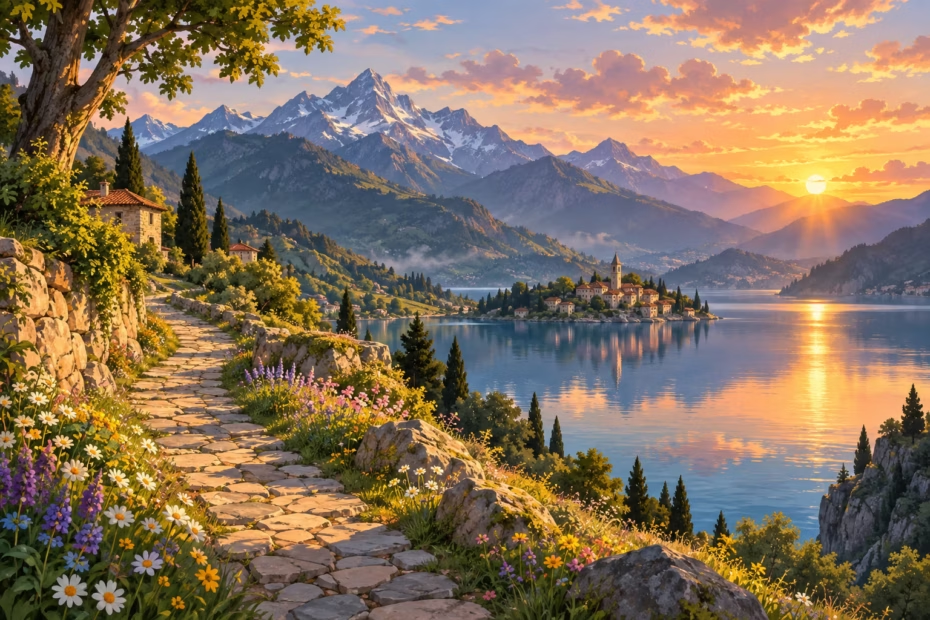
How to Choose Adjectives for Beautiful Places
Choose a word that names the feature you want readers to notice. Picturesque suggests a charming, picture-like scene; scenic focuses on the view; majestic conveys impressive scale; and serene describes calm. For a more precise description, pair one adjective with a visible detail instead of stacking near-synonyms.
Quick examples: a picturesque harbor, a scenic ridge walk, a majestic mountain range, a serene garden pond, a lush forest, or a panoramic overlook.
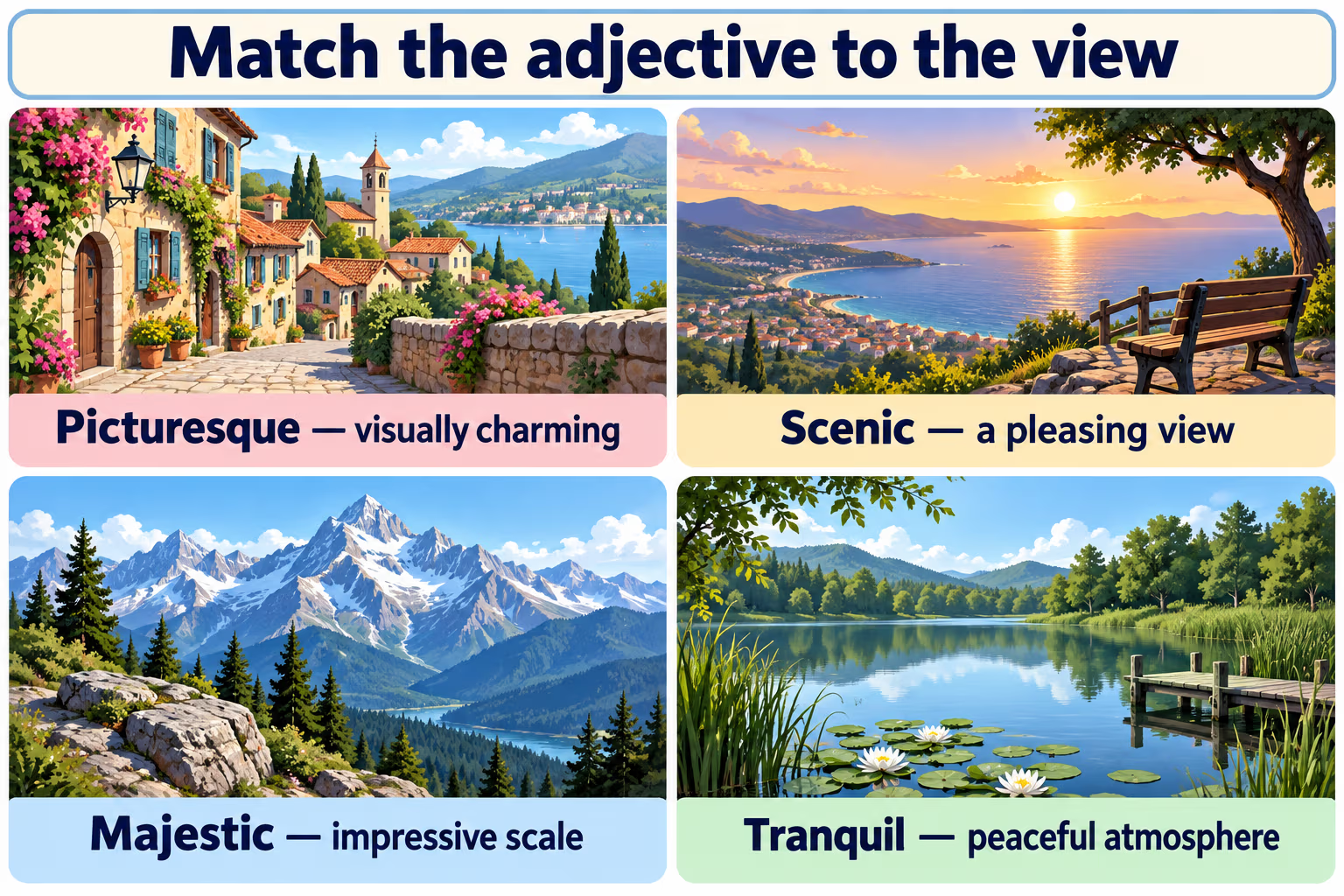
Match the Adjective to the Place
| Adjective | What it emphasizes | Example |
|---|---|---|
| Picturesque | A charming, picture-like appearance | A picturesque lane curved past stone cottages. |
| Scenic | Attractive scenery or a view | The scenic route followed the coast. |
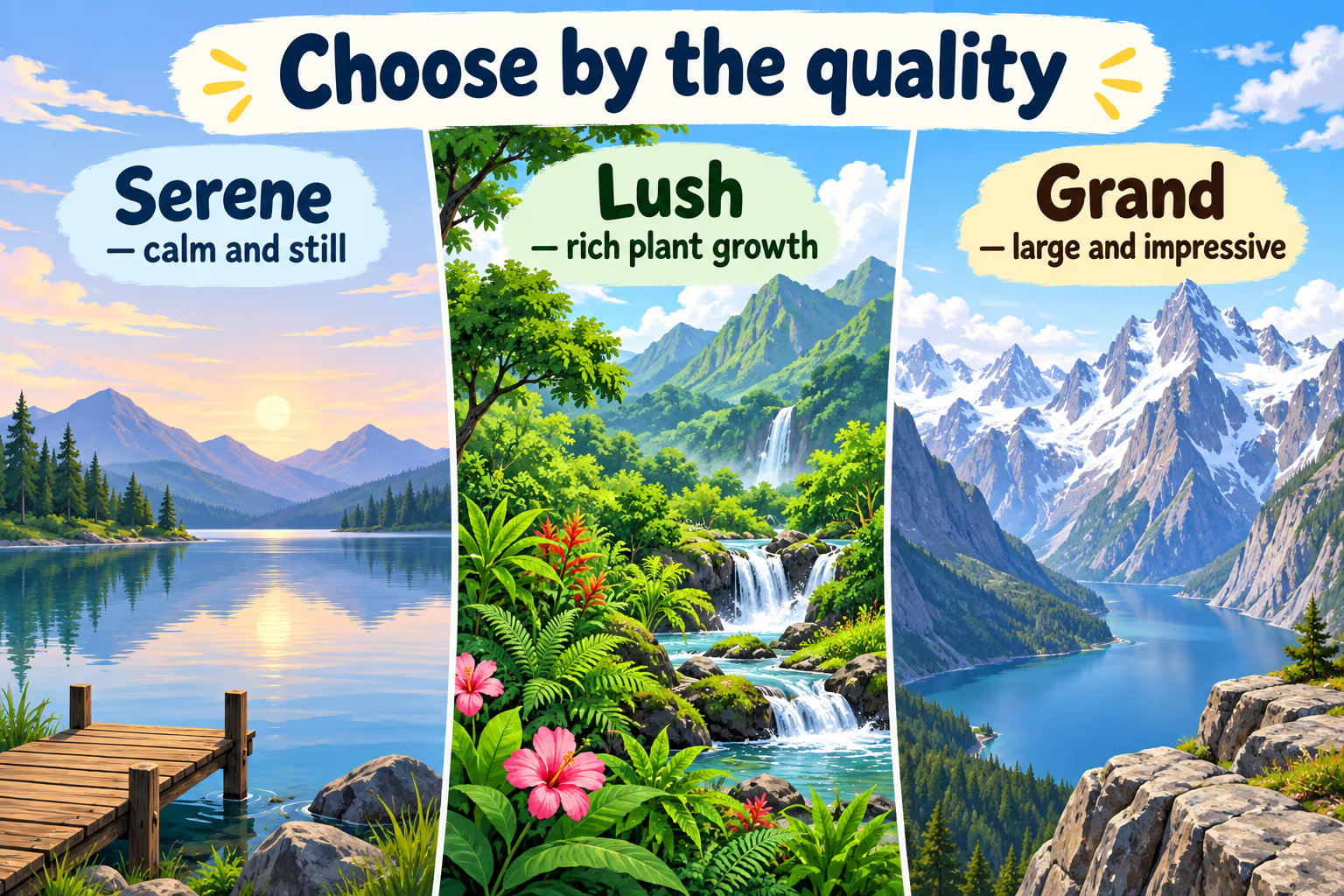
| Majestic | Grandeur and impressive presence | Majestic peaks rose above the valley. |
| Serene | Calm, quiet, or untroubled character | A serene pond reflected the trees. |
| Lush | Abundant, healthy-looking plant growth | Lush ferns covered the shaded ravine. |
| Panoramic | A broad, wide-ranging view | The tower offered a panoramic view of the harbor. |
These words describe different qualities, so they are not always interchangeable. Merriam-Webster defines picturesque around a picture-like, charming appearance, while scenic relates to scenery. The National Park Service notes that a view can include both natural and built features and can be valued for historical or cultural meaning as well as beauty. That makes scenic useful for a city overlook or historic district, not only wilderness.
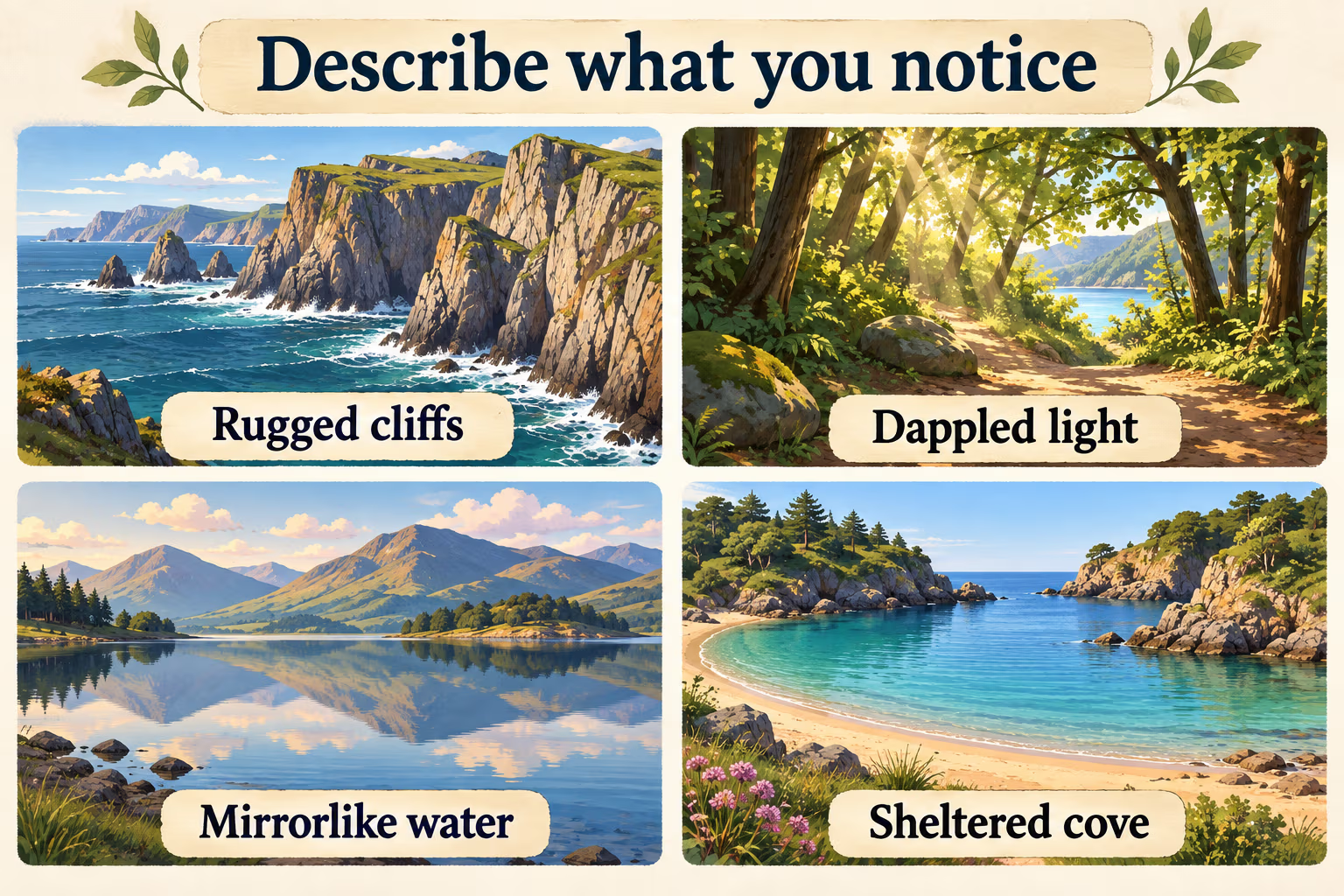
Describe What You Notice
Start with a noun—ridge, courtyard, shoreline, garden, or skyline—then choose the adjective that fits its observable quality. A rugged ridge has a rough, uneven profile; dappled light falls in patches through leaves; mirrorlike water reflects its surroundings; and a sheltered cove is protected from exposure. Specific details let readers imagine why a place feels beautiful instead of relying on a general label.
Words to Use with Care
- Pristine usually praises a clean, fresh, or apparently unspoiled condition. Use it only when the setting supports that claim; it does not prove that a place has never been affected by people.
- Idyllic presents a setting as especially peaceful or ideal. It expresses an impression, not a guarantee that the place is free of practical problems.
- Cosmopolitan describes a place associated with people or influences from many parts of the world. It can suit a city, but it is not a synonym for beautiful.
- Sun-kissed is a figurative, promotional-sounding choice for a place touched by warm sunlight. In a neutral description, “sunlit” may be more direct.
Short Examples by Setting
- Mountain: “A rugged trail climbed toward a majestic, snow-striped ridge.”
- Garden: “Dappled light crossed the serene courtyard, where a stone fountain stood among lush ferns.”
- Coast: “From the panoramic overlook, the sheltered cove looked turquoise beneath the morning sun.”
- City: “The historic plaza felt vibrant at dusk, with lanterns glowing above its tiled arcades.”
When it comes to describing beautiful places, words often fall short. The breathtaking landscapes, the vibrant colors, and the serene atmosphere are all elements that make a place truly beautiful. As a seasoned traveler and avid wordsmith, I’ve compiled a list of adjectives that can capture the essence of these stunning locations. From picturesque to awe-inspiring, these words will help you paint a vivid picture of the most beautiful places on Earth. So, whether you’re a travel enthusiast looking for inspiration or simply appreciate the beauty of the world, join me as we explore the descriptive wonders of these captivating destinations.
Imagine standing on a cliff, overlooking a vast expanse of turquoise waters that stretch as far as the eye can see. The word “beautiful” simply doesn’t do justice to such a sight. That’s where descriptive adjectives come in. They have the power to transport you to these extraordinary places, evoking emotions and sensations that words alone cannot convey. From the majestic snow-capped mountains to the pristine white sandy beaches, each location has its own unique charm that deserves to be celebrated. So, let’s dive into the world of adjectives and discover the perfect words to describe these breathtakingly beautiful places.
How to Describe beautiful place? – Different Scenarios
When it comes to describing beautiful places, adjectives play a crucial role in painting a vivid picture in the reader’s mind. Let’s explore different scenarios and learn how to effectively describe stunning locations.
1. Scenic landscapes:
When describing scenic landscapes, it’s important to focus on the sights and natural features that make the place beautiful. Here are some adjectives that can help you capture the essence of these breathtaking vistas:
- Majestic: The towering mountains and cascading waterfalls create a truly majestic scene.
- Serene: The peaceful lake, surrounded by lush green trees, evokes a sense of serenity.
- Picturesque: The charming old town, with its colorful houses and cobblestone streets, is truly picturesque.
- Panoramic: The scenic overlook offers a panoramic view of the sprawling valley below.
2. Pristine beaches:
Describing pristine beaches requires attention to the details that make them unique. Here are some adjectives that can help you transport your readers to sandy shores:
- Tranquil: The gentle lapping of the waves and the soft caress of the sea breeze create a tranquil atmosphere.
- Idyllic: The palm-fringed beach, with its crystal-clear turquoise water, is the epitome of an idyllic paradise.
- Sun-kissed: The golden sand glistens under the warm, sun-kissed sky, inviting visitors to relax and unwind.
- Secluded: The secluded beach, hidden away from the hustle and bustle, offers a peaceful retreat from the world.
3. Enchanting cities:
Describing enchanting cities requires capturing the charm and allure of their architecture and culture. Here are some adjectives that can help you paint a beautiful picture of these captivating urban spaces:
- Vibrant: The bustling city streets are filled with vibrant colors, lively music, and the scent of delicious street food.
- Historic: The cobblestone alleys and centuries-old buildings add a touch of history and charm to the city’s atmosphere.
- Cosmopolitan: The city’s diverse population and eclectic mix of cuisines create a cosmopolitan vibe that is truly unique.
- Architectural marvel: The city is dotted with architectural marvels, from grand cathedrals to modern skyscrapers, showcasing its rich history and innovation.
Describing Words for beautiful place in English
When it comes to describing beautiful places, there is a wide array of adjectives that can be used to paint a vivid picture in the reader’s mind. These words help us convey the enchantment and awe-inspiring qualities of the places we explore. As someone who has had the opportunity to witness numerous breathtakingly beautiful locations, I’ve compiled a list of adjectives that can effectively capture the essence of these places.
- Majestic: Majestic places command a sense of grandeur and superiority, leaving us in awe of their beauty. Think of towering mountains, impressive waterfalls, or ancient castles that inspire wonder and reverence.
- Idyllic: Idyllic places are peaceful and serene, offering a picturesque setting that is almost too perfect to be real. Picture a tranquil countryside with rolling hills, meandering rivers, and charming cottages nestled among abundant greenery.
- Exquisite: Exquisite places possess a delicate beauty that is both rare and refined. These are places where every detail is meticulously designed, leaving visitors marveling at the intricate craftsmanship and stunning displays of art or architecture.
- Breathtaking: Breathtaking places quite literally take our breath away with their sheer beauty and magnificence. From panoramic vistas of lush landscapes to stunning sunsets over the ocean, these places leave a lasting impression on all who have the privilege of beholding them.
- Enchanting: Enchanting places have a mystical quality that captivates the imagination. They are often filled with charm, myth, and a hint of magic, inviting visitors to lose themselves in their spellbinding beauty.
- Pristine: Pristine places are untouched by human intervention, showcasing untouched natural beauty at its finest. These places are unspoiled and pure, providing a sense of tranquility and a connection to the raw power of nature.
Remember, the key to creating a captivating description lies in choosing the right adjectives that resonate with your readers and accurately convey the essence of the beautiful places you are describing. By using these adjectives, you can transport your readers to these awe-inspiring destinations and allow them to experience the beauty for themselves.
| Adjective | Meaning |
|---|---|
| Majestic | Grand, superior |
| Idyllic | Peaceful, perfect |
| Exquisite | Refined |
Adjectives for beautiful place
Positive Adjectives for Beautiful Places
When it comes to describing beautiful places, there is a wide range of positive adjectives that can help create vivid and captivating descriptions. Here are some examples:
| Adjective | Example Sentence |
|---|---|
| Majestic | The majestic mountains towered over the landscape. |
| Idyllic | We found ourselves in an idyllic little village. |
| Exquisite | The exquisite details of the architecture amazed me. |
| Breathtaking | The view from the top of the hill was breathtaking. |
| Enchanting | The enchanting city streets were filled with history. |
| Pristine | The beach was covered in pristine white sand. |
| Serene | The serene lake mirrored the sky above. |
| Tranquil | We walked along the tranquil riverbank. |
| Picturesque | The picturesque countryside was like something out of a postcard. |
| Magical | The magical sunset cast a warm glow over the landscape. |
| Heavenly | The view from the mountaintop was simply heavenly. |
| Captivating | The captivating beauty of the waterfall left us speechless. |
Negative Adjectives for Beautiful Places
Although beautiful places are often associated with positive emotions, there are also negative adjectives that can be used to describe certain aspects. Here are a few examples:
| Adjective | Example Sentence |
|---|---|
| Crowded | The crowded streets of the city were overwhelming. |
| Noisy | The noisy construction nearby disturbed the peace. |
| Polluted | The polluted air made it hard to fully enjoy the view. |
| Busy | The busy tourist season brought a lot of hustle and bustle. |
| Touristy | Unfortunately, the beach had become too touristy. |
Remember, when using adjectives to describe beautiful places, it’s important to choose words that resonate with your readers and accurately convey the essence of the places you are describing. So go ahead and explore the world of adjectives to find the perfect words to paint a vibrant picture of breathtakingly beautiful destinations.
Synonyms and Antonyms with Example Sentences
Synonyms for Beautiful Place
When describing a beautiful place, there are many synonyms you can use to add variety and color to your descriptions. Here are some examples of synonyms for “beautiful”:
- Gorgeous: The sunset over the ocean was absolutely gorgeous.
- Stunning: The view from the mountaintop was stunning.
- Breathtaking: The waterfall in the middle of the forest was truly breathtaking.
- Picturesque: The quaint little village was so picturesque, it felt like stepping into a postcard.
- Serene: The serene lake was a peaceful haven amidst the hustle and bustle of the city.
- Idyllic: The small cottage nestled in the meadow was an idyllic retreat.
- Majestic: The towering mountains created a majestic backdrop for the valley below.
Antonyms for Beautiful Place
Sometimes, you may want to describe a place that is not particularly beautiful. In such cases, using antonyms can help you accurately capture the essence of the location. Here are some examples of antonyms for “beautiful”:
- Dreary: The abandoned factory was a dreary and desolate place.
- Ugly: The concrete jungle of the city can be overwhelming and ugly.
- Dismal: The grey and rainy weather made the park seem dismal and gloomy.
- Unpleasant: The crowded and noisy market was an unpleasant place to be.
- Barren: The desert with its vast stretches of sand and rocks was a barren landscape.
- Chaotic: The bustling city center was a chaotic mess of traffic and noise.
- Repulsive: The decaying and run-down building was repulsive to look at.
Remember, choosing the right adjectives is crucial when describing a place as it helps create a vivid picture in the reader’s mind. Whether you are describing a beautiful place or one that is not so appealing, using the appropriate synonyms or antonyms can enhance your descriptions and engage your audience.
Conclusion
Describing beautiful places requires the use of adjectives that capture the essence and allure of these locations. Throughout this article, I have discussed the importance of carefully selecting the right adjectives to create vivid and captivating descriptions. By choosing the appropriate synonyms and antonyms, we can add depth and variety to our writing, making it more engaging for our readers.
Using adjectives effectively allows us to paint a picture in the minds of our audience, transporting them to these beautiful places and allowing them to experience the sights, sounds, and emotions firsthand. It is through the power of words that we can truly convey the unique qualities and charm of each location.
Whether it’s the serene tranquility of a secluded beach, the vibrant energy of a bustling city, or the breathtaking grandeur of a majestic mountain range, adjectives help us capture the beauty and essence of these places. By incorporating these descriptive words into our writing, we can create immersive and captivating descriptions that leave a lasting impression on our readers.
So, the next time you find yourself describing a beautiful place, remember the power of adjectives and choose your words wisely. Let your writing transport your readers to these enchanting destinations and allow them to experience the magic for themselves.

Frequently Asked Questions About Adjectives for Beautiful Places
What is a strong adjective for a beautiful place?
Breathtaking is a strong choice when a view inspires awe. Use majestic for grandeur, stunning for a striking impression, and picturesque when a scene looks especially charming.
What adjective describes a peaceful place?
Serene or tranquil describes a calm, quiet atmosphere. For example: “We rested beside a serene pond shaded by willows.”
What is the difference between scenic and picturesque?
Scenic relates broadly to scenery or a pleasing view. Picturesque suggests a picture-like, charming appearance. A whole coastal drive can be scenic, while one colorful fishing village along it may be picturesque.
Can a city or historic place be scenic?
Yes. A scenic view can include buildings, streets, and culturally or historically meaningful places as well as natural features. Name the detail that makes the particular view notable.


