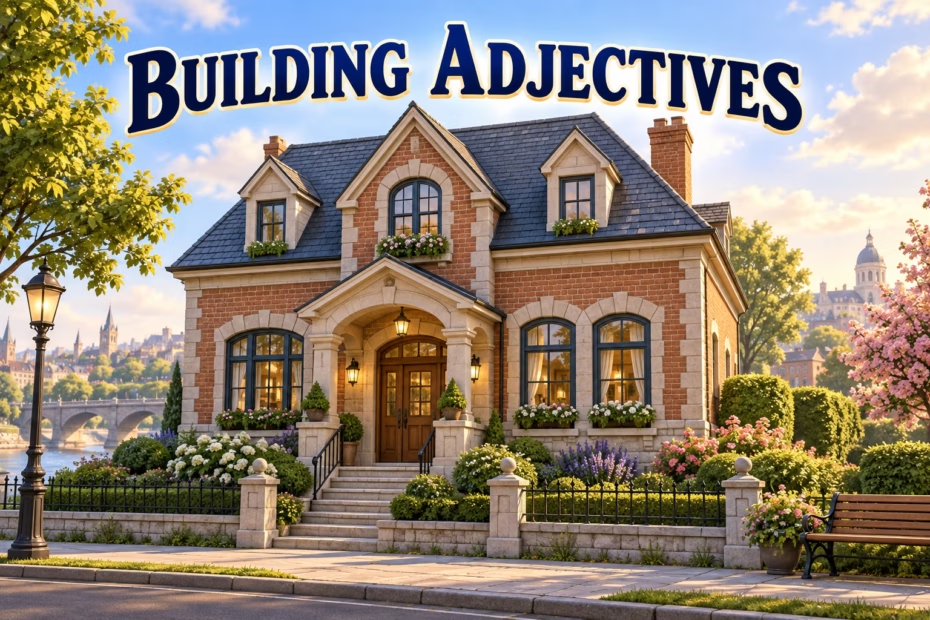
Choose adjectives for a building by naming what you can observe: a low-rise shape, arched openings, a tiled roof, brick walls, or a sunlit interior. Start with the setting and overall form, then notice roof features, projections, recesses, windows, materials, color, texture, and craftsmanship. Keep visible details distinct from style labels and judgments.
Key points
- Move from broad to specific: notice the site and overall form first, then the roof, projections, recesses, openings, and materials.
- At close range, describe surface qualities such as color, texture, and craftsmanship. For an interior, notice the room shape, finishes, and how spaces connect.
- Separate observable details (arched, brick-faced, weathered) from evaluations (beautiful, dreary) or claims that need evidence (historic, safe, sustainable).
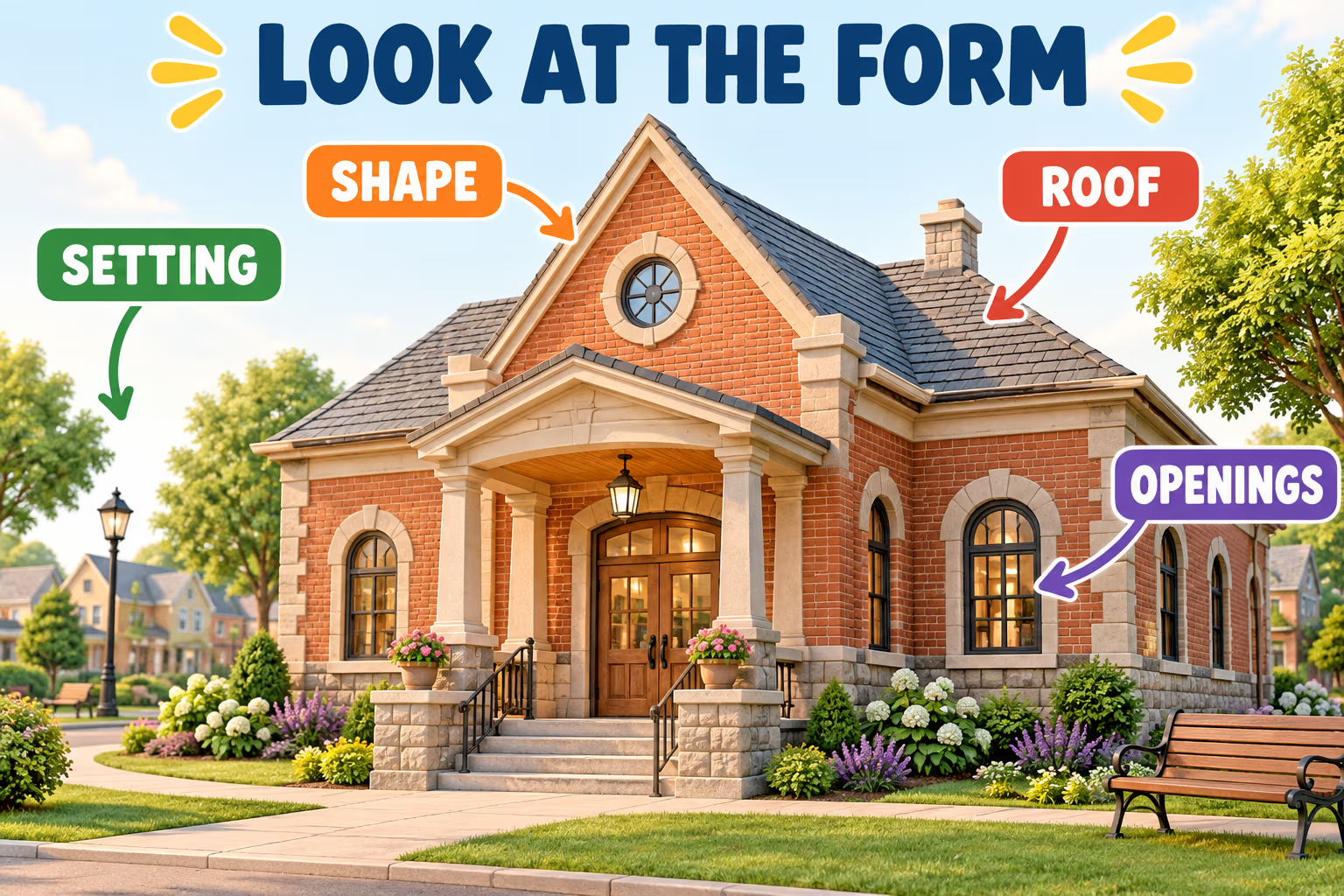
- The National Park Service’s Preservation Brief 17 offers a practical three-step visual framework: overall setting and form, close-range surface qualities, then interior spaces and features. It was written for understanding architectural character; this guide uses its feature checklist to help writers choose precise words.
Which Adjective Fits the Building Feature?
A building can be described in several ways at once. Brick names a material; arched names a form; low-rise describes scale; residential names a use; and elegant expresses an impression. These words answer different questions, so choose the category that helps a reader picture the feature you mean.
| What to observe | Adjectives to consider | Example |
|---|---|---|
| Setting and site | urban, waterfront, hillside, secluded, prominent | The compact library stands on a sloping corner lot beside the river. |
| Overall shape and scale | low-rise, tall, broad, narrow, symmetrical, monumental | A broad, symmetrical facade faces the public square. |
| Roof, projections, and recesses | gabled, flat-roofed, projecting, recessed, porch-framed, stepped | A recessed entrance sits beneath a projecting canopy. |
| Windows and doorways | arched, glazed, narrow, evenly spaced, shuttered, columned | Tall, evenly spaced windows break up the brick facade. |
| Materials and surfaces | brick-faced, timber-framed, stone-clad, glazed, textured, weathered | Rough-cut stone contrasts with smooth metal trim. |
| Color and craftsmanship | earth-toned, contrasting, finely detailed, hand-finished, patterned | Contrasting mortar outlines the carefully laid brickwork. |
| Interior space and light | airy, enclosed, lofty, narrow, interconnected, sunlit | The airy lobby opens through a wide arch into a quieter reading room. |
| Known function | residential, civic, commercial, industrial, educational, cultural | The former warehouse now serves as a cultural center. |
Describe What You See Before You Judge It
Specific observations give readers something they can picture; evaluative adjectives tell them how you feel about it. Both are useful, but do not present an opinion as a physical fact. When a word could mean different things, replace it or pair it with a detail that explains your meaning.
| Broad or interpretive word | More specific description | Why the distinction helps |
|---|---|---|
| Beautiful | Its pale stone entry is framed by carved columns and a broad stair. | Readers can picture the features behind the writer’s positive opinion. |
| Modern | A glass curtain wall wraps around the steel-framed upper floors. | “Modern” might mean recent or refer to a particular design tradition; name the visible form when that is what you mean. |
| Old or historic | The facade has weathered brick and replacement windows. | Weathering is observable; age and historical significance require dates, records, or other context. |
| Safe or sturdy | Describe visible materials and features, such as a steel frame or masonry walls. | A photograph or adjective cannot establish structural safety or condition. |
| Sustainable | Describe documented features, such as a verified energy rating or installed solar panels. | Environmental performance depends on evidence beyond appearance alone. |
Even a visible condition word needs care. Weathered describes a surface; cracked names a visible mark. Neither alone proves that a building is structurally unsafe. Likewise, a building may look old without being historically significant. The National Park Service explains that a historic property’s character-defining features are understood in relation to its history and significance, from its overall shape and land use to details such as stone patterns and mortar color (NPS, Character-Defining Features of a Historic Property).
How to Describe a Building’s Exterior and Interior
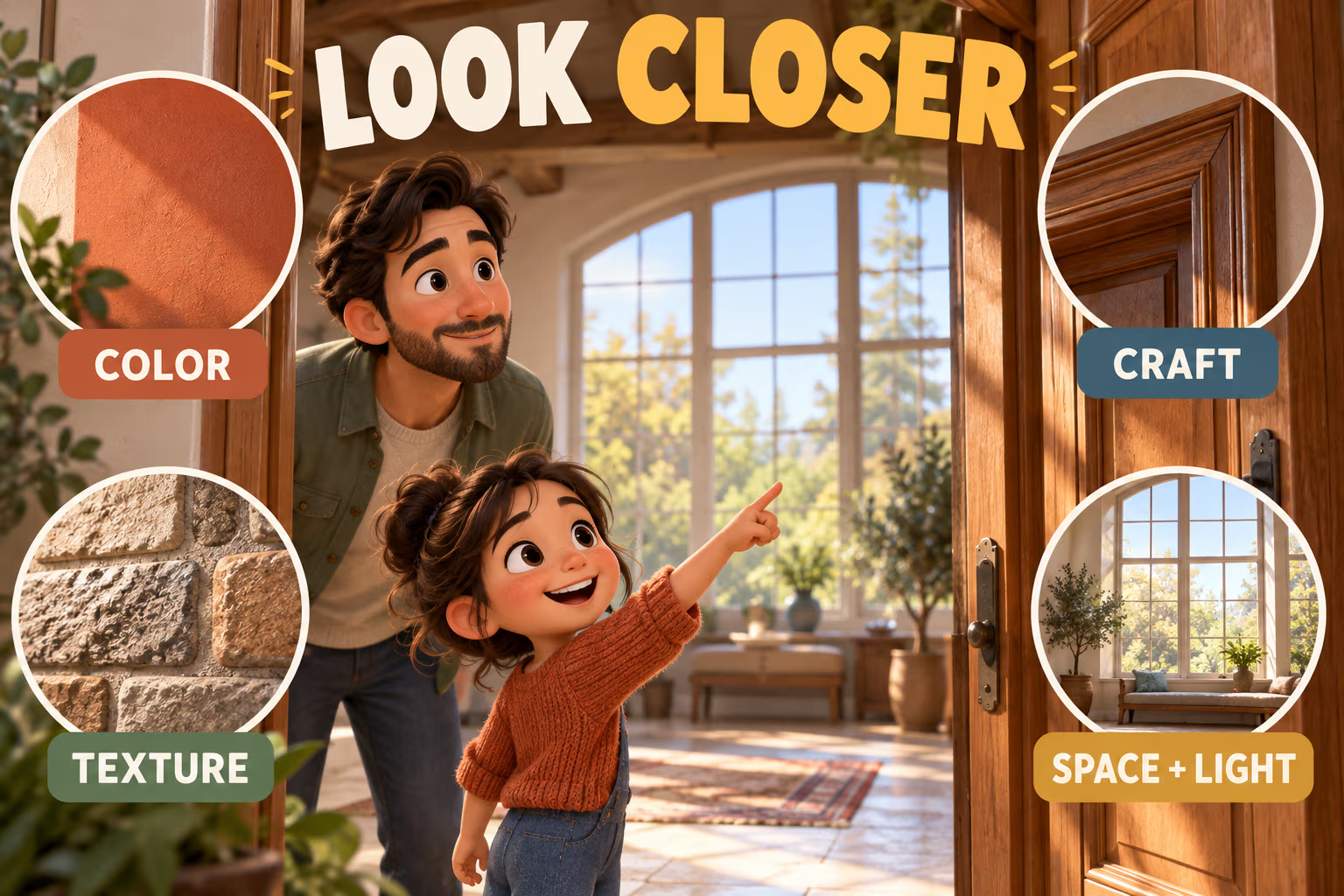
For an exterior, first step back and look at the building in its setting. Then move around it, if possible, and notice the roofline, chimneys or cupolas, porches or bay windows, arcades or recessed balconies, doors, windows, and exterior materials. At close range, compare color, texture, joints, finishes, and visible workmanship. The same word can be too broad in one context and precise in another: ornate is an impression, while “carved stone trim around the doorway” names what creates it.
For an interior, describe one room and then how it relates to the spaces around it. Lofty may fit a high ceiling; narrow may fit a corridor; interconnected can describe rooms linked by an open archway. Also note finishes and features such as wood floors, a fireplace mantel, exposed beams, or a plain, uncluttered wall. A room can feel spacious because of its dimensions, layout, light, or view; name the reason rather than relying on a general label.
Use Architectural Style Labels Carefully
Ordinary adjectives describe qualities; architectural style labels identify a design tradition or type. Arched, ornate, and symmetrical can describe visible features without identifying a style. A name such as Gothic Revival is more specific and should fit recognizable design features or reliable documentation. Do not call a building Gothic simply because it looks old, or “historic” merely because it is attractive or weathered.
Use function words only when the building’s use is known. Commercial, educational, and residential describe purpose, which may not be obvious from a facade; a former school might now house apartments. For more words about architectural characteristics, see our guide to adjectives for architecture; for rooms and decor, see adjectives for interior design.
A Four-Step Building Description
- Set the scene: say where the building sits and how its scale relates to the surroundings.
- Name its form: describe its overall shape, roof, projections, recesses, windows, and doors.
- Look closer: add materials, colors, surface texture, craftsmanship, and interior features.
- Separate fact from impression: support words such as elegant with details, and verify claims about age, historic status, safety, or environmental performance.
For example, instead of “The beautiful old building was sustainable,” try: “The three-story brick library has a shallow roof, evenly spaced arched windows, and a recessed entrance; its public records list a solar array installed in 2022.” The first version blends opinions and unverified claims. The second gives a visual description and identifies the evidence for the sustainability detail.
Reading the Original Positive and Negative Lists
The original examples below remain intact. Its positive and negative categories are useful for writing, but evaluations such as impressive, dreary, or unsightly depend on a viewer’s purpose and taste. When you want a neutral description, pair the adjective with its visible basis—such as a dim interior, crowded furnishings, or chipped paint—and avoid turning appearance into a claim about safety or significance.
When it comes to describing buildings, the right adjectives can make all the difference. As a seasoned architect, I’ve come across countless structures that have left me in awe, and it’s often the descriptive words used to capture their essence that truly bring them to life. In this article, I’ll be sharing a comprehensive list of adjectives that can be used to describe buildings, along with examples that showcase their application. Whether you’re an aspiring architect, a design enthusiast, or simply someone who appreciates the beauty of buildings, this guide will help you find the perfect words to articulate your admiration.
From towering skyscrapers to quaint cottages, buildings come in all shapes and sizes, each with its own unique character and charm. As I walk through the streets of a city, I can’t help but be captivated by the architectural wonders that surround me. The grandeur of a majestic cathedral, the sleekness of a modern glass facade, the rustic beauty of a historic landmark – these are just a few examples of the myriad of adjectives that can be used to describe buildings. In this article, I’ll be diving into the world of architectural vocabulary, providing you with a curated selection of adjectives that will help you paint a vivid picture of any building you encounter.
How to Describe building? – Different Scenarios
Describing buildings is an important skill for architects, design enthusiasts, and anyone who appreciates the beauty of architecture. Each building has its own unique features and characteristics that can be effectively conveyed through the use of descriptive adjectives. In this section, I’ll provide you with different scenarios and examples to help you describe buildings accurately.
Scenario 1: Describing the Exterior of a Building
When describing the exterior of a building, consider its overall appearance, architectural style, and notable features. Here are some examples to get you started:
| Adjective | Example Sentence |
|---|---|
| Majestic | The majestic building stood tall, commanding attention. |
| Modern | The sleek design of the building reflected its modernity. |
| Vibrant | The vibrant colors of the building added a lively touch. |
| Ornate | The ornate façade of the building showcased intricate details. |
Scenario 2: Describing the Interior of a Building
Describing the interior of a building involves capturing its atmosphere, layout, and decor. Use these adjectives to create a vivid picture:
| Adjective | Example Sentence |
|---|---|
| Spacious | The spacious interior provided ample room for creativity. |
| Cozy | The cozy atmosphere of the building made it feel like home. |
| Elegant | The elegant furnishings added a touch of sophistication. |
| Bright | The large windows flooded the interior with natural light. |
Scenario 3: Describing the Function of a Building
When describing the function of a building, focus on its purpose and how it serves its users. Consider these adjectives:
| Adjective | Example Sentence |
|---|---|
| Educational | The building was designed to provide an educational environment. |
| Functional | The layout of the building was designed for optimal functionality. |
| Sustainable | The sustainable features of the building aligned with eco-friendly principles. |
| Multi-purpose | The building served a multi-purpose role, accommodating various activities. |
| Adjective | Example Sentence |
|---|---|
| Scenic | The building was nestled in |
Describing Words for building in English
When it comes to describing buildings, it’s important to choose the right adjectives to accurately convey their characteristics and features. Whether you’re an architect, a design enthusiast, or simply someone who appreciates the beauty of architecture, having a diverse vocabulary of describing words can greatly enhance your ability to articulate your admiration effectively. In this section, I’ll provide you with a range of adjectives that you can use to describe different aspects of a building, along with examples to help you understand their usage.
Describing the Exterior of a Building
When describing the exterior of a building, it’s essential to capture its appearance, style, and overall impression. Here are some adjectives that can be used to describe the exterior of a building:
- Elegant
- Majestic
- Modern
- Sleek
- Ornate
- Stately
- Unique
Example: The majestic building with its towering spires and intricate architectural details never fails to leave visitors in awe.
Describing the Interior of a Building
The interior of a building is where its true character and functionality come to life. Here are some adjectives to describe the interior of a building:
- Spacious
- Cozy
- Luxurious
- Welcoming
- Contemporary
- Minimalistic
- Inviting
Example: As I stepped into the welcoming interior of the building, I was greeted by a warm ambiance and an expansive open floor plan.
Describing the Function of a Building
A building’s purpose and function play a significant role in its design and layout. Here are some adjectives that can be used to describe the function of a building:
- Educational
- Commercial
- Residential
- Cultural
- Historical
- Sustainable
- Innovative
Example: The sustainable building incorporates state-of-the-art technology to reduce energy consumption and promote eco-friendly practices.
Remember, using the right adjectives can bring your descriptions of buildings to life. Experiment with different words to accurately convey the unique characteristics and features of the buildings you encounter.
I hope this section has provided you with useful adjectives to describe buildings in English. Continue reading to discover more exciting and insightful information about adjectives for buildings.
Adjectives for building
As someone who appreciates architecture or works in the field of design, you know that choosing the right adjectives to describe buildings is essential. Whether you’re talking about the exterior, interior, or overall function of a building, using the right words can effectively articulate your admiration. Here are some adjectives to help you accurately describe buildings, along with examples to give you a better understanding of their usage.
Positive Adjectives for Building
When it comes to describing buildings in a positive light, there are a plethora of adjectives you can use. These words can evoke a sense of admiration, awe, and appreciation for the architectural beauty. Here are 12 positive adjectives you can use:
| Adjective | Definition | Example Sentence |
|---|---|---|
| Majestic | Having grandeur or dignity | The majestic cathedral towered above the city skyline. |
| Impressive | Evoking admiration or respect | The museum’s impressive facade drew crowds of visitors. |
| Stately | Dignified and imposing in appearance | The stately mansion showcased exquisite craftsmanship. |
| Striking | Attracting attention or admiration | The modern building’s striking design turned heads. |
| Elegant | Gracefully stylish or tasteful | The hotel’s elegant interiors exuded luxury. |
| Iconic | Widely recognized and well-established as a symbol | The Eiffel Tower is an iconic landmark of Paris. |
| Unique | One of a kind | The library’s unique design set it apart from other buildings. |
| Contemporary | Reflecting the present time or current trends | The art gallery showcased contemporary architectural designs. |
| Serene | Calm and peaceful | The beachfront villa offered a serene atmosphere for relaxation. |
| Inviting | Welcoming and attractive | The cafe’s inviting atmosphere made it a popular spot. |
| Harmonious | Exhibiting a pleasing arrangement or combination of elements | The concert hall was praised for its harmonious acoustics. |
| Sustainable | Designed to minimize harm to the environment | The sustainable office building featured solar panels and green spaces. |
Negative Adjectives for Building
While we often focus on the positive aspects of buildings, there are times when negative adjectives are necessary to convey certain qualities or flaws. Here are 5 negative adjectives you can use when describing buildings:
| Adjective | Definition | Example Sentence |
|---|---|---|
| Dilapidated | In a state of disrepair or ruin | The abandoned house had a dilapidated roof and crumbling walls. |
| Dreary | Dull, bleak, or depressing | The office building’s dreary interior lacked natural light. |
| Cluttered | Filled with an excessive amount of objects | The small apartment felt cluttered and cramped. |
| Unsightly | Unpleasant or unattractive to look at | The graffiti made the historic building look unsightly. |
| Impractical | Not suitable or efficient for practical use | The building’s unconventional layout made it impractical for office space. |
Remember, the adjectives you choose should accurately reflect your observations and opinions about buildings. Each adjective has its own unique meaning and can greatly impact how others perceive the architectural beauty. So, use these adjectives wisely and let your descriptions bring buildings to life in the minds of your readers.
Synonyms and Antonyms with Example Sentences
Synonyms for Building
When it comes to describing buildings, there are various synonyms that can help us convey different aspects and qualities. Here are some synonyms for the word “building” along with example sentences:
| Synonym | Example Sentence |
|---|---|
| Structure | The tallest structure in the city is a skyscraper. |
| Edifice | The ancient edifice stood majestically in the square. |
| Construction | The construction of the new office building is underway. |
| Establishment | The historical establishment was converted into a museum. |
| Architecture | The unique architecture of the building caught my eye. |
Antonyms for Building
On the other hand, we also have antonyms that describe the opposite characteristics or qualities of a building. Here are some antonyms for the word “building” along with example sentences:
| Antonym | Example Sentence |
|---|---|
| Demolition | The demolition of the old building made way for a new park. |
| Ruin | The abandoned ruin was once a magnificent building. |
| Collapse | The poorly constructed building collapsed during the storm. |
| Deterioration | The gradual deterioration of the building was evident. |
| Disintegration | The neglected building showed signs of disintegration. |
Remember, using a wide range of adjectives can help us paint a vivid picture and accurately convey our thoughts about buildings. By incorporating synonyms and antonyms into our vocabulary, we can add depth and richness to our descriptions.
Conclusion
In this article, I have explored the significance of selecting the right adjectives when describing buildings. By providing a wide range of synonyms and antonyms for the word “building,” along with example sentences, I aimed to enhance readers’ understanding of their usage. It is crucial to incorporate a diverse array of adjectives to paint a vivid picture and effectively convey our thoughts about buildings.
By incorporating synonyms and antonyms into our vocabulary, we can add depth and richness to our descriptions. Architects, design enthusiasts, and those who appreciate architecture can benefit from this knowledge, as it allows them to articulate their admiration and effectively convey certain qualities or flaws of buildings.
Remember, the choice of adjectives can greatly impact how we perceive and understand buildings. Whether it’s describing their grandeur, elegance, or even their flaws, the right adjectives can help us accurately convey our thoughts and emotions. So, let’s continue to explore the vast world of adjectives and expand our vocabulary to create captivating and insightful descriptions of the buildings we encounter.
Frequently Asked Questions About Building Adjectives
What are good adjectives to describe a building?
Useful building adjectives include low-rise, symmetrical, arched, brick-faced, weathered, sunlit, spacious, and interconnected. Choose words that fit the feature: arched describes form, brick-faced names a material, and spacious describes an interior impression. Add a concrete detail when an evaluative word such as beautiful is important.
How can I describe a building’s exterior?
Begin with the site and overall shape, then describe the roof, projections such as porches, recesses such as arcades, doors, windows, and materials. At closer range, notice color, texture, joints, and craftsmanship. For example: “The low-rise brick library has a shallow roof and evenly spaced arched windows.”
What is the difference between “modern” and “contemporary”?
In everyday writing, modern may mean recent, current-looking, or connected with Modernist design, so it can be ambiguous. Contemporary usually means of the present period. If you mean a visible quality, describe it directly—such as a glass facade or open plan—and use a style label only when it is justified.
Can appearance show that a building is historic, safe, or sustainable?
Appearance alone cannot establish historical significance, structural safety, or environmental performance. Weathered masonry is a visible condition, not proof of a building’s date or stability. Use records, professional evaluation, or documented performance information when those claims matter, and keep the visual description separate from the evidence.
What adjectives describe a building’s interior?
Try lofty for a high-ceilinged room, narrow for a compact corridor, sunlit for a bright space, or interconnected for rooms joined by open passages. You can also name materials and finishes—such as wood-paneled, tiled, or plastered. Describe the feature that creates the impression so readers can picture the space.


