
Adjectives for a citizen describe a person’s actions, attitudes, or relationship to a community; they do not determine who legally qualifies as a citizen. Useful choices include engaged, responsible, law-abiding, and community-minded, when the example supports that description.
Key Facts About Citizen Descriptors
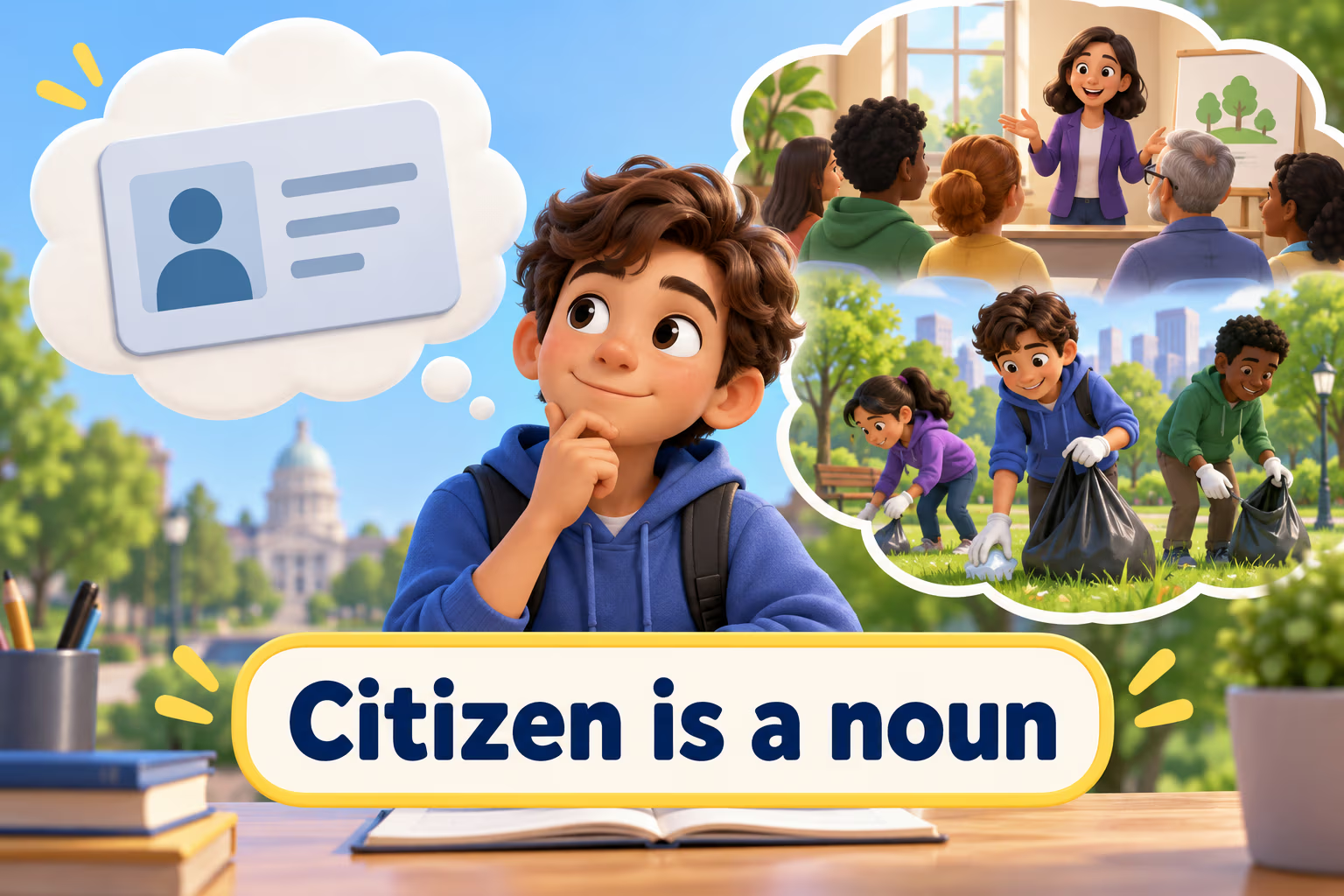
- Citizen is a noun; civic is the adjective related to citizens, towns, or public life.
- Engaged and active describe participation when you can name the activity.
- Law-abiding describes conduct toward laws; patriotic describes expressed attachment to a country.
- Volunteer is generally a noun or verb; use voluntary as the adjective for willing, unpaid work.
- “Selfish,” “lazy,” and “dishonest” are behavior judgments, not antonyms of citizen.

Which Adjectives Fit a Citizen?
The best adjective depends on the action, setting, and tone you want to convey. Use a specific word supported by the example instead of treating every citizen as if they share one personality or political outlook.
| Adjective | What it describes | Example |
|---|---|---|
| Engaged | Active interest or participation | “The engaged resident spoke at a public meeting.” |
| Responsible | Careful handling of a stated duty | “A responsible juror reviews the evidence before deciding.” |
| Law-abiding | Conduct that follows applicable laws | “The law-abiding driver stopped at the red light.” |
| Community-minded | Concern for shared local needs | “Community-minded neighbors organized a clean-up.” |
| Patriotic | Expressed attachment to one’s country | “The patriotic speaker honored the country’s history.” |
| Inclusive | Effort to include people across differences | “The inclusive organizer made the meeting accessible.” |
| Critical | Careful evaluation or disagreement | “The critical citizen questioned how the budget was spent.” |
How Do Citizen and Civic Differ?
Citizen names a person who belongs to a country as a matter of legal membership, or more loosely a person associated with a town or city. Civic is the adjective in phrases such as civic duty, civic life, and civic engagement. Cambridge Dictionary also records civic for behavior associated with being a good member of society (civic entry).
Use citizen when naming the person: “The citizen asked a question.” Use civic when modifying a related noun: “The question concerned civic policy.” A person may be a resident without being a citizen under a country’s law, so the terms should not be swapped in legal or immigration contexts.
How Can You Choose a Precise Word?
- Name the behavior or quality. Is the sentence about participation, honesty, patriotism, or care for neighbors?
- Check the grammar. Use an adjective before a noun (“an engaged citizen”) or after a linking verb (“the citizen is engaged”).
- Match the evidence. “Volunteered at the food pantry” supports “helpful” in that situation; it does not prove a person is always generous.
- Choose the right register. “Law-abiding” is precise and neutral; “compliant” can suggest obedience to an authority, whether or not the rule is fair.
- Keep legal status separate. When discussing rights or eligibility, use the precise legal term for the relevant country rather than inferring status from someone’s conduct.

What Is the Difference Between Volunteer and Voluntary?
Volunteer is commonly a noun (“a volunteer”), a verb (“to volunteer”), and an attributive modifier in phrases such as “volunteer staff.” Voluntary is the straightforward adjective meaning willingly done, often without pay or force. Cambridge Dictionary distinguishes these uses in its entries for volunteer and voluntary.
Prefer “a citizen who volunteers,” “a volunteer citizen” when the context makes the compound clear, or “a citizen who does voluntary work.” The original word list calls volunteer an adjective; that label is not the clearest choice for a learner’s adjective list.
How Should You Describe Behavior Fairly?
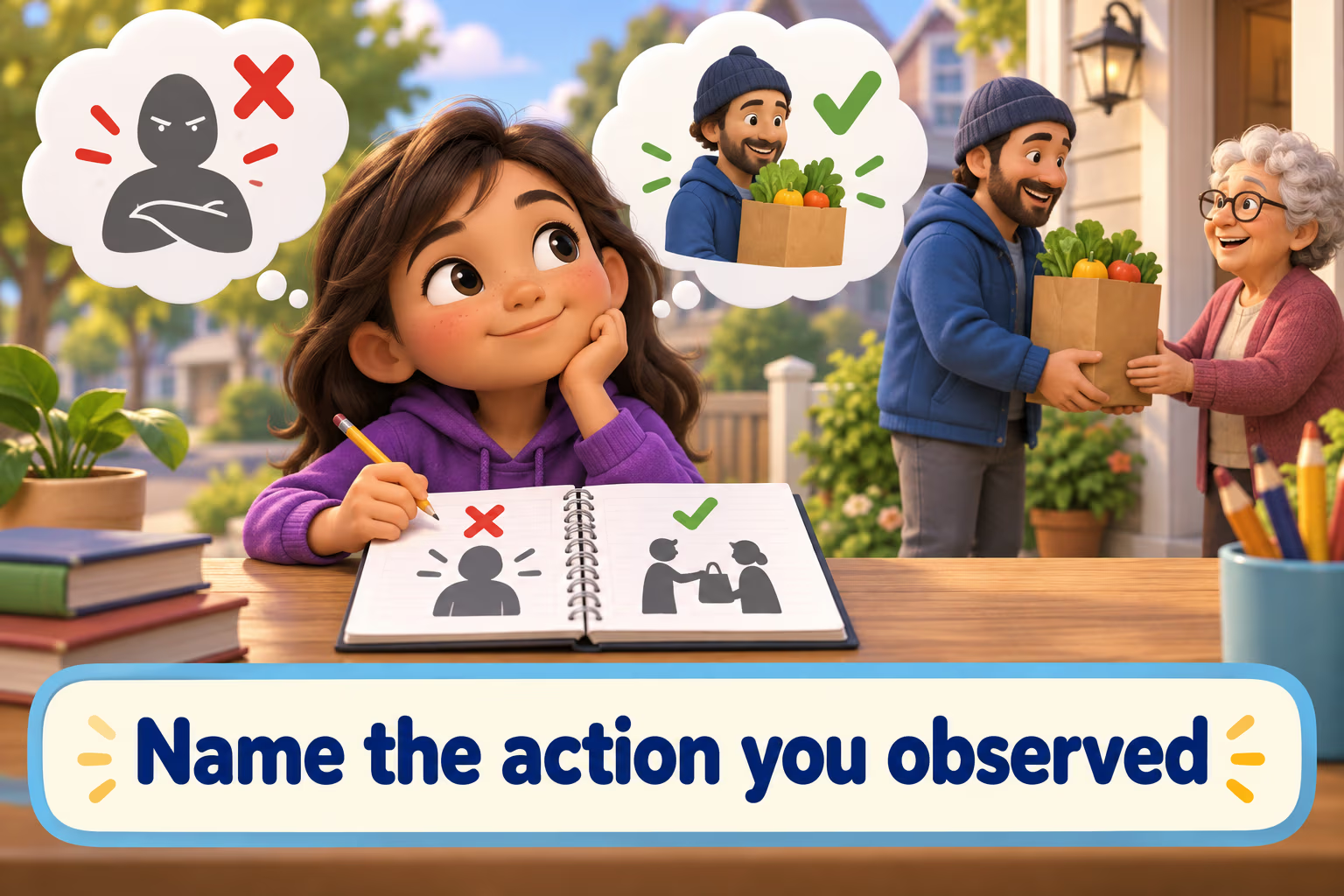
Describe an observable action when a sentence makes a judgment about character. “She organized rides to the neighborhood meeting” gives a reader evidence; “she is a perfect citizen” makes a broad evaluation that the single action cannot prove.
- Prefer “missed two meetings” to “lazy” when the fact is attendance.
- Prefer “gave inaccurate information” to “dishonest” unless the sentence has evidence of deliberate deception.
- Prefer “disagreed with the proposal” to “unpatriotic”; criticism of a policy does not by itself show a person’s attachment to a country.
- Use “law-abiding” for behavior that follows applicable law, not as a guarantee that someone is ethical in every area.
Being a citizen is a fundamental aspect of our identity. It defines our rights, responsibilities, and connection to a particular country or community. But have you ever stopped to think about the different qualities and characteristics that can describe a citizen? In this article, I’ll explore a variety of adjectives that can be used to paint a vivid picture of what it means to be a citizen. From patriotic and law-abiding to active and engaged, these adjectives will help us better understand the diverse nature of citizenship.
When we think of a citizen, certain words may come to mind – loyal, responsible, or even civic-minded. But the beauty of language is that it allows us to delve deeper and uncover a wide range of adjectives that can capture the essence of a citizen. Whether it’s describing their behavior, attitude, or values, these adjectives provide a nuanced perspective on what it means to be a citizen. In the following paragraphs, I’ll provide examples and explanations for some of these adjectives, shedding light on the multifaceted nature of citizenship.
As we explore these adjectives, it’s important to remember that being a citizen is not a one-size-fits-all concept. Every citizen brings their own unique qualities and contributions to their community. So, let’s dive in and discover the rich tapestry of adjectives that can be used to describe citizens, offering a deeper understanding of their role and impact in society.
How to Describe citizen? – Different Scenarios
When it comes to describing a citizen, there are various scenarios that can come into play. Each scenario provides a unique lens through which we can understand and describe individuals in our society. Let’s explore some of these scenarios:
1. Active Citizen
An active citizen is someone who takes an active role in their community. These individuals are engaged in various activities and initiatives that contribute to the well-being of their fellow citizens. Examples of adjectives that describe an active citizen include:
- Engaged: Actively participating in community events and initiatives.
- Volunteer: Willing to offer their time and skills for the betterment of their community.
- Helpful: Always ready to lend a hand to those in need.
- Contributive: Making meaningful contributions to society through their actions.
2. Law-Abiding Citizen
A law-abiding citizen is someone who respects and obeys the laws of their country. These individuals understand the importance of following rules and regulations for the safety and harmony of society. Examples of adjectives that describe a law-abiding citizen include:
- Responsible: Taking personal responsibility for their actions.
- Compliant: Following laws and regulations without question.
- Ethical: Acting in accordance with moral principles and values.
- Honorable: Demonstrating integrity and upright behavior.
3. Patriotic Citizen
A patriotic citizen is someone who has a deep love and devotion for their country. These individuals are proud to be a part of their nation and actively show their support and allegiance. Examples of adjectives that describe a patriotic citizen include:
- Loyal: Showing unwavering loyalty towards their country.
- Devoted: Being committed to the well-being and progress of their nation.
- Passionate: Exuding enthusiasm and love for their homeland.
- Respectful: Treating national symbols and traditions with reverence.
It’s important to note that these scenarios are not mutually exclusive, and one can exhibit qualities from multiple scenarios. Every citizen brings their own unique mix of attributes and characteristics to their community. Understanding and appreciating the diverse qualities that make up a citizen helps us build a stronger and more vibrant society.
| Scenario | Adjectives |
|---|---|
| Active Citizen | Engaged, Volunteer, Helpful, Contributive |
Describing Words for citizen in English
As I’ve mentioned earlier, there are many qualities and characteristics that can describe a citizen. Let’s explore some adjectives that can help us paint a picture of what it means to be a citizen in English. Here are a few examples:
- Engaged: An engaged citizen actively participates in their community and shows a genuine interest in making a positive impact. They are proactive, enthusiastic, and eager to contribute to the well-being of their society.
- Volunteer: A citizen who volunteers selflessly donates their time and energy to assist others. They are helpful, caring, and willing to lend a hand whenever needed.
- Compliant: A law-abiding citizen follows rules and regulations and respects the laws of their country. They are responsible, obedient, and ensure that they do their part in maintaining a peaceful and just society.
- Ethical: An ethical citizen possesses a strong sense of morals and values. They strive to do what is right, uphold honesty and integrity, and show empathy towards others.
- Loyal: A loyal citizen demonstrates unwavering support and devotion to their country, its values, and its institutions. They stand by their nation in times of triumph and challenges.
- Respectful: A respectful citizen treats others with kindness, dignity, and fairness. They acknowledge and value the diversity of their community, showing tolerance and understanding.
These adjectives may overlap as one citizen can embody multiple qualities. For instance, a patriotic citizen could be both engaged and ethical, working tirelessly for the betterment of society while upholding high moral standards. The goal is to help students understand that citizenship is a multidimensional concept and that each person brings their own unique blend of qualities to their community.
Now that we’ve explored some adjectives that describe a citizen, let’s move on to the next section to gain a deeper understanding of how citizenship is shaped and developed.
Adjectives for citizen
Positive Adjectives for Citizen with 12 Example Sentences
Being a citizen comes with many positive qualities and attributes that contribute to a strong and vibrant society. Let’s explore some of these positive adjectives that can be used to describe a citizen, along with example sentences:
| Adjective | Example Sentence |
|---|---|
| Responsible | I am a responsible citizen who always follows the rules. |
| Generous | I am a generous citizen who loves helping others in need. |
| Caring | I am a caring citizen who shows compassion towards my community. |
| Active | I am an active citizen who takes part in community events and projects. |
| Respectful | I am a respectful citizen who treats others with kindness and consideration. |
| Honest | I am an honest citizen who always tells the truth. |
| Courageous | I am a courageous citizen who stands up for what is right. |
| Reliable | I am a reliable citizen who can be counted on to fulfill my responsibilities. |
| Inclusive | I am an inclusive citizen who embraces diversity and promotes equality. |
| Thoughtful | I am a thoughtful citizen who considers the needs and feelings of others. |
| Empathetic | I am an empathetic citizen who understands and shares the feelings of others. |
| Optimistic | I am an optimistic citizen who believes in the potential for positive change. |
Negative Adjectives for Citizen with 5 Example Sentences
While we strive to focus on the positive qualities of citizens, it’s important to acknowledge that there can also be negative aspects. Here are some negative adjectives that may be used to describe a citizen, along with example sentences:
| Adjective | Example Sentence |
|---|---|
| Selfish | As a selfish citizen, I only think about my own needs and not those of others. |
| Lazy | As a lazy citizen, I avoid taking part in community activities and initiatives. |
| Disrespectful | As a disrespectful citizen, I do not show consideration or regard for others. |
| Dishonest | As a dishonest citizen, I often lie and deceive others for personal gain. |
| Irresponsible | As an irresponsible citizen, I neglect my duties and fail to fulfill my obligations. |
By exploring both the positive and negative adjectives that can describe a citizen, we gain a better understanding of the diverse qualities that shape our communities. Remember, it’s important to strive to embody the positive adjectives and work towards personal growth and positive change.
Synonyms and Antonyms with Example Sentences
Synonyms for citizen
Synonyms and Antonyms with Example Sentences
When we talk about citizens, there are different words we can use to describe them. Here are some synonyms that can help us better understand the qualities and attributes of a citizen:
- Responsible: A responsible citizen takes care of their duties and obligations to their community and country. They follow rules and contribute positively. Example sentence: “A responsible citizen always votes in elections.”
- Generous: A generous citizen is willing to give and share with others. They show kindness and help those in need. Example sentence: “A generous citizen donates food to a local shelter.”
- Caring: A caring citizen shows concern and compassion for others. They support their community and help others in times of need. Example sentence: “A caring citizen volunteers at a nursing home to spend time with elderly residents.”
- Active: An active citizen takes an active role in their community. They participate in community activities and projects to make a difference. Example sentence: “An active citizen organizes a neighborhood clean-up.”
- Respectful: A respectful citizen treats others with respect and dignity. They value different perspectives and show courtesy to others. Example sentence: “A respectful citizen always listens attentively to others during a community meeting.”
- Honest: An honest citizen believes in truthfulness and integrity. They are truthful in their actions and words, and they value honesty in others. Example sentence: “Honest citizens report any suspicious activity they observe.”
Antonyms for citizen
While there are positive words to describe citizens, there are also negative words that represent undesirable qualities. Here are some antonyms for citizen:
- Selfish: A selfish citizen thinks only of themselves and their own interests without considering the needs of others. Example sentence: “A selfish citizen doesn’t contribute to community projects.”
- Lazy: A lazy citizen avoids taking responsibility or making an effort to contribute to their community. Example sentence: “A lazy citizen doesn’t bother participating in local events or initiatives.”
- Disrespectful: A disrespectful citizen shows a lack of respect towards others and their community. Example sentence: “A disrespectful citizen often uses offensive language towards fellow community members.”
- Dishonest: A dishonest citizen engages in deceitful behavior and is not truthful in their actions or words. Example sentence: “A dishonest citizen doesn’t hesitate to lie or cheat for personal gain.”
- Irresponsible: An irresponsible citizen neglects their duties and obligations towards their community and country. Example sentence: “An irresponsible citizen doesn’t pay taxes or fulfill their civic duties.”
Remember, it is important to understand and embody the positive adjectives when describing a citizen. By doing so, we contribute to personal growth and positive change in our society.
Conclusion
In this article, we explored various adjectives that can be used to describe a citizen. We discussed positive qualities such as responsibility, generosity, care, activeness, respect, and honesty, which are essential for being a good citizen. On the other hand, we also mentioned negative adjectives like selfishness, laziness, disrespect, dishonesty, and irresponsibility, which should be avoided.
Understanding and embodying these positive adjectives can lead to personal growth and contribute to positive change in society. By being responsible, we can take ownership of our actions and make a difference. Generosity allows us to help others and create a more compassionate world. Being caring and active helps us build strong relationships and actively participate in our communities. Respect and honesty foster trust and integrity in our interactions.
By striving to embody these positive adjectives, we can become exemplary citizens and inspire others to do the same. Let’s make a commitment to embrace these qualities and contribute to creating a better society for everyone. Together, we can make a difference.
Are These Words Synonyms or Antonyms of Citizen?
Most words in this topic describe a citizen; they are not synonyms for the noun citizen. “Engaged” and “responsible” are adjectives that can modify citizen, while “resident” and “national” can have related but legally distinct meanings depending on country and context.
There is no straightforward adjective antonym for citizen. Noncitizen can name someone who is not a citizen under a particular legal system, but it is a status term, not a negative personality trait. Words such as selfish, lazy, and dishonest criticize behavior and should not be presented as the opposite of citizenship.
| If you mean… | Use… | Avoid implying… |
|---|---|---|
| Participation in community affairs | engaged, active, involved | that every citizen participates in the same way |
| Work done freely without pay | voluntary, unpaid; “who volunteers” | that “volunteer” is the usual adjective |
| Attachment to a country | patriotic | that political criticism proves disloyalty |
| Conduct under law | law-abiding | that one trait proves overall moral character |
Frequently Asked Questions About Adjectives for a Citizen
Is civic an adjective for citizen?
Yes. Civic is the adjective related to a town, city, its people, or the behavior and responsibilities of a society member. Say “civic engagement” or “civic responsibility”; say “a citizen” when naming the person.
Can patriotic describe every citizen?
No. Patriotic describes expressed love or support for a country, so use it only when the context supports that attitude. Citizenship is a legal or civic status and does not require one particular emotional or political expression.
Is law-abiding a positive adjective?
Law-abiding is usually approving or neutral and means that someone obeys the law. It describes a specific kind of conduct; it does not establish that a person is kind, fair, or responsible in every other part of life.
What is a more natural alternative to contributive?
Use contributing, helpful, community-minded, or a precise verb such as “organized,” “donated,” or “served.” Contributive is understandable but uncommon in ordinary learner prose, so a familiar alternative is clearer.
Can a noncitizen be a community-minded resident?
Yes. Community-minded behavior does not depend on citizenship status. A person may contribute to a neighborhood, volunteer, or attend local meetings without holding citizenship; legal voting or public-office eligibility depends on the relevant jurisdiction and role.
Conclusion
Adjectives for a citizen work best when they name a supported quality or action: engaged, responsible, law-abiding, patriotic, or community-minded. Keep the noun citizen separate from the adjective civic, and describe behavior with specific evidence rather than treating traits as synonyms or antonyms of a person’s legal status.


