Skip to content

Adjectives for Feelings and Emotions: Words & Examples

    A person reflects on a feeling while a supportive friend sits nearby.

    Adjectives for feelings and emotions help explain what a person is experiencing. The most useful word depends on the feeling, its intensity, and the situation: you might feel content after a quiet afternoon, relieved when a concern is resolved, or apprehensive before an uncertain event. A word can describe a moment without defining a person.

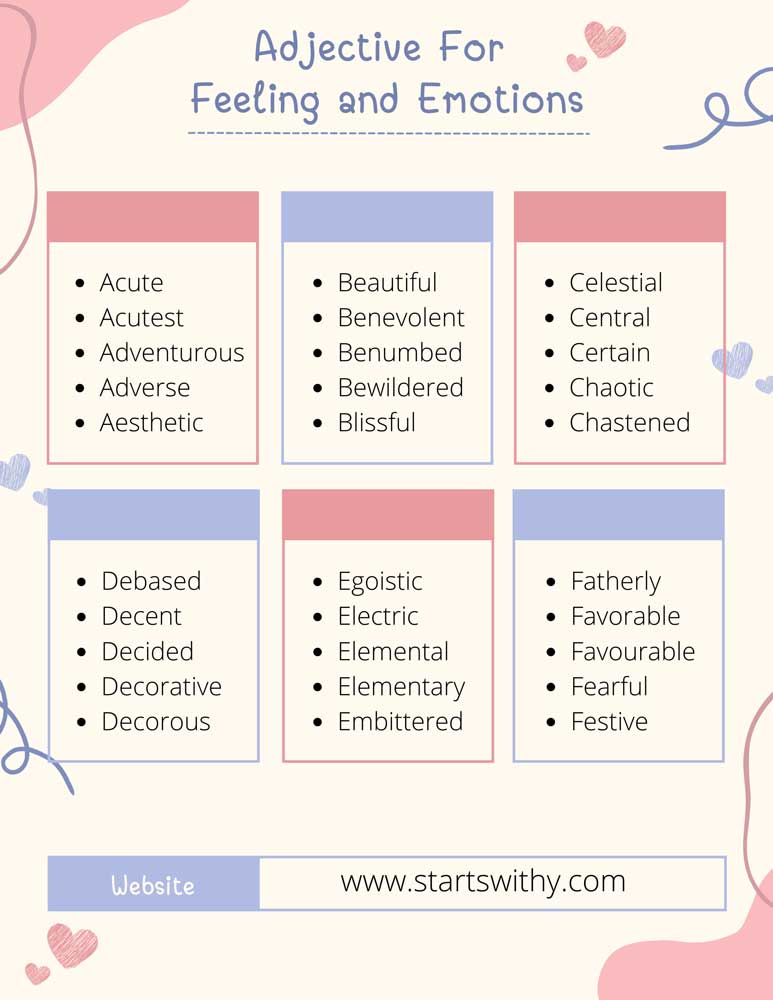
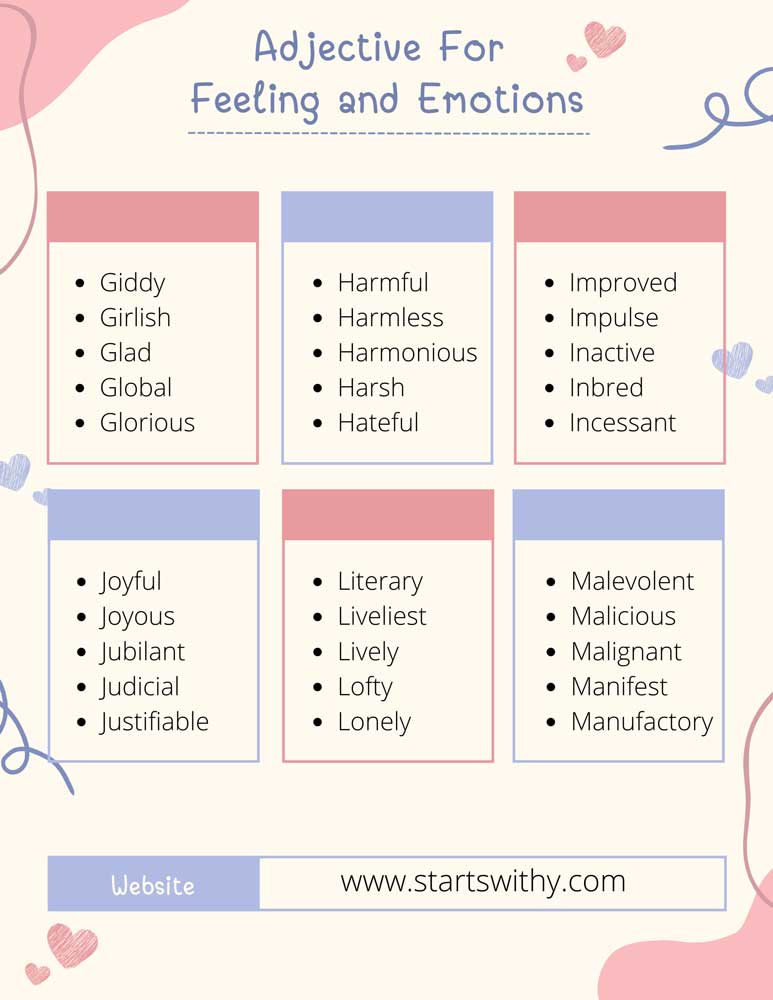
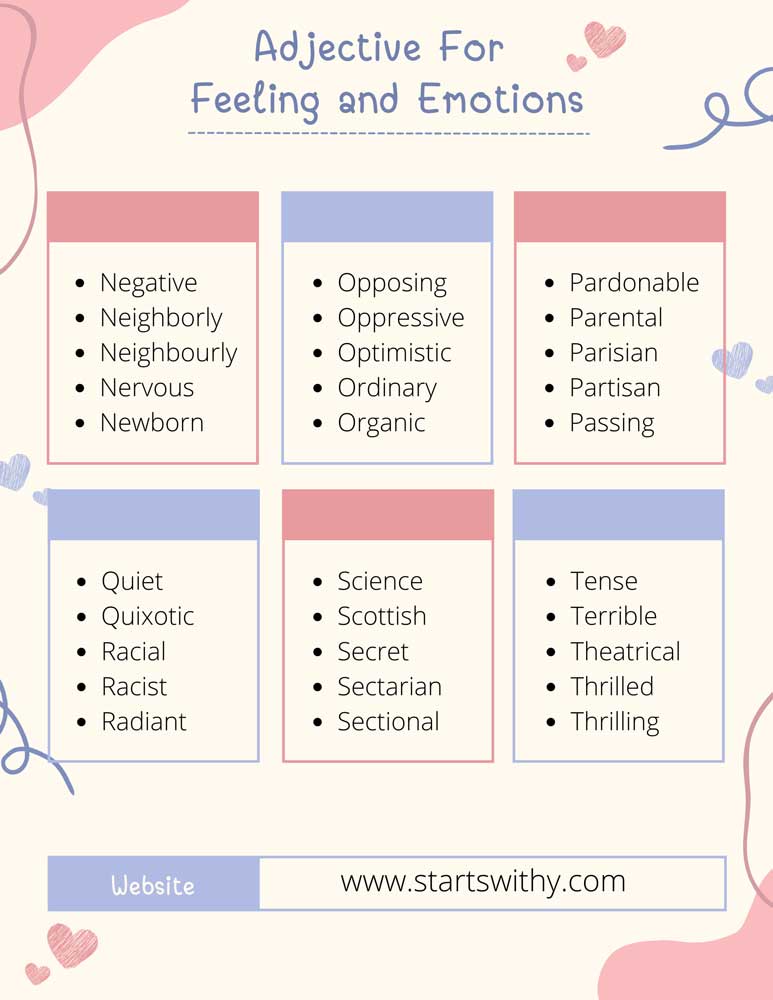
    Adjective For Feeling and Emotions

    How do you choose an adjective for a feeling?

    Start with a specific question: What am I feeling, how strong is it, and what happened around it? A concrete adjective is often more helpful than a broad label such as “good” or “bad.” For example, “I felt disappointed when the plans changed” tells the reader more than “I felt bad.” Choose words that fit your own experience, and ask rather than assume when describing someone else.

    The American Psychological Association’s introductory psychology lesson offers one useful technical definition of emotion as a brief, synchronized subjective, behavioral, and physiological response. In technical psychology, mood often refers to a less intense and longer-lasting state that may not have one clear cause. Everyday speech uses “feeling,” “emotion,” and “mood” more loosely, so these distinctions are guides rather than rules for ordinary conversation. The APA’s emotion-words checklist offers further examples of words people may use to describe their experience.

    Words for different feelings

    These groups are starting points, not rigid categories. A word’s meaning and tone can shift with context, and two near-synonyms may not fit the same sentence.

    Feeling or experienceAdjectives to considerExample
    Happiness or pleasurecheerful, delighted, joyful, pleased, content“She felt delighted when her friend arrived.”
    Sadness or lossdisappointed, sorrowful, heartbroken, downcast, wistful“He felt disappointed when the event was canceled.”
    Anger or irritationannoyed, frustrated, irritated, resentful, furious“I was frustrated by the repeated delay.”
    Worry or uncertaintyuneasy, concerned, apprehensive, nervous, anxious“They felt apprehensive before the first rehearsal.”
    Affection or carefond, affectionate, loving, grateful, appreciative“I felt grateful for her patient help.”
    Calm or releasecalm, peaceful, reassured, relieved, settled“We felt relieved after confirming the booking.”
    Surprise or interestastonished, curious, fascinated, intrigued, startled“The unexpected ending left us astonished.”
    Mixed or hard-to-name feelingsambivalent, conflicted, hopeful, overwhelmed, uncertain“I felt hopeful but still uncertain about the move.”

    What is the difference between “overwhelmed” and “overwhelming”?

    Many adjectives ending in -ed describe the person or other experiencer of a reaction: “I felt overwhelmed by the number of choices.” An -ing form often describes the thing or situation that prompts the reaction: “The number of choices was overwhelming.” The same pattern appears in pairs such as interested/interesting, bored/boring, and upset/upsetting. This is a useful pattern, although not every adjective follows it in exactly the same way.

    A person pauses at a desk and notices how they feel about several tasks.
    The -ed form commonly describes the person experiencing the feeling.
    A person organizes a large stack of ordinary work papers at a desk.
    The -ing form often describes the situation that prompts a reaction.

    Check who or what the adjective describes. In “the children were excited,” the children experience the feeling; in “the game was exciting,” the game produces interest or enthusiasm. This small grammar check can make descriptions clearer.

    Can you have more than one feeling at once?

    Yes. People may describe mixed reactions to the same event, such as feeling proud and nervous before a performance, or relieved and sad when a demanding project ends. Pairing adjectives with and or but often communicates this better than forcing one label: “I was excited and a little apprehensive.”

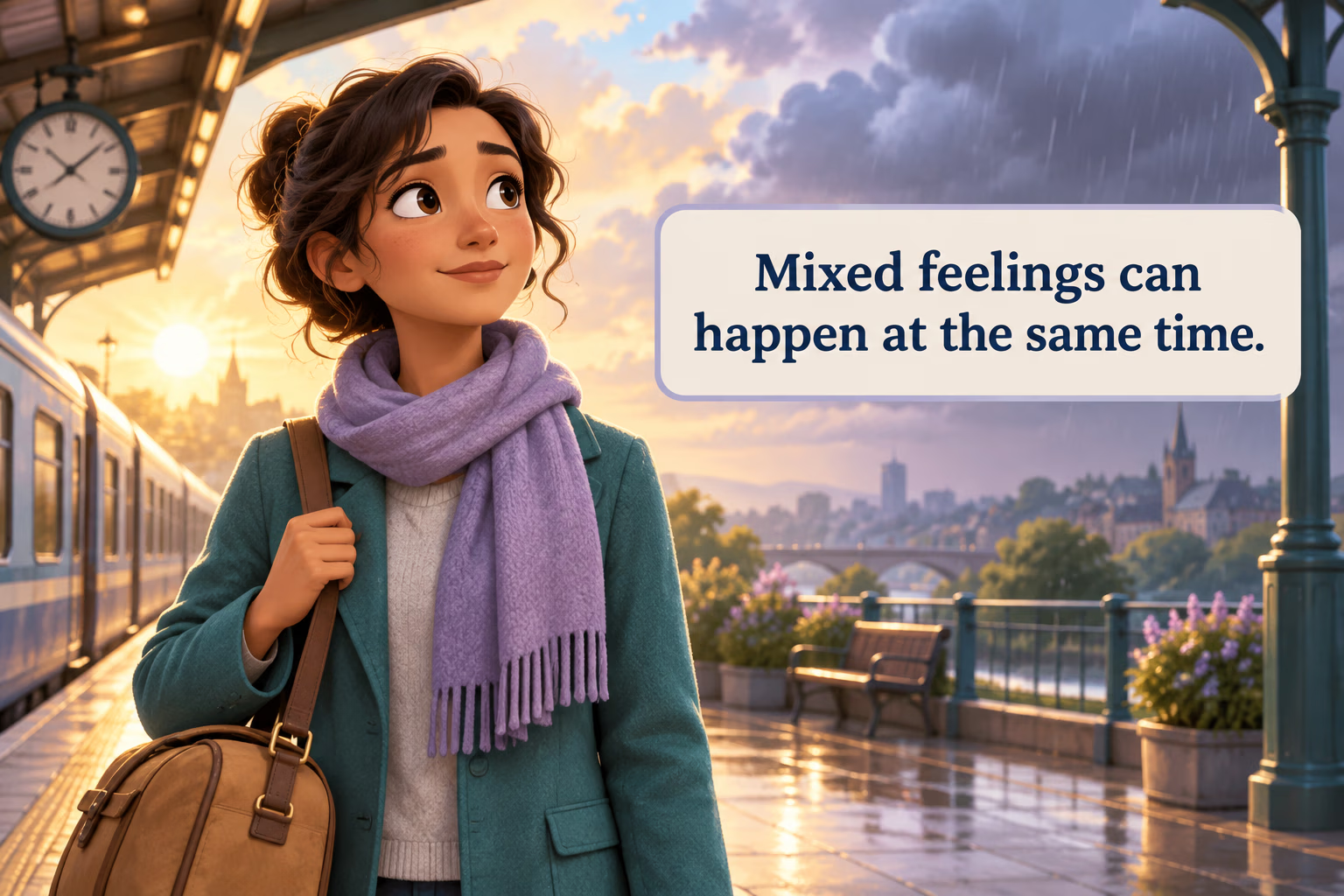
    A thoughtful traveler waits at a station as daylight and rain share the sky.
    A person may feel more than one thing about the same moment.

    Are all feeling words adjectives?

    No. Some commonly used descriptions name a physical condition, behavior, or broader judgment rather than an emotion. Tired and hungry usually describe bodily states; thoughtful may describe behavior or character; and careless evaluates conduct. These words can matter when describing a whole situation, but they are not interchangeable with a feeling such as worried or pleased. Avoid turning a momentary emotion into a permanent judgment about someone.

    How can you use emotion adjectives respectfully?

    • Describe your own experience when possible: “I felt uneasy about the change.”
    • Include the context when it helps explain the word: “She seemed relieved after hearing the update.”
    • Use a question when another person’s feelings are not clear: “How did that feel for you?”
    • Do not use an adjective as a diagnosis. Words such as anxious and depressed can appear in everyday speech, but a sentence alone cannot establish a health condition.

    The alphabetized legacy list below is retained from the original article. It includes words from several grammatical and semantic categories, not only adjectives for emotions, so check a current dictionary and the surrounding sentence when choosing an entry.

    Frequently asked questions

    What are positive adjectives for feelings?

    Depending on the context, joyful, content, grateful, hopeful, affectionate, and relieved can express pleasant or welcome feelings. “Positive” describes their usual tone; it does not mean a person should feel this way all the time.

    What adjectives describe mixed emotions?

    Ambivalent and conflicted can describe having competing reactions. You can also name both directly: “hopeful but worried,” “sad and grateful,” or “excited yet uncertain.”

    What is the difference between a feeling and a trait?

    A feeling usually describes a current or recent experience, while a trait suggests a more enduring tendency or characteristic. “I felt impatient during the delay” describes a moment; calling someone “an impatient person” makes a broader judgment. Context helps readers tell which meaning you intend.

    Note on the preserved source: this legacy list is not a vetted emotion-word bank. Its opening claims that some people are “more emotional” or “more in touch” with feelings are subjective generalizations, not universal measures. The alphabetical entries mix emotions with unrelated traits, physical states, nationality, religion, and sexual-orientation labels; some are outdated or malformed. The N-section word “niggard” is archaic, easily misinterpreted, and generally best avoided (Dictionary.com usage note). A fictional example also uses “disfigured” as a horror cue; that wording is preserved for transparency, not recommended for describing real people. None of these legacy entries should be treated as a diagnosis or as evidence that a person is dangerous.

    We all have feelings and emotions. And we all have different ways of describing them. Some people are more emotional than others. And some people are more in touch with their feelings than others. But we all have adjectives that we use to describe our feelings and emotions.

    Here are some common adjective words that we use to describe feeling and emotions:

    • Happy
    • Sad
    • Angry
    • Afraid
    • Disgusted
    • Surprised
    • Tired
    • Embarrassed
    • Proud

    Some people might feel one or more of these emotions at the same time. For example, you might be both happy and tired, or both angry and afraid.

    What are some other words that you use to describe your feelings and emotions?

    Adjective For Feeling and Emotions

    When you’re trying to describe how you feel, sometimes it’s difficult to find the perfect words. That’s where this list of adjective words to describe feeling and emotions comes in handy. Whether you need to describe happiness, sadness, anger, love, or any other emotion, you’ll find just the right word on this list.

    • Happy: content, delighted, elated, overjoyed, relieved, satisfied
    • Sad: blue, dejected, downcast, gloomy, unhappy, upset
    • Angry: aggravated, annoyed, bitter, furious, heated, mad
    • Loving: adoring, affectionate, devoted, fond, loving, tender
    • Excited: antsy, eager, enthusiastic, expectant, impatient, thrilled
    Adjective For Feeling and Emotions

    A

    AbnormalAbsorbingAccurate
    AccustomedActiveActual
    AcuteAcutestAdventurous
    AdverseAestheticAffected
    AffectionateAgitatedAgonizing
    AgreeableAkinAllied
    AlteredAltruisticAmazing
    AmiableAmicableAmorous
    AmusingAngryAntagonistic
    AntiAntiqueAnxietythe
    ArtificialArtisticAttendant
    AustrianAuthenticAutomatic
    AwesomeAwfulAwkward

    B

    BareBeautifulBenevolent
    BenumbedBewilderedBitter
    BitternesstheBlackBland
    BlankBlendedBlessed
    BlindBlissfulBloodthirsty
    BluntBodilyBohemian
    BombasticBoundlessBoyish
    BreastsoBriefBritish
    BroadestBrokenBrotherly
    BruisedBrutalBuiltthe

    C

    CalmerCanadianCasual
    CatholicCelestialCentral
    CertainChaoticCharacteristic
    CharitableCharteredChaste
    ChastenedChattyChic
    ChiefChildishChildlike
    ChillyChineseChivalrous
    ChokedChokingChristian
    ChronicCineamticCivilized
    ClassicClassicalClear
    CoastalColdColdness
    CollectiveComfortableComforting
    ComfyCommendableCommoner
    CommunalCompactCompassionate
    CompetitiveComplacentComplete
    ComplexComplicatedComposite
    CompoundConcentratedConcerned
    ConcomitantConfidentConflicted
    CompoundConcentratedConcerned
    ConcomitantConfidentConflicted
    ConflictingConfusedConfusing
    CongenialConjugalConjureri
    ConscientiousConsciousConsequent
    ConservativeConsiderableConsiderate
    ConsistentConstantConstitutional
    ContemporaryContemptibleContented
    ContradictoryContraryConventional
    ConvulsiveCoolCooler
    CourteousCozyCrafty
    CrazyCreditableCreepy
    CrispCriticalCrowded
    CruelCumbersomeCurious
    CushionedCustomary

    D

    DampDangerousDark
    DayanDeDead
    DearDebasedDecent
    DecidedDecorativeDecorous
    DeepDefiniteDegenerate
    DelicateDeliciousDelightful
    DemobilisedDependentDepraved
    DepressedDepressingDepressive
    DerivativeDesirableDesolate
    DespairfulDespairingDesperate
    DidstDifficultDim
    DirectDirestDirty
    DisagreeableDisappointedDischarged
    DiscordantDiscouragingDiscreditable
    DisinterestedDistinctDistinctive
    DistressingDisturbedDisturbing
    DiverseDivineDizzy
    DogmaticalDomesticDominant
    DiverseDivineDizzy
    DogmaticalDomesticDominant
    DoubtfulDoubtlessDrab
    DramaticDreadfulDreamy
    DrearyDryDull
    DumbDurableDynamic

    E

    EagerEarnestEarthly
    EasterlyEasyEcclesiastical
    EcstaticEducationalEerie
    EffectedaEgoisticElectric
    ElementalElementaryElevated
    EmbitteredEmotionalEmotionan
    EnchantedEnergeticEnglish
    EnlargedEnormousEntertaining
    EnthusiasticEntireEnviable
    EnviousEquivocalErotic
    EuropeanEvidentEvil
    ExactExaggeratedExalted
    ExcellentExcessExcessive
    ExcitableExcitedExciting
    ExclusiveExcruciatingExercised
    ExhaustedExhilaratingExpansive
    ExperiencedExperimentalExplosive
    ExpressiveExquisiteExternal
    ExperiencedExperimentalExplosive
    ExpressiveExquisiteExternal
    ExtraExtraordinaryExtravagant
    ExtremeExuberantExultant

    F

    FaceaFactitiousFaint
    FaithfulFakeFamilial
    FamiliarFancyFartherhis
    FashionedFastFastidious
    FatefulFatherlyFavorable
    FavourableFearfulFeelinga
    FeelingnervousFellowFemale
    FeminineFerventFestive
    FeudalFeverishFickle
    FictitiousFierceFiercest
    FirmFitFlamboyant
    FleetingFlintyFlorentine
    FluentFluffyFluid
    FondFoolishForeign
    ForgetfulForlornForthright
    FortunateFosterFrank
    FraternalFrenchFrenzied
    FreshFretfulFriendly
    FraternalFrenchFrenzied
    FreshFretfulFriendly
    FrightFrightenedFrightful
    FrivolousFrozenFrustrated
    FugitiveFunerealFunny
    FuriousFuturisticFuzzy

    G

    GallicGayGenerous
    GenialGentleGentlemanly
    GentlerGenuineGerman
    GhastlyGiddyGirlish
    GladGlobalGloomy
    GloriousGlowingGolden
    GothicGovernedGrand
    GraspingGratefulGratified
    GratitudeGraveGrecian
    GregariousGrimGrippy

    H

    HabitualHallowedHappy
    HardHarderHarmful
    HarmlessHarmoniousHarsh
    HatefulHazyHealthful
    HeartedHeartfeltHeartless
    HeartyHeavyHeightened
    HelplessHeroicHidden
    HideousHollowHoly
    HomelyHomemadeHomosexual
    HonestHonorableHonourable
    HugeHumanHumane
    HumanitarianHumiliatedHungry
    HurtHurtfulHusbandly
    Hysterical

    I

    IcyIdealIdentical
    IdleIgnobleIgnorant
    IllImaginaryImaginative
    ImitativeImmediateImmense
    ImmortalImpassionedImpatient
    ImperialisticImpersonalImpetuous
    ImpossibleImpressiveImproper
    ImprovedImpulseInactive
    InbredIncessantIncestuous
    InclinedIncommunicableIncompatible
    IndescribableIndignantIndispensable
    IndistinctIndividualIndivisible
    IndulgentIndustriousIneffable
    IneradicableInevitableInexhaustible
    InexplicableInexpressibleInferior
    InflexibleIngenuousIngrained
    InhabitableInherentInherentthose
    InheritedInhumanInitial
    InhabitableInherentInherentthose
    InheritedInhumanInitial
    InjuriousInnateInner
    InnermostInnocentInnumerable
    InsaneInseparableInsidious
    InsolentInstantInstinctive
    IntangibleIntellectualIntellectualized
    IntelligentIntelligibleIntense
    InterestedInterestingInterestingi
    InteriorInternalInternational
    InvidiousInvisibleInvoluntary
    InwardIrishIrksome
    IrrationalIrrepressibleIrresistible
    IrresponsibleIrritableIrritated
    IslamicItalian
    Adjective For Feeling and Emotions

    J

    JaundicedJazzyJealous
    JointJoyfulJoyous
    JubilantJudicialJustifiable
    JuvenescentJuvenile

    K

    KeenKindKindliest
    KindlyKindredKnownthe

    L

    LargeLastingLaudable
    LeadenLegalLegitimate
    LethargicLiberalLifeless
    LightLighterLiterary
    LiveliestLivelyLofty
    LonelyLonesomeLoose
    LovelyLovingLoyal
    LoyalistLustfulLuxe
    LuxuriousLyric

    M

    MachoMadMagical
    MagnanimousMaidenlyMajor
    MalevolentMaliciousMalignant
    ManifestManifoldManly
    ManufactoryMarkedMartial
    MarvellousMarvelousMasochistic
    MassiveMasterlyMaternal
    MathematicalMeanerMediaeval
    MediumMelancholyMemorable
    MentalMercifulMere
    MinisterialistMinorMisanthropical
    MischievousMiserableMisleading
    MixedMockModerate
    ModernModestMomentary
    MonarchicalMonogamousMonstrous
    MoralMorbidMortal
    MotherlyMucousMulti
    MunicipalMuscularMusical
    MotherlyMucousMulti
    MunicipalMuscularMusical
    MuteMutinousMutual
    MyriadMysteriousMystic
    Mystical

    N

    NaggingNakedNascent
    NastyNationalistNationalistic
    NativeNaturalNatured
    NegativeNeighborlyNeighbourly
    NervousNewbornNice
    NicerNiggardNoble
    NormalNorthernNostagic
    NostalgicNovelNumbed
    Numerous

    O

    ObscureObviousOdd
    OffendedOldenOminous
    OnebothOnlineOpen
    OperativeOpposingOpposite
    OppressiveOptimisticOrdinary
    OrganicOrientalOriginal
    OutdoorOutragedOutward
    OverallOverflowingOverstrained
    OverwhelmingOverwrought

    P

    PainfulPainfullyPan
    ParamountParanoidPardonable
    ParentalParisianParticularistic
    PartisanPassingPassionate
    PassivePastPaternal
    PatriarchalPatrioticPeaceful
    PeculiarPensivePent
    PerfectPermanentPerverted
    PeskyPettyPhony
    PhysicalPictorialPious
    PleasingPleasurablePlush
    PoeticPoeticalPoignant
    PoisonousPolishPoor
    PopularPositivePosthumous
    PostmodernPowerfulPowerless
    PracticalPrayerfulPrecious
    PrecisePredominantPresent
    PrevailingPrevalentPrevious
    PrecisePredominantPresent
    PrevailingPrevalentPrevious
    PricklyPrimaryPrimitive
    PrimordialPrincipalProbable
    ProfessionalProfoundPromethean
    ProperPropheticProprietary
    ProtestantProudPrudential
    PrussianPsychicalPsychological
    PuerilePurePurgatorial

    Q

    QuâQueerQuick
    QuietQuixotic

    R

    RacialRacistRadiant
    RadicalRancorousRapid
    RapturousRareRational
    RawRealRealistic
    ReasonableRebelliousReciprocal
    RecklessRecognizableRecorded
    RefinedReflexRefreshed
    RegulatedRelatedRelational
    RelaxingReligiousRemarkable
    RemoteRepentantRepetitive
    RespectfulRespectiveResponsive
    RestlessRestrainedRetinal
    RetrospectiveRevengefulReverent
    RevoltingRevolutionaryRewarding
    RichRighteousRiled
    RipeRomanRomanesque
    RomanticRottenRoyal
    RudimentaryRuffledRural
    Rustic
    Adjective For Feeling and Emotions

    S

    SacredSadSadden
    SaidSalubriousSalutary
    SanguineSaracenicSatirical
    SatisfiedSavageScared
    ScaryScienceScottish
    SecretSectarianSectional
    SehSelectSelfish
    SemiSemiticSendest
    SeniorSensibleSensitive
    SensuousSentimentalSentimentalized
    SharpSheerShivery
    ShortSickSickening
    SicklySilentSilken
    SillySimpleSincere
    SinfulSingleSingular
    SinkingSizedSkinned
    SlaverySleekSlick
    SlightSlightestSmooth
    SlaverySleekSlick
    SlightSlightestSmooth
    SneakySoftSoftened
    SofterSoftestSole
    SolemnSolidSolitary
    SoreSouthernSoviet
    SpareSpasmodicSpiritual
    SpontaneousStableStark
    StartledStealthySticky
    StimulatingStormyStraightforward
    SubjectiveSublimeSubsequent
    SubtleSuccessiveSucky
    SuddenSuggestiveSulphurous
    SunnySuperficialSuperfluous
    SupersensualSuperstitiousSuppressed
    SupremeSurrealSurreptitious
    SusceptibleSustainedSweet
    SwiftSwissSymbiotic
    SympatheticSynergeticSynonymous

    T

    TacitTackyTame
    TangledTearyTempestuous
    TemporaryTenderTenderer
    TenseTerribleTheatrical
    ThrilledThrillingThronged
    TimidTiniestTired
    TraditionalTragicTranscendent
    TranscendentalTransientTransitory
    TremendousTrickyTroubled
    TumultuousTurbulentTurrible

    U

    UbiquitousUglyUnaccountable
    UnaffectedUnanalyzableUnanimous
    UnbearableUnbecomingUncanny
    UnchangingUncharitableUncomfortable
    UncommonUnconcealedUnconfessed
    UnconquerableUncontrollableUncontrolled
    UndefinableUndefinedUnderground
    UnderivedUndesirableUndue
    UneasyUnendurableUnescapable
    UnexpectedUnexplainedUnexpressed
    UnfathomableUnfavorableUnfeigned
    UnfriendlyUngenerousUngovernable
    UngraciousUngratefulUnguided
    UnhallowedUnholyUnifying
    UnimpassionedUninhibitedUnique
    UniversalUnjadedUnkind
    UnkindnessUnknownUnlimited
    UnmistakableUnmixedUnnecessary
    UnnumberedUnpleasantUnpremeditated
    UnqualifiedUnreasonableUnrelated
    UnresolvedUnrestrainableUnruly
    UnselfishUnsettlingUnsophisticated
    UnspeakableUngratefulUntold
    UntrainedUntutoredUnusual
    UnutterableUnwantedUnwonted
    UnworthyUppermostUseful
    UselessUsualUtmost

    V

    VagrantVagueVain
    ValuableVariedVehement
    VertiginousViciousViennese
    VigorousVindictiveViolent
    VirileVirtuousVisible
    VitalVividVolatile
    VolcanicVulgar

    W

    WarlikeWarmWarmest
    WaywardWeirdWeirdest
    WelcomingWholesomeWicked
    WideWidespreadWild
    WomanlyWonderfulWondrous
    WroughtYouthful

    Final verdict

    In conclusion, it is important to know a variety of adjective words to describe feeling and emotions. This will help you better communicate with others and understand what they are going through. Adjective words can also be used to describe your own emotions. When you are able to label your emotions, you can better deal with them.

    Written & edited by

    Founder & Editor, StartsWithy

    Robin founded StartsWithy in 2022 to make English words easier to understand and use. Robin oversees our 30,000+ guides, checks meanings and grammar against trusted dictionaries such as Cambridge, Oxford Learner’s and Collins, and is accountable for every correction we make.