Adjectives for Hockey: Play, Pace, and Atmosphere
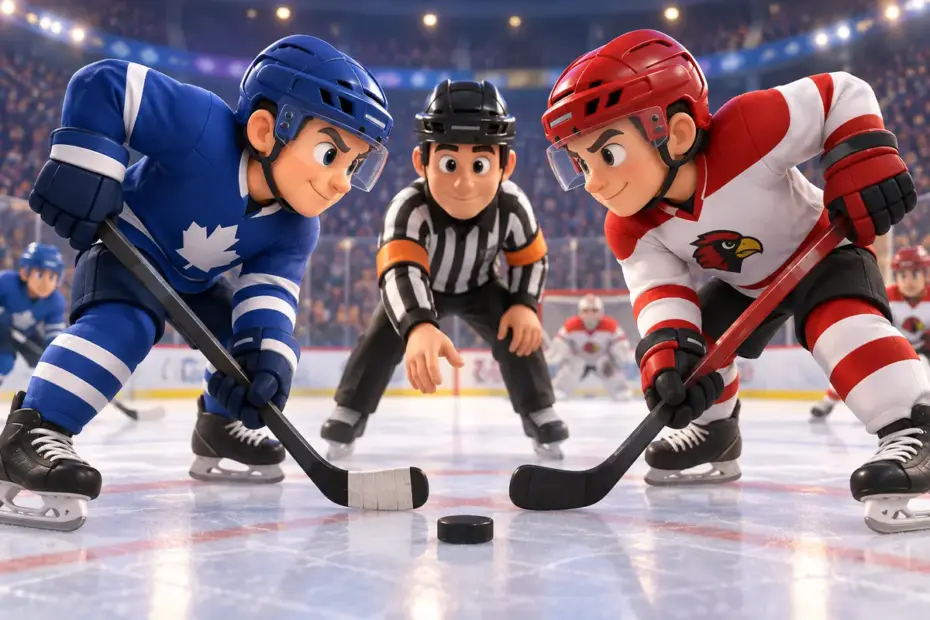
Adjectives for hockey include fast-paced, physical, skillful, tactical, competitive, intense, disciplined, and dramatic. Specify whether you describe a game, team, player, pass, or atmosphere. Ice hockey and field hockey involve different surfaces and equipment, so a general adjective list should not assume every game uses a puck, ice, or the same rules.
Key facts at a glance
- fast-paced describes tempo.
- physical describes bodily contest.
- skillful describes control and technique.
- tactical describes planned choices.
- competitive describes strong opposition or striving to win.
Which adjectives for hockey fit the meaning?
| Word | Feature or meaning | Example |
|---|---|---|
| fast-paced | tempo | The fast-paced game gave the defense little time. |
| physical | bodily contest | The physical contest required strong positioning. |
| skillful | control and technique | A skillful pass opened the play. |
| tactical | planned choices | The tactical adjustment changed the formation. |
| competitive | strong opposition or striving to win | The competitive match stayed unsettled. |
| intense | concentrated effort or atmosphere | The intense final kept spectators watching. |
| disciplined | controlled execution | The disciplined team held its shape. |
| dramatic | a striking change or outcome | A late goal created a dramatic finish. |
How can you make the description accurate?
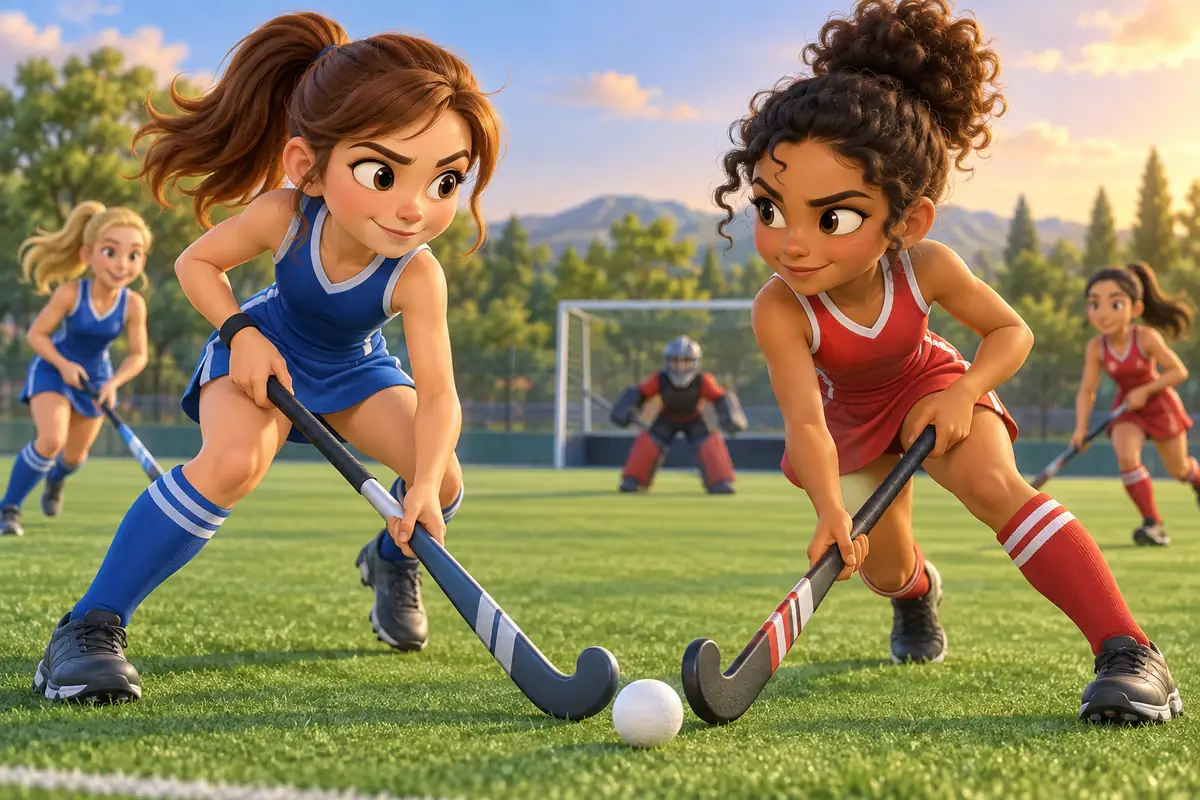
Identify the version of hockey before using equipment terms. A puck and ice belong to ice-hockey contexts, while a field-hockey sentence normally concerns a ball and a field. General words for pace or tactics can apply to either when the described play supports them.
Physical does not mean every contact is permitted, and aggressive does not automatically mean illegal. A precise report names the actual action and follows the relevant competition’s rules rather than making a rule claim from an adjective.
Competitive can describe strong opposition without saying the score is close throughout. Intense can describe the atmosphere or concentration. Give the late goal, quick transition, or disciplined formation that explains the word.
What are natural example sentences?
- The fast-paced game gave the defense little time.
- A skillful pass opened the play.
- The competitive match stayed unsettled.
- The disciplined team held its shape.
How do you choose between similar words?
Choose the feature first, then select the word that names it. Appearance, behavior, capability, and a narrator’s evaluation answer different questions. A concrete detail helps readers understand why the modifier belongs.
- Identify the exact person, object, action, or quality being described.
- Choose an attribute relevant to the scene or explanation.
- Add an example, action, or circumstance supporting the word.
- Remove a second modifier if it only repeats the same information.
Merriam-Webster Dictionary: hockey supports the vocabulary or factual distinctions used here. The examples are original illustrations of word choice.

Frequently asked questions
Is fast-paced enough for a match report?
Fast-paced is a useful starting description, but a report is clearer when it names quick transitions, brief possession, or another observed pattern. Explain what made the pace noticeable instead of using the adjective as a substitute for the actual play.
Can physical describe field hockey?
Physical can describe bodily effort or contest in different hockey settings, but it does not establish that a particular contact is allowed. Identify the version and action. Rule interpretations require the relevant competition rules rather than a vocabulary label. The surrounding example should explain the intended feature without relying on vague praise.
What is the difference between skillful and tactical?
Skillful emphasizes effective technique or control, while tactical emphasizes planned choices and arrangements. A well-controlled pass can be skillful; choosing a formation can be tactical. A play may involve both qualities, but they answer different questions. The surrounding example should explain the intended feature without relying on vague praise.
How do I describe a dramatic finish?
Name the change that made the finish dramatic, such as a late equalizer or deciding goal. The adjective describes narrative impact rather than a fixed score margin. Avoid claiming excitement alone explains the game’s technical quality. The surrounding example should explain the intended feature without relying on vague praise.
Hey there, hockey fans! As an avid follower of the sport, I’ve come to appreciate the power of words when it comes to describing the exhilarating game of hockey. From the bone-crushing checks to the lightning-fast slapshots, there’s no shortage of adjectives that can capture the essence of this thrilling sport. In this article, I’ll be sharing with you a curated list of adjectives that perfectly encapsulate the intensity, skill, and excitement that hockey brings to the table.
When it comes to describing the players, there’s no denying the physicality and toughness they possess. Words like “aggressive,” “fierce,” and “tenacious” come to mind, highlighting their relentless pursuit of victory on the ice. But it’s not just about brute force – hockey players also exhibit finesse and grace, with adjectives like “nimble,” “slick,” and “deft” showcasing their skillful maneuvers and precise puck-handling abilities.
But it’s not just the players who deserve our attention – the game itself is a spectacle to behold. From the thunderous roar of the crowd to the lightning-quick pace of the action, hockey is an adrenaline-fueled experience. With adjectives like “thrilling,” “fast-paced,” and “heart-pounding,” we can paint a vivid picture of the excitement that unfolds on the ice.
How to Describe hockey? – Different Scenarios
When it comes to describing hockey, there are various scenarios that can help capture the essence and excitement of the sport. Whether you’re talking about the physicality of the players, the skillful plays on the ice, or the atmosphere of a game, here are a few ways to describe hockey in different scenarios:
- On the Ice:
- Physicality and Toughness:
- Skill and Finesse:
- Atmosphere and Exhilaration:
- Teamwork and Strategy:
Remember, describing hockey is all about capturing the intensity, skill, and excitement of the sport. Using descriptive adjectives and vivid language can help paint a picture and transport the reader to the thrilling world of hockey. So, whether you’re watching a game or describing it to someone, let your words convey the power and beauty of the sport.
Describing Words for hockey in English
When it comes to describing the sport of hockey, there are a plethora of words that can capture the excitement, intensity, and skill involved. As a passionate hockey fan and expert, I have curated a list of adjectives that perfectly capture the essence of this thrilling sport. Whether you’re a teacher looking for words to teach your students or a parent wanting to introduce your child to the game, these adjectives will help bring hockey to life.
Physicality:
- Aggressive: Players in hockey need to display aggression to stay competitive.
- Tough: Hockey players are known for their resilience and ability to play through injuries.
- Gritty: The sport demands a gritty mindset, with players willing to battle for every puck and defend their teammates.
Skill and Finesse:
- Agile: Hockey players showcase their agility as they swiftly maneuver across the ice.
- Dextrous: The skillful handling of the puck requires players to be dextrous.
- Creative: Hockey is a sport that allows players to showcase their creativity through flashy moves and unexpected plays.
Atmosphere and Exhilaration:
- Electric: The atmosphere in a hockey arena can be electrifying, filled with roaring fans and high-energy music.
- Thrilling: Hockey games are filled with thrilling moments, keeping fans on the edge of their seats.
- Intense: The fast-paced nature of the game adds to the intense excitement felt by both players and spectators.
Teamwork and Strategy:
- Cohesive: Successful teams in hockey have a cohesive group dynamic, working together seamlessly.
- Calculated: Hockey requires a calculated approach, with players strategically positioning themselves on the ice.
- Disciplined: Strong teams exhibit disciplined play, following their strategies and not taking unnecessary risks.
Using descriptive adjectives like these can paint a vivid picture of the sport of hockey, allowing children to better understand and appreciate it. By introducing these words into their vocabulary, children can develop a deeper connection with the sport and its unique qualities.
Remember, the world of hockey is vast and diverse, and there are countless adjectives to explore. Encourage your students or children to discover even more descriptive words that capture the many aspects of this thrilling sport.
Adjectives for hockey
When it comes to describing the sport of hockey, there are various adjectives that can capture its essence and excitement. Let’s explore some positive and negative adjectives that can be used to describe different aspects of hockey.
Positive Adjectives for hockey with 12 Example Sentences
- Exciting: Hockey games are exciting to watch, with fast-paced action and thrilling moments.
- Skillful: Players in hockey display incredible skill, whether it’s stickhandling, shooting, or making precision passes.
- Agile: Hockey players need to be agile on their skates, swiftly maneuvering around opponents.
- Tenacious: Hockey players are known for their tenacity, never giving up and always giving their best effort.
- Passionate: Hockey is a sport that evokes passion, both on the ice and among its devoted fans.
- Fiery: The intensity of hockey games can be described as fiery, with players giving their all and showing their competitive spirit.
- Adaptive: Hockey players need to quickly adapt to changing situations on the ice, making split-second decisions.
- Determined: Players in hockey are determined to win, showing perseverance and a strong will to succeed.
- Resilient: Hockey players face physical challenges and setbacks, but they bounce back and continue to compete.
- Dynamic: The dynamic nature of hockey makes it an exciting sport to watch, with constant movement and strategy.
- Committed: Hockey players are committed to their teams, working together to achieve success on the ice.
- Thrilling: Watching a hockey game can be thrilling, with goals, saves, and exciting plays happening throughout.
- Physical: Hockey is known for its physical nature, with players engaging in body checks and battles for the puck.
- Abrasive: The aggressive nature of hockey can sometimes lead to abrasive encounters between players.
- Chaotic: The fast pace and intense action in hockey can make it appear chaotic at times.
- Contentious: Hockey games can be contentious, with arguments and disagreements among players and coaches.
- Injurious: Due to the physicality of the sport, injuries are not uncommon in hockey.
Note: It’s important to remember that while there are negative aspects associated with hockey, they are inherent to the nature of the sport and do not diminish its overall value and enjoyment. Understanding these aspects can help children better appreciate the sport and the skills of its players.
Hockey is a thrilling and dynamic sport that showcases the skills and determination of its players. Using adjectives to describe different aspects of the game can help children better understand and appreciate its excitement and intensity.
Synonyms and Antonyms with Example Sentences
Synonyms for hockey
When it comes to describing the game of hockey, there are several synonyms that can be used to capture its essence. Here are a few examples:
| Synonym | Definition |
|---|---|
| Ice hockey | a sport played on ice between two teams, using sticks to hit a puck into the opponent’s goal |
| Puck game | a game played with a flat disc called a puck, where two teams try to score goals on each other |
| Field hockey | a game played on a grass or turf field, using a stick to hit a ball into the opponent’s goal |
| Stick and ball game | a game played with sticks and a ball, where players use the sticks to hit the ball into the opponent’s goal |
Using these synonyms can help to diversify the way we describe the sport, making it more engaging and relatable for young learners.
Antonyms for hockey
While synonyms provide alternate ways to describe hockey, antonyms can offer contrasting words to further enhance our understanding of the sport. Here are a few examples:
| Antonym | Definition |
|---|---|
| Basketball | a sport played on a court, where two teams try to throw a ball through a hoop |
| Tennis | a game played on a rectangular court, where players hit a ball back and forth across a net |
| Golf | a game played on a course, where players use clubs to hit a small ball into a series of holes |
| Soccer | a sport played on a field, where two teams try to kick a ball into the opponent’s goal |
These antonyms highlight the unique aspects of hockey and distinguish it from other popular sports. Understanding the differences between hockey and its antonyms can help children develop a deeper appreciation for the sport.
By using a variety of synonyms and antonyms, we can provide a more comprehensive and engaging understanding of hockey.
Conclusion
In this article, we have explored the power of descriptive adjectives in capturing the essence and excitement of hockey. By using vivid language, we can convey the intensity, skill, and thrill of this beloved sport. Throughout the article, we have provided a curated list of adjectives that paint a vivid picture of hockey in various scenarios.
Additionally, we have introduced synonyms and antonyms for hockey, offering alternative ways to describe the sport and highlighting its unique aspects. These synonyms and antonyms can help children develop a deeper appreciation for hockey by encouraging them to explore different perspectives.
By utilizing a variety of words, including adjectives, synonyms, and antonyms, we can achieve a more comprehensive and engaging understanding of hockey. Whether you’re a player, a fan, or simply someone interested in learning more about the sport, incorporating these descriptive words into your vocabulary will undoubtedly enhance your experience.
So, next time you watch a hockey game or discuss the sport with others, remember the power of words in capturing the excitement and beauty of hockey. Embrace the descriptive adjectives and let them transport you into the heart of the game.


