Life is a beautiful and complex journey filled with countless experiences and emotions. As humans, we have a natural inclination to describe and understand the world around us, including the various aspects of our lives. Adjectives play a crucial role in capturing the essence of these experiences, allowing us to paint vivid pictures with our words.
In this article, I’ll be exploring a wide range of adjectives that can be used to describe different aspects of life. From the mundane to the extraordinary, these words will help you express your thoughts and feelings with precision and clarity. Whether you’re writing a heartfelt poem, crafting a compelling story, or simply trying to articulate your emotions, having a diverse vocabulary of descriptive words at your disposal can elevate your writing to new heights.
So, join me as we delve into the world of adjectives and discover how these powerful words can bring life to your writing. From the simple joys of everyday existence to the profound moments that shape us, let’s explore the rich tapestry of adjectives that capture the essence of life’s experiences.
Describing life is a fascinating endeavor that allows us to paint a vivid picture with words. As we navigate through various scenarios, there are adjectives that can capture the essence of each experience. Let’s explore how to describe life in different scenarios:
How to Describe life? – Different Scenarios
1. Describing Daily Work
| Activity | Adjective(s) |
|---|---|
| Waking up | Refreshing, Invigorating |
| Eating breakfast | Delicious, Nutritious |
| Going to work | Productive, Diligent |
| Exercising | Energetic, Revitalizing |
| Relaxing at home | Cozy, Peaceful |
| Going to bed | Serene, Restful |
2. Describing Nature
| Scenario | Adjective(s) |
|---|---|
| Sunny day | Bright, Radiant |
| Rainy day | Gloomy, Refreshing |
| Snowy day | Magical, Serene |
| Lush green forest | Vibrant, Enchanting |
| Sandy beach | Tranquil, Breathtaking |
| Star-filled night sky | Majestic, Captivating |
3. Describing Relationships
| Relationship | Adjective(s) |
|---|---|
| Close friendship | Supportive, Trustworthy |
| Loving family | Caring, Unconditional |
| Romantic partnership | Passionate, Devoted |
| Teacher-student bond | Inspiring, Mentorship |
| Colleague connection | Collaborative, Professional |
| Community solidarity | United, Empathetic |
4. Describing Emotions
| Emotion | Adjective(s) |
|---|---|
| Happiness | Joyful, Ecstatic |
| Sadness | Melancholic, Heartbroken |
| Excitement | Thrilling, Exhilarating |
| Anger | Fuming, Frustrated |
| Surprise | Astonished, Startled |
| Contentment | Satisfied, Serene |
5. Describing Travel Experiences
| Experience | Adjective(s) |
|---|---|
| Adventurous hike | Thrilling, Breathtaking |
| Cultural immersion | Enriching, Eye-opening |
| Exotic cuisine | Flavorful, Exquisite |
| Historical landmarks | Captivating, Spellbinding |
| Relaxing beach getaway | Tranquil, Idyllic |
| City exploration | Vibrant, Stimulating |
Describing Words for life in English
Life is a beautiful journey filled with a range of experiences and emotions. Whether we’re talking about our daily routines, our relationships, or the way we feel, adjectives play a vital role in bringing our experiences to life. Using the right words can help us express ourselves and deepen our understanding of the world around us. Let’s explore some describing words for different aspects of life in English.
Describing Your Daily Routines
When it comes to describing our daily routines, adjectives help us paint a vivid picture of our experiences. Here are some examples of adjectives we can use:
- When I wake up in the morning, I feel refreshed and energized.
- At breakfast, I enjoy delicious and nourishing meals.
- When I go to work, I experience a productive and challenging day.
- Exercising makes me feel strong and accomplished.
- In the evening, I find relaxing and peaceful activities to do at home.
- Before I go to bed, I like to create a calm and restful environment.
Describing Relationships and Emotions
Adjectives are also powerful tools to describe our relationships and emotions. Here are some adjectives to help us express our feelings:
- My family is supportive and loving.
- My friends are loyal and trustworthy.
- Being in love feels exciting and fulfilling.
- When I’m happy, I feel joyful and content.
- A challenging situation can make us anxious or stressed.
- Losing someone we care about can leave us heartbroken and grief-stricken.
| Destination | Adjectives |
|---|---|
| Beaches | Sunny, serene, tranquil |
| Mountains | Breathtaking, majestic, scenic |
Adjectives for life
In this section, I’ll be discussing different adjectives that can be used to describe various aspects of life. Adjectives are powerful words that bring life and vividness to our writing. By using descriptive words, we can paint a picture and evoke emotions in the reader. Let’s explore some positive and negative adjectives that can help us better understand and describe life.
Positive Adjectives for Life
Positive adjectives help us express the joyful, uplifting, and inspiring aspects of life. Here are 12 example sentences showcasing positive adjectives and how they can be used:
| Adjective | Example Sentence |
|---|---|
| Blissful | Life becomes blissful when we learn to appreciate the little things. |
| Radiant | The sunsets in this coastal town are absolutely radiant. |
| Serene | Spending a day by the lake can bring a sense of peace and serenity. |
| Exhilarating | Riding a roller coaster is an exhilarating experience that fills you with excitement. |
| Vibrant | New York City is known for its vibrant nightlife and bustling energy. |
| Uplifting | Listening to motivational speeches can have an uplifting effect on our spirits. |
| Magical | Witnessing the Northern Lights is a truly magical experience. |
| Tranquil | The sound of rain on the roof can create a tranquil atmosphere. |
| Enchanting | Exploring ancient ruins in Greece was an enchanting journey. |
| Harmonious | The voices of the choir blended together in a harmonious melody. |
| Invigorating | Taking a brisk walk in nature can be invigorating for both the body and mind. |
| Inspiring | Reading biographies of successful people can be very inspiring. |
Negative Adjectives for Life
On the other hand, negative adjectives help us express the challenging, difficult, or disappointing aspects of life. Here are 5 example sentences showcasing negative adjectives and how they can be used:
| Adjective | Example Sentence |
|---|---|
| Chaotic | Rush hour traffic can be chaotic and stressful. |
| Draining | Dealing with negative people can be mentally and emotionally draining. |
| Frustrating | Trying to assemble furniture without clear instructions can be frustrating. |
| Mundane | Doing the same tasks day after day can make life feel mundane. |
| Lonely | Moving to a new city where you don’t know anyone can be a lonely experience. |
Remember, adjectives have the power to add depth and understanding to our writing. By carefully choosing the right adjectives, we can communicate our thoughts and emotions effectively. Whether it’s describing the positive or negative aspects of life, adjectives play a crucial role in capturing the essence of our experiences. So let’s continue exploring the world of adjectives and unlock the full potential of our writing.
Synonyms and Antonyms with Example Sentences
Synonyms for Life
When it comes to describing life, there are numerous synonyms that can help us paint a vivid picture. Here are some powerful alternatives to the word “life”:
Synonym
- existence
- livelihood
- being
- journey
- adventure
Example Sentences:
- My existence has been filled with joy and happiness.
- Providing for our family is our livelihood.
- Every being on this planet deserves respect and love.
- Life is a beautiful and unpredictable journey.
- Let’s embrace the unexpected and embark on this grand adventure called life.
Antonyms for Life
On the other hand, when we want to express the opposite of life, we can turn to antonyms. Here are some examples:
Antonym
- death
- nonexistence
- absence
- stillness
- inactivity
Example Sentences:
- The loss of a loved one leaves a void that can only be filled with cherished memories, even in their absence.
- In the face of nonexistence, we must appreciate the gift of life.
- The silence that follows a storm signifies a moment of stillness.
- After a long day of work, I enjoy the inactivity of sitting by the fire, lost in my thoughts.
Conclusion
Exploring the world of adjectives has allowed me to appreciate the power of descriptive words in bringing life to our writing. Throughout this article, we have discussed the importance of adjectives in describing and understanding different aspects of life.
By providing examples of synonyms and antonyms for the word “life,” such as “existence,” “livelihood,” “being,” and “journey,” we have seen how these words can paint a vivid picture. On the other hand, the antonyms like “death,” “nonexistence,” and “absence” convey a sense of stillness and inactivity.
As writers, we have the opportunity to harness the full potential of our writing by incorporating these descriptive words. By choosing the right adjectives, we can evoke emotions, create imagery, and engage our readers on a deeper level.
So, let’s continue to explore the vast world of adjectives and unlock the potential of our writing. By using these powerful words, we can bring our stories to life and captivate our readers with every word we write.
How to Choose an Adjective for Life
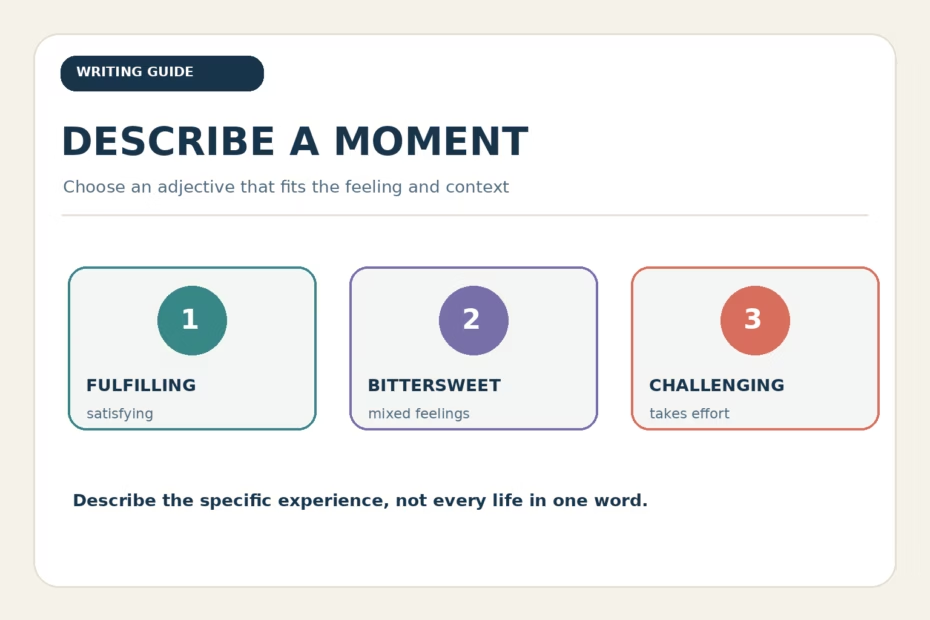
First decide what “life” means in your sentence. You might be describing a routine, a relationship, a particular memory, or a long period of change. A precise adjective fits that frame: peaceful can describe a quiet morning, challenging a difficult season, and fulfilling work or an experience that brings satisfaction. No single adjective needs to describe a whole person’s life.
Helpful Adjective Differences
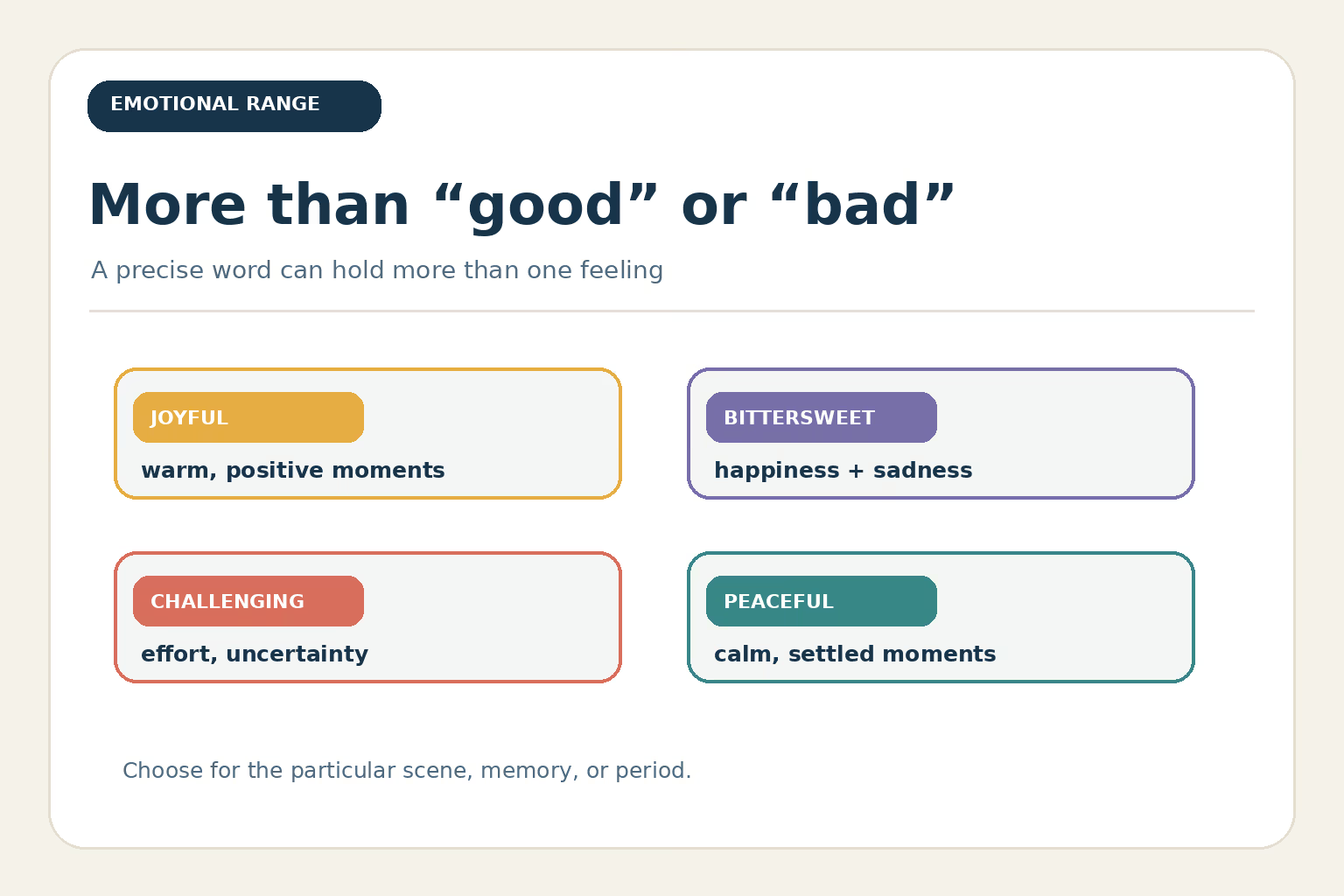
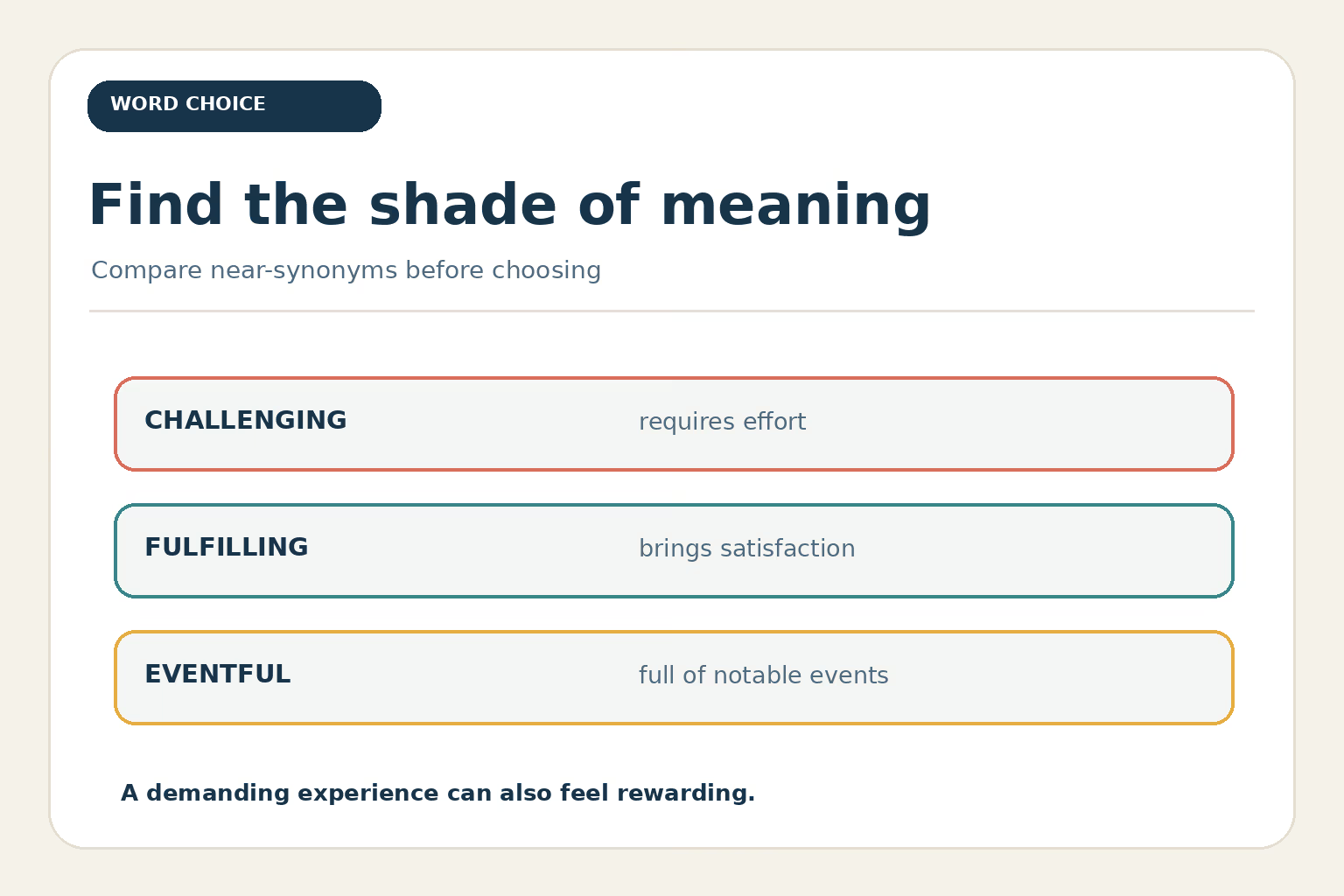
- Fulfilling: satisfying or meaningful; it does not have to mean easy or exciting.
- Challenging: requiring effort or testing someone’s abilities. It can be used positively or negatively depending on context.
- Bittersweet: combining happiness with sadness, often when a good moment also carries a loss or ending.
- Life-changing: having a large enough effect to change someone’s life. Cambridge Dictionary hyphenates it as a compound adjective.
- Eventful: full of noteworthy events; it describes how much happened, not whether the experiences were good.
- Ordinary: usual or familiar. In reflective writing it may sound neutral or reassuring, while uneventful emphasizes that little happened.
Cambridge Dictionary defines bittersweet as containing a mixture of sadness and happiness and life-changing as having an effect strong enough to change someone’s life. These meanings make the words useful when a simple label such as good or bad would flatten the experience.
Example Sentences with Adjectives for Life
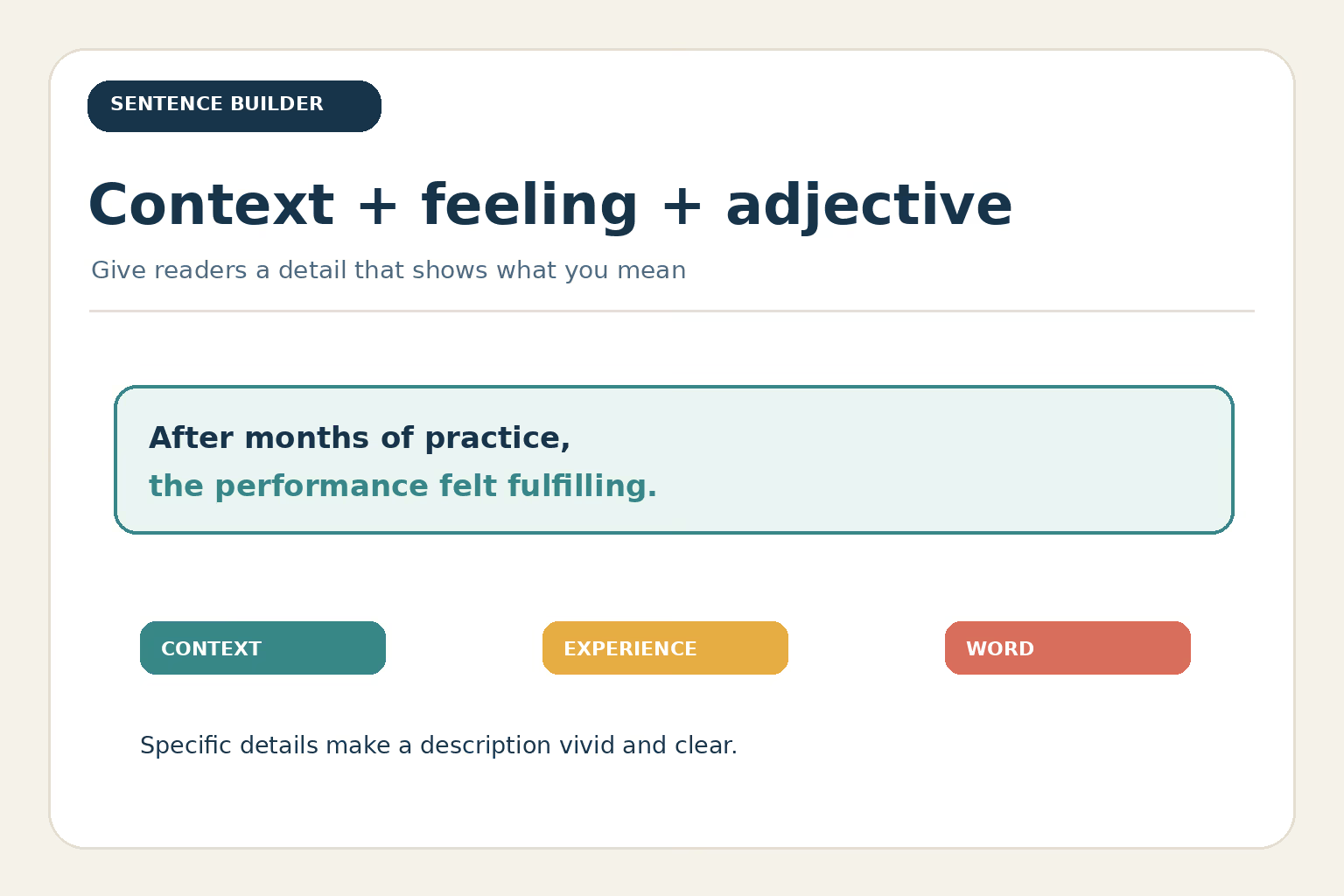
- After months of practice, performing the song for her family felt fulfilling.
- The move was challenging at first, but the new neighborhood soon felt welcoming.
- Graduation was a bittersweet day: she was proud to finish school and sad to leave her friends.
- For the family, the unexpected phone call became a life-changing moment.
- They described the road trip as eventful because every day brought a new stop or surprise.
- His peaceful morning routine gave him time to read before work.
- Although the celebration was brief, it made an unforgettable memory.
- She called that period uncertain because the next steps were not yet clear.
For a clear sentence, combine a detail with the adjective: “The first year was demanding but rewarding.” The detail shows why the word fits, and pairing two adjectives can express mixed or changing feelings without forcing a single mood.
Describe Experiences with Care
When writing about someone else’s life, avoid assuming that a difficult event made them “stronger” or that every experience was “inspiring.” Those words can be appropriate when they reflect the person’s own view, but they may also impose a meaning they did not choose. Use the person’s own description when possible, or stay close to observable details: “She rebuilt her routine after the move” is more specific than “She had an inspiring life.”
For personal writing, first-person language can make the perspective clear: “I found the year exhausting but meaningful.” For a story or essay, ask whether the adjective describes the event, the narrator’s feeling, or the overall period. That small distinction often makes a sentence more accurate.
Note on the Antonyms List Above
The original section groups death, nonexistence, absence, stillness, and inactivity as antonyms for life. These words are not interchangeable opposites: death is the direct opposite in the biological sense, while absence means being away and stillness or inactivity describe a lack of movement or action. Choose the term that matches the intended meaning.
Frequently Asked Questions
What are good adjectives to describe life?
Words such as fulfilling, peaceful, challenging, eventful, ordinary, and bittersweet can work, depending on which experience or period you mean. Add a concrete detail to show why the word fits.
What does “bittersweet” mean when describing life?
It describes an experience that includes both happiness and sadness. For example, a reunion can feel bittersweet when it brings joy while reminding people that someone is absent.
Should “life-changing” have a hyphen?
Cambridge Dictionary lists life-changing with a hyphen. Use that spelling in sentences such as “It was a life-changing decision.”
What is the opposite of life?
In the biological sense, death is the direct opposite. Words such as absence and inactivity describe different ideas and are not exact substitutes.


