Adjectives for Lions: Words for Appearance and Behavior
Adjectives for lions work best when they name something a reader can see or when they describe a behavior supported by the scene. Use words such as golden-coated, mane-fringed, or resting for direct observations; reserve judgments such as courageous or majestic for a clearly stated literary or symbolic purpose.
At a glance
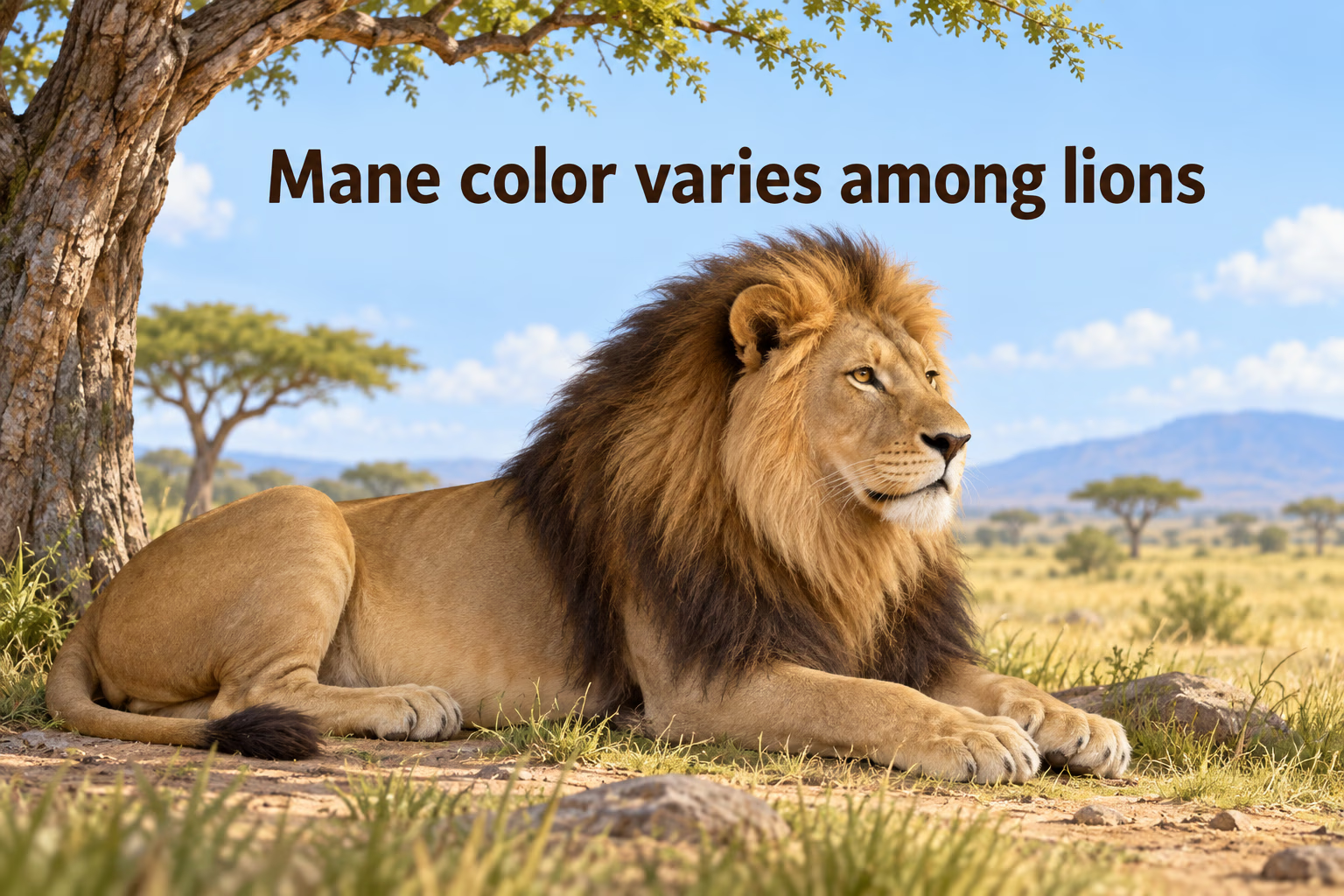
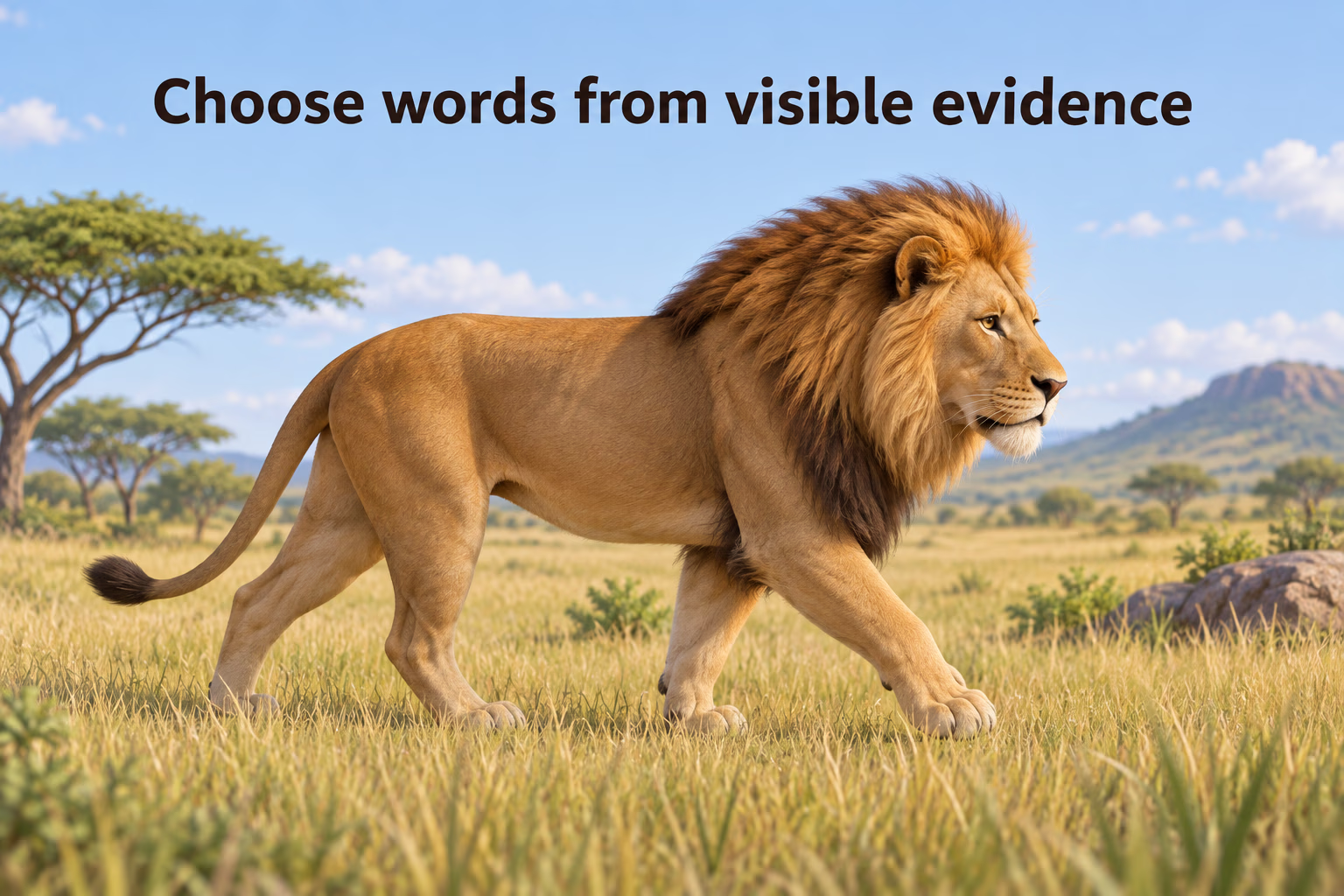
- A lion’s coat is usually yellow-gold; an adult male’s mane can range from blond to reddish-brown or black.
- Muscular, golden, and mane-fringed describe visible features.
- Roaring, resting, and stalking describe actions only when the scene shows them.
- A lion pride’s social pattern is not captured by calling every lion “protective” or “aggressive.”
- Majestic and courageous are interpretations or symbolism, rather than measurable animal traits.
How do you choose an accurate adjective for a lion?
Start with the evidence in the scene, then choose the narrowest word that fits it. A field-note description should distinguish what is visible—such as a tawny coat, a dark mane, or a crouched posture—from what a person infers about motive or character.
- Name the feature or action. Note coat color, mane, body position, movement, sound, or who is nearby.
- Match the adjective to that evidence. “The tawny lioness walked through dry grass” is more specific than “a beautiful lion.”
- Qualify an inference. A lion pausing near cubs may appear watchful, but the observation alone does not prove a human-like intention.
- Check the setting and audience. A science report favors literal language; a fable may deliberately use “noble” or “brave” as symbolism.
For example, “The golden-coated lion rested beneath an acacia” reports appearance and action. “The noble lion guarded his family” adds interpretation and a gendered story; use that version only when the surrounding text supports its meaning.
Which words describe a lion’s appearance?
Appearance adjectives describe coat, mane, build, size, age, and posture. They are strongest when a detail distinguishes this lion from another one in the same scene.
| Visible feature | Useful adjective | Example |
|---|---|---|
| Coat | tawny, golden, sandy | A tawny lion blended into the dry grass. |
| Adult male mane | shaggy, dark, blond, reddish-brown | A dark-maned male rested in the shade. |
| Build | muscular, broad-shouldered, compact | The muscular lion held a steady stance. |
| Movement | slow-moving, graceful, deliberate | The lioness moved quietly through the brush. |
| Posture | crouched, reclining, upright, alert | The alert lion raised its head at a sound. |
| Age cue | young, adult, spotted | A young cub’s spotted coat was still visible. |
Male lions’ manes do not have one fixed shade or size. The Smithsonian’s National Zoo says adult male manes range from blond through reddish-brown to black, and that age, genetics, and hormones likely influence their length and color. “Dark-maned” is therefore a better observation than “healthy” unless a reliable source supports that additional claim. Smithsonian National Zoo: Lion.
Which words describe lion behavior?
Behavior words should identify an action that is visible or documented, rather than assign a fixed personality to a wild animal. Use resting, roaring, walking, stalking, feeding, or grooming when the scene shows that action.
| Observed scene | Grounded description | What the word does not prove |
|---|---|---|
| A lion has its head raised and ears turned toward a sound. | alert, attentive | It does not establish that the lion is angry. |
| A lion lies stretched out in shade. | resting, reclining | It does not establish laziness or contentment. |
| A lioness moves low through grass toward prey. | stalking, focused | “Cruel” is a human judgment, not a precise behavior label. |
| Several pride members vocalize. | roaring, calling | A roar alone does not show that an attack is underway. |
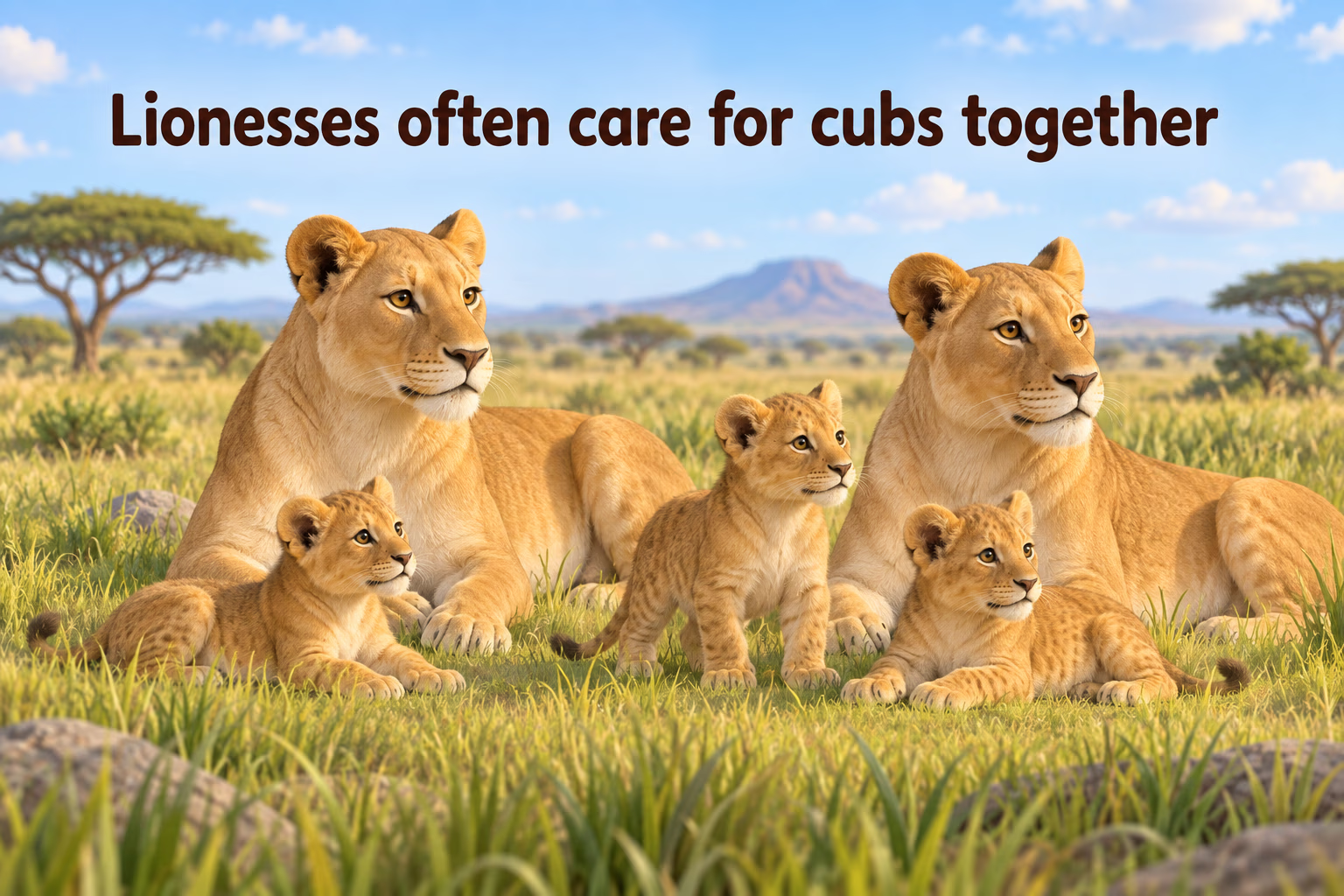
| Adult females are near cubs. | gathered, caring for young (when care is observable) | “Protective” should not be assumed from proximity alone. |
Lions are social felines, but pride members may travel or rest in smaller subgroups instead of remaining in one tight cluster. Related females commonly stay with their natal pride; females raise cubs and are usually the primary hunters, while males often take on defensive roles. These are broad patterns, not descriptions of every individual or every population. The Smithsonian’s lion account also notes a distinct social arrangement among lions in India.
Are “majestic,” “fierce,” and “courageous” factual?
Majestic, fierce, and courageous can be effective descriptive words, but each adds a viewpoint. “Majestic” expresses awe, “fierce” suggests intensity or ferocity in a particular context, and “courageous” attributes a human moral quality that cannot be measured from an animal’s appearance.
In a creative description, “A majestic lion watched the plain” signals the narrator’s impression. In a factual caption, “An adult male lion with a dark mane watched the plain” gives readers details they can check. The distinction matters in classroom writing and wildlife reporting, where an evaluative adjective can quietly turn into an unsupported claim.
What are useful positive and negative adjectives?
Positive or negative describes a writer’s attitude toward a word; it does not mean that the animal itself is morally good or bad. Choose a neutral behavior or physical description for informational writing, and use a value-laden word only when the genre calls for it.
- Mostly observational: tawny, muscular, shaggy, spotted, alert, resting, roaring, territorial.
- Admiring or literary: majestic, impressive, graceful, magnificent, regal.
- Intense or cautionary: powerful, formidable, fierce, intimidating, vulnerable.
- Use with context: aggressive, protective, courageous, resilient, dominant. Explain the action or symbolic meaning rather than treating the word as a permanent personality label.
Vulnerable also has a technical conservation use. The 2023 assessment lists the lion (Panthera leo) as Vulnerable globally on the IUCN Red List, so this word can accurately describe conservation status when the context makes clear it is about population-level risk, not an individual lion’s temperament. IUCN Red List assessment for Panthera leo.
How can you make a lion description more specific?
Pair an adjective with the noun or action it actually modifies, then add a short detail that lets the reader picture it. Three grounded choices usually create a clearer sentence than a long string of dramatic synonyms.
- Vague: “The lion was fierce.” Specific: “The lion gave a low warning growl as another male approached.”
- Vague: “The lioness was beautiful.” Specific: “The tawny lioness crossed the grass with a steady, quiet gait.”
- Vague: “The lion was brave.” Specific: “The lion remained beside the cubs while the rest of the pride moved away.”
A useful rule is to ask, “Could a camera or sound recording verify this word?” If not, mark the sentence as interpretation, attribute it to an observer, or choose a more observable alternative.
What are the limits of lion adjectives?
Adjectives simplify a changing animal into one label, so no short word list can explain a lion’s age, sex, health, social role, local habitat, or immediate behavior. Lions can be powerful predators and vulnerable to ecological threats at the same time; those descriptions refer to different things and can both be accurate.
Use aggressive for a clearly described aggressive act, not as a blanket trait of every lion. Use protective only when the observed behavior supports it, and avoid implying that all pride structures work identically. Captive behavior, field observations, and symbolic depictions should not be treated as interchangeable evidence.
Frequently asked questions about adjectives for lions
What is the best adjective for a lion?
There is no single best adjective for every lion. Muscular describes a visible build, tawny describes a coat, and alert describes a posture or response. Use majestic when you want to express admiration, and make the point of view clear in factual writing.
What words describe a lion’s mane?
Useful mane words include shaggy, thick, blond, reddish-brown, and dark, as long as the feature is visible. Adult male lions’ manes vary in length and color; age, genetics, and hormones likely contribute to that variation.
Can “fierce” describe a lion?
Yes, fierce can describe an intense scene, such as a territorial clash or hunt, and it is common in imaginative writing. For a neutral wildlife report, name the action—such as roaring, chasing, or defending territory—because “fierce” interprets the scene rather than identifying one measurable trait.
What is an antonym for a lion?
A lion is an animal, so it does not have a true antonym. Words such as timid or weak can contrast with selected qualities like bold or strong, but they do not mean “the opposite of lion.”
Original adjective lists and examples
Source note: The material below is retained from the original article. Its “positive” and “negative” labels are vocabulary prompts, not scientific personality classifications; the “synonyms” and “antonyms” tables compare selected qualities rather than providing literal synonyms or opposites of the animal. The examples are creative sentences, not claims that every lion behaves this way.

Lions, the majestic kings of the animal kingdom, are truly awe-inspiring creatures. From their powerful presence to their regal mane, lions have captivated our imaginations for centuries. But how do we accurately describe these magnificent beasts? In this article, I’ll be sharing a variety of adjectives that perfectly capture the essence of lions, along with examples to help paint a vivid picture in your mind.
When it comes to describing lions, one word that immediately comes to mind is “fierce.” Their piercing gaze and strong, muscular bodies exude an undeniable aura of power and strength. Just imagine a lion standing tall, its eyes locked onto its prey, ready to pounce at any moment. Another adjective that aptly describes lions is “majestic.” With their flowing manes and dignified posture, lions command respect and admiration wherever they roam. Picture a lion strolling through the savannah, its mane billowing in the wind, truly a sight to behold.
In this article, we’ll explore more adjectives that capture the essence of lions, from their physical characteristics to their behavior. So, let’s dive in and discover the perfect words to describe these extraordinary creatures.
How to Describe lions? – Different Scenarios
When it comes to describing lions, there are various scenarios in which we can use different adjectives to capture their essence. Let’s explore some of these scenarios and the descriptive words that best fit them:
1. Physical Appearance:
Lions are known for their impressive physical appearance. Here are some adjectives that can be used to describe their physical characteristics:
- Majestic: Lions have a powerful and regal presence.
- Impressive: Their strong bodies command attention.
- Gorgeous: Lions have beautiful flowing manes.
- Dignified: Their posture exudes grace and confidence.
2. Hunting Behavior:
Lions are skilled hunters, and their hunting behavior can be described using the following adjectives:
- Fierce: Lions are known for their aggressive and determined hunting style.
- Stealthy: They move silently, stalking their prey.
- Strategic: Lions use teamwork and coordination to bring down larger prey.
3. Family Dynamics:
In lion prides, family dynamics play an important role. Here are some adjectives to describe the relationships within a lion pride:
- Protective: Lions show a strong sense of loyalty and protectiveness towards their pride members.
- Nurturing: Lionesses take care of the cubs, providing them with love and guidance.
- Social: Lions live in close-knit groups, displaying social behavior and strong bonds.
4. Symbolism and Representation:
Lions have been symbols of power, strength, and courage for centuries. Here are some adjectives that capture their symbolic meaning:
- Resilient: Lions symbolize resilience in the face of challenges.
- Majestic: The lion’s symbolism often conveys a sense of awe and grandeur.
- Courageous: Lions represent bravery and fearlessness.
By using these adjectives, we can paint a vivid picture of lions and convey their unique qualities in different scenarios. Whether it’s their physical appearance, hunting behavior, family dynamics, or symbolic representation, lions truly deserve the adjectives we use to describe them.
| Scenario | Adjectives |
|---|---|
| Physical Appearance | Majestic, Impressive, Gorgeous, Dignified |
Describing Words for lions in English
When it comes to describing lions, there are a wide range of adjectives that capture their impressive qualities. Lions are known for their majestic presence, powerful bodies, and stunning manes. Let’s explore some descriptive words that highlight the unique characteristics of these mighty creatures.
Physical Appearance
- Majestic: Lions have a regal and imposing presence that commands respect.
- Strong: Their robust and sturdy bodies exude strength and power.
- Beautiful: Lions possess a captivating beauty that is admired by many.
- Magnificent: Their striking features make them a sight to behold.
- Graceful: Lions move with a grace and elegance that is truly captivating.
Hunting Behavior
- Fierce: Lions are fearless hunters, displaying aggression and determination in their pursuits.
- Stealthy: They possess the ability to move silently and blend into their surroundings, making them effective ambush predators.
- Strategic: Lions employ clever tactics and coordinate with their pride to secure a successful hunt.
- Persistent: They never give up easily and will continue to pursue their prey until they succeed.
Family Dynamics
- Protective: Lions are fiercely protective of their pride, ensuring the safety of their young ones.
- Nurturing: Lionesses display a tender and affectionate nature towards their cubs, providing them with care and support.
- Social: Lions are highly sociable animals, living in close-knit groups known as prides.
- Resilient: Lions are often seen as a symbol of strength and resilience, as they can endure challenging environments and circumstances.
- Majestic: Lions are widely regarded as majestic creatures, inspiring awe and admiration.
- Courageous: They embody bravery and fearlessness, standing tall in the face of danger.
These are just a few examples of the descriptive words that can be used to depict lions in various scenarios. By using these adjectives, we can paint a vivid picture of the awe-inspiring nature of lions.
Adjectives for lions
As someone who has spent years observing and studying lions, I have come to appreciate the beauty and majesty of these incredible creatures. In this section, I will share with you a range of adjectives that can be used to describe lions. From their physical appearance to their behavior and characteristics, these adjectives will help you paint a vivid picture of these fascinating animals.
Positive Adjectives for Lions
Lions are often admired for their regal demeanor and awe-inspiring presence. Here are some positive adjectives that capture the essence of these magnificent creatures:
- Majestic: The lion’s powerful build and commanding presence make it truly majestic.
- Graceful: Despite their size, lions move with a surprising grace and agility.
- Powerful: With their muscular bodies and strong jaws, lions are undeniably powerful predators.
- Courageous: Lions are known for their fearlessness, fearlessly protecting their pride and territories.
- Stunning: The lion’s golden coat and impressive mane make it a truly stunning sight.
- Resilient: Lions have shown remarkable resilience, surviving in a variety of challenging environments.
Let’s see some examples of how these adjectives can be used in sentences:
| Adjective | Sentence |
|---|---|
| Majestic | The lion stood tall, its majestic mane flowing in the breeze. |
| Graceful | The lioness moved gracefully through the tall grass. |
| Powerful | The lion’s powerful roar echoed through the valley. |
| Courageous | The lioness fearlessly protected her cubs from danger. |
| Stunning | The lion’s stunning coat shimmered in the sunlight. |
| Resilient | Despite adversity, the lion displayed remarkable resilience. |
Negative Adjectives for Lions
While lions are often revered, it’s important to acknowledge that they can also display negative traits. Here are some adjectives that describe these aspects of lion behavior:
- Aggressive: Lions can be highly aggressive when defending their pride or territory.
- Ferocious: When hunting, lions exhibit a ferociousness that is both awe-inspiring and intimidating.
- Demanding: Within a lion pride, the dominant male can be demanding and assertive.
- Territorial: Lions are fiercely territorial, defending their hunting grounds from intruders.
- Vulnerable: Despite their strength, lions can be vulnerable to factors such as habitat loss and poaching.
Here are a few examples of these adjectives in context:
| Adjective | Sentence |
|---|---|
| Aggressive | The lion growled menacingly, its aggression on full display. |
| Ferocious | With a mighty roar, the lion launched into a ferocious attack. |
| Demanding | The dominant male lion asserted his authority with demanding roars. |
| Territorial | The lion fiercely defended its territory from intruding rivals. |
| Vulnerable | The lion’s vulnerability to habitat loss is a cause for conservation concern. |
I hope these adjectives help you in your quest to describe lions accurately and vividly. Remember, when it comes to capturing the true essence of these magnificent animals, choosing the right adjectives is key.
Synonyms and Antonyms with Example Sentences
Synonyms for lions
When it comes to finding the right adjectives to describe lions, there are several synonyms that can help us paint a vivid picture. Let’s take a look at some synonyms for lions:
| Synonym | Definition |
|---|---|
| Majestic | Having dignified beauty or grandeur |
| Graceful | Elegant and smooth in movement |
| Powerful | Having great strength or force |
| Courageous | Fearless and brave |
| Stunning | Extremely impressive or attractive |
| Resilient | Able to recover quickly from difficulties |
Here are some sentences that demonstrate the use of these synonyms:
- The lion, with its majestic presence, ruled over the savannah.
- The graceful lioness moved silently through the grass, her every movement a picture of elegance.
- The powerful roar of the lion echoed through the wilderness, asserting his dominance.
- The courageous lioness fearlessly protected her cubs from any danger.
- The stunning mane of the lion caught the sunlight, creating a mesmerizing sight.
- Despite facing adversity, the lion proved to be resilient and bounced back from every challenge.
Antonyms for lions
On the other hand, if we want to describe lions in a contrasting way, we can use antonyms to convey a different perspective. Here are some antonyms for lions:
| Antonym | Definition |
|---|---|
| Timid | Shy and lacking confidence |
| Weak | Lacking in strength or power |
| Cowardly | Showing a lack of courage or bravery |
| Unimpressive | Not making a strong impact or being noteworthy |
| Fragile | Easily broken or damaged |
| Inflexible | Not easily adaptable or willing to change |
Let’s see how these antonyms can be used in sentences:
- Unlike the confident lion, the timid lioness often avoided confrontations.
- The weak lion struggled to keep up with the pack during the hunt.
- Instead of being courageous, the cowardly lion retreated at the first sign of danger.
- The lion’s performance was unimpressive, lacking the usual grace and power.
- Unlike the robust lion, the fragile cub required constant care and protection.
- The inflexible lion refused to stray from its territory, even in the face of better opportunities elsewhere.
By using synonyms and antonyms, we can create a more diverse and nuanced description of lions, capturing their various characteristics and qualities.
Conclusion
Describing lions with adjectives allows us to paint a vivid picture of these magnificent creatures. From their physical appearance to their behavior, adjectives play a crucial role in capturing the essence of lions.
In this article, we have explored a wide range of adjectives that can be used to describe lions. We have discussed positive adjectives like majestic, graceful, powerful, courageous, stunning, and resilient, which highlight their awe-inspiring qualities. On the other hand, negative adjectives such as aggression, ferociousness, demandingness, territoriality, and vulnerability shed light on different aspects of their behavior.
By selecting the right adjectives, we can create a more diverse and nuanced description of lions. Synonyms and antonyms for lions further enhance our ability to convey their characteristics effectively.
Adjectives provide us with a powerful tool to bring lions to life in our writing. Whether we want to portray their strength, beauty, or even their vulnerabilities, adjectives help us paint a vivid and captivating picture of these majestic creatures.


