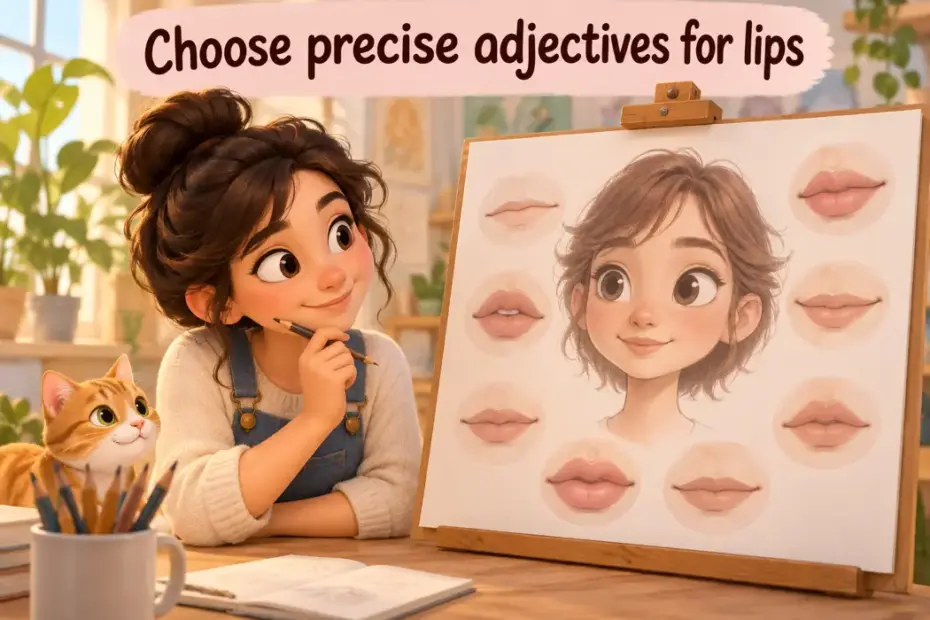
Adjectives for Lips: Meaning and Example Sentences
The best adjective depends on the detail you want to describe. Some words refer to texture or condition; others describe shape or the way lips are held. These examples are meant for clear description, not to suggest that one appearance is better than another.
Texture and surface
- Smooth: “The artist used a smooth line to outline the character’s lips.”
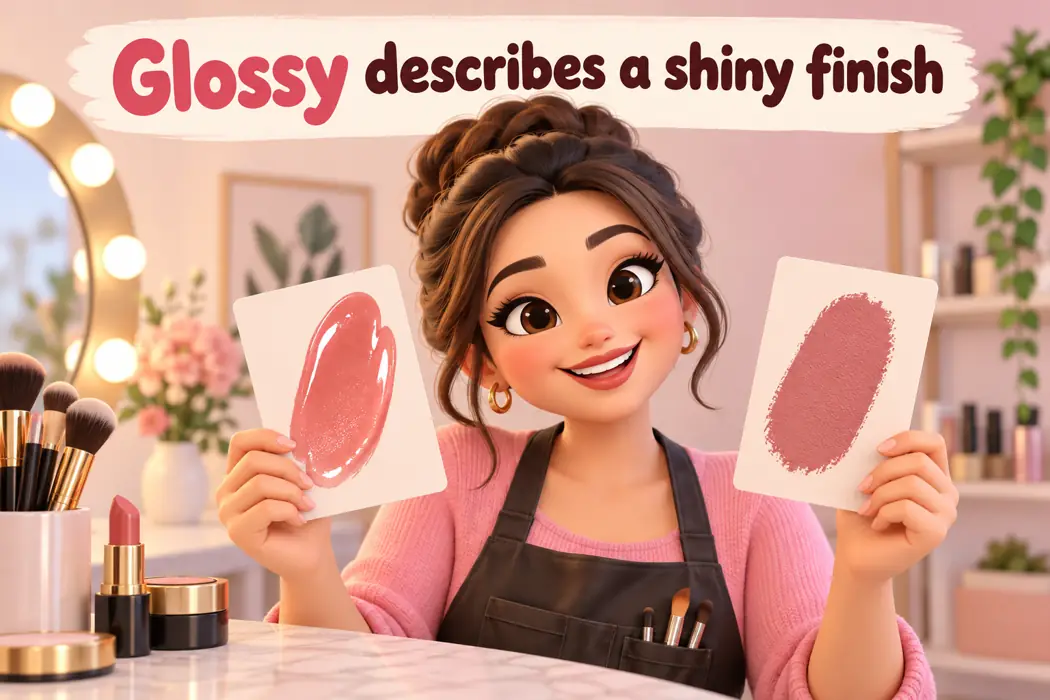
- Glossy: “The glossy finish caught the stage lights.”
Smooth describes a regular, unrough surface. Glossy means smooth and shiny, so it often describes a visible finish.
Condition
- Dry: “After the windy walk, Jordan’s lips felt dry.”
- Chapped: “In the story, the traveler’s chapped lips showed how long they had been outdoors.”
Dry is a broad everyday description. Chapped usually suggests skin that is rough or cracked, often from exposure to cold or wind. In descriptive writing, use these words only for what the scene shows; they do not by themselves explain a cause.
Shape and position
- Full: “The portrait emphasized the character’s naturally full lips.”
- Parted: “He paused, his lips parted as if he were about to speak.”
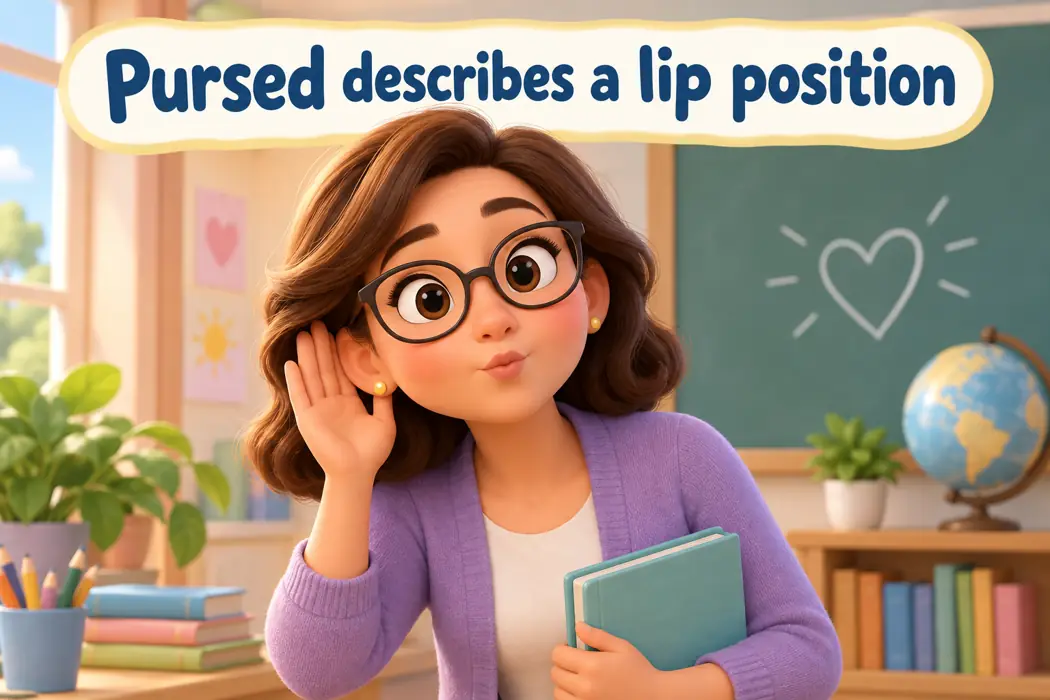
- Pursed: “The teacher listened with pursed lips before answering.”
Parted means separated slightly. Pursed describes lips brought tightly together into a rounded shape and often suggests disapproval or doubt. That implication comes from context, not a fixed rule about someone’s feelings.
Choosing the right adjective
- Decide whether you mean texture, condition, shape, or expression.
- Choose a word that matches the visible detail: for instance, glossy for shine or parted for an open position.
- Check the word’s connotation. Pursed often carries an emotional suggestion, while dry is more literal.
- Use the sentence around it to make the intended meaning clear.
For a neutral description, state the visible detail rather than making a judgment about attractiveness or personality. A character’s expression can hint at a reaction, but it should not be treated as proof of what that person thinks.
For definitions, see Cambridge Dictionary entries for smooth, glossy, dry, and pursed.
Describe a moment, not a whole personality
Lip descriptions can give a scene a visible detail, but their meaning depends on the action around them. “She pressed her lips together before answering” shows a movement. “She was an unfriendly person because her lips were pressed together” makes a much larger claim that the movement alone cannot support. In fiction, connect the detail with dialogue or another action so readers can interpret the scene.
Parted lips may appear when someone is about to speak, surprised, or simply breathing with the mouth slightly open. Pursed lips may suggest doubt or disapproval in context, but the same position does not establish one emotion in every person. A neutral description leaves room for the rest of the sentence to explain the reaction.
Useful distinctions for portraits and stories
| Detail | Words to consider | What to make clear |
|---|---|---|
| Surface appearance | smooth, glossy, matte | Whether you mean texture or reflected light |
| Visible condition | dry, chapped, cracked | The observed condition without assuming its cause |
| Position | parted, pursed, closed | How the lips are held at that moment |
| Shape | full, thin, curved | A physical feature described without ranking appearances |
For an art discussion, you can describe the drawing itself: “A curved line defined the upper lip” or “A glossy highlight appeared on the painted lips.” These sentences explain an artistic choice rather than claiming a characteristic of a real person. Specify whether the adjective applies to the model, the character, or the image.
A short writing exercise
Choose one detail and add an action. “His lips were parted” becomes “His lips parted as he began to ask a question.” “Her lips were pursed” becomes “She pursed her lips, reread the note, and asked for clarification.” The action gives the description a purpose in the scene and avoids a string of unrelated adjectives.
When editing, remove any word that repeats the same information. You may not need both shiny and glossy together. A precise adjective plus one concrete action often creates a clearer sentence than several descriptions stacked before the noun.
Frequently asked questions
Are full and pursed descriptions of the same feature?
No. Full usually refers to shape or volume, while pursed refers to a temporary position. A person with any natural lip shape can purse their lips.
Is dry the same as chapped?
No. Dry is a broader description, while chapped suggests rough or cracked skin. Use the word that fits the observed detail, without turning a vocabulary description into a diagnosis.
Hey there! If you’re looking to add some flair to your writing or simply want to find the perfect words to describe lips, you’ve come to the right place. As a seasoned writer, I understand the importance of finding just the right adjective to capture the essence of a person’s lips. In this article, I’ll be sharing a curated list of adjectives that will help you paint a vivid picture and bring your descriptions to life.
Lips are a fascinating feature that can convey a multitude of emotions and characteristics. From full and luscious to thin and delicate, there are countless ways to describe this prominent facial feature. Whether you’re writing a romantic scene, creating a character, or simply want to enhance your vocabulary, these adjectives will give you the tools you need to make your descriptions pop. So, let’s dive in and explore the world of adjectives for lips, complete with examples to inspire your writing.
How to Describe lips? – Different Scenarios
Describing lips can be a fun and creative way to add depth and personality to your writing. Whether you’re working on a story, poem, or even a descriptive essay, finding the right words to capture the essence of a person’s lips can make all the difference. In this section, I’ll guide you through different scenarios and provide you with some adjectives to help you describe lips effectively.
1. Lips in a Flirty Scenario
When describing lips in a flirty scenario, you want to focus on their sensuality and allure. Here are some adjectives that can help you achieve that:
| Adjectives | Example Sentence |
|---|---|
| Luscious | Her luscious lips beckoned me closer. |
| Sultry | His sultry lips whispered secrets in my ear. |
| Seductive | The way she moved her seductive lips drove me wild. |
| Tempting | His tempting lips invited me to explore forbidden desires. |
2. Lips in a Gentle Scenario
In a gentle scenario, you want to portray softness and tenderness. Consider using these adjectives:
| Adjectives | Example Sentence |
|---|---|
| Tender | Her tender lips brushed against my cheek. |
| Gentle | His gentle lips kissed away all my worries. |
| Featherlight | I felt her featherlight lips against mine. |
| Delicate | The touch of his delicate lips sent shivers down my spine. |
3. Lips in an Angry Scenario
When writing about lips in an angry scenario, you want to convey intensity and aggression. These adjectives will help you achieve that:
| Adjectives | Example Sentence |
|---|---|
| Pursed | Her lips were tightly pursed, a sign of her anger. |
| Thin | His thin lips formed a straight line, showing his displeasure. |
| Tense | I could see the tension in his lips as he yelled at me. |
| Grim | The corners of his lips turned down in a grim expression. |
Describing Words for lips in English
When it comes to describing lips, there are plenty of adjectives that can help bring your writing to life. Whether you’re writing a story, a poem, or simply trying to find the right words to describe someone’s lips, it’s important to choose adjectives that accurately convey the desired image or emotion. Here are some adjectives that can be used to describe lips in various situations:
1. Flirty Lips
- Luscious: Full and inviting, like a ripe, juicy fruit.
- Sultry: Alluring and seductive, with a hint of mystery.
- Seductive: Tempting and captivating, inviting others closer.
- Tempting: Irresistible and enticing, drawing attention.
2. Gentle Lips
- Tender: Soft and delicate, conveying warmth and care.
- Gentle: Mild and soothing, offering comfort and reassurance.
- Featherlight: Light and barely noticeable, creating a delicate touch.
- Delicate: Fragile and refined, requiring gentle handling.
3. Angry Lips
- Pursed: Tight and pressed together, signaling anger or frustration.
- Thin: Compressed and narrow, indicating displeasure or irritation.
- Tense: Stiff and rigid, displaying tension and hostility.
- Grim: Set in a firm line, revealing anger or determination.
Remember, effective writing engages all the senses and utilizes descriptive language. When describing lips, consider the shape, texture, and color as well. By choosing the right adjectives, you can create vivid imagery and evoke specific emotions in your readers.
In the next section, we will explore more scenarios and provide a curated list of adjectives for each one, enabling you to effectively describe lips in different contexts. So, stay tuned to enhance your writing even further!
Adjectives for lips
Positive Adjectives for Lips
When it comes to describing lips, there are plenty of positive adjectives that can bring them to life. Here are some examples, along with sentences to demonstrate their usage:
| Adjective | Example Sentence |
|---|---|
| Luscious | Her luscious lips were the perfect shade of red. |
| Sultry | He couldn’t resist her sultry smile. |
| Seductive | Her seductive lips had a magnetic effect on everyone. |
| Tempting | The dessert looked tempting, like a pair of rosy lips. |
| Plump | Her plump lips pouted as she waited for a kiss. |
| Voluptuous | The actress had voluptuous lips that stole the show. |
| Sensuous | His sensuous lips brushed against hers, sending shivers down her spine. |
| Alluring | She had an alluring smile that captivated everyone she met. |
| Kissable | His kissable lips beckoned to her, tempting her to lean in. |
| Juicy | The watermelon had juicy red lips that made her mouth water. |
| Radiant | Her radiant smile was bright enough to light up a room. |
| Perfect | His perfect lips were the envy of all his friends. |
Negative Adjectives for Lips
While positive adjectives can make lips sound desirable, negative adjectives can evoke different emotions. Here are a few examples, along with sentences to illustrate their usage:
| Adjective | Example Sentence |
|---|---|
| Pursed | Her pursed lips revealed her disapproval. |
| Thin | His thin lips gave him a stern and serious expression. |
| Tense | The argument left them with tense lips and clenched jaws. |
| Grim | The news left a grim expression on his lips. |
| Chapped | His chapped lips were in desperate need of moisturizer. |
Choosing the right adjectives can bring your writing to life. Whether you want to convey positive or negative emotions, these adjectives for lips will help you create vivid imagery. Keep in mind that context is crucial when selecting the most appropriate adjectives for your writing.
Synonyms and Antonyms with Example Sentences
Synonyms for lips
When it comes to describing lips, there are several synonyms that can help us paint a vivid picture. Here are some alternative words to use instead of the word “lips”:
- Mouth
- Smacker
- Kisser
- Pout
Let me provide you with some sentences that demonstrate the usage of these synonyms:
| Synonym | Example Sentence |
|---|---|
| Mouth | She painted her mouth a bright, bold red. |
| Smacker | He puckered up his smacker for a quick peck. |
| Kisser | The actress had the most perfectly shaped kisser. |
| Pout | He gave her a pout to show his disappointment. |
Antonyms for lips
If we want to describe lips that are different from the norm, we can use antonyms to create contrast. Here are some antonyms for the word “lips”:
- Smile
- Frown
- Grimace
- Laughter
Let’s look at some example sentences using these antonyms:
| Antonym | Example Sentence |
|---|---|
| Smile | Her lips curved upward in a warm, genuine smile. |
| Frown | He pressed his lips together, forming a deep frown. |
| Grimace | The taste of the sour candy made her lips grimace. |
| Laughter | Waves of laughter escaped from between her lips. |
Using synonyms and antonyms adds variety and depth to our writing. It allows us to create more engaging and descriptive imagery. By carefully selecting the right words, we can bring our descriptions of lips to life.
Conclusion
Describing lips in writing can be a creative and engaging task. By using synonyms and antonyms, we can bring our descriptions to life and captivate our readers. Throughout this article, I have provided a range of adjectives and examples to help you expand your vocabulary and add depth to your writing.
Synonyms such as “mouth,” “smacker,” “kisser,” and “pout” offer variety and allow you to paint a vivid picture in your readers’ minds. These words can evoke different emotions and create a unique atmosphere in your descriptions. On the other hand, antonyms like “smile,” “frown,” “grimace,” and “laughter” provide contrast, highlighting the different expressions and moods associated with lips.
Remember, the right choice of words can make all the difference in crafting compelling descriptions. By carefully selecting adjectives, you can create imagery that resonates with your audience and immerses them in your writing. So, next time you describe lips, experiment with synonyms and antonyms to add depth, variety, and engaging imagery to your prose.


