Adjectives for a Mean Person: 20+ Words & Examples
Adjectives for a mean person include unkind, rude, hurtful, inconsiderate, spiteful, cruel, selfish, and greedy, but the words describe different actions or motives. Use hurtful for impact, rude for a breach of courtesy, and cruel for intentional harm. When context is unclear, describe the behavior rather than judging a whole person.
Unkind is a broad word for behavior that does not treat someone well.
Rude points to discourteous words or manners; it does not by itself prove harmful intent.
Hurtful describes an effect, while cruel is stronger and usually implies intentional pain.
Selfish and greedy focus on self-interest or taking more than a fair share.
In mathematics, the mean is an arithmetic average; this is a separate sense of the same word.
The preserved A–Z source index includes hundreds of general adjectives, not hundreds of synonyms for mean.
Which Adjectives Describe Mean Behavior Most Precisely?
The closest everyday choices are unkind, rude, hurtful, and mean-spirited, but no single synonym fits every situation. Choose a word by the observable behavior, its impact, and whether the sentence needs to state a motive.
Adjective
What it emphasizes
Example
unkind
A broad lack of consideration or kindness
“That joke about her accent was unkind.”
rude
Discourteous speech or manners
“He interrupted the host and walked away mid-sentence.”
hurtful
The pain or offense an action causes, whether intended or not
“The comment was hurtful, even if it was meant as a joke.”
inconsiderate
Ignoring another person’s needs, time, or feelings
“Playing loud music after a roommate asked for quiet was inconsiderate.”
thoughtless
Carelessness about how words or actions may affect someone
“The thoughtless remark embarrassed her in front of the group.”
insulting
Words or conduct that offend or show disrespect
“Calling his work useless was insulting.”
dismissive
Treating a person or idea as unworthy of attention
“The manager gave a dismissive answer to a fair question.”
snide
An indirectly mocking or critical remark
“She made a snide comment about his presentation.”
scornful
Open contempt or disdain
“His scornful expression made the disagreement personal.”
mean-spirited
Petty or spiteful unkindness, often aimed at humiliating someone
“The mean-spirited caption mocked a coworker’s mistake.”
spiteful
Conduct meant to hurt or punish someone out of resentment
“Deleting the shared draft to punish a teammate was spiteful.”
nasty
Informal, strong disapproval of unpleasant or hostile conduct
“The reply turned nasty after the argument.”
hostile
Open opposition, antagonism, or threatening behavior
“The hostile exchange made the meeting difficult.”
aggressive
Forceful, confrontational, or threatening conduct; not a simple synonym for unkind
“The aggressive complaint included a threat.”
cruel
Severe unkindness that intentionally causes pain or suffering
“Teasing him about his injury was cruel.”
callous
A hard or uncaring response to someone else’s suffering
“Ignoring her distress seemed callous.”
selfish
Putting one’s own interests ahead of other people’s needs
“Keeping all the shared supplies for himself was selfish.”
greedy
Wanting more money, resources, or advantage than is fair
“Demanding a second share after taking one was greedy.”
stingy
Unwillingness to spend or share, especially money
“The review called the owner stingy for refusing basic repairs.”
violent
Using or threatening physical force; far stronger than mean
“The violent threat required immediate attention.”
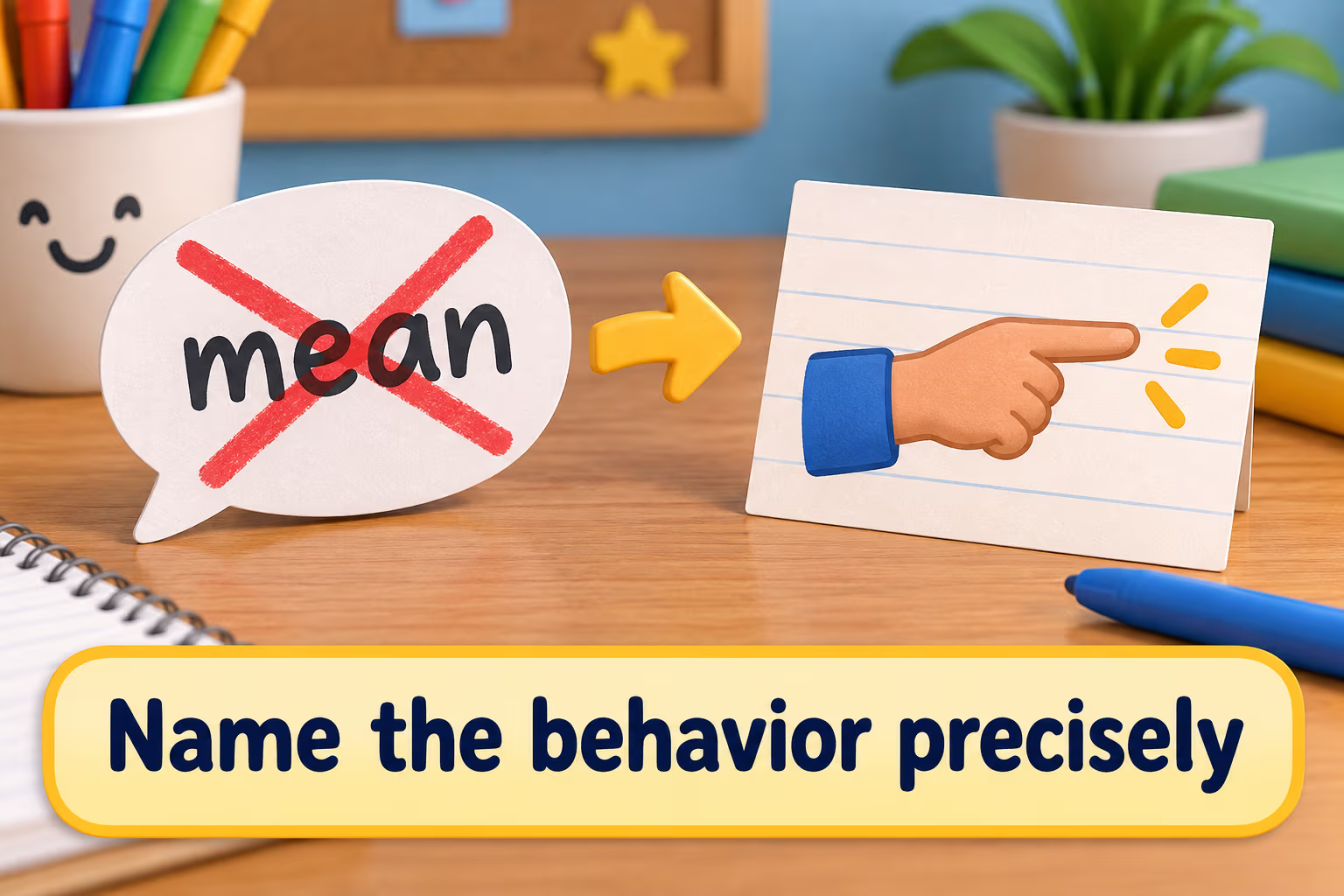
Name the behavior precisely
How Do You Choose the Right Word?
Start with the part of the event the sentence needs to communicate. A description can focus on the words used, the effect on someone, the treatment of another person’s needs, or an explicitly known motive. If the motive is uncertain, use a word about the behavior or effect instead of claiming to know why the person acted.
Name the observable act. “She mocked his answer in front of the class” is more specific than “She is mean.”
Choose the dimension. Use rude for discourtesy, hurtful for impact, inconsiderate for disregard, or spiteful when retaliation is clear.
Match the strength. Reserve cruel for severe, intentional harm; do not substitute violent unless force or a threat is involved.
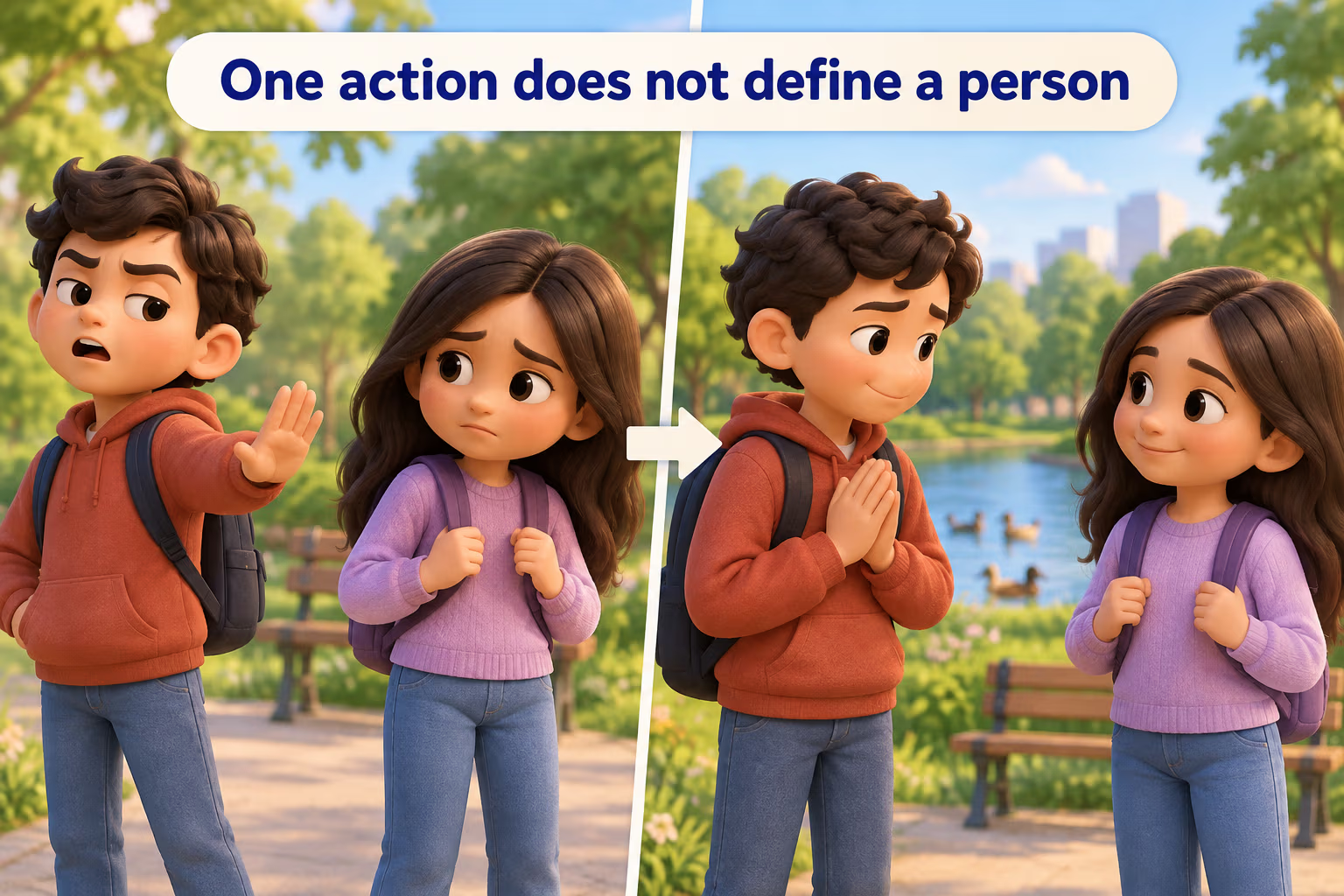
Keep the judgment proportional. “That was an unkind comment” describes one event; “he is a cruel person” makes a much broader claim.
One action does not define a person
What Does “Mean” Mean in Different Contexts?
Mean has several adjective senses, so context matters. It can mean unkind or unpleasant, unwilling to spend or share, or (in mathematics) an arithmetic average. Informal English also uses mean before a noun to mean very skilled or impressive, as in “She plays a mean guitar.” These senses are not interchangeable.
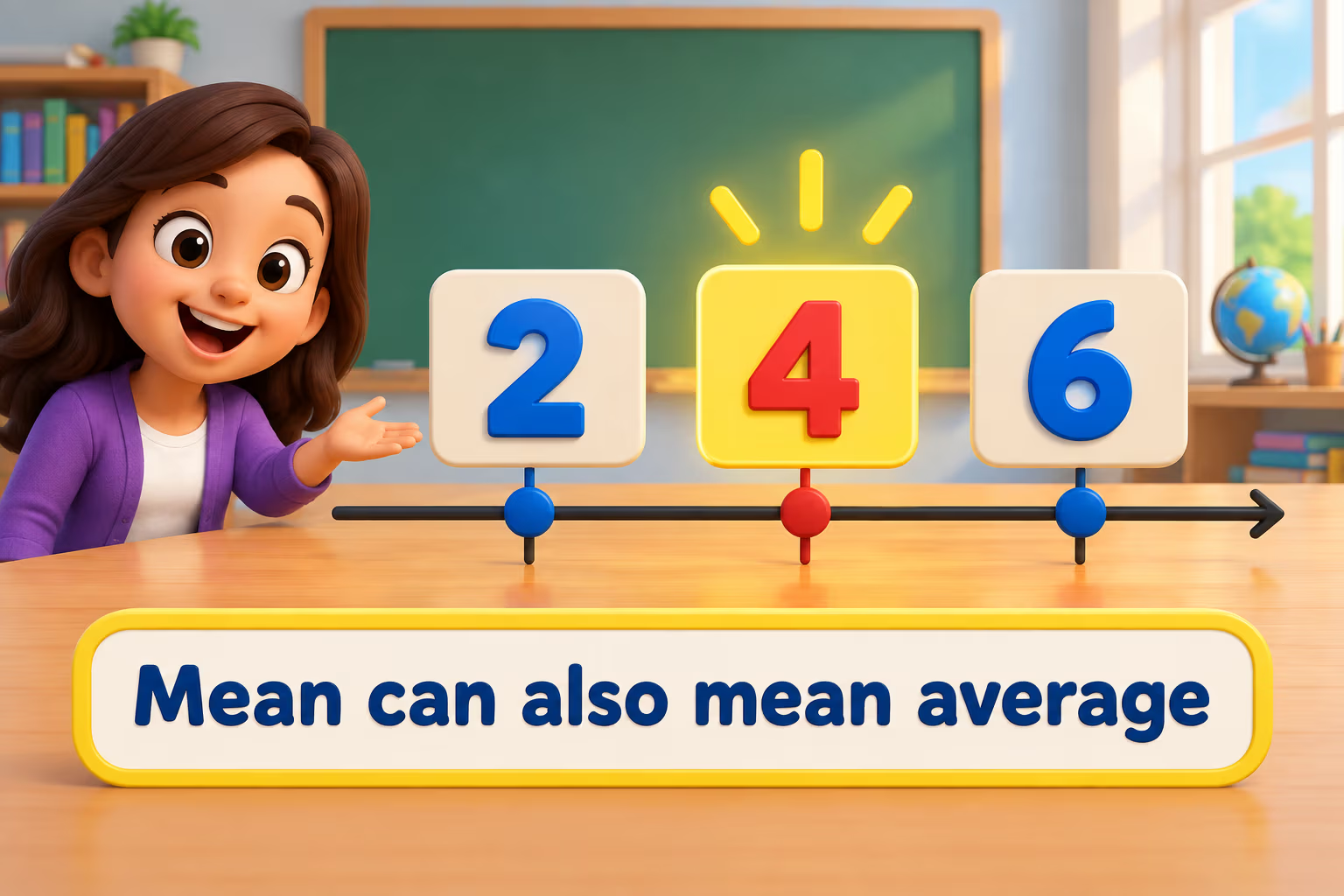
For a mathematical mean, add the values and divide by their count: the mean of 2, 4, and 6 is 4. The median is the middle value after sorting, and the mode is the most frequent value; these are different measures of center.
Mean can also mean average
Mean as a verb often means “intend” or “signify,” as in “What do you mean?” It does not describe a person’s temperament in that sentence. A nearby positive adjective sense also appears in informal expressions such as “a mean piano player,” meaning a very good player.
Is “Mean” the Same as “Bully” or “Aggressive”?
No. Mean is a broad everyday adjective; bullying names a more specific pattern in the U.S. government’s school-age definition. StopBullying.gov describes bullying among school-aged children as unwanted aggressive behavior involving a real or perceived power imbalance, repeated or with the potential to repeat over time. A single rude exchange does not by itself establish that pattern, although one harmful incident can still matter and need a response.
Aggressive describes confrontational or forceful behavior and can be neutral in contexts such as sports or business; it does not automatically mean cruel. Violent is stronger still, referring to physical force or a threat. Use those terms only when the details support them.
What Are Better Alternatives to Calling Someone “Mean”?
When writing about a real person, a concrete sentence often communicates more and assumes less than a fixed label. Compare “He is mean” with “He laughed when his classmate made a mistake.” The second version gives readers evidence and lets them distinguish a one-time lapse from a repeated pattern.
Try a behavior-focused sentence: “The remark was insulting,” “She ignored the agreed schedule,” or “He kept the shared supplies for himself.” If you need an overall character description in fiction, balance a trait with evidence and context—for example, “The character is guarded and often dismissive, but apologizes when he recognizes the harm.”
Original A–Z Adjective Index
The full original index below is retained as published, including every heading, list item, image, table, and cell. Its 41 tables contain a broad alphabetical vocabulary index; many entries are not synonyms for mean. Use the curated comparison above when you need words that specifically describe unkind behavior.
No one likes a mean person. A mean person is someone who is always trying to make others feel bad or to get ahead by putting others down. A mean person is also someone who is always trying to take advantage of others or to get what they want without caring about how it affects others. Adjectives that can be used to describe a mean person include: rude, selfish, self-centered, unkind, thoughtless, inconsiderate, and greedy. If you know someone who is always trying to make you feel bad or to get ahead by putting others down, then you know a mean person.
A mean person is someone who is always trying to make others feel bad or to get ahead by putting others down. A mean person is also someone who is always trying to take advantage of others or to get what they want without caring about how it affects others.
Adjectives For Mean
When you want to describe someone who is unpleasant or unkind, you can use a variety of adjectives. Here are some of the most common adjectives used to describe someone who is mean:
Rude
Unkind
Hateful
Hurtful
Mean-spirited
Nasty
Aggressive
Hostile
Angry
Violent
These are just a few of the many words that can be used to describe someone who is mean. When you encounter someone who is behaving in a mean way, it is important to stand up for yourself and others. This person may not realize how their actions are affecting those around them.
If you witness someone being treated in a mean way, it is important to speak up and stand up for that person. We all deserve to be treated with respect and kindness.
A
Abstract
Abundant
Acceptable
Accidental
Accurate
Accustomed
Achievable
Active
Actual
Adequate
Adjective
Adjusted
Administrative
Admirable
Advanced
Affordable
Aggressive
Agreeable
Alarming
Allegorical
Allowable
Alternate
Alternative
Ambitious
Amicable
Ample
Analogous
Annual
Anti
Antibacterial
Anticipated
Anxious
Apparent
Applicable
Apt
Apter
Arbitrary
Arithmetic
Arithmetical
Artificial
Assemblyi
Assured
Astonishing
Asynchronous
Atlantic
Atonal
Attic
Audible
Audiovisual
Augmented
Automatic
Auxiliary
Average
Avowable
Aware
Awful
B
Balanced
Ballad
Baneful
Barbarous
Bare
Basest
Basic
Beati
Beautiful
Benign
Black
Blessed
Blind
Bloody
Boisterous
Boundless
Boyi
British
Brutal
Busiest
C
Capable
Careless
Carnal
Casual
Central
Certain
Characteristic
Charitable
Charming
Cheap
Cheweli
Chief
Circuitous
Civil
Clear
Clever
Clinical
Close
Coercive
Coffeei
Cold
Colonial
Comfortable
Commercial
Comparable
Compendious
Competent
Competitive
Complementary
Complex
Complicated
Compulsory
Conceivable
Concerted
Conciliatory
Concrete
Congenial
Connected
Conscriptive
Consequent
Considerable
Constant
Constitutional
Contemporary
Contemptible
Contractual
Contrary
Convenient
Conventional
Convincing
Cordial
Correct
Corrupt
Costly
Crafty
Creative
Creature
Creditable
Crimei
Criminal
Crippled
Critical
Crooked
Crucial
Crude
Cruel
Cunning
Curious
Customary
Customsi
D
Daily
Dangerous
Darned
Deadly
Deari
Deceitful
Decent
Decisive
Definite
Delicate
Democratic
Desirable
Desperate
Despicable
Devisable
Devised
Devoid
Diabolical
Difficult
Digital
Dignified
Dilated
Diminished
Diplomatic
Direct
Disabled
Disagreeable
Disciplinary
Discriminatory
Disgraceful
Dishonest
Dishonourable
Disreputable
Dissimilar
Distant
Distinct
Distressing
Diverse
Divine
Doggoned
Double
Doubtful
Dramatic
Drastic
Dreadful
E
Earthly
Easy
Eccentric
Ecological
Educational
Effective
Effectual
Efficacious
Efficient
Elaborate
Electronic
Elegant
Empirical
Energetic
Enlarged
Enormous
Entire
Equivocal
Especial
Essential
Established
Evansi
Evident
Evil
Exact
Excellent
Exclusive
Expeditious
Expensive
External
Extraordinary
Extreme
F
Factitious
Fair
Familiar
Favorable
Favourable
Feeble
Final
Financial
Fiscal
Following
Forcible
Formidable
Fortunate
Foul
Fraught
French
Frequent
Fresh
Frugal
Future
G
Gentle
Gentler
Geometric
Gigantic
Golden
Gradual
Grand
Greedy
H
Happy
Heroic
Honest
Honorable
Honourable
Human
Humble
I
Identical
Idle
Ignorant
Illegal
Illegitimate
Illicit
Imaginable
Immediate
Imperfect
Impossible
Improper
Inadequate
Inconceivable
Independent
Indirect
Indispensable
Individual
Inexhaustible
Inexpensive
Infallible
Inferior
Infernal
Ingenious
Iniquitous
Injudicious
Innocent
Insufficient
Intellectual
Intelligent
Intentional
Interesting
Intermediate
Internal
Intrinsic
Intrusive
Intuitive
Invariant
Invasive
Invisible
Involved
Irregular
Irresistible
Iti
J | K
Jerking
Judicial
Judicious
Justifiable
Justified
Key
Kickiti
L
Large
Lavish
Lawful
Left
Legal
Legi
Legislative
Legitimate
Lessened
Lethal
Liberal
Likeliest
Linear
Litigious
Lively
Lonely
Lustrous
M
Madi
Magical
Magnanimous
Magnetic
Magnificent
Major
Mathematical
Matrimonial
Meanii
Mechanical
Medical
Mediocre
Mercenary
Mere
Meritorious
Mexican
Middle
Mighty
Military
Mingy
Minimal
Miserly
Moanful
Moderate
Modern
Modest
Monetary
Monotonous
Monthly
Moral
Multiplied
Musical
Mysterious
Mystical
N
Namesyou
Narrow
Native
Natural
Naval
Nearest
Needed
Nefarious
Negotiable
Neo
Noble
Nonviolent
Normal
Notable
Numerous
O
Objectionable
Objective
Obnoxious
Obtuse
Obvious
Occasional
Odd
Odious
Offensive
Open
Opposite
Oppressive
Optical
Optional
Oral
Ordinary
Organic
Organizational
Original
Ostensible
Outi
Outlandish
Outward
Overrated
P
Painful
Palpable
Pandemic
Paperi
Paramedic
Parental
Parsimonious
Partial
Partisan
Passible
Peaceable
Peaceful
Peacefullest
Peculiar
Pecuniary
Penny-Pinching
Penurious
Perfidious
Permanent
Persuasive
Photographic
Physical
Pizen
Plain
Plastic
Plausible
Pleasant
Pleasing
Plentiful
Pointwise
Poor
Popular
Positive
Potent
Potential
Pounding
Powerful
Practicable
Practical
Precarious
Precious
Precise
Preferable
Present
Prevalent
Preventive
Primary
Prime
Primitive
Principal
Prior
Probable
Probablythe
Productive
Powerful
Practicable
Practical
Precarious
Precious
Precise
Preferable
Present
Prevalent
Preventive
Primary
Prime
Primitive
Principal
Prior
Probable
Probablythe
Productive
Profitable
Promising
Prompt
Proper
Proven
Provisional
Psychic
Pure
Pursuant
Q | R
Questionable
Quicker
Quiet
Racism
Rapacious
Rapid
Rare
Real
Realistic
Reasonable
Reasoni
Recognized
Recondite
Reduced
Regular
Regulatory
Relative
Reliable
Religious
Remarkable
Remedial
Remote
Renewable
Reprehensible
Repressive
Repugnant
Requisite
Resourceful
Respectable
Respective
Restorative
Rotten
Rough
Rustic
S
Safe
Savest
Scanty
Scrimpy
Secret
Secure
Seductive
Selfish
Sensational
Sensitive
Settled
Shabby
Shameless
Shean
Sheepi
Shortest
Significant
Silent
Simple
Single
Singular
Sinister
Slender
Slenderest
Slightest
Slow
Smooth
Sober
Sole
Sophisticated
Spanish
Spectacular
Speedy
Spiritual
Splendid
Standard
Statistical
Stingy
Straightforward
Strange
Strategic
Studious
Stupid
Subsequent
Subtle
Successful
Suitable
Superlative
Supernatural
Supernormal
Surprising
Surreptitious
Sustainable
Sweet
Swift
Symbolic
Sympathetic
Systemic
T
Tangible
Technical
Technological
Telepathic
Telepathy
Terrible
Thee
Therapeutic
Thunderedi
Tight
Tight-Fisted
Timei
Tough
Traceable
Traditional
Translated
Treacherous
Trimmed
Typical
U
Uctive
Umble
Unaccustomed
Unanimous
Unauthorized
Unavowable
Unchecked
Uncommon
Unconditional
Unconstitutional
Uncontrovertible
Undemocratic
Underhanded
Unemployed
Unexpected
Unfair
Unhallowed
Unintrusive
Unjust
Unjustifiable
Unknown
Unlawful
Unlikely
Unlimited
Unmoral
Unnatural
Unnecessary
Unofficial
Unpassable
Unresponsive
Unrivalled
Unsatisfactory
Unscrupulous
Unseen
Unstinted
Untried
Unused
Unusual
Unwarrantable
Unwilling
Unwitting
Unworthy
Upi
Useful
Usi
Usual
Utmost
V
Vague
Valuable
Vast
Verbal
Veritable
Viable
Vigorous
Vile
Violent
Virtual
Visible
Visual
Voluntary
Vulgar
W
Weak
Whoi
Wicked
Windbound
Wireless
Wisest
Wonderful
Worldi
Worldly
Worthy
Wrong
Final verdict
The bottom line is that there are a lot of different words that can be used to describe someone who is mean. It really depends on the context and the severity of the person’s actions. Sometimes, meanness can be seen as a positive trait, like when someone is assertive or decisive.
Other times, it can be viewed as a negative quality, like when someone is rude or aggressive. Ultimately, it’s up to the individual to decide which adjectives best describe the mean person in their life.
How to Read the Original List
The source tables are preserved verbatim as a broad alphabetized adjective directory. They should not be read as a validated list of words meaning “unkind”: entries such as adequate, arithmetic, and beautiful have unrelated meanings. The 41 original tables contain 662 nonempty cells and 644 unique labels after exact text matching; table position alone does not make an entry a synonym.
The short original list names rude, unkind, hateful, hurtful, mean-spirited, nasty, aggressive, hostile, angry, and violent. These are related by negative tone, but they differ in meaning and intensity. For example, anger is an emotion and does not prove unkindness; aggression is confrontational conduct; and violence implies force or threats. The distinctions in the table above help prevent those terms from being treated as interchangeable.
Frequently Asked Questions
What is the best adjective for someone who is mean?
Unkind is the safest broad choice when a person’s behavior lacks kindness. Use rude for discourtesy, hurtful for emotional impact, selfish for putting personal interests first, or cruel when severe harm is intentional. A concrete description of the act is often more precise than a label for the person.
What is a stronger word than “mean”?
Cruel is stronger when someone intentionally causes pain or suffering. Callous emphasizes a lack of concern for another person’s distress, while vicious is stronger and often suggests deliberate violence or cruelty. Choose the stronger word only when the evidence supports its added meaning.
Are “rude,” “hurtful,” and “cruel” interchangeable?
No. Rude concerns manners or respect, hurtful describes an effect, and cruel suggests severe, intentional pain. A blunt remark may be rude without being cruel; a careless remark can be hurtful even when its speaker did not intend harm.
Does “mean” always describe an unkind person?
No. Mean can describe an arithmetic average, a person unwilling to spend or share, an intention or significance as a verb, or—in informal praise—a very skilled performer. In “the mean score,” it means average; in “a mean violinist,” it can mean excellent.
Is one unkind act enough to call someone a bully?
Not by itself under StopBullying.gov’s school-age definition, which includes unwanted aggressive behavior, a real or perceived power imbalance, and repetition or a likelihood of repetition. A single unkind act can still be serious; describe what happened and seek help when safety or repeated harm is a concern.
Robin founded StartsWithy in 2022 to make English words easier to understand and use. Robin oversees our 30,000+ guides, checks meanings and grammar against trusted dictionaries such as Cambridge, Oxford Learner’s and Collins, and is accountable for every correction we make.