Adjectives for an office: describe the space and the work
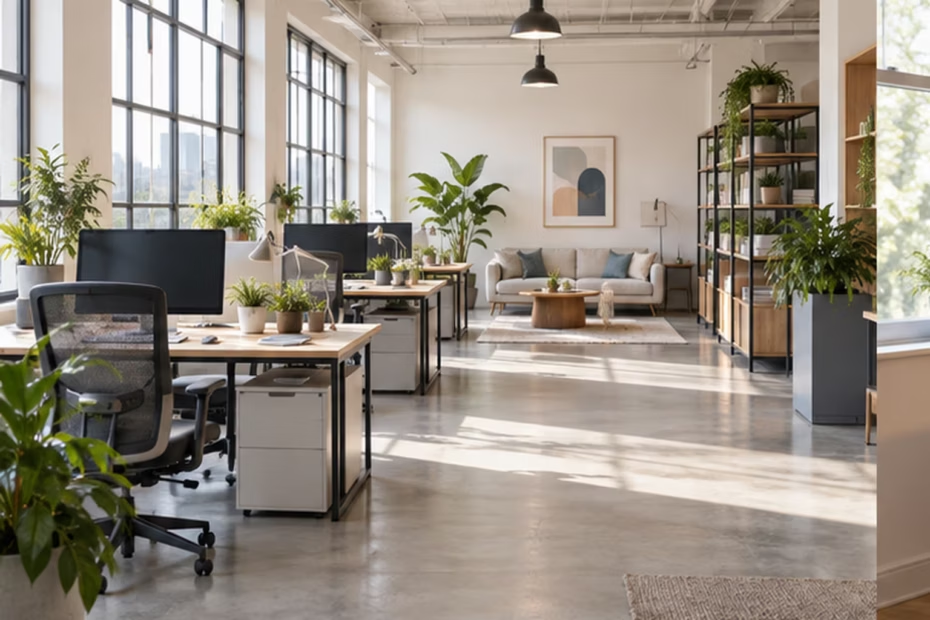
The best office adjective depends on what you want to describe. Bright and compact describe physical features; collaborative describes a way of working; productive makes a claim about results. These words can complement each other, but they are not interchangeable. Cambridge defines a workspace as an area where someone works, including an office or home setup; a description can focus on that physical place or on the work happening there. See Cambridge Dictionary: workspace.
Choose adjectives by category
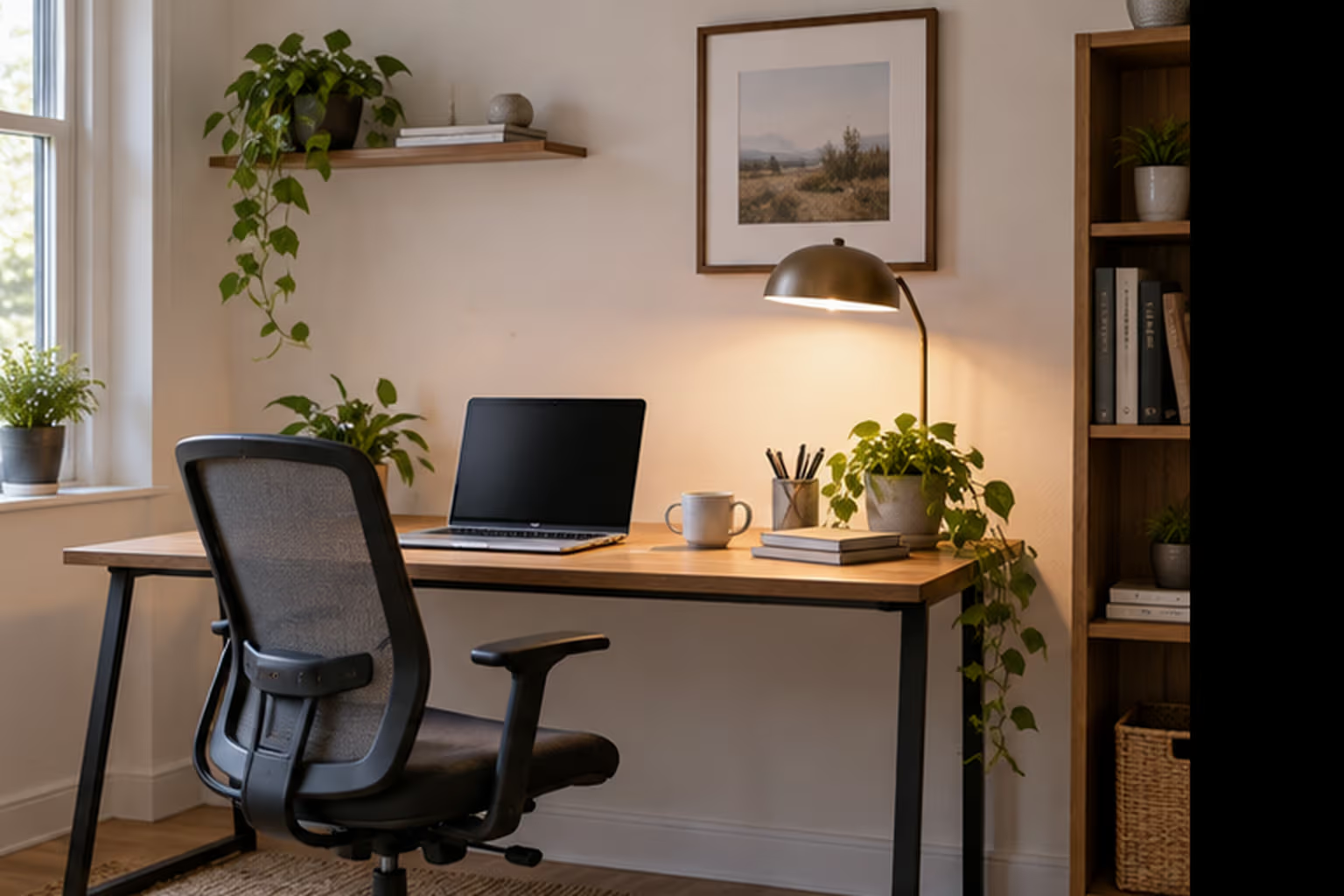
| What you describe | Useful adjectives | Example |
|---|---|---|
| Layout and appearance | open-plan, compact, spacious, bright, minimalist | The bright office has open-plan desks and two quiet meeting rooms. |
| Sound and atmosphere | quiet, lively, busy, calm, bustling | The reception area is lively in the morning and quiet after lunch. |
| Work process | collaborative, focused, flexible, fast-paced, independent | The design team uses a collaborative process for early drafts. |
| Workload or organization | demanding, structured, changeable, well-resourced, deadline-driven | The deadline-driven week required careful planning. |
| Personal impression | welcoming, formal, inspiring, impersonal, comfortable | Visitors described the reception area as welcoming and comfortable. |
Use an adjective with a detail that shows what you mean. “Modern office” is broad; “a modern office with adjustable desks, glass meeting rooms, and a shared project board” gives a clearer picture. “Quiet” could mean little background noise, an empty room, or a team that speaks softly. Add the detail that matters for your purpose.

Separate the room from the workplace culture
A space can be bright and well-organized while its work process is demanding; a plain office can still have a welcoming team. Keep physical description separate from claims about people or performance. Efficient and productive describe how work gets done or what it produces, not the furniture. Collaborative should point to shared planning, feedback, or decision-making rather than simply an open floor plan.
Words like chaotic, unproductive, and toxic are more useful when followed by observable details. Instead of “the office is toxic,” describe the behavior or condition you mean: “staff receive conflicting deadlines,” “meetings routinely run over,” or “coworkers interrupt one another.” NIOSH describes work organization in terms such as workload, job control, and work practices; those concrete conditions are clearer than a label alone. See the CDC’s NIOSH overview of work organization and workplace stress.
Office adjectives in example sentences
- The compact office uses wall shelves to keep the shared desks clear.
- Large windows make the meeting room bright in the afternoon.
- The bustling reception area becomes calmer after the morning rush.
- Our team works independently on research and collaboratively on final reviews.
- The formal conference room has a long table and a screen for presentations.
- The flexible workspace includes bookable desks and small rooms for calls.
- A demanding schedule can be easier to describe accurately by naming deadlines and workload.
- The organized supply area makes shared materials easy to find.
- The office felt welcoming because visitors were greeted and shown where to go.
- Employees described the work pace as fast-moving during the product launch.
- The quiet room provides a private place for focused work.
- Instead of calling a space “dull,” a writer might say it has plain walls and little natural light.
To write a balanced description, combine a physical detail with a work-style adjective and an example: “The bright shared office supports collaborative planning, while small private rooms give employees a quiet place for focused tasks.” This kind of sentence tells readers what they can see and how the space is used without treating one office style as ideal for every team.
The original article below is preserved verbatim. The added guide supplies more specific categories, examples, and distinctions between workspace features, work processes, and personal impressions.
When it comes to describing an office, the right adjectives can make all the difference. From sleek and modern to bustling and energetic, the words we use to paint a picture of our workplace can shape how others perceive it. In this article, I’ll be sharing a collection of adjectives that can help you accurately convey the atmosphere, aesthetics, and overall vibe of an office. Whether you’re writing a company profile, creating marketing materials, or simply trying to capture the essence of your workspace, these descriptive words will come in handy.
Picture yourself stepping into an office that is vibrant and dynamic, with an air of creativity and innovation. That’s the power of the right adjectives. From “innovative” and “collaborative” to “inspiring” and “dynamic,” these words can bring life to your descriptions and leave a lasting impression on your readers. I’ll not only provide you with a list of descriptive words, but I’ll also give you real-life examples of how to use them in context. So, get ready to transform your office descriptions from mundane to captivating with these adjectives that truly capture the essence of an office.
How to Describe office? – Different Scenarios
When it comes to describing an office, the right choice of adjectives can make all the difference. Each office has its own unique atmosphere and vibe, and using the right words can accurately convey these qualities. Let me walk you through different scenarios and provide examples of how to describe an office effectively.
- Professional and Corporate Office:
- Creative and Inspiring Office:
- Collaborative and Team-oriented Office:
-
- Some offices aim to create a warm and comfortable environment that feels like a second home. Here are some adjectives to capture that cozy vibe:
- Inviting: The office has an inviting and cozy ambiance that makes employees feel at ease.
- Relaxed: The office cultivates a relaxed atmosphere, promoting a calm and stress-free working environment.
- Comfortable: The office provides comfortable seating, ample natural light,
- Some offices aim to create a warm and comfortable environment that feels like a second home. Here are some adjectives to capture that cozy vibe:
Describing Words for office in English
When it comes to describing offices, finding the right adjectives is key to capturing the atmosphere and vibe of each environment. By choosing the right words, we can accurately convey the unique qualities of different types of offices. Let’s explore some descriptive words for various office settings:
- Professional and Corporate Offices:
- Creative and Inspiring Offices:
- Collaborative and Team-Oriented Offices:
- Warm and Comfortable Offices:
Remember, the key to effectively describing an office is to choose adjectives that truly capture its essence. This will enable us to paint a vivid picture in the reader’s mind, whether it’s a professional and corporate setting, a creative and inspiring workspace, a collaborative and team-oriented environment, or a warm and comfortable office.
So, the next time you want to convey the unique qualities of an office, remember to carefully select the right adjectives to bring your description to life.
NOTE: The above examples are not exhaustive but serve as a starting point for describing various types of offices.
Adjectives for office
As an expert in office environments, I understand the importance of using the right adjectives to accurately describe the atmosphere and vibe of each unique workplace. In this section, I’ll provide you with a list of positive and negative adjectives for the office, along with example sentences to help you understand how to use them effectively.
Positive Adjectives for the Office
When it comes to describing a positive office environment, there are a variety of adjectives that can be used. Here are some examples:
| Adjective | Example Sentence |
|---|---|
| Productive | This office is highly productive, with employees constantly focused on their work. |
| Efficient | The office runs like a well-oiled machine, with everything in its place. |
| Positive | The energy in the office is contagious, making it a joy to come to work every day. |
| Collaborative | The office fosters a collaborative environment, with teamwork being a top priority. |
| Inspiring | This office is filled with creativity and inspiration, leading to innovative ideas. |
| Organized | The office is meticulously organized, ensuring that tasks are completed smoothly. |
Negative Adjectives for the Office
Not all office environments are positive, and sometimes it’s necessary to describe the negative aspects accurately. Here are some examples of negative adjectives for the office:
| Adjective | Example Sentence |
|---|---|
| Chaotic | The office is always in chaos, with papers and files scattered everywhere. |
| Unproductive | This office is highly unproductive, with employees often procrastinating. |
| Disorganized | The office is extremely disorganized, making it difficult to find anything. |
| Toxic | The office has a toxic atmosphere, with negativity and conflicts among coworkers. |
| Dull | The office is dull and uninspiring, lacking any energy or excitement. |
Remember, when using adjectives to describe an office, it’s important to choose words that accurately convey the unique qualities and characteristics of the workplace. By selecting the right adjectives, you can effectively paint a vivid picture of the office environment.
Now that we have explored the positive and negative adjectives for the office, let’s move on to the next section to delve into the adjectives for specific types of offices.
Synonyms and Antonyms with Example Sentences
Synonyms for Office
When it comes to describing office spaces, there are a variety of synonyms that can help convey the specific qualities and characteristics of the environment. Here are some powerful synonyms to use:
- Productive – Efficient, fruitful, thriving
- Efficient – Effective, capable, competent
- Positive – Optimistic, uplifting, encouraging
- Collaborative – Team-oriented, cooperative, interactive
- Inspiring – Motivating, stimulating, invigorating
- Organized – Systematic, well-structured, well-ordered
For example:
- “The office has a productive atmosphere, where everyone works together towards a common goal.”
- “The efficient workflow in this office ensures that tasks are completed in a timely manner.”
- “The positive energy in the office promotes a supportive and encouraging work environment.”
- “The collaborative nature of this office fosters creativity and innovation.”
- “The inspiring decor and artwork in the office inspire employees to think outside the box.”
- “The organized layout of the office contributes to a smooth and efficient workflow.”
Antonyms for Office
On the other hand, there are also antonyms that can be used to describe office environments with negative qualities. It’s important to choose words carefully to accurately depict the atmosphere. Here are some antonyms for office:
- Chaotic – Disorderly, messy, unruly
- Unproductive – Inefficient, idle, unprofitable
- Disorganized – Cluttered, haphazard, chaotic
- Toxic – Negative, unhealthy, poisonous
- Dull – Boring, monotonous, uninspiring
For example:
- “The chaotic office makes it difficult to find necessary documents and resources.”
- “The unproductive atmosphere in this office leads to missed deadlines and poor performance.”
- “The disorganized state of the office creates confusion and slows down productivity.”
- “The toxic work environment is filled with negativity and constant conflict.”
- “The dull office lacks creativity and fails to inspire employees.”
By carefully selecting the right adjectives, we can effectively describe office environments and convey their unique qualities and characteristics. Remember, choosing the appropriate words can make a significant impact in painting an accurate picture of an office space.
Conclusion
Choosing the right adjectives to describe office environments is crucial for accurately conveying the unique qualities and characteristics of each workspace. In this article, we have explored a range of synonyms and antonyms that can be used to describe office spaces.
Synonyms such as productive, efficient, positive, collaborative, inspiring, and organized are all excellent choices for highlighting the positive aspects of an office. On the other hand, antonyms like chaotic, unproductive, disorganized, toxic, and dull can be used to portray the negative aspects of a workspace.
By carefully selecting the appropriate words, we can make a significant impact in accurately describing an office space. These adjectives can help create a clear and vivid picture in the reader’s mind, allowing them to understand the atmosphere and culture of the office.
Remember, the words we choose have the power to shape perceptions and influence opinions. So, when it comes to describing an office, choose your adjectives wisely and let them do the talking.


