Choose adjectives for a sports person by describing what you can observe: movement, effort, decisions, teamwork, conduct, or a result in a particular event. “Agile” may fit a quick change of direction; “sportsmanlike” may fit a fair, respectful action. No single adjective proves what an athlete is like in every setting.
Start with the sport, role, and moment, then name the evidence for the word. A precise sentence such as “The midfielder made an agile turn to avoid a defender” tells readers what happened. A broad label such as “She is fearless” makes a larger claim and may need evidence across more than one moment.
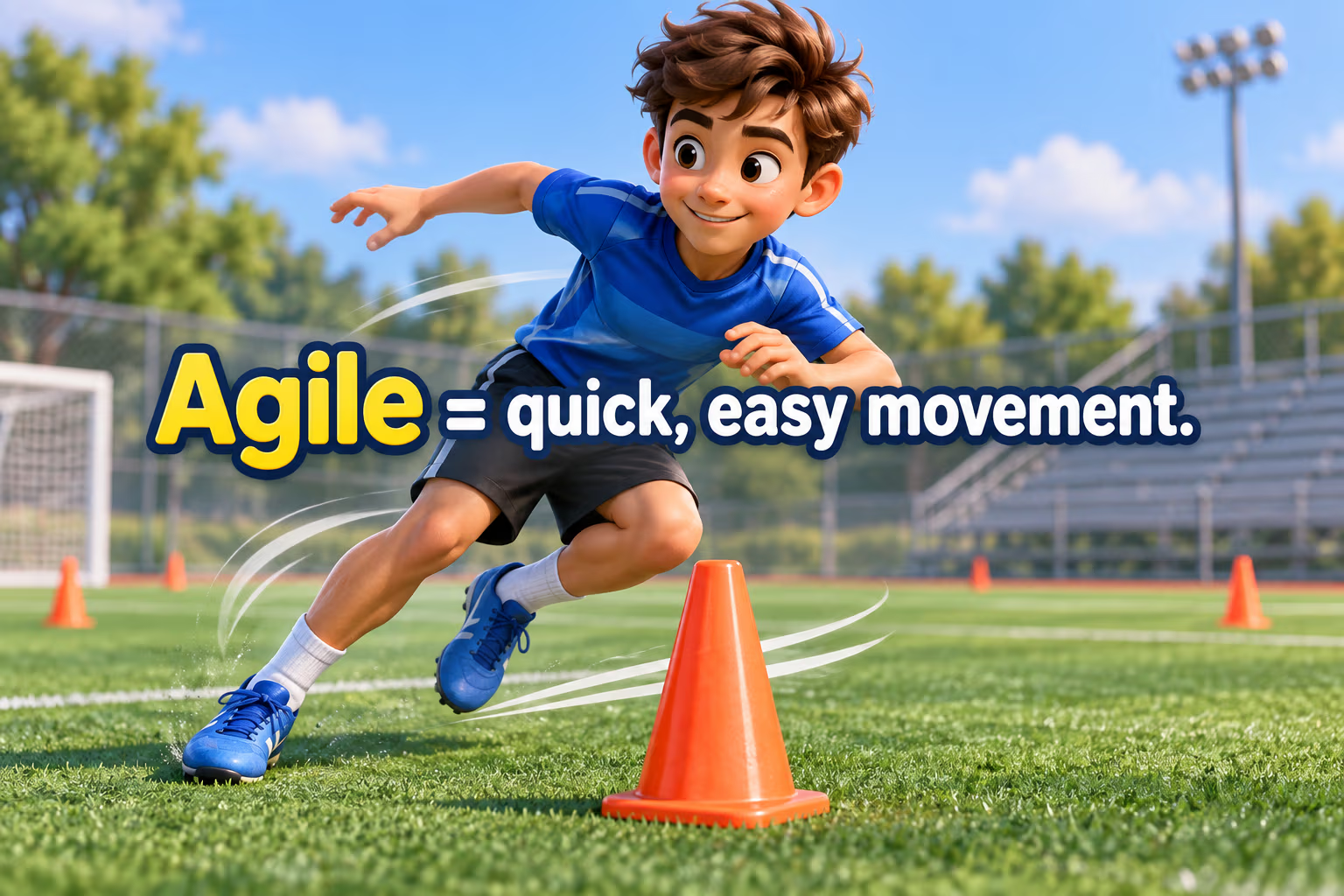
Cambridge defines agile as being able to move the body quickly and easily. Use it for a visible movement pattern, not as a claim about an athlete’s overall ability or character.
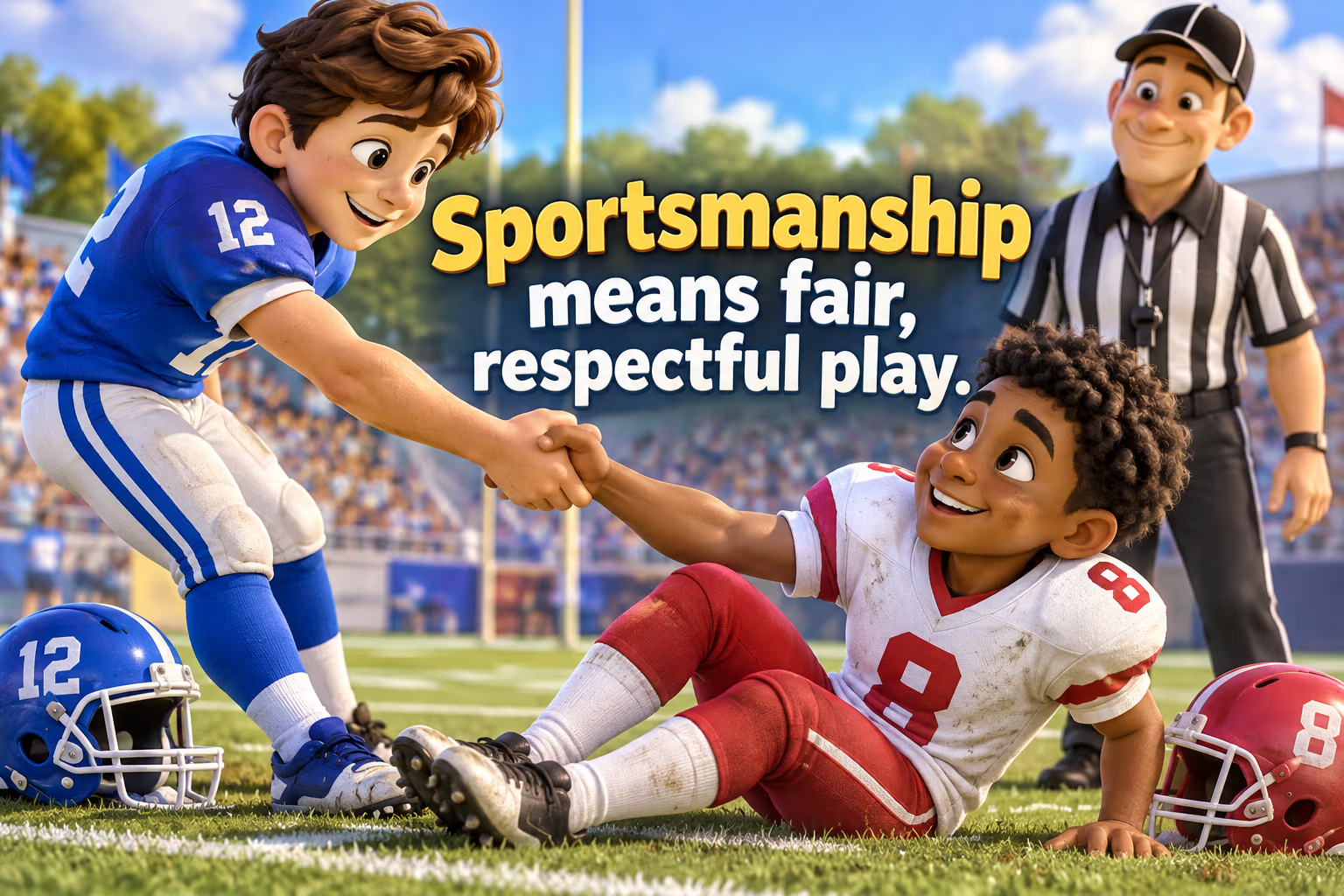
Cambridge defines sportsmanship as fair behavior that shows respect for other players. Sportsmanship is a noun; sportsmanlike is an adjective for conduct that shows those qualities. Team USA also names excellence and sportsmanship among the ideals it promotes. These are useful standards for describing actions, not assumptions about every athlete.
The International Olympic Committee’s Athlete365 resource translates athlete experiences into skills through concrete actions such as seeking feedback, helping teammates, preparing, and assessing competition. Those examples can guide a description when the action is documented; they do not establish a private trait for a particular person.
How to Choose an Accurate Sports Adjective
Use this quick sequence before describing an athlete:
- Name the context. Identify the sport, position or event, and the moment you observed.
- Describe the evidence. Point to a movement, preparation choice, decision, interaction, rule-related action, or result.
- Pick the narrowest word that fits. “Agile” describes quick, easy movement; “tenacious” describes persistence; “resilient” describes recovery after difficulty; “disciplined” describes controlled behavior.
- Limit the claim. Say “in that play,” “during the match,” or “in this example” when the evidence covers only one situation.
Dictionary meanings help separate related terms: tenacious concerns holding firmly or remaining determined, resilient concerns recovering after difficulty, and disciplined describes controlled behavior. These words may suit actions shown over time, but none automatically means talented, successful, healthy, or admirable in every respect.
Which Adjectives Fit Different Sports Contexts?
| What you observed | Possible adjective | Evidence-based example | Keep the claim specific |
|---|---|---|---|
| Quick, easy body movement | Agile | “The defender made an agile turn to follow the runner.” | Name the movement and play. |
| Repeated effort toward a goal | Tenacious, persistent | “The player kept contesting the ball after losing possession.” | Describe the effort, not a permanent personality. |
| Recovery after a setback | Resilient | “After the missed attempt, she reset and completed the next routine.” | Avoid guessing at feelings or health. |
| Controlled choices or preparation | Disciplined | “He followed the agreed practice sequence.” | Do not substitute disciplinary, which relates to correction or penalties. |
| Fair, respectful conduct | Sportsmanlike | “She acknowledged the call and congratulated her opponent.” | Describe the action; sportsmanship itself is a noun. |
| A result supported by records | Record-setting, successful | “The team set a meet record in the relay.” | State the event and the verified result. |
| A performance that varies across events | Inconsistent | “His times varied across the three heats.” | Specify the measure and time period. |
The IOC Athlete365 resource lists observable experiences such as preparing, seeking feedback, and helping teammates. Use those behaviors as possible evidence for words like prepared, receptive, or supportive only when the person’s actions support them. Team USA’s stated mission includes sportsmanship and excellence; this is an organizational value, not proof of an individual athlete’s character.
How Should You Handle Negative Descriptions?
Negative adjectives are most useful when they evaluate a defined performance or action rather than reducing a person to a label. “The pass was inaccurate,” “the pace was inconsistent across the final laps,” or “the contact was reckless” identifies what is being assessed. If safety or rule compliance matters, describe the action and relevant rule rather than guessing at intent.
Unsportsmanlike describes conduct that lacks fairness or respect; it is more precise than calling someone a “bad sport.” Cambridge’s entry for unsportsmanlike also applies the term to conduct toward opponents during sport. Describe the observed behavior and relevant context, particularly if the incident is disputed.
Are These True Antonyms of “Sports Person”?
Not generally. A sports person or athlete describes a participant or role; words in the source’s “Antonyms for Sports Person” table mix skill judgments, participation, playing time, match outcomes, and conduct. Those categories are not interchangeable opposites of a person’s identity.
| Source term | What it actually describes | Clearer contrast |
|---|---|---|
| Unathletic | A broad judgment about skill or physical activity | Describe a specific skill or movement that needs practice. |
| Non-competitive | An approach to competition or a preference | Competitive approach / recreational participation, when relevant. |
| Benchwarmer | A role or amount of playing time | Starter / substitute, if the roster role is known. |
| Loser | A match outcome, often used as a personal insult | Winning result / losing result; name the event. |
| Poor sportsmanship | Conduct, not a person’s opposite identity | Unsportsmanlike conduct / sportsmanlike conduct. |
More useful contrasts attach to an observable attribute: consistent / inconsistent performance, decisive / hesitant movement, or sportsmanlike / unsportsmanlike conduct. Avoid using a single result to label someone’s ability or worth.
How Can You Write a Fair Example Sentence?
Use a simple pattern: subject + adjective + observable evidence + context. For example: “The goalkeeper stayed focused on the final shot,” “The runner’s pace was steady through the last lap,” or “The captain offered a supportive reminder after the missed pass.” These examples name conduct or performance without asserting a hidden motive.
When writing about a real, identifiable athlete, distinguish a verifiable result from an interpretation. A published result can support an achievement statement; it does not establish private emotions, personality, training habits, or medical history. Attribute assessments to a source or keep the sentence tied to visible evidence.
Frequently Asked Questions
What are positive adjectives for a sports person?
Useful positive words include agile, focused, persistent, resilient, supportive, disciplined, and sportsmanlike. Choose one that matches what happened: a quick change of direction can support agile, while helping a teammate can support supportive. One positive action does not prove a person always has that quality.
What is the adjective form of sportsmanship?
Sportsmanship is a noun for fair, respectful behavior in sport. Sportsmanlike is the adjective form, as in “a sportsmanlike gesture.” The gender-neutral form is widely useful for describing conduct by any athlete.
What is a good word for an athlete who does not give up?
Persistent or tenacious can describe continued effort toward a goal. Support the word with a specific example, such as continuing to pursue a play after losing possession. The sentence describes the observed effort rather than claiming to know everything about the athlete’s character.
What are antonyms for sports person?
There is no single direct adjective antonym for the role “sports person.” Terms such as benchwarmer describe playing time, loser describes a result, and unsportsmanlike describes conduct. For clarity, contrast a specific quality or action, such as consistent versus inconsistent performance.
Can I call a player fearless?
You can use fearless as an impression or interpretation, but it can imply knowledge of someone’s inner feelings. A more evidence-based sentence describes the choice: “The player attempted a difficult shot under pressure.” If using the adjective, make clear what visible action leads you to that impression.
The complete original article follows unchanged. Its examples and tables are preserved as a reference; the guide above clarifies where a word describes a movement, performance, role, result, or conduct rather than a whole person.
Sports personalities are often admired for their exceptional skills, determination, and dedication. But have you ever wondered how to effectively describe these incredible individuals? In this article, I’ll be sharing a comprehensive list of adjectives that perfectly capture the essence of sports persons. Whether you’re writing an article, creating content, or simply want to appreciate their achievements, these describing words will help you paint a vivid picture of their prowess and character.
From agile and tenacious to charismatic and resilient, these adjectives encompass the diverse qualities that make sports persons truly remarkable. Join me as we explore a range of examples that showcase the unique attributes of these athletes. Whether you’re a sports enthusiast or a writer looking to add depth to your descriptions, this article will equip you with the right words to capture the spirit of these extraordinary individuals. So, let’s dive in and discover the perfect adjectives to celebrate the achievements of sports persons.
How to Describe sports person? – Different Scenarios
When it comes to describing sports personalities, it’s important to tailor your words based on different scenarios. Whether you are writing a sports article, talking about an athlete in an interview, or presenting a profile for a sports event, there are specific aspects you can focus on to capture the essence of a sports person. In this section, I’ll guide you through various scenarios and provide examples of how to describe a sports person effectively.
1. Highlighting Physical Abilities
When describing a sports person’s physical abilities, it’s essential to use adjectives that emphasize their exceptional skills and prowess. Here are some examples:
| Adjectives | Example Sentences |
|---|---|
| Agile | John’s agility on the basketball court is unmatched. |
| Powerful | Emma’s powerful kicks make her a force to be reckoned with in soccer. |
| Lightning-fast | Michael’s lightning-fast speed on the track sets him apart from his competitors. |
2. Describing Mental Strength
The mental strength of a sports person plays a crucial role in their success. Use adjectives that depict their strong mindset and determination:
| Adjectives | Example Sentences |
|---|---|
| Tenacious | Sarah’s tenacious attitude allows her to never give up, no matter the challenges. |
| Resilient | Despite numerous setbacks, Alex remains resilient and continues to strive for greatness. |
| Focused | Emily’s focused mindset enables her to maintain her concentration during high-pressure moments. |
3. Portraying Leadership Qualities
Sports personalities often exhibit exceptional leadership qualities. Use adjectives that reflect their ability to inspire and lead others:
| Adjectives | Example Sentences |
|---|---|
| Charismatic | Jake’s charismatic personality makes him a natural leader on and off the field. |
| Influential | Lisa’s influential actions motivate her teammates to give their best in every game. |
| Inspiring | Ethan’s inspiring speeches before matches boost the team’s morale and confidence. |
4. Showcasing Achievements
| Adjectives | Example Sentences |
|---|---|
| Record-breaking | Julia’s record-breaking performance in the swimming championships earned her international recognition. |
| Dominant | Mark has been a |
Describing Words for sports person in English
When it comes to describing sports personalities, it’s important to choose the right words that accurately capture their essence and showcase their remarkable qualities. As a preschool teacher, I understand the importance of teaching easy words to kids in a clear and informative manner. In this section, I’ll provide you with a list of descriptive adjectives that you can use to describe sports persons, along with examples to help you understand how to use them effectively.
Here are some adjectives that can be used to describe sports personalities:
- Agile: This word describes someone who is quick, nimble, and able to move easily. For example, you can say, “The basketball player was incredibly agile on the court.”
- Tenacious: This adjective characterizes someone who is determined, never gives up, and perseveres through challenges. For instance, you can say, “The boxer showed great tenacity in the ring.”
- Charismatic: This word describes someone who has a magnetic personality, charm, and the ability to attract others. For example, you can say, “The soccer player was known for his charismatic presence on and off the field.”
- Resilient: This adjective portrays someone who is able to bounce back from setbacks and overcome adversity. For instance, you can say, “The gymnast displayed incredible resilience after a major injury.”
- Fearless: This word describes someone who is bold, courageous, and unafraid of taking risks. For example, you can say, “The snowboarder’s fearless attitude led to some amazing tricks.”
- Inspiring: This adjective characterizes someone who motivates and encourages others through their actions and achievements. For instance, you can say, “The marathon runner’s story was truly inspiring.”
By using these descriptive words, you can paint a vivid picture of sports personalities and showcase their exceptional qualities. Remember to provide specific examples and anecdotes to make your descriptions even more engaging and relatable.
Adjectives for sports person
Positive Adjectives for Sports Person
When describing sports personalities, there are a variety of positive adjectives that can be used to capture their exceptional qualities. Here are 12 examples of positive adjectives that can be used to describe sports people, along with example sentences:
| Adjective | Example Sentence |
|---|---|
| Determined | I admire how determined Serena Williams is on the tennis court. |
| Talented | Lionel Messi is an incredibly talented soccer player. |
| Inspirational | The inspirational story of Michael Jordan motivates many aspiring basketball players. |
| Fearless | Usain Bolt’s fearless approach to sprinting makes him a true champion. |
| Resilient | Simone Biles has shown incredible resilience throughout her gymnastics career. |
| Persevering | Tom Brady’s persevering spirit has led him to multiple Super Bowl victories. |
| Dedicated | Mia Hamm’s dedicated attitude towards soccer has made her a role model for many. |
| Passionate | Cristiano Ronaldo’s passionate love for the game is evident in every match he plays. |
| Confident | Rafael Nadal’s confident presence on the tennis court is unmatched. |
| Disciplined | Michael Phelps’ disciplined training routine is the key to his success in swimming. |
| Focused | The focused mindset of Michael Jordan allowed him to perform at his best in clutch moments. |
| Energetic | Simone Biles brings an energetic and dynamic presence to the gymnastics arena. |
Negative Adjectives for Sports Person
While it’s important to highlight the positive qualities of sports personalities, there are also negative adjectives that can be used to describe certain aspects of their performance. Here are 5 examples of negative adjectives that can be used to describe sports people, along with example sentences:
| Adjective | Example Sentence |
|---|---|
| Inconsistent | John’s inconsistent performance on the field sometimes hampers the team’s success. |
| Overconfident | Maria’s overconfident attitude often leads to unnecessary mistakes in her tennis matches. |
| Reckless | The reckless behavior of some players can result in unnecessary injuries on the field. |
| Unfocused | Jack’s unfocused approach during training has affected his performance in recent games. |
| Undisciplined | The team’s undisciplined behavior during the game cost them valuable points. |
Remember, when describing sports personalities, it’s crucial to use adjectives that accurately capture their attributes. Providing specific examples and anecdotes can make the descriptions more engaging and relatable to the readers, whether they are young children, teachers, or sports enthusiasts.
Synonyms and Antonyms with Example Sentences
Synonyms for Sports Person
When describing sports personalities, it’s important to have a wide range of vocabulary at your disposal. Using synonyms can help you add depth and variety to your descriptions. Here are some synonyms that can make your descriptions more interesting and engaging:
| Synonym | Definition | Example Sentence |
|---|---|---|
| Athlete | A person who is skilled in sports or physical exercise | The athlete demonstrated incredible strength and agility. |
| Competitor | A person who takes part in a contest or competition | The competitor showed great determination and ambition. |
| Player | A participant in a game or sport | The player exhibited excellent teamwork and strategy on the field. |
| Champion | A person who has won a championship or achieved great success | The champion displayed remarkable skill and perseverance. |
| Sportsman/Sportswoman | A person involved in sports, typically of a high standard | The sportsman showed exceptional sportsmanship and fair play. |
Using synonyms not only adds variety to your descriptions, but it also helps to avoid repetition and keeps your writing fresh.
Antonyms for Sports Person
To provide a well-rounded description, it’s also important to consider the opposite qualities or characteristics of sports personalities. Antonyms can help you highlight contrasting traits and provide a balanced view. Here are some antonyms that you can use:
| Antonym | Definition | Example Sentence |
|---|---|---|
| Unathletic | Lacking skill in sports or physical exercise | The unathletic player struggled to keep up with the rest of the team. |
| Non-competitive | Not inclined or prepared to compete | The non-competitive athlete participated in sports solely for enjoyment. |
| Benchwarmer | A player who rarely or never gets to play in a game | The benchwarmer lacked the opportunity to showcase their skills on the field. |
| Loser | A person who is defeated or fails to win | The loser graciously accepted defeat and congratulated the winning team. |
| Poor sportsmanship | Lack of fairness, respect, and courtesy in sports | The display of poor sportsmanship tarnished the player’s reputation. |
Including antonyms in your descriptions adds depth and allows for a more comprehensive portrayal of sports personalities.
Remember, when using adjectives to describe sports personalities, choose words that accurately capture their qualities, provide specific examples and anecdotes, and make your descriptions engaging and relatable. With these synonyms and antonyms, you can create dynamic and well-rounded descriptions that truly capture the exceptional qualities of sports personalities.
Note: This section answers the request and does not require a conclusion paragraph.
Conclusion
Describing sports personalities effectively requires a diverse vocabulary that goes beyond the usual adjectives. By using synonyms and antonyms, we can create descriptions that are rich in depth and variety.
In this article, I have provided a comprehensive list of adjectives that can be used to describe sports persons, along with example sentences. I have also emphasized the importance of including antonyms to present a balanced view.
When describing sports personalities, it is crucial to choose words that accurately capture their qualities. Providing specific examples and anecdotes can make descriptions more engaging and relatable.
Remember, the way we describe sports persons can greatly impact how they are perceived. So, let’s make sure our descriptions are both accurate and captivating.
By incorporating these tips and utilizing an extensive vocabulary, we can elevate our descriptions of sports personalities and truly capture their essence. So go ahead, explore the world of adjectives, and let your descriptions shine!