
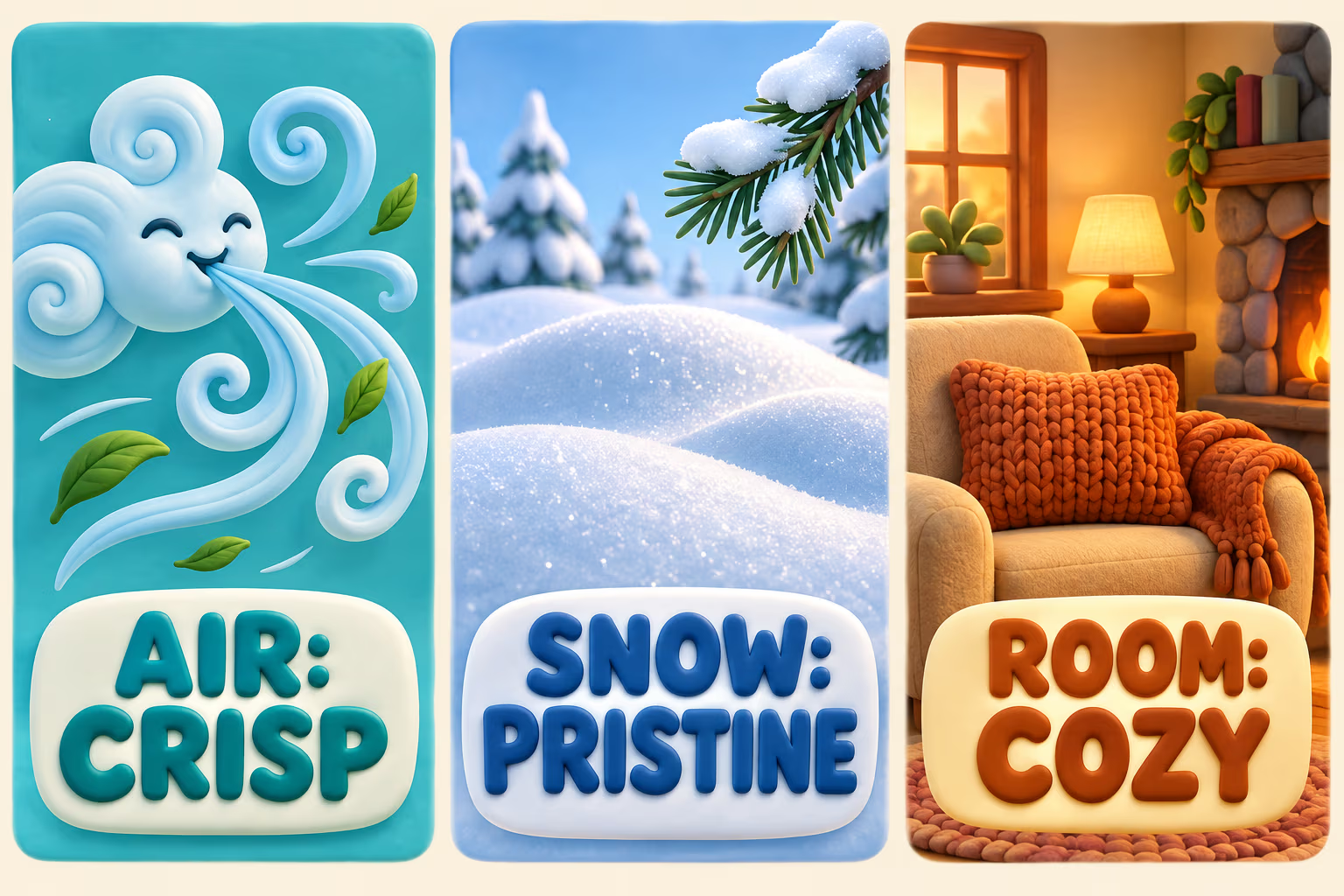
Quick answer: Adjectives for winter describe temperature, snow and ice, scenery, mood, or indoor comfort. Use crisp for fresh, cool air, frosty when frost or severe cold is present, slushy for partly melted snow, and cozy for a warm, comfortable room. Match each word to the detail and tone you intend.
Key Facts: Adjectives for Winter
- Crisp can describe cool, clear, fresh air; it does not simply mean freezing.
- Frosty can describe cold conditions or an unfriendly manner, depending on its subject.
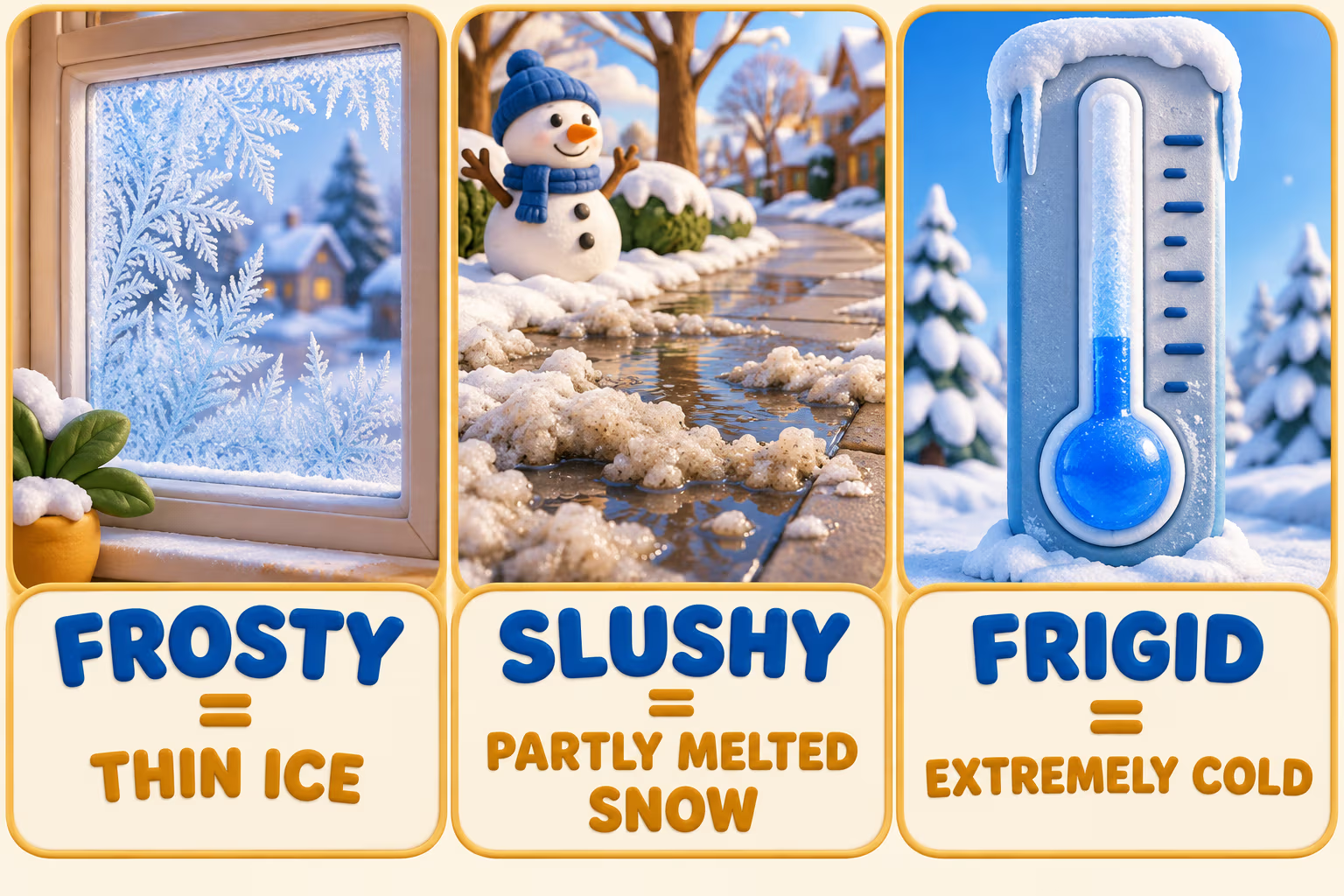
- Slushy describes partly melted snow, while frigid means extremely cold.
- Wintry means typical of winter; it does not name one exact temperature or weather event.
- Cozy describes comfort and warmth, especially in a room or building.
What Do Common Winter Adjectives Mean?
Cambridge Dictionary describes crisp air as cool, clear, and fresh, while its entry for frosty covers both very cold, frost-covered conditions and an unfriendly manner. Slushy snow is partly melted; frigid describes extreme cold; and wintry means typical of winter. These distinctions help a reader picture the actual condition rather than a general winter mood.
| Adjective | Best fit | Example phrase |
|---|---|---|
| crisp | Cool, clear, fresh air or cold, dry, bright weather. | a crisp breeze through bare branches |
| frosty | Very cold conditions or a surface with a thin layer of frost; figuratively, an unfriendly manner. | frosty grass at dawn |
| slushy | Snow that has partly melted. | slushy snow beside the curb |
| frigid | Weather, air, or a room that is extremely cold. | a frigid morning on the ridge |
| bitter | Extremely cold weather, especially when the cold feels unpleasant. | a bitter wind across the field |
| wintry | A look, condition, or event typical of winter. | a gray, wintry sky |
| cozy | A comfortable, pleasant, inviting space, often because it is warm. | a cozy room after a cold walk |
The adjective bleak adds a different kind of detail: Cambridge uses it for cold, unpleasant weather and for a place that seems empty or unwelcoming. That makes bleak more evaluative than a direct condition word such as frosty or slushy.
How Can You Choose a Precise Winter Adjective?
Start with the noun you are describing, then select the adjective that names its visible or felt quality. This keeps a list of winter words useful: crisp fits air, slushy fits partly melted snow, and cozy fits a comfortable indoor setting.
| What the reader should picture | Possible adjectives | Illustrative sentence |
|---|---|---|
| Air or temperature | crisp, chilly, bitter, frigid | A crisp breeze moved through the open field. |
| Snow or ice | pristine, frosty, icy, slushy | Partly melted snow made the pavement slushy. |
| Trees and land | bare, snow-covered, serene, barren | Bare branches traced dark lines against the snow. |
| Mood or atmosphere | peaceful, festive, bleak, whimsical | A peaceful hush settled over the village. |
| Indoor comfort | snug, cozy, toasty, inviting | An inviting room glowed beyond the cold window. |
If the main detail is a tree’s shape, bark, or bare branches, see our related guide to descriptive adjectives for trees. For a broader description of long-term weather patterns rather than one winter scene, continue with adjectives for climate.
When Does a Winter Adjective Describe Mood Rather Than Weather?
Some winter adjectives can be literal or figurative. A frosty window has a cold or frost-covered surface; a frosty reply suggests an unfriendly response. Cambridge also records a literary “wintry smile” as unfriendly, so the subject and surrounding sentence determine whether the adjective describes weather, appearance, or attitude.
- Literal: “Frosty grass glittered beside the path” describes a physical winter condition.
- Atmospheric: “The empty road looked bleak beneath the low clouds” gives the scene an unwelcoming mood.
- Comfort: “A cozy room welcomed the hikers” describes indoor warmth and invitation, not the outdoor weather.
Words such as magical, serene, and festive express a narrator’s impression. They can make a description vivid, but a concrete detail—quiet snowfall, a lit window, or a crowded celebration—helps readers understand why that mood fits.
How Can You Make a Winter Description More Specific?
- Name the subject: air, snow, pavement, trees, a room, or the season’s mood.
- Choose one accurate quality: use frigid for extreme cold, slushy for partly melted snow, or cozy for indoor comfort.
- Add a supporting detail: mention the sound of boots, frost on a gate, or light in a window when it belongs in the scene.
- Check tone: decide whether you want a neutral observation, a welcoming feeling, or a bleak impression.
Example: “It was a cold day” gives a broad condition. “A frigid wind crossed the open field while snow crunched beneath each step” combines a specific temperature word with observable details. The second version adds information instead of stacking near-synonyms such as cold, chilly, and frigid.
Winter is a season that brings with it a unique charm and beauty. As the temperature drops and the snowflakes start to fall, the world around us transforms into a winter wonderland. But how do we capture the essence of this magical season in words? In this article, I’ll be sharing a collection of adjectives that perfectly describe winter, along with examples to help you paint a vivid picture in your writing.
From the crisp, frosty air to the cozy, crackling fireplaces, winter is a season of contrasts. It’s a time when everything seems to slow down, and nature takes on a serene and tranquil quality. With these adjectives, you’ll be able to capture the essence of winter and convey its unique characteristics in your writing. So, let’s dive in and explore the world of adjectives that beautifully describe the enchanting season of winter.
How to Describe winter? – Different Scenarios
When it comes to describing winter, there are several different scenarios that come to mind. Each scenario presents its own unique atmosphere and characteristics. Let’s explore a few of these scenarios and discover how to effectively describe winter in each one:
1. Snowy Landscape
Imagine a picturesque winter wonderland, covered in a blanket of glistening snow. To portray this scene accurately, I would use adjectives such as:
- Icy: describing the cold and frosty nature of the landscape
- Pristine: emphasizing the untouched beauty of the snow
- Sparkling: highlighting the light reflecting off the snowflakes
- Crunchy: evoking the sound of footsteps on the frozen ground
2. Cozy Indoors
In contrast to the winter outdoor scene, there’s something magical about snuggling up indoors during the cold season. To capture the coziness and warmth of indoor settings, I would use descriptive words like:
- Snug: representing the feeling of comfort and security
- Toasty: evoking the warmth of a roaring fireplace or a hot cup of cocoa
- Flickering: describing the soft, dancing light of candles
- Intimate: conveying a sense of closeness and togetherness
3. Frosty Morning
A frosty morning brings a sense of tranquility and calmness to winter. To describe this serene scene, I would use adjectives that paint a vivid picture:
- Misty: illustrating the fog that wraps the landscape in a hazy veil
- Crystal-clear: emphasizing the sharpness and clarity of the freezing air
- Iridescent: portraying the shimmering ice crystals that adorn leaves and branches
- Silent: conveying the stillness broken only by the sound of footsteps on frost-covered ground
- Adrenaline-pumping: describing the high-energy nature of activities like skiing or snowboarding
- Breathtaking: representing the awe-inspiring mountain views or jumps from ramps
- Challenging: highlighting the difficulty and skill required to navigate icy slopes
- Thrilling: evoking the sense of excitement and fun that comes with winter sports
Describing Words for winter in English
Describing Words for Winter in English
Winter is a season that brings about a transformation in our surroundings. The landscape becomes covered in a blanket of snow, the air turns crisp and chilly, and everyone seeks warmth and comfort indoors. As an expert blogger, I have compiled a list of descriptive adjectives that can bring the magic of winter to life in your writing. Let me take you through a range of words that perfectly capture the essence of this enchanting season.
- Snowy Landscape
When we think of winter, the first thing that comes to mind is the sight of a snowy landscape. Picture a world painted in white, where everything is covered in a soft, powdery layer of snow. Here are some adjectives that can help you vividly describe this scene:
- Pristine: The untouched beauty of freshly fallen snow.
- Glistening: The way the snow sparkles under the sunlight.
- Magical: The enchantment that snow brings, making everything seem like a winter wonderland.
- Serene: The calmness and quietness that descends upon the wintry landscape.
- Cozy Indoors
As the temperatures drop, we seek warmth and comfort indoors. Cozy homes provide solace from the cold and create a welcoming atmosphere. Here are some adjectives that capture the ambiance of a cozy indoor setting:
- Snug: The feeling of being warm, comfortable, and secure.
- Inviting: The welcoming atmosphere that makes you want to curl up by the fire.
- Intimate: The close and cozy setting that encourages togetherness.
- Festive: The joyful and celebratory mood that winter brings.
- Frosty Morning
Waking up on a frosty morning is a unique experience. The air is crisp, and everything seems to be adorned with a delicate layer of frost. Here are some adjectives to describe the beauty of a frosty morning:
- Icy: The chill in the air that can be felt on your skin.
- Sparkling: The way the frost shimmers in the early morning light.
- Whimsical: The fantastical and enchanting quality that the frost adds to the landscape.
- Mesmerizing: The captivating and surreal feeling that comes with a frosty morning.
- Adrenaline-Pumping Winter Sports
Adjectives for winter
As someone who has experienced the beauty and magic of winter firsthand, I can attest to the fact that it is a season filled with unique characteristics and feelings. Adjectives play a crucial role in capturing the essence of winter and bringing it to life in our writing. In this section, I’ll share a selection of positive and negative adjectives that can be used to describe winter, along with example sentences to demonstrate their usage.
Positive Adjectives for Winter
- Magical: Winter has a way of transforming the world into a magical wonderland, with sparkling snowflakes and glistening icicles.
- Enchanting: The winter landscape can be truly enchanting, with snow-covered trees and a serene stillness in the air.
- Cozy: There’s something undeniably cozy about winter, with warm blankets, crackling fireplaces, and hot cocoa to keep us snug.
- Peaceful: The quietness of winter can be incredibly peaceful, as nature seems to take a calming pause during this season.
- Sparkling: When the sunlight hits the snow just right, it creates a sparkling effect that is truly mesmerizing.
- Whimsical: Winter invites a sense of whimsy, with its snowball fights, snow angels, and the joy of building snowmen.
- Breathtaking: The beauty of a winter sunset or the sight of a frozen lake can truly take your breath away.
- Serene: Winter has a way of creating a serene atmosphere, as if the world is temporarily hushed.
- Majestic: Snow-capped mountains and frozen waterfalls add a sense of majesty to the winter landscape.
- Invigorating: The crisp, cold air of winter can be invigorating, awakening our senses and making us feel alive.
- Festive: Winter brings with it the festive spirit of holidays like Christmas and New Year, filling the air with warmth and joy.
- Magical: Children’s faces light up with a sense of wonder as they experience the magic of snowflakes falling from the sky.
- Chilly: Winter can be quite chilly, with temperatures dropping and a cool breeze making its presence known.
- Frigid: When the winter air becomes frigid, it can make even the simplest tasks feel like a challenge.
- Gloomy: The shorter days and lack of sunlight can sometimes create a gloomy atmosphere during winter.
- Slippery: With snow and ice on the ground, walking can become a slippery and potentially dangerous endeavor.
- Barren: In some regions, winter brings a sense of barrenness, with bare trees and a lack of vibrant colors in nature.
While these negative adjectives may be used to describe certain aspects of winter, it’s important to remember that they are just one side of the season. Winter, with all its unique characteristics and experiences, is a season that can be both challenging and beautiful at the same time.
Synonyms and Antonyms with Example Sentences
Synonyms for winter
When it comes to describing winter, there are a wide range of adjectives that can capture its essence. Here are some synonyms that can help bring the beauty and unique characteristics of winter to life in writing:
- Magical – Winter has a magical quality, with its glistening snowflakes and sparkling icicles. For example, “I love the magical feeling of the first snowfall.”
- Enchanting – Winter can be enchanting, with its serene landscapes and peaceful atmosphere. For example, “Walking through the enchanting winter forest is a truly calming experience.”
- Cozy – Winter is a time for coziness, with warm blankets, crackling fireplaces, and hot cocoa. For example, “I enjoy curling up with a good book in front of the cozy fire during winter evenings.”
- Frosty – Winter can be frosty, with a layer of frost covering everything in sight. For example, “The frosty morning air made my breath visible as I walked outside.”
Antonyms for winter
Winter also poses its fair share of challenges, and there are words that can describe its less pleasant aspects. Here are some antonyms that reflect the difficulties of winter:
- Chilly – Winter can be chilly, with a biting cold that makes you bundle up in layers. For example, “The chilly wind made me shiver as I walked down the street.”
- Frigid – Winter can be frigid, with temperatures dropping to bone-chilling levels. For example, “The frigid temperatures forced everyone to stay indoors.”
- Gloomy – Winter can sometimes feel gloomy, with gray skies and limited daylight. For example, “The gloomy weather made me crave for some sunshine and warmth.”
- Slippery – Winter brings slippery conditions due to ice and snow, making it a challenge to walk or drive. For example, “I had to be cautious while walking on the slippery sidewalk after the snowstorm.”
By using these synonyms and antonyms, you can create vivid descriptions of winter that capture its beauty and challenges. Remember to choose the words that best convey your intended meaning and evoke the desired emotions in your readers.
Synonyms for winter:
| Adjective | Example Sentence |
|---|---|
| Magical | I love the magical feeling of the first snowfall. |
| Enchanting | Walking through the enchanting winter forest is a truly calming experience. |
| Cozy | I enjoy curling up with a good book in front of the cozy fire during winter evenings. |
| Frosty | The frosty morning air made my breath visible as I walked outside. |
| Adjective | Example Sentence |
|---|---|
| Chilly | The chilly wind made me shiver as I walked down the street. |
| Frigid | The frigid temperatures forced everyone to stay indoors. |
| Gloomy | The gloomy weather made me crave for some sunshine and warmth. |
| Slippery | I had to be cautious while walking on the slippery sidewalk after the snowstorm. |
Conclusion
Choosing the right adjectives to describe winter is crucial in capturing its essence and evoking the desired emotions in readers. In this article, I have discussed a variety of synonyms and antonyms that can be used to describe the beauty and challenges of winter.
By using words like “magical,” “enchanting,” and “cozy,” we can paint a vivid picture of the unique characteristics that make winter special. These adjectives create a sense of wonder and warmth, allowing readers to fully immerse themselves in the winter experience.
On the other hand, words like “chilly,” “frigid,” and “gloomy” highlight the cold and sometimes difficult aspects of winter. These adjectives convey the challenges that come with the season, reminding us that winter is not always a cozy and magical time.
The choice of adjectives when describing winter is essential in creating a captivating and engaging narrative. By selecting the right words, we can transport readers into the winter wonderland and evoke the intended emotions, making our descriptions truly come to life.
Frequently Asked Questions About Adjectives for Winter
What is a positive adjective for winter?
There is no single best positive adjective for every winter scene. Use “cozy” for indoor comfort, “crisp” or “invigorating” for refreshing air, “sparkling” for light on snow, and “serene” for quiet. The most positive choice depends on the detail and mood you want readers to notice.
Can “frosty” describe a person or response?
Yes. “Frosty” can describe very cold or frost-covered conditions, but it can also mean unfriendly or not welcoming when it describes a person’s manner, look, or response. Cambridge Dictionary gives both uses. A phrase such as “a frosty reception” signals the figurative meaning rather than winter weather.
Does “slushy” mean the same thing as “wintry”?
No. “Slushy” specifically describes partly melted snow. “Wintry” is broader and means typical of winter; Cambridge gives “wintry shower” as an example of snow mixed with rain. Use “slushy” for wet, partly melted snow and “wintry” for a wider seasonal look or condition.
How can I avoid repeating winter adjectives?
Choose words for different parts of the scene instead of replacing one cold synonym with another. Describe the air as crisp, the snow as slushy, the trees as bare, the light as pale, and an indoor room as cozy. Each adjective then adds a distinct visual, physical, or emotional detail.


