Aim at means to point something toward a target, or to direct an effort toward a goal, audience or result. To use aim at in a sentence, give it a noun or a gerund: “The campaign aimed at younger voters.” The phrase never takes a to-infinitive, and that single rule separates aim at from aim to.
Aim at at a glance
- Aim at is a fixed phrase made of the verb aim and the preposition at.
- It has a physical sense, pointing an object at a target, and a figurative sense, directing an effort at a goal.
- The object is a noun or a gerund, never a to-infinitive.
- The passive is aimed at, and it dominates official and policy writing.
- The commonest error is dropping at, as in aims younger voters.
- Its nearest confusable is aim to, which takes a plain verb instead of a noun.
What does aim at mean?
Aim at is a phrase meaning to point something toward a target, or to direct an effort toward a particular goal, audience or result. The Cambridge entry for aim at records both the physical sense, as in aiming a camera at a subject, and the figurative sense, as in a policy aimed at reducing waste. The two senses share one idea: a direction chosen on purpose.
| Sense | Plain meaning | Example sentence |
|---|---|---|
| Point toward | Direct a weapon, camera or object at a target | She aimed the torch at the path. |
| Intend for | Be intended to affect or reach a goal | The new rules aim at safer cycling. |
| Target an audience | Direct a message or product at a group | The advert aims at first-time buyers. |
Aim at is not the same as hit or achieve. It describes the direction of an effort, not its success, so a campaign can aim at a result and still miss it. Where the outcome is certain, use achieve or reach instead, and keep aim at for the intention. A warning aimed at walkers, for instance, tells them which route to avoid after dark.
How do you use aim at in a sentence?
Aim at takes a noun or a gerund as its object, and the passive is common in policy writing. Five patterns cover most sentences you will meet.
| Pattern | Example | What it signals |
|---|---|---|
| aim at + noun | The course aims at beginners. | Names the goal or audience directly. |
| aim at + gerund | The plan aims at cutting waiting times. | States the intended activity, not a finished result. |
| aim something at someone | He aimed the question at the quietest student. | Points one specific act at a person. |
| be aimed at + noun | The campaign is aimed at young families. | Passive, standard in official writing. |
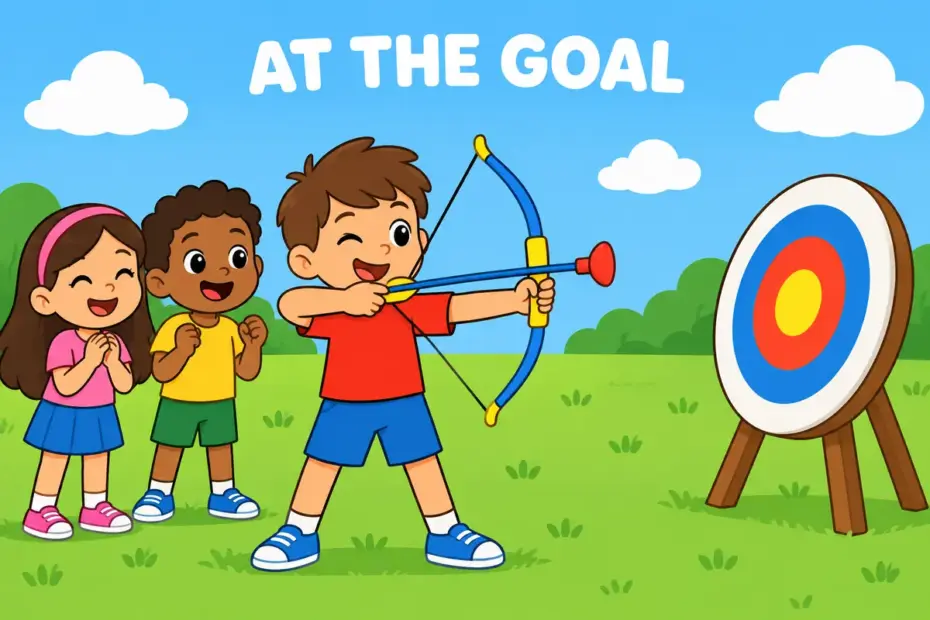
| aim at + physical target | The archer aimed at the outer ring. | The literal sense of pointing. |
The first four patterns are figurative and the last is literal. A writer who wants a plainer verb can target a group or focus on a goal, though aim at keeps the idea of deliberate direction. When the object is a person, direct a remark at someone is the exact parallel.
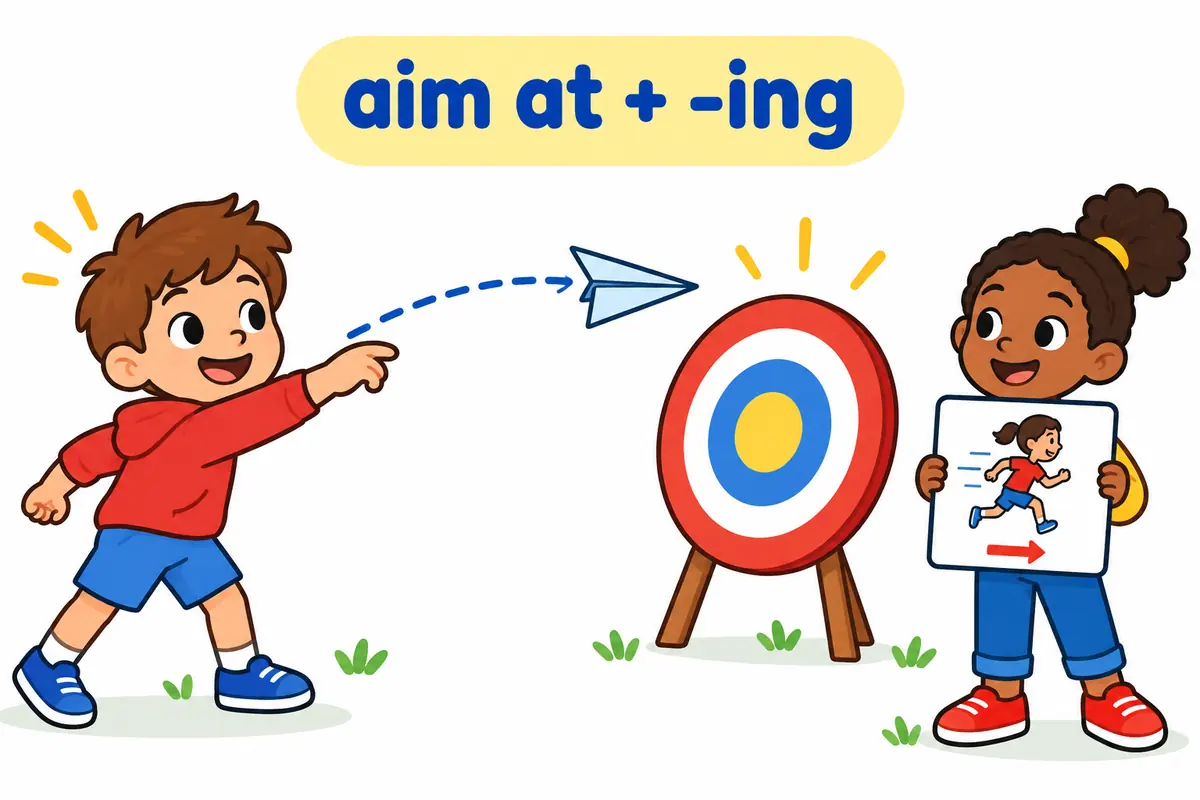
Aim at in a sentence: examples across contexts
Aim at shifts between the literal and the figurative with almost no change in grammar. The ten sentences below keep the same phrase while moving from a sports field to a government briefing.
| Context | Example sentence | Why this works |
|---|---|---|
| Classroom | The lesson aims at building confidence before the exam. | Uses a gerund to name the intended outcome. |
| Workplace email | This week’s review aims at clearing the backlog. | Keeps the goal concrete and achievable. |
| News report | The levy is aimed at large online retailers. | The passive names who the measure targets. |
| Marketing | The new advert aims at commuters on the morning train. | Names a precise audience segment. |
| Sports writing | The striker aimed at the far corner and found it. | Uses the literal sense inside a result. |
| Policy writing | The strategy aims at halving emissions by 2035. | A gerund lets the sentence carry a deadline. |
| Conversation | I aimed my comment at nobody in particular. | The literal sense survives in speech. |
| Academic prose | The intervention is aimed at reducing readmission. | The passive keeps the study impersonal. |
| Charity appeal | The appeal aims at raising funds for the roof. | Names a single, countable goal. |
| Film review | The director aims at subtlety rather than spectacle. | Uses an abstract noun after at. |
Only the sports and conversation rows are literal. In every other row the phrase reports an intention, which is why a reader should never assume that aiming at something means achieving it. Notice too how often a gerund follows at: building, clearing, halving, reducing. That -ing pattern is the strongest signal that a writer is using the figurative sense rather than pointing at a physical object.
Aim at vs aim to
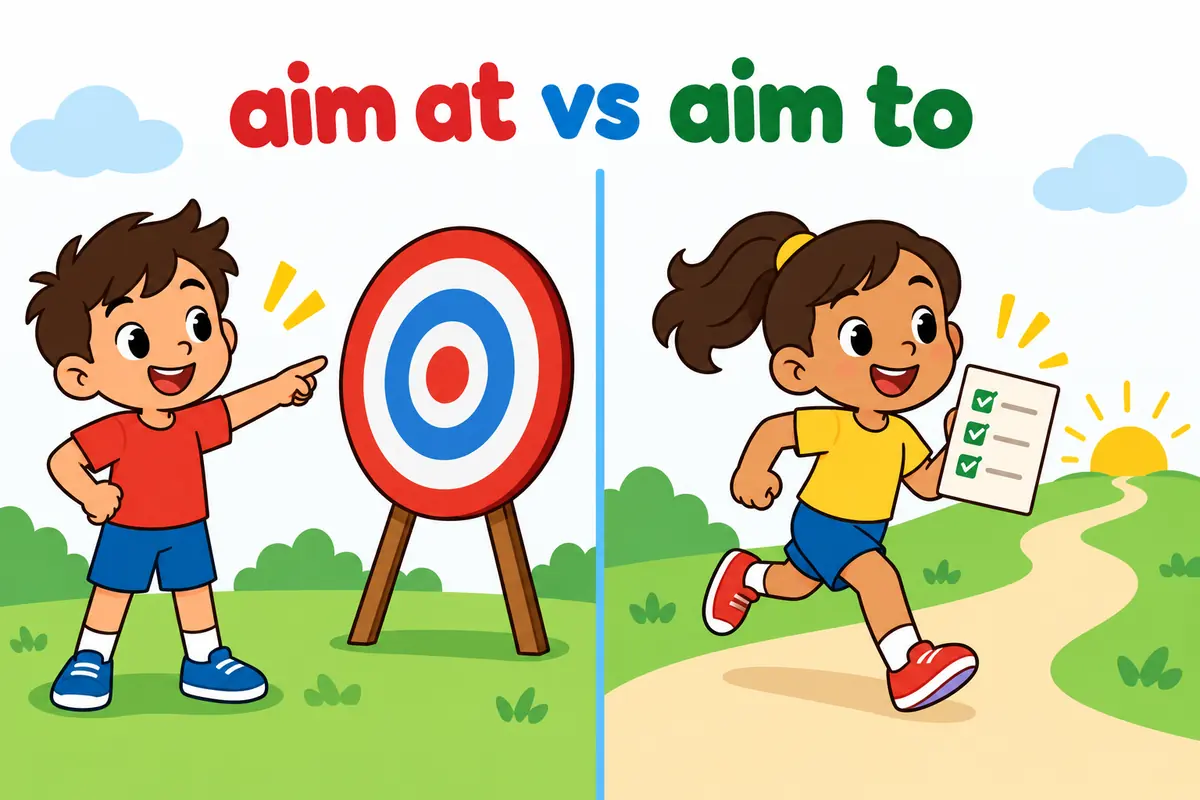
The commonest confusion is between aim at and aim to, and the grammar alone decides which one fits. The table sets the two side by side.
| Attribute | aim at | aim to |
|---|---|---|
| Object type | A noun or gerund | A plain base verb |
| Example | Aims at reducing costs | Aims to reduce costs |
| Focus | The goal or target itself | The intention to act |
| Passive form | Common: is aimed at | Rare in practice |
| Register | Neutral to formal | Neutral |
| Common error | Dropping at | Adding at before a verb |
Verdict: choose aim at when the next word after at is a thing, a group or an -ing form, and choose aim to when the next word is a plain verb. The plan to do something and the aim at a goal are two ways of saying the same intention, so pick the one whose grammar matches the rest of the sentence.
Register tips the balance in some documents. News and policy writing lean on the passive is aimed at because it keeps the target in view and the actor out of it, while a memo may prefer aim to for a short, active commitment. Neither is wrong, but mixing the two inside one paragraph reads as careless.
Word forms and grammar of aim at
As a fixed expression, aim at allows little variation. The verb aim changes its tense, but the preposition stays put, and only the object moves.
| Form | Part of speech | Example |
|---|---|---|
| aim at | verb, base form | They aim at a fairer system. |
| aims at | verb, third person | The scheme aims at older residents. |
| aimed at | verb, past and passive | The warning was aimed at drivers. |
| aiming at | verb, present participle | We are aiming at a spring launch. |
| aim (noun) | noun | Their aim was a cleaner river. |
The preposition never drops, so aiming a target is not English. The related noun aim takes a possessive or of, as in the aim of the policy, and it must not borrow the preposition at.
Common mistakes with aim at
- Incorrect:
The plan aims at to cut costs.Correct: The plan aims at cutting costs. Rule: Aim at takes a gerund or a noun, never a to-infinitive. - Incorrect:
The campaign aims younger voters.Correct: The campaign aims at younger voters. Rule: The preposition at is required before the object. - Incorrect:
The scheme is aimed to reduce waste.Correct: The scheme is aimed at reducing waste. Rule: In the passive, aimed takes at plus a gerund. - Incorrect:
We aim at improve the service.Correct: We aim at improving the service. Rule: After at, use the -ing form of the verb. - Incorrect:
The arrow aimed to the centre.Correct: The arrow was aimed at the centre. Rule: A physical target takes at, and the verb needs an object.
Practice using aim at
- Fill the gap: The workshop ______ helping new parents return to work.
- Choose the better phrase: Our team (aims at / aims to) finish the report by Friday.
- Correct the error: The leaflet is aimed to first-year students.
- Build a sentence: use be aimed at about a warning to drivers.
- Spot the register: which belongs in a policy paper — the fund is aimed at rural clinics, or the fund is aiming at rural clinics?
- Rewrite with aim to: The drive aims at recruiting volunteers. Change the phrase.
Answers
- aims at — the object is a gerund, helping, so aim at fits.
- aims to — the next word is the plain verb finish.
- The leaflet is aimed at first-year students — the passive needs at plus a noun.
- Model answer: The sign is aimed at drivers who ignore the speed limit.
- The fund is aimed at rural clinics — a policy paper favours the passive.
- Model answer: The drive aims to recruit volunteers — aim to takes the base verb.
The bottom line
Use aim at in a sentence to direct something toward a target, a goal or an audience, and give it a noun or a gerund as its object. The two details that decide most sentences are these: the preposition at never drops, and the choice between aim at and aim to depends only on whether the next word is a thing or a verb. Where the point is a formal intention, purpose and seek offer quieter alternatives.
Frequently asked questions about aim at
What is the difference between aim at and aim to?
Aim at takes a noun or a gerund, as in aims at reducing costs, while aim to takes a plain verb, as in aims to reduce costs. Both express an intention. The grammar of the next word decides which you need, and aim at also has a literal sense of pointing at a physical target.
Can aim at take a to-infinitive?
No. After aim at, use a noun or an -ing form, so aims at cutting waste is right and aims at to cut waste is wrong. The to-infinitive belongs to aim to, not to aim at. That single rule explains most errors with this phrase, including the common mistake of writing at before a plain verb.
Is aimed at a passive form?
Yes. Is aimed at is the passive of aim at, and it is the standard form in policy, marketing and academic writing because it keeps attention on the target rather than on whoever is aiming. The active version, the ministry aims at rural clinics, is equally correct but sounds less official.
Does aim at mean the same as achieve?
No. Aim at names the direction of an effort, not its success, so a scheme can aim at a result and still fall short. Use achieve or reach when the outcome is certain, and keep aim at for the intention. That difference matters most in reports, where aim at and achieve must not be blurred.