Aromatic describes something with a strong, pleasant smell, especially spices, herbs, coffee or flowers. To use aromatic in a sentence, place it before the noun or after a linking verb: “aromatic herbs” and “the kitchen was aromatic”. It names smell, not taste.
Aromatic at a glance
- Aromatic is an adjective meaning having a strong, pleasant smell.
- Its comparative forms are more aromatic and most aromatic.
- It works before a noun (aromatic spices) or after be, smell or become.
- It commonly partners with herbs, spices, coffee, oil, rice and curry.
- The commonest error is confusing it with aromantic, which means feeling no romantic attraction.
What does aromatic mean?
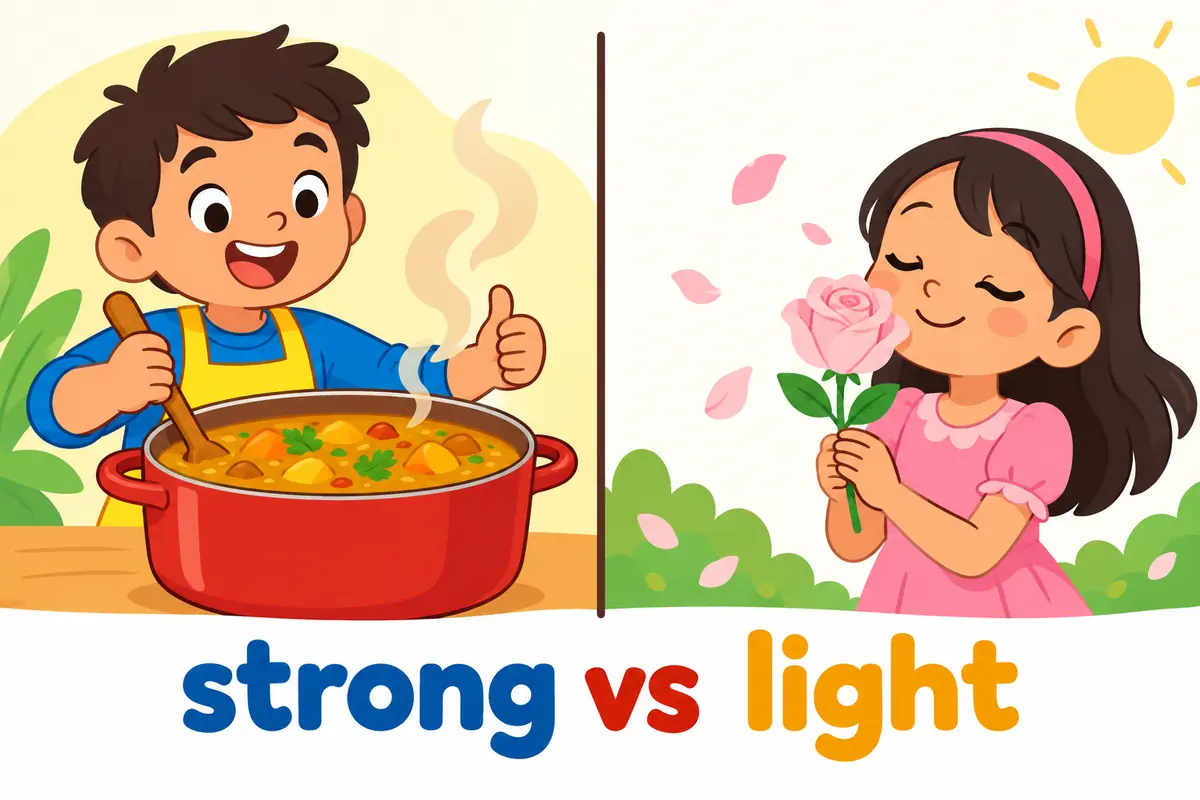
Aromatic is an adjective meaning having a strong, pleasant smell, usually one that is spicy, herbal or warm rather than light and floral. The Cambridge entry for aromatic records the smell sense, and it also notes the noun use for a fragrant plant or substance. A scented candle can smell of almost anything, but aromatic cooking smells of heat, spice and oil. The word most often describes food and drink, essential oils and certain plants, and it rarely describes clean air or a person.
| Sense | Plain meaning | Example sentence |
|---|---|---|
| Smelly pleasant | Having a strong, pleasing smell | Aromatic rice steamed in a clay pot. |
| Noun: an aromatic | A fragrant plant or substance | The recipe calls for three aromatics: garlic, ginger and spring onion. |
| Chemistry | A class of ring-shaped organic compounds | Benzene is the simplest aromatic compound. |
One honest limit. Aromatic is not simply a fancy word for fragrant. It signals strength and often warmth or spice, so a faint, delicate perfume is fragrant rather than aromatic. Nor does it describe taste: a dish can taste bland while smelling aromatic, because the adjective belongs to the nose.
Register keeps aromatic close to the kitchen. It is at home in recipes, menus, garden notes and perfume copy, where a specific scent is expected. In formal science writing the same spelling carries the chemistry sense, so a reader who meets aromatic compounds should expect a structure, not a smell.
How do you use aromatic in a sentence?
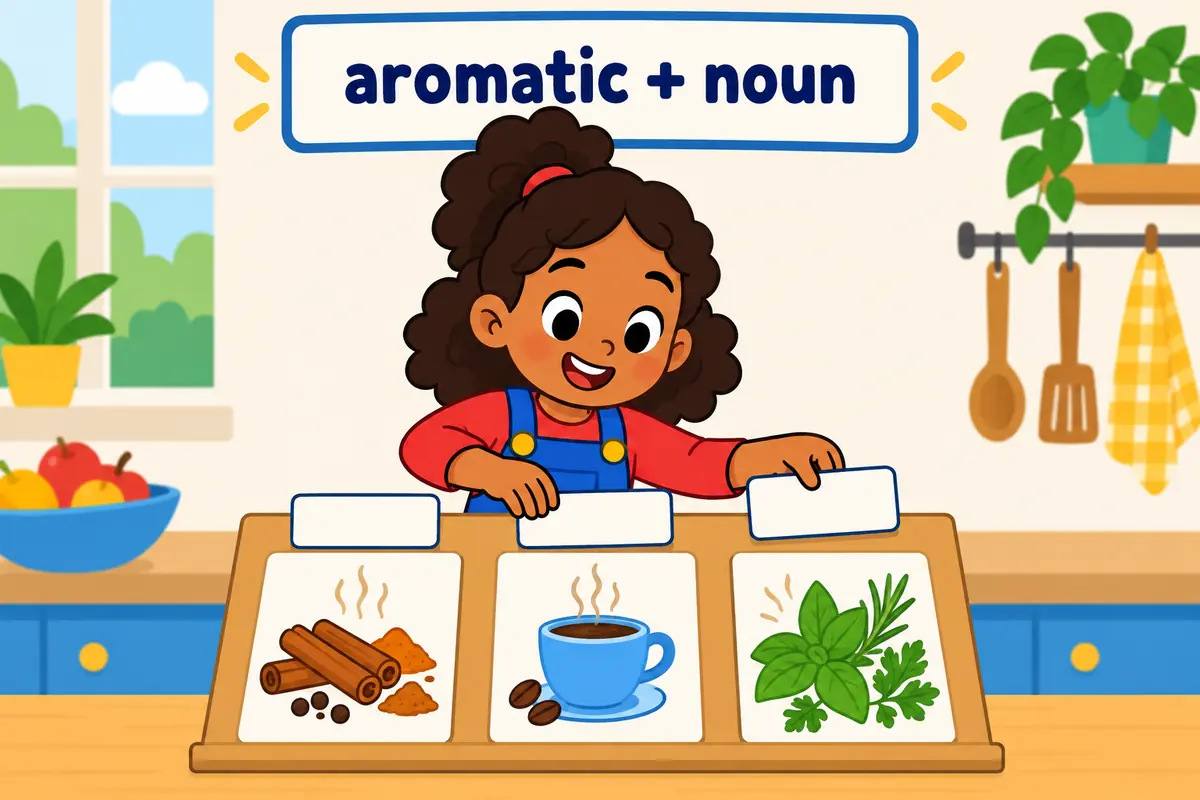
Aromatic sits before the noun it describes, or after a linking verb such as be, smell, seem or become. Because it already means having a smell, the verb smell pairs with it naturally: the stew smelled aromatic, not the stew smelled of aromatic. Comparatives use more and most rather than -er.
| Pattern | Example | What it signals |
|---|---|---|
| aromatic + noun | She stirred a pot of aromatic curry. | The smell is a standing quality of the noun |
| be / smell / become aromatic | By noon the whole flat smelled aromatic. | The smell is noticed or develops |
| more / most aromatic | Basil is the most aromatic herb in the garden. | Degrees of fragrance compared |
| a list of aromatics (noun) | Fry the aromatics before adding the liquid. | Names the fragrant base of a dish |
Because the adjective already contains the idea of a smell, the only verb that adds information is smell itself, which explains why the stew smelled aromatic is so common in food writing.
Aromatic in a sentence: examples across contexts
The examples below move from cooking to chemistry, showing how far the adjective reaches and where it stays put in the kitchen.
| Context | Example sentence | Why this works |
|---|---|---|
| Recipe writing | Add the aromatic vegetables and cook until soft. | Uses the noun sense for a fragrant base. |
| Restaurant review | The room was aromatic with coffee and warm bread. | Names two concrete smells. |
| Home conversation | Something aromatic is simmering on the stove. | Everyday, pleasant impression. |
| Travel writing | Aromatic smoke drifted from the street stalls. | Grounds the adjective in a scene. |
| Gardening | Plant sweet herbs and aromatic shrubs along the path. | Groups plants by scent. |
| Food science | Aromatic compounds give roasted coffee its scent. | Keeps the technical edge of the word. |
| Chemistry class | Benzene is the simplest aromatic hydrocarbon. | Uses the specialized chemistry sense. |
| Perfume writing | The base notes are warm and aromatic, not floral. | Distinguishes spicy warmth from flower scent. |
| Classroom talk | Which spice is the most aromatic in our box? | Turns the adjective into a comparison. |
| Tea tasting | This aromatic tea has notes of jasmine and ginger. | Names the scent to justify the word. |
| News report | Firefighters described an aromatic haze of burnt herbs. | Uses the word even for a smoky smell. |
| Cookery note | The sauce was bland until the aromatics went in. | Sets the word against its opposite. |
| Market stall | Baskets of aromatic spices lined the whole row. | Places the smell in a lively scene. |
| Bakery review | The shop was aromatic with cinnamon and warm dough. | Names two concrete smells. |
| Cafe sign | Freshly ground, deeply aromatic coffee served all morning. | Uses two modifiers before the noun. |
| Spice shop | Every jar on the shelf was more aromatic than the last. | Builds a comparison through the sentence. |
Notice how each sentence anchors the adjective in something specific: a named spice, a place, a cooking step. Aromatic becomes vague only when the writer leaves the scent unnamed.
Aromatic vs fragrant
These two adjectives both praise a smell, and writers swap them freely in drafts. The useful difference is strength and source.
| Attribute | Aromatic | Fragrant |
|---|---|---|
| Core meaning | Strong, pleasant, often spicy or warm | Light, sweet, usually floral |
| Typical source | Spices, herbs, coffee, cooked food | Flowers, perfume, fresh fruit |
| Strength implied | Noticeable and lingering | Gentle and delicate |
| Common partners | herbs, oil, rice, curry | rose, soap, bloom, air |
| Opposite sense | Pungent or stinking | Odourless, faint |
Verdict: use aromatic for a strong, warm scent from food or spice, and fragrant for a soft, sweet one from flowers or perfume. A curry is aromatic even when the chillies make it pungent; a single rose is fragrant and almost never aromatic.
When the smell is pleasant but faint, fragrant is the honest word, and when it is sharp and unpleasant, pungent takes over. Aromatic sits between them, strong but welcome, which is why it suits spices and roasted coffee so well.
Word forms and grammar of aromatic
| Form | Part of speech | Example |
|---|---|---|
| aromatic | adjective | The rice was aromatic and hot. |
| more aromatic, most aromatic | comparative / superlative | This blend is the most aromatic of the three. |
| aromatics | noun, plural | Add the aromatics and stir for a minute. |
| an aromatic | noun, singular | Ginger is an aromatic used across many cuisines. |
Two look-alikes catch writers. Arromatic is a misspelling with a doubled r. The real word aromantic, meaning a person who feels no romantic attraction, drops the second a and means something completely different.
Grammar is simple once the part of speech is clear. The adjective needs no preposition, so the room smelled aromatic, never smelled of aromatic. The noun, by contrast, behaves like any countable noun and takes a plural: one aromatic, several aromatics.
Common mistakes with aromatic
The errors below come from two traps: wrong spelling and the belief that aromatic simply means smelly in any way.
Incorrect: My brother is aromatic and has never wanted a partner. Correct: My brother is aromantic and has never wanted a partner. Rule: Aromantic means feeling no romantic attraction; aromatic is about smell.
Incorrect: The drains were aromatic after the storm. Correct: The drains were pungent after the storm. Rule: Aromatic is positive; bad smells need pungent or stinking.
Incorrect: The aromatic perfume was so faint we barely noticed it. Correct: The fragrant perfume was so faint we barely noticed it. Rule: Aromatic implies a strong scent; use fragrant for a light one.
Incorrect: The soup tasted aromatic and rich. Correct: The soup smelled aromatic and tasted rich. Rule: Aromatic belongs to smell, so pair it with smell, not taste.
Incorrect: The weather was aromatic and mild. Correct: The weather was balmy and mild. Rule: Balmy means pleasantly warm; aromatic always concerns smell.
Incorrect: The room smelled of aromatic. Correct: The room smelled aromatic. Rule: Aromatic is an adjective, so it follows smell directly with no of.
Practice using aromatic
- Fill in the blank: A pot of ___ rice filled the kitchen with warmth.
- Choose the better word: The rose was ___, while the curry was ___. (fragrant / aromatic)
- Correct the error: The bin was aromatic by the afternoon.
- Correct the error: The bread tasted aromatic and fresh.
- Build a sentence: use aromatic before a noun about a herb garden.
- Spot the register: which sentence belongs in a recipe – Chuck in the smelly veg, or Add the aromatics and stir?
- Fill in the blank: Benzene is the simplest ___ hydrocarbon.
- Build a sentence: use more aromatic to compare two teas.
Answers
- aromatic – the adjective sits before the noun rice.
- fragrant then aromatic – light floral scent first, strong spicy scent second.
- The bin was pungent by the afternoon. – a bad smell is not aromatic.
- The bread smelled aromatic and tasted fresh. – aromatic describes the smell.
- Aromatic herbs such as rosemary and thyme line the sunny edge of the garden. – the adjective precedes the noun.
- The second sentence – aromatics is the precise culinary noun.
- aromatic – the chemistry sense names a class of compounds.
- Of the two teas, the one with ginger is slightly more aromatic. – more forms the comparative.
The bottom line
Aromatic is an adjective for a strong, pleasant smell, most often from spices, herbs and cooked food, and it can also be a noun for a fragrant ingredient. Keep it for smell rather than taste, and choose fragrant when the scent is light and floral. Aromatic in a sentence sounds precise in a recipe and technical in a chemistry lab.
Frequently asked questions about aromatic
Is aromatic the same as fragrant?
They overlap but differ in strength and source. Aromatic suggests a strong, warm smell from spices, herbs or coffee, and it lingers. Fragrant suggests a light, sweet smell from flowers or perfume. A simmering curry is aromatic, a single rose is fragrant, and calling the rose aromatic overstates its scent.
What does aromatic mean in chemistry?
In chemistry, aromatic describes a class of ring-shaped organic compounds, such as benzene. This technical sense is separate from everyday smell, though some aromatic compounds do have strong odours. In a chemistry sentence the word names a structure, not a fragrance, so read the context before choosing a meaning.
Can aromatic describe a bad smell?
No. Aromatic carries approval, so it suits pleasant, appetizing scents and not foul ones. For strong unpleasant smells, use pungent for something sharp and stinging, or stinking for something rotten. Saying the drains were aromatic confuses readers, because the word signals a smell they would enjoy.
Is aromatic an adjective or a noun?
It is most often an adjective, as in aromatic rice. It also works as a noun, especially in cooking, where aromatics are the fragrant vegetables and spices that form a dish base, such as onion, garlic and ginger. The plural noun aromatics is standard in recipes and food writing.