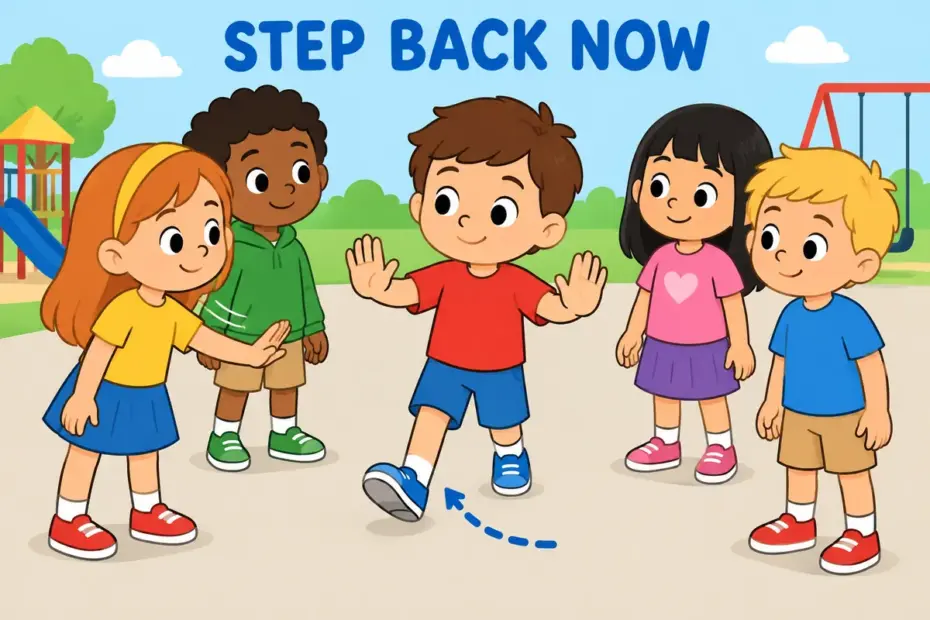
Back off is a phrasal verb meaning to move away, to stop pressuring someone, or to withdraw from a confrontation, and to use back off in a sentence you leave it without a direct object: “The reporters backed off when the family asked.” When a noun must follow, add from, as in back off from the deal.
Back off at a glance
- Back off is a phrasal verb; its forms are back off, backs off, backed off and backing off.
- The verb is intransitive, so it takes no direct object.
- Before a noun, the verb needs from, as in back off from the argument.
- The imperative Back off! is a warning to stop crowding or nagging.
- The commonest error is writing back off with a direct object, as in back off the stage.
What does back off mean?
Back off is a phrasal verb meaning to move away from someone or something, or to stop pressuring and criticising a person. The Cambridge entry for back off records both the physical retreat and the sense of easing pressure. A third, related sense describes withdrawing from a plan or threat, as when a firm backs off its demand. In the physical sense, a person or vehicle simply moves away; in the pressure sense, an authority, a critic or a crowd stops pushing. Where the movement is a full retreat by an army or a crowd, retreat names it more precisely, because back off usually describes a smaller, deliberate step away. When pressure rather than distance is easing, ease off is a close alternative, and a formal departure from a plan is to withdraw. The word is also the wrong choice for surrender: backing off can end a quarrel, but it does not always mean giving in.
| Sense | Plain meaning | Example sentence |
|---|---|---|
| Move away | Step back from someone or something | The excited dog backed off at the gate. |
| Ease pressure | Stop nagging or criticising | The coach backed off after the loss. |
| Withdraw a claim | Drop a demand or a threat | The company backed off its ultimatum. |
How do you use back off in a sentence?
Students often ask whether back off is separable. It is not, because it takes no direct object to separate the verb from the particle. The verb stands alone, or a prepositional phrase with from follows it.
| Pattern | Example | What it signals |
|---|---|---|
| back off (no object) | The crowd backed off and waited. | The core intransitive use. |
| back off from + noun | She backed off from the argument. | From introduces what is left behind. |
| back off on + noun | The council backed off on the fee. | On marks the point of easing. |
| back off + adverb | He backed off quickly. | Adverbs are the only words that follow directly. |
| Back off! (imperative) | Back off! That is my seat. | A blunt warning to stop crowding. |
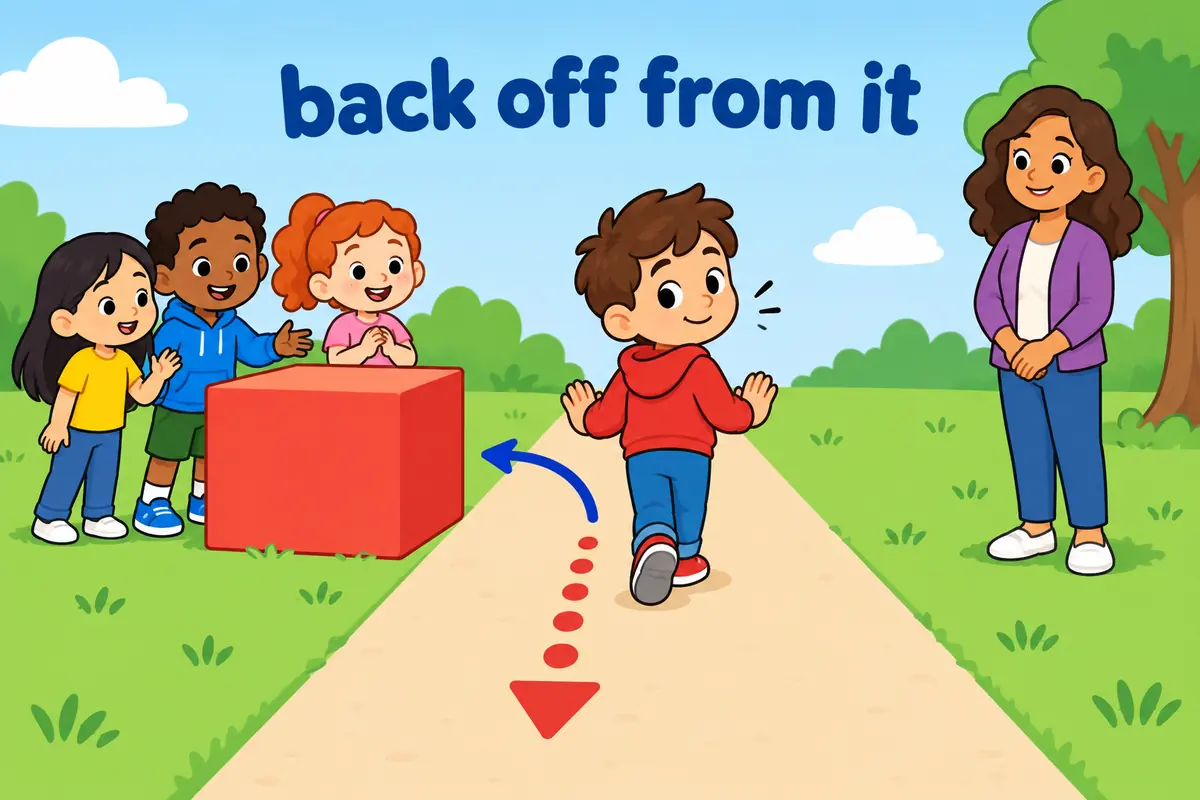
Back off in a sentence: examples across contexts
| Context | Example sentence | Why this works |
|---|---|---|
| Conversation | Just back off and give me a minute. | The imperative fits an informal plea. |
| Workplace email | The manager backed off once the deadline moved. | Reports the easing of pressure. |
| News report | The minister backed off from the proposed ban. | From plus a noun shows withdrawal. |
| Sports writing | The defence backed off and invited the pass. | The physical sense of dropping away. |
| Business | The buyer backed off on the asking price. | On marks the point of easing. |
| Parenting | We agreed to back off and let her choose. | Shows the pressure sense gently. |
| Driving | The van backed off to let the cyclist pass. | Vehicle movement, intransitive. |
| Negotiation | Neither side would back off from its position. | From plus noun suits a standoff. |
Back off vs back down and back out
Three phrasal verbs share the base verb back, and learners mix them constantly.
| Attribute | Back off | Back down | Back out |
|---|---|---|---|
| Core meaning | Move away or stop pressuring | Yield in a dispute | Withdraw from an agreement |
| Object or preposition | None, or from | None, or from | None, or of |
| Trigger | A request to stop | A stronger argument or opponent | A change of mind or fear |
| Keeps a position | Yes, just at a distance | No, the position is given up | No, the promise is dropped |
| Typical setting | Quarrels, crowds, traffic | Debates and standoffs | Deals and bookings |
Use back down when someone surrenders a position, back out when a promise or deal is dropped, and back off when the pressure simply eases.
Word forms and grammar of back off
| Form | Part of speech | Example |
|---|---|---|
| back off | Phrasal verb (base) | Just back off and let her think. |
| backs off | Phrasal verb (third person) | He always backs off when voices rise. |
| backed off | Phrasal verb (past) | The dog backed off at the sound. |
| backing off | Phrasal verb (present participle) | They are backing off from the plan. |
| Back off! | Imperative | Back off, you are standing on my foot. |
The particle never moves, so the same base verb appears in the back up page with a totally different meaning.
Common mistakes with back off
- Incorrect:
The crowd backed off the stage.Correct: The crowd backed off from the stage. The verb takes no direct object, so from is needed before a noun. - Incorrect:
She backed off him.Correct: She backed off. A person cannot be the direct object of this intransitive verb. - Incorrect:
He backed off to sign the deal.Correct: He backed off from signing the deal. From is followed by a gerund, not an infinitive. - Incorrect:
Please back off from this email thread.Correct: Please step back from this email thread. The blunt imperative is too informal for business writing. - Incorrect:
They backed off the project.Correct: They backed out of the project. Dropping a commitment is back out, not back off.
Practice using back off
Work through the six items, then check the reasoning rather than only the answer.
- Fill the gap: The paparazzi refused to ______ from the actress.
- Choose the better word: After the evidence appeared, the editor (backed off / backed out) the story.
- Correct the error: The protesters backed off the building.
- Build a sentence: use back off on about a council reducing a new charge.
- Spot the register: which belongs in a workplace email, please back off, or we would ask you to step back?
- Rewrite without a preposition: The pressure eased after the apology. Use back off.
Answers
- back off. From introduces the person the crowd is leaving alone.
- backed off. The editor eased pressure; backed out would mean abandoning a commitment.
- The protesters backed off from the building. A noun after the verb needs from.
- Model answer: The council backed off on the new parking charge after complaints.
- We would ask you to step back. The blunt Back off is too informal for an email.
- The pressure backed off after the apology. Here back off is used intransitively about the pressure itself.
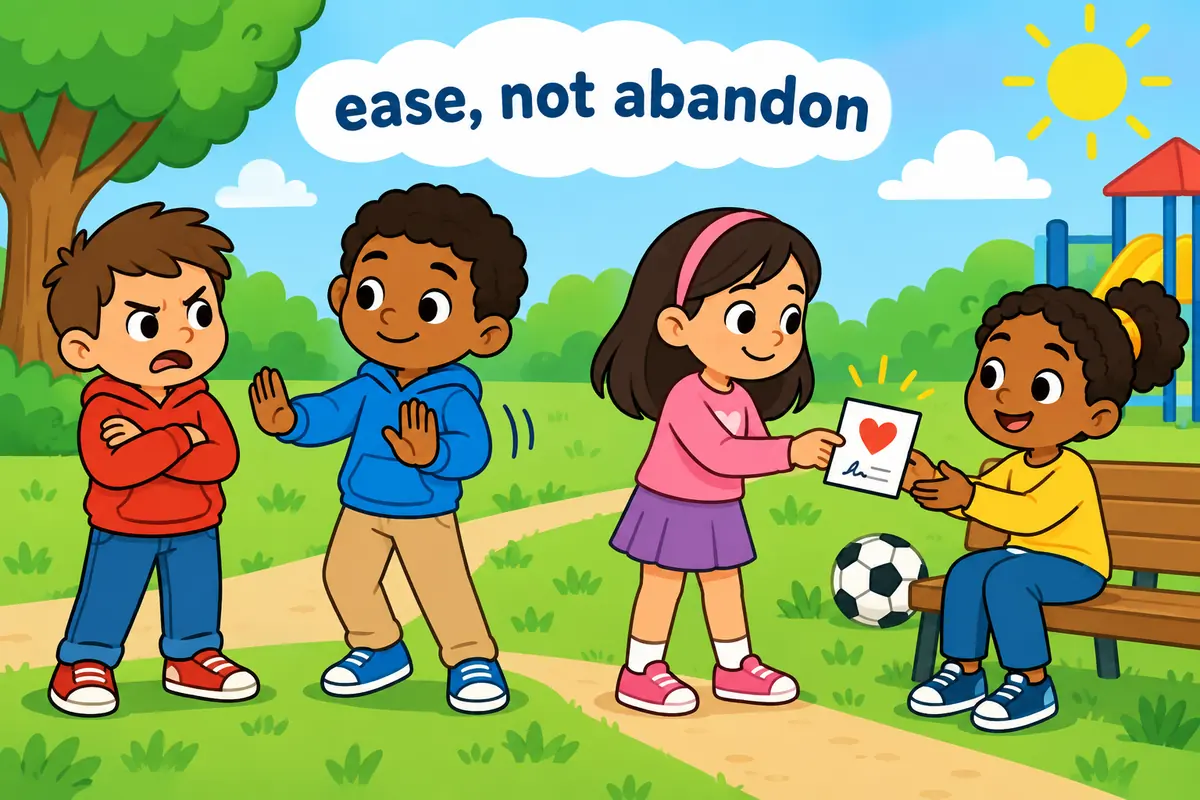
The bottom line
Use back off in a sentence when someone moves away or stops pushing, and remember that the verb stands alone because it takes no direct object. Two details decide most sentences: a following noun needs from, and dropping a firm commitment is back out, not back off. Keep the imperative for informal speech, where it reads as a blunt warning.
Frequently asked questions about back off
Is back off one word or two?
Back off is written as two words when it is the phrasal verb, as in she backed off. A single hyphenated form, back-off, appears only as a technical noun or adjective in engineering and computing, such as a back-off period between retries. In everyday writing, keep the space between back and off.
Is back off rude?
The imperative Back off can sound rude because it is a blunt order to stop crowding or nagging. In conversation among friends it is usually playful. In a workplace email or a formal letter, replace it with a request such as please step back or please give us space, which keeps the meaning without the edge.
What does back off mean in a relationship?
In a relationship, back off usually means give someone emotional space rather than physically moving away. A partner who backs off stops pressing a difficult topic and waits. It can signal healthy respect for a boundary, though it can also mean growing distance, so the surrounding sentence decides which reading applies.
What is the difference between back off and get back?
Back off means withdraw or ease pressure, while get back often means return to a place or move away quickly. The commands differ in tone: back off warns someone to stop crowding you, and get back warns of immediate danger. The two are not interchangeable, because only get back suggests returning or escaping.
Have you ever found yourself in a situation where you needed to assert your boundaries firmly? That’s when the phrase “back off” comes in handy.
“Back off” is a direct and assertive way to communicate to someone that you want them to give you space or stop their current behavior. It is a clear signal for the other person to retreat or withdraw from a conversation or situation.
7 Examples Of Back Off Used In a Sentence For Kids
- Back off means to move away from someone.
- It is important to back off when someone asks you to give them space.
- You should kindly tell someone to back off if they are too close to you.
- It is polite to use the phrase back off when you want someone to stay away.
- Remember to always back off if you see someone feeling uncomfortable.
- It’s okay to ask someone to back off if they are bothering you.
- If someone is too close to you, you can use the words back off to ask them to move back.
14 Sentences with Back Off Examples
- If someone tries to copy your answers during an exam, back off and focus on your own work.
- When a peer tries to take credit for your group project, calmly tell them to back off.
- Back off from engaging in arguments with classmates over trivial matters.
- If someone is invading your personal space in the library, don’t hesitate to firmly say back off.
- When someone tries to pressure you into attending a party instead of studying, confidently tell them to back off.
- Back off from unhealthy competition with your classmates and focus on improving yourself.
- If someone tries to borrow money from you without any intention of returning it, tell them to back off.
- When a friend starts spreading rumors about you, stand up for yourself and demand they back off.
- Back off from getting involved in drama or gossip that does not concern you.
- If someone tries to take advantage of your notes without contributing anything in return, don’t be afraid to say back off.
- When a fellow student tries to sabotage your chances of success, assertively tell them to back off.
- Back off from spending too much time on social media and prioritize your studies instead.
- If someone tries to pressure you into joining a club or organization you’re not interested in, politely ask them to back off.
- When a roommate tries to dictate how you should live your life, confidently tell them to back off.
How To Use Back Off in Sentences?
To use Back Off in a sentence, follow these steps:
-
Identify the Situation: Determine when you want to convey the idea of moving away or stopping in a forceful manner.
-
Choose Your Words: Pick a suitable context for using Back Off. This could be in a playful situation with friends, a serious moment with a stranger, or any scenario where you need someone to give you space.
-
Think of the Tone: Consider the tone of your message. Are you trying to be assertive, playful, or serious?
-
Construct the Sentence: Incorporate the phrase “Back Off” into your sentence. For example, “When my little brother wouldn’t stop bothering me, I had to firmly say, ‘Back off!'”
-
Pay Attention to Body Language: If saying “Back Off” in person, your body language should match the message. Stand tall, maintain eye contact, and use a firm tone of voice.
-
Practice: Repeat the sentence a few times to get comfortable with using the phrase naturally.
-
Use it in Context: Wait for a suitable moment and confidently use the phrase “Back Off” to communicate your message effectively.
Remember to always consider the appropriateness of using Back Off in different situations and adjust your tone accordingly for the best results.
Conclusion
In conclusion, the phrase “back off” is commonly used to convey a clear message of retreat or withdrawal in various situations. It is often employed to establish boundaries, assert authority, or indicate a need for space. Examples of its usage include instructing someone to physically move away, requesting cessation of unwanted behavior, or signaling a desire for privacy or independence. The versatility of this phrase allows it to effectively communicate the speaker’s intentions while also setting the tone for respectful interaction and conflict resolution.
Whether in interpersonal conflicts, crowded spaces, or moments of tension, the straightforward nature of saying “back off” can help manage challenging situations and maintain personal boundaries. By being assertive yet concise, this phrase can convey a firm stance without escalating confrontations, making it a valuable tool in navigating various social dynamics and ensuring mutual respect among individuals.


