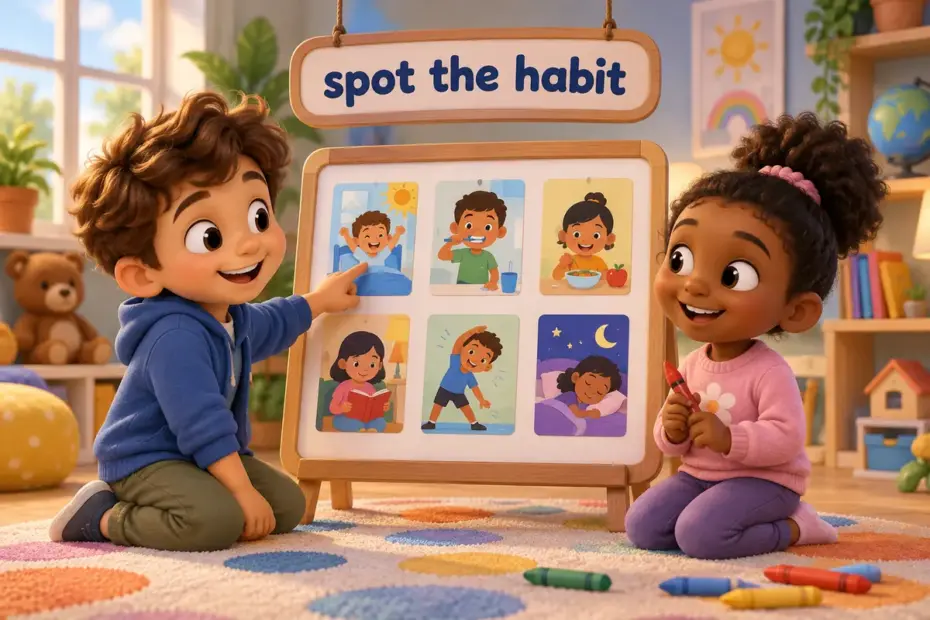
Bad habits for kids with pictures give a child something clear to see, name and change. A picture of a habit is easier to talk about than a warning, because the child can point to it. A simple example is a drawing of fingers near the mouth for nail biting.
Bad habits for kids with pictures at a glance
- A habit is an action a child repeats without thinking.
- A picture makes the habit concrete and easy to discuss.
- Most childhood habits are common and fade with gentle help.
- The kindest fix replaces a bad habit with a good one.
- The commonest mistake is scolding the child instead of teaching the swap.
What are bad habits for kids?
A bad habit for kids is a repeated action that harms health, learning or manners, such as nail biting, late sleeping or leaving mess behind. Children rarely choose these habits on purpose; the action usually brings comfort, speed or attention. Seeing the habit in a picture helps a child notice it without feeling blamed.
| Habit | What it looks like | Why it matters |
|---|---|---|
| Nail biting | Fingers near the mouth | Dirt carries germs to the mouth. |
| Late sleeping | A tired face each morning | Little sleep slows learning. |
| Skipping breakfast | An empty plate at the door | The body runs out of fuel by mid-morning. |
| Too much screen time | Eyes fixed on a glowing screen | It crowds out play and sleep. |
| Not brushing teeth | A dry brush by the sink | Sugar stays on the teeth for hours. |
| Losing things | Odd socks and lost pens | Time is wasted searching each day. |
Common bad habits and how to picture them
A clean, simple drawing teaches the habit faster than a lecture. Each picture below shows the habit itself and points to one gentle fix a family can try this week.
| Bad habit | Picture idea | Gentle fix |
|---|---|---|
| Nail biting | fingers near the mouth | Keep a small fidget toy in the pocket. |
| Late waking | a child under a heavy quilt | Set out clothes the night before. |
| Thumb sucking | a thumb near the cheek at bedtime | Offer a soft cuddly toy instead. |
| Skipping breakfast | an empty plate beside a packed bag | Keep fruit and milk ready on the shelf. |
| Too much screen time | a face lit by a tablet after dark | Use a timer and a screen curfew. |
| Messy room | clothes and toys across the floor | Tidy for five minutes before dinner. |
| Not brushing teeth | a dry toothbrush by the sink | Brush together as a short song plays. |
| Losing things | a pile of odd socks and pens | Give each item one labelled place. |
| Interrupting | a hand tugging at a sleeve | Teach the child to rest a hand and wait. |
| Ignoring homework | a covered book under a bag | Start with just ten minutes a day. |
| Over-snacking | a scatter of wrappers on a chair | Keep fruit within reach and treats away. |
| Whining | a drooping face beside a toy | Name the feeling before the request. |
How do you break a bad habit gently?
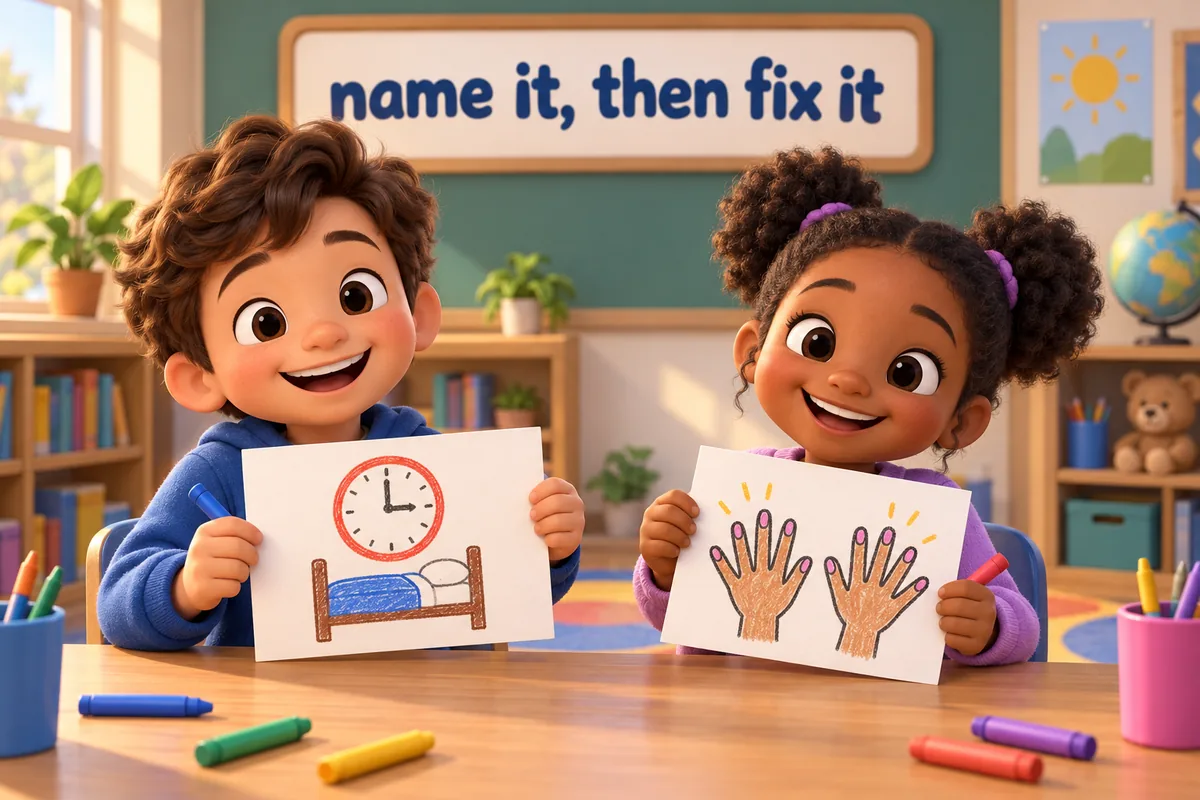
Change works best in small steps, with praise for the new action rather than blame for the old one. Name the habit together, choose one substitute, and make the substitute easy to reach. Track the good days, not the slips, and the habit usually fades within a few weeks.
| Step | What to do | Why it works |
|---|---|---|
| Name it | Show a picture and agree on the habit. | A shared name removes blame. |
| Swap it | Offer one easy substitute action. | The hands find something new to do. |
| Practise it | Rehearse the swap at the same time daily. | Repetition builds the new routine. |
| Praise it | Notice the good day out loud. | Praise teaches faster than scolding. |
| Keep it | Hold the swap steady for a month. | Time turns the swap into a habit. |
Consistency matters more than speed. A substitute that is easy and close at hand wins, so keep the fidget toy in a pocket and the fruit on the shelf. If the old habit returns during a busy week, treat it as a normal slip and return to the same kind step rather than starting a new plan from scratch.
The habit words fit ordinary sentences, and examples sit in adjectives for bad habits. A picture chart can carry a short a bad egg in a sentence label, while adjectives for kids and b words for kids add the describing and spelling words for younger learners.
Bad habits compared with good habits
The clearest way to teach a swap is to place the bad habit beside its good partner. The table pairs them, so a child sees exactly what to do instead of only what to stop.
| Point | Bad habit | Good habit |
|---|---|---|
| Sleep | staying up late | a steady bedtime |
| Food | skipping breakfast | a quick healthy start |
| Teeth | a dry toothbrush | brushing twice a day |
| Room | clothes on the floor | a place for every item |
| Screens | hours after dark | a set daily limit |
Words for talking about habits
A few plain words help parents and children discuss a habit without a quarrel.
| Word | Part of speech | Example |
|---|---|---|
| habit | noun | A habit grows slowly, one day at a time. |
| routine | noun | A bedtime routine helps a child settle. |
| swap | verb | Swap the late night for a story instead. |
| praise | verb | Praise the good day and ignore the slip. |
| steady | adjective | A steady bedtime works better than a rule. |
Common mistakes when fixing a bad habit
Most well-meant attempts share one of a few faults, and each fault has a quick fix.
- Incorrect:
Stop doing that bad thing.Correct: Swap the nail biting for a fidget toy. Rule: teach the replacement action, not just the ban. - Incorrect:
My child is always lazy.Correct: My child finds morning routines hard. Rule: name the habit, never the child. - Incorrect:
He don’t like brushing.Correct: He does not like brushing. Rule: use the correct verb form. - Incorrect:
I scolded the child for a whole week.Correct: I praised each good day instead. Rule: praise changes behaviour faster than blame. - Incorrect:
We fixed every habit at once.Correct: We fixed one habit at a time. Rule: one habit at a time keeps the change steady.
Practice talking about bad habits
Try each task, then read the reason beside the answer to check your thinking.
- Fill in the blank: A bedtime ________ helps a child settle at night.
- Fill in the blank: ________ the good day and ignore the slip.
- Choose the kinder fix: scold the child or swap the habit for a fidget toy?
- Correct the error: He don’t like brushing.
- Build a picture idea: describe a simple drawing for the habit of losing things.
- Spot the swap: what good habit pairs with too much screen time?
- Build a sentence: write one praise sentence for a child who brushed their teeth.
Answers
- routine, because a routine is the repeated pattern at bedtime.
- Praise, because praise is the verb for noticing the good action.
- Swap the habit for a fidget toy, because a replacement action teaches what to do.
- He does not like brushing: not needs the full verb does not.
- Sample: a drawing of labelled boxes with a pen in each box.
- A set daily screen limit, because a clear limit replaces the old habit.
- Sample: Well done for brushing your teeth before bed.
The bottom line
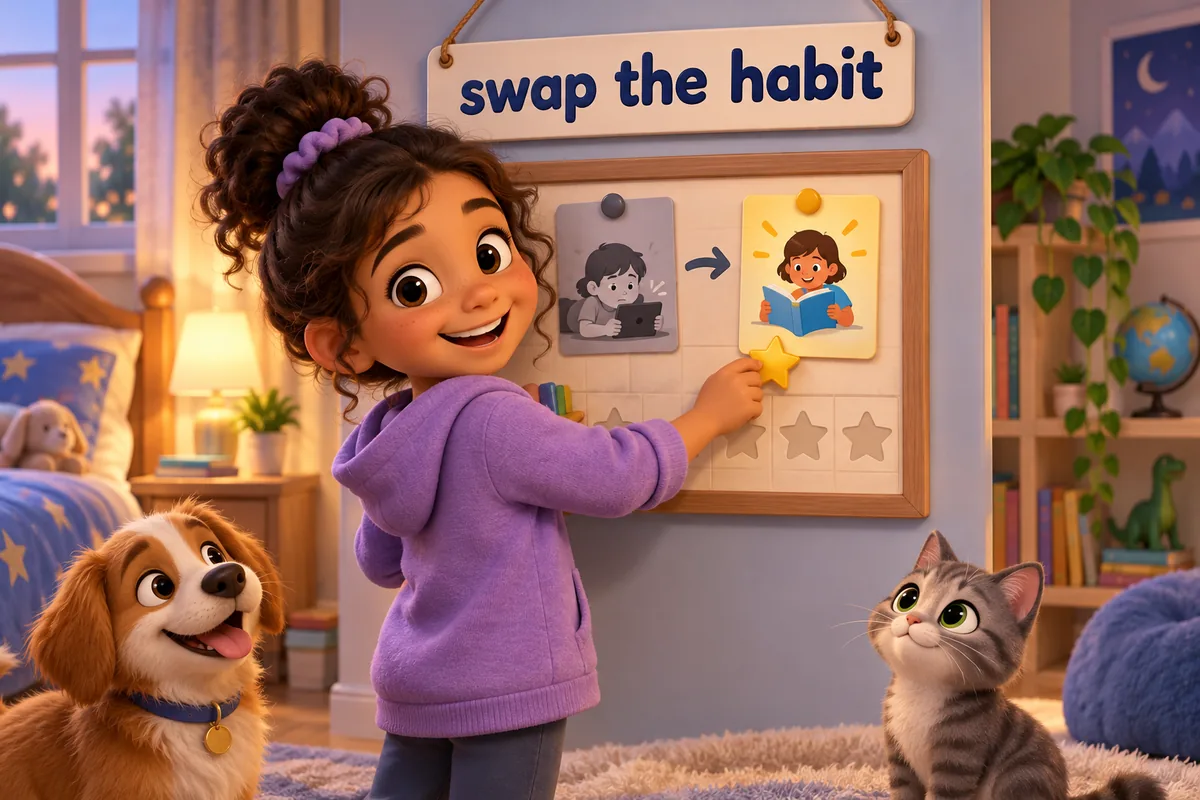
Use bad habits for kids with pictures as a gentle teaching tool, because a simple drawing lets a child name the habit without feeling blamed. Pair every bad habit with one good substitute, praise the good day, and change one habit at a time. Steady patience does far more than a week of scolding.
Frequently asked questions about bad habits for kids
At what age do childhood habits usually fade?
Many childhood habits, such as thumb sucking and nail biting, fade on their own as a child grows older and finds new interests. A picture chart and gentle reminders can speed the change. If a habit causes pain or worry, it is worth raising with a health visitor or doctor.
Should I punish a child for a bad habit?
Punishment rarely works for a habit, because the action is usually automatic rather than deliberate. A child who is scolded may hide the habit instead of changing it. Naming the habit kindly, offering one substitute and praising the good days changes behaviour far more reliably than any punishment.
How many habits should we work on at once?
Choose one habit at a time. Fixing several habits together splits the child’s attention and makes progress hard to see. Once the first substitute feels normal, usually after a few weeks, move on to the next habit. The steady order keeps each change firm.
How can pictures help a child change a habit?
A picture shows the habit as a concrete action, so a child can point to it and talk about it calmly. Pictures also show the good substitute beside the old habit, making the swap clear. A simple chart with a star for each good day adds gentle encouragement.