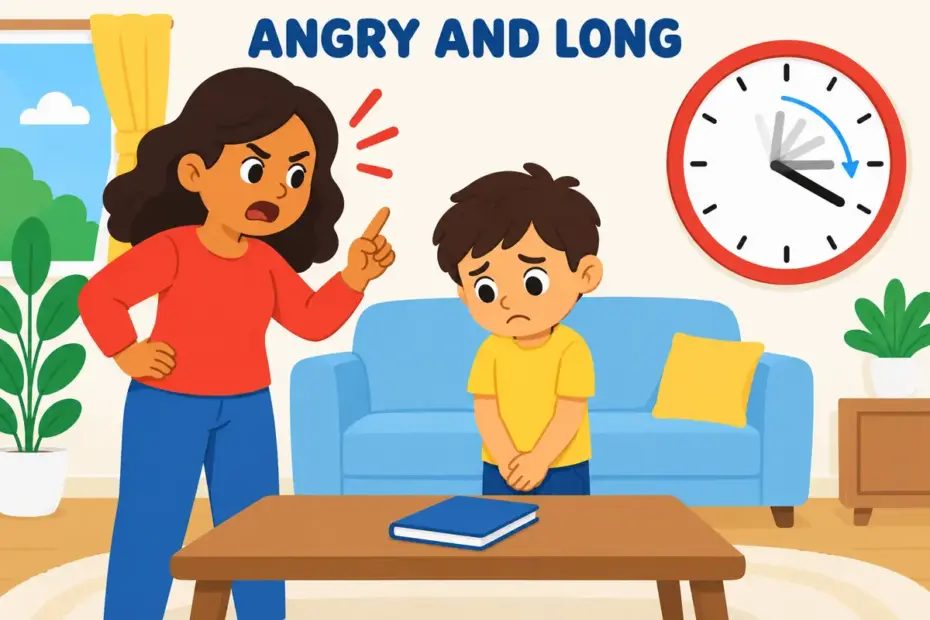
Berate means to scold or criticize someone angrily and at length, usually in a stream of words rather than a single remark. To use berate in a sentence, make the person the object and the reason an optional afterthought: “The coach berated the team for twenty minutes.” The length of the anger is the point.
Berate at a glance
- Berate is a transitive verb; its forms are berates, berated and berating.
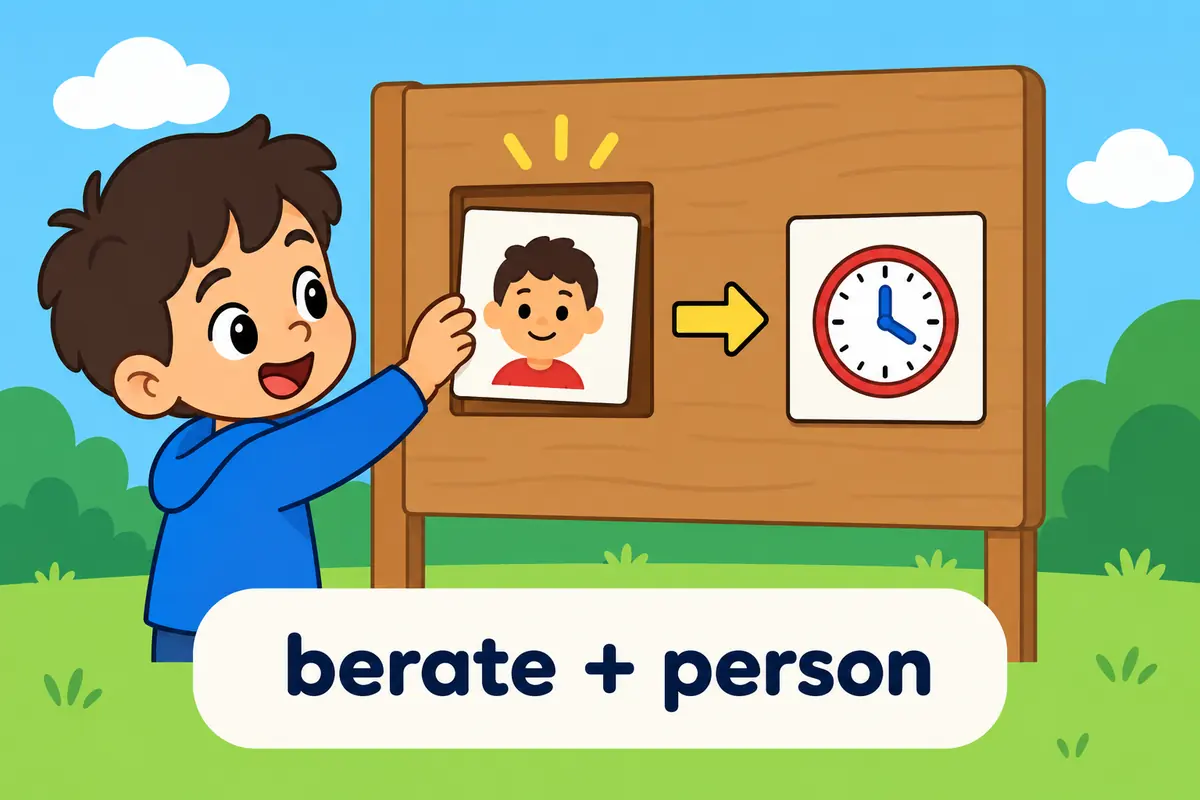
- The usual pattern is berate + somebody + for + noun or -ing, as in berated him for arriving late.
- Berate belongs to written narration and reported speech more than to casual conversation.
- Common collocations include berate for, berate in public and be berated by.
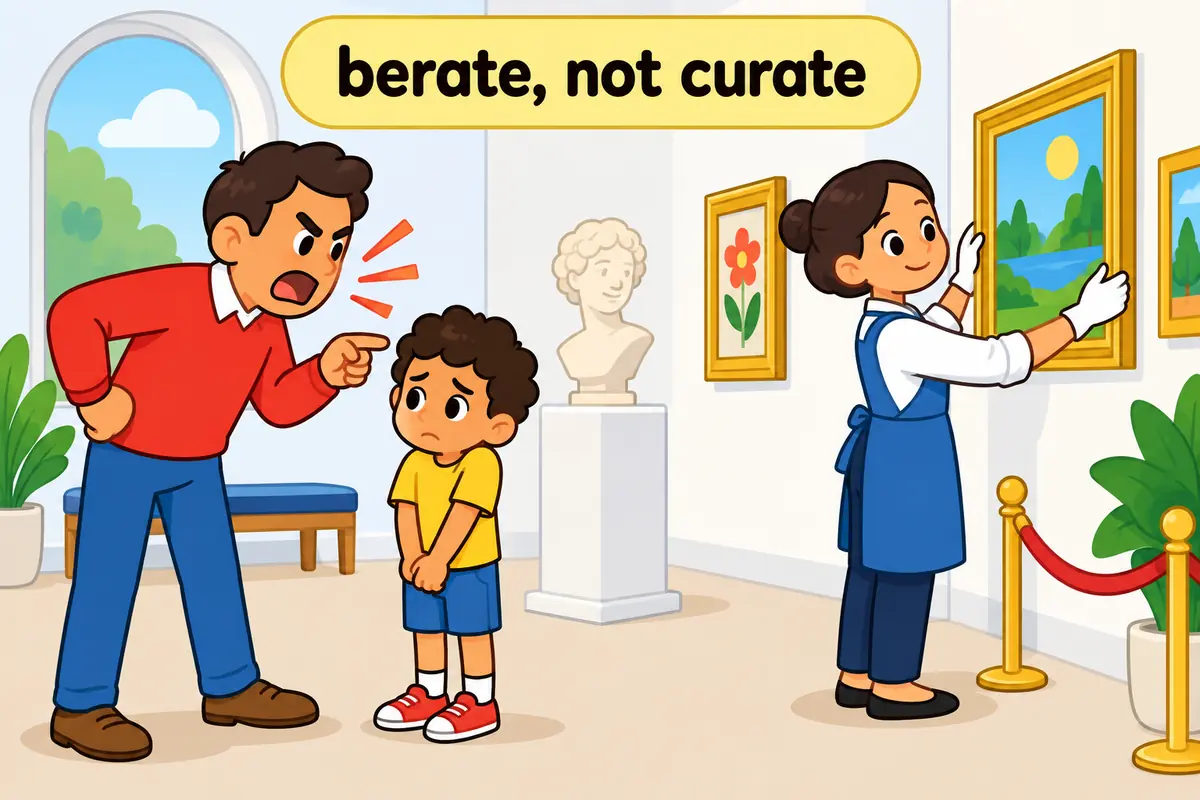
- The commonest error is confusing berate with curate, which means to select and organise.
What does berate mean?
Berate is a transitive verb meaning to scold or criticize someone at length and with obvious anger. The Cambridge entry for berate records the single core sense of speaking angrily to a person because of what they have done. Length separates it from a one-line rebuke: a rebuke is a sentence, while a berating is a speech.
Berate is not a neutral synonym for discuss or correct. It carries a judgement about the speaker as well as the target, so a manager who berates a junior is showing temper rather than teaching. Where the aim is guidance, a plainer verb such as warn or advise is more accurate and usually kinder.
How do you use berate in a sentence?
Name the person first and the reason second, and keep the verb active when you want to show heat. Four patterns cover most sentences, and each one changes what the reader blames.
| Pattern | Example | What it signals |
|---|---|---|
| berate + somebody + for + noun | The referee berated the player for the delay. | Names the fault the scolding answers. |
| berate + somebody + for + -ing | She berated the driver for blocking the entrance. | Turns the fault into an action with -ing. |
| be berated by + somebody | The clerk was berated by a customer for ten minutes. | Keeps attention on the person suffering the scolding. |
| berate + somebody, no reason | He berated the whole room and then left. | Shows a broad, unmeasured attack. |
One sharp remark is closer to rebuke a colleague, while careful fault-finding is to criticize the plan; berate always adds length and heat to either.
Berate in a sentence: examples across contexts
Berate keeps its heat but changes its setting. The eight sentences below move from a classroom to a newspaper, and each one makes clear how long the scolding lasted and who was blamed.
| Context | Example sentence | Why this works |
|---|---|---|
| Classroom | The teacher berated the class for leaving the science bench untidy. | Names the fault and keeps the object as a group. |
| Workplace email | The manager berated the supplier in writing for three missed deadlines. | Usually a bad idea, which is exactly why it reads as temper. |
| News report | Witnesses said a passenger berated the guard for several minutes. | The time phrase confirms the sustained sense of the verb. |
| Sports report | The captain berated his defence after the second goal. | A trigger event shows what set the anger off. |
| Family conversation | She berated her brother for borrowing the bike without asking. | Everyday speech uses the -ing or noun reason freely. |
| Academic writing | The review berates the study for ignoring its own data. | The present tense suits a published critique. |
| Historical narrative | The letters show the inspector berating the officers for weeks. | The continuous form draws out the duration. |
| Customer service | The caller berated the agent about a charge she had not made. | About competes with for when the complaint is broad. |
Berate vs scold
Berate and scold overlap, and learners often choose the wrong one. Scold corrects, usually briefly; berate attacks, usually at length. The table sets the two apart by strength and setting.
| Attribute | berate | scold |
|---|---|---|
| Strength | Strong, sustained anger | Mild to firm correction |
| Duration | Often a stretch of speech | Usually a sentence or two |
| Typical subject | A superior, coach or angry adult | A parent or teacher |
| Typical object | An adult or a whole group | Often a child |
| Register | Written narration and journals | Everyday and spoken |
Verdict: use scold for ordinary correction and berate when the anger is public, prolonged and part of the point you are making.
Word forms and grammar of berate
Berate inflects regularly and has no common noun form, so writers who need one reach for the gerund a berating or switch to the noun reproach when the tone should be cooler.
| Form | Part of speech | Example |
|---|---|---|
| berate | verb, base form | Do not berate the new starter. |
| berates | verb, third person | He berates every referee who disagrees. |
| berated | verb, past and past participle | She berated the driver for ten minutes. |
| berating | verb, present participle | The berating of the staff lasted an hour. |
| berating | noun, gerund | He gave the team a long berating. |
Common mistakes with berate
- Incorrect:
The teacher berated to the class about the mess.Correct: The teacher berated the class about the mess. Rule: Berate is transitive, so it takes the person as a direct object and never needs to. - Incorrect:
She berated that the report was late.Correct: She berated the author for the late report. Rule: The verb takes a person, not a that-clause; use complain or object before a clause. - Incorrect:
The chef curated the waiter in front of the guests.Correct: The chef berated the waiter in front of the guests. Rule: Curate a collection means to select and organise it, which has nothing to do with anger. - Incorrect:
He was berated for to be late.Correct: He was berated for being late. Rule: After the preposition for, an -ing form is required, never a to-infinitive. - Incorrect:
The coach berates on the players every week.Correct: The coach berates the players every week. Rule: There is no preposition between berate and its object.
Practice using berate
Complete the six items, then check the reason given with each answer.
- Fill the gap: The director ______ the crew for losing the shot.
- Choose the better word: The mother (scolded / berated) the toddler for touching the stove, quickly and without anger.
- Correct the error: The editor berated that the copy was full of errors.
- Build a sentence: use be berated by about a student who is shouted at unfairly in front of the class.
- Spot the register: which belongs in a formal report — the officer was berated by a senior colleague, or the boss really went off on him?
- Change the voice: The player berated the umpire. Rewrite in the passive.
Answers
- berated — the crew is the direct object and the reason follows with for.
- scolded — the correction is brief and mild, so the gentler verb fits.
- The editor berated the reporter for the errors — berate takes a person, not a that-clause.
- Model answer: Ravi was berated by the coach in front of everyone for one missed pass.
- The officer was berated by a senior colleague — a report keeps the formal passive and drops slang.
- The umpire was berated by the player — the person becomes the subject of be berated by.
The bottom line
Use berate in a sentence when the scolding is angry and drawn out, and name the person as the object with for introducing the fault. The two details that decide most sentences are these: the verb is transitive, so the person cannot be left out, and it is stronger and longer than scold. For brief, even-tempered correction, an admonish a pupil or warn is the more accurate verb.
Frequently asked questions about berate
Is berate a formal word?
Berate sits in written narration, journalism and reported speech rather than everyday talk. A news report writes that a passenger berated the guard, while a friend would more likely say the passenger shouted at the guard. The formality comes from its length and heat, which make it descriptive rather than conversational.
Does berate always need a reason?
No. A reason is common and usually follows for, but it is optional. The coach berated the whole team for twenty minutes names no reason and still works, because the object alone is enough. Adding for focuses the sentence on a particular fault instead of a general bad mood.
Can you berate yourself?
You can, and the reflexive form sounds natural enough, as in he berated himself for the missed deadline. It stays within the same meaning of a long, angry scolding, but the anger is turned inward. Writers often prefer blamed himself or reproached himself when they want a quieter, less theatrical tone.
What part of speech is berate?
Berate is a verb, and specifically a transitive verb, which means it always needs a direct object. Its regular forms are berates, berated and berating, and the gerund a berating can serve as a noun. It has no adjective form, so describing someone as berated means they were on the receiving end of the scolding.
Have you ever found yourself in a situation where you were sharply scolded or criticized harshly? This form of verbal reprimand is known as berating, a common behavior that can leave individuals feeling embarrassed or demoralized.
Berating can occur in various settings, such as at home, school, or work, and can have negative effects on a person’s self-esteem and mental well-being. It often involves using harsh language, raised voices, and personal attacks to express disapproval or frustration.
7 Examples Of Berate Used In a Sentence For Kids
- The teacher shouldn’t berate the students for making mistakes.
- It is not nice to berate someone for trying their best.
- Let’s always remember to be kind and not berate others.
- We should offer help and support instead of berating others.
- It is important to be understanding and not berate others for their differences.
- Let’s cheer each other on and never berate a friend for making a mistake.
- Being patient and kind is better than choosing to berate someone.
14 Sentences with Berate Examples
- Berate your friend for missing an important lecture.
- Don’t berate yourself for getting a low grade on one exam; learn from it and do better next time.
- It’s not productive to constantly berate your roommate for small mistakes; try to communicate calmly instead.
- Berate your group member if they are not contributing enough to the project.
- It’s important for professors to provide constructive feedback rather than berating students in front of their peers.
- Don’t berate yourself for taking a break; self-care is essential for academic success.
- Berate yourself for procrastinating on your assignments and learn to manage your time better.
- It is not respectful to constantly berate your professor for the difficulty of the course; try to seek help and improve your understanding.
- It’s not fair to berate your classmates for asking questions; we are all here to learn and grow together.
- Berate yourself for skipping classes; attendance is crucial for understanding the material.
- Don’t berate your peers for not studying the same way you do; everyone has their own preferred method of learning.
- It’s important to not berate yourself for not knowing all the answers; it’s okay to ask for help and learn from your mistakes.
- Don’t berate your friend for scoring lower than you on an exam; support each other and celebrate small victories.
- Berate yourself for not participating in extracurricular activities; they can enhance your college experience.
How To Use Berate in Sentences?
To berate means to scold or criticize someone harshly. When using the word berate in a sentence, it is important to consider the context and tone in which it is being used. Here is a helpful guide on how to use berate in a sentence for beginners.
-
Choose the right situation: Use berate when you want to describe someone scolding or criticizing another person strongly.
-
Correct usage: “The teacher began to berate the student for not completing the assignment on time.”
-
Avoid overusing: It is important not to overuse the word berate in writing to avoid sounding repetitive.
-
Consider the audience: Make sure the audience understands the meaning of berate or provide context if needed.
-
Check the tone: Be mindful of the tone of your sentence when using the word berate. It typically carries a negative connotation.
-
Synonyms: If you feel like berate might be too harsh for the context, you can consider using synonyms such as scold, reprimand, chastise, or criticize.
By following these guidelines, you can effectively incorporate the word berate into your writing or conversations. Remember to always consider the appropriateness of the word berate in different situations to ensure clear communication.
Conclusion
In conclusion, the examples of sentences with the keyword ‘berate’ highlight instances where individuals harshly scold, criticize, or reprimand others. These sentences depict situations where someone is verbally chastised or harshly condemned for their actions or behavior. The word ‘berate’ carries a strong tone of disapproval and reproach, indicating a severe and often emotional reaction to perceived wrongs or mistakes.
Through these examples, it is evident that ‘berate’ is a word used to describe instances of harsh reprimand or scolding, often reflecting negative emotions and a strong sense of disapproval. It serves as a reminder of the power of words and the impact they can have on individuals when used in a critical or condemning manner.


