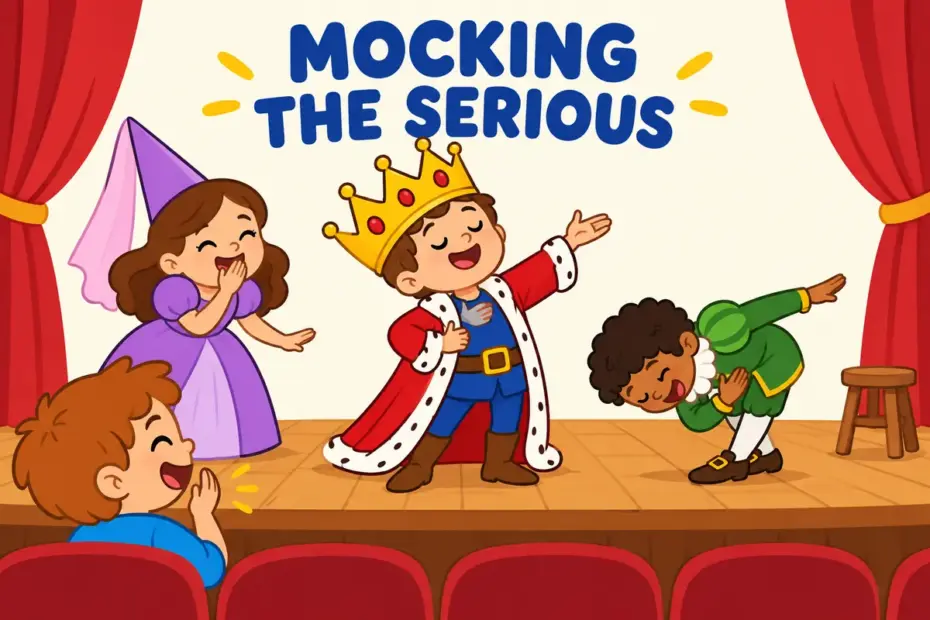
Burlesque in a sentence names a comic, exaggerated imitation that treats a serious subject as ridiculous. The noun usually attaches to what it mocks with of: ‘a burlesque of courtroom drama’. The same word also names the variety show built on parody, so the surrounding sentence, not the word alone, decides which sense a reader meets.
Burlesque at a glance
- Burlesque is a noun and also a verb; the forms are burlesques, burlesqued and burlesquing.
- The dominant pattern is a burlesque of something, because the noun usually names what is mocked.
- It belongs to arts criticism, theatre writing and history rather than everyday conversation.
- Common collocations are comic burlesque, a burlesque of, and the burlesque tradition.
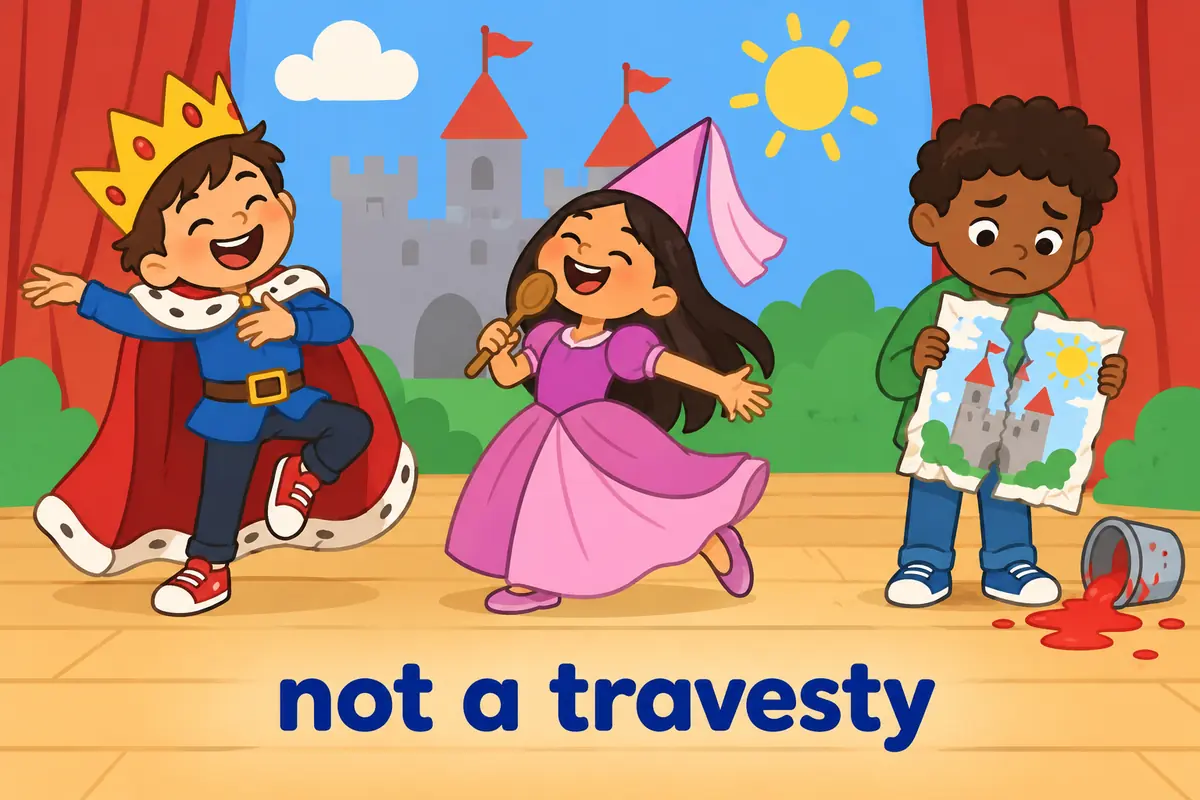
- The commonest error is treating burlesque as a plain synonym for disaster, which is travesty.
What does burlesque mean?
Burlesque is a noun meaning a comic, exaggerated imitation of a serious style or work, or the theatrical show built on such imitation. The Cambridge entry for burlesque records the literary sense beside the stage sense, and the difference decides most sentences: the first mocks a style, the second names an entertainment. A milder relative is parody, which copies one specific work for laughs rather than a whole manner of writing.
| Sense | Plain meaning | Example sentence |
|---|---|---|
| Comic imitation | A serious style or work made ridiculous by exaggeration | The novella is a burlesque of heroic adventure stories. |
| Stage entertainment | A variety show of comic sketches and songs, later associated with striptease | She sang two numbers in a downtown burlesque. |
| Verb sense | To imitate something mockingly | The sketch burlesques political speeches without naming anyone. |
One limitation is worth stating plainly. Burlesque is not a neutral synonym for parody, and it is not a word for a mess. If the imitation is grotesque and joyless, travesty is closer; if a plan simply fails, call it a failure.
How do you use burlesque in a sentence?
The noun is countable when it names one imitation and uncountable when it names the genre or the venue. Four patterns cover almost every real sentence, and each one signals whether the writer means a single work or a tradition.
| Pattern | Example | What it signals |
|---|---|---|
| a burlesque of + noun | Her speech was a burlesque of a manager’s pep talk. | One work mocks a named style or occasion. |
| burlesque as a genre | He wrote for burlesque in the 1890s. | Uncountable use; the whole form, not one piece. |
| burlesque + object (verb) | The programme burlesques celebrity interviews. | Names what is being mocked as the object. |
| a burlesque + of + era or style | The film is a burlesque of silent melodrama. | Sets the imitation against a period or genre. |
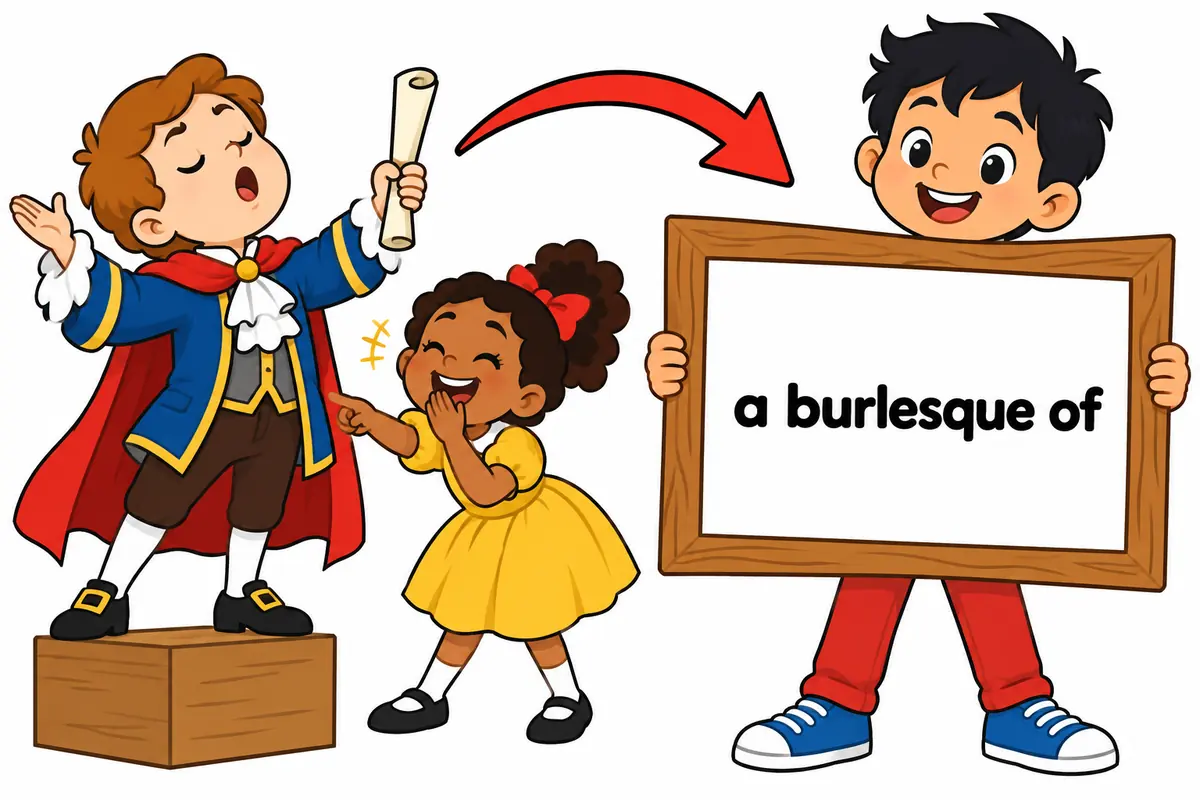
Burlesque in a sentence: examples across contexts
Burlesque keeps one meaning while the register shifts around it. The sentences below move from a classroom to a library display, and each one names the style or subject being mocked. A short classroom skit can borrow the structure of a burlesque without the costumes.
| Context | Example sentence | Why this works |
|---|---|---|
| Classroom | The class performed a burlesque of a very solemn coronation. | A familiar ceremony makes the exaggeration easy to picture. |
| Theatre review | The second act is a burlesque of drawing-room drama, played with straight faces. | Names the target genre and the acting choice that creates the joke. |
| Arts criticism | Critics called the novel a burlesque rather than a satire of court life. | Separates imitation for laughter from imitation that aims to correct. |
| News feature | The troupe brought burlesque back to a historic music hall. | The stage sense needs a venue to read naturally. |
| History essay | Victorian burlesque often turned classical legend into song and pun. | Pairs the tradition with the material it reworked. |
| Museum label | This poster advertised a burlesque of Shakespeare’s tragedies. | The of phrase names the exact target for a passing visitor. |
| Academic prose | Scholars treat burlesque as a mode that inverts high and low style. | Uses the uncountable form for a broad category. |
| Conversation | His imitation was gentle burlesque, not cruelty. | Keeps the word light and non-threatening in speech. |
Burlesque vs parody
The two words overlap because both imitate for comic effect, but they aim at different targets. A travesty sits further along the same scale and usually carries disgust rather than amusement. The programme is closer to satire than to burlesque, since it wants viewers to change something.
| Attribute | burlesque | parody | travesty |
|---|---|---|---|
| What it targets | A whole style or manner | One work, writer or genre | A subject treated with gross disrespect |
| Main effect | Exaggerated comic imitation | Recognisable mimicry | Grotesque distortion |
| Typical tone | Playful, sometimes affectionate | Witty and knowing | Hostile or appalled |
| Usual frame | A performance or literary mode | A single text or hit | A judgement on quality or justice |
| Reader response | Laughter at the style | Recognition of the source | Outrage at the failure |
Verdict: choose burlesque when a style is exaggerated into absurdity, parody when a particular work is sent up, and travesty when the imitation has curdled into contempt.
Word forms and grammar of burlesque
Burlesque moves between noun, verb and adjective, and learners most often misspell the present participle. The table lists the forms that appear in real writing.
| Form | Part of speech | Example |
|---|---|---|
| burlesque | noun | The play is a burlesque of grand opera. |
| burlesque | adjective | She owned a burlesque theatre on the pier. |
| burlesques | verb, third person | His column burlesques self-help advice. |
| burlesqued | verb, past and past participle | The troupe burlesqued the mayor’s speech. |
| burlesquing | verb, present participle | They spent the summer burlesquing costume dramas. |
Keep the spelling burlesquing with the u before the ing; the form burlesqueing is a common slip that no dictionary accepts. A stage burlesque often leans on caricature, because a thickened detail carries the joke.
Common mistakes with burlesque
- Incorrect:
The launch was a burlesque.Correct: The launch was a travesty. Rule: Burlesque is a comic imitation; a badly handled event is a travesty or a fiasco. - Incorrect:
The film burlesques that everybody was corrupt.Correct: The film burlesques the style of gangster epics. Rule: The verb takes a noun phrase as its object, never a that-clause. - Incorrect:
It was a burlesque about the war.Correct: It was a burlesque of war reporting. Rule: The noun names what it mocks with of, not about. - Incorrect:
He burlesqueing the anthem.Correct: He was burlesquing the anthem. Rule: The present participle needs a helper verb and the spelling burlesquing.
Practice using burlesque
- Fill the gap: The comic play is a ______ of very serious detective fiction.
- Choose the better word: The shambolic trial was a (burlesque / travesty) of justice.
- Correct the error: The show burlesques that politicians are honest.
- Build a sentence: use a burlesque of about a class assembly that copies a formal ceremony.
- Spot the register: which belongs in a theatre review – this burlesque of opera, or the cast was burlesquing?
- Rewrite with the verb: The magazine made fun of royal weddings. Use burlesque as a verb.
Answers
- burlesque – the noun names the style being mocked, and of introduces it.
- travesty – the word judges a grotesque failure, while burlesque means a comic imitation.
- The show burlesques political honesty – the verb needs a noun phrase, not a that-clause.
- Model answer: The assembly was a burlesque of a graduation ceremony, complete with cardboard scrolls.
- This burlesque of opera – a review uses the noun, while the verb form belongs in a looser note.
- The magazine burlesqued royal weddings – the past tense keeps the comic imitation clear.
The bottom line
Use burlesque in a sentence when you mean a comic, exaggerated imitation of something serious, and attach it to its target with of. The two nuances that decide most sentences are these: the noun has a literary sense and a stage sense, and it always signals laughter rather than the disgust of a lampoon. When the imitation is a single work rather than a whole style, parody is the more exact choice. When the plot collapses into noise, the better label is farce rather than burlesque.
Frequently asked questions about burlesque
Is burlesque always negative?
Not always. The literary sense can be affectionate, since a burlesque may imitate a style the writer admires. The stage sense is neutral and simply names an entertainment. The negative force belongs mainly to travesty, which suggests gross disrespect, and to satire, which aims to correct a fault.
What is the plural of burlesque?
As a countable noun the plural is burlesques, as in three comic burlesques of famous trials. When burlesque names the whole genre or a venue, it is uncountable and stays singular, as in a history of burlesque. The verb also takes -s in the third person.
Can burlesque be a verb?
It can, and the verb takes a direct object naming what is mocked. Writers burlesque a style, a genre or a public figure rather than a whole situation. The verb rarely takes a that-clause, which is the mistake that marks a learner most clearly.
How is burlesque different from satire?
Burlesque mocks a style by exaggeration and mainly wants laughter. Satire attacks a fault in people or institutions and wants change. A single work can be both, but the test is intent: if the writer is exposing a wrong, choose satire; if the writer is making a manner of writing absurd, choose burlesque.
Curious about the art of burlesque? Burlesque, a theatrical genre known for its exaggeration and provocative humor, has a rich history that traces back to the 1800s. Combining elements of comedy, satire, dance, and striptease, burlesque performances are often bold, entertaining, and filled with wit.
In a burlesque show, performers use elaborate costumes, music, and choreography to create engaging and often satirical performances. The use of comedy and exaggeration is a key element in burlesque, making it a unique and captivating form of entertainment.
7 Examples Of Burlesque Used In a Sentence For Kids
- Burlesque is a type of playful and humorous performance with singing and dancing.
- People wear colorful and extravagant costumes when they perform burlesque.
- The performers in burlesque shows often use exaggerated gestures and funny expressions.
- Watching a burlesque show can make you laugh and clap your hands.
- Burlesque shows are full of energy and excitement.
- Some burlesque performers tell stories through their dance moves and songs.
- Many people enjoy watching burlesque because it is entertaining and makes them smile.
14 Sentences with Burlesque Examples
- Burlesque shows are a popular form of entertainment among college students in India.
- Many colleges organize burlesque nights during their cultural festivals.
- The college drama club is planning to put on a burlesque performance next month.
- The students are excited to attend the burlesque dance workshop on campus.
- The burlesque society is hosting a fundraising event to support local charities.
- The college library has a collection of burlesque literature for students to explore.
- The burlesque art exhibition on campus has garnered a lot of attention from students.
- The upcoming burlesque competition is open to all college students to showcase their talents.
- Many students are taking burlesque classes to learn new dance styles and techniques.
- The college magazine features an article on the history of burlesque in India.
- The burlesque fashion show is a highly anticipated event among students this semester.
- The college auditorium is buzzing with excitement as students prepare for the burlesque performance.
- The club is hosting a burlesque movie night showcasing iconic films from the genre.
- The college radio station is playing burlesque music to set the mood for the upcoming party.
How To Use Burlesque in Sentences?
Burlesque is a genre of entertainment that combines music, dance, comedy, and theatrical elements to create a glamorous and provocative performance. When using the word burlesque in a sentence, it is important to understand its meaning and context.
To use burlesque in a sentence, consider the following example: “The theater featured a burlesque show with elaborate costumes and energetic dance routines.” Here, the word burlesque is used to describe a type of show known for its flashy and humorous style.
When incorporating burlesque into your writing, it is helpful to provide additional details to give your audience a clear image of what you are describing. For instance, you could say, “She decided to take a burlesque dance class to learn the art of seductive and playful performance.”
Remember to use burlesque in a way that accurately conveys its meaning as a form of entertainment that celebrates sensuality, humor, and showmanship. By using the word burlesque thoughtfully and in the right context, you can enrich your writing and communicate effectively with your audience.
Conclusion
In this article, we explored sentences using the keyword “burlesque” to showcase its meaning and usage in different contexts. These sentences demonstrated how “burlesque” can refer to a comedic and exaggerated performance style, as well as a form of parody or satire with a touch of humor. From describing a burlesque show filled with glitz and glamour to a burlesque-inspired costume party, the keyword was used to highlight various scenarios where this theatrical style is prominent.
Overall, the sentences presented here vividly illustrate the versatility and playful nature of burlesque, showing how it can be incorporated into entertainment, fashion, and social events. Whether it’s in a performance on stage or as part of a themed gathering, the essence of burlesque adds a touch of whimsy and humor to any setting, making it a unique and engaging form of artistic expression.


