Chemical Property: Meaning and Quick Answer
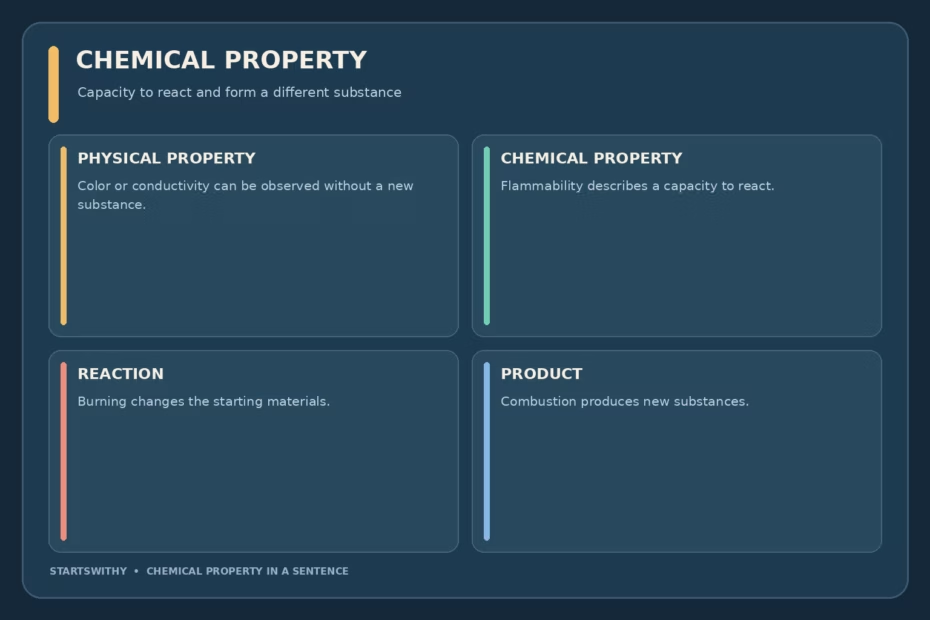
A chemical property describes whether and how a substance can change into a different substance through a chemical reaction. Flammability, acidity, and reactivity with oxygen are examples. To write a clear sentence, name the material, the condition or other substance involved, and the reaction or product that demonstrates the property.
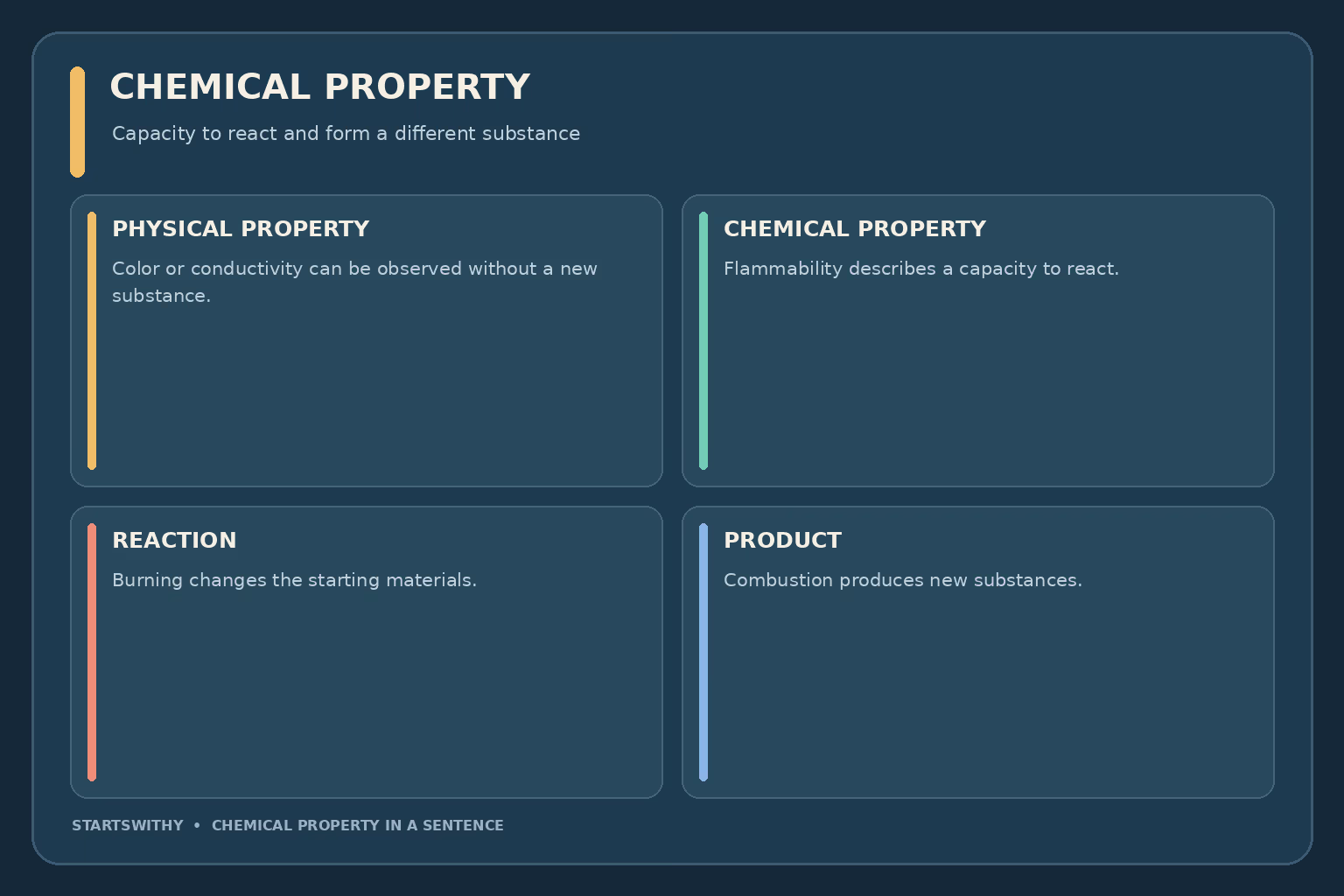
For example: Iron’s tendency to react with oxygen and moisture is a chemical property; rust is produced when that reaction occurs. The tendency to react is the property. The formation of rust is the chemical change. This distinction makes examples more precise than simply saying that an object “has a chemical property.”
Have you ever wondered how substances behave when they undergo a transformation? Chemical properties provide insight into the behavior of substances as they react with other materials. These properties describe how a substance interacts with other substances, leading to changes in its composition.
A chemical property is a characteristic of a substance that describes its ability to undergo a specific chemical change. It helps determine how a substance will react under certain conditions, providing valuable information about its behavior in various chemical reactions.
7 Examples Of Chemical Property Used In a Sentence For Kids
- Chemical property helps us understand how different substances react with each other.
- When a substance changes its color, it is showing a chemical property.
- Mixing vinegar and baking soda shows a fun chemical property.
- Chemical property can help us determine if a substance is harmful or safe.
- Chemical property can tell us if a substance will dissolve in water or not.
- Bubbles forming when two substances mix is an example of a chemical property.
- Chemical property helps scientists identify different types of matter.
14 Sentences with Chemical Property Examples
- In organic chemistry class, we learned about the chemical properties of different functional groups.
- The chemical properties of a compound determine how it will react in certain conditions.
- Understanding the chemical properties of elements is crucial for predicting their behavior in reactions.
- Lab experiments help students observe and analyze the chemical properties of substances.
- Learning the chemical properties of acids and bases is essential for understanding pH levels.
- Students often conduct experiments to test the chemical properties of various substances.
- The chemical properties of metals make them excellent conductors of electricity.
- Carbon’s unique chemical properties allow it to form a wide variety of organic compounds.
- Knowing the chemical properties of solvents helps researchers choose the right one for their experiments.
- The chemical properties of a compound can change when exposed to different temperatures.
- Studying the chemical properties of polymers is crucial for designing new materials for various applications.
- Understanding the chemical properties of gases is important for gas laws and calculations.
- The chemical properties of a substance can affect its toxicity and environmental impact.
- Organic chemistry lab assignments often focus on testing and observing the chemical properties of different compounds.
How To Use Chemical Property in Sentences?
To use a Chemical Property in a sentence, start by identifying the specific chemical characteristic you want to describe. Chemical properties are attributes that can only be observed during a chemical reaction or change in composition. Examples include flammability, reactivity, and toxicity.
When incorporating a chemical property into a sentence, make sure to provide context and clearly explain how the property is being demonstrated. For instance, you could say “The flammability of gasoline makes it a dangerous substance to handle near open flames.” In this sentence, the term “flammability” is being used to describe how easily gasoline can catch on fire.
It’s important to remember that chemical properties are different from physical properties, such as color or texture, which can be observed without changing the substance’s composition. Experimentation or research might be necessary to determine a substance’s chemical properties accurately.
When writing about chemical properties, always be precise and use scientific language to convey your meaning accurately. Avoid vague or general statements that may lead to confusion. Additionally, consider the audience you are addressing and tailor your explanation accordingly, using terms that are easily understood by your readers.
By following these guidelines, you can effectively incorporate chemical properties into your writing and communication to convey information about the behavior and characteristics of various substances.
Conclusion
In conclusion, understanding the chemical properties of substances is essential in predicting how they will react with other materials and in what conditions they will undergo certain changes. By examining sentences with chemical property, we can grasp the significance of these characteristics in determining the behavior of elements and compounds. For instance, “The metal’s ability to corrode easily is a result of its chemical property” demonstrates how a specific property can influence the reactivity of a substance.
Recognizing and utilizing the chemical properties of various substances is crucial in fields such as medicine, agriculture, and manufacturing, as it enables scientists and engineers to design effective and efficient processes and products. With a thorough understanding of sentences with chemical property, we can appreciate the diverse ways in which these properties shape the physical and chemical properties of matter, leading to the development of innovative technologies and materials.
Original Featured Illustration
The original featured illustration is retained with the source article.
Chemical Properties vs. Physical Properties
A physical property can be observed or measured without changing a substance’s chemical identity. Color, density, melting point, and electrical conductivity are common examples. A chemical property describes a substance’s ability to undergo a reaction that changes its chemical identity. Flammability, acidity, toxicity, and the tendency to oxidize are examples.
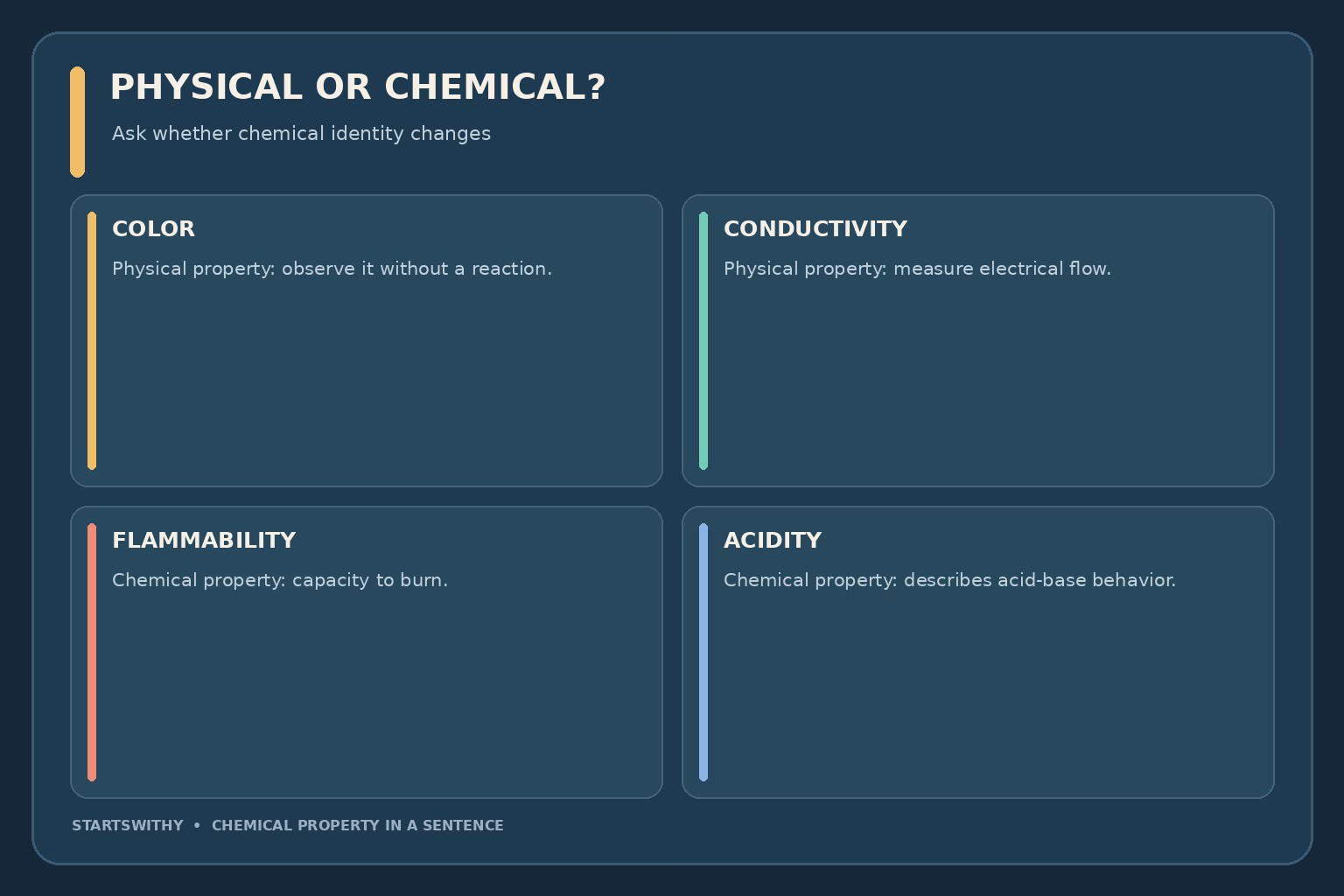
Ask: Does testing this feature require a chemical reaction that changes what the substance is? If not, it is generally a physical property. Measuring a metal’s conductivity does not turn the metal into another substance. Seeing that a liquid is clear does not tell you how it will react. By contrast, testing whether a material burns involves combustion, which forms new substances.
Do not confuse a chemical property with a chemical change. Flammability is the property; burning is the change. A substance may have a chemical property even when no reaction is happening at the moment.
Accurate Examples of Chemical Properties in Sentences
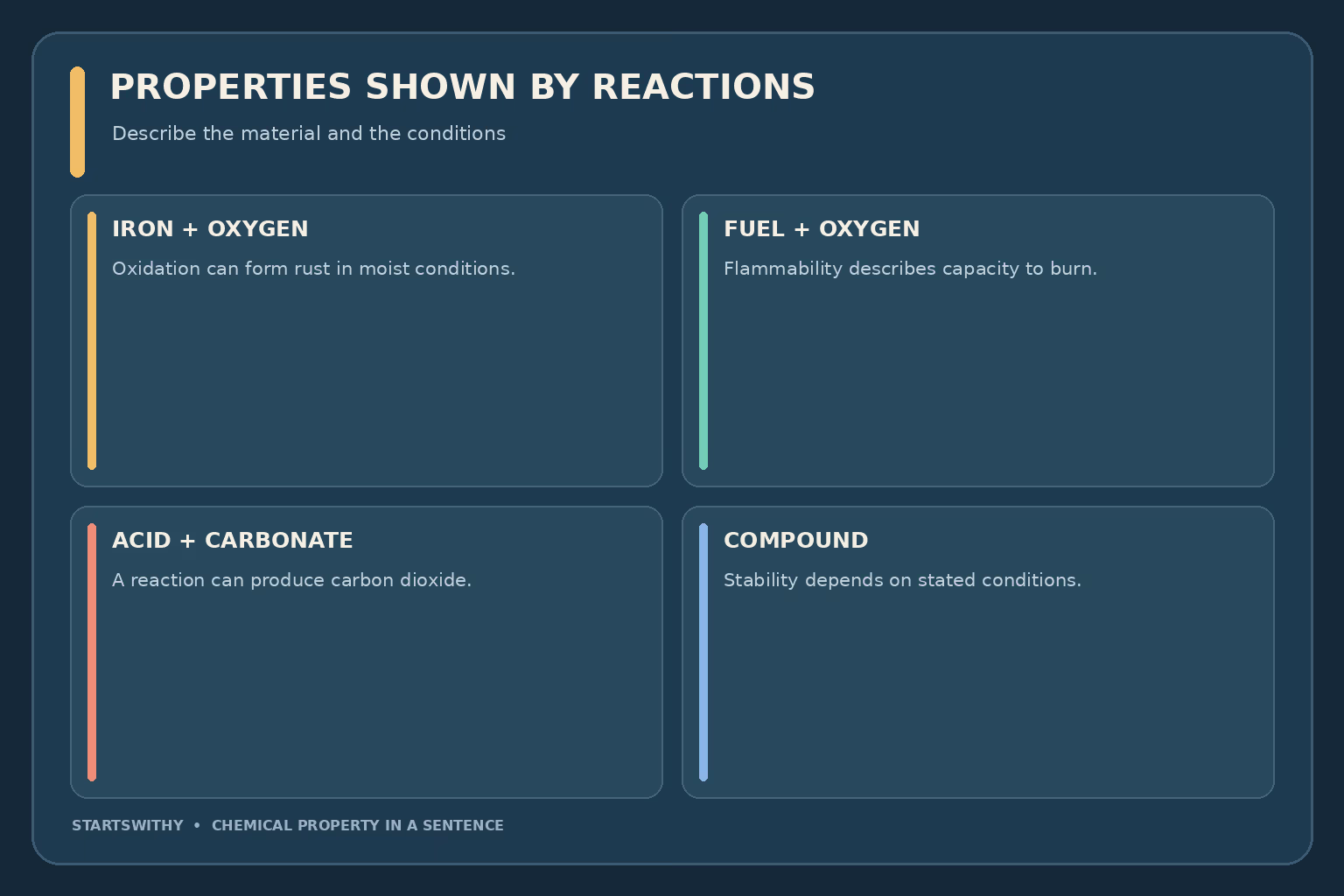
- Flammability: “The solvent’s flammability means it can ignite under suitable conditions, so its label gives important handling information.”
- Oxidation: “Iron’s tendency to react with oxygen and moisture is a chemical property that helps explain how rust forms.”
- Acid reactivity: “The acid’s reaction with the carbonate produced carbon dioxide, demonstrating a chemical property of the acid under those conditions.”
- Stability: “The compound’s chemical stability allows it to remain unchanged during the specified storage conditions.”
- Reactivity with water: “The compound’s reactivity with water must be considered when choosing compatible storage materials.”
- Toxicity: “The chemical’s toxicity is a property relevant to evaluating exposure and appropriate safety controls.”
These sentences avoid implying that a reaction always happens. Flammability describes the capacity to burn if suitable conditions are met; it does not mean a sample will spontaneously ignite. Reactivity depends on the particular substance, the other reactant, and conditions such as temperature or concentration. For laboratory or workplace decisions, use the substance’s safety documentation and established procedures rather than guessing from a general description.
How to Use “Chemical Property” in a Sentence
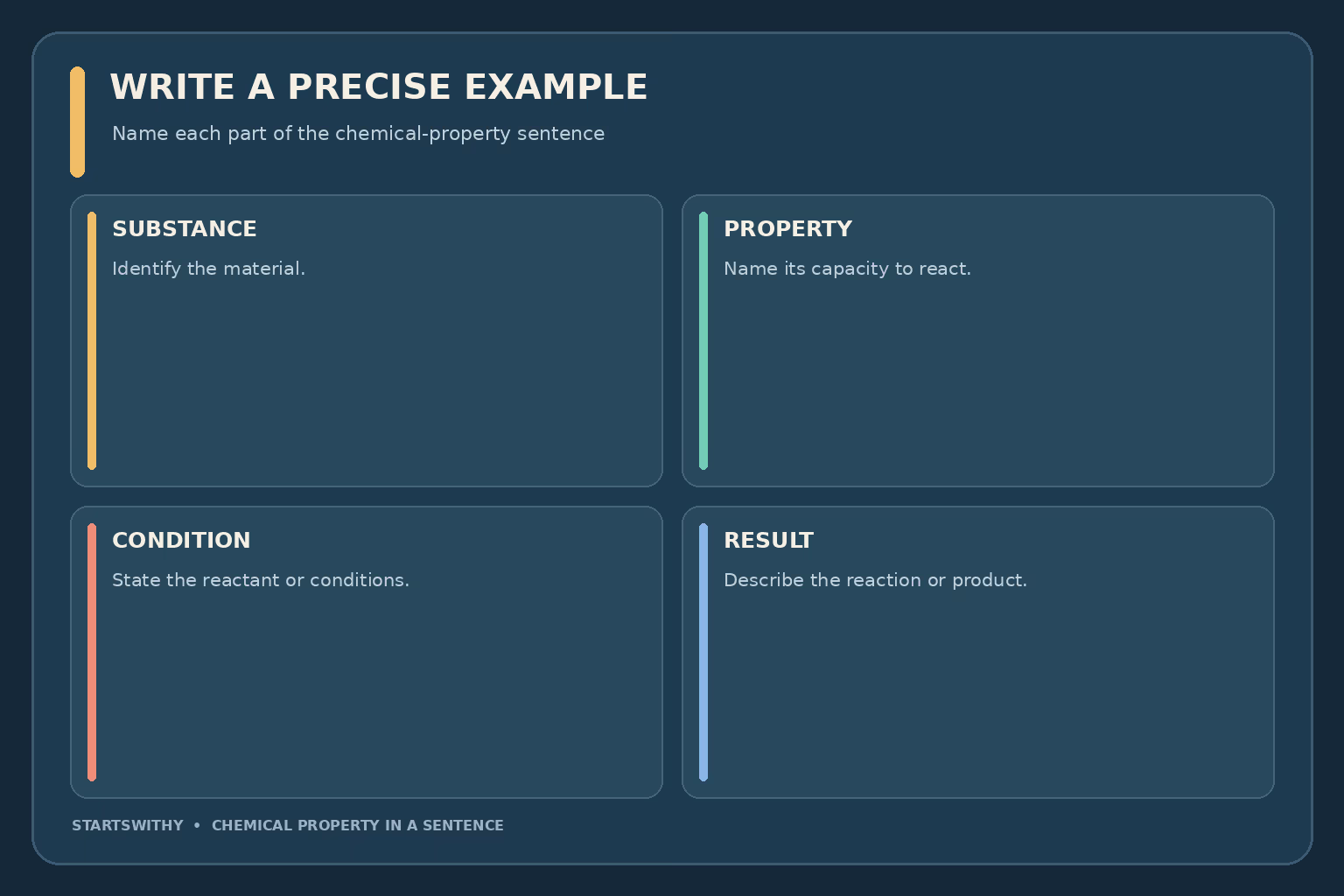
Use this simple structure:
[Substance] + [chemical property] + [condition or reactant] + [reaction or product].
Example: “Under moist conditions, iron’s reactivity with oxygen allows it to form rust.” Here, iron is the substance, reactivity is the chemical property, moisture and oxygen describe the conditions, and rust is the product.
For an observation-based sentence, report what happened and avoid overclaiming: “The sample released a gas when it reacted with the solution, an observation consistent with a chemical change.” Bubbles can also come from boiling or dissolved gas escaping, so bubbles alone do not prove a reaction. A color change can be a clue, but a physical change or mixing of colored materials can also alter appearance. Identify the substances and consider the full evidence.
Common Chemical-Property Examples to Correct
Some statements are often mislabeled in introductory explanations. Color and electrical conductivity are physical properties because observing or measuring them does not, by itself, change chemical identity. Solubility is also generally treated as a physical property: dissolving can spread particles through a solvent without converting them into a different chemical species. Specific systems may react while mixing, so describe the actual substances and process when that happens.
A color change or bubbles are observations, not chemical properties by themselves. They can accompany a reaction, but do not establish one without context. A more accurate sentence names the reacting materials and the evidence for new substances. Similarly, saying that a material’s “chemical properties change when temperature changes” is imprecise: temperature can affect whether or how quickly a reaction occurs, but the statement should identify the material, conditions, and reaction rather than imply that every property changes.
Short Chemical Property Sentence Examples
- The flammability of paper is a chemical property because combustion forms new substances.
- Iron’s reaction with oxygen is a chemical property that can lead to rust under suitable conditions.
- The compound’s acidity is a chemical property measured through its acid-base behavior.
- A substance’s reactivity with water is a chemical property that should be checked before storage.
- The compound’s stability is a chemical property described for stated temperature and storage conditions.
Sources for Further Reading
- OpenStax Chemistry 2e: Physical and Chemical Properties — compares chemical and physical properties and gives examples.
- IUPAC Gold Book: Chemical reaction — terminology for reactions and the interconversion of chemical species.
- NIST Chemistry WebBook — reference data for defined chemical species and reactions.