Chew on has two senses: to bite at food again and again, and, far more often, to think something over slowly. To use chew on in a sentence, give it an object: “Let me chew on the offer overnight.” The phrasal verb is inseparable, so the object always stays after on.
{W} at a glance
- Chew on is a transitive phrasal verb; its forms are chews on, chewed on and chewing on.
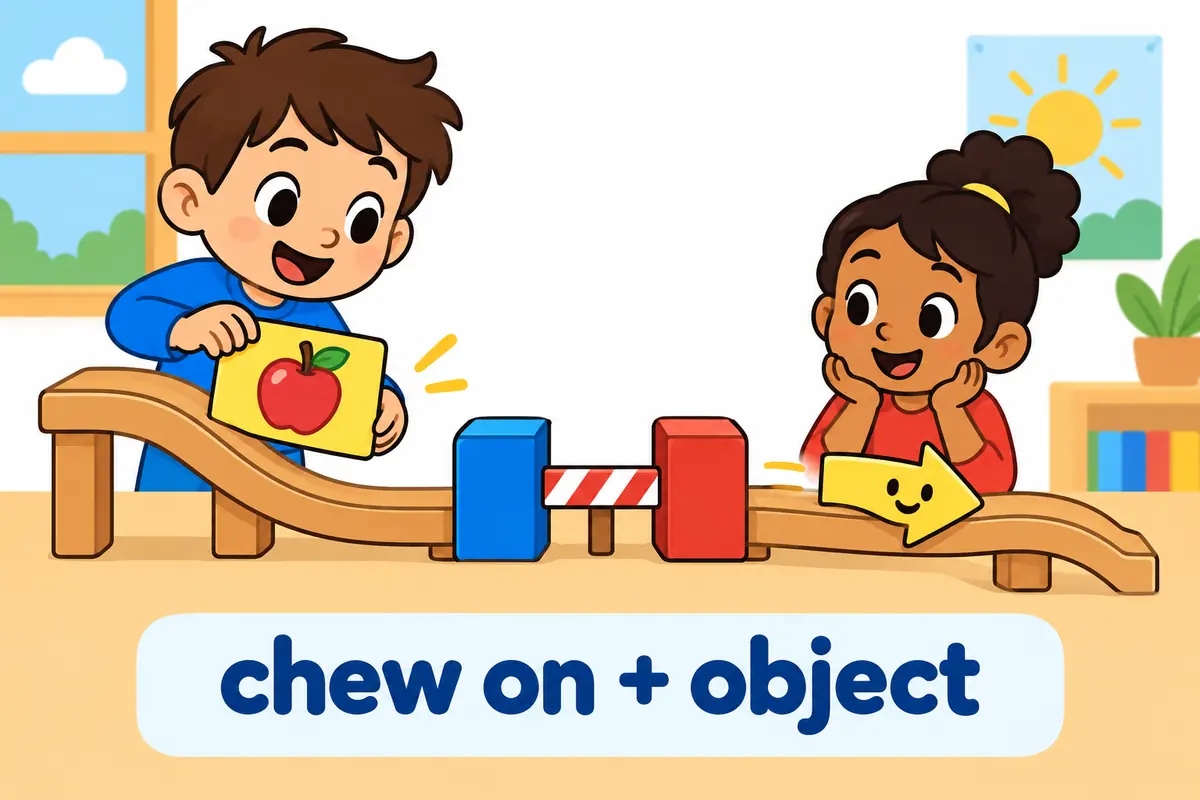
- The dominant pattern is chew on plus a noun, as in chew on a problem.
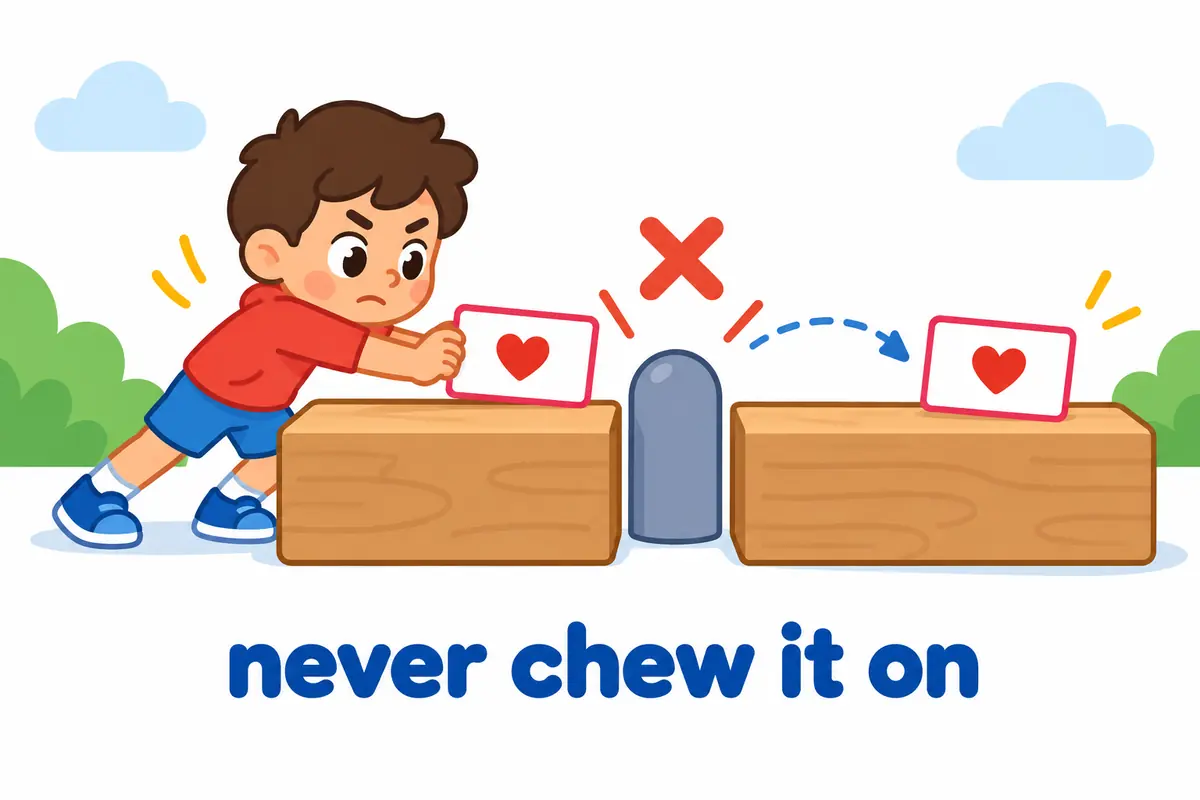
- The verb is inseparable: the object cannot slip between chew and on.
- The commonest figurative meaning is to consider something unhurriedly.
- The commonest learner error is splitting it, as in chew the idea on.
What does chew on mean?
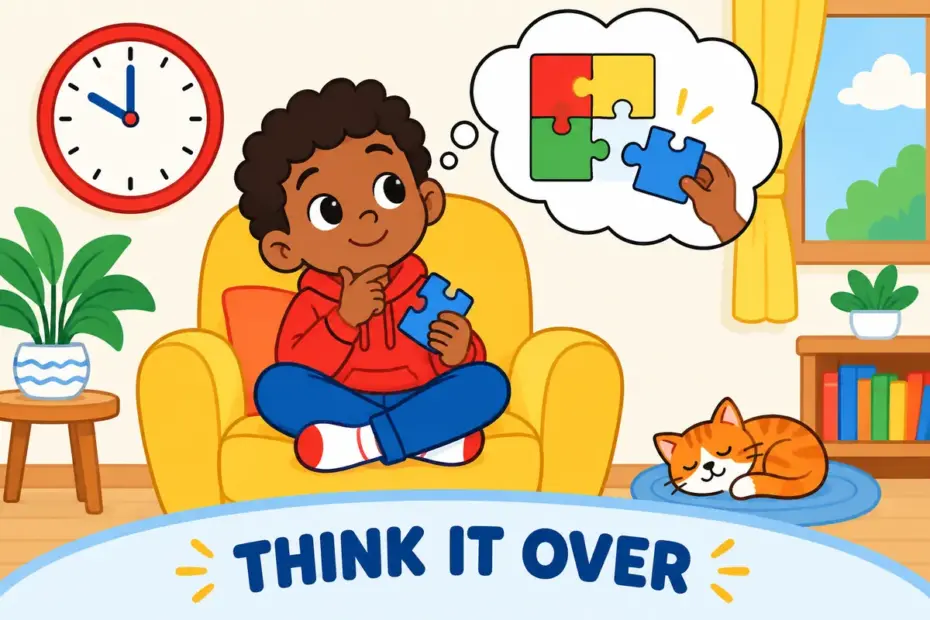
Chew on is a phrasal verb meaning either to bite repeatedly at something or to consider an idea slowly. The Cambridge Dictionary entry for chew on records both the literal and the figurative senses. The literal sense keeps the mouth busy; the figurative sense keeps the mind busy, and it is the one that dominates modern writing.
The two senses are easy to separate because the literal sense needs something edible and the figurative sense needs something thinkable. For a quick decision, consider a plan is plainer and shorter, because chew on implies that time is being taken.
| Sense | Plain meaning | Example sentence |
|---|---|---|
| Literal | Bite repeatedly at food or an object | The puppy chewed on a rubber bone all evening. |
| Figurative | Think something over slowly | She chewed on the idea for a week before replying. |
| Figurative, formal | Weigh a proposal before deciding | The board is still chewing on the merger. |
One limitation is worth stating. Chew on is not the right verb for a decision you must make at once, and it never means reject: a person who chews on a proposal is still open to it.
How do you use chew on in a sentence?
Chew on is inseparable, so the object stays after on in every ordinary sentence: you chew on a question, never chew a question on. The particle can still strand at the end of a question, as in what are you chewing on? A pronoun object always follows on too, so the natural phrasing is chew on it. For variety, mull over a choice carries the same unhurried sense.
| Pattern | Example | What it signals |
|---|---|---|
| chew on + noun | Let me chew on your suggestion. | the usual inseparable form |
| chew on + pronoun | I will chew on it tonight. | the object must follow on |
| stranded in a question | What are you chewing on? | the particle may end the clause |
| progressive | They are chewing on the terms. | an ongoing, unhurried decision |
| chew + object + on | Incorrect: chew the idea on | the split is not allowed here |
Chew on in a sentence: examples across contexts
| Context | Example sentence | Why this works |
|---|---|---|
| Conversation | Give me a day to chew on it. | uses the pronoun after on, the natural spoken form. |
| Workplace email | I would like to chew on your proposal before Friday. | softens a refusal into a considered pause. |
| News report | Lawmakers are still chewing on the budget cuts. | signals an unresolved but active debate. |
| Academic writing | The panel chewed on the findings for two sessions. | keeps the tone measured rather than dramatic. |
| Advice | Chew on the offer before you sign anything. | urges caution without sounding negative. |
| Customer service | We are chewing on the best way to fix this. | shows the problem is being worked on. |
| Literal, home | The baby chewed on a soft teething ring. | returns to the physical sense of biting. |
| Sports writing | The coach chewed on the loss over the weekend. | shows reflection rather than instant reaction. |
| Diary | I chewed on her words all night. | keeps the pause personal and unhurried. |
| Study group | We chewed on the problem together. | shows shared, unhurried thinking. |
| Project planning | Let us chew on the design before we commit. | asks for reflection before a firm choice. |
| Family talk | They chewed on the idea of moving abroad. | keeps a big decision gentle and slow. |
| Coaching | Take a day to chew on the feedback. | frames advice as reflection, not rejection. |
| Research | The team chewed on the anomaly for weeks. | shows prolonged, careful thought. |
| Interview prep | She chewed on the tricky question overnight. | shows calm preparation before answering. |
Other verbs hand the same object to a different particle: weigh the options suggests balancing, while bring on a change introduces something new rather than holding it in mind.
Chew on vs chew over
Chew on and chew over share the same figurative meaning, but they differ in grammar. chew over an idea is separable, so you may write chew it over, while chew on keeps the object after the particle. The two are close enough that a writer can ponder a question and reach for either.
| Attribute | Chew on | Chew over |
|---|---|---|
| Separability | Inseparable: chew on it | Separable: chew it over |
| Meaning | Consider slowly | Consider slowly, with more review |
| Register | Neutral and common in speech | Slightly more informal and idiom-like |
| Typical subject | A person or a group | A person or a group |
| What it implies | An unhurried personal pause | A fuller second look at details |
| Pronoun placement | chew on it | chew it over |
Verdict: pick chew on when the sentence should sound plain and inseparable, and chew over when you want the object to sit between the verb and the particle.
Chew on and its synonyms
Several verbs sit close to chew on, and each shifts the emphasis a little. Consider is the most neutral, ponder is more reflective, and deliberate is normally kept for groups that must reach a decision. The table below shows where each one belongs, because each choice signals a slightly different pace of thought.
| Word | Nuance | Example |
|---|---|---|
| think about | Neutral and quick | Think about the offer before Friday. |
| consider | Slightly formal and decision-focused | Consider the offer carefully. |
| ponder | Deeper and often written | He pondered the question for days. |
| mull over | Unhurried and detail-weighing | She mulled over the choice all evening. |
| deliberate | Formal, usually a group | The committee deliberated for an hour. |
| weigh | Balances two or more options | We weighed the risks before agreeing. |
Word forms and grammar of chew on
| Form | Part of speech | Example |
|---|---|---|
| chew on | base phrasal verb | They chew on every idea twice. |
| chews on | third-person singular | She chews on a decision for days. |
| chewed on | past tense and participle | We chewed on the offer all week. |
| chewing on | present participle | He is chewing on a reply. |
| chew it on | non-standard | Incorrect: chew the plan on. |
The related verb ruminate on a memory is the formal cousin of chew on, and it takes the same preposition without ever allowing a split.
Common mistakes with chew on
Chew the idea on before you answer.Chew on the idea before you answer. The verb is inseparable, so the object stays after on.I will chew on.I will chew on it. The verb is transitive and still needs an object.She chewed up on the problem.She chewed on the problem. Chew up means to destroy by biting, so the extra particle changes the meaning.He chewed on to accept the job.He chewed on the job offer. Chew on takes a noun object, not an infinitive.The board has chewed the merger on.The board has chewed on the merger. Never move the object ahead of the particle.
Practice using chew on
- Fill in the blank: ______ the plan for a day before you decide.
- Choose the better word: I am still (chewing on / chewing up) your advice.
- Correct the error: She chewed the question on for an hour.
- Build a sentence: Use chew on it to describe a job offer you have not answered.
- Spot the register: Which sentence belongs in a work email? A) Lemme chew on that a bit. B) I would like to chew on the proposal before replying.
- Fill in the blank: They ______ on the budget all week last month.
- Correct the error: What are you chew on?
- Build a sentence: Use chew on to describe a team thinking about a new idea before a meeting.
Answers
- Chew on — the imperative keeps the object after the inseparable particle.
- chewing on — the figurative sense is unhurried consideration, and chewing up would mean destroying.
- She chewed on the question for an hour. — the object must follow on in normal word order.
- Model answer: I will chew on it over the weekend. — the pronoun sits after on, as the inseparable verb requires.
- B — the email keeps a measured tone, while A is too casual for a proposal.
- chewed — the past time phrase last month requires the past tense.
- What are you chewing on? — the progressive form needs chewing, not chew.
- Model answer: The team will chew on the new idea before the meeting. — the noun idea follows on, as the inseparable verb requires.
The bottom line
To use chew on in a sentence, keep the verb inseparable and the object after on, as in chew on the offer. The figurative sense means to consider slowly, so it signals an unhurried pause rather than a refusal. For a quick decision choose consider, and for a fuller second look choose chew over. Chew on it belongs in speech and in measured workplace writing alike.
Frequently asked questions about chew on
Is chew on a separable phrasal verb?
No. Chew on is inseparable, so the object always follows the particle. You write chew on the offer or chew on it, never chew the offer on. Only the particle may strand at the end of a question, as in what are you chewing on.
What does chew on mean when it describes food?
In the literal sense, chew on means to bite repeatedly at something without swallowing it, such as a bone or a teething ring. The food sense needs a physical object, while the figurative sense needs an idea, plan or question as its object.
Should you write chew on or chew upon?
Chew on is the standard modern form in speech and everyday writing. Chew upon exists but sounds dated and bookish, so most editors avoid it unless the sentence deliberately imitates older prose. When in doubt, choose chew on for current usage.
Is chew on suitable for formal writing?
Chew on sits in the middle register. It is welcome in a workplace email or a measured news report, where it signals an unhurried decision, but a legal filing or academic paper usually prefers consider, weigh or deliberate for the same meaning.