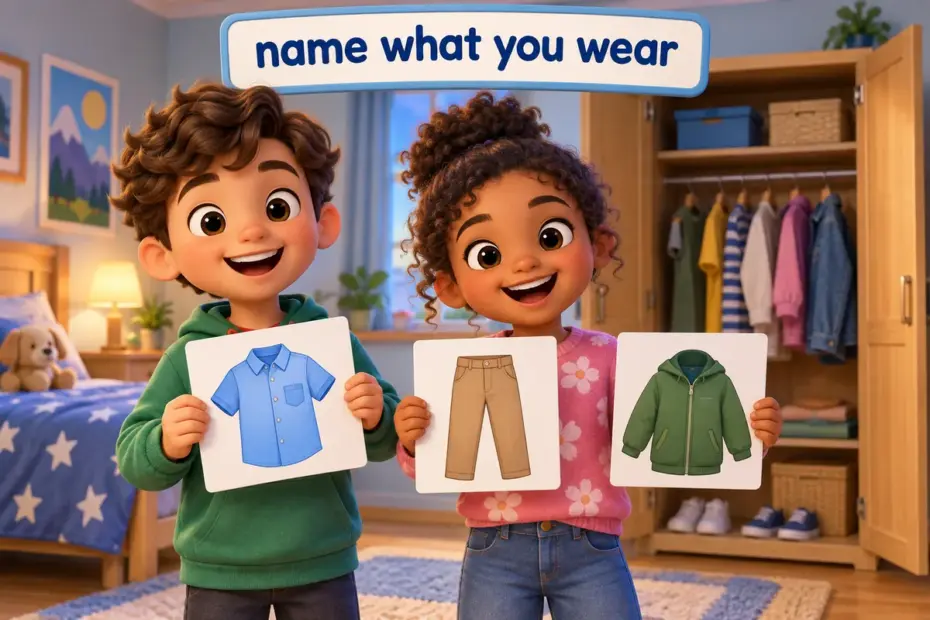
Clothes name for kids is the set of everyday words a child needs to talk about what they wear. Names such as shirt, trousers, socks and shoes cover most of a daily routine. A simple example is “I wear a blue shirt to school.”
Clothes name for kids at a glance
- Clothes words name the items a person wears.
- The items group by where they are worn: top, bottom, feet, head.
- The word clothes is always plural; a garment is one piece.
- Many items come in pairs, such as socks, shoes and gloves.
- The commonest mistake is writing close when the child means clothes.
What are clothes names for kids?
Clothes names are the everyday words for the things people wear, such as a shirt, a jacket, trousers, socks and shoes. Children meet these words when they dress, pack a bag or talk about the weather. Learning a small set at a time, grouped by where the item is worn, keeps the list manageable.
| Item | Worn where | When it is used |
|---|---|---|
| Shirt | Upper body | School, work or a visit |
| Jacket | Over the top | Cool or windy weather |
| Trousers | Lower body | Most everyday days |
| Socks | Feet, under shoes | Every day with shoes |
| Shoes | Feet | Walking outdoors |
| Hat | Head | Sun or cold |
Clothes names by group
Grouping the items by where they are worn makes the words far easier to remember. The table below lists twenty common pieces, the group each belongs to, and one plain example sentence a child can copy.
| Item | Group | Example sentence |
|---|---|---|
| Shirt | top | I wear a blue shirt to school. |
| T-shirt | top | A cotton T-shirt feels cool in summer. |
| Sweater | top | She pulls a warm sweater over her head. |
| Jacket | outer | He zips his jacket before the walk. |
| Coat | outer | A thick coat keeps out the cold wind. |
| Trousers | bottom | These trousers have two deep pockets. |
| Jeans | bottom | Blue jeans are strong and easy to wash. |
| Shorts | bottom | We wear shorts on hot days. |
| Skirt | bottom | Her skirt has a pattern of small flowers. |
| Dress | bottom | The dress reaches just below her knees. |
| Socks | feet | Warm socks keep the toes cosy. |
| Shoes | feet | These shoes fit snugly and lace up. |
| Boots | feet | Rain boots keep the feet dry in puddles. |
| Slippers | feet | He wears soft slippers at home. |
| Hat | head | A wide hat shades the face from the sun. |
| Cap | head | His cap has a short curved peak. |
| Scarf | accessory | A woollen scarf wraps around the neck. |
| Gloves | accessory | Gloves keep the fingers warm. |
| Belt | accessory | The belt holds the trousers at the waist. |
| Pajamas | night | We change into pajamas before bed. |
How do you teach clothes names to kids?
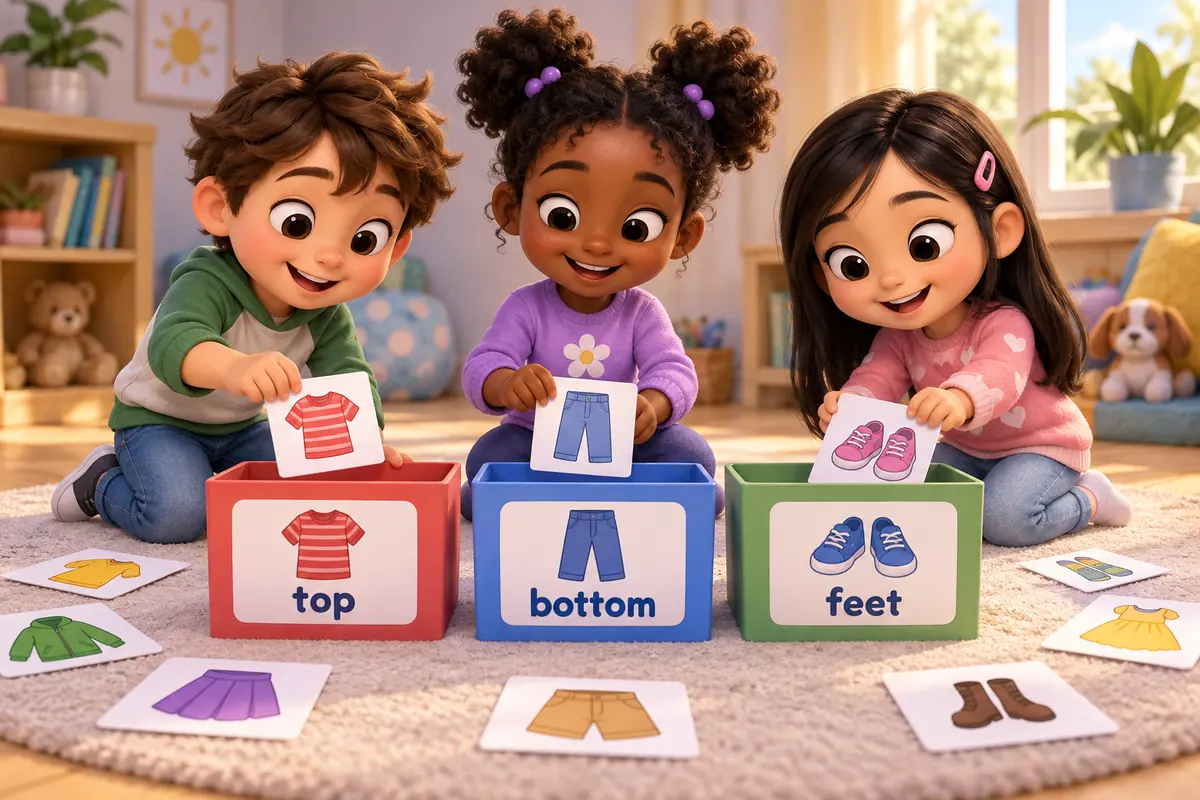
Teach the words in small groups and connect each one to a real action, such as putting on a sock or zipping a jacket. Say the word as the child handles the item, then ask the child to name it back. Grouping by body area gives every new word a place to live.
| Step | What to do | Why it works |
|---|---|---|
| Group them | Teach tops, then bottoms, then feet. | Small groups are easy to hold. |
| Use real items | Hold the sock as you say the word. | A real object fixes the meaning. |
| Act it out | Put on, take off, fold, hang up. | Actions add a verb to each noun. |
| Ask back | Ask the child to name the item. | Recall proves the word is learned. |
| Repeat daily | Use the words at dressing time. | Daily routine keeps them fresh. |
The describing words sit together under adjectives for clothes, and single describing words appear in adjective for clothes. Younger children can spell the labels with the help of a words for kids, while the mix-up between clothes and close is explained in close vs clothes.
Clothes compared with close
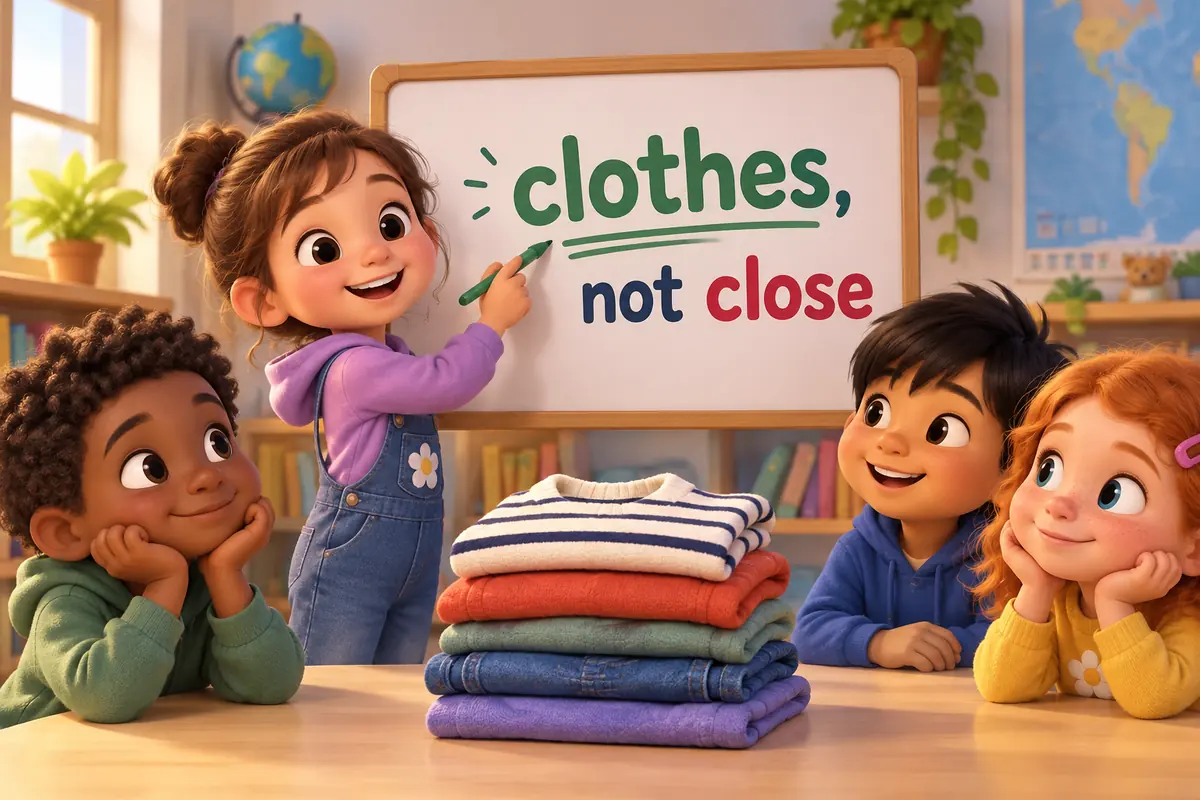
Clothes and close look almost the same on the page, but they mean very different things. Clothes is a plural noun for what we wear, while close is a verb or adjective meaning to shut, or near. Keeping the two apart stops a common spelling slip.
| Point | clothes | close |
|---|---|---|
| Meaning | the items we wear | to shut, or near |
| Part of speech | plural noun | verb or adjective |
| Example | Fold your clothes neatly. | Please close the door. |
| Number | always plural | no plural form |
| Memory hook | clothes has the letters for cloth | close has no th |
Which clothes suit which weather?
Linking each item to a kind of weather gives the new word a reason to exist. A child who knows why a coat is worn remembers the word far better than one who only sees a picture.
| Weather | Clothes to name | Why those items help |
|---|---|---|
| Hot and sunny | T-shirt, shorts, hat, sandals | Loose cotton and a hat keep the body cool. |
| Cold | Coat, sweater, scarf, gloves | Layers trap warmth close to the body. |
| Rainy | Raincoat, boots, hood | Waterproof layers keep the body dry. |
| Windy | Jacket, cap, long trousers | A snug jacket stops the wind biting. |
| Night | Pajamas, slippers, a warm robe | Soft night clothes help a child rest. |
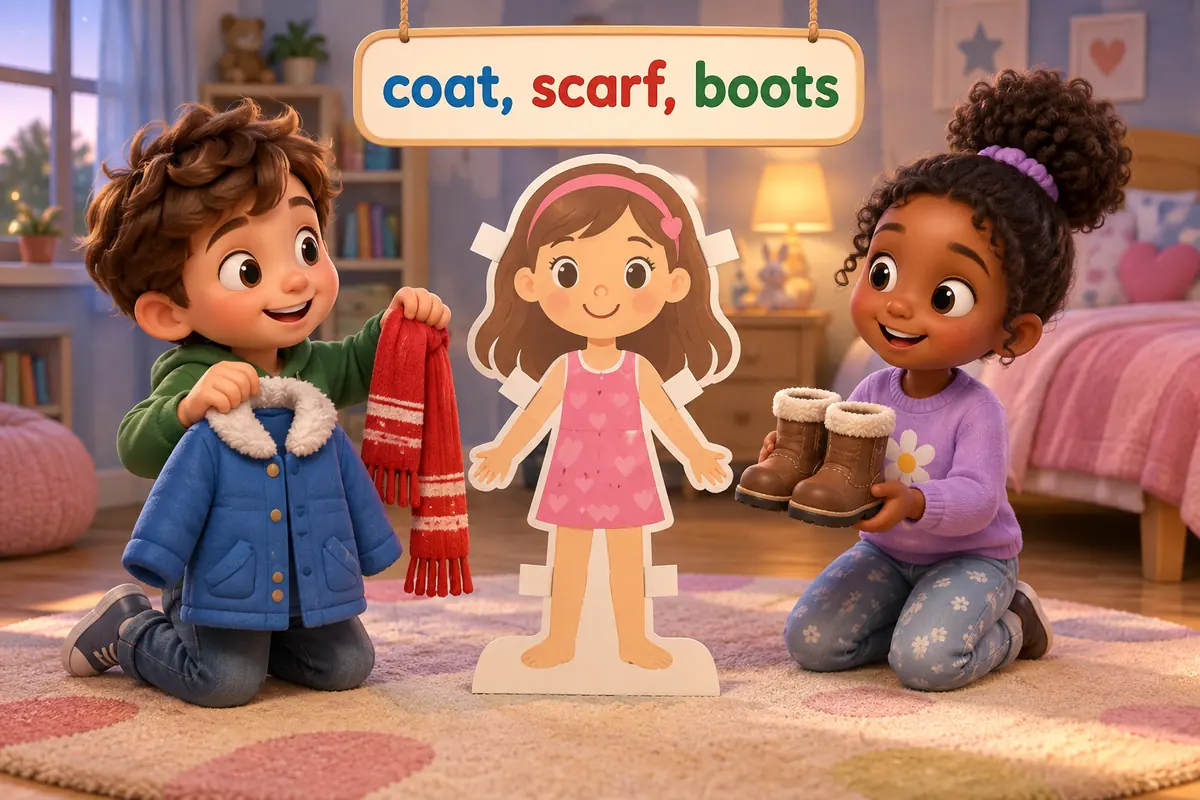
A child can practise the weather pairs by dressing a paper figure for each season, naming each item aloud as it is placed. The same words then appear when the child gets ready in the morning, which turns a lesson into a routine. Repeating the names at real dressing time is what makes them stick.
Words to describe clothes
A short set of describing words lets a child say more than the item name.
| Word | Part of speech | Example |
|---|---|---|
| woolly | adjective | A woolly sweater is warm in winter. |
| striped | adjective | He likes a striped shirt. |
| loose | adjective | Loose trousers feel cool in summer. |
| fold | verb | Fold the clothes before storing them. |
| wear | verb | I wear socks with my shoes. |
Common mistakes with clothes names
Most errors in clothes words share one of a few faults, and each fault has a quick fix.
- Incorrect:
I bought a new clothes.Correct: I bought a new shirt. Rule: clothes is plural and cannot take a. - Incorrect:
Please close your clothes in the cupboard.Correct: Please keep your clothes in the cupboard. Rule: close means shut, not store. - Incorrect:
My trouser is torn.Correct: My trousers are torn. Rule: trousers is a plural noun. - Incorrect:
These is my shoes.Correct: These are my shoes. Rule: a plural subject takes a plural verb. - Incorrect:
He wear a cap.Correct: He wears a cap. Rule: a third-person singular subject takes wears.
Practice with clothes names
Try each task, then read the reason beside the answer to check your thinking.
- Fill in the blank: I wear warm ________ on my feet.
- Fill in the blank: Please ________ the door before you leave.
- Choose the better word: fold your (clothes / close) neatly.
- Correct the error: I bought a new clothes.
- Build a group: name two items worn on the feet.
- Spot the pair: name two items that always come in pairs.
- Build a sentence: write one sentence describing a piece of clothing.
Answers
- socks, because socks are worn on the feet.
- close, because close is the verb meaning to shut.
- Clothes, because clothes is the plural noun for what we wear.
- I bought a new shirt: clothes is plural and cannot take a.
- Sample: socks and shoes are both worn on the feet.
- Sample: socks and shoes always come in pairs.
- Sample: A woolly scarf keeps my neck warm in winter.
The bottom line
Use clothes name for kids as a small set of everyday words grouped by where each item is worn. Teach a few names at a time with real clothing in your hands, and add describing words once the names are secure. Keep clothes and close apart, and the commonest spelling slip disappears.
Frequently asked questions about clothes names for kids
Why is clothes always plural?
Clothes treats the items we wear as a collection, so it has no singular form and takes a plural verb, as in the clothes are clean. To speak about one piece, use a specific word such as a shirt or a jacket. This is why a new clothes is never correct.
Which clothes names should a child learn first?
Begin with the items a child uses every day, such as shirt, trousers, socks, shoes and a jacket. These cover a full set of clothes and appear in the daily routine. Add weather words like hat, scarf and gloves once the basics are secure.
What is the difference between trousers and pants?
Both words name the same garment, but trousers is the common British term, while pants is the common American one. In British English, pants often means underwear instead, so the meaning shifts with the region. Teach the word used in the child’s own community first.
How can a child remember clothes and close?
Link clothes to the word cloth, since both share the same letters and both are about fabric. Close has no th, and it means shut or near. Saying the two worlds apart, cloth for clothes and shut for close, gives a child a clear hook.