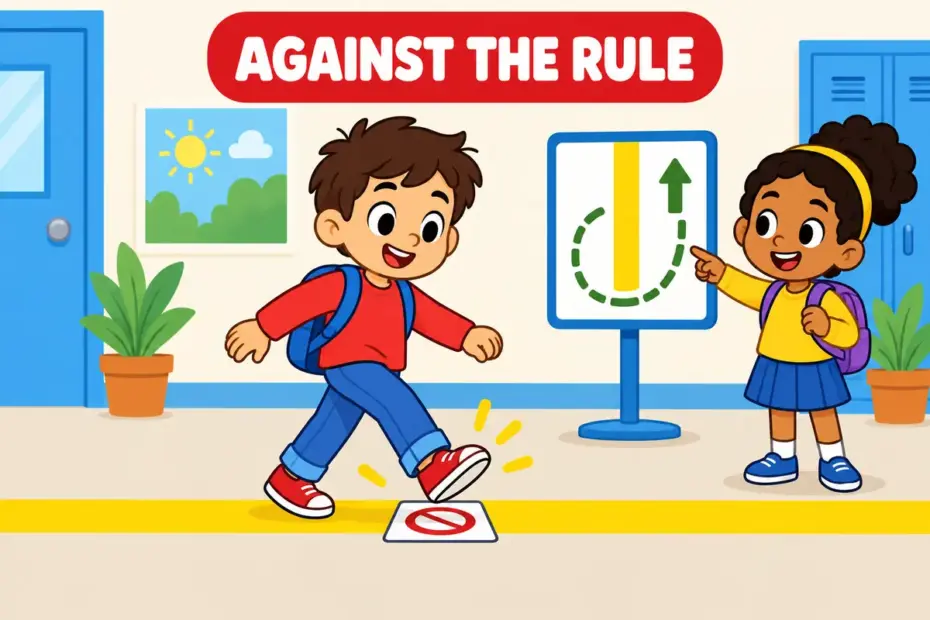
Contravene means to act against a law, rule or agreement. To use contravene in a sentence, make the rule the object and keep the sentence formal: “The firm contravened the safety regulations.” The verb is transitive, so it never needs a preposition between itself and the rule it breaks.
Contravene at a glance
- Contravene is a transitive verb meaning to break or go against a rule, law or order.
- Its forms are contravenes, contravened and contravening; the noun is contravention.
- The object is always a rule, law, treaty or decision, never a person.
- The standard frame is contravene plus a noun, or act in contravention of a rule.
- It belongs to legal, official and compliance writing rather than casual speech.
- The commonest error is adding a preposition, as in contravene to the rules.
What does contravene mean?
Contravene is a transitive verb meaning to act against or conflict with a law, rule, agreement or order. The Cambridge entry for contravene keeps that formal, impersonal sense at its centre: the word points at the rule that has been broken, not at the person who broke it. Ignoring a clause in a signed deal is to breach a contract, while continuing to violate the regulations after a warning is to contravene them a second time.
| Sense | Plain meaning | Example sentence |
|---|---|---|
| Break a law or rule | Act against an official requirement | The firm contravened the safety regulations. |
| Conflict with an order | Be inconsistent with a decision or treaty | The new policy contravenes the trade treaty. |
| Go against a code | Act contrary to an accepted standard | Such adverts contravene the industry code. |
One limitation is worth stating. Contravene is impersonal and formal, so it records the conflict between an action and a rule without judging the motive behind it. It does not imply open defiance, which belongs to flout, and it does not imply an encroachment on somebody’s rights, which belongs to infringe. In everyday speech, broke the rules is the plainer choice in almost every case.
How do you use contravene in a sentence?
The verb takes one object and no preposition, and that object is always the rule, law or decision being broken. The subject is the action, document, policy or person that breaks it, which is why contravene appears so often in passive and official constructions.
| Pattern | Example | What it signals |
|---|---|---|
| contravene + law or rule | The builder contravened the fire code. | The simplest form; the rule is the direct object. |
| contravene + agreement or order | The order contravenes the trade treaty. | Extends the verb from laws to formal agreements. |
| contravene + by + gerund | The paper contravened the ban by publishing early. | Names how the rule was broken. |
| be found to contravene + noun | The scheme was found to contravene planning rules. | Common in tribunals and official findings. |
| in contravention of + noun | This acts in contravention of the policy. | The noun form, used to describe an ongoing state. |
Two rules follow from that structure. First, the object must name a rule, right or agreement, so you contravene a regulation but never a person; the verb for defying a person is disobey. Second, contravene is transitive throughout, so there is no preposition between the verb and its object, and the passive form is unusual because the rule, not the actor, would become the subject.
The passive does appear in official registers, as in the regulation was contravened, but it turns the rule into the subject and hides whoever broke it. That hidden actor is often the whole point of using the verb, because a report can record a breach without naming anyone responsible. Learners writing formal answers should keep the active voice unless the aim is deliberately to avoid assigning blame.
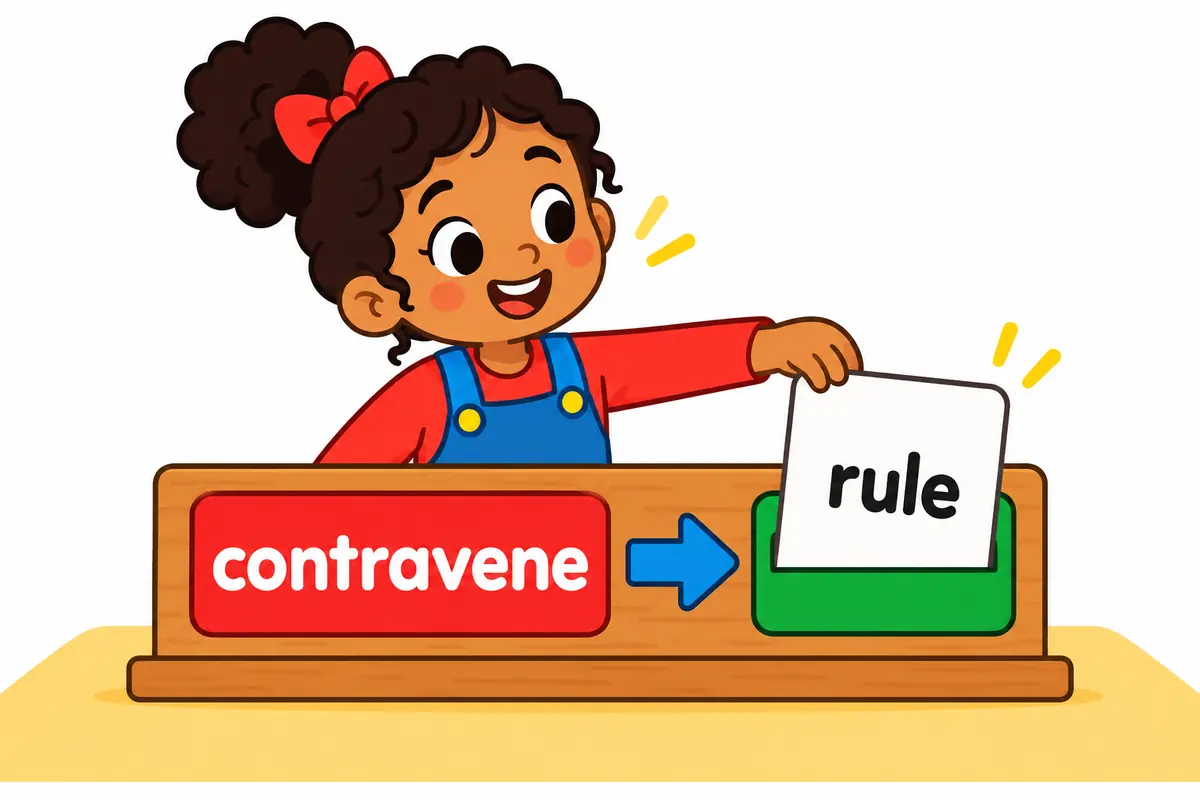
Contravene in a sentence: examples across contexts
The verb stays formal wherever it appears, but the surrounding sentence changes with the setting. Each row names the context and the reason the wording fits.
| Context | Example sentence | Why this works |
|---|---|---|
| Classroom | Running in the corridor contravenes the school rules. | A plain rule makes the formal verb easy to see. |
| Workplace email | Please confirm that the new schedule does not contravene the union agreement. | An official check suits the verb’s neutral tone. |
| Legal writing | The tribunal held that the dismissal contravened the regulations. | A tribunal finding is the verb’s natural home. |
| News report | Investigators say the plant contravened its operating licence. | Names an authority and the rule it cites. |
| Government policy | The draft law may contravene the treaty on air quality. | Treaties are a common formal object. |
| Academic writing | The method appears to contravene standard ethical guidelines. | Hedged with appears to, as research writing prefers. |
| Compliance memo | Any invoice split to avoid approval limits contravenes the policy. | The subject is a practice, not a named person. |
| Conversation | Parking there contravenes the rules, even for a minute. | Keeps the verb but drops the surrounding formality. |
| Sports writing | The ruling contravened the league’s own charter. | An institution is shown to breach its own rule. |
| Technical manual | Operating the valve this way contravenes the safety procedure. | Instructions turn procedures into objects. |
Contravene vs flout
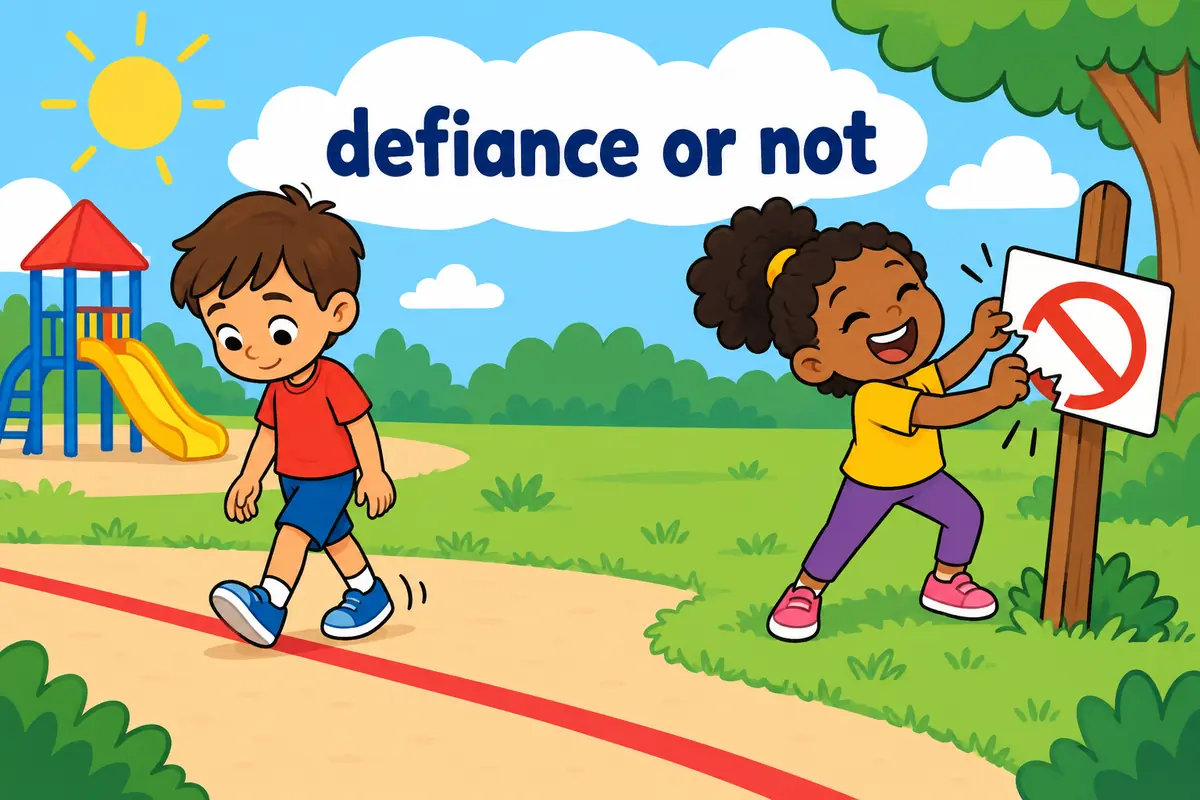
The nearest rival is flout, which also means to break a rule, but flout adds open, scornful defiance. To flout a ban is to treat it with contempt, while to contravene a ban is simply to act against it, perhaps by accident. A party that can infringe a right is encroaching on something owed to another, which is a third, narrower idea again.
| Attribute | contravene | flout | breach |
|---|---|---|---|
| Core meaning | Act against a rule or order | Openly disregard a rule | Break a term or duty |
| Defiance implied | No | Yes, deliberate | No |
| Usual object | A law, treaty, regulation or ruling | A ban, rule or convention | A contract, duty or border |
| Typical subject | A policy, action or firm | A person or body that knows the rule | A party to an agreement |
| Register | Formal and legal | Formal and disapproving | Legal and commercial |
| Emotional weight | Neutral and factual | Critical and vivid | Neutral and technical |
Verdict: choose contravene for a neutral statement that an action conflicts with a rule, flout when the point is defiant disrespect, and breach when the broken thing is a specific term of a contract or duty.
Word forms and grammar of contravene
The verb inflects regularly and supplies a common abstract noun, contravention. Its root also appears in the everyday verb contradict, which means to state the opposite, and in a contract, a formal agreement that contravention so often concerns.
| Form | Part of speech | Example |
|---|---|---|
| contravene | verb, base | They must not contravene the code. |
| contravenes | third person singular | The plan contravenes local planning law. |
| contravened | past and past participle | The council contravened its own policy. |
| contravening | present participle | Contravening the treaty carries a penalty. |
| contravention | noun | In contravention of the order, work continued. |
| contraventional | adjective, rare | Legal drafts occasionally use contraventional offences. |
Common mistakes with contravene
- Incorrect:
The player contravened the referee.Correct: The player contravened the referee’s ruling. Rule: The object is the rule or order, never the person who made it; for a person, use disobey. - Incorrect:
The company contravened to the regulations.Correct: The company contravened the regulations. Rule: Contravene is transitive and takes no preposition before its object. - Incorrect:
The new rule was contravened by the firm’s actions.Correct: The firm’s actions contravened the new rule. Rule: Prefer the active form, because a rule is contravened rather than doing the contravening. - Incorrect:
She contravened her promise to her friend.Correct: She broke her promise to her friend. Rule: Contravene suits formal rules and agreements, not personal promises. - Incorrect:
These actions are contravene the code.Correct: These actions contravene the code. Rule: Contravene is a verb, so it needs no form of be before it. - Incorrect:
He contravened the meeting by arriving late.Correct: He contravened the attendance rule by arriving late. Rule: Name the specific rule the action conflicts with.
Practice using contravene
Work through the seven items, then read the reason beside each answer rather than only the key.
- Fill the gap: The overflow pipe ______ the building code.
- Choose the better word: The protester openly (contravened / flouted) the ban to make a point.
- Correct the error: The staff contravened against the safety rules.
- Build a sentence: use contravene with a delivery company and a parking rule.
- Spot the register: which belongs in a legal submission, the sale contravened the order, or the sale was against the order big time?
- Rewrite with the noun: The works contravened the permit. Use contravention instead.
- Choose the object: can you contravene a person, a policy or a promise? Explain in one line.
Answers
- contravenes: the singular subject pipe takes the third person form.
- flouted: open defiance is the point, which is exactly what flout adds.
- The staff contravened the safety rules: the verb takes no preposition.
- Model answer: The delivery company contravened the parking rule outside the depot.
- The sale contravened the order: a legal submission avoids slang and intensifiers.
- The works were in contravention of the permit: the noun phrase needs in.
- A policy: contravene takes a rule or agreement, not a person, and a personal promise needs broke or breached.
The bottom line
Use contravene in a sentence when an action or policy conflicts with a law, rule or formal agreement, and make that rule the object. The two nuances that decide most sentences are these: the verb implies no defiance, unlike flout, and it is transitive, so it takes no preposition before the rule. Where the breach concerns a person overstepping their authority rather than a rule being broken, overstep is often the more precise verb.
Frequently asked questions about contravene
Is contravene a formal word?
Yes. Contravene belongs to legal, official and compliance writing, where rules are named precisely. In ordinary conversation most people say broke the rules or went against the rules. Using contravene at the dinner table would sound stiff, but an auditor or a tribunal would reach for it without hesitation.
Can you contravene a person?
No. Contravene takes a rule, law, treaty or decision as its object, never a person. You contravene a ruling, not the judge who issued it. When the object is a person, English uses disobey or defy, as in the player disobeyed the coach rather than contravened the coach.
What is the difference between contravene and flout?
Contravene is neutral and factual: an action conflicts with a rule, perhaps by accident. Flout adds open, scornful defiance, so it implies the person knew the rule and mocked it. A factory may contravene a discharge limit through an oversight, but it flouts the limit only when it proudly ignores the warning.
What is the noun form of contravene?
The noun is contravention, as in the works were in contravention of the permit. It usually appears in the fixed phrase in contravention of. The adjective contraventional exists in legal drafting but is rare outside it, so learners can safely rely on contravene and contravention alone.