Culture in a Sentence: Meaning and Examples
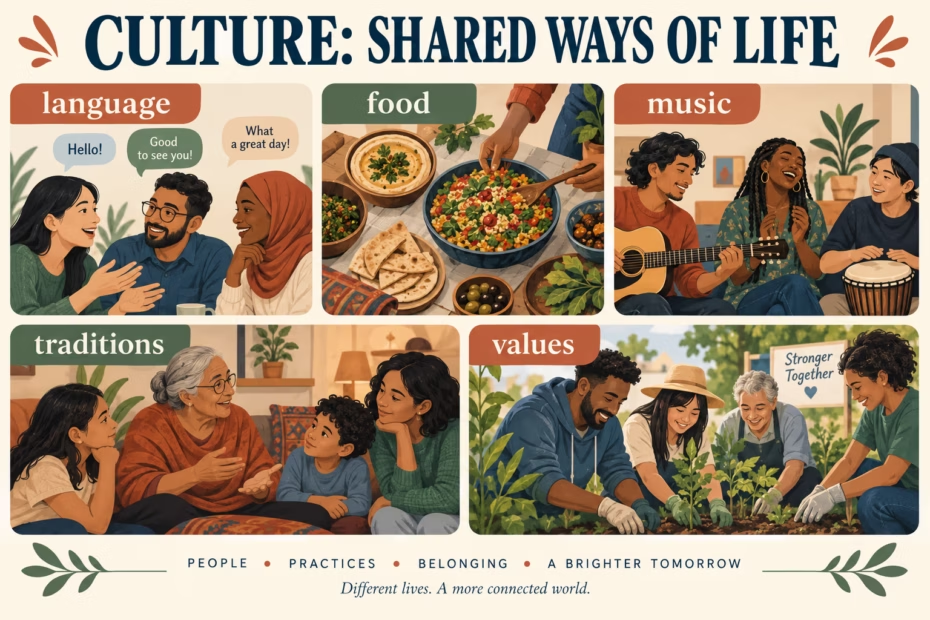
Culture names the shared ways of life, customs, beliefs, arts, and values of a group, place, or organization. For example: The neighborhood’s culture is reflected in its annual street fair. The word is usually a noun; cultural is the adjective, as in cultural traditions.
Culture can refer to a whole society’s way of life, a community’s practices, or the habits and values that shape a particular institution. It does not mean that every person in a group behaves alike. A clear sentence names the group or setting and gives a specific practice, value, or custom as context.

What does culture mean?
Culture has several closely related uses. In its broad social sense, it means a group’s learned and shared ways of living: language, food, music, stories, celebrations, values, and everyday expectations. The Cambridge Dictionary describes it as the way of life, especially the customs and beliefs, of a group at a particular time. UNESCO’s intercultural dialogue glossary also describes culture broadly, including lifestyles, ways of living together, value systems, traditions, and beliefs.
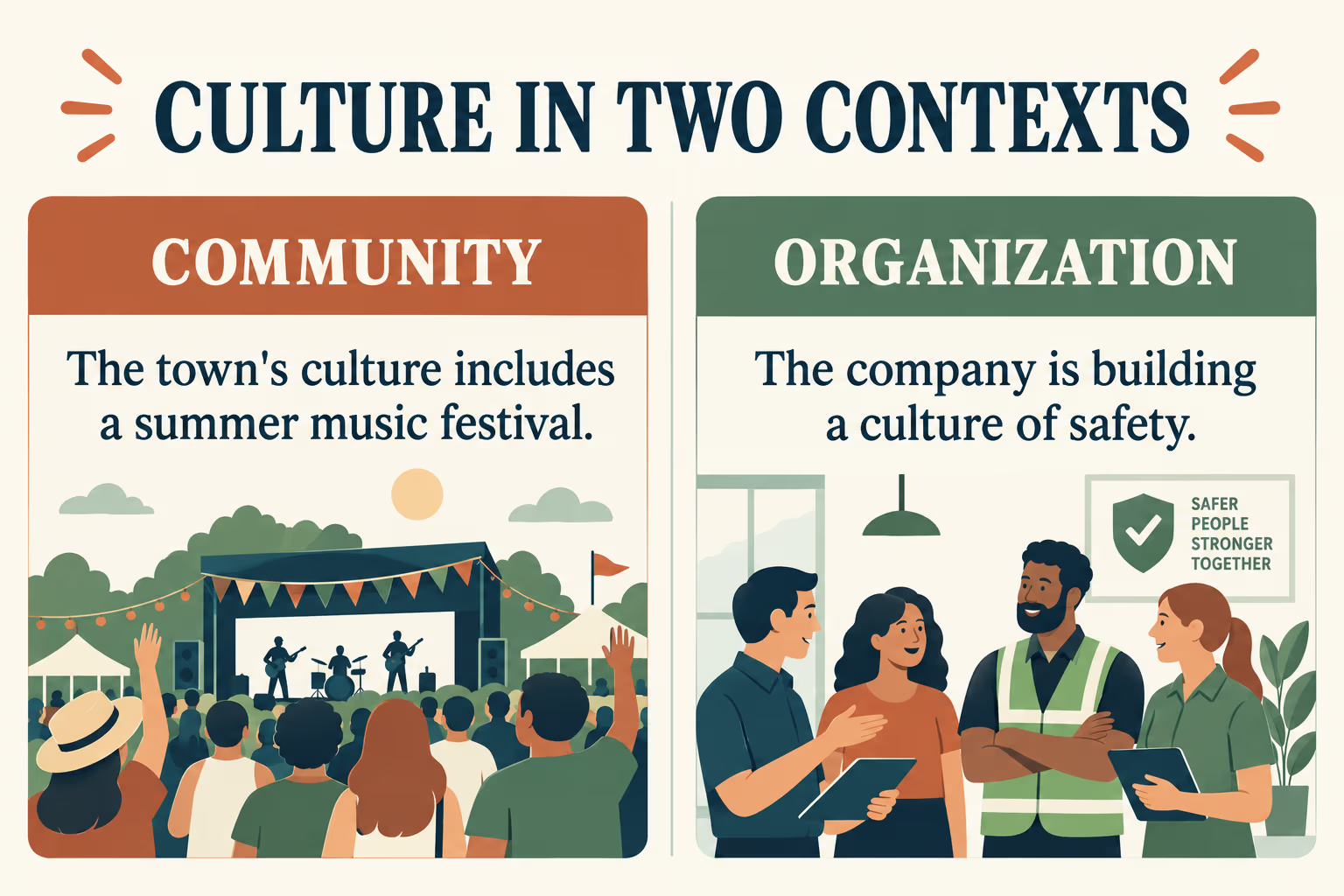
The word can also describe the recognizable habits and attitudes of a smaller group or institution. In a culture of safety, for example, culture refers to shared workplace expectations and practices that make safety a priority. It can also mean artistic or intellectual activity, as in the city’s cultural life. The intended meaning becomes clear from the words around it.
Examples of culture in a sentence
- The town’s culture includes a summer music festival and a weekly farmers’ market.
- Our class learned how stories can carry cultural knowledge between generations.
- The museum’s new exhibit explores the culture of the port city.
- Respectful visitors ask questions before photographing a sacred cultural object.
- The school is building a culture of curiosity by giving students time to investigate their questions.
- Food is one way families share culture, but it is only one part of a much larger way of life.
- Her research compares workplace culture at two hospitals.
- The festival celebrates the region’s music, crafts, and cultural traditions.
- Because cultures change over time, no single custom represents every member of a community.
These examples show why a detail helps. Culture matters is grammatical but general; The club’s culture encourages new members to share ideas tells the reader which group and what feature you mean.
Culture or cultural?
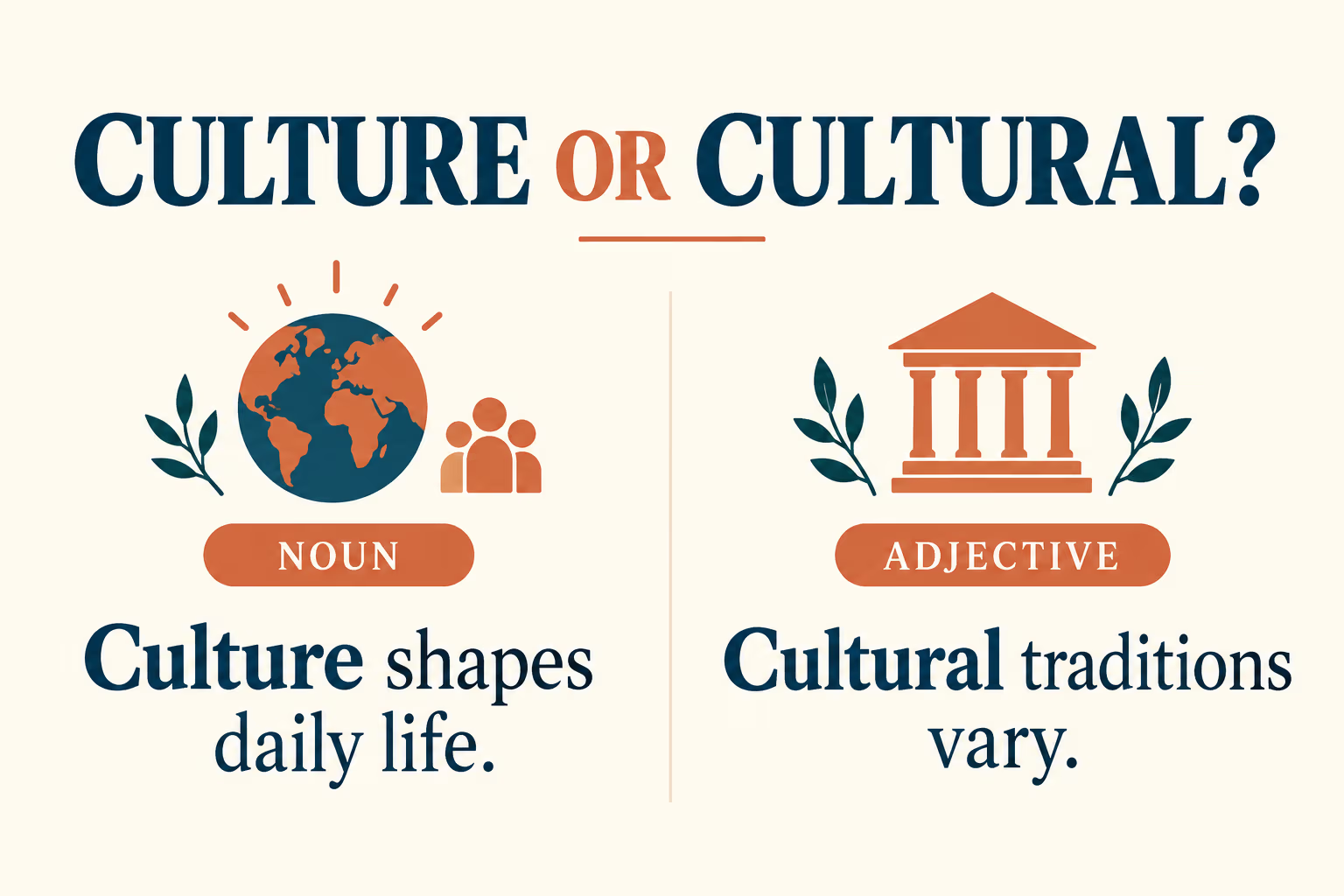
Culture is a noun: it names a way of life, a group’s customs, or an organization’s shared practices. Cultural is an adjective that describes something connected with culture.
- Noun: The community’s culture is expressed through its stories and celebrations.
- Adjective: The library hosts a cultural festival each spring.
- Noun: A strong culture of mentorship helps new employees learn.
- Adjective: The team discussed cultural differences in communication.
Use culture after a possessive or article when you mean a particular group’s way of life: a culture, the culture, our culture. Use cultural before a noun such as heritage, practice, event, or exchange. The Cambridge Dictionary entry for cultural identifies it as the adjective form.
Grammar and common patterns
When culture means a society’s general way of life, it is often uncountable: Culture influences how people communicate. It can also be countable when referring to a distinct group or form: The region is home to many cultures. This countable and uncountable use is reflected in Cambridge’s dictionary entry.
- Culture of + noun: The center promotes a culture of lifelong learning.
- Culture in + place or group: The documentary examines culture in a changing city.
- Culture and + related idea: The course studies language and culture together.
- Cultural + noun: The archive preserves cultural records and oral histories.
In most broad statements, treat culture as singular: Culture is shaped by history and The company’s culture has changed. When you mean separate ways of life, use the plural cultures: Students compared several cultures. Avoid saying that a culture is uniform or unchanging. People may share practices while interpreting, adapting, or participating in them differently.
How to write a clear culture sentence
- Name the setting: identify the community, school, workplace, region, or historical period.
- Choose a concrete feature: mention a practice, value, tradition, art form, or shared expectation.
- Explain the connection: say how that feature expresses, shapes, or changes the culture.
For example, “The neighborhood’s culture is reflected in its annual street fair” names a community, gives a specific event, and explains how the event relates to shared local life. For a workplace meaning, a sentence such as “The clinic’s culture of careful handoffs helps staff share patient information” makes the setting and practice specific.
Frequently asked questions
Is culture singular or plural?
Culture is singular; use cultures for more than one distinct group or system. It can be countable or uncountable depending on meaning: culture is important but many cultures are represented.
Should I write “culture is” or “culture are”?
Use culture is when culture is the singular subject. Use cultures are when the plural noun refers to multiple cultures.
What is a simple sentence with culture?
Culture shapes the way people celebrate important events. A more specific sentence is: The town’s culture includes a yearly lantern festival.
Can culture describe a workplace?
Yes. Workplace culture means shared habits, expectations, and values within an organization. For example: The studio’s culture encourages people to ask for feedback.
Does culture mean only traditions?
No. Traditions are one part of culture. Depending on context, culture can also include language, arts, values, social practices, institutions, and ways of living together.
How is “culture” different from “cultural”?
Culture is a noun; cultural is an adjective. Write the culture of the region but the region’s cultural history.
Sources and further reading
- Cambridge Dictionary: culture — meaning and countable/uncountable usage.
- Cambridge Dictionary: cultural — adjective meaning and examples.
- UNESCO Intercultural Dialogue Glossary: culture — a broad account of culture’s social, artistic, and everyday dimensions.
Culture can be described as the unique way of life and values shared by a group of people. It includes customs, language, traditions, beliefs, arts, and social norms that are passed down from generation to generation.
In today’s diverse world, cultural differences play a significant role in shaping societies and individuals. Understanding various cultures helps foster respect, empathy, and communication among communities, leading to a more interconnected and inclusive global environment.
7 Examples Of Culture Used In a Sentence For Kids
- Culture includes traditions, dance, music, and food.
- People from different countries have their own unique culture.
- It’s fun to learn about the culture of other countries.
- We celebrate festivals to honor our culture.
- Culture teaches us about our heritage and history.
- India is known for its rich and diverse culture.
- Let’s dress up in traditional clothes to show our love for our culture!
14 Sentences with Culture Examples
- College students in India often participate in various cultural events to showcase their talents and celebrate culture.
- Culture plays a significant role in shaping the attitudes and behaviors of college students in India.
- It is essential for college students to respect diversity and appreciate different aspects of Indian culture.
- College campuses in India are vibrant with cultural festivals and activities that promote creativity and unity among students.
- Through cultural exchange programs, college students in India get to learn about different traditions and customs from around the world.
- College clubs and societies often organize events to promote cultural awareness and understanding among students.
- Engaging in cultural activities allows college students in India to develop a sense of belonging and pride in their heritage.
- College students have the opportunity to participate in workshops and seminars to deepen their understanding of culture.
- College campuses serve as platforms for students to express themselves creatively and explore various forms of cultural expressions.
- By studying different art forms, music, and dance, college students in India gain a deeper appreciation for their rich culture.
- Many educational institutions in India incorporate cultural studies into their curriculum to help students understand the societal values and norms.
- Culture clubs on college campuses provide students with a platform to share their traditions and customs with peers.
- College students often engage in discussions on culture to gain insights into the diverse perspectives that exist within Indian society.
- Attending cultural events and festivals is a great way for college students to unwind and embrace the vibrant traditions of India.
How To Use Culture in Sentences?
To efficiently use the word Culture in a sentence, consider the following guidelines:
-
Understand the definition of Culture. Culture refers to the beliefs, customs, arts, etc., of a particular society, group, place, or time. It can also include the attitudes and behaviors of a particular social group.
-
Choose a context-appropriate sentence. To effectively incorporate Culture into your sentence, consider the context in which you are using it. For example, you could discuss how culture influences people’s behavior, traditions, or values.
-
Use Culture as the main subject or object in the sentence. This means that Culture should be the focal point of the sentence and should be clear to the reader how it is being used.
-
Be clear and concise. Make sure your sentence is easy to understand and conveys your intended meaning clearly. Avoid using overly complex language or convoluted sentence structures.
For example, you could say: “The Japanese culture values respect and harmony in all aspects of life.” In this sentence, Culture is the subject, and it clearly conveys how a specific culture prioritizes certain values.
By following these guidelines, you can effectively incorporate the word Culture into your sentences and communicate your ideas clearly and effectively.
Conclusion
In conclusion, the importance of understanding and respecting different cultures cannot be overstated. By being open to diverse cultural experiences, individuals can broaden their perspectives, foster mutual respect, and promote harmony in a global society. Being mindful of cultural differences allows for meaningful interactions, promotes inclusivity, and enables the celebration of our rich and varied heritage.
Ultimately, embracing cultural diversity not only enriches our lives but also cultivates a sense of unity and understanding among all individuals. By valuing and learning from different cultures, we can break down barriers, challenge stereotypes, and work towards building a more harmonious and interconnected world where the beauty of each culture is celebrated and respected.