Curt in a Sentence: Meaning, Examples & Practice
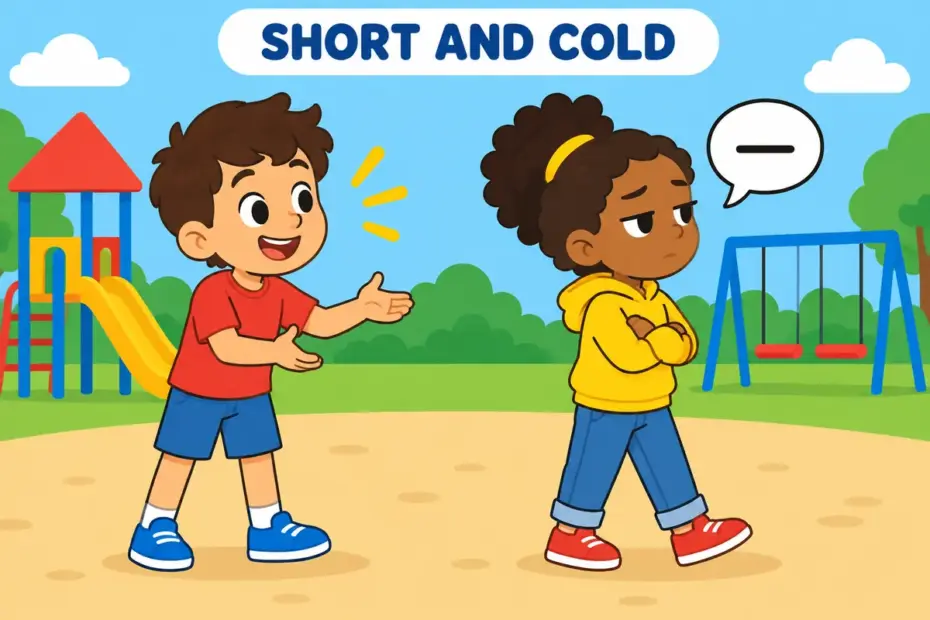
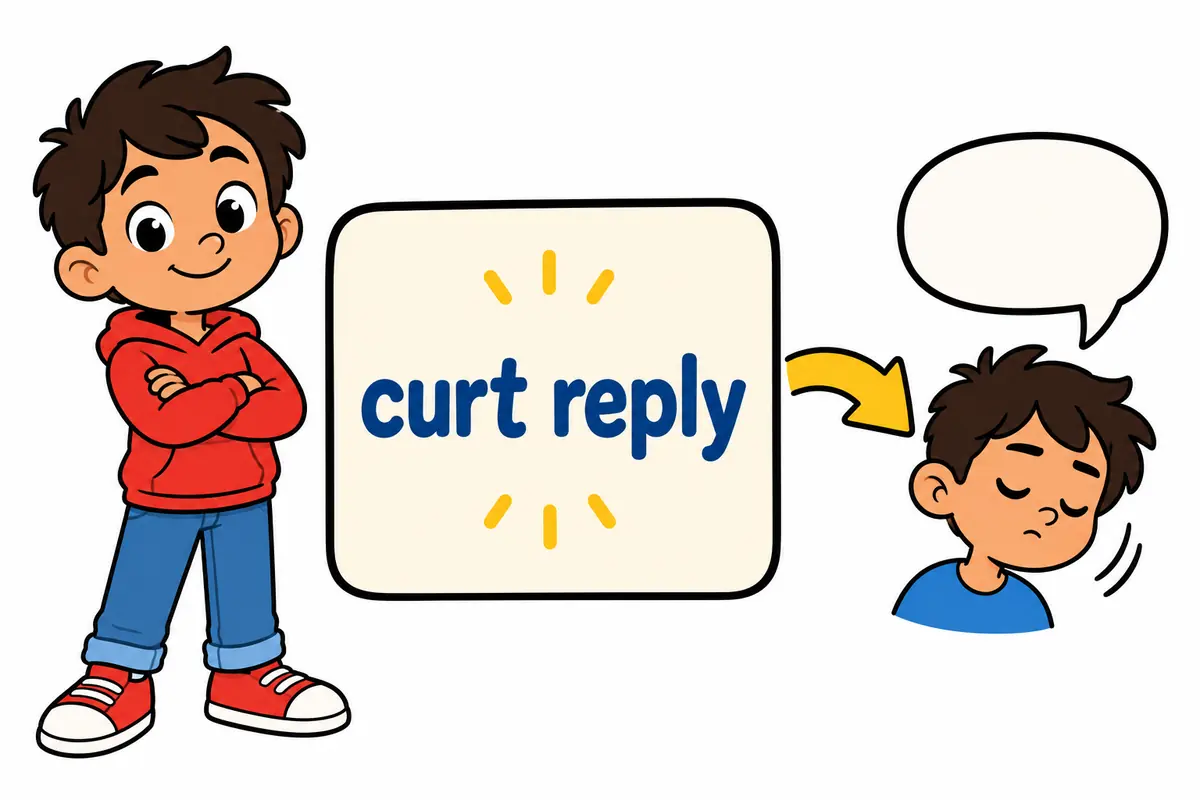
Curt in a sentence describes a reply so short that it sounds rude or impatient. The adjective usually follows a linking verb, as in “his answer was curt,” or sits before a noun such as reply, nod or tone. A curt remark is not always hostile; it is efficient to the point of coldness.
Curt at a glance
- Curt is an adjective; its forms are curter, curtest (or more curt, most curt), the adverb curtly and the noun curtness.
- It means rudely brief, using far fewer words than a situation seems to invite.
- The dominant pattern is a linking verb plus curt, or curter before a noun such as reply or nod.
- Common collocates are reply, answer, nod, tone, refusal, remark and message.
- The commonest error is using curt for neutral brevity, when terse or brief is the fairer word.
What does curt mean?
Curt is an adjective meaning rudely brief, using far fewer words than the situation seems to require. The Cambridge entry for curt records the sense of being rudely short in manner or speech, and the rudeness is the point: the same words delivered warmly would not be curt. The noun curtness names the quality, as in the curtness of his reply.
| Sense | Plain meaning | Example sentence |
|---|---|---|
| Rudely brief speech | A short answer that sounds impatient | “Fine,” she said, in a curt tone. |
| Abrupt manner | A hasty, dismissive gesture or nod | He gave a curt nod and left. |
| Clipped writing | Deliberately stripped, cold prose | The memo was curt and left no room for debate. |
One limit is worth stating plainly. Curt is not a compliment about efficiency. A terse instruction can be perfectly polite, and a succinct summary can be praised; curt always adds the sting of withheld warmth. If no offence is intended or taken, terse or brief is the safer word.
How do you use curt in a sentence?
Curt attaches to a noun or follows a linking verb, and the five patterns below cover almost every natural use.
| Pattern | Example | What it signals |
|---|---|---|
| linking verb + curt | His answer was curt. | The default predicative use, judging the reply. |
| curt + noun | She sent a curt refusal. | Describes the short, cold thing itself. |
| curt with + person | He was curt with the new colleague. | Names who received the coldness. |
| curt + tone / voice | She spoke in a curt tone. | Keeps the judgement on the manner of speech. |
| curter / curtest | His second email was even curter. | Compares how cold the brevity becomes. |
Curt in a sentence: examples across contexts
Curt appears wherever a short answer lands coldly, as the twelve examples below show.
| Context | Example sentence | Why this works |
|---|---|---|
| Classroom | The pupil gave a curt “don’t know” and looked away. | Shows brevity plus a dismissive manner. |
| Workplace email | His curt reply read only: “Not now.” | Packs coldness into two words. |
| Customer service | The assistant was curt, so the caller asked to speak to a manager. | Links the manner to a consequence. |
| News report | The minister offered a curt statement and took no questions. | Suggests evasion through brevity. |
| Sport | The captain’s curt nod ended the interview. | Uses a gesture rather than words. |
| Hospital | The nurse was gentle, though the doctor’s tone was curt. | Contrasts two colleagues’ manners. |
| Legal writing | The letter was curt but did state the deadline. | Shows curtness does not remove accuracy. |
| Conversation | Don’t be curt with me; I only asked a question. | Naming the offence directly. |
| Phone call | He was curt on the phone and hung up first. | Combines tone with a closing action. |
| Text message | Her one-word reply felt curt after the long message I sent. | Shows how context makes brevity cold. |
| Interview | When pressed, the singer gave a curt “no comment”. | Uses the word for a terse refusal. |
| Novel | His curt greeting told her the evening was over before it began. | Lets the adjective carry the mood. |
Curt vs terse
The two words both mean short, but only curt accuses the speaker of coldness, which is why the choice changes the meaning of a review or a report.
| Attribute | Curt | Terse |
|---|---|---|
| Core meaning | Rudely brief | Brief and to the point |
| Politeness | Always carries a sting | Neutral or approving |
| Effect on listener | Feels brushed aside | Feels respected for brevity |
| Typical nouns | reply, nod, tone, answer | statement, note, style, message |
| Register | Everyday and critical | Technical and journalistic |
| Can it be a compliment? | Never | Often |
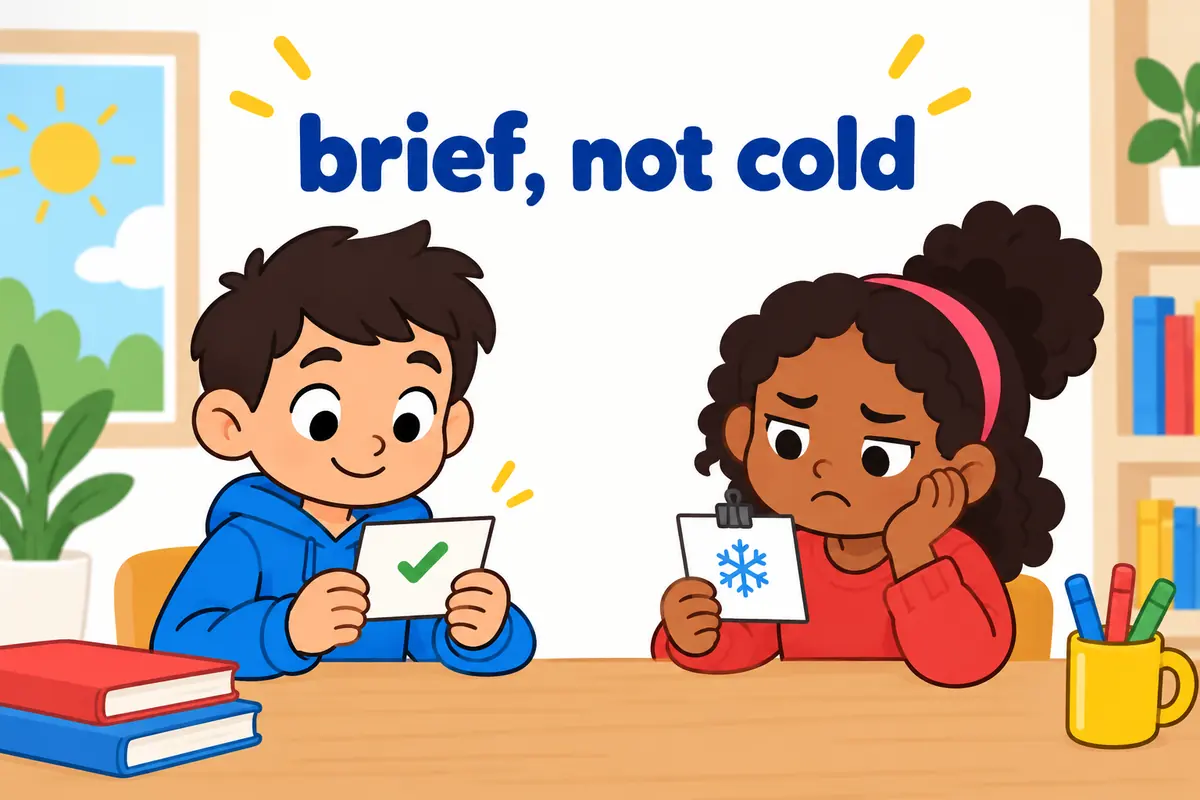
Choose terse when the brevity is a virtue and curt when it is a fault. A terse style strips a report to its facts; a curt reply strips a conversation of its warmth. The difference is not length but the feeling the reader is left with. A person can be rude at length, but curt only ever means coldly brief.
Curt, brusque and blunt compared
Three near neighbours each point to a different kind of offence, and mixing them up mislabels what actually happened.
| Attribute | Curt | Brusque | Blunt |
|---|---|---|---|
| Core meaning | Rudely brief | Roughly abrupt in manner | Direct to the point of offence |
| Length | Very short | Short and rough | Can be long |
| Where the offence lies | In what is left unsaid | In the rough tone | In the plain truth |
| Typical use | replies, refusals | commands, greetings | opinions, criticism |
| Example | a curt “no” | a brusque order | a blunt judgement |
Curt offends by saying too little, brusque by saying it roughly, and blunt by saying it too plainly. A speaker who is abrupt may only be in a hurry, which is a milder charge than curtness, because hurry is a circumstance rather than an attitude toward the listener.
Word forms and grammar of curt
Curt is a regular adjective with an everyday adverb and noun, and learners mainly trip over the comparative and the two derived forms.
| Form | Part of speech | Example |
|---|---|---|
| curt | adjective | a curt reply |
| curter / curtest | comparative / superlative | The last message was curtest of all. |
| more curt / most curt | comparative / superlative | Her tone grew more curt. |
| curtly | adverb | He answered curtly. |
| curtness | noun | the curtness of the email |
| snappish | adjective, near synonym | a snappish reply |
Both comparative styles are correct, though curter and curtest are more common in British writing and more curt and most curt in American writing. The adverb is curtly, not curt, and the noun is curtness. Snappish is close in meaning but adds irritability, while curt can be perfectly calm and still wound. Laconic describes a settled habit of few words rather than a single cold moment.
Common mistakes with curt
Six errors account for most learner sentences, and each comes with the rule that fixes it.
1. Using curt for neutral brevity. The terse note was curt and clear. The terse note was brief and clear. Rule: curt adds rudeness, while terse praises brevity.
2. Using the adjective as an adverb. He spoke curt and left the room. He spoke curtly and left the room. Rule: the adverb is curtly.
3. Swapping adjective and noun. His curtness reply annoyed the class. His curt reply annoyed the class. Rule: curt is the adjective; curtness is the noun.
4. Putting the adjective after a linking verb incorrectly. She was curtly with the visitors. She was curt with the visitors. Rule: linking verbs take the adjective curt, and with marks the people.
5. Describing a long speech as curt. The teacher gave a curt explanation that lasted twenty minutes. The teacher gave a brief explanation that lasted twenty minutes. Rule: curt means short, so it cannot describe a long turn.
6. Leaving the noun out. He gave me a curt and walked on. He gave me a curt nod and walked on. Rule: the adjective must attach to a noun such as nod, reply or answer.
How does curt sound in an email?
Curt is the usual verdict on a one-line reply that answers a question without a greeting or a thank-you. Readers decode brevity as mood, so an email can be entirely accurate and still be read as curt when it drops the opening, the softener or the closing line. The fix is rarely length; a single friendly clause such as “thanks for checking” is enough to remove the sting. The same holds for messages, where a lower-case one-word answer almost never reads as neutral. When speed matters more than warmth, the polite solution is to name the constraint: “Sorry for the brevity, I’m on a deadline.”
Practice using curt
- The manager gave a ______ reply and returned to her work.
- He was ______ with the new colleague all morning.
- Choose the better word: the report was ______ and easy to scan. (curt / terse)
- Correct the error: “She spoke curt and hung up.”
- Build a sentence using curt about a one-word text message.
- Spot the register. Which sentence belongs in a reference? (a) She’s fine, whatever. (b) She is calm and never curt with colleagues.
- Fill in the blank: His ______ greeting made the whole room fall silent.
- Correct the error: “His curtness answer surprised us.”
Answers
- curt — the adjective before reply judges the manner as coldly brief.
- curt — was is a linking verb, so the adjective follows it.
- terse — the report is praised for brevity, not accused of rudeness.
- She spoke curtly and hung up. — the adverb curtly modifies the verb spoke.
- His one-word text was so curt that she rang to check he was not angry. — the sentence ties brevity to a reaction.
- (b) — it describes manner in measured, professional wording.
- curt — the adjective before greeting fits the cold, brief mood.
- His curt answer surprised us. — use the adjective curt, not the noun curtness, before answer.
The bottom line
Curt means rudely brief, so it judges not only the length of a reply but the coldness it leaves behind. Use curt in a sentence after a linking verb or before a noun such as reply, nod or tone, and keep terse for brevity that is neutral or welcome. Curt, brusque and blunt each name a different offence, and only the context tells you which one a listener felt. When brevity is forced by circumstance, a short apology removes the sting.
Frequently asked questions about curt
Is curt a synonym for rude?
Not exactly. Curt is a specific kind of rudeness, the rudeness of being too brief, whereas rude covers insults, bad language and disrespect of any kind. A person can be curt without saying anything offensive, and can be rude at length. Curt narrows the charge to cold brevity.
What is the difference between curt and terse?
Curt means rudely brief and always carries a sting, while terse means brief and to the point and is often a compliment. A terse report is praised for economy; a curt reply is criticised for coldness. The words have similar length but opposite emotional charges, so choose according to the effect, not the count.
What is the adverb form of curt?
The adverb is curtly, as in he answered curtly. The noun is curtness, as in the curtness of the email. Curt itself is the adjective, used after linking verbs or before nouns. Learners sometimes write curt as an adverb, which is the single most common mistake with this word.
Why do short emails sound curt?
Because readers treat missing warmth as a signal. A one-line answer without a greeting or a thank-you can be accurate yet read as curt, since written messages carry no tone of voice to soften them. Adding a single friendly clause usually removes the sting without losing the brevity.