Generic in a Sentence: Meaning, Examples & Practice
Generic means shared by a whole group rather than one particular member, or made and sold without a brand name. To use generic in a sentence, put it before the noun it classifies or after a linking verb: “The chemist offered a generic painkiller.” The same adjective can be neutral in medicine and critical in design.
Generic at a glance
- Generic is an adjective; its forms are generically, the noun genericity and the plural noun generics.
- The two main senses are shared by a class and sold without a brand.
- Typical nouns are term, answer, version, drug, packaging and feature.
- Generic is neutral in medicine and grammar but negative in design and reviews.
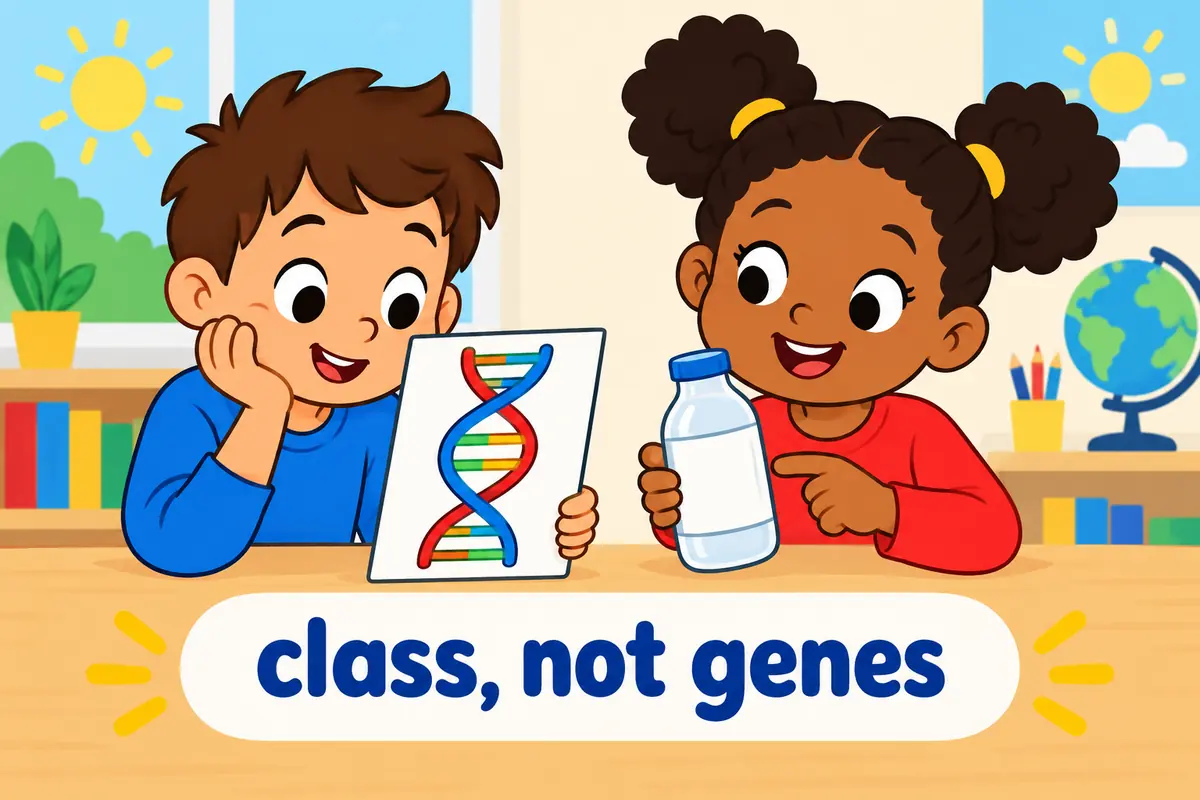
- The commonest error is confusing generic with genetic, which relates to genes.
What does generic mean?
Generic is an adjective meaning belonging to or shared by a whole class, or made without a brand name. The Cambridge entry for generic records both the class-wide sense and the commercial sense of an unbranded product. It is close to nondescript, but nondescript describes how something looks, while generic describes the class something belongs to. A grey anonymous van is nondescript; a plain painkiller sold under no brand is generic.
| Sense | Plain meaning | Example sentence |
|---|---|---|
| Shared by a class | True of a whole group, not one member | The generic features of a folk tale appear in every version. |
| Unbranded | Sold without a brand name | The pharmacist suggested a generic painkiller. |
| Vague | Lacking specific detail | He gave a generic answer about the process. |
| Grammar | Naming a whole class | The generic use of the pronoun one is formal. |
One limitation is worth stating plainly. Generic is not a synonym for general in every sentence: general points to a wide scope, while generic points to features that mark a type. It is also not always an insult; a generic medicine is chemically equivalent and often cheaper, and a generic rule in grammar is a real rule. The negative tone appears only when generic describes expression or design, where it means bland and forgettable.
How do you use generic in a sentence?
Generic behaves like most adjectives, sitting before a noun or after a linking verb. The five patterns below cover ordinary use. Where the complaint is that a statement covers too wide a range, broad is the fairer word, because broad deals with scope while generic deals with shared features.
| Pattern | Example | What it signals |
|---|---|---|
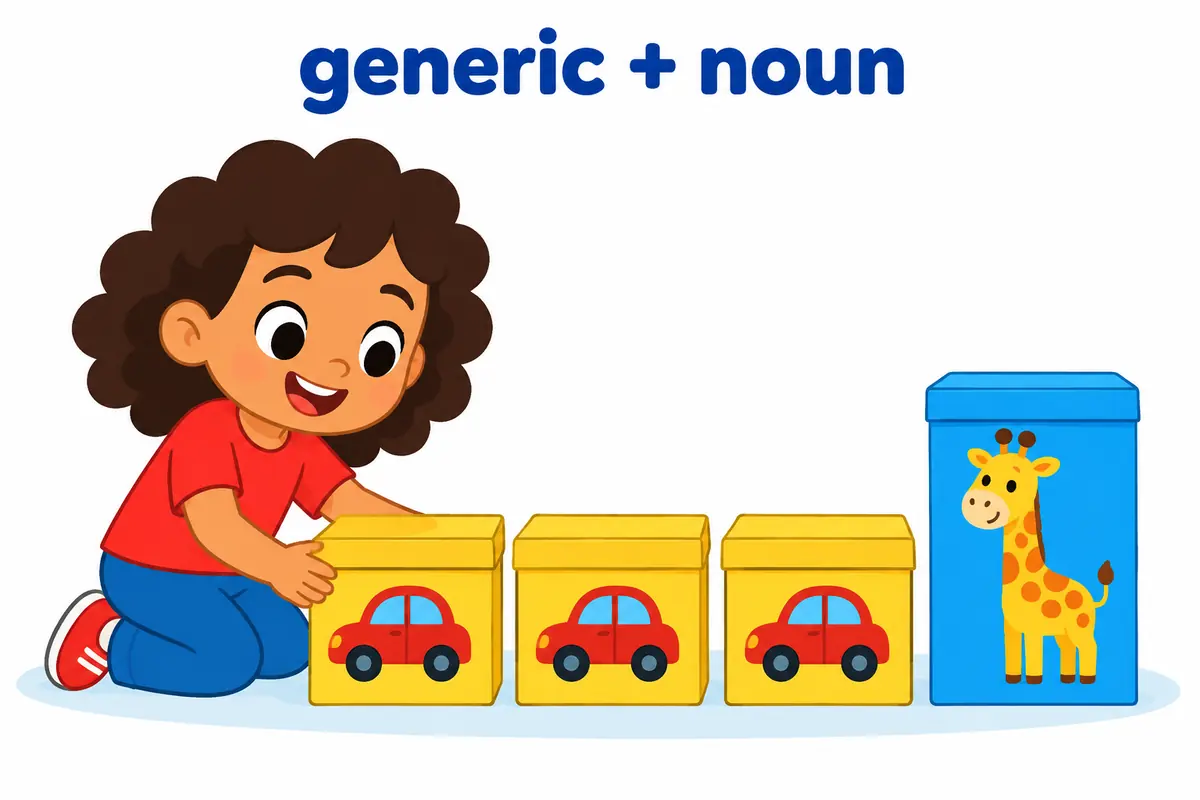
| generic + noun | They agreed on a generic term for the role. | The adjective classifies the noun. |
| be/look/sound + generic | The instructions were too generic to be useful. | A linking verb keeps the adjective after it. |
| a generic version of + noun | She installed a generic version of the software. | An unbranded equivalent of a named thing. |
| generic + plural noun | Generic medicines often cost far less. | The class-wide or unbranded sense before a plural. |
| make/keep + noun + generic | Keep the label generic so it suits every store. | An object complement after a verb. |
Generic in a sentence: examples across contexts
Generic keeps its meaning while the setting changes. The ten sentences below move from a classroom to a pharmacy, and each shows whether the class-wide sense or the unbranded sense is at work.
| Context | Example sentence | Why this works |
|---|---|---|
| Classroom | The teacher asked for a generic description of a mammal. | Names features shared by a whole class. |
| Workplace email | Please use a generic subject line that suits every client. | The adjective modifies a noun used across cases. |
| Pharmacy | The pharmacist explained that the generic tablet works the same way. | The neutral commercial sense of an unbranded medicine. |
| Review writing | The plot felt generic, as if it had been reused a hundred times. | The critical sense of bland and unoriginal. |
| Technical writing | The manual keeps a generic section for all models. | One passage serves a whole product family. |
| News report | The company released a generic statement and took no questions. | Signals wording with no specific commitment. |
| Grammar lesson | The generic use of they is now accepted in formal prose. | A technical label for class-wide reference. |
| Conversation | The card was a bit generic, but I still liked it. | Everyday mild criticism of sameness. |
| Marketing | Generic packaging saves money but hides the brand. | Balances the commercial pro and con. |
| Data science | A generic model can be tuned for each new task. | Technical sense of applying across many cases. |
The pharmacy and grammar rows show the neutral senses, while the review and marketing rows show the critical one. Where a quality genuinely applies everywhere, universal is the stronger adjective, because universal claims every case while generic claims only the typical ones.
Generic vs standard
Generic and standard both suggest something usual, but they measure different things. Standard names the accepted norm or the required size; generic names what is shared by a class or sold without a brand. A standard fitting follows an agreed measurement, while a generic part simply belongs to the common type.
| Attribute | generic | standard |
|---|---|---|
| Core sense | Shared by a class; unbranded | Usual or accepted norm |
| Focus | Categories and types | Rules and measurements |
| Connotation | Often bland or cheap | Neutral to positive, the norm |
| Medicine | The unbranded equivalent | The agreed formulation |
| Typical pairing | generic term, generic answer | standard size, standard practice |
Verdict: choose standard for the accepted norm, and generic for what is shared by a whole class or sold under no brand. When neither tone is wanted, a plain description is safer than either label.
Is generic a negative word?
Generic is neutral in medicine and grammar, but negative in reviews and branding, where it means bland or forgettable. A generic drug is the same medicine at a lower price; a generic film is one with nothing distinctive. The word turns critical only when it describes expression or design, because then it implies that nothing individual was added.
| Context | Tone of generic |
|---|---|
| Medicine | Neutral and practical, meaning unbranded |
| Grammar | Technical and neutral, meaning class-wide |
| Product branding | Negative, implying no identity |
| Writing and reviews | Critical, implying vague or bland |
| Labels and forms | Neutral, meaning shared across a group |
The lesson is to check the noun. Generic applied to a medicine, a rule or a label is a statement of fact; applied to a story, a slogan or a personality it is a judgement. A sweeping use of the word can flatten a real difference, so name the feature you mean instead of reaching for the label.
Word forms and grammar of generic
Generic inflects regularly and also works as a noun in pharmacy, where a generic means an unbranded medicine. The table records the forms, including the technical noun genericity. Where the criticism is simply that something is ordinary, plain is the lighter word, because plain suggests no decoration while generic suggests a whole class.
| Form | Part of speech | Example |
|---|---|---|
| generic | adjective | The logo is too generic to remember. |
| a generic | noun | The pharmacist offered a generic. |
| generics | plural noun | Generics cost less than the original brand. |
| generically | adverb | The form is generically worded. |
| genericity | noun, technical | Genericity lets the rule apply widely. |
Common mistakes with generic
- Incorrect:
The doctor suggested a genetic painkiller.Correct: The doctor suggested a generic painkiller. Rule: Genetic relates to genes; generic means unbranded. - Incorrect:
The word has a genetic meaning here.Correct: The word has a generic meaning here. Rule: Use generic for a class-wide sense. - Incorrect:
He gave a generic of the plan.Correct: He gave a generic version of the plan. Rule: Generic is usually an adjective, not a noun for a copy. - Incorrect:
The generic are cheaper.Correct: The generics are cheaper. Rule: When generic is used as a noun, it needs a plural or an article. - Incorrect:
In generic, the software is the same.Correct: Generically, the software is the same. Rule: The adverb is generically, not the phrase in generic.
Practice using generic
Work through the seven items, then check the reasoning rather than only the answer.
- Fill the gap: The store sells both the branded medicine and a ______ version.
- Choose the better word: The plot was so (generic / genetic) that I guessed the ending.
- Correct the error: The generic are often cheaper than branded drugs.
- Build a sentence: use a generic answer about a school rule.
- Spot the register: which suits a pharmacy — a generic tablet, or a no-name pill?
- Rewrite with the adverb: The policy applies to every case in a general way. Use generically.
- Choose the better word: The recipe is fairly (standard / generic) for this region.
Answers
- generic — an unbranded version of the medicine is a generic one.
- generic — the plot is bland and reused; genetic would relate to genes.
- The generics are often cheaper — the plural noun needs the plural verb.
- Model answer: The principal gave a generic answer that avoided the actual question.
- A generic tablet — a pharmacy uses the neutral commercial term, not no-name pill.
- The policy applies generically to every case — the adverb describes how it applies.
- standard — the recipe follows the accepted norm for the region.
The bottom line
Use generic in a sentence to say that something is shared by a whole class or sold without a brand, and check the noun to judge the tone. The two points that decide most sentences are these: generic is usually an adjective, so a generic needs an article, and it is never a synonym for genetic. Where a claim is being pushed too far, sweeping names the real fault, because a sweeping statement overreaches while a generic one simply stays broad.
Frequently asked questions about generic
What does generic mean in simple terms?
Generic means shared by a whole group rather than by one particular member, or made without a brand name. A generic term applies to many things, and a generic medicine is the unbranded equivalent of a branded one. The word describes what a whole class has in common.
Is generic the same as genetic?
No. Generic describes what is shared by a class or sold without a brand, while genetic relates to genes and heredity. The two words look similar and are often confused in writing. A generic test checks a category; a genetic test examines DNA, so the letters that differ carry the whole difference.
Is generic a bad word?
It depends on the context. In medicine and grammar generic is neutral and simply means unbranded or class-wide. In design, branding and reviews it turns negative, suggesting bland and forgettable. The same word can therefore describe a cheap medicine approvingly and a dull slogan critically.
Can generic be a noun?
Yes, generic can be a noun, especially in pharmacy, where a generic means an unbranded medicine and generics is the usual plural. In most other contexts it stays an adjective before a noun. Outside medicine, a generic is understood as an unbranded or class-wide version of something.