Define means to state the exact meaning of a word, or to mark the clear limits of an idea. To use define in a sentence, give the verb an object: define a term, define a role, define a boundary. The object you choose decides which sense you mean.
Define at a glance
- Define is a transitive verb; its forms are defines, defined, defining and definition.
- The two main senses are stating a meaning and marking the limits of something.
- Typical objects are a word, a term, a role, a boundary or a relationship.
- Define belongs to dictionaries, contracts, science and careful everyday explanation.
- The commonest error is confusing define with devise, a verb meaning to plan or invent.
What does define mean?
Define is a transitive verb meaning to state the exact meaning of something, or to make its limits clear. The Cambridge entry for define records both senses, and they work differently: a statement answers a question, while a limit settles a boundary. When you only want to describe something rather than fix its meaning, describe is the safer verb.
| Sense | Plain meaning | Example sentence |
|---|---|---|
| State a meaning | Give the exact sense of a word or idea | The glossary defines every technical term in the chapter. |
| Mark the limits | Show where something begins and ends | A low wall defines the edge of the garden. |
| Give distinct character | Make something clearly recognisable | Careful lighting defines the shape of the sculpture. |
One limitation is worth stating plainly. Define does not mean explain, and it does not mean judge. A sentence can define a term without saying whether it is useful or true, because that verdict is a separate claim the verb never makes.
How do you use define in a sentence?
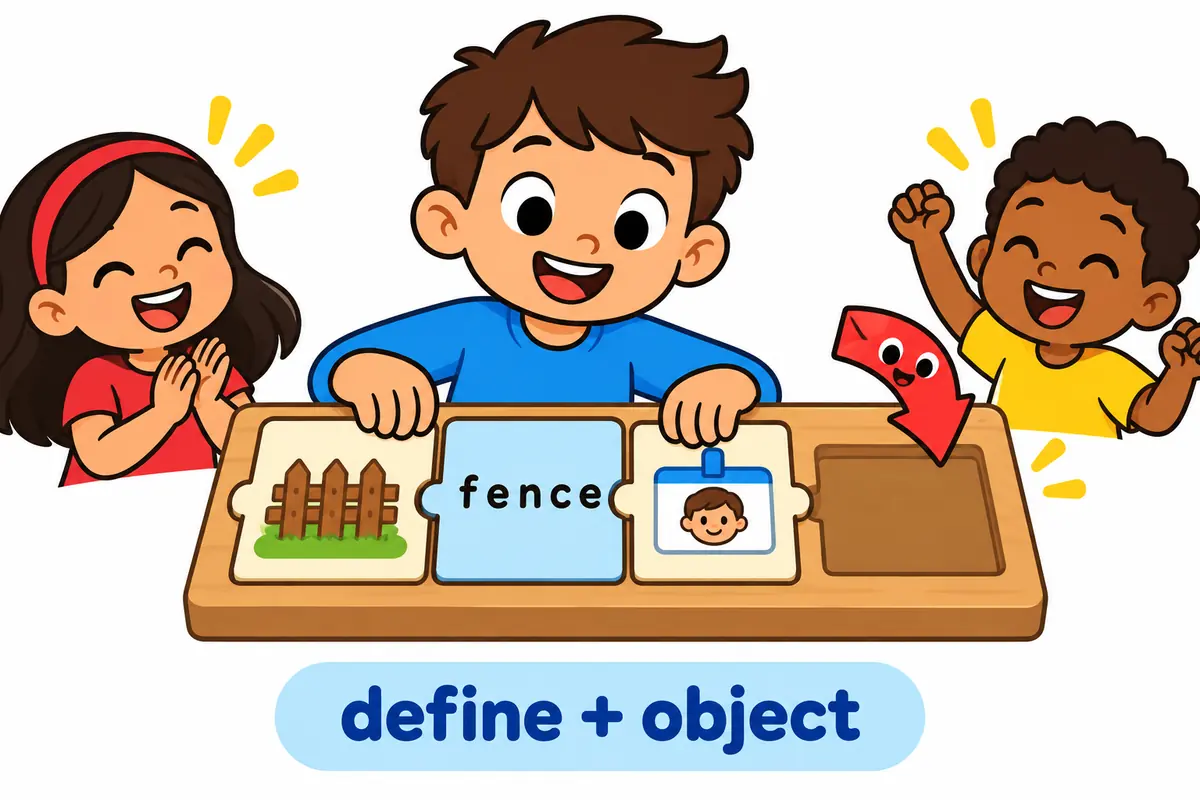
Put something specific after the verb: define a term, define a role, define a boundary. Most real sentences fall into five patterns, and the object you attach tells a reader which sense is in play.
| Pattern | Example | What it signals |
|---|---|---|
| define + object | The teacher defined photosynthesis in one sentence. | The verb’s basic job: give a meaning. |
| define + object + as + noun | The law defines a minor as anyone under eighteen. | Quotes the exact wording that fixes a category. |
| define + object + by + noun | The committee defined success by attendance alone. | Names the standard that settles the meaning. |
| define + boundary or role | The contract defines each partner’s duties. | The limit sense, common in legal and business writing. |
| be defined by | Her style is defined by restraint. | Passive voice; the defining feature becomes the subject. |
When a reader needs numbers rather than a meaning, specify the details is the better verb, because define only fixes what something is.
Define in a sentence: examples across contexts
The same verb moves easily from a classroom to a contract, and each example below names the object it governs.
| Context | Example sentence | Why this works |
|---|---|---|
| Classroom | The worksheet defines habitat before the quiz. | The new term is fixed before it is used. |
| Dictionary writing | The entry defines the noun and then the verb. | Follows the order in which a learner meets the senses. |
| Workplace email | Please define the approval limit for this budget. | Turns an instruction into a request for an exact boundary. |
| Legal writing | Clause four defines force majeure in narrow terms. | The limit sense keeps a disputed phrase under control. |
| Science writing | The paper defines the control group at the start. | Prevents ambiguity before any results are reported. |
| News report | The rules define a small business as one with fewer than fifty staff. | Quotes the threshold that decides who qualifies. |
| Academic prose | Historians define the period by its printing methods. | Names the evidence that settles a category. |
| Product description | A single line defines what the app does. | Compresses a promise into a clear boundary. |
| Conversation | Can you define the problem in one line? | The plain sense that survives in speech. |
Precision matters most in the contract and science rows, where the wording is the evidence. In the last row the verb simply means tell me clearly, which is the sense a learner meets first.
Define vs devise
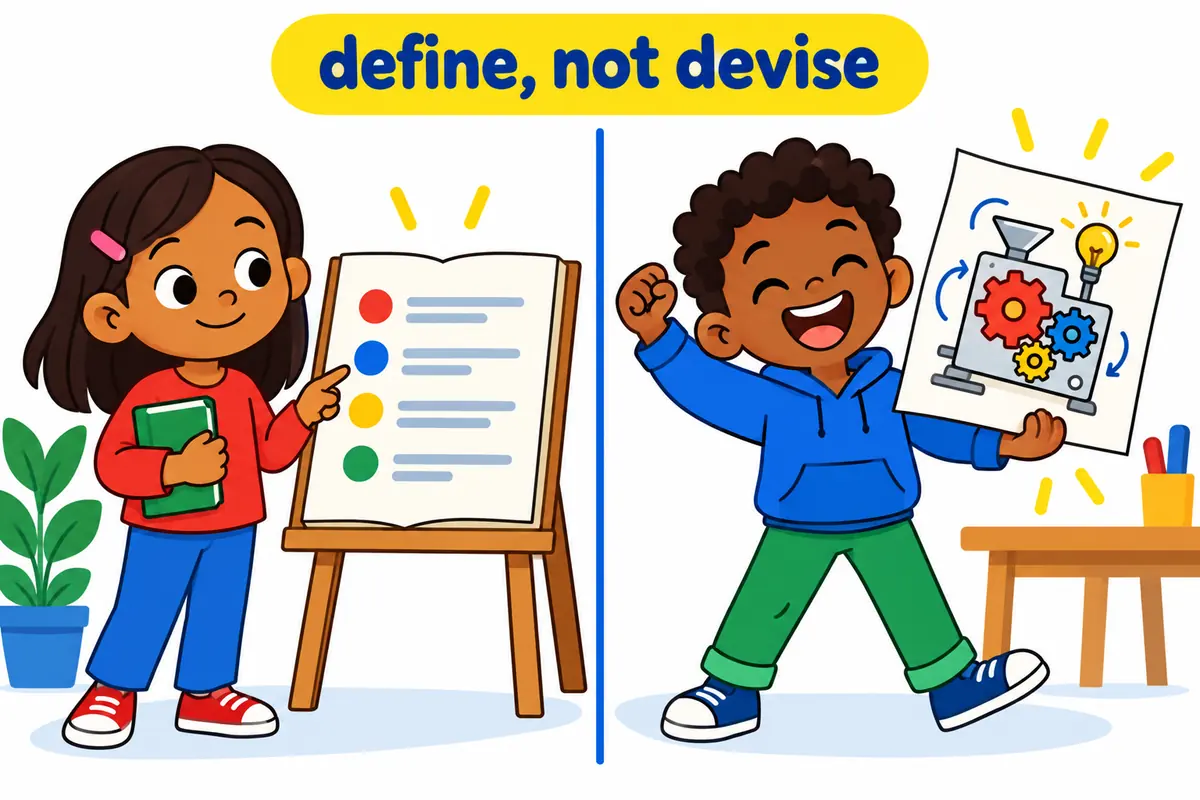
Define and devise share four letters and almost nothing else. To devise a plan means to invent or work out something new, while define means to fix what something already means.
| Attribute | define | devise |
|---|---|---|
| Core meaning | State a meaning or set a limit | Plan or invent something |
| Typical object | A word, term, role or boundary | A method, scheme or solution |
| Result | Clarity about what something is | A new thing that did not exist before |
| Register | Neutral to formal | Neutral to formal |
| Usual subject | A document, teacher or rule | A person or a team |
Verdict: use define when you are pinning down a meaning, and devise when you are creating a plan; a rule can define a term, but only a person devises a scheme.
Word forms and grammar of define
Define inflects regularly, and its noun definition is far more common than the verb in everyday writing. The table also lists the spelling learners most often invent by mistake.
| Form | Part of speech | Example |
|---|---|---|
| define | verb, base form | The report must define its terms. |
| defines | verb, third person singular | The policy defines acceptable use. |
| defined | verb, past and past participle | The team defined the scope last week. |
| defining | verb, present participle | Careful wording is the defining feature of a good contract. |
| definition | noun | The definition ran to three lines. |
| defination | not a word | Write definition, never defination. |
The past participle defined locks into fixed compounds such as a defined benefit scheme and a clearly defined role.
Common mistakes with define
- Incorrect:
The teacher defined about the topic.Correct: The teacher defined the topic. Rule: Define takes a direct object and never the preposition about. - Incorrect:
The contract definates the payment date.Correct: The contract defines the payment date. Rule: Definate is not a word; the verb is define. - Incorrect:
She defined that the rule was unfair.Correct: She described the rule as unfair. Rule: Define does not introduce a that-clause, so use describe or call before a clause. - Incorrect:
This word defines differently in law.Correct: This word is defined differently in law. Rule: When nobody is named as the definer, the passive is required. - Incorrect:
The manager defined the process the rules.Correct: The manager defined the process in the rules. Rule: A verb takes one object, so a second noun phrase needs its own preposition.
Practice using define
Work through the six items, then check the reasoning as well as the answer.
- Fill the gap: The first page ______ the key terms used in the study.
- Choose the better word: The engineers had to (define / devise) a new safety test.
- Correct the error: The rules definate who may enter the lab.
- Build a sentence: use define + object + as about a school rule and the age it applies to.
- Spot the register: which belongs in a legal contract — Clause two defines the delivery period, or the staff sort of defined the delivery dates?
- Rewrite in the passive: The editor defined the house style. Keep the same meaning.
Answers
- defines — the page fixes the meaning of each term, and the object follows directly.
- devise — a test is something new that is planned, so define does not fit.
- The rules define who may enter the lab — definate is a misspelling of the verb define.
- Model answer: The school defines a junior pupil as anyone below year ten.
- Clause two defines the delivery period — a contract needs the limit sense, not the vague conversational one.
- The house style was defined by the editor — the passive keeps the style as the subject of the sentence.
The bottom line
Use define in a sentence when you need to fix a meaning or mark a limit, and put a specific object straight after the verb. Two nuances decide most sentences: the verb does not introduce a that-clause, and the passive is normal when nobody is named as the definer. To state the rule plainly, keep the object concrete and let the document do the defining.
Frequently asked questions about define
Is define a verb or a noun?
Define is a verb, and its related noun is definition, as in the definition of the term. You cannot write a define or the defines. A sentence needs define to act on an object, so the glossary defines the term is correct, while the define of the term is not.
Can define introduce a that-clause?
No. Define takes a noun phrase, not a that-clause, so write the report defines the standard, never the report defines that the standard is fair. Where a clause is unavoidable, use show, describe or call instead, as in the reviewer described the standard as fair.
What is the difference between define and devise?
Define fixes the meaning of something that already exists, while devise means to plan or invent something new. A policy defines a rule, but an engineer devises a method. The two words look similar because they share letters, yet their objects differ: definitions describe, while devices are created.
Does define always need an object?
Yes, in the active voice define needs an object, because you always define something, whether a term, a role or a boundary. The only exception is the passive, as in the term is defined in the glossary. Without an object or a passive, the sentence is incomplete.
Have you ever struggled with understanding the meaning of a word or concept? When you encounter new terminology, sometimes it’s helpful to have someone simply define it for you.
To define something is to provide a clear and concise explanation of its meaning, helping to increase understanding and knowledge. It serves as a foundation for grasping the concept in a straightforward manner.
7 Examples Of Define Used In a Sentence For Kids
- Define means to explain the meaning of something.
- Can you define the word “happy”?
- Let’s define the colors of the Indian flag.
- Define the shapes you see in this picture.
- Define your favorite animal and tell us why you like it.
- Please define the taste of the fruit you are eating.
- It’s important to define the terms we are using in class.
14 Sentences with Define Examples
- Define plagiarism in your own words.
- Can you define the concept of microeconomics for me?
- Please define the term “quantum mechanics.”
- How would you define the concept of nationalism?
- Define exponential growth and provide an example.
- Can you define the term “cultural relativism”?
- What is your understanding of the term “sustainable development”? Please define.
- Define the term “citation” and explain its importance in academic writing.
- Could you define the term “social stratification”?
- Define the concept of supply and demand in economics.
- How would you define the function of nucleotides in DNA?
- Please define the term “feminism” and its key principles.
- Define the process of mitosis in cell division.
- Can you define the term “human rights” and explain its significance in global politics?
How To Use Define in Sentences?
Define is used in a sentence to explain the meaning of a particular word or concept to the reader. When using define, it is important to provide clear and concise definitions to ensure understanding. To include define in a sentence, follow these steps:
-
Identify the word or concept you want to define. For example, if you want to define the word “success,” make sure you have a clear understanding of what it means.
-
Write the sentence in a way that introduces the term you want to define. For example, “Success can be defined as achieving one’s goals and objectives.”
-
After introducing the term, use define to provide the definition. For instance, “Success can be defined as the accomplishment of an aim or purpose.”
-
Make sure the definition is accurate and relevant to the context of your sentence. Avoid using overly complex language that may confuse the reader.
-
If necessary, you can provide additional information or examples to further clarify the meaning of the term you are defining.
By following these simple steps, you can effectively use define in a sentence to help your audience better understand the meaning of a specific word or concept.
Conclusion
In this article, we explored numerous examples of sentences using the keyword “define.” These sentences illustrate how the word can be used to explain or describe the meaning of something. Whether defining a concept, a word, or a specific term, the examples highlighted the versatility and importance of clear definitions in communication.
By providing simple and concise definitions, these sentences demonstrate the power of clarity in conveying ideas effectively. Understanding how to define terms accurately can enhance both written and verbal communication, ensuring that information is accurately conveyed and easily comprehended by others. Therefore, mastering the art of defining concepts is crucial for effective communication in various contexts.


