
Dispassionate is an adjective meaning not influenced by emotion, especially when judging or deciding. It describes a person, tone or analysis that stays calm and fair, as in “a dispassionate review of the evidence.” The word names evenness of judgement rather than coldness.
Dispassionate at a glance
- Dispassionate is an adjective; its adverb is dispassionately.
- It means free from emotional bias when judging, and secondarily calm in manner.
- The usual subjects are observers, judges, reports, accounts and reviews.
- It belongs to formal and analytical writing rather than casual conversation.
- The commonest error is using it to mean bored or uncaring, which is indifferent.
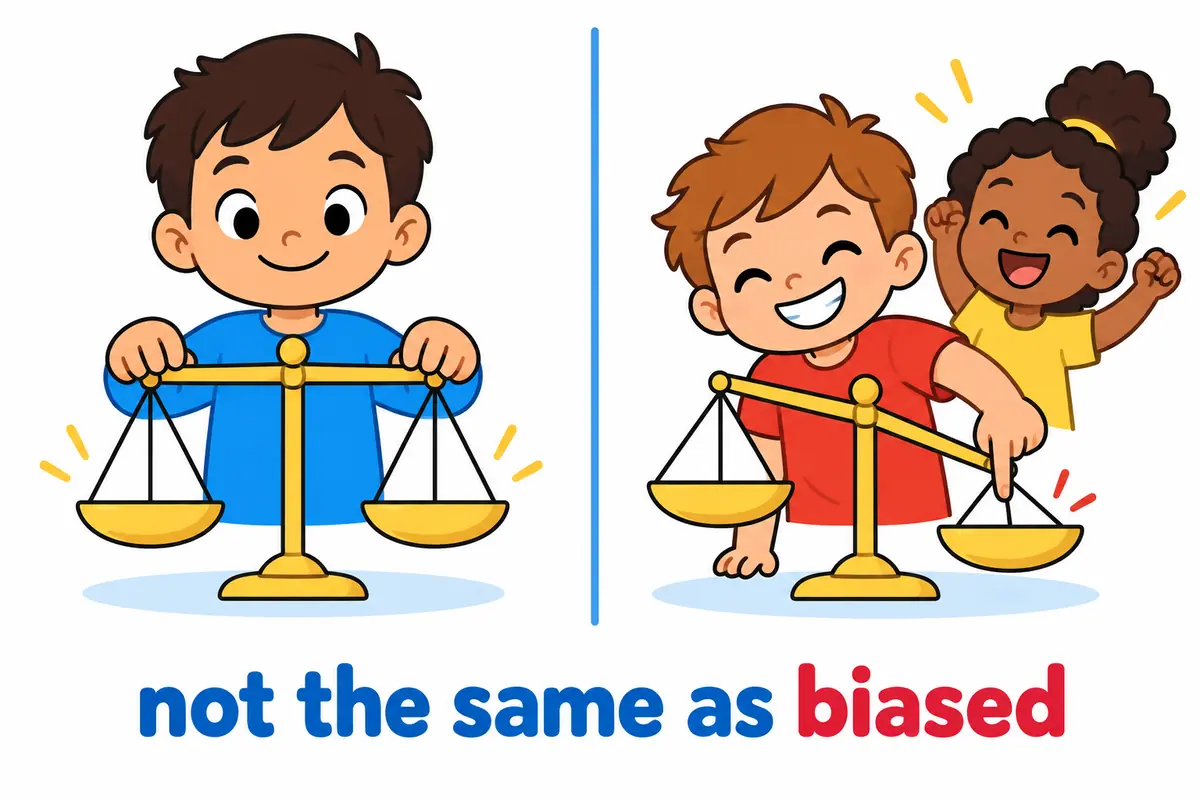
- It describes how a judgement is reached, not whether the person feels anything.
What does dispassionate mean?
Dispassionate is an adjective meaning free from the influence of emotion, especially in judgement, and calm in manner. The Cambridge entry for dispassionate records both the impartial and the unemotional senses, and the difference matters because a dispassionate report can still be sympathetic in tone.
| Sense | Plain meaning | Example sentence |
|---|---|---|
| Free from emotional bias | Not swayed by feeling when judging | The panel reached a dispassionate verdict. |
| Calm in manner | Showing no strong feeling while speaking | She gave a dispassionate account of the accident. |
| Fair to both sides | Treating each party with the same measure | A dispassionate referee is worth more than a popular one. |
One limitation is worth stating plainly. Dispassionate does not mean indifferent or unkind; it means that emotion has been set aside while a judgement is made, not that no feeling exists. Where warmth is the point, calm and steady is the better choice, because dispassionate can sound clinical in a personal letter.
The register also shifts with the noun that follows. A dispassionate observer, a dispassionate review and a dispassionate voice all sound natural, while a dispassionate party or a dispassionate friend sound odd, because a party to a dispute has a stake and a friend is expected to care. That distribution is a useful test: if the noun suggests a personal stake, dispassionate will read as a quiet reproach rather than a compliment.
How do you use dispassionate in a sentence?
Dispassionate is an adjective, so it modifies a noun or follows a linking verb. The adverb form dispassionately modifies the act of judging. The pattern table below shows where each form belongs.
| Pattern | Example | What it signals |
|---|---|---|
| dispassionate + noun | A dispassionate observer noted every detail. | The noun is a person or a piece of work that avoids bias. |
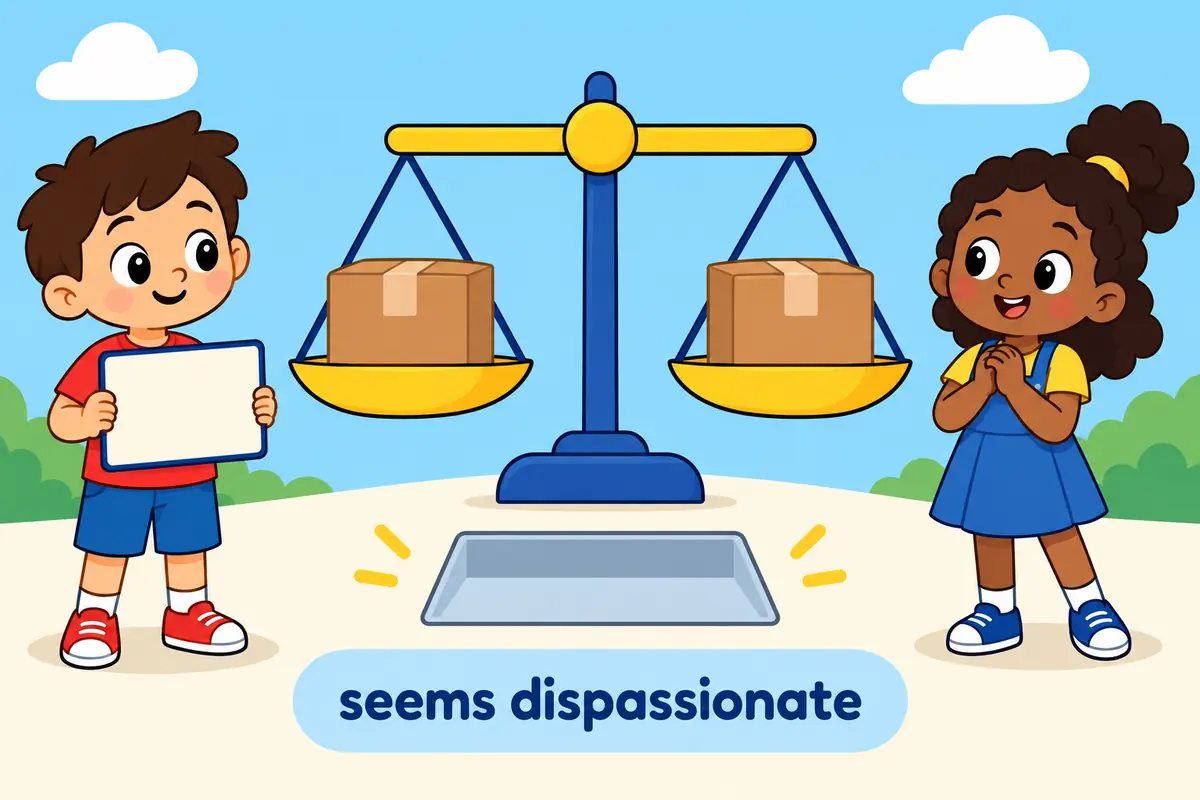
| linking verb + dispassionate | The report seems dispassionate. | Describes the impression the work gives. |
| remain or stay + dispassionate | The chair stayed dispassionate under pressure. | Emphasises self-control during a dispute. |
| dispassionate + about + object | He remained dispassionate about the result. | Names the matter that could have stirred feeling. |
| dispassionately + verb | She judged the entries dispassionately. | The adverb describes how the action is carried out. |
The preposition about introduces the tempting subject, as in dispassionate about the outcome. The word rarely takes very or so in careful writing, because a judgement is either even or it is not; writers who want a degree often switch to unbiased and fair instead.
| Collocation | What it means | Example |
|---|---|---|
| dispassionate analysis | An examination with no emotional lean | The journal published a dispassionate analysis of the trial. |
| dispassionate observer | Someone watching without taking sides | A dispassionate observer would call the race even. |
| dispassionate tone | A manner that keeps feeling out | She replied in a dispassionate tone. |
| dispassionate account | A report that avoids advocacy | The book gives a dispassionate account of the feud. |
| dispassionate eye | A habit of judging without bias | Editors value a dispassionate eye. |
Dispassionate in a sentence: examples across contexts
Dispassionate changes setting more than meaning. The nine sentences below move from a classroom to a courtroom, and each one names what the writer is trying not to be swayed by.
| Context | Example sentence | Why this works |
|---|---|---|
| Classroom | The teacher gave a dispassionate summary of both arguments. | Two sides are weighed, so the fair sense is clear. |
| Workplace email | Please review the proposals in a dispassionate frame of mind. | An instruction to set aside preference. |
| News report | The correspondent wrote a dispassionate account of the vote. | Reporting aims to avoid taking sides. |
| Legal writing | A dispassionate reading of the clause favours neither party. | The neutral reading of a document is the point. |
| Academic prose | The study offers a dispassionate analysis of the data. | Analysis is expected to exclude the author’s hopes. |
| Medicine | The consultant described the risks in a dispassionate voice. | A calm manner helps a frightened patient listen. |
| Sports page | Even a dispassionate fan could see the penalty was fair. | Names the bias the observer is rising above. |
| Book review | The critic was dispassionate about a novel by a friend. | The friendship is the feeling being set aside. |
| Conversation | Try to stay dispassionate when you read the comments. | Everyday advice to avoid a heated reaction. |
| Community meeting | The chair gave a dispassionate summary of every complaint. | A chair must hold several rival views at once. |
| Science writing | The paper reports the anomaly in dispassionate language. | Neutral wording keeps the finding open to challenge. |
| Family discussion | He tried to be dispassionate about which school to choose. | A personal decision is made with feelings held back. |
The word suits writing where a decision has to be defended later. In a personal message it can sound cold, which is why a friend might prefer fair and patient to dispassionate. A useful habit is to ask what feeling the writer is rising above: name that feeling and the adjective earns its place, but leave it unnamed and the sentence can seem merely stiff.
Dispassionate vs impartial
Dispassionate and impartial both describe freedom from bias, but they answer different questions. Impartial means treating both sides equally; dispassionate means reaching a view without letting emotion decide it. A judge must be impartial between the parties and dispassionate about the evidence. detached goes further and can imply a lack of involvement that borders on indifference.
| Attribute | dispassionate | impartial |
|---|---|---|
| Core meaning | Judging without emotional sway | Treating sides equally |
| Focus | The judge’s inner state | The balance between parties |
| Typical subject | A report, analysis, observer or tone | A judge, referee, jury or rule |
| Implies emotion present | Yes, but set aside | Not necessarily |
| Can sound cold | Sometimes | Rarely |
| Common partner | analysis, review, account | tribunal, umpire, decision |
Verdict: choose impartial when the balance between two sides is the point and dispassionate when the absence of emotional pull is the point. Neither word means uncaring, which is why biased and emotional sit at the opposite end of the scale. A third near-synonym, objective, stresses that a judgement rests on facts rather than feelings, and it suits scientific and legal writing best. If you can swap in fair without losing meaning, impartial is usually the safer word; if you can swap in unemotional, dispassionate is the better fit.
Word forms and grammar of dispassionate
Dispassionate is an adjective with an adverb and two rare nouns. The table also lists the form learners invent by mistake.
| Form | Part of speech | Example |
|---|---|---|
| dispassionate | adjective | She kept a dispassionate distance from the quarrel. |
| dispassionately | adverb | He dispassionately listed the pros and cons. |
| dispassionateness | noun, rare | The dispassionateness of the report surprised readers. |
| dispassion | noun, rare | His dispassion was mistaken for coldness. |
| passionate | adjective, opposite | A passionate speech moved the whole hall. |
| dispassionated | non-standard | Marked wrong: no such form exists. |
The adverb is the form writers forget. When the word describes how someone acts rather than what someone is, the -ly ending is required, as in she answered dispassionately. Keep the adjective for nouns and linking verbs only.
Two nouns sit behind the adjective, and both are rare. Dispassion names the quality itself, while dispassionateness names the state of being free from emotion; neither appears often outside formal prose. Learners can usually avoid both by writing the adjective instead, as in the report’s tone was dispassionate rather than the dispassionateness of the report.
Common mistakes with dispassionate
- Incorrect:
He spoke dispassionate about the case.Correct: He spoke dispassionately about the case. Rule: An adverb modifies a verb, so the -ly form is needed. - Incorrect:
She felt dispassionate and bored.Correct: She felt indifferent and bored. Rule: Dispassionate is about fair judgement, not a lack of interest. - Incorrect:
The report was dispassionate and exciting.Correct: The report was dispassionate and thorough. Rule: The word clashes with adjectives that signal strong feeling. - Incorrect:
Dispassionate of the outcome, she left.Correct: Dispassionate about the outcome, she left. Rule: The adjective takes about, not of. - Incorrect:
He gave a dispassionated account.Correct: He gave a dispassionate account. Rule: There is no -ed form of this adjective. - Incorrect:
The judge was dispassionate to both sides.Correct: The judge was dispassionate about both sides. Rule: About introduces the matter judged, while to would describe a manner.
Practice using dispassionate
Work through the six items, then check the reasoning rather than only the answer.
- Fill the gap: The mediator stayed ______ while both families argued.
- Choose the better word: The referee made a (dispassionate / dispassionated) call.
- Correct the error: She reviewed the plan dispassionate.
- Build a sentence: use dispassionate about a report on a school debate.
- Spot the register: which belongs in a formal review — a dispassionate analysis of the evidence, or I was pretty dispassionate about it?
- Rewrite with the adverb: She judged the entries without emotion. Use dispassionately.
- Choose the better word: The review was (dispassionate / indifferent) about the author’s fame.
- Correct the error: She gave a dispassionateness summary.
Answers
- dispassionate — the adjective follows the linking verb stayed.
- dispassionate — there is no dispassionated form, so the plain adjective is correct.
- She reviewed the plan dispassionately — the adverb is needed to modify reviewed.
- Model answer: The report gave a dispassionate account of the school debate.
- A dispassionate analysis of the evidence — a formal review avoids pretty and the first person.
- She judged the entries dispassionately — the adverb describes how she judged.
- dispassionate — the review sets feeling aside, while indifferent would mean it did not care.
- She gave a dispassionate summary — the adjective is needed, not the rare noun.
The bottom line
Use dispassionate in a sentence when a judgement, report or observer stays free of emotional sway and treats the evidence evenly. The two details that decide most sentences are the part of speech and the underlying feeling: dispassionate is an adjective, with dispassionately as its adverb, and it assumes that emotion exists but has been set aside. Where equal treatment of two sides is the point, objective and even-handed or impartial is the more precise choice.
Frequently asked questions about dispassionate
Is dispassionate a formal word?
Dispassionate sits in formal and analytical writing, where a judgement has to be defended. News reports, legal opinions and academic reviews use it freely. In casual speech most people say calm, fair or not taking sides, so a text message built around dispassionate would sound stiff.
Does dispassionate mean cold or uncaring?
No. Dispassionate means that emotion has been set aside while a judgement is made, not that no feeling exists. A doctor can give a dispassionate account of a serious illness and still be kind. The word describes the manner of judging, not the warmth of the person.
What part of speech is dispassionate?
Dispassionate is an adjective, so it modifies a noun or follows a linking verb such as seems or remains. Its adverb is dispassionately, which modifies a verb, as in she judged the entries dispassionately. The rare noun forms are dispassion and dispassionateness.
Can you use dispassionate to describe writing?
Yes. A dispassionate account, report or analysis is one that presents evidence without pushing the writer’s feelings. The label praises restraint in reporting, but it can also suggest a lack of engagement, so a memoir or a tribute would usually choose a warmer adjective instead.