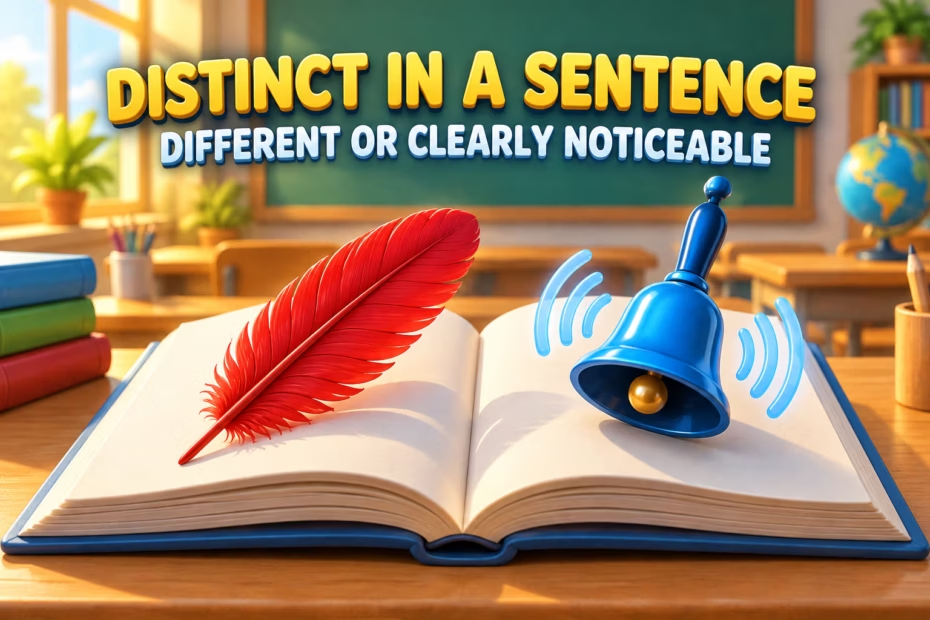
Distinct is an adjective with two common sentence meanings: “clearly different or separate” (“The twins have distinct voices”) and “easy to hear, see, or notice” (“A distinct bell rang”). Use it only when context supports that meaning. “Distinct” can overlap with “unique,” but it does not always mean one of a kind.
Meaning and usage at a glance
- Different or separate: “The two ideas are distinct from one another.” Cambridge Dictionary gives this sense.
- Clearly noticeable: “A distinct smell filled the room.” Oxford Learner’s Dictionaries includes examples that can be heard or seen clearly.
- Useful comparison pattern: distinct from names what something differs from; as distinct from means “rather than.”
- Adjective placement: write “a distinct feature” before a noun or “the features are distinct” after a linking verb.
- Not always unique: unique is stronger when you mean the only existing one or the only one of its type.
What Does Distinct Mean in a Sentence?
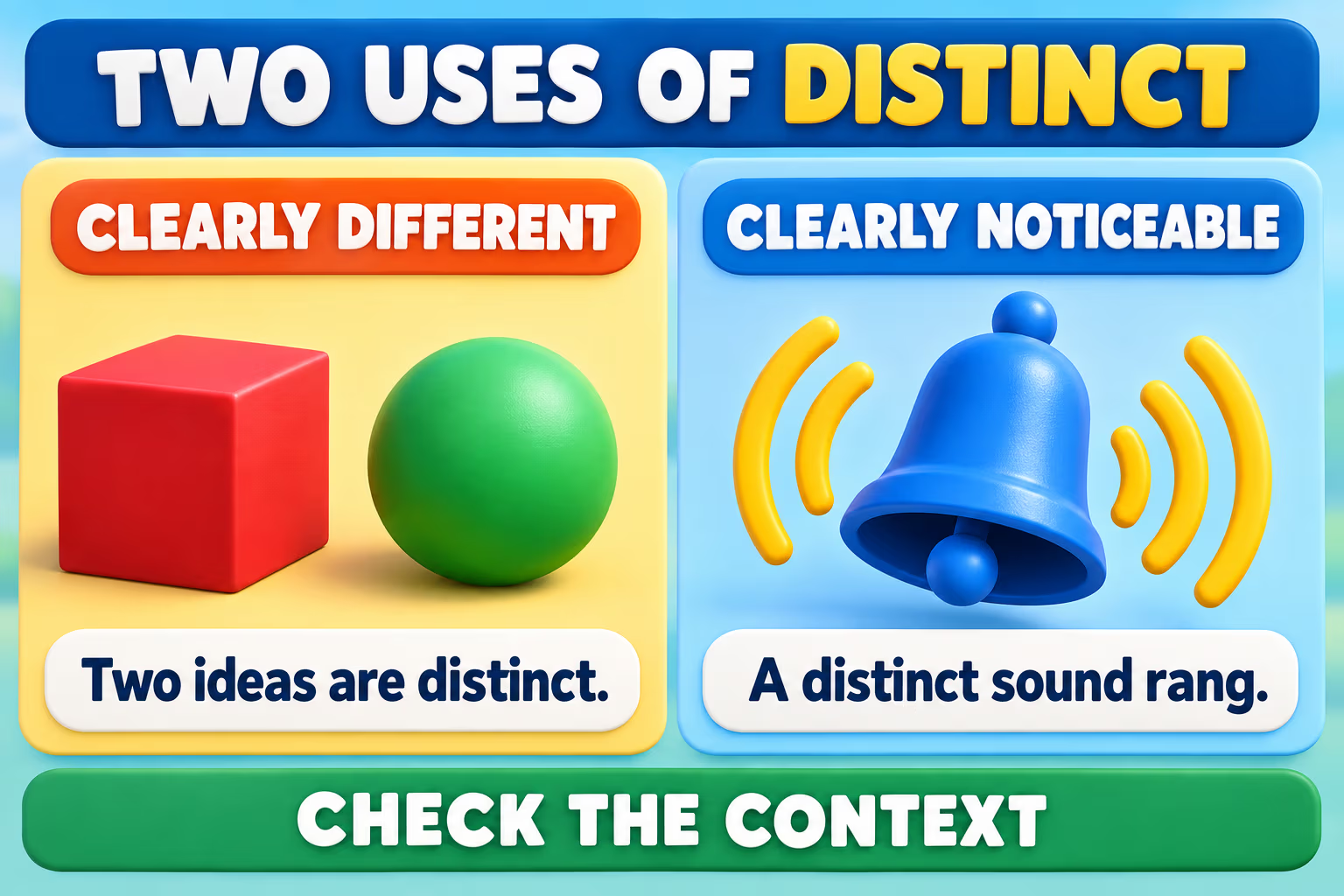
Distinct has more than one related use. Cambridge defines it as clearly separate and different, while Oxford also records the sense “easily or clearly heard, seen, felt, etc.” The first use compares things; the second emphasizes that a feature is perceptible. For example, “The two melodies are distinct” describes separate melodies, while “A distinct alarm sounded” describes a sound that can be heard clearly.
Context matters when both senses could fit. A “distinct red feather” might be easy to notice because of its color, or different from other feathers in the group. A clear sentence gives the comparison or feature that makes the meaning plain.
Another common pattern is a distinct possibility or a distinct impression. In these phrases, distinct emphasizes that the possibility or impression is definite or clearly felt; it does not mean the possibility is “unique.” Oxford records this emphasizing use before a noun.
Distinct vs. Unique: Are They the Same?
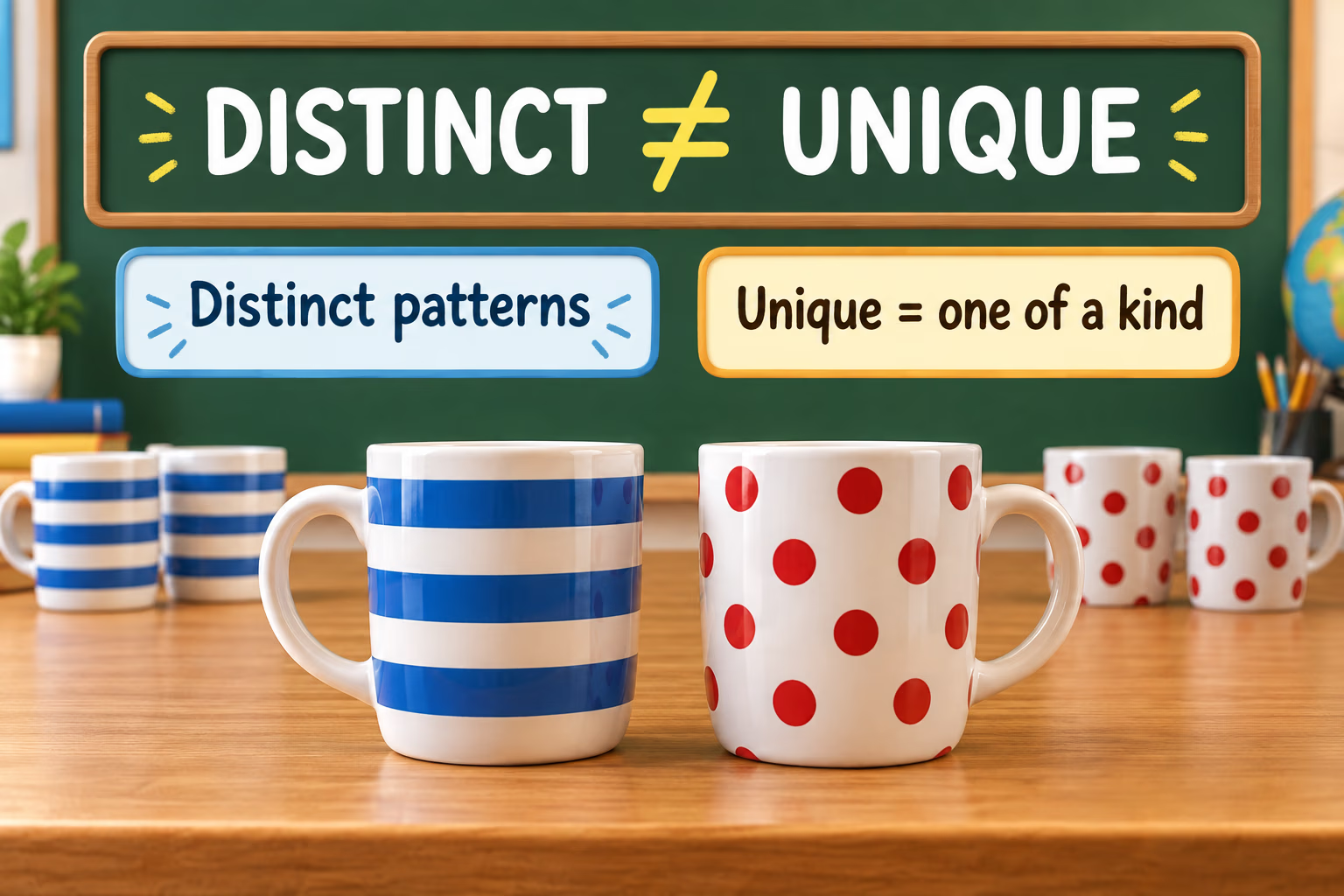
Not always. Cambridge defines unique as the only existing one of its type, or more generally something unusual or special. Distinct can simply mean clearly different or separate. Two mugs can have distinct patterns even if neither pattern is one of a kind. Choose unique only when the sentence intends that stronger meaning.
The original lead uses “unique or clear”; the distinction above makes those meanings more precise. For related examples, see Startswithy’s guides to unique in a sentence and different in a sentence.
How to Use Distinct in a Complete Sentence
Distinct is an adjective. Cambridge Grammar explains that adjectives can appear before a noun or after a linking verb such as be. These patterns let the word describe a feature or state a comparison:
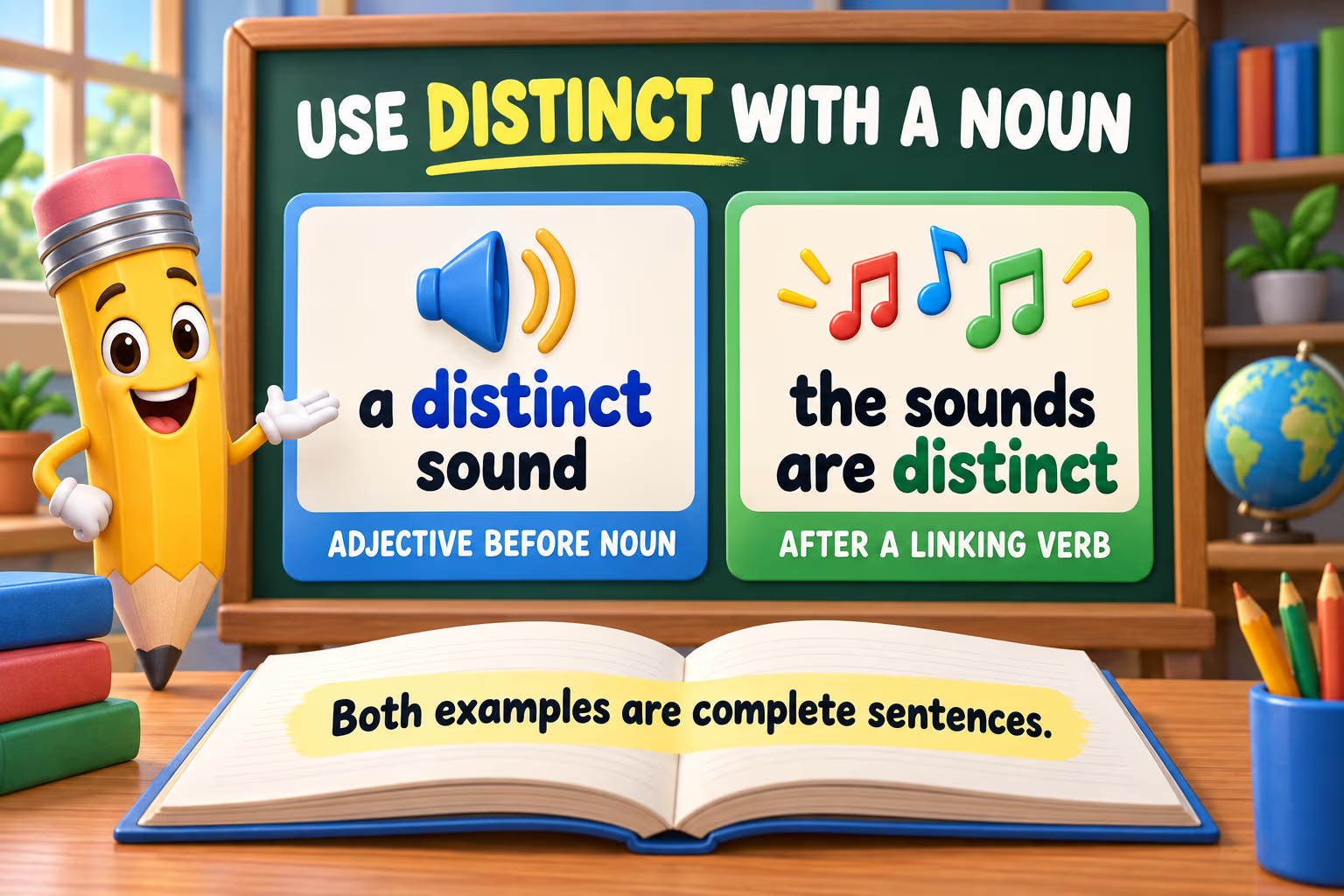
- Before a noun: “The map shows a distinct border.” The adjective describes the border as easy to see.
- After a linking verb: “The two paths are distinct.” The adjective says the paths are separate or different.
- With a comparison: “This accent is distinct from mine.” The preposition from introduces what it differs from.
- With a sensory detail: “A distinct scent of pine drifted through the cabin.” The adjective means the scent was noticeable.
Use as distinct from when you mean “rather than”: “The class studies spoken English, as distinct from written English.” In formal prose, a sentence should contain an independent clause. “A distinct border” is a useful phrase, but by itself it has no finite verb; write “A distinct border marks the edge of the map” for a complete sentence. See Purdue OWL’s sentence-fragment guidance.
A Quick Test for Choosing the Right Meaning
- If you are comparing groups, objects, or ideas, check whether clearly different or separate fits: “The two plans are distinct.”
- If you are describing a sound, smell, line, or other feature, check whether easy to hear, smell, or see fits: “A distinct bell rang.”
- If you mean something is the only one of its type, use unique only when that claim is accurate.
- If the phrase is meant to stand as a complete sentence, check that it expresses a complete clause rather than only a noun phrase.
7 Examples Of Distinct Used In a Sentence For Kids
- The bird has a distinct red feather on its head.
- Each person has their own distinct smile.
- Different fruits have distinct flavors.
- The elephant has a distinct long trunk.
- Your fingerprints are distinct from everyone else’s.
- Cats have distinct purring sounds when they are happy.
- In a group of flowers, each one has a distinct color.
14 Sentences with Distinct Examples
- Distinct hairstyles are popular among college students in India.
- In Indian colleges, students value their distinct cultural identities.
- Each student has a distinct way of approaching academic challenges.
- It is important for college students to develop their own distinct study habits.
- Indian colleges offer a distinct variety of extracurricular activities for students to participate in.
- Many college students in India have distinct career aspirations.
- Students often seek to make a distinct impact on the community through social initiatives.
- The diverse student body in Indian colleges contributes to a distinct learning environment.
- Distinct fashion choices are common among college students in India.
- College clubs and organizations offer students the opportunity to develop distinct leadership skills.
- Studying abroad can provide students with a distinct global perspective.
- Professors encourage students to bring their distinct viewpoints to class discussions.
- Interactions with international students can offer a distinct cultural exchange experience.
- Attending guest lectures can expose students to distinct ideas and perspectives.
How To Use Distinct in Sentences?
Distinct is used in a sentence to emphasize the uniqueness or difference of a particular thing or idea in comparison to others.
To use Distinct in a sentence, you can start by identifying the key features or qualities that set the subject apart from others. For example, “The taste of the exotic fruit was distinct from any other fruit I had ever tried.”
Another way to use Distinct is by contrasting the subject with something else to highlight its uniqueness. For instance, “Her style of painting is distinct from traditional techniques, making her work stand out among other artists.”
When using Distinct in a sentence, it is important to provide enough context for the reader to understand what makes the subject unique or different. It can be helpful to include specific details or examples to illustrate the Distinct characteristics being described.
Remember to use proper grammar and punctuation when incorporating Distinct into your sentence. Make sure the sentence is clear, concise, and effectively conveys the intended meaning. By following these guidelines, you can effectively use Distinct in a sentence to highlight the individuality or uniqueness of a subject.
Frequently Asked Questions About Distinct in a Sentence
What does distinct mean in a sentence?
In a sentence, distinct usually means either clearly different from something else or easy to notice by sight, hearing, or another sense. “The two melodies are distinct” means separate; “A distinct alarm sounded” means clearly audible. A sentence’s context signals which use the adjective carries.
Is distinct the same as unique?
No. Distinct can describe two or more things that are recognizably different or separate; unique usually means the only existing one or the only one of its type. Two mugs can have distinct patterns even when many mugs share those patterns. Use unique only when one-of-a-kind meaning is intended.
What preposition follows distinct?
When identifying what is different, distinct is commonly followed by from: “This shade is distinct from the other one.” As distinct from introduces a contrast meaning “rather than,” as in “a written test, as distinct from an interview.” Cambridge Dictionary records both patterns.
Can distinct go before or after a noun?
Yes. The adjective can come before a noun (“a distinct outline”) or after a linking verb (“The outlines are distinct”). In formal prose, “A distinct outline” alone is a noun phrase, not a complete sentence; Purdue OWL explains that a complete sentence needs an independent clause.