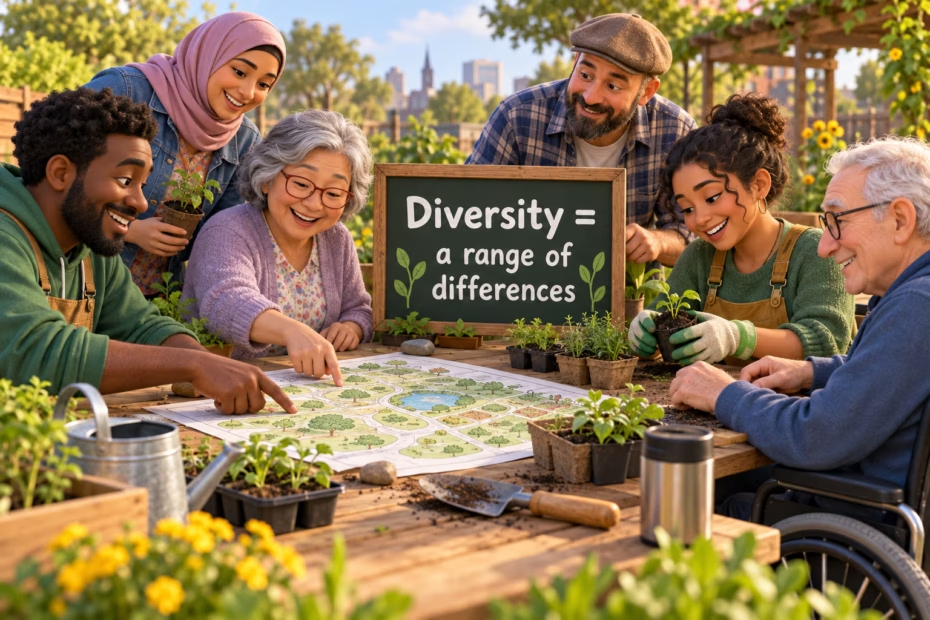
In a sentence, diversity means a range of differences or the presence of different kinds of people or things in a group. Use it for human communities, opinions, skills, choices, or living things; name the kind of difference when it matters, and do not assume that variety alone guarantees fairness or good outcomes.
Quick guide
- Diversity is a noun for variety or differences within a group or field.
- Common patterns include “diversity of ideas,” “diversity in the workplace,” and “diversity among species.”
- The word can describe people, viewpoints, products, languages, habitats, and other things.
- Diversity describes who or what is present; inclusion concerns whether people can participate.
What Does Diversity Mean?
Diversity is the condition of including or containing different types of people or things. Cambridge Dictionary also gives a sense for differences in ideas or opinions, so the word is not limited to social identity. In context, a sentence may discuss cultural diversity, a diversity of viewpoints, product variety, or biological diversity.
| Context | What varies | Example |
|---|---|---|
| Community | Languages, traditions, ages, or experiences | “The neighborhood’s cultural diversity is reflected in its community events.” |
| Discussion | Ideas or viewpoints | “The panel welcomed a diversity of views on the proposal.” |
| Choices | Products, styles, or options | “The menu offers a diversity of vegetarian dishes.” |
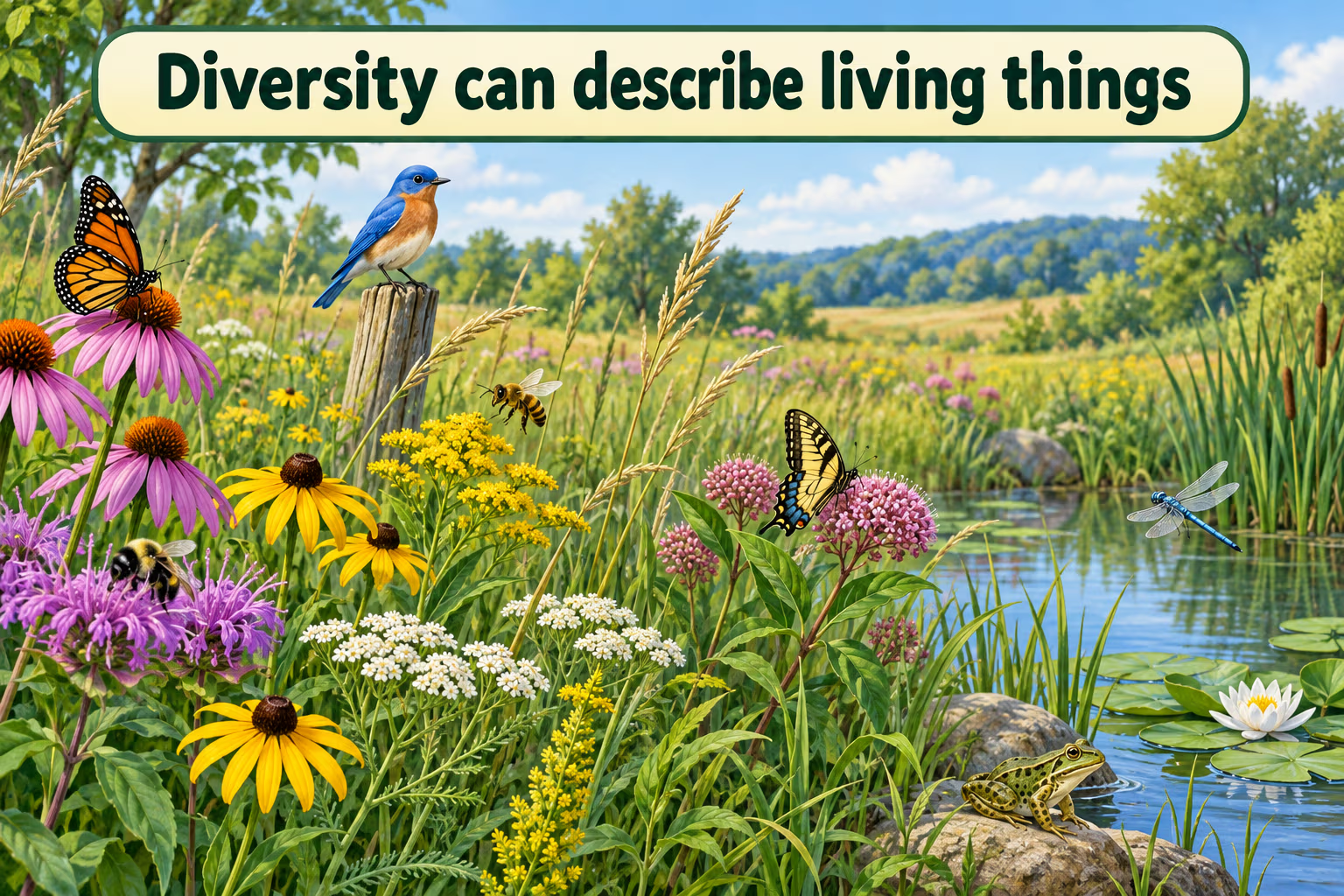
| Ecology | Species or habitats | “Researchers recorded the diversity of plants along the wetland trail.” |
Diversity is commonly used as an uncountable noun, as in “The region has cultural diversity.” It can also take an article when it means a particular range: “The program brings a diversity of voices to the discussion.” Cambridge records the noun as both singular and uncountable.
How Do You Use Diversity in a Sentence?
Use diversity of before the kinds or range present, diversity in before a field or setting, and diversity among before a group whose members differ. These patterns make the sentence more specific than saying only that something is “diverse.”
- Diversity of + noun: “The class compared a diversity of stories from different regions.”
- Diversity in + setting or field: “The museum is working to broaden diversity in its collection.”
- Diversity among + group: “The survey found diversity among the team’s professional backgrounds.”
Diverse is the related adjective: “The library has a diverse collection.” Diversity is the noun: “The collection shows diversity.” Cambridge defines diverse as including different types or being different from one another.

Does Diversity Mean Inclusion?
No. Diversity describes variety or representation; inclusion refers to including people and enabling participation. Cambridge Dictionary distinguishes these meanings, and UNESCO describes inclusive education in terms of respecting learners’ differences and ensuring their participation. A group can contain different perspectives while still leaving some members unheard, so use inclusive only when the sentence supports that claim.
For respectful writing, identify a relevant dimension only when it helps explain the sentence. Avoid treating one person as a spokesperson for a whole identity group, and do not guess how someone identifies. The American Psychological Association says preferences for person-first and identity-first disability language vary; when possible, use the person’s or community’s stated preference.
Diversity is not automatically positive or negative in every context. For example, a “diversity of opinions” may mean that people disagree; the sentence should state whether that range is useful, challenging, or simply present. Claims about outcomes need their own evidence instead of being inferred from the word diversity.
More Diversity Sentence Examples
The original examples below are retained in full. They include human, educational, cultural, and nature-related uses. In the source’s final paragraph, “diversity in sentences” means variety in sentence structure, a separate general use of the word.
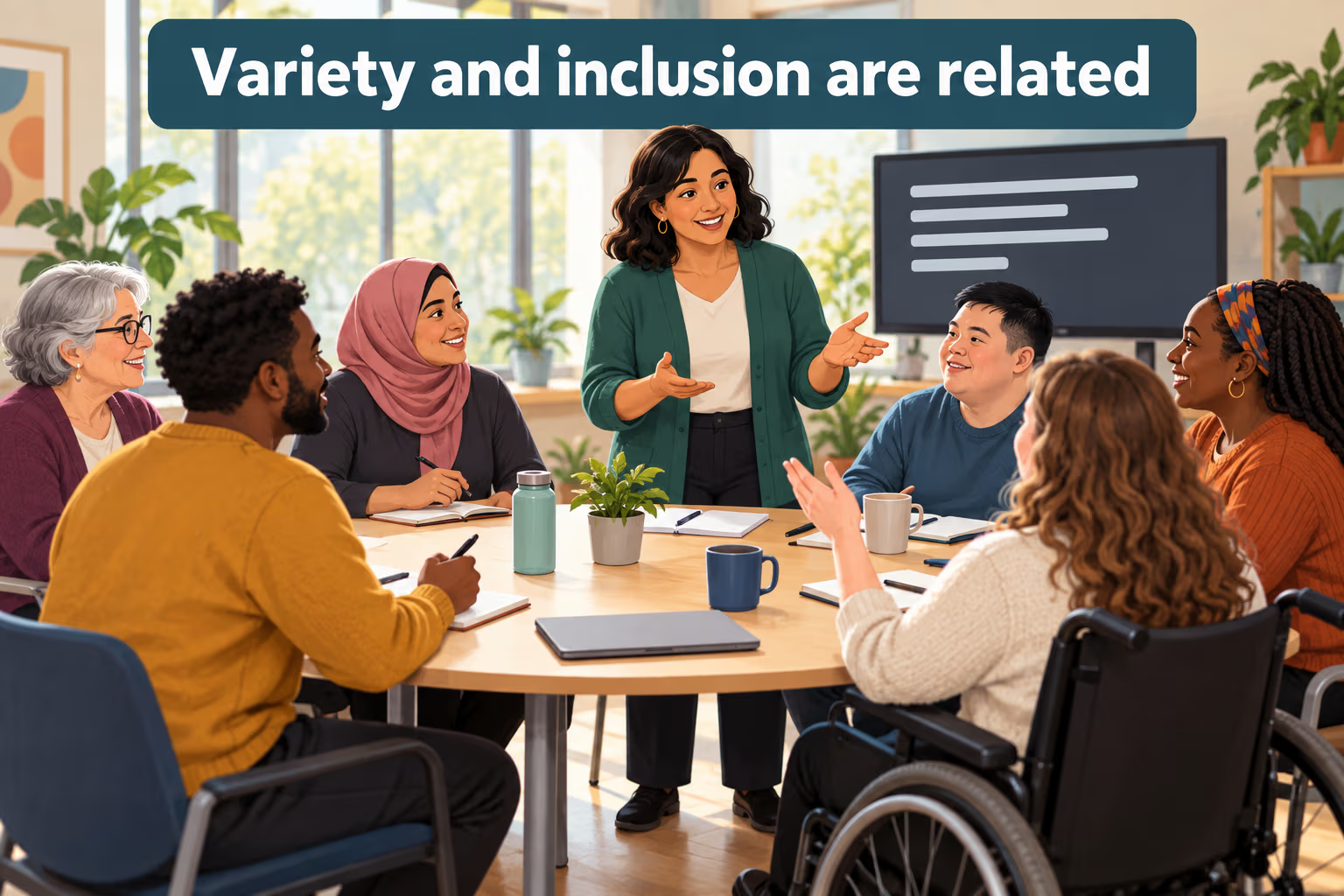
Diversity refers to the presence of various differences among people in a group or organization, including differences in race, religion, gender, sexual orientation, age, and abilities. Embracing diversity means recognizing, respecting, and valuing these differences to create an inclusive and supportive environment for all individuals.
In today’s global society, diversity has become a crucial aspect of workplaces, schools, and communities. By promoting diversity, organizations can benefit from a wide range of perspectives and experiences, leading to innovation, creativity, and better decision-making. Embracing diversity not only fosters a culture of acceptance and mutual understanding but also contributes to a more enriched and harmonious society.
7 Examples Of Diversity Used In a Sentence For Kids
- India is a country with diversity in languages, food, and traditions.
- People celebrate festivals with diversity of colors and music.
- Animals in the jungle have diversity of shapes and sizes.
- School is a place where we learn about the diversity of cultures around the world.
- Our friends have diversity in interests and hobbies.
- We can learn new things by exploring the diversity in nature.
- It’s important to respect and appreciate the diversity in our community.
14 Sentences with Diversity Examples
- Diversity in cultural backgrounds among college students enriches the learning experience.
- As young adults, college students have the opportunity to embrace diversity and enhance their understanding of various perspectives.
- Group projects are a great way for students to appreciate the diversity of skills and talents among their peers.
- Participating in cultural clubs on campus can expose students to the beauty of diversity in art, music, and traditions.
- The university’s diversity initiatives aim to create an inclusive environment where all students feel valued and respected.
- Students from different parts of India bring a unique diversity of languages and traditions to the campus community.
- Through discussions and debates, students can explore diversity of opinions and learn to respect differing viewpoints.
- Attending lectures by guest speakers from various fields can help students appreciate the diversity of career paths available to them.
- Diversity in extracurricular activities allows students to explore different interests and develop new skills.
- The college library offers a wide range of books and resources that celebrate the diversity of authors and perspectives.
- Social events organized by student clubs are a fun way to celebrate the diversity of talents and interests on campus.
- Diversity in food choices at the college cafeteria reflects the varied preferences of the student body.
- In a multicultural country like India, college campuses are a melting pot of diversity in traditions, beliefs, and values.
- Engaging in community service projects can expose students to the diversity of challenges faced by different groups in society.
How To Use Diversity in Sentences?
To use the word Diversity in a sentence, first understand that Diversity refers to a range of different things. When you want to talk about the variety of different cultures, perspectives, or ideas within a group, you can use the word Diversity.
For example, you could say, “The company values diversity and strives to create an inclusive workplace for employees from all backgrounds.” This sentence shows that the company appreciates differences and aims to make everyone feel welcome.
Another way to use Diversity in a sentence is, “The diversity of wildlife in the rainforest is astounding, with hundreds of species coexisting in the same ecosystem.” This sentence highlights the variety of animals and plants living in the rainforest.
Remember that Diversity can be applied to many different contexts, such as nature, workplaces, schools, and communities. It’s important to use the word Diversity accurately and respectfully to acknowledge and celebrate differences.
Practice incorporating Diversity into your writing by thinking about the range of elements present in a situation and how they contribute to a rich and vibrant whole. With time and practice, you’ll become more comfortable using Diversity in your conversations and writing.
Conclusion
Diversity in sentences enhances readability and engagement. By incorporating a variety of sentence structures, lengths, and styles, writers can effectively convey their message to a broader audience. Varying sentence patterns keeps the writing interesting and prevents it from becoming monotonous or repetitive.
In addition, diverse sentences can cater to different learning preferences and communication styles. Some readers may prefer short, straightforward sentences, while others may enjoy longer, more descriptive ones. By including a mix of sentence types, writers can better connect with their readers and ensure that their message is easily understood and engaging to all. Ultimately, embracing diversity in sentences is not only beneficial for the writer but also for the reader, creating a more dynamic and inclusive writing style.
The preceding source paragraph describes possible benefits of promoting diversity, not guaranteed effects or the definition of diversity. Claims about innovation, decision quality, or harmonious communities depend on context and should be supported with evidence.
Frequently Asked Questions
Is diversity a noun or an adjective?
Diversity is a noun. Diverse is the adjective: “The team has diversity” uses the noun, while “The team is diverse” uses the adjective.
Can diversity describe ideas or nature?
Yes. It can describe differences in opinions as well as varieties of people or things. “A diversity of ideas” and “species diversity in the forest” are both standard uses.
What is the difference between diversity and inclusion?
Diversity describes which differences or groups are present. Inclusion concerns whether people can participate in shared spaces and activities. A sentence should not treat the terms as interchangeable.
How can I write about diversity respectfully?
Be specific about the relevant differences, avoid presenting one person as representative of a group, and follow people’s stated language preferences. Describe participation or outcomes only when the details support those claims.