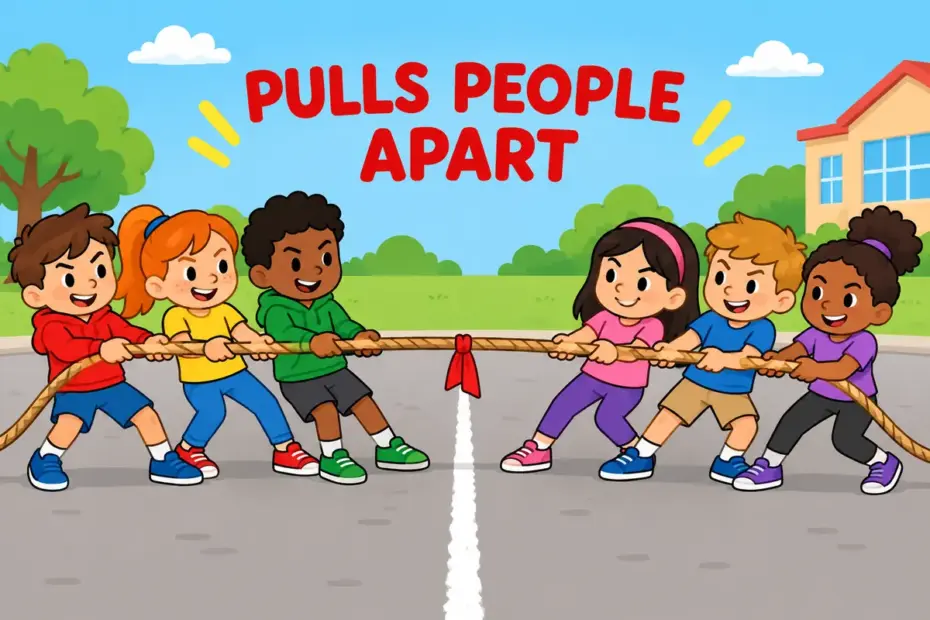
Divisive describes something that splits people into opposing sides, usually with strong feeling on both. To use divisive in a sentence, attach it to the issue, decision or figure that causes the split: “The new boundary plan proved divisive.” The adjective judges the effect, not the intention behind it.
Divisive at a glance
- Divisive is an adjective that describes anything tending to cause disagreement between people.
- It takes a noun or a linking verb: a divisive issue, or the issue proved divisive.
- Adverbs such as deeply, highly and bitterly measure how sharp the split is.
- Divisive belongs to news, politics and comment writing rather than to casual talk.
- Divisive usually modifies a cause, so it sits beside issue, decision, figure, rule or debate.
- The commonest error is using divisive of a group; groups are divided while issues are divisive.
What does divisive mean?
Divisive is an adjective meaning that causes disagreement or hostility between people, splitting them into camps. The Cambridge entry for divisive records this sense, and the important part is direction: it describes the thing doing the splitting, not the people split. A contentious topic invites argument, while a divisive one actually pulls a group apart.
| Sense | Plain meaning | Example sentence |
|---|---|---|
| Causing disagreement | Splits people into opposing camps | The stadium plan proved divisive. |
| Politically charged | Draws firm lines between parties | The vote became a divisive issue. |
| Socially separating | Weakens a group by setting members against each other | The rule was divisive within the club. |
One limitation is worth stating plainly. Divisive is not a synonym for unpopular: a policy can be widely disliked and still unite everyone against it. The word applies only when opinion breaks into rival sides, which is why it so often appears beside words like issue, figure and debate.
How do you use divisive in a sentence?
Divisive usually sits before a noun or after a linking verb, and the choice changes the emphasis. Before a noun it labels the thing; after a verb such as proved or seemed it reports the effect the thing had. The five patterns below cover almost every real sentence. Two cautions follow: the adverb divisively is rare enough to sound awkward, and the adjective never describes the people who were split.
| Pattern | Example | What it signals |
|---|---|---|
| divisive + noun | A divisive election split the village. | Attaches the effect to a thing, not a person. |
| be, seem, prove + divisive | The proposal proved divisive. | Links a subject to the effect it had on people. |
| the least or most divisive + noun | It was the least divisive option on the table. | Ranks the level of disagreement. |
| deeply or highly + divisive | A deeply divisive speech followed. | An adverb measures how strong the split is. |
| divisive among or within + group | The change was divisive among staff. | Names the group that breaks into sides. |
Divisive in a sentence: examples across contexts
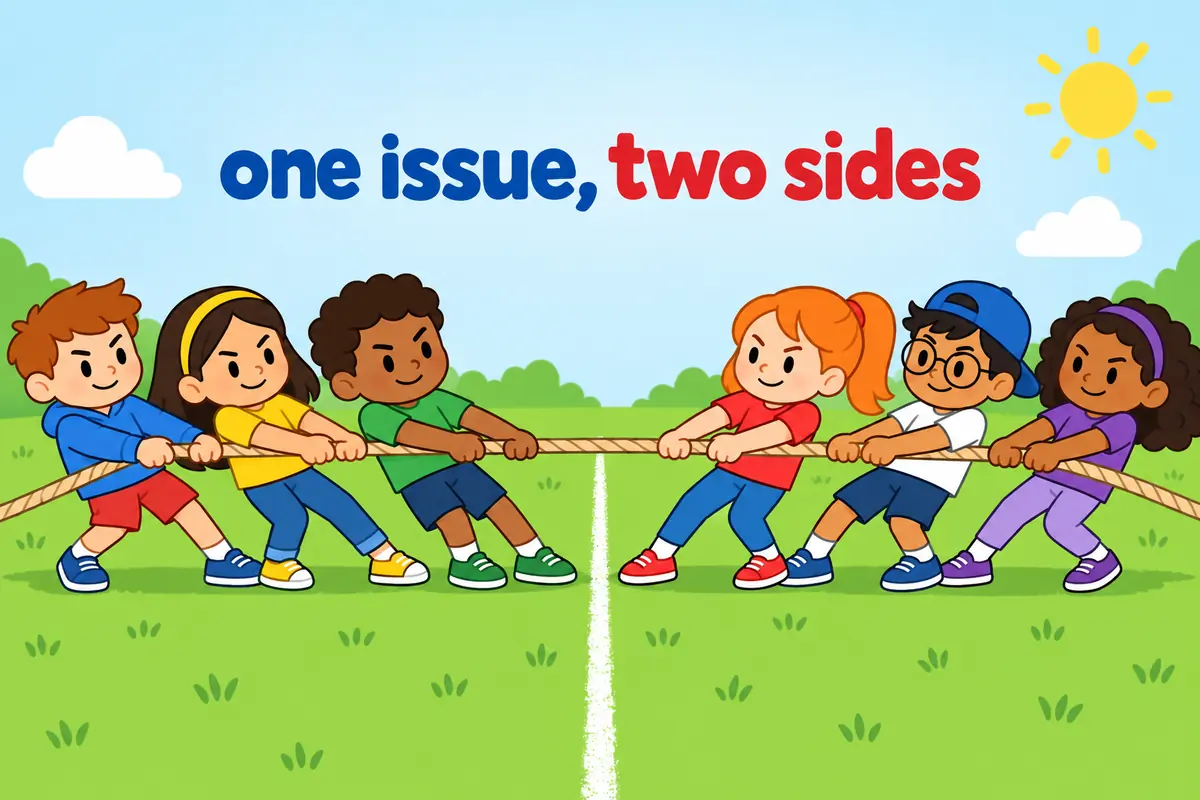
Divisive travels easily between registers. The nine sentences below move from a playground to a parliament and each one shows a group being pulled apart by a single issue, decision or figure.
| Context | Example sentence | Why this works |
|---|---|---|
| Classroom | The choice of class captain proved divisive. | A small contest makes the idea concrete for children. |
| Workplace email | The new shift pattern has been divisive among the team. | Names the group and the feeling without blame. |
| News report | The mayor called the housing plan the most divisive in years. | Ranks the effect and attributes the claim. |
| Politics | A divisive campaign left the country exhausted. | Shows the aftermath of a split rather than the argument. |
| Sports writing | His appointment divided fans and became a divisive talking point. | Pairs the verb divided with the adjective for variety. |
| Academic writing | The reform proved divisive within the faculty. | Uses within to limit the split to one body. |
| Opinion column | Few figures are as divisive as the outgoing chair. | Applies the adjective to a person by effect. |
| Family conversation | Where to hold the reunion was oddly divisive. | Shows the word works on a small scale too. |
| Religious affairs | The ruling was divisive among congregations. | Keeps the subject as the decision, not the people. |
| Local government | The road scheme became the most divisive item on the agenda. | Ranks the item and names the setting. |
| Media comment | Talk shows thrive on divisive questions. | Shows the adjective before a noun in opinion writing. |
| Community group | The fundraising idea was divisive within the committee. | Uses within to limit the split to one body. |
Only the sentence about the chair uses divisive of a person, and there it describes the effect that figure has on others. That is the natural exception: a divisive figure is one around whom people take sides. A partisan debate hardens the lines that a divisive issue first opens, and splitting a group is the effect the word names. Notice that no row praises or condemns the split; each one simply records the pull that a single subject exerts on a group.
Divisive vs controversial
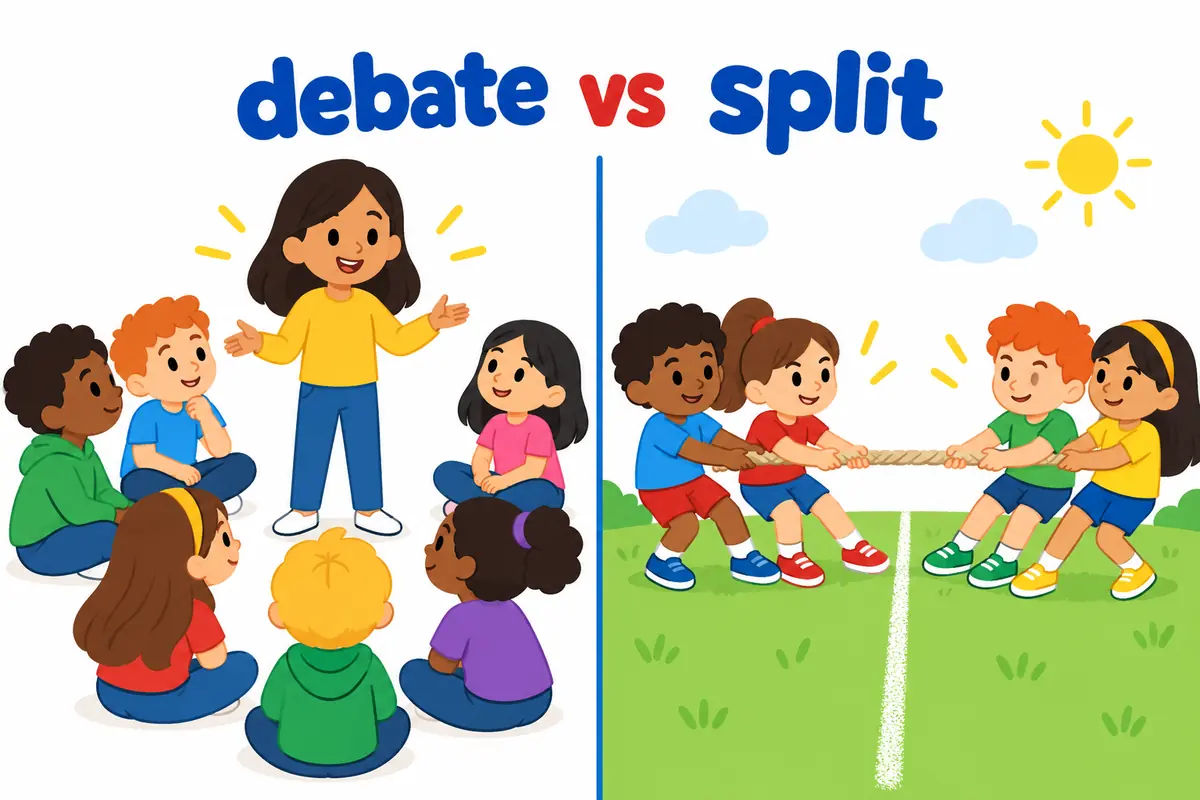
Divisive and controversial are close enough that writers treat them as twins, yet they answer different questions. Controversial means people disagree in public; divisive means that disagreement has hardened into opposing camps. A topic can be controversial and still leave a group intact, but a divisive one always draws a line through it.
| Attribute | divisive | controversial |
|---|---|---|
| Core effect | Splits a group into rival sides | Stirs public disagreement |
| Strength | Strong and polarising | Mild to strong |
| Typical subject | Issue, decision, figure, rule | Topic, book, film, opinion |
| Needs a group | Yes, someone must be split | No, the debate can stay abstract |
| Emotional tone | Wounding and personal | Intellectual and public |
| Typical partner | Deeply, bitterly, among | Highly, widely, around |
Verdict: choose controversial when people merely disagree in public, and divisive when you want to say that the disagreement has broken a group into sides.
Divisive, controversial or partisan?
Three labels describe conflict, but they answer different questions about how far the disagreement has gone. The table sets them against the strength of the split.
| Word | What it describes | Strength of split | Typical subject | Example |
|---|---|---|---|---|
| divisive | A cause that pulls a group apart | Strong | An issue, rule or figure | The plan proved divisive. |
| controversial | Something people argue about publicly | Mild to strong | A topic, film or opinion | The film was controversial on release. |
| partisan | Loyalty to one side over the whole | Strong and organised | A debate, vote or crowd | The debate turned sharply partisan. |
| polarising | Pushing people to opposite ends | Extreme | A leader or campaign | Her style was polarising from the start. |
The words form a line rather than a set: controversial invites argument, divisive splits a group, partisan commits each side to a camp, and polarising drives the two ends as far apart as they will go. Only divisive and contemporary politics share the word polarising, which is why the two so often appear side by side in commentary.
Word forms and grammar of divisive
Divisive has a small family, and the noun division is the member writers reach for most. The table separates the forms and marks the ones that sound formal.
| Form | Part of speech | Example |
|---|---|---|
| divisive | adjective | The proposal was divisive. |
| divisiveness | noun | Critics blamed the bill for its divisiveness. |
| division | noun | The vote exposed a deep division. |
| divide | verb | The plan divided the council. |
| divided | adjective | The council was sharply divided. |
| divisively | adverb, rare | He spoke divisively at the meeting. |
Common mistakes with divisive
- Incorrect:
The club was divisive after the vote.Correct: The club was divided after the vote. Rule: People and groups are divided; issues, plans and speeches are divisive. - Incorrect:
The policy was divisive between the teachers.Correct: The policy was divisive among the teachers. Rule: Use among for a group of three or more; between is for two. - Incorrect:
She made a divisive that upset everyone.Correct: She made a divisive remark that upset everyone. Rule: Divisive is an adjective and needs a noun or a linking verb, never stands alone. - Incorrect:
They argued divisive about the budget.Correct: They argued divisively about the budget. Rule: The adverb is divisively, and it is rare; a plainer phrase such as with deep disagreement usually reads better. - Incorrect:
The debate was very much divisive opinion.Correct: The debate divided opinion. Rule: When the subject is the event and the object is opinion, the verb divide is the natural choice.
Practice using divisive
Work through the six items, then check the reasoning rather than only the answer.
- Fill the gap: The new timetable proved ______ among parents.
- Choose the better word: The meeting left the team (divisive / divided).
- Correct the error: The topic was divisive between the two clubs.
- Build a sentence: use prove divisive about a school rule.
- Spot the register: which belongs in a news report — the plan proved divisive, or the plan totally split everyone?
- Rewrite with the noun: The policy divided the staff. Use divisiveness instead.
- Add the adverb: The council argued ______ for hours. Choose the correct adverb form.
- Correct the error: The team was divisive within itself after the loss.
Answers
- divisive — the adjective follows the linking verb proved and describes the timetable.
- divided — the team is the group that splits, so the verb participle fits.
- The topic was divisive among the two clubs — among is the natural choice for a group.
- Model answer: The new lunch rule proved divisive among the older pupils.
- The plan proved divisive — a report keeps the formal adjective and drops the slang intensifier.
- Model answer: The staff resented the divisiveness of the policy — the noun needs an article.
- divisively — the verb argued needs an adverb, and divisively is the correct form even though it is rare.
- The team was divided within itself after the loss — the group is divided, so the participle is correct.
The bottom line
Use divisive in a sentence when a single issue, decision or figure pulls a group into opposing sides. The two nuances that decide most sentences are these: divisive describes the cause of the split rather than the people split, and it is stronger than controversial because it implies a group already broken. Choose discordant only when you mean sounds or notes that clash.
Frequently asked questions about divisive
Is divisive always a criticism?
Divisive usually carries a negative tone, because splitting a group is rarely welcome. It can still be used as a plain description: a historian may call a law divisive without condemning it. The word reports an effect, so the judgement comes from the surrounding sentence rather than from divisive itself.
Can a person be described as divisive?
Yes. A divisive figure is someone around whom people take sides, and the label describes the effect that person has on a group. It says nothing about intent, so a reformer can be divisive without wanting a quarrel. In formal writing the phrase a divisive figure is the usual form.
What is the opposite of divisive?
The clearest opposites are unifying and consensus-building. A unifying speech draws a group together, while a divisive one pushes it apart. Where you want to stress the repair rather than the split, phrases such as bridge-building or unifying work better, because they name what the leader actually did.
Does divisive mean the same as divided?
No. Divided describes the state of a group that has already split, so a committee is divided. Divisive describes the cause of that split, so an issue is divisive. The two often appear together, because a divisive decision is what leaves a group divided afterwards.