Economic vs economical share a root but never share a job. Economic describes the economy as a whole, as in economic growth, while economical describes something that saves money, as in an economical car. A nation faces economic problems, but a shopper buys an economical option.
Economic vs Economical at a glance
- Economic is an adjective about the economy: economic policy, economic growth.
- Economical is an adjective about saving money or resources: an economical car.
- Economic works with large systems, and economical works with things that save.
- The commonest error is using economic where economical is meant, as in an economic car.
- The noun economy names the system, and the adverb economically carries both senses.
What do economic and economical mean?
Economic is an adjective meaning belonging to the economy, the system of trade, money, and work in a country. Economical is an adjective meaning careful with money or resources, or cheap to run. The Cambridge entry for economic and the Cambridge entry for economical keep the two apart, and one line shows it: economic policy shapes a nation, while an economical kettle saves power.
| Sense | Word | Plain meaning | Example |
|---|---|---|---|
| Relating to the economy | economic | Connected with trade and money as a whole | Economic growth slowed this year. |
| Financially worthwhile | economic | Justified by profit | The plan is not economic at this scale. |
| Saving money | economical | Careful with spending | She is economical with her budget. |
| Cheap to run | economical | Using little fuel or energy | This car is very economical. |
| Brief and efficient | economical | Using few words or moves | He wrote an economical reply. |
The shared root makes the pair tempting to merge, yet English keeps them apart by scale. Economic never means cheap, and economical never describes a whole country, so the noun after each word is the safest guide to the sense that is meant.
What is the difference between economic and economical?
The difference is scale and focus. Economic describes a whole system, a market, or a policy, and it never means cheap. Economical describes an individual choice or object that avoids waste, from a car to a sentence. A comparison such as addition vs edition shows the same pattern, where a shared root hides two separate words.
| Criterion | Economic | Economical |
|---|---|---|
| Core meaning | about the economy | saving money or resources |
| Focus | a whole system | a single choice or object |
| Typical nouns | growth, policy, crisis, system | car, method, meal, use |
| Opposite idea | political or social | wasteful or extravagant |
| Who it describes | nations, markets, industries | people, machines, purchases |
| Adverb | economically, economy sense | economically, saving sense |
| Common error | used for a cheap product | used for national issues |
Choose economic for anything owned by a nation or a market, and economical for anything that saves a household money.
How do you use economic and economical in a sentence?
Economic nearly always sits before a system noun, while economical can stand before a noun or pair with with; to watch the economy sense at work, read economic in a sentence.
| Pattern | Example | What it signals |
|---|---|---|
| economic + system noun | The country faced an economic crisis. | large-scale finance |
| economic + for or to | The mine is no longer economic. | profitable at scale |
| economical + noun | an economical car | saves money to run |
| be economical with + noun | Be economical with water. | use little of a resource |
| an economical + noun of style | an economical summary | brief and efficient |
Economic and economical in a sentence: examples across contexts
Different registers make the split visible, and a familiar root-sharing pair such as abel vs able follows the same rule.
| Context | Example sentence | Why this works |
|---|---|---|
| News report | Economic growth slowed to one percent this year. | economic describes a national system |
| Consumer advice | This small van is remarkably economical on fuel. | economical means cheap to run |
| Politics | The party promised a new economic policy. | economic pairs with policy |
| Home budgeting | An economical meal can still taste good. | economical means thrifty |
| Business writing | The plant is no longer economic at current prices. | economic means profitable |
| Engineering | The new engine runs economically at low speed. | the adverb points to fuel savings |
| Academic writing | Economic models predict slower trade. | economic marks the discipline |
| Environment | Be economical with paper in the office. | economical with means use little |
| Editorial writing | Her economical style wastes no words. | economical can describe prose |
| Regional report | The region is economically dependent on tourism. | the adverb covers the economy sense |
| Small business | The owner keeps costs low with an economical van. | economical means thrifty |
| Economics class | Students reviewed the economic data for the quarter. | economic marks the discipline |
Which should you use?
Match the word to the scale of the noun in front of it.
| Situation | Use | Example |
|---|---|---|
| A nation, market, or policy | economic | an economic slowdown |
| A project that must pay for itself | economic | The route is not economic. |
| A product that saves money | economical | an economical heater |
| Careful use of a resource | economical | economical with fuel |
| Brief, efficient wording | economical | an economical description |
Register is the second test. Economic belongs to news pages, policy papers and academic prose, where whole systems are the subject, while economical belongs to reviews, shopping guides and how-to advice, where the subject is a saving. When the two senses meet in the adverb economically, the noun in the sentence tells you which meaning is intended.
Word forms and grammar of economic and economical
| Form | Part of speech | Example |
|---|---|---|
| economy | noun | The economy grew slowly. |
| economics | noun | She studied economics at university. |
| economist | noun | The economist warned of a slowdown. |
| economic | adjective | economic growth |
| economical | adjective | an economical meal |
| economically | adverb | The engine runs economically. |
| uneconomical | adjective | an uneconomical design |
Common mistakes with economic and economical
Mistake 1: economic for a cheap item. Incorrect: They bought an economic car. Correct: They bought an economical car. Rule: a product that saves money is economical.
Mistake 2: economical for national issues. Incorrect: the economical crisis. Correct: the economic crisis. Rule: matters of the whole economy are economic.
Mistake 3: the adjective where an adverb is needed. Incorrect: She spends very economic. Correct: She spends very economically. Rule: the adverb for saving is economically.
Mistake 4: economical for profitability. Incorrect: The project is not economical at this scale. Correct: The project is not economic at this scale. Rule: meaning profitable or justified is economic.
Mistake 5: economic with the phrase economical with. Incorrect: Be economic with paper. Correct: Be economical with paper. Rule: the phrase for using little of a resource is economical with.
Practice using economic and economical
- Fill in the blank: The country is facing a serious ___ downturn.
- Choose the better word: This small car is very (economic / economical) on fuel.
- Correct the error: The government announced new economical policies.
- Build a sentence: use economical with to give advice about electricity.
- Spot the register: which fits a news headline, (a) Economic growth slows, or (b) Economical growth slows?
- Fill in the blank: The company closed the plant because it was no longer ___.
Answers
- economic, because a downturn affects the whole economy.
- economical, because it saves fuel and money.
- The government announced new economic policies; national policy is economic.
- Be economical with electricity in the evenings.
- (a), because growth of the economy is economic.
- economic, because the plant could no longer be run at a profit.
The bottom line
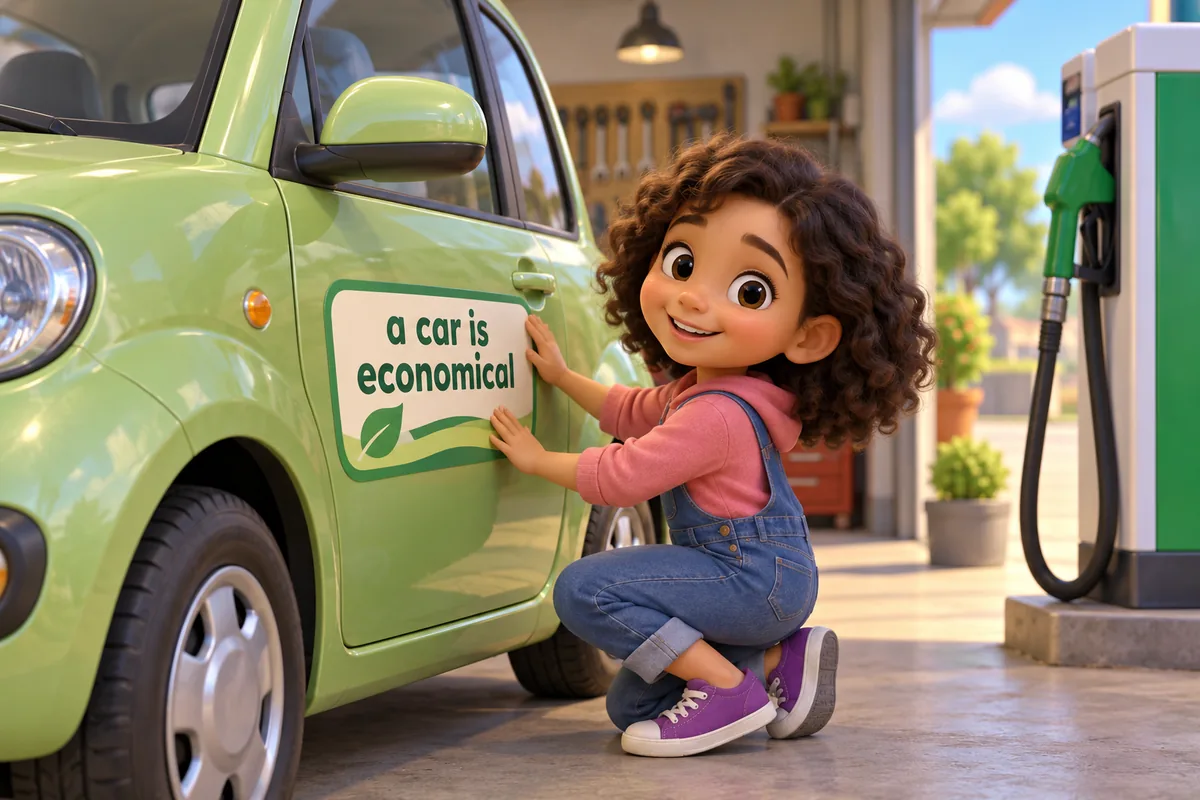
The economic vs economical choice comes down to scale: economic describes the economy as a system, and economical describes something that saves money or resources. If the noun is a nation, a market, or a policy, choose economic; if the noun saves fuel, money, or words, choose economical. The adverb economically covers both senses, so read the noun before you decide which adjective fits.
Frequently asked questions about economic and economical
What is the difference between economic and economical in one line?
Economic relates to the economy as a system, while economical means saving money or resources. Economic growth concerns a whole country, and an economical car concerns a household budget. If the sentence names a nation, a market, or a policy, use economic; if it names a saving, use economical.
Can economic ever mean cheap?
Economic can mean financially worthwhile, as in a mine that is no longer economic, meaning it cannot be run at a profit. It never means cheap to buy. A low-cost, low-fuel product is economical, so the two senses stay apart: economic means profitable at scale, and economical means thrifty.
What is the adverb of economic and economical?
Both words spell the adverb economically, and context separates the senses. In the region is economically strong, the word refers to the economy as a whole; in the engine runs economically, it refers to fuel savings. The shared adverb is one reason the adjectives get swapped.
Is economical always about money?
Not only money. Economical also describes using few resources, such as an economical use of water or an economical style that says much in few words. Anything that avoids waste can be economical, while economic stays tied to the economy and to large-scale finance.