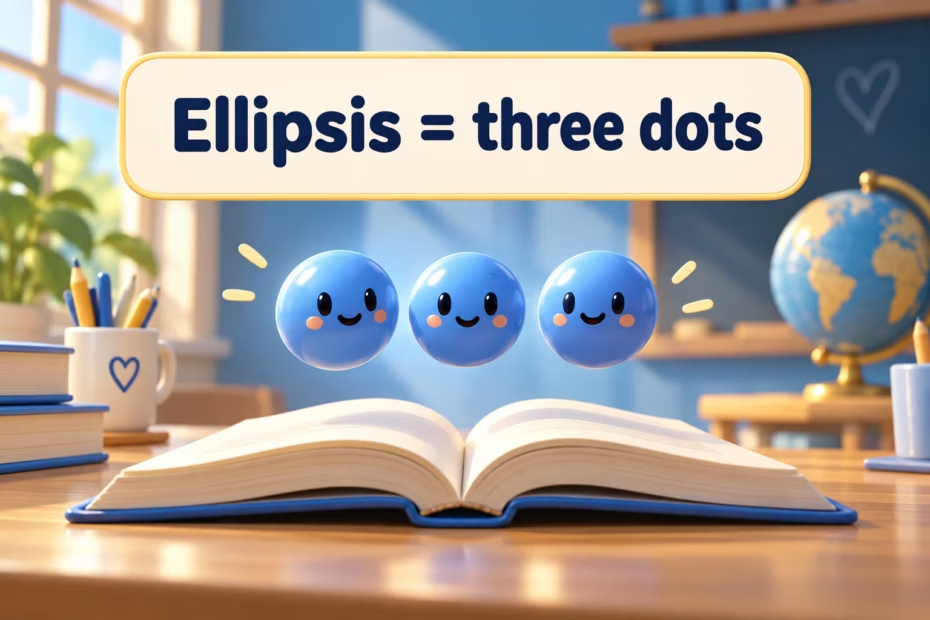
An ellipsis in a sentence is three dots used to show that words are omitted from a quotation or that a speaker pauses or trails off. The mark can appear as three periods (…) or as the single character (…) depending on typography and style. Its spacing and punctuation depend on the sentence and the style guide.
Key points
- An ellipsis is three dots, often typed as three periods or one ellipsis character.
- In a quotation, it can show that material has been omitted; never omit words in a way that changes the source’s meaning.
- In dialogue or informal prose, it can signal hesitation, a pause, or an unfinished thought.
- Style guides differ on spacing, sentence-ending dots, and details of quotation formatting.
- Use an ellipsis only when the omission or pause matters; it is not a general-purpose comma or dash.
What Does an Ellipsis Mean in a Sentence?
An ellipsis can signal omitted words, a pause, or a thought that trails off. The surrounding sentence tells readers which function is intended: a marked gap inside a quotation usually indicates omitted material, while a character’s dialogue may use dots to represent hesitation or silence.
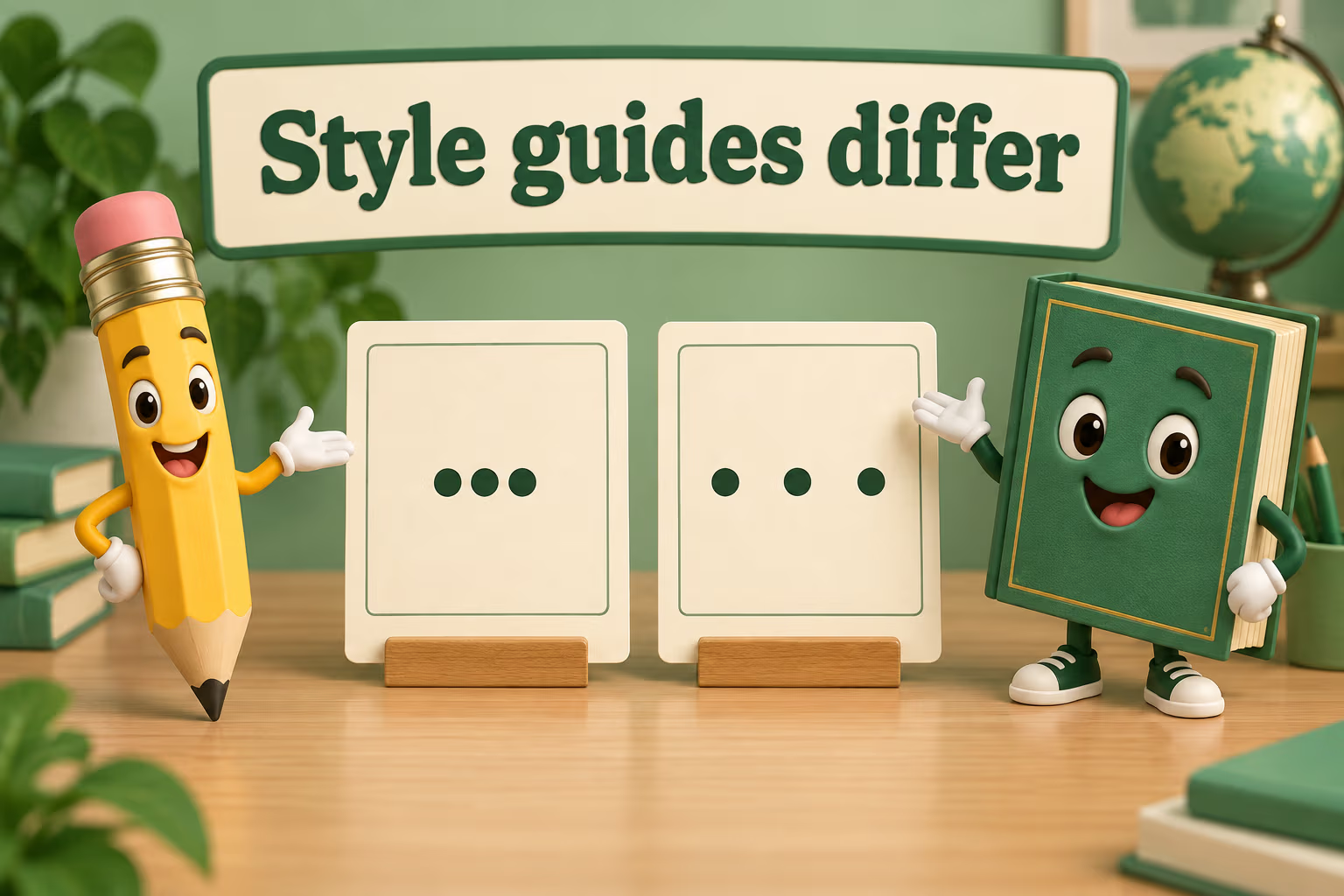
The plural form is ellipses. In typography, the mark may be three separate periods (...), three spaced points (. . .), or a single ellipsis character (…). These forms are not interchangeable in every publication: follow the assigned style guide for formal writing.
How Do You Use an Ellipsis to Omit Words?
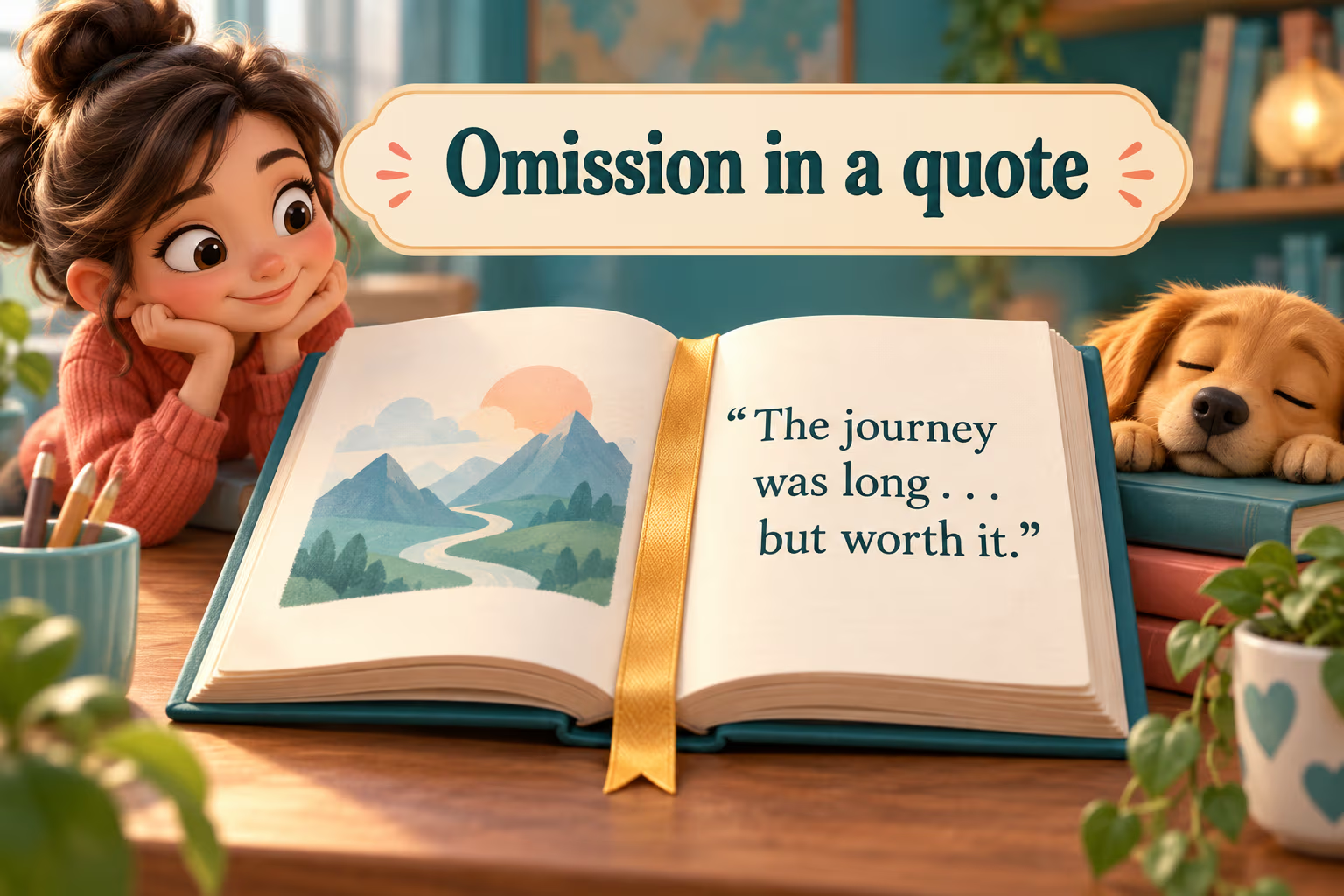
Use an ellipsis inside a quotation when you remove words from the original and need to show the gap. The shortened quote must stay faithful to the original meaning, and the remaining words must still make grammatical sense in their new context.
- Choose a complete, relevant passage. Confirm the words and context in the original source.
- Remove only what is unnecessary. Keep qualifications, limits, and nearby wording that affect the claim.
- Mark an internal omission in the format your style guide requires. MLA uses three spaced periods for an omission within a sentence; Chicago’s treatment depends on the location and sentence boundary.
- Read the shortened quote in context. Check that the remaining grammar works and that a reader would not infer a claim the original author did not make.
For example, if the source says, “The garden opens at nine, welcomes school groups, and closes at four,” a faithful shortened quote could read: “The garden opens at nine . . . and closes at four.” Removing “welcomes school groups” does not change the stated opening and closing times. Omitting a phrase such as “only on weekdays,” by contrast, could mislead a reader about when the garden opens.
Purdue OWL likewise instructs writers to replace missing words with an ellipsis and preserve the source’s basic meaning and grammatical integration. If omitted text could create ambiguity, quote a longer passage or explain the context instead.
Can an Ellipsis Show a Pause or an Unfinished Thought?
Yes. In dialogue and informal prose, an ellipsis can suggest hesitation, silence, or a speaker who does not finish a thought. “I thought we could… maybe try again” conveys hesitation; “I thought we could—” suggests a sharper interruption, so the dash may be more accurate when another speaker cuts in.
In fiction, an ellipsis can also show a faltering voice or a pause between thoughts. The Chicago Manual of Style says fiction conventionally uses three dots for such pauses and notes that question or exclamation marks may remain when the context calls for them. These are editorial conventions; a publisher’s house style takes priority.
Do not add ellipses to every pause in ordinary prose. A comma, period, or dash is usually clearer when the sentence has a straightforward grammatical relationship. Frequent ellipses can make writing feel uncertain or overdramatic when that is not the intended voice.
How Many Dots Do You Use, and Where Do Spaces Go?
An ellipsis is commonly represented by three dots, but style guides differ on how it is spaced and how it interacts with a sentence-ending period. In ordinary web writing, three close-set periods (...) or the single character (…) are common; formal manuscripts should follow one consistent style.
| Context | What the dots signal | Practical check |
|---|---|---|
| Middle of a quotation | Words have been left out | Use the assigned style’s spacing and preserve the source’s meaning. |
| End of a deliberately unfinished sentence | The quoted or spoken thought trails off | Keep any question mark or exclamation point needed to express the intended tone. |
| Dialogue pause | Hesitation, faltering, or silence | Use a dash instead if the voice is interrupted abruptly. |
| End of a quotation after omitted text | Omission plus sentence boundary, depending on the style | Check the manual: some systems distinguish a period ending the source sentence from the three omission points. |
MLA’s guidance for an omission within a sentence uses spaced points: . . .. Chicago’s quotation rules distinguish internal omissions from sentence-ending omissions, and Chicago’s fiction guidance limits dialogue pauses to three dots. Therefore, the blanket instruction to “put a space before and after the ellipsis” is too broad: placement and spaces depend on what the dots mean and the format being followed.
What Are Common Ellipsis Mistakes?
The most common error is using dots where a comma, period, or dash would express the relationship more accurately. An ellipsis should represent a real omission, pause, or trailing thought rather than decorate an otherwise complete sentence.
- Changing a quotation’s meaning: Do not remove a qualification, exception, or condition that changes the author’s point.
- Using it as a casual connector: Replace “The lecture ended…we went home” with a period, semicolon, or conjunction when the writer means a direct transition.
- Breaking up a noun phrase: “The…assignment” does not mark a useful pause or omitted quote material. Write “the assignment” unless words have actually been removed from a quotation.
- Mixing styles: Avoid switching between a single ellipsis character and differently spaced periods without a reason.
- Overusing dramatic pauses: Reserve the mark for meaningful hesitation or an unfinished thought.
The original examples below are retained exactly as published. Several place ellipses inside ordinary phrases or use them where a sentence boundary would usually be clearer; use the explanations above to distinguish those source examples from standard edited usage.
Curious about those three consecutive dots you often see in a sentence? Allow me to introduce you to the concept of an ellipsis. An ellipsis, represented as ‘…’, is a punctuation mark used to indicate the omission of words from a quote or to create a pause in writing.
This handy trio of dots can serve various functions in writing, such as building suspense, indicating a trailed-off thought, or showing a pause in dialogue. Understanding how to use ellipses effectively can enhance the flow and tone of your writing, making them a valuable tool in your punctuation arsenal.
7 Examples Of Ellipsis Used In a Sentence For Kids
- I like to color… in my coloring book.
- The bird flew high… in the sky.
- The cat has a long… tail.
- The sun is bright… in the sky.
- I can hear the wind… blowing outside.
- The flower smells… so nice.
- The elephant has a big… trunk.
14 Sentences with Ellipsis Examples
- Can we meet later to discuss the…assignment…?
- I’m having trouble understanding the…lecture slides…from last week.
- Have you bought the…textbook…for this course yet?
- I’m going to skip the next class…it seems like it’s just a review session.
- Do you think we’ll have a…midterm…for this subject?
- The professor’s explanation was a bit unclear…I hope they clarify it next time.
- The library is closed on Sundays…so we’ll have to find another place to study.
- I’m not sure if the…submission deadline…is the same for everyone.
- The campus cafeteria closes early on Fridays…so we might need to plan our meals ahead.
- The syllabus mentions a group project…have you found your group members yet?
- Let’s meet at the…library…after class to work on our group project.
- The syllabus says there will be a…guest speaker…next week.
- I missed the last lecture…do you mind sharing your notes with me?
- Do you think we’ll have a…presentation…as part of the final assessment?
How To Use Ellipsis in Sentences?
Ellipsis is a punctuation mark that indicates the omission of words or a pause in a sentence. It consists of three consecutive periods (…) and is commonly used to create suspense or to show a trailing off of thought.
To effectively use ellipsis in a sentence, first, consider where you want to place it. The most common placements are at the beginning, middle, or end of a sentence. For example, “I went to the store… and then I realized I forgot my wallet.”
When using an ellipsis to indicate the omission of words in a quote or text, make sure that the meaning is not altered. For example, “The team scored two goals in the first half … securing their spot in the finals.”
It is important to note that there should be a space before and after the ellipsis, and no additional punctuation is needed unless it is part of the original sentence. Practice using ellipsis to convey a sense of suspense or a pause in your writing. Overusing ellipsis can distract from your message, so use it sparingly for maximum impact.
In conclusion, ellipsis is a powerful punctuation mark that can add depth and intrigue to your writing. Mastering its proper usage will enhance your writing skills and make your sentences more engaging for your readers.
Conclusion
In writing, ellipsis is a valuable tool that allows for the omission of words or phrases in a sentence, helping to convey a sense of continuity, suspense, or emphasis. Using ellipsis can create a more dynamic and engaging style of writing by leaving some information to the reader’s imagination. It can also be used to indicate a pause in speech or thought, adding depth and nuance to the text.
Overall, mastering the use of ellipsis in sentences can enhance the flow and impact of your writing, making it more compelling and engaging for the reader. When used thoughtfully and strategically, ellipsis can help convey emotion, create suspense, or simply streamline the text for a more concise and impactful message.
Frequently Asked Questions About Ellipses in Sentences
Does an ellipsis always mean words were omitted?
No. In a quotation, an ellipsis can show that words were left out. In dialogue or informal prose, it can instead indicate hesitation, silence, or an unfinished thought. Readers use context to tell the functions apart, so an editor should choose the punctuation that makes the intended meaning clear.
Is an ellipsis three dots or four?
The ellipsis itself is generally three dots. Some quotation styles place a sentence-ending period next to the three omission points, which can produce four marks when the omission also crosses a sentence boundary. Follow the required manual; four visible marks do not automatically mean that every ellipsis has four dots.
Should there be spaces between ellipsis dots?
It depends on the style. MLA uses three spaced periods for an omission within a sentence, while ordinary digital prose often uses the single ellipsis character (…) or three close-set periods. Choose the format required by your school, publisher, or house style and use it consistently.
Can I use an ellipsis at the beginning of a quotation?
Often, an opening ellipsis is unnecessary because readers already understand that a quotation begins where the writer chose to begin it. Some style guides discourage dots at the start or end of a quotation unless they prevent a genuine misunderstanding. Check the specified manual and never use the mark to imply words that were not in the original.
What is the difference between an ellipsis and a dash?
An ellipsis usually indicates omitted material, hesitation, silence, or a thought that fades. A dash more often signals an abrupt break or interruption. In “I thought we could…,” the speaker hesitates; in “I thought we could—,” another voice may cut the speaker off.
Sources and Further Reading
The Chicago Manual of Style’s 18th-edition Q&A on ellipses in fiction explains three-dot pauses in dialogue and distinguishes them from omissions in quotations. The MLA Style Center’s guidance on styling ellipses describes spaced periods for omissions within a sentence. Purdue OWL’s quotation guidance says omitted words should be marked and stresses preserving the source’s meaning and grammatical fit. For more punctuation examples, see our guide to using an ellipsis in writing.