What “Emcee” Means and How to Use It
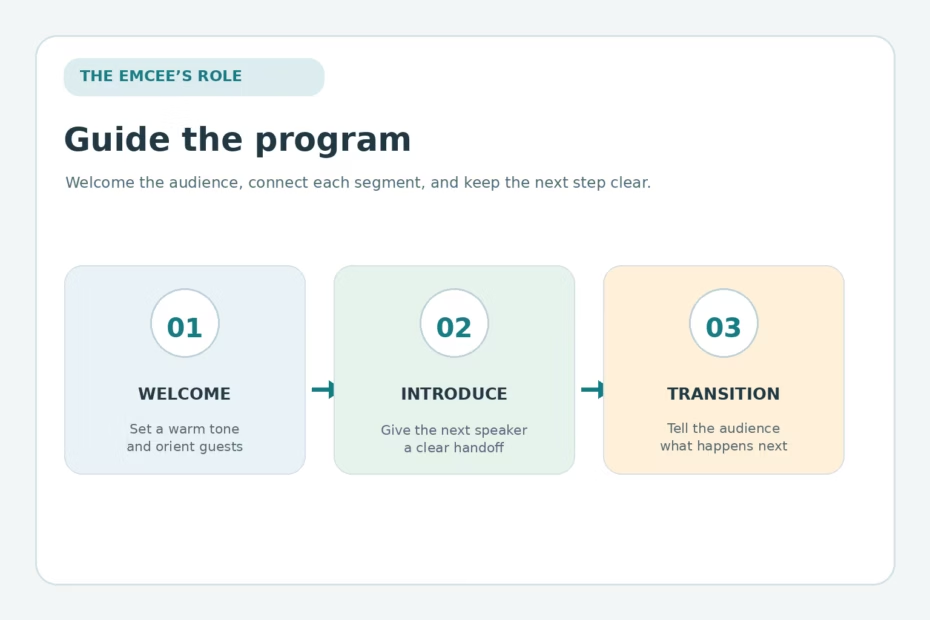
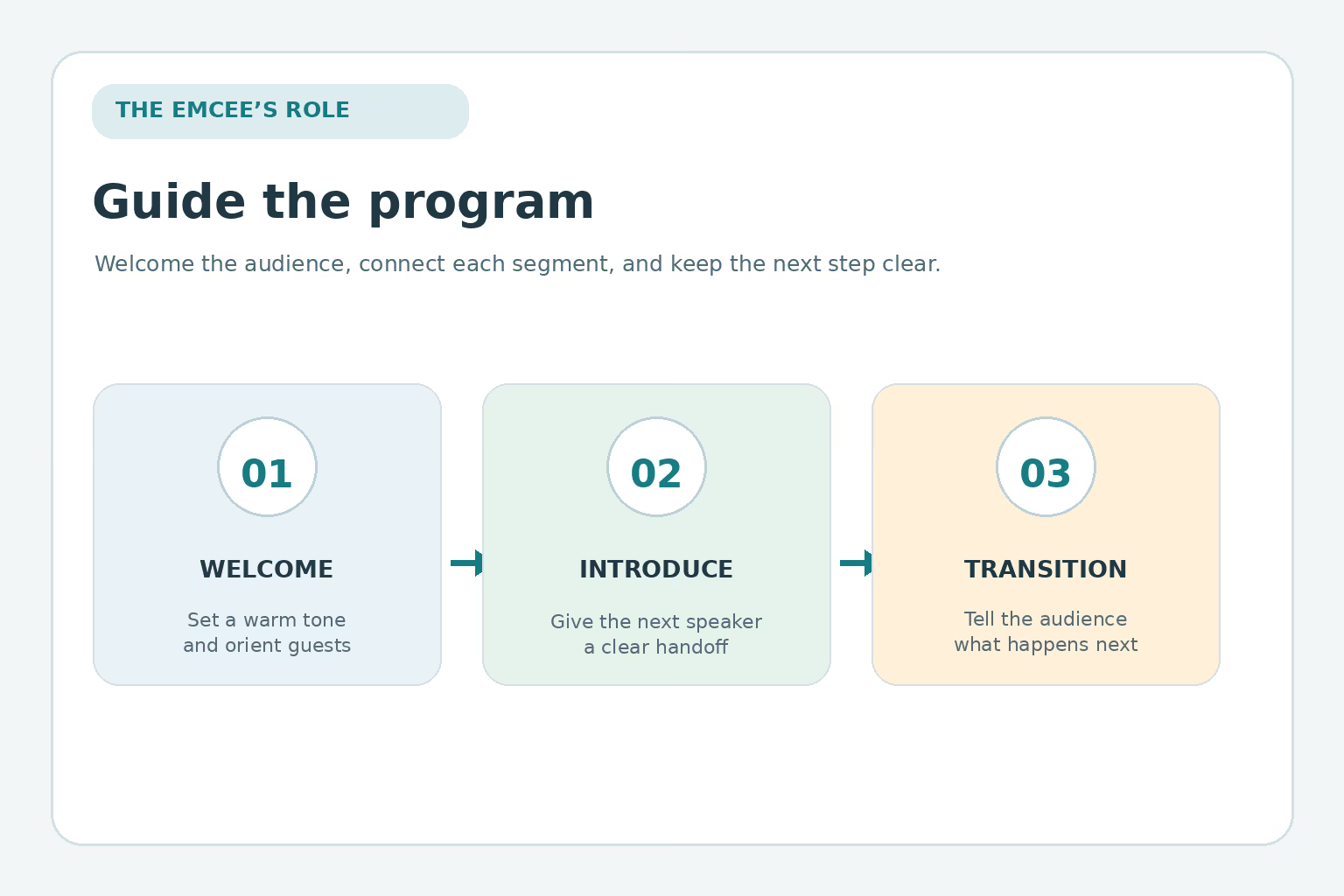
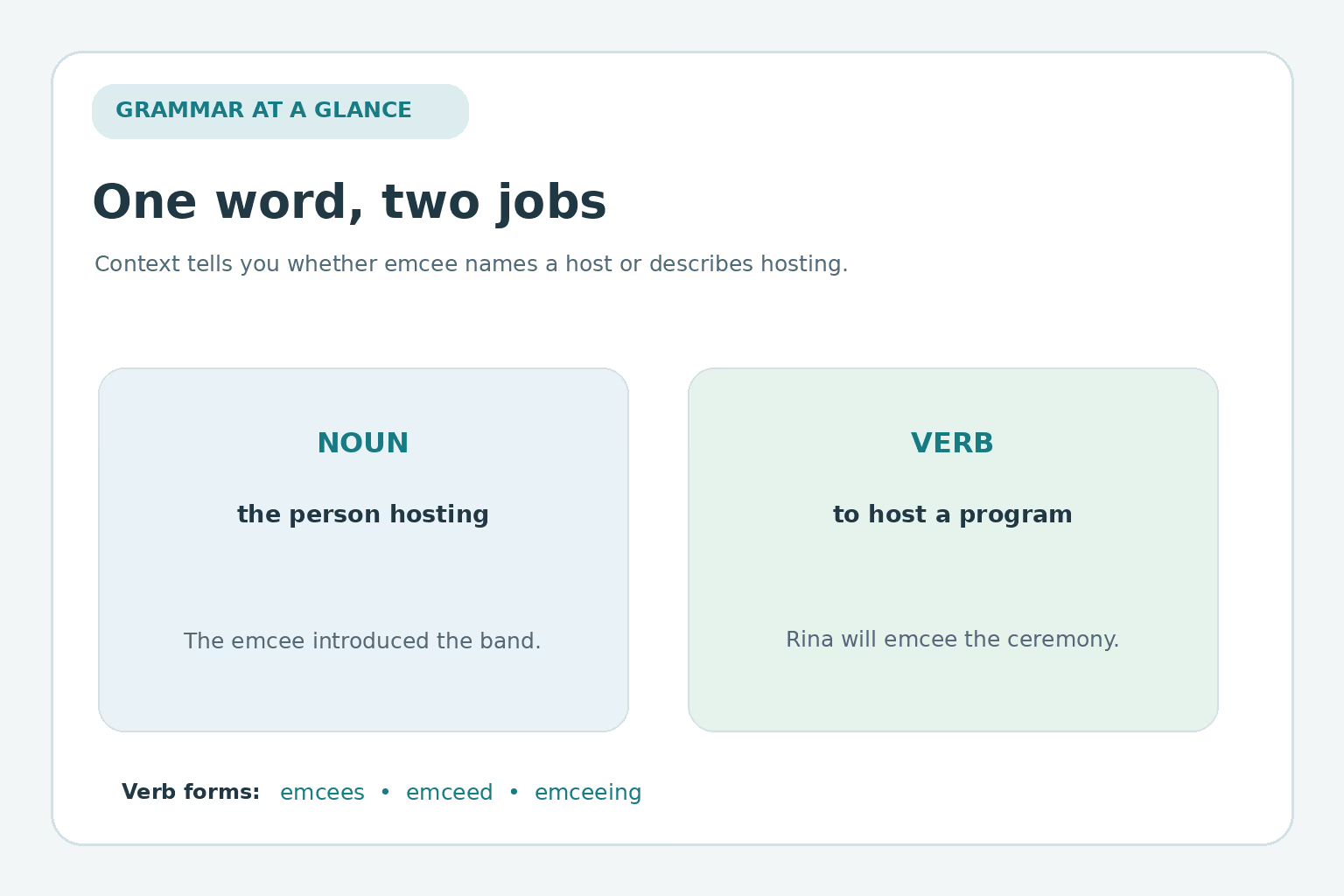
Emcee names a host who introduces performers or speakers and guides an event’s program. It can also be a verb: to emcee means to host or present that program. The word comes from saying the letters “M.C.,” an abbreviation for “master of ceremonies.” It is often written as one word in ordinary prose: “The emcee welcomed the guests,” or “Maya will emcee the awards dinner.”
The role changes with the event. A wedding emcee may introduce toasts and signal the next part of the reception; a concert emcee may welcome the audience and introduce the acts. Neither example means the host necessarily planned the event, controls the sound system, or makes every decision. In a sentence, describe the specific job the person performs.
Emcee as a Noun or a Verb
As a noun, emcee refers to the person: “Our emcee introduced the keynote speaker.” Use an article or possessive before the word when the sentence needs one: an emcee, the emcee, or your emcee. As a verb, it describes what someone does: “Jordan will emcee the benefit.” This verb is transitive in that example because it takes an object, the benefit. It can also appear without an object when the event is already clear: “She emcees every year.”
The standard verb forms are emcees (present), emceed (past), and emceeing (present participle). The double e remains in emceeing; a hyphen is not needed. Compare: “Lee emcees the monthly open mic,” “Lee emceed last night’s show,” and “Lee is emceeing tonight.” In a formal introduction, you can instead say that someone “will serve as the master of ceremonies.”
| Form | Example | What it does |
|---|---|---|
| Noun | The emcee introduced the panel. | Names the host. |
| Present verb | Rina emcees the ceremony. | Describes a current or usual action. |
| Past verb | Rina emceed the ceremony. | Places the hosting in the past. |
| Participial form | Rina is emceeing the ceremony. | Shows an action in progress. |
Emcee, MC, or Master of Ceremonies?
Emcee is a convenient spelling in general writing. You may also see MC or M.C. as an abbreviation, especially in event listings, music, or a person’s preferred professional title. Follow the spelling used by the person or organization when naming a particular host. If your audience might not know what MC means, write master of ceremonies on first mention and explain that the person is the event’s emcee.
Use lowercase emcee for the common noun and verb in the middle of a sentence: “The emcee introduced the band,” and “Nico will emcee the discussion.” Capitalize it when it begins a sentence or appears in a title using title case, but it is not ordinarily a proper noun. The plural noun is emcees: “Two emcees shared the program.”
How to Write a Clear Sentence with Emcee
- Choose the part of speech. If the word means the host, use a noun phrase: “The emcee thanked the volunteers.” If it means hosting, use a verb: “Sam will emcee the showcase.”
- Name the event or task. The object makes the verb’s meaning concrete: “She emceed the ceremony” is more informative than “She emceed.”
- Keep the host’s responsibility accurate. An emcee may introduce a speaker, explain a transition, or invite applause. Do not imply that the person organized the event unless that is also true.
- Use a natural tense. Use will emcee for a future program, is emceeing for an event in progress, and emceed for a finished event.
- Read the sentence aloud. Because emcee sounds like the names of the letters M and C, a short context clue can help a reader who has not encountered the spelling before.
Short Emcee Script Examples
When you are writing an introduction for an event, the word can sit naturally in a brief sentence. For example: “Avery will emcee tonight’s science fair, introduce each student team, and announce the schedule.” Or: “The emcee paused while the next speaker took the stage.” These lines identify the host and give the reader a clear action without assigning the person every production responsibility.
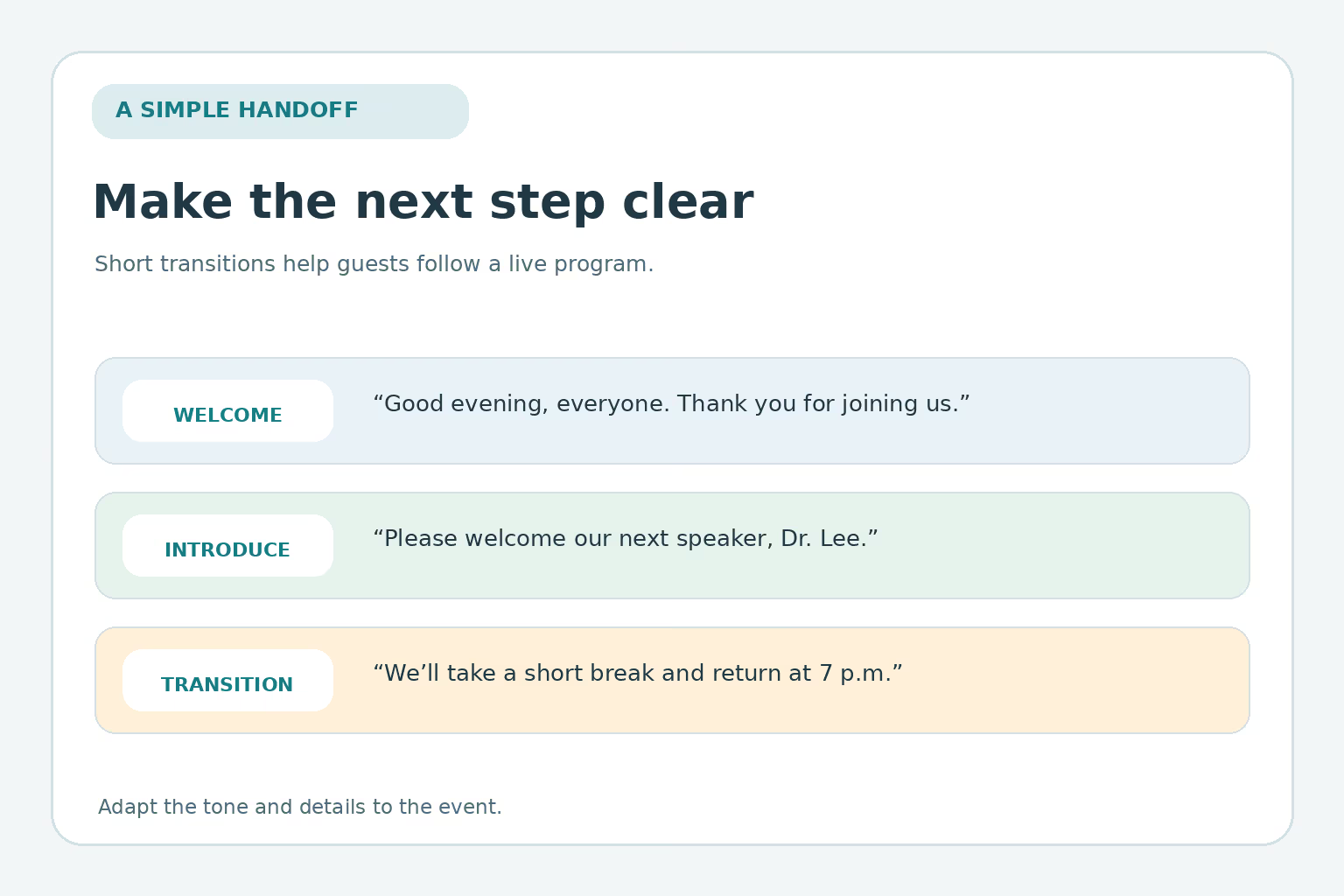
For the spoken program itself, an emcee can use simple transitions such as “Please welcome our next speaker,” “We’ll take a short break and return at 7 p.m.,” or “Thank you to the performers; the closing remarks will begin shortly.” These are sample lines, not fixed formulas. A wedding, a school assembly, and a comedy show call for different levels of formality and energy. Keep announcements brief, pronounce names as speakers request, and make timing details easy to hear.
Common Usage Questions
Is emcee one word? Yes, emcee is commonly written as a single word when used as a noun or verb. MC and M.C. are alternative abbreviations, and house style may determine which form to use.
Is emcee a noun or a verb? It can be either. “The emcee is ready” uses the noun; “They emcee the monthly event” uses the verb. The surrounding words show which meaning is intended.
How do you spell the past tense? Use emceed: “Pat emceed the fundraiser.” For the ongoing form, use emceeing, with two es after the c.
Does an emcee organize the event? Not necessarily. The emcee hosts or guides the program. Planning, production, and technical duties may belong to other people unless the event assigns those jobs to the same host.
Quick Takeaway
Use emcee as a noun for the person guiding an event and as a verb for hosting it. Add the event or a specific task when it makes the sentence clearer, choose the tense that fits the timeline, and describe the host’s actual responsibilities.

Are you curious about the role of an emcee? An emcee, short for master of ceremonies, is the person responsible for hosting an event, guiding the audience through the program, and ensuring the event runs smoothly.
Emcees use their public speaking skills to engage the audience, make announcements, introduce speakers or performers, and keep the energy up throughout the event. Whether it’s a wedding, a corporate event, a concert, or a comedy show, the emcee plays a crucial role in setting the tone and keeping the event on track.
7 Examples Of Emcee Used In a Sentence For Kids
- Emcee is the person who speaks at an event.
- The emcee said hello to everyone.
- The emcee announced the winner of the game.
- We listened to the emcee as he told a story.
- The emcee made everyone laugh with a joke.
- We clapped for the emcee after the performance.
- The emcee thanked everyone for coming to the party.
14 Sentences with Emcee Examples
- Emcee your college’s annual talent show to showcase the diverse talents of your peers.
- As the emcee of a debate competition, keep the audience engaged and the rules clear.
- Emcee a fundraising event to support a social cause and raise awareness among college students.
- Host a quiz competition as the emcee and encourage healthy competition among students.
- As the emcee of a college sports event, motivate teams and keep the energy levels high.
- Emcee the farewell party for seniors, making it a memorable event with heartfelt speeches and fun activities.
- Organize a poetry slam competition and serve as the emcee to promote creative expression among students.
- Emcee a fashion show at your college to celebrate style and creativity among students.
- Coordinate a music concert as the emcee to introduce each performer and create a lively atmosphere.
- Lead a panel discussion on current events as the emcee and facilitate meaningful conversations among students.
- Emcee a networking event at your college to help students connect with professionals in their field of interest.
- Host a comedy night at your college as the emcee to provide a platform for budding comedians to showcase their talent.
- Organize a dance competition and serve as the emcee to add excitement and entertainment to the event.
- Emcee a workshop on career development to provide valuable insights and tips to college students.
How To Use Emcee in Sentences?
To use Emcee in a sentence, first identify the main subject or action you want to highlight. For example, if you want to emphasize the role of the Emcee in a play, start your sentence with “The Emcee in the play set the tone for the entire performance.”
Next, consider the context in which you want to use the term. Is it referring to a host, a master of ceremonies, or a software tool? Depending on the intended meaning, adjust your sentence accordingly.
Remember to capitalize the word Emcee when using it as a proper noun, referring to a specific individual or title. For example, “Our Emcee for the evening was a skilled presenter who kept the audience engaged throughout the event.”
If you are using Emcee as a verb, meaning to act as a master of ceremonies, make sure to place it in the appropriate tense. For instance, “She will Emcee the awards ceremony next weekend.”
To make your sentence more impactful, try including descriptive adjectives or adverbs to provide more context. For example, “The enthusiastic Emcee energetically welcomed the guests to the party.”
Lastly, always proofread your sentence to ensure it conveys your intended meaning clearly and effectively. Practice incorporating Emcee into various sentences to become more comfortable using the term in your writing.
Conclusion
In conclusion, an emcee plays a crucial role in events, setting the tone, keeping the audience engaged, and facilitating smooth transitions between different parts of the program. Their ability to captivate and entertain the audience through well-crafted sentences, humor, and charisma is key to the success of any event. Through their skillful compering, an emcee can enhance the overall experience for attendees and ensure that the event runs smoothly.
Emcees are essential in various settings, from weddings and parties to corporate functions and conferences. Their expertise in delivering sentences with confidence and flair helps create a welcoming atmosphere and keeps the event on track. A skilled emcee can truly elevate an event, leaving a lasting impression on the audience and ensuring that the occasion is memorable for all the right reasons.