Empathy in a sentence describes understanding another person’s feelings or point of view, often by imagining their situation. For example, “Mina showed empathy by listening without assuming she knew exactly how her classmate felt.” In ordinary usage, empathy is an uncountable noun.
Key facts
- Empathy is a noun and is usually uncountable: “She showed empathy.”
- Common patterns include empathy for someone, empathy with a person or group, and show/feel empathy.
- Empathetic and empathic are adjectives; empathize is a verb.
- Empathy involves understanding or sharing another person’s experience; it does not mean you know their feelings with certainty or must agree with them.
- Sympathy often means concern or sorrow for someone, while empathy often emphasizes understanding or sharing their perspective. Usage can overlap.
What Does Empathy Mean?
Empathy is the ability to understand or share another person’s feelings or experience by considering their situation. Cambridge defines it as sharing another’s feelings or experiences by imagining what it would be like to be in that person’s position. Psychology discussions also distinguish cognitive empathy (understanding another perspective) from affective empathy (an emotional response to another’s feelings); these terms describe related dimensions, not a single sentence pattern.
Empathy is not the same as certainty. A speaker can try to understand a friend and still misread what the friend feels, so careful language leaves room for correction: “I can see why that might feel frustrating—am I understanding you?” Empathy also does not automatically require agreement, advice, or action.
How Do You Use Empathy in a Sentence?
Use empathy as a noun with a verb such as show, feel, express, or develop, or place it after for or with to identify whose perspective is being considered.
| Pattern | Example | Usage note |
|---|---|---|
| show empathy | “Ravi showed empathy by listening before offering advice.” | Often describes an observable response. |
| empathy for + person/group | “The class discussed how to express empathy for people facing a difficult move.” | For is common when naming the person or group. |
| empathy with + person/group | “She felt empathy with classmates adjusting to a new school.” | With highlights identification or shared understanding. |
| feel/develop empathy | “Reading the memoir helped him develop empathy for the narrator.” | Empathy is generally uncountable in everyday English. |
| empathetic/empathic + noun | “An empathetic reply acknowledged the concern without dismissing it.” | Both adjective forms are used. |
| empathize with + person | “I can empathize with your disappointment.” | Empathize is the verb; it is usually followed by with. |
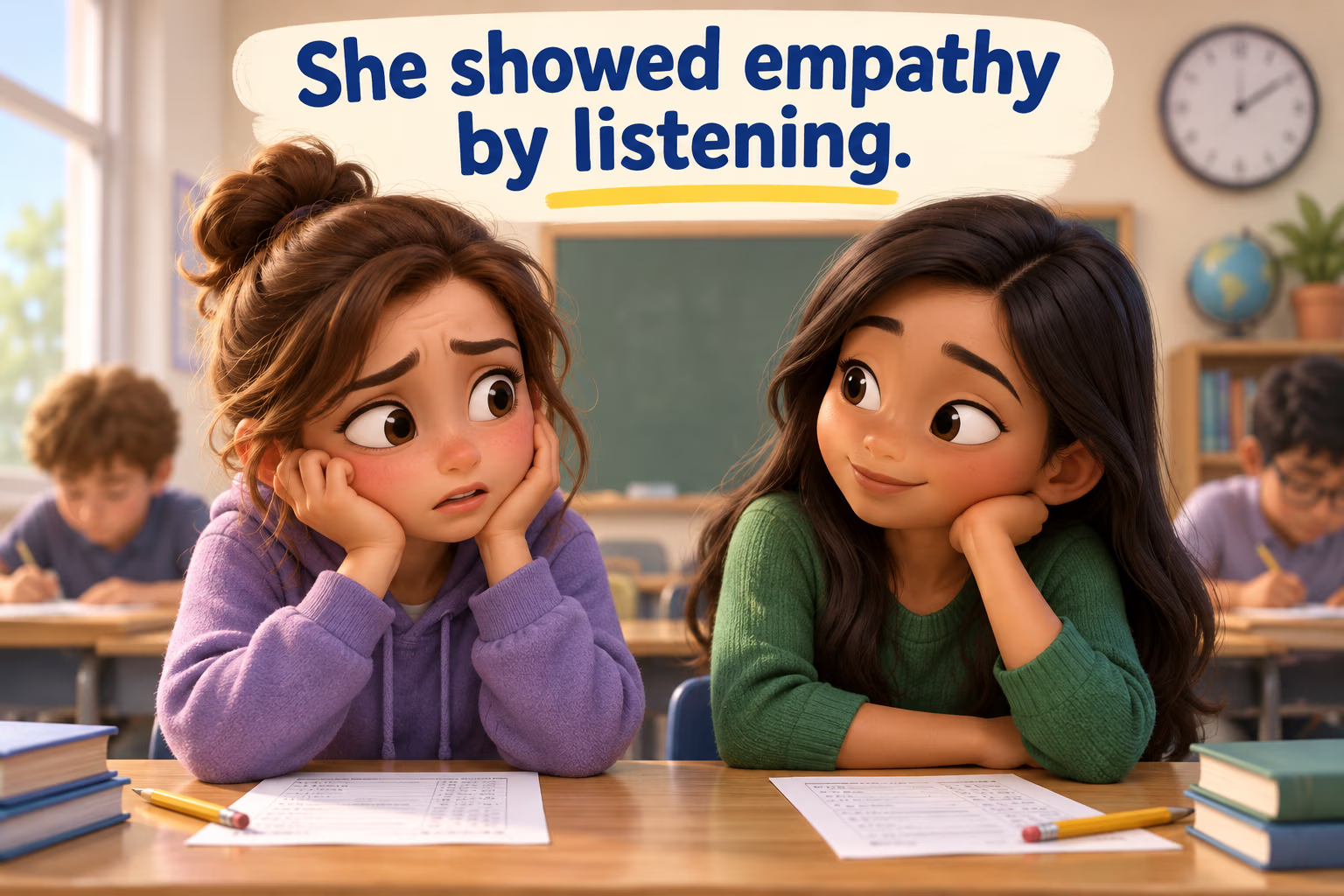
For a clear sentence, name the action or context that supports the claim instead of treating empathy as a vague compliment. “Leah showed empathy by asking what support her teammate wanted” gives readers a concrete example; it does not assume that Leah can know the teammate’s private feelings.
Empathy vs. Sympathy: What Is the Difference?
Empathy commonly emphasizes understanding or sharing another person’s perspective or feelings; sympathy commonly emphasizes concern for someone who is experiencing hardship. The distinction is useful, but everyday usage and specialist definitions can overlap, so context matters more than a rigid rule.
- Empathy: “After hearing why the move was difficult, I could empathize with how unsettled Jo felt.”
- Sympathy: “I felt sympathy for Jo after the family had to leave their home.”
Neither word promises a particular action. A person may understand a feeling without offering help, and someone may offer practical help without claiming to share the other person’s emotion. The APA Dictionary of Psychology explicitly notes that empathy alone does not entail motivation to assist.
Is Empathy a Noun, and What Are Its Related Forms?
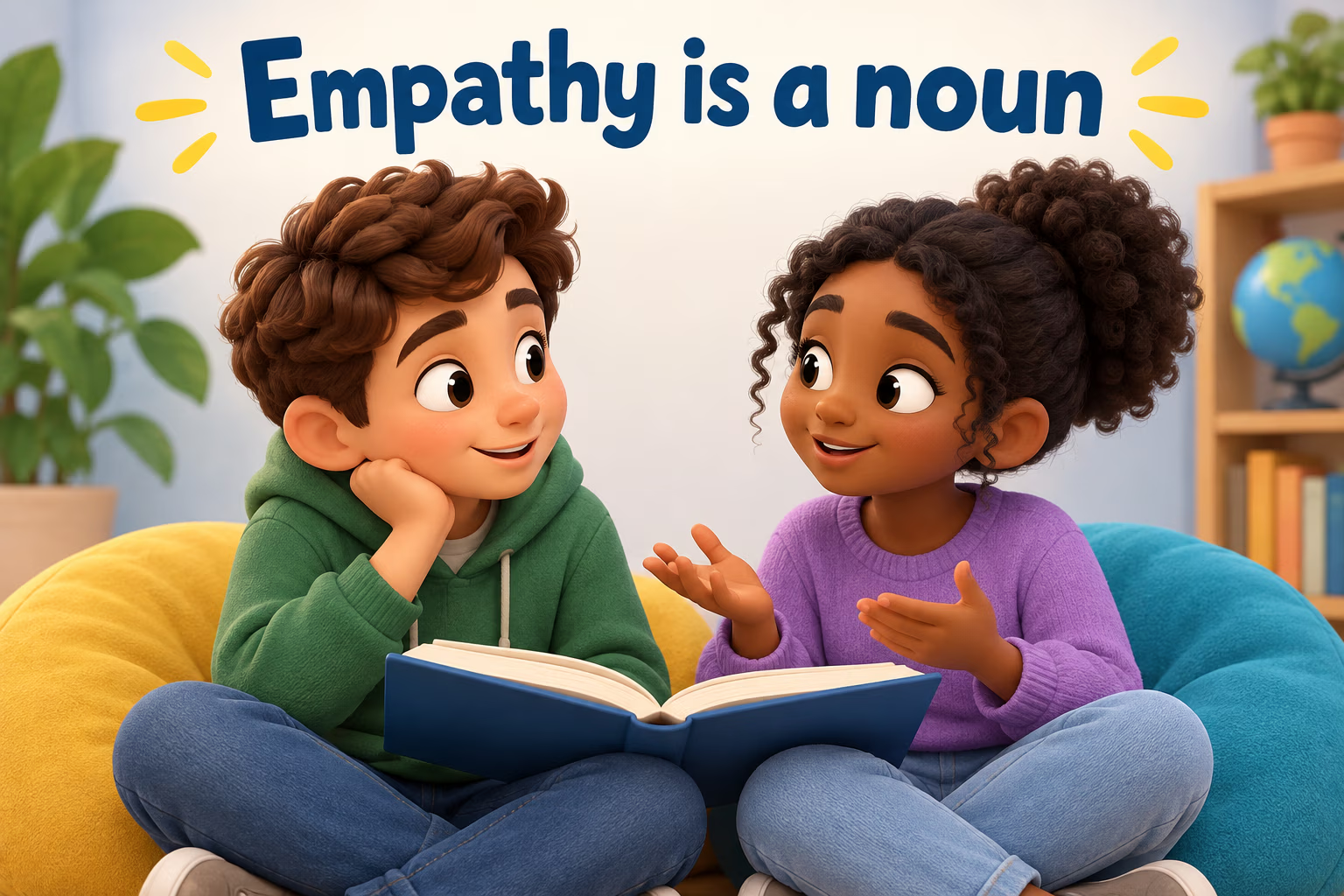
Yes. Empathy is a noun, usually uncountable: write “They showed empathy,” rather than “They showed an empathy” in ordinary usage. Use empathetic or empathic as an adjective and empathize as a verb.
| Word | Part of speech | Example |
|---|---|---|
| empathy | noun | “The counselor responded with empathy.” |
| empathetic | adjective | “Her empathetic question invited an honest answer.” |
| empathic | adjective | “The study examined empathic accuracy.” |
| empathize | verb | “I empathize with the character’s uncertainty.” |

How Can You Write an Empathy Example Clearly?
- Choose a situation. Name what the person is facing, such as a disappointing result or an unfamiliar setting.
- Use a natural word form. Try “show empathy,” “empathy for,” “empathetic response,” or “empathize with.”
- Keep the claim specific. Describe listening, asking a respectful question, or acknowledging a stated feeling instead of claiming to read someone’s mind.
- Check whether the sentence means empathy or support. Kindness and assistance may accompany empathy, but they are not grammatical synonyms for it.
For example: “When Noor described missing her old school, Kai listened and asked what she missed most; his empathetic response gave her room to explain.” The sentence shows an attempt to understand, without asserting that Kai knows everything Noor feels.
For a related communication skill, see this guide to using “listen to” in a sentence.
Original Empathy Sentence Examples and Usage Guide
The following original examples and instructions are retained in full. Their wording is preserved as source material; the usage notes above add grammatical and contextual precision.
Have you ever considered the power of empathy in your daily interactions? Empathy is the ability to understand and share the feelings of another person. It involves being able to put yourself in someone else’s shoes and truly connect with their emotions.
7 Examples Of Empathy Used In a Sentence For Kids
- Empathy means understanding how someone else feels.
- We should show empathy by being kind and helpful to others.
- When a friend is sad, we can show empathy by comforting them.
- Let’s practice empathy by listening to each other’s feelings.
- Showing empathy can help make our friends feel better.
- It’s important to have empathy for people who are different from us.
- With empathy, we can create a caring and supportive community.

14 Sentences with Empathy Examples
- Empathy is crucial when dealing with the diverse group of students on campus.
- It’s important for college students to show empathy towards their peers during stressful exam periods.
- Developing empathy can help college students better understand and relate to people from different backgrounds.
- Empathy can strengthen relationships and foster a sense of community among college students.
- College students can practice empathy by actively listening to their classmates’ concerns and offering support.
- Showing empathy towards professors can lead to better communication and academic success.
- College students in India can benefit from cultivating empathy towards those facing social injustice and discrimination.
- Demonstrating empathy towards international students can help them feel more welcome and included in campus life.
- Group projects in college can be more successful when there is a mutual sense of empathy among team members.
- Volunteering opportunities can help college students develop a deeper sense of empathy towards marginalized communities in India.
- Practicing empathy towards oneself is also important for college students to maintain mental well-being during challenging times.
- Engaging in discussions about social issues can encourage college students to cultivate empathy towards those in need.
- Encouraging a culture of empathy on campus can promote a more inclusive and compassionate college environment.
- College students who demonstrate empathy towards their peers are more likely to build strong and lasting friendships.

How To Use Empathy in Sentences?
To use the word Empathy in a sentence correctly, you can follow these steps:
- Understand the meaning of Empathy: Empathy refers to the ability to understand and share the feelings of another person.
- Identify a situation where Empathy can be applied: Think of a scenario where someone may be going through a difficult time or experiencing strong emotions.
- Form a sentence with Empathy: For example, “She showed great empathy towards her friend who was feeling sad about losing their pet.”
- Check that Empathy is used correctly: Ensure that the sentence conveys the idea of understanding and sharing the emotions of another person.
- Practice using Empathy in different sentences: Experiment with using Empathy in various contexts to become more familiar with incorporating it into your language.
Remember, Empathy is an important skill in building connections with others and showing compassion. By practicing using Empathy in your sentences, you can enhance your ability to relate to and understand the emotions of those around you.

Conclusion
In conclusion, sentences infused with empathy can deepen connections, foster understanding, and provide comfort in various situations. When individuals express empathy through their words, they acknowledge and validate the feelings of others, creating a sense of support and compassion. These sentences convey an understanding of another person’s emotions, helping to strengthen relationships and build trust.
By utilizing sentences with empathy, individuals can demonstrate their capacity for kindness and understanding, contributing to a more compassionate and empathetic society. Such sentences not only facilitate effective communication but also serve to uplift and empower those who may be going through difficult times. Ultimately, practicing empathy in our sentences can lead to enhanced interpersonal relationships and a more empathetic, connected community.

Frequently Asked Questions About Empathy
Can you say “an empathy”?
In ordinary English, empathy is usually uncountable, so write “show empathy” or “a feeling of empathy.” A specialist text may use the word differently, but “an empathy” is not the usual phrasing in everyday examples.
Is “empathy for” or “empathy with” correct?
Both are grammatical. Empathy for someone is a common way to name the person receiving understanding or concern; empathy with someone often emphasizes identification or shared understanding. Choose the phrase that best fits the sentence.
Does empathy mean agreeing with someone?
No. A writer can describe understanding another person’s perspective without agreeing with their beliefs or decisions. A sentence such as “I understand why you see it that way, although I disagree” separates perspective-taking from agreement.
What is the difference between empathetic and empathic?
Both are adjectives meaning related to or showing empathy. Empathetic is especially common in general writing; empathic also appears in psychology and research contexts. Follow the style of the publication if it prefers one form.
Sources and Further Reading
Cambridge English Dictionary: empathy gives a learner-friendly definition and labels the noun uncountable. The APA Dictionary of Psychology: empathy notes that empathy by itself does not entail a motivation to assist. The Greater Good Science Center at UC Berkeley describes sensing emotions and imagining another person’s perspective, while its article on the terms of empathy discusses distinctions among cognitive and emotional empathy, sympathy, and compassion.