What Does Empirical Mean?
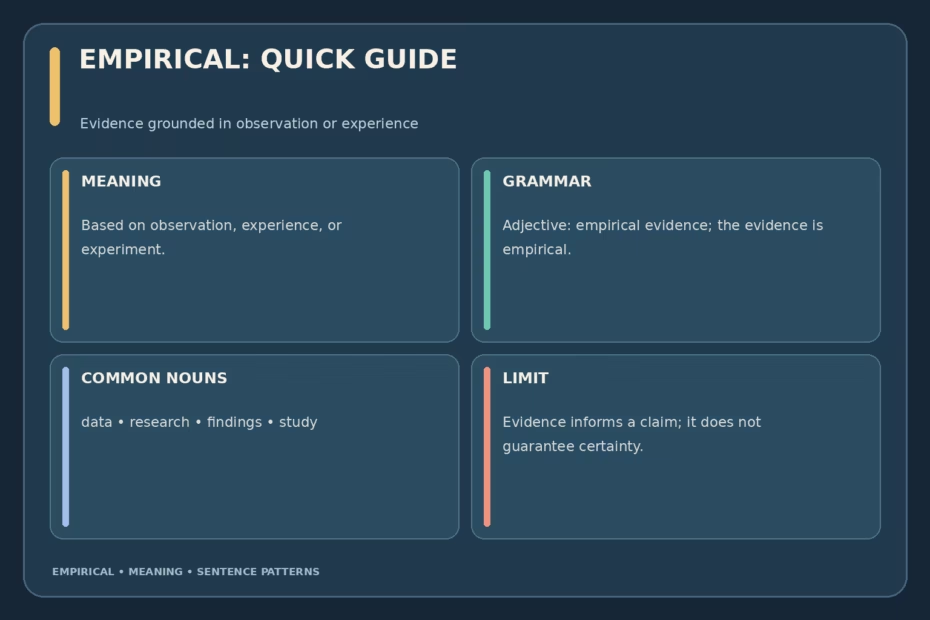
Empirical is an adjective for something based on observation, experience, or experiment. It commonly describes evidence, data, research, findings, or a study. An empirical claim has some grounding in what was observed, measured, tested, or reported, rather than resting only on abstract reasoning or speculation.
The word does not mean “certain,” “objective,” or “proven beyond doubt.” Empirical findings can be limited by how a study was designed, what was measured, and which people or settings were included. A careful writer identifies the evidence and describes what it supports without claiming more than the results show.
How to Use Empirical in a Sentence
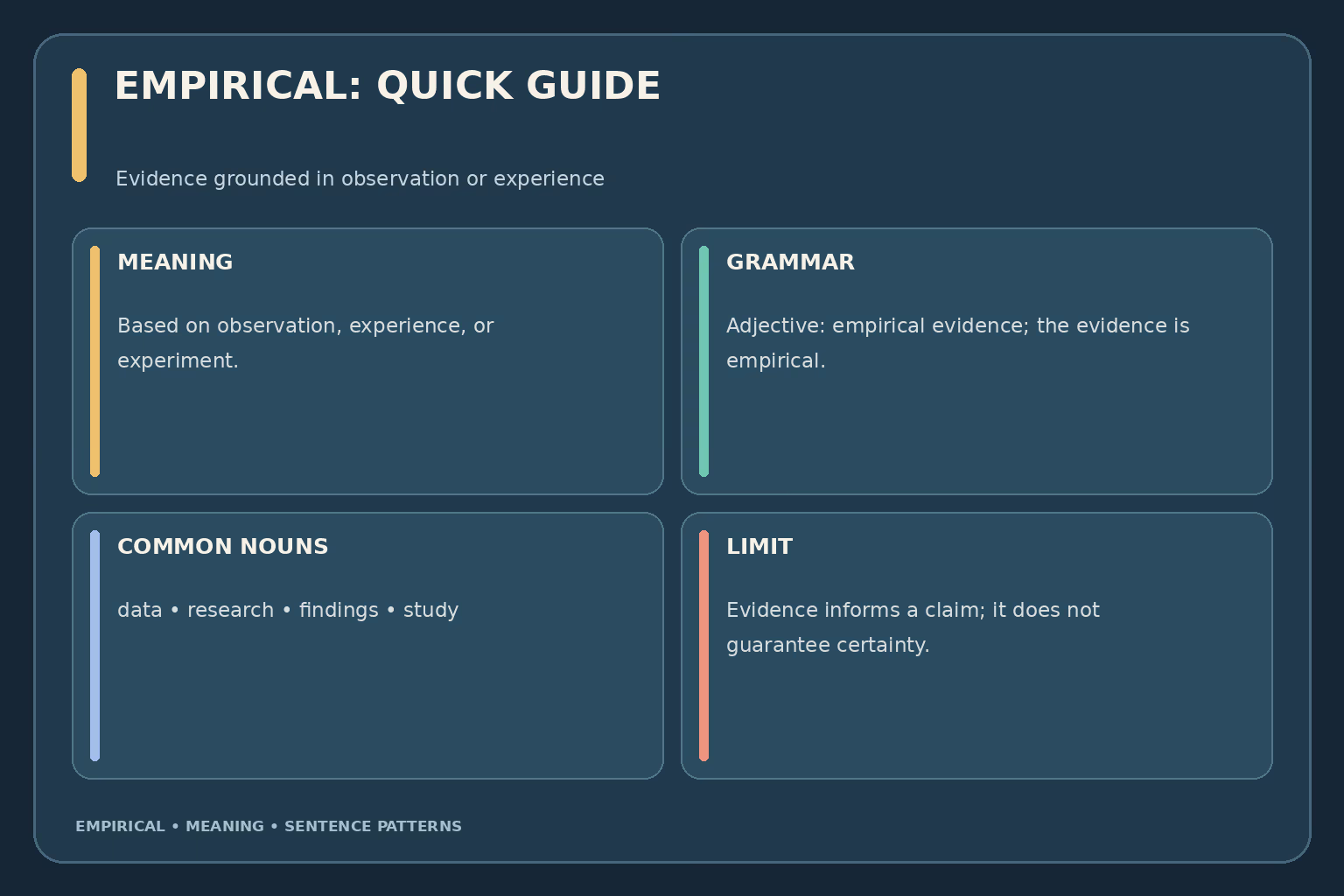
Place empirical before a noun to say that the noun is grounded in evidence gathered from the world. It can also follow a linking verb, as in “The conclusion is empirical.” The related adverb empirically describes how an action is done: “The team tested the prediction empirically.”
- Before a noun: “The report compares empirical evidence from three regions.”
- After a linking verb: “Her observations are empirical, although the sample is small.”
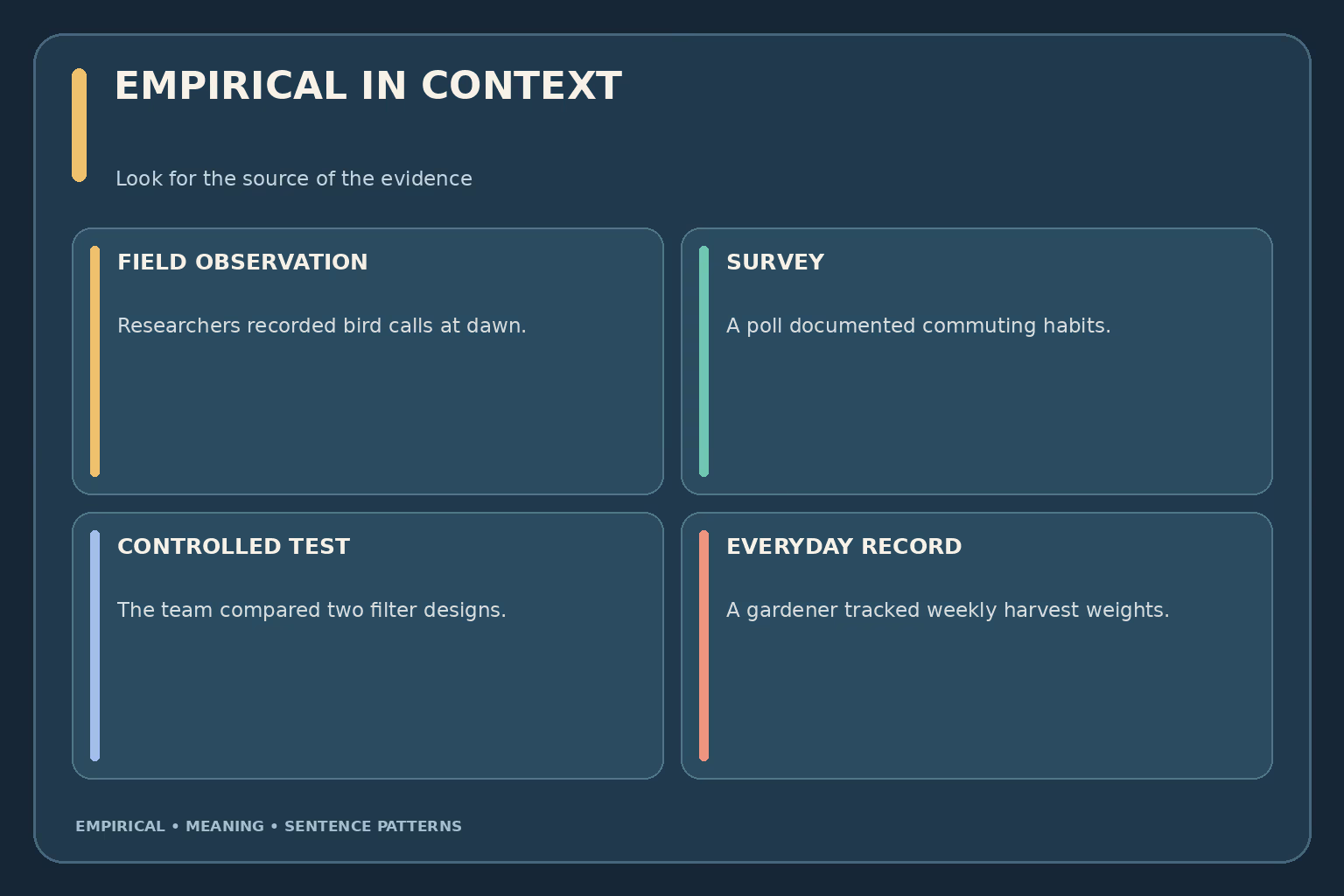
- With the adverb: “The researchers empirically tested whether the new filter removed sediment.”
In academic and professional writing, the adjective often appears with evidence, data, research, study, results, findings, and analysis. These combinations are useful because the reader can see exactly what is based on observation or measurement. “An empirical result” is more specific than simply calling a broad argument empirical.
Empirical Evidence: Observation, Measurement, and Experience
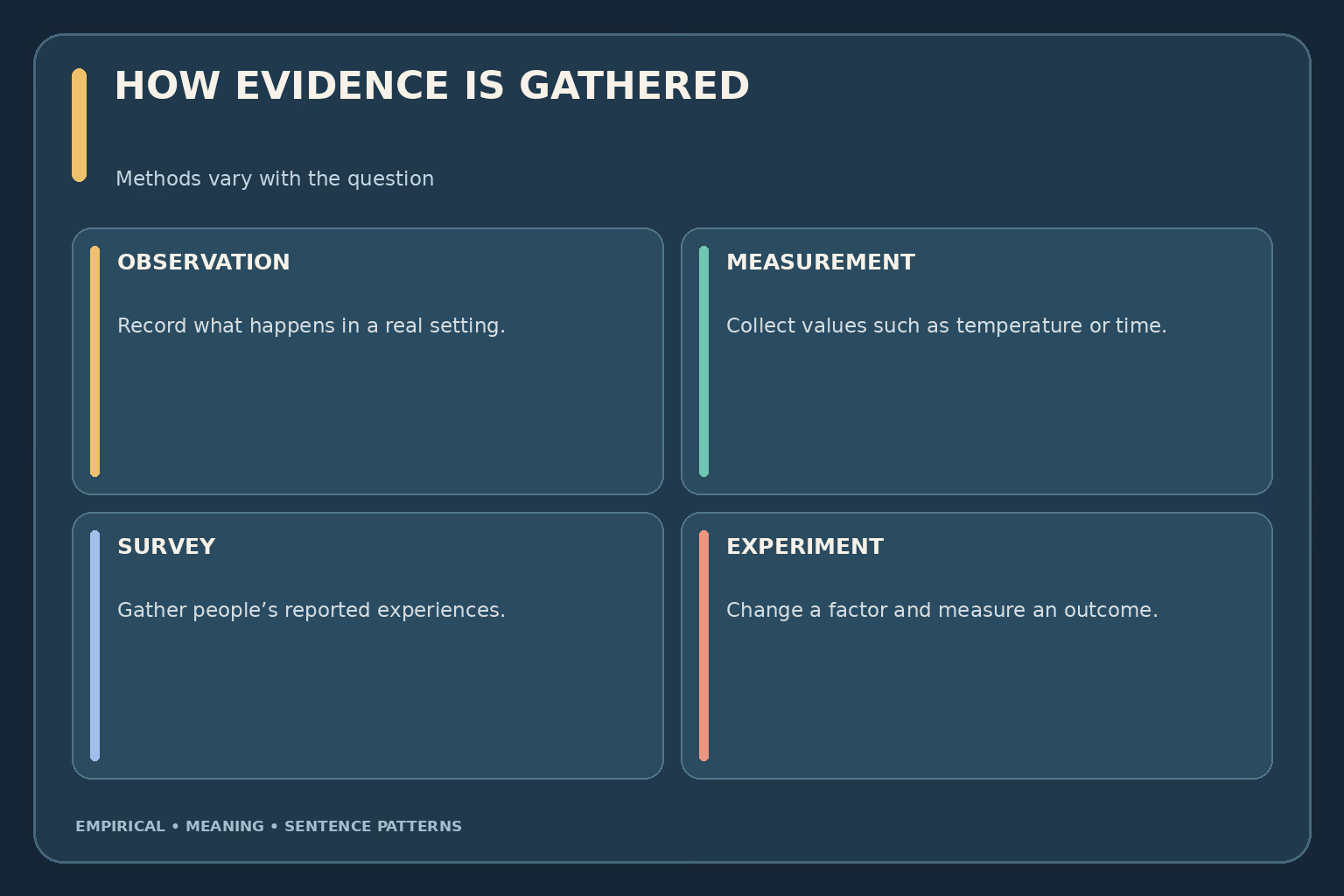
Empirical evidence may come from direct observation, recorded measurements, surveys, interviews, documents, or experiments. Researchers choose a method that fits their question. An experiment is one way to gather empirical evidence, but not every empirical study is an experiment: a field observer may record animal behavior without changing the conditions, and a survey may describe reported experiences without assigning participants to groups.
Empirical work can use numbers, descriptions, or both. A quantitative study might compare measured blood pressure across groups; a qualitative study might analyze interview accounts of how patients experience care. Each uses data, though the data and analysis differ. It is therefore too narrow to use empirical as if it meant only “statistical” or “laboratory tested.”
For example, imagine a school wants to know whether a quieter study room helps students focus. Researchers could count completed tasks, ask students about their experience, observe study sessions, or compare outcomes under different room conditions. Those gathered observations are empirical evidence. The evidence can inform the answer, but the design and limits still matter: one classroom or a short trial may not represent every student or setting.
Empirical vs. Theoretical, Anecdotal, and Experimental
- Empirical and theoretical: An empirical claim draws on observations or collected data. A theoretical account explains ideas or proposes relationships. Research can combine both: theory guides a question, and empirical evidence helps assess it.
- Empirical and anecdotal: An anecdote is an individual story or personal observation. It is a kind of experience, but one person’s account alone may not establish a general pattern. Broader empirical research usually states how evidence was gathered and considers its scope.
- Empirical and experimental: Experimental research deliberately changes or assigns a condition to examine its effects. Observational research records what happens without that intervention. Both can be empirical; the word does not by itself tell you which design was used.
These distinctions make sentence choices clearer. “The article presents empirical findings from interviews” tells readers that reported experiences were collected and analyzed. “The article presents an experimental result” signals a designed test. “The article offers a theoretical explanation” describes an account that may later be examined with data.
More Sentences with Empirical
- “The botanist collected empirical data by measuring the height of each seedling every Friday.”
- “A survey gave the team empirical information about how commuters choose their routes.”
- “The archaeologists based their account on empirical evidence from dated artifacts and excavation records.”
- “The trial produced empirical findings, but its small sample calls for cautious interpretation.”
- “Her conclusion was empirical because it drew on recorded observations rather than on a prediction alone.”
- “The article reviews empirical research on sleep habits among shift workers.”
- “To assess the claim, the class gathered empirical evidence by tracking how quickly ice melted in shade and sunlight.”
- “The analyst empirically tested the forecast against measurements from later seasons.”
- “Interviews provided empirical insight into how residents experienced the new bus schedule.”
- “The model is theoretical; the next step is to compare its predictions with empirical results.”
- “An empirical study documented the association, but it did not establish that one factor caused the other.”
- “The museum’s conservation team used empirical measurements to monitor changes in humidity.”
Common Usage Mistakes
- Calling evidence conclusive just because it is empirical: Empirical means grounded in evidence, not automatically decisive. Name the sample, measurement, or limitation when it affects the claim.
- Using it as a synonym for “scientific” in every context: The word focuses on the evidence basis. A study can be empirical in many fields, including history, education, and sociology.
- Assuming empirical means experimental: Observation and surveys can also supply empirical data. Use experimental when the study actually manipulates or assigns conditions.
- Leaving the evidence vague: Instead of “This is empirical,” explain whether the conclusion comes from measurements, observations, interviews, or another stated source.
Frequently Asked Questions
Is empirical the same as objective?
No. Empirical describes a basis in observation or experience. Researchers still make choices about what to observe, how to measure it, and how to interpret results. Objectivity concerns impartiality or independence from personal bias, and empirical methods alone do not guarantee it.
Can qualitative research be empirical?
Yes. Interviews, observations, and documents can provide empirical material when they are systematically gathered and analyzed. Empirical evidence is not limited to numerical data.
What is the difference between empirical and empirically?
Empirical is an adjective, as in “empirical research.” Empirically is an adverb, as in “the claim was empirically examined.”
What is an empirical example?
A record of measured daily rainfall is empirical data. A conclusion about a season’s rainfall based on those records is an empirical finding, provided the writer explains how the records were collected and what period they cover.
Sources
- Oxford Learner’s Dictionaries: empirical (meaning and common combinations).
- American Psychological Association Dictionary of Psychology: empirical method (systematic observation and experimentation).
- American Psychological Association: Methodology Field Values (empirical study definition).
- American Heritage Dictionary: empirical (observation, experiment, and practical experience).

Have you ever wondered what it means when someone describes something as “empirical”? In simple terms, empirical refers to information that is based on observation or experience rather than theory or pure logic.
Empirical evidence is crucial in various fields, including science, psychology, and sociology. It involves collecting data through observation, experiments, or surveys to support or refute a hypothesis. This method of obtaining knowledge is highly valued for its practical and real-world applications.
7 Examples Of Empirical Used In a Sentence For Kids
- Empirical means learning by doing and experimenting.
- Scientists use empirical evidence to prove their theories.
- We can find out if something is true by using empirical methods.
- Can you think of a fun empirical experiment we can try?
- Let’s observe and collect data to make an empirical conclusion.
- We can trust information that is based on empirical research.
- In school, we will learn more about empirical knowledge.
14 Sentences with Empirical Examples
- The psychology department is conducting an empirical study to determine the effects of social media on mental health among college students.
- The sociology professor emphasized the importance of using empirical evidence to support arguments in research papers.
- The biology lab requires students to collect empirical data to analyze genetic variations in plant species.
- The economics lecture will focus on the role of empirical research in understanding consumer behavior.
- The statistics class teaches students how to utilize empirical methods to draw meaningful conclusions from data sets.
- The political science seminar explores the impact of empirical studies on public policy decision-making.
- The chemistry lab experiment involves gathering empirical evidence to determine the reaction rate of a chemical compound.
- The physics professor encourages students to conduct empirical investigations to test hypotheses related to motion and force.
- The environmental science project requires students to conduct fieldwork to gather empirical data on local biodiversity.
- The computer science course delves into the importance of utilizing empirical evaluations to measure the performance of algorithms.
- The business ethics class discusses the significance of incorporating empirical research in analyzing ethical dilemmas faced by corporations.
- The literature professor critiques academic essays for lacking empirical evidence to support literary interpretations.
- The history lecture examines the influence of empirical research in shaping perspectives on past events.
- The engineering project challenges students to design prototypes based on empirical data gathered from testing different materials.
How To Use Empirical in Sentences?
To use Empirical in a sentence, first identify the context in which you want to use the word. Empirical refers to information or knowledge that is gained through observation, experience, or experiments rather than through theory or logic.
When constructing a sentence using the word empirical, consider starting with a subject followed by a verb and then include the word in a way that accurately reflects its meaning. For example, “The scientist conducted an empirical study to gather data on the effects of climate change.”
It’s important to note that empirical is often used in scientific, research, or academic settings to describe evidence that is based on actual observations and measurements. Using it correctly can help you communicate more effectively, especially when discussing data, findings, or conclusions.
If you’re unsure how to incorporate empirical into your sentence, try searching for examples in books, articles, or online resources. This can give you a better understanding of how the word is used in different contexts. Also, remember to pay attention to the structure and flow of your sentence to ensure that empirical is integrated smoothly and accurately.
Practice using empirical in various sentences to become more comfortable with its usage. As you gain experience, you’ll be able to incorporate the word seamlessly into your writing and conversations, providing a clearer and more precise description of information based on observation and experience.
Conclusion
In conclusion, empirical evidence plays a crucial role in data-driven decision making and scientific research. By relying on observations, measurements, and experimentation, empirical data provides a foundation for drawing reliable conclusions and informing policy and practice. For example, studies on climate change use empirical data to understand its impact on the environment, while medical research relies on empirical evidence to develop effective treatments.
Ultimately, the value of empirical evidence lies in its ability to validate hypotheses and theories, offering an objective basis for understanding complex phenomena. Whether in the field of social science, psychology, or economics, empirical sentences serve as a cornerstone for advancing knowledge and driving evidence-based practices. Acknowledging the importance of empirical research can lead to more informed decision-making and better outcomes across various disciplines and industries.