
Espy is a verb meaning to catch sight of something, especially at a distance or after searching. To use espy in a sentence, put the thing seen straight after the verb: The lookout espied a ship on the horizon. It is transitive, so it always needs an object.
Espy at a glance
- Espy is a transitive verb; its forms are espies, espied and espying.
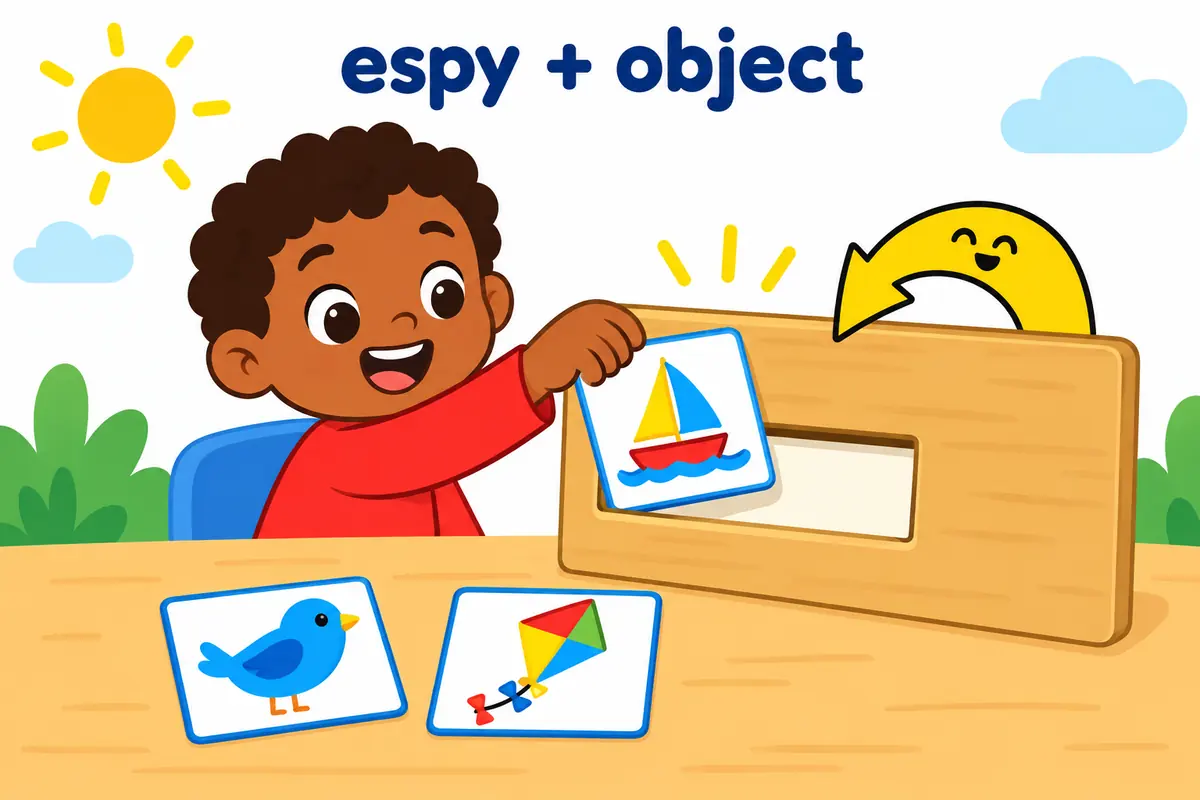
- The dominant pattern is espy plus an object, as in espied a sail.
- Espy suits literary and formal writing far more than casual speech.
- Usual collocations include a figure, a sail, a shape and a movement.
- The commonest error is treating espy as a synonym for stare, which it is not.
What does espy mean?
Espy is a transitive verb meaning to catch sight of someone or something, particularly from a distance or after an effort to look. The Cambridge entry for espy records this single core sense, and the two near neighbours split the work neatly. Glimpse stresses a brief, incomplete view, while spot stresses a quick find. Because espy carries a literary flavour, a news report is likelier to choose see or spot.
| Sense | Plain meaning | Example sentence |
|---|---|---|
| Catch sight at a distance | See something far off after looking | The lookout espied a ship on the horizon. |
| Detect after searching | Find something hidden or faint | She espied a light through the fog. |
Espy is the wrong choice for ordinary conversation: saying I espied my keys sounds theatrical, and found or noticed is clearer. The verb does not mean to stare, to watch for a long time, or to inspect something close up. Instruments such as radar detect a signal that no person could espy, which shows how strongly espy depends on a human observer doing the seeing.
How do you use espy in a sentence?
The verb follows a small set of patterns. Every one of them keeps the thing seen as a direct object, and most place the observer as the subject.
| Pattern | Example | What it signals |
|---|---|---|
| espy + object | The walker espied a fox. | A plain, completed sighting. |
| espy + object + present participle | They espied a boat drifting toward the rocks. | You saw it while it was doing something. |
| espy + object + location phrase | He espied a figure at the far gate. | Where the thing was when noticed. |
| passive: be espied | A sail was espied from the cliff. | The thing seen matters more than the seer. |
| espy + object + through/from | She espied a barn through the rain. | The obstacle or vantage point. |
| espy + object + adjective | He espied the door ajar. | A state noticed at the moment of seeing. |
Register matters as much as grammar here. Espy sits at home in a novel, a travel memoir or a formal report, where it adds a note of distance and effort. In a text message or a news bulletin, see or spot will always sound more natural, and a learner who uses espy in casual writing often sounds as though the sentence has been lifted from an older book. The safest habit is to reserve espy for a deliberate literary or descriptive effect, where its slight formality is the point rather than an accident.
Espy in a sentence: examples across contexts
Espy appears in several registers, from travel writing to legal reporting. The table shows how the same verb shifts tone with its setting.
| Context | Example sentence | Why this works |
|---|---|---|
| Conversation | I espied your umbrella by the door. | Playful and slightly formal, so it teases. |
| Classroom | The pupils espied a robin on the fence. | A concrete nature observation for young writers. |
| Workplace email | The guard espied a damaged crate near the loading bay. | Precise reporting of what was noticed. |
| News report | Coastguards espied the dinghy shortly after dawn. | Compact and vivid for a short bulletin. |
| Travel writing | From the ridge we espied three lakes at once. | Adds a literary, panoramic feel. |
| Academic writing | The surveyor espied a fault line in the exposed rock. | Signals a careful visual check. |
| Fiction | He espied her scarf on the far platform. | Turns a small detail into a plot beat. |
| Legal or official | The officer espied a second vehicle parked behind. | Neutral description of an observation. |
| Sports writing | The keeper espied a gap at the near post. | Reads as spotting a chance in play. |
| Science writing | The astronomer espied a faint moon beside the planet. | Reports a careful telescope sighting. |
| Diary or memoir | That morning I espied the first swallow of spring. | A personal, literary observation. |
| Military history | The scout espied the camp beyond the river. | A classic reconnaissance report. |
Three patterns explain most real uses. The subject is nearly always a person doing the seeing, which keeps the sentence human rather than technical. The object is usually small, distant or partly hidden, so espy rarely takes something close and obvious. The surrounding words often name a vantage point, as in from the ridge or through the fog, because espy is about the difficulty of seeing rather than the bare fact of sight.
Espy vs glimpse
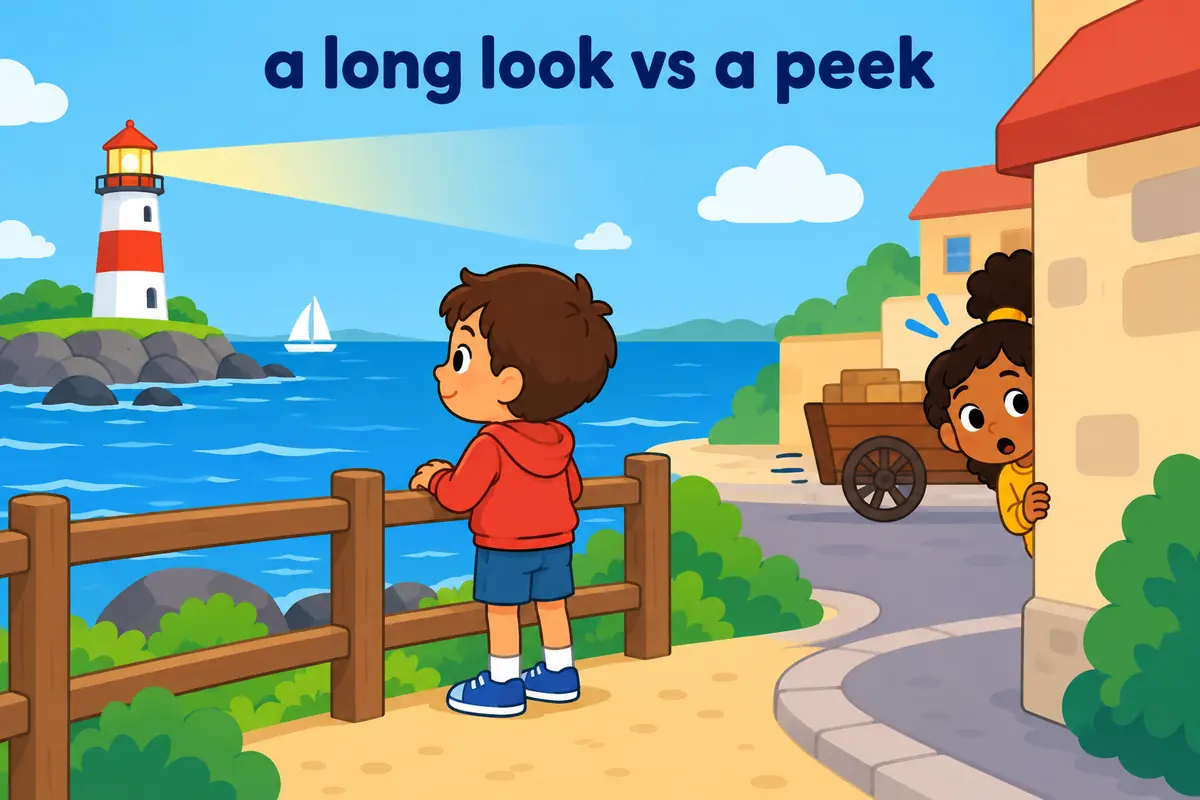
Espy and glimpse both describe seeing, but they answer different questions. One is about effort and distance; the other is about how little you managed to see.
| Attribute | Espy | Glimpse |
|---|---|---|
| Core meaning | Catch sight of after looking | See briefly and incompletely |
| Duration of the view | A completed moment of noticing | A split-second, partial view |
| Typical subject | A lookout, walker or guard | Anyone in motion, often by chance |
| Register | Literary or formal | Neutral and everyday |
| What it implies | Effort, distance or searching | Chance and speed |
The verdict is simple: use espy in descriptive writing about scanning a distance, and choose glimpse when the view is brief and accidental. Older writers used descry for the same distant sighting, and where the find is quick, spot is the natural choice. A useful test is to ask whether saw would do the same job. If it would, espy is decoration; if the distance or the search carries the meaning, espy earns its place.
Word forms and grammar of espy
| Form | Part of speech | Example |
|---|---|---|
| espy | Base verb | Birdwatchers espy a heron most mornings. |
| espies | Third-person singular | She espies a sail from the pier. |
| espied | Past tense and past participle | They espied a fire on the ridge. |
| espying | Present participle | Espying a gap, the runner slipped through. |
| espial | Noun (rare) | The espial of the fleet was reported at noon. |
| espieded | Non-standard | Never use this; the past tense is espied. |
The tricky form is the third-person singular. Because espy ends in a consonant plus y, it becomes espies and espied, not espys or espyed. The rare noun espial keeps the same spelling pattern and appears mostly in older texts, so a modern writer is safer using the verb.
Common mistakes with espy
- Incorrect:
She espied at the horizon.Correct: She espied a ship on the horizon. Rule: espy is transitive and takes a direct object, not a preposition. - Incorrect:
He espied to see a light.Correct: He espied a light. Rule: espy already means to see, so adding another verb is redundant. - Incorrect:
We were espying the view all afternoon.Correct: We watched the view all afternoon. Rule: espy marks a single moment, not a lasting activity. - Incorrect:
She espieded the sail.Correct: She espied the sail. Rule: the past tense is espied; there is no -ed on an already past form. - Incorrect:
She espied the view beautifully.Correct: She saw the view clearly. Rule: espy reports the act of seeing, not the quality of the view. - Incorrect:
We espied around the room.Correct: We looked around the room. Rule: espy needs a direct object, so a bare search takes look or search.
Practice using espy
- Fill in the blank: The hikers ___ a lake far below the pass.
- Choose the better word: From the tower we (espied / stared) a distant flag.
- Correct the error: She espied at the far shore.
- Build a sentence about a lighthouse using espy plus a location phrase.
- Spot the register: which sentence belongs in a novel, We espied a sail or We saw a boat?
- Fill in the blank: Through the mist the driver ___ a faint sign.
- Fill in the blank: The scouts ___ a campfire beyond the ridge.
- Choose the better word: The telescope helped them (espy / glimpse) the tiny moon.
Answers
- espied; a single sighting in the past takes the past tense.
- espied; stare describes a long, fixed look, which does not fit a passing glance.
- She espied the far shore; the verb needs a direct object, not at.
- From the cliff we espied a lighthouse at the edge of the bay; espy plus a location phrase.
- We espied a sail suits a novel; the literary verb raises the register.
- espied; the mist is an obstacle the driver looks through.
- espied; a single sighting seen from a distance.
- espy; the telescope is an instrument used to find a distant object.
The bottom line
Espy means to catch sight of something, usually at a distance and after looking, and it always takes an object. In plain prose, catch sight of does the same work without the old-fashioned tone. Remember two limits: espy marks one completed moment, and it never means to stare. Used in the right register, with a distant or hidden object and a real observer, it sharpens a descriptive sentence rather than merely decorating it.
Frequently asked questions about espy
Is espy still used today?
Espy survives mainly in descriptive and literary writing, where a plain see or spot would lose the sense of watching from a distance. News writing and everyday speech prefer see, spot or catch sight of, so espy can sound deliberately old-fashioned or theatrical in a casual sentence.
What is the past tense of espy?
The past tense of espy is espied, and the third-person singular is espies, as in the lookout espied a sail and she espies one most mornings. The present participle is espying. Because the base ends in a consonant plus y, the y changes to i before the endings.
Does espy mean the same as stare?
No. Stare describes holding your eyes on something for a long time, often rudely, while espy records the single moment you manage to see something. You can espy a distant boat in an instant and then look away; staring lasts and says nothing about whether you found anything.
Can espy be used in the passive voice?
Yes, espy appears in the passive, especially in narrative writing, as in a faint light was espied through the fog. The passive suits espy because the interesting part is the thing seen, not the person seeing it. Active sentences stay clearer when the observer matters.