What Does “Facetious” Mean?
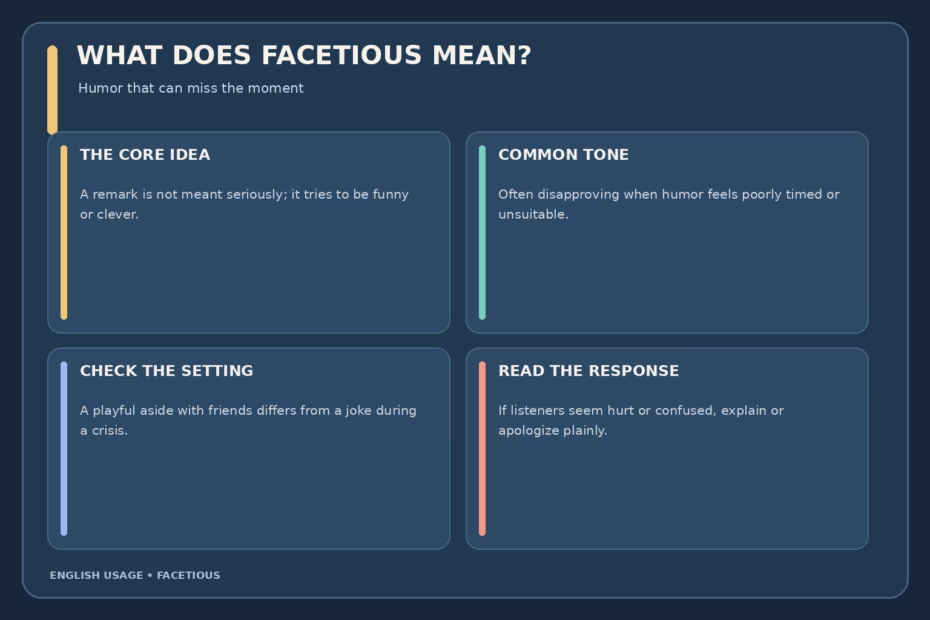
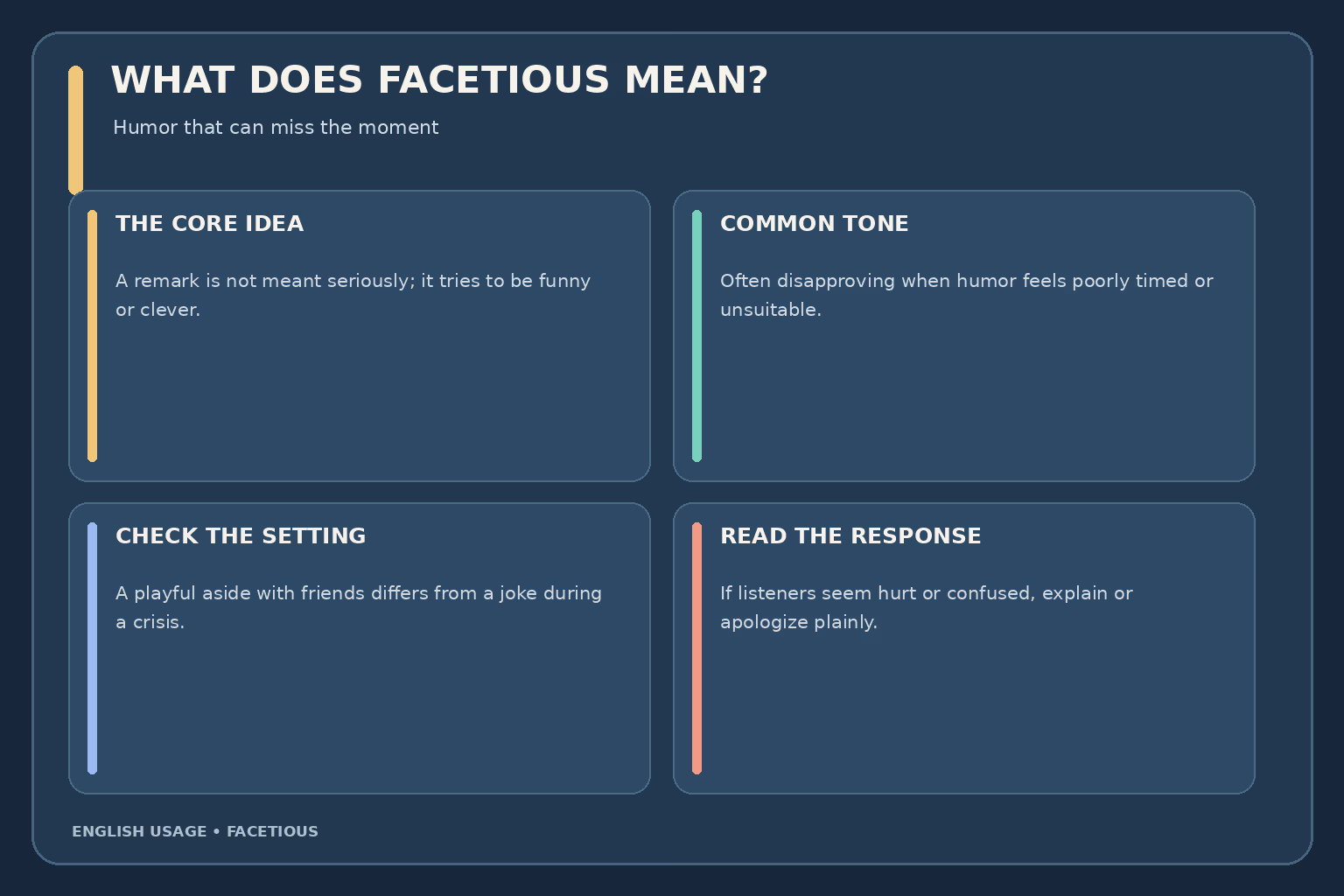
Facetious describes a remark or manner that is not serious and is intended to be funny or clever, especially about a serious subject. The word often carries a disapproving tone: calling a comment facetious can suggest that the joke was out of place, flippant, or unwelcome. A facetious person may be joking, but that does not guarantee that everyone will find the joke amusing.
Quick definition: A facetious comment treats a serious matter with humor or apparent unseriousness. Context determines whether it lands as playful wit or as poor judgment.
Facetious in a Sentence: More Examples
In each example, the speaker uses a joke or exaggeration instead of a literal statement. The adjective facetious describes the remark or the speaker’s manner.
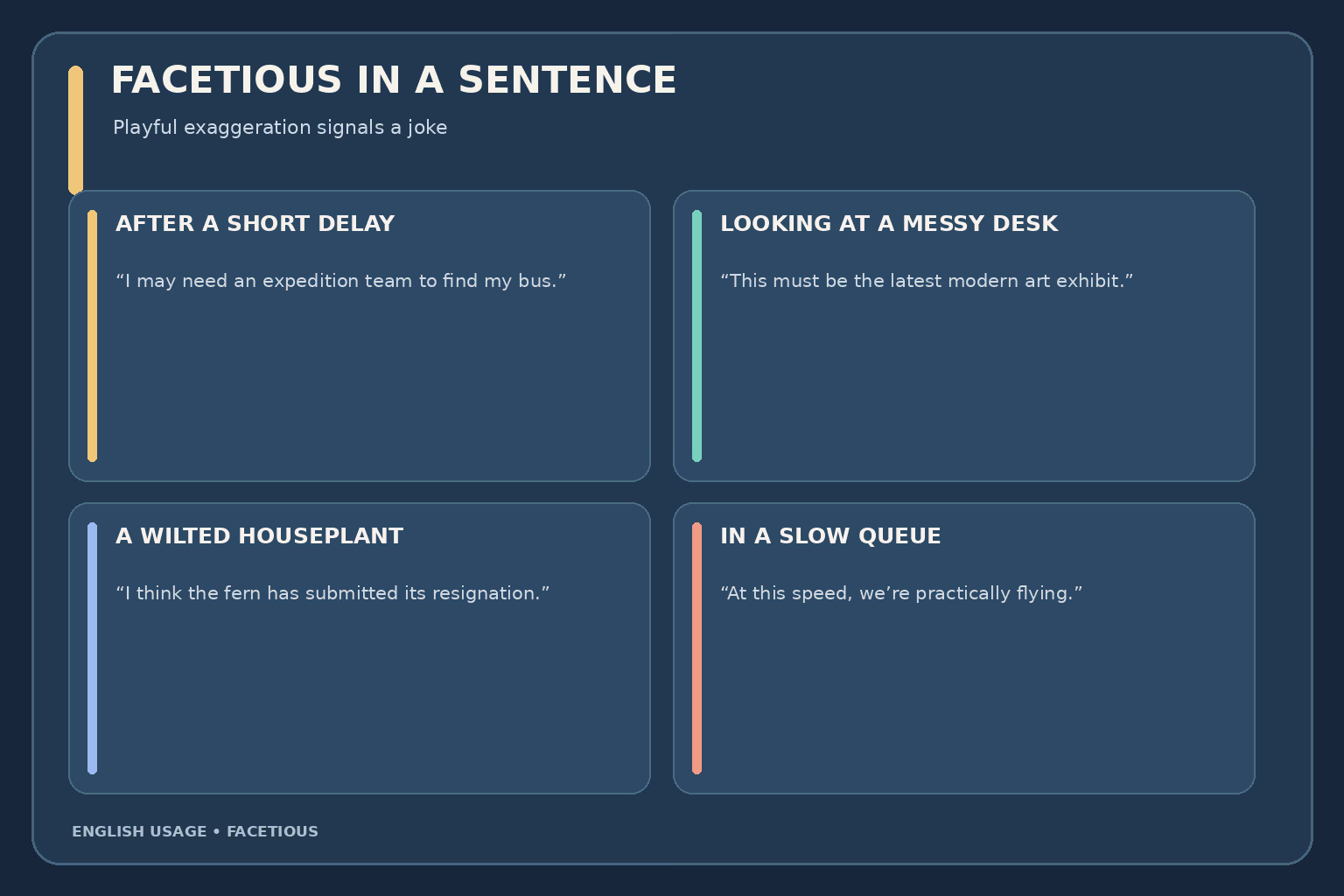
- When Maya asked whether the ten-minute delay was serious, Leo gave a facetious answer: “I’ve already started writing my memoir about it.”
- “This pile of laundry is clearly a new mountain range,” Sam said facetiously.
- The manager was looking for a real estimate, so Nina kept her facetious comments to herself.
- His facetious suggestion that the printer needed a vacation made the team laugh.
- “I’ll just grow wings and fly there,” Priya said facetiously when asked to cross town in five minutes.
- The reporter asked for a direct answer, but the official responded with a facetious remark about consulting a crystal ball.
- Her facetious apology—“I’m sorry the cake had to be eaten”—made it clear she was teasing.
- At the memorial, the audience found his facetious comment about the long speeches disrespectful.
- “I suppose the houseplant is paying rent now,” he said facetiously after finding another leaf on the floor.
- The teacher recognized the student’s facetious answer but asked for a serious one as well.
- When the software crashed again, a facetious teammate called it “an exciting new feature”; the customer wanted a fix, not a joke.
- Her facetious remark about needing a map to navigate the tiny office was understood as light teasing.
How to Use “Facetious” Correctly
Facetious is an adjective. It commonly describes a remark, comment, answer, response, tone, attitude, or person. The adverb is facetiously, and the noun is facetiousness.
- Adjective: “That was a facetious answer.”
- Adverb: “She facetiously suggested that the dog had taken over the meeting.”
- Noun: “His facetiousness eased the tension among friends.”
Use facetious when you want to point out that a comment is joking rather than earnest, particularly when it treats a serious topic lightly. It can be approving in a familiar, playful setting, but dictionaries commonly mark the sense as disapproving because the humor may be inappropriate. If you only mean that something is funny, funny or humorous may be clearer.
Pronunciation: facetious is commonly pronounced “fuh-SEE-shuhs” (/fəˈsiːʃəs/). Its ending sounds like “shus,” not like “tee-us.”
Facetious vs. Sarcastic, Ironic, and Tongue-in-Cheek
These words can describe overlapping kinds of humor, but they emphasize different things. Facetious focuses on not being serious, often when the topic calls for seriousness. Sarcastic often describes sharp, mocking or critical language. Ironic refers to a contrast between expectation and reality, or between what is said and what is meant. Tongue-in-cheek usually signals that a statement is meant humorously or ironically rather than literally.
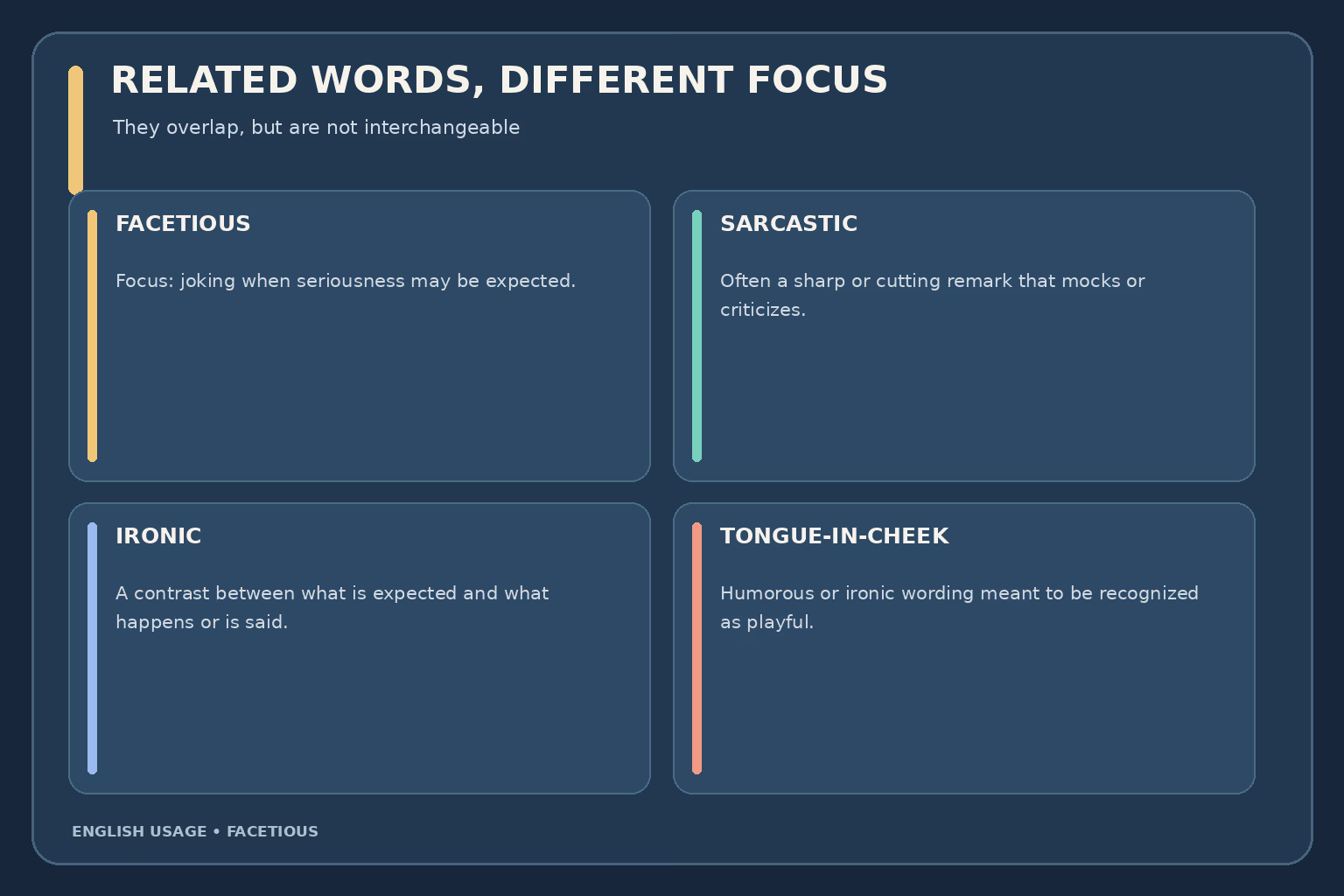
For example, “Wonderful, another meeting” may be sarcastic if the speaker is criticizing the meeting. A sunny forecast during a downpour creates an ironic contrast. A facetious reply to a serious question might be, “I consulted my very qualified houseplant.” The same line could be facetious and sarcastic depending on the speaker’s intent and tone. These labels are guides rather than strict boxes.
When Is a Facetious Remark Appropriate?
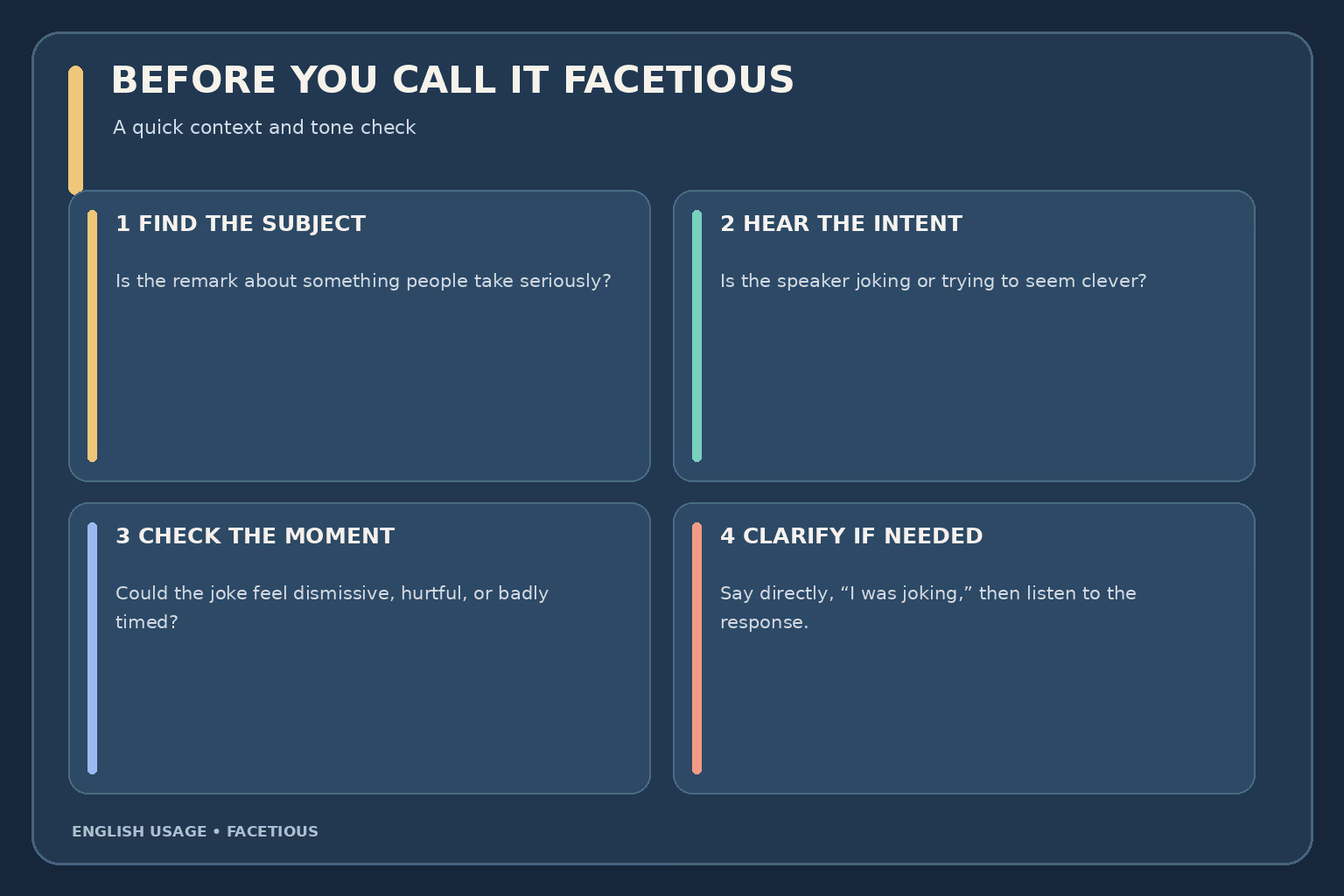
A remark’s wording alone may not tell you how it will be received. Consider the subject, setting, relationship, and audience. A joke among close friends may sound dismissive in a workplace discussion, during a disagreement, or when someone is sharing painful news. Written messages can make playful intent harder to read because readers cannot hear the speaker’s voice or see facial expressions.
Before making a facetious comment, ask whether the audience expects humor and whether the timing could make the remark seem uncaring. If someone takes it literally or seems hurt, clarify plainly instead of insisting that they should have understood the joke. For example: “I meant that as a joke, but I see it didn’t come across that way. I’m sorry.”
Common Questions About “Facetious”
Does facetious mean funny?
Not exactly. A facetious remark is intended as a joke or clever comment, often about a serious subject. It may be funny to some listeners, but the word can imply that the humor is inappropriate or unwelcome.
Is facetious positive or negative?
It depends on context. Friends may use it playfully, but the word is often disapproving when someone jokes at the wrong time or avoids taking a serious matter seriously.
What is a simple synonym for facetious?
Joking or tongue-in-cheek may fit, depending on the sentence. Flippant emphasizes a lack of seriousness and is often critical; sarcastic emphasizes mocking or cutting humor. They are not exact substitutes in every context.
Can facetious describe a person?
Yes. “He can be facetious” means he sometimes speaks in a joking, not entirely serious way. The description may suggest that his humor is poorly timed, depending on context.
What is the difference between facetious and sarcastic?
Both can involve humor, but sarcastic often suggests mockery or criticism, while facetious highlights joking unseriousness, particularly around a serious subject. A remark can be both.
Sources and Further Reading
- Cambridge Dictionary: “facetious” (definition, pronunciation, and usage examples).
- Oxford Advanced Learner’s Dictionary: “facetious” (meaning, register, and example phrases).
- Cambridge Dictionary: “facetiously” (adverb form and examples).
- Cambridge Dictionary: “sarcastic” (related term for comparison).
Have you ever used humor in a way that may seem silly or light-hearted, but actually carries a deeper meaning or intention? That’s the essence of being facetious. When someone is being facetious, they are making a comment or joke that is meant to be amusing or playful, but not to be taken seriously.
Facetious remarks are often made with a sense of irony or sarcasm, adding a layer of humor that can sometimes be misinterpreted by others. It’s important to recognize and appreciate facetious comments for their light-hearted nature, rather than taking them at face value.
7 Examples Of Facetious Used In a Sentence For Kids
- Facetious means not serious or funny.
- It is okay to be facetious and make silly jokes sometimes.
- When you are playing with your friends, you can be facetious and have fun.
- It is important to understand the difference between being facetious and being mean.
- Let’s all be facetious together and laugh at silly things.
- Being facetious can make people smile and feel happy.
- Remember, it is good to be facetious but not hurt anyone’s feelings.
14 Sentences with Facetious Examples
- Facetious comments during a serious lecture could offend the professor.
- It’s important to avoid making facetious remarks during group discussions as it can disrupt the flow of conversation.
- Some students use facetious excuses to explain why they didn’t submit their assignments on time.
- Facetious behavior in the library is not appreciated by fellow students who are trying to concentrate.
- It’s better to be sincere in interviews rather than trying to come across as facetious.
- Using facetious language in academic papers is not taken lightly by professors.
- When giving presentations, it’s best to avoid including any facetious content to maintain professionalism.
- Facetious attitudes towards exams show a lack of respect for the effort put in by teachers.
- In debates, it’s important to stick to factual arguments rather than resorting to facetious comments.
- Classrooms are meant for serious learning, and facetious behavior can be seen as disrespectful.
- Facetious remarks made in response to feedback from professors can hinder academic progress.
- Collaborative projects require a serious approach, and facetious team members can be a hindrance.
- University events should be approached with a sense of maturity, and facetious behavior can detract from the overall experience.
- Facetious attitudes towards exams show a lack of dedication to one’s academic responsibilities.
How To Use Facetious in Sentences?
Facetious **is a word used to describe behavior or speech that is meant to be humorous or amusing but often silly, inappropriate, or lacking seriousness. When using this word in a sentence, keep in mind the context and tone to ensure it is appropriate. Here’s a helpful guide on how to use Facetious in a sentence for beginners:
-
Choose the right situation: Make sure the context is suitable for a facetious remark or behavior. It is typically used in casual settings or when joking with friends.
-
Understand the tone: Ensure that your facetious remark is understood as intended by using a playful or sarcastic tone. Avoid using it in serious or formal situations.
-
Use it sparingly: Facetious remarks are best used in moderation to maintain their impact. Overusing the word may diminish its effect.
-
Example sentence: “Despite his serious demeanor, John couldn’t help but make a facetious comment to lighten the mood.”
-
Practice makes perfect: Experiment with using the word in various sentences to become more comfortable incorporating it into your vocabulary.
Remember that facetious is meant to add humor or playfulness to a conversation, so use it wisely to enhance your communication skills and entertain others.
Conclusion
In conclusion, facetious sentences are intended to be humorous or playful, often using sarcasm or wit to make a point in a lighthearted manner. They are not meant to be taken seriously and are used to add levity to a conversation or situation. However, it is important to be mindful of the context and audience when using facetious language, as it may not always be appropriate or well-received.
Facetious sentences serve as a form of amusement and can help to lighten the mood or add a funny twist to a statement. When used effectively, they can create a sense of camaraderie and humor among individuals. Nonetheless, it is crucial to gauge the appropriateness of such sentences in different settings to ensure they are received positively and do not cause unintended offense.