When assessing a situation or problem, a factor is a specific aspect or element that plays a crucial role in influencing outcomes. Factors can be various variables, conditions, or circumstances that contribute to shaping a result or impacting a decision. Understanding the different factors at play is essential for making well-informed choices and navigating challenges effectively.
By identifying and analyzing the factors at hand, individuals can gain insight into the underlying dynamics driving a situation. Whether it’s in problem-solving, decision-making, or strategic planning, recognizing the relevant factors helps in devising appropriate solutions or responses. Factors can range from economic considerations, environmental conditions, demographic factors, psychological influences, or any other significant elements that need to be taken into account when evaluating a scenario.
What Does “Factor” Mean?
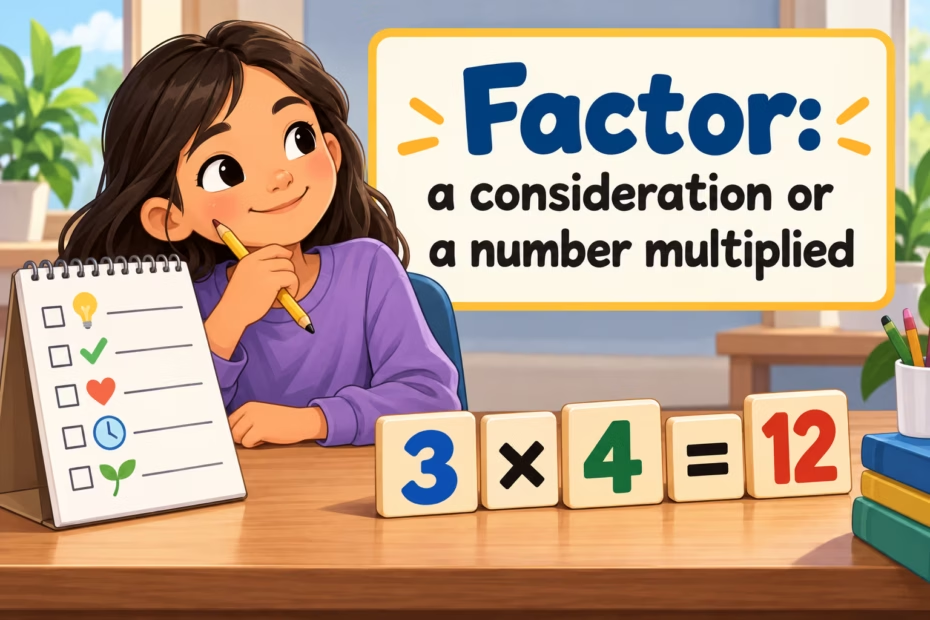
Factor has a few related but distinct uses. As a noun, it can mean a circumstance that helps shape a result (“cost was a factor in the decision”) or, in mathematics, a number multiplied by another number to make a product (“3 is a factor of 12”). As a verb, factor in means to include something when planning or calculating. The surrounding words show which meaning is intended.
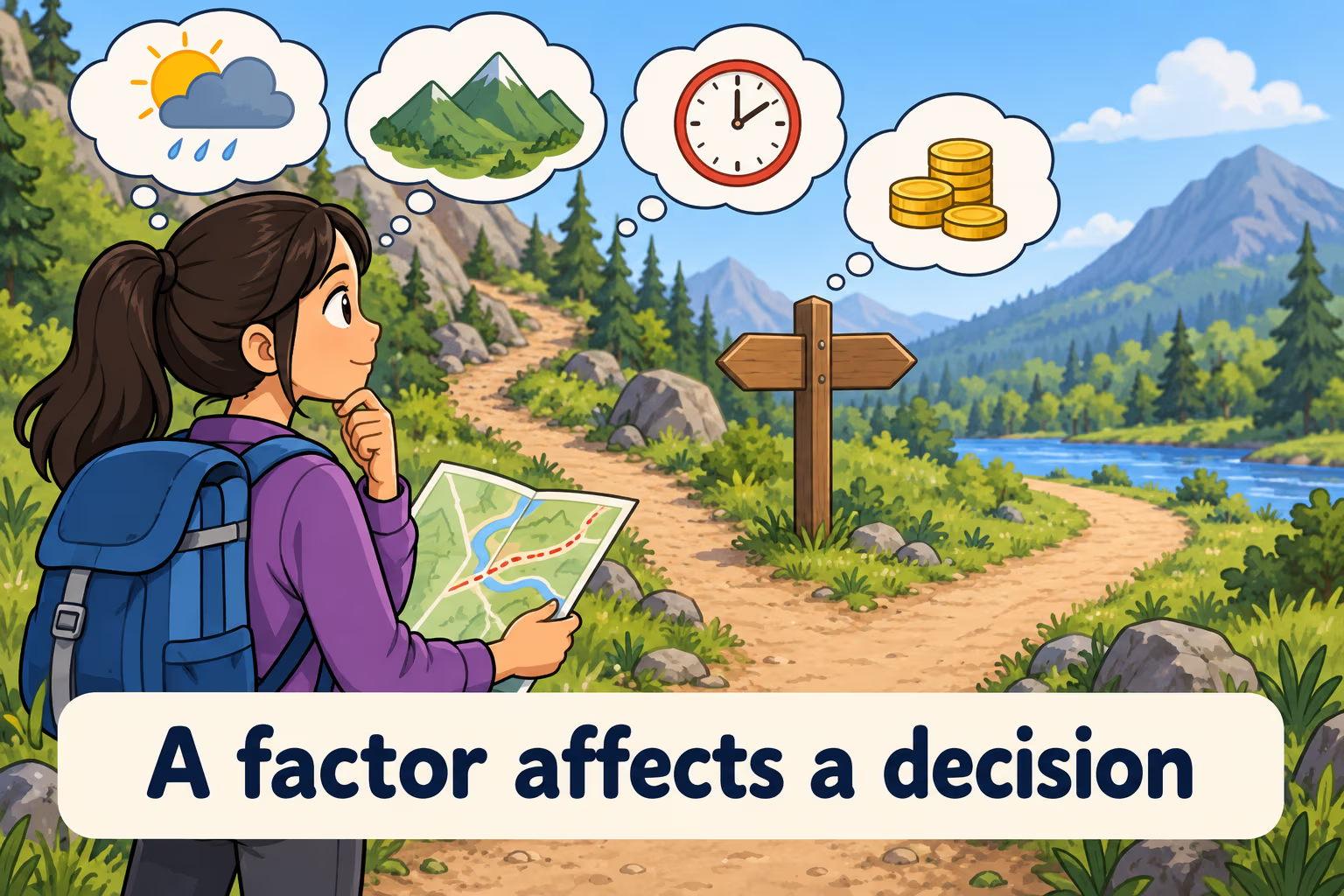
Factor as a Noun: A Consideration
In everyday writing, a factor is one part of a larger situation that can influence a choice or outcome. It does not have to be the only cause or the most important cause. In Weather was one factor in the delay, weather contributed to the delay, alongside any other relevant conditions. This sense commonly appears in patterns such as a factor in a decision, factors affecting a result, and several factors contributed to the change.
Factor as a Verb: Include It in a Plan
The verb factor in means to take something into account. It usually has an object: Factor in the travel time or We factored the travel time in. With a direct object and the particle in, the object can come between the verb and particle; a pronoun normally does: factor it in. The pattern factor something into something names the larger calculation or plan: Factor delivery fees into the total.
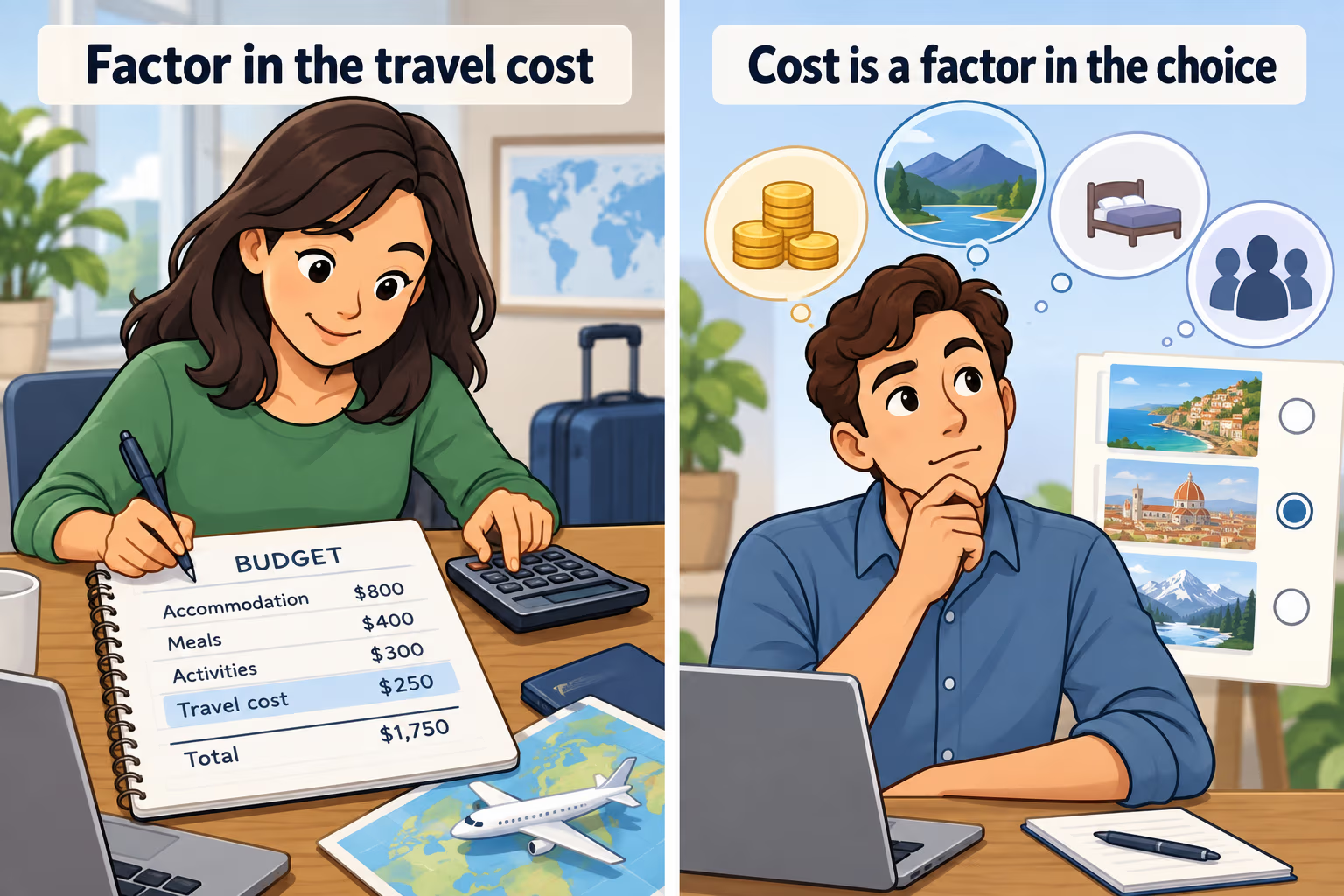
Compare the grammar: Travel time is a factor in the plan uses factor as a noun; Factor travel time into the plan uses it as a verb. In the first sentence, the travel time is a consideration. In the second, someone actively includes it while planning.
Factor in a Sentence: More Examples
| Example | How “factor” works |
|---|---|
| Noise was a factor in choosing the apartment. | Noun: a consideration that influenced a choice. |
| Several factors contributed to the delay. | Noun: circumstances contributing to an outcome. |
| Please factor the delivery fee into the estimate. | Verb pattern: include an amount in a calculation. |
| We forgot to factor it in. | Verb + pronoun object + particle. |
| Age is one factor among many that researchers considered. | Noun: one relevant element, not necessarily the only one. |
| The report factors in seasonal demand. | Verb: takes demand into account. |
Factor in Mathematics
In arithmetic, factors are numbers that multiply to give a product. For example, 3 and 4 are factors of 12 because 3 × 4 = 12. When listing the positive whole-number factors of 12, include every number that divides 12 evenly: 1, 2, 3, 4, 6, and 12. A factor pair is a pair that multiplies to the target number, such as (2, 6).
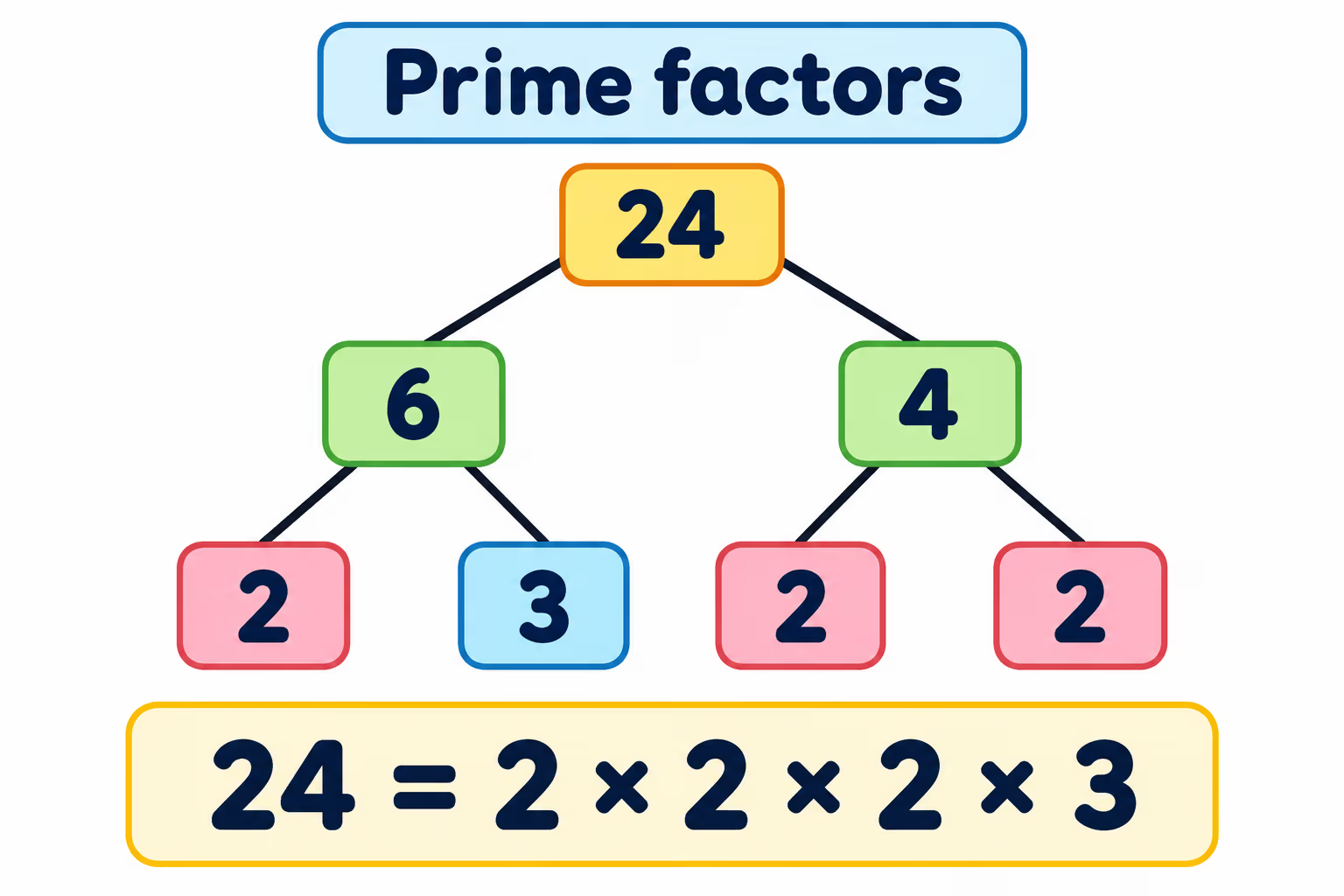
Prime factorization breaks a whole number greater than 1 into prime factors. For 24, a factor tree might begin with 6 × 4, then split 6 into 2 × 3 and 4 into 2 × 2. The result is 24 = 2 × 2 × 2 × 3, often written 23 × 3. A factor tree can branch in different ways, but the prime factors at the end give the same prime factorization.
One is a factor of every positive whole number, but it is not prime: a prime number has exactly two positive factors, 1 and itself. The number 1 has only one positive factor. These details help avoid calling 1 a prime factor or stopping a factor tree before all branches end in primes.
For another check, the positive factors of 18 are 1, 2, 3, 6, 9, and 18. Pair them from the ends of the list: 1 × 18, 2 × 9, and 3 × 6. Each pair gives 18. If a proposed factor leaves a remainder when dividing the target number, it is not an integer factor of that number. In algebra, factor can also mean rewrite an expression as a product: for example, x2 + 5x + 6 factors as (x + 2)(x + 3), because multiplying the two expressions returns the original quadratic.
Quick Practice
- In “Rainfall was a factor in the delay,” does factor name an action or a consideration? It names a consideration.
- Rewrite “Include the tax in your estimate” with factor: “Factor the tax into your estimate.”
- Name a factor pair for 20: 4 and 5, because 4 × 5 = 20.
Common Usage Mistakes
- Keep the noun and verb patterns clear. Write “cost was a factor in the choice” for the noun, or “factor cost into the budget” for the verb.
- Give the verb an object when needed. “Factor in the fee” is clearer than a bare “factor in” when the reader does not already know what is being included.
- Do not confuse factors with multiples. Factors multiply to make a number; multiples are products formed by multiplying that number by whole numbers. For 12, 3 is a factor, while 24 is a multiple.
- Use exact mathematical terms. A factor pair for 12 is 3 and 4; its prime factorization is 2 × 2 × 3.
Frequently Asked Questions
What does “factor” mean in a sentence? It usually means either a circumstance that contributes to an outcome, a number multiplied to make a product, or the verb meaning to include something in a calculation. Context and sentence structure identify the sense.
Is “factor in” a noun or a verb? In “Factor in the fee,” it is a verb phrase meaning “include the fee.” In “The fee is a factor in the total,” factor is a noun meaning a consideration or element.
How do you use “factor into”? Use factor X into Y when X is included in a larger calculation or plan: “Factor taxes into the final price.”
What is a factor in math? It is a number that divides another number evenly or one of the numbers multiplied to make a product. For example, 2 and 6 are factors of 12 because 2 × 6 = 12.
What is the prime factorization of 24? It is 2 × 2 × 2 × 3, or 23 × 3.
Sources: Cambridge Dictionary for the noun, verb, and phrasal-verb patterns; Maths is Fun: Factors and Prime Factorization for factor pairs and factor trees; and Khan Academy for the definition of a prime number.
7 Examples Of Factor Used In a Sentence For Kids
- Factor is something that helps us solve problems.
- One factor of 6 is 3 because 3 x 2 = 6.
- Can you find the missing factor in this math problem?
- Knowing your times tables is an important factor in math.
- Factor trees can help us find the prime factors of a number.
- Multiplication is a fun way to find different factors.
- The number 1 is a special factor because it is a factor of every number.
14 Sentences with Factor Examples
- Factor in the cost of study materials when creating your budget for the semester.
- Time management is a crucial factor in balancing academics and extracurricular activities.
- Factor in transportation costs when deciding on the best location for your accommodation.
- The proximity to campus is an important factor to consider when choosing where to live during your college years.
- Factor in the availability of part-time job opportunities in the area you plan to study in.
- The reputation of the college should be a key factor when selecting where to pursue your degree.
- Networking with alumni can be a valuable factor in building connections for internships or job opportunities.
- Factor in the time it takes to commute to campus when planning your class schedule.
- Factor in your personal interests and hobbies when choosing a college major.
- Factor in your mental health and self-care routines into your daily schedule.
- The overall campus environment can be a deciding factor in choosing the right college for you.
- Factor in the availability of study spaces and libraries when choosing your preferred campus.
- Financial aid packages can be a crucial factor in determining where you can afford to study.
- Factor in the influence of peer pressure on your academic performance and decision making.
How To Use Factor in Sentences?
Factor is a useful math concept that involves finding numbers that can be multiplied together to result in a given number. To use Factor effectively, start by identifying the number you want to factor. Next, find two numbers that can be multiplied to give that number. These two numbers are the factors of the original number.
For example, if you want to factor the number 12, you can start by listing all the possible pairs of numbers that multiply to 12: (1, 12), (2, 6), and (3, 4).
It’s important to note that Factorizing a number involves breaking it down into its prime factors, which are the smallest prime numbers that can multiply to give the original number.
To find the prime factors of a number, you can continue breaking down each number in its prime factors until you can no longer divide it further.
For instance, to factor the number 24 into its prime factors, you can break it down step by step:
24 = 2 * 12
= 2 * 2 * 6
= 2 * 2 * 2 * 3
Therefore, the prime factors of 24 are 2 * 2 * 2 * 3.
By following these steps, you can effectively use Factor to break down numbers into their factors and prime factors.
Conclusion
In conclusion, the impact of various factors on our lives can be profound and far-reaching. From environmental factors shaping our physical surroundings to social factors influencing our relationships and opportunities, numerous elements play a role in our daily experiences. Individuals often find themselves navigating through complex situations where multiple factors are at play, such as economic, cultural, and personal factors which can collectively shape our decisions and outcomes.
Understanding how these factors interact and influence our lives is crucial for making informed choices and fostering personal growth. By recognizing the significance of these factors, we can better adapt to changing circumstances, overcome challenges, and maximize opportunities for success and well-being. Each decision we make and every outcome we experience is a reflection of the multiple factors that contribute to shaping our paths in life.